
SUPERCHARGE YOUR ONLINE VISIBILITY! CONTACT US AND LET’S ACHIEVE EXCELLENCE TOGETHER!
Search has changed significantly over the past decade. Earlier, users mostly typed short keywords into search engines and received a list of web pages. Websites optimized their content around those keywords to improve rankings.
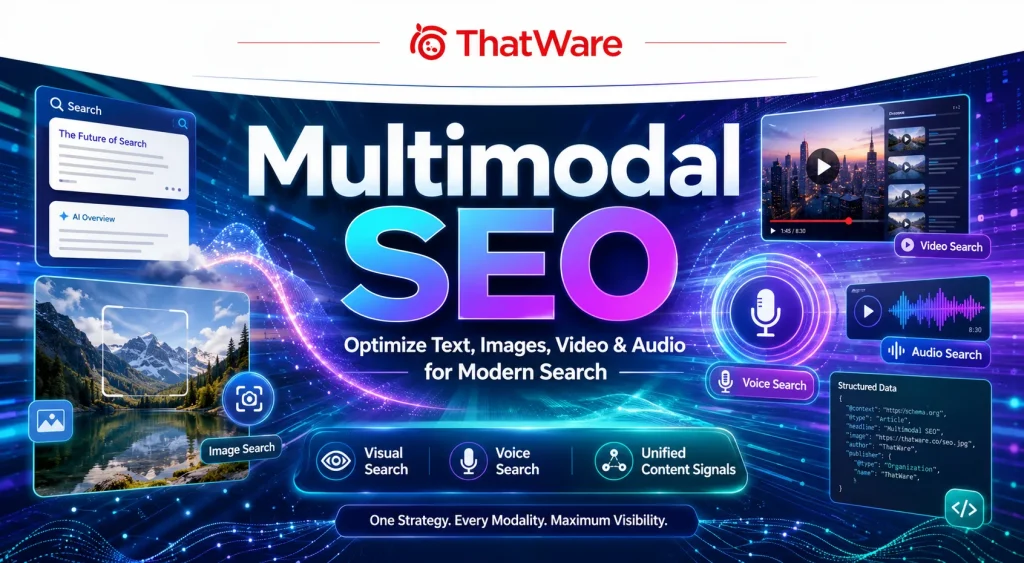
Today the search experience is very different. People search using photos, voice commands, videos, screenshots, and long natural language questions. Search engines now analyze multiple types of content before deciding what information is most helpful for a user.
This shift has created a new approach to search optimization called Multimodal SEO. Instead of focusing only on written content, this method focuses on optimizing text, images, videos, audio, and structured information together.
For businesses, publishers, and digital platforms, this approach helps content reach users across many types of search experiences.
This guide explains how Multimodal SEO works, why it matters, and how websites can build a strong strategy around it.
The Evolution of Search Behavior
To understand the importance of Multimodal SEO, it is helpful to look at how search behavior has evolved.
Early search behavior
In the early years of search engines, most users typed simple queries such as:
- best laptop
- weather today
- digital marketing course
Search engines relied heavily on matching those keywords with content on web pages.
The rise of smarter search
Over time, search engines became better at understanding meaning rather than just matching words. They started recognizing the intent behind queries.
For example, when someone searches for:
“best camera for travel photography”
the search engine tries to understand the user’s goal rather than simply matching those words.
The shift toward multimodal interaction
The biggest change came when search systems began supporting different types of inputs.
Users can now search by:
- speaking a question through a voice assistant
- uploading a photo to identify a product
- watching videos directly from search results
- scanning text from images
- searching through visual interfaces
Because of this shift, websites that rely only on written text may not appear in many search experiences.
Multimodal SEO solves this challenge by preparing content for multiple types of discovery.
What Is Multimodal SEO
Multimodal SEO is the practice of optimizing content so that it can be discovered through several types of search interactions.
Instead of focusing only on text, it combines multiple content formats such as:
- written content
- images
- videos
- audio
- structured information
These elements work together to help search systems understand the topic of a page more clearly.
When a search engine analyzes a page today, it does not only read the text. It may also examine:
- objects inside images
- captions inside videos
- spoken words in audio content
- page structure and metadata
Multimodal SEO ensures that all these elements support the same topic and message.
Why Multimodal SEO Is Important
The growing importance of Multimodal SEO comes from changes in how people access information online.
1. Users prefer visual content
Visual content is often easier to understand than long blocks of text. Images and videos can explain concepts quickly.
For example, a person searching for a workout routine may prefer watching a video demonstration instead of reading detailed instructions.
Optimizing visual content helps websites appear in image search results and video results.
2. Voice search is becoming common
Voice assistants have changed how people search for information.
Voice queries are usually longer and more conversational. Instead of typing a few keywords, users ask full questions.
Examples include:
- what is multimodal SEO
- how do I improve website ranking
- what are the best running shoes for beginners
Content that answers these questions clearly has a higher chance of being selected for voice responses.
3. Video consumption continues to grow
Video has become one of the most popular content formats online. Many users prefer watching short tutorials or demonstrations instead of reading lengthy guides.
Search engines now display video results directly on search pages. Websites that include optimized video content can benefit from this increased visibility.
4. Search engines analyze more signals
Search systems today evaluate many signals before ranking content. These signals include page structure, media elements, user engagement, and topical relevance.
A page that includes several types of helpful content often provides a stronger signal of value than a page with only text.
Key Components of Multimodal SEO
A successful Multimodal SEO strategy includes several important components. Each one contributes to improving visibility across different types of search experiences.
Image SEO Optimization
Images play an important role in helping search systems understand content.
Modern search engines can recognize objects, patterns, and visual details inside images. This allows them to match visual content with relevant queries.
To improve image SEO optimization, websites should follow these practices.
Use descriptive file names
Image file names should clearly describe the content of the image.
For example:
running-shoes-red.jpg
is better than:
IMG001.jpg
Descriptive names provide useful information to search systems.
Write clear alt text
Alt text describes the image for accessibility and search understanding.
Good alt text explains what the image shows while staying relevant to the topic of the page.
Example:
“A runner wearing lightweight red running shoes on a city street.”
Compress images for faster loading
Large images can slow down page loading time. Compressing images improves website performance and user experience.
Fast websites are more likely to perform well in search results.
Place images within relevant content
Images should support the topic of the page. Random or unrelated images provide little value.
When images reinforce the topic of the page, they help search systems understand the context better.
Video SEO Strategy
Video content offers strong opportunities for search visibility.
Search engines often display video results in dedicated sections, which can attract a large number of viewers.
A good video SEO strategy includes several key practices.
Write clear video titles
Video titles should explain what the video is about. Titles that clearly describe the topic perform better in search.
Example:
“Beginner guide to home workout exercises.”
Provide detailed descriptions
Video descriptions should summarize the content and include relevant keywords.
Descriptions help search engines understand the video topic.
Add captions
Captions provide a written version of the spoken content in a video.
They make videos accessible to more users and allow search systems to analyze the spoken information.
Include transcripts
A transcript provides the full text of everything said in the video.
Search systems can analyze transcripts to understand the topic more deeply.
Voice Search SEO
Voice search queries differ from traditional search queries.
They tend to be longer and sound like natural speech.
Because of this, voice search SEO focuses on answering questions clearly.
Create question based headings
Many users ask questions when using voice search.
Examples include:
- What is multimodal SEO
- How does visual search work
- Why is image optimization important
Using these questions as headings can help content match voice queries.
Provide clear answers
Answers should be simple and direct. Short explanations often perform better for voice responses.
Long complex sentences may reduce clarity.
Include frequently asked questions
Adding FAQ sections helps cover common questions related to a topic.
These sections improve the chances of appearing in voice search results.
Structured Data Markup
Structured data markup provides additional information about the content on a web page. It helps search systems clearly understand what the content represents and how different elements on the page are related. Instead of relying only on text analysis, search systems can use structured data to identify specific details about the page.
Structured data works by adding a special format of code to the page that describes the content in a clear and organized way. This code is not usually visible to visitors, but it allows search systems to interpret the meaning of the content more accurately.
For example, a page that contains a recipe might include structured data that identifies the ingredients, cooking time, nutrition information, and preparation steps. This extra layer of information helps search systems present the content in a more useful format.
There are several common types of structured data used across websites.
Articles
News websites and blogs often use structured data to identify articles. This markup can include details such as the headline, author, publishing date, and featured image. When search systems understand these elements clearly, the article may appear in enhanced search features or news results.
Product Pages
Ecommerce websites frequently use structured data for product pages. This markup can include the product name, price, availability, rating, and brand. With this information, search listings may display additional details such as star ratings or price ranges, which can make the listing more appealing to users.
Reviews
Review markup allows websites to highlight ratings and feedback for products, services, or businesses. When implemented properly, search results may show star ratings directly within the listing. These visual indicators often attract attention and can improve the likelihood that users click on the result.
Tutorials and How-To Guides
Instructional content can also benefit from structured data. Tutorials and guides can include information about the steps required to complete a task, the tools needed, and the estimated time required. This helps search systems present the content more clearly when users search for instructions or step by step guidance.
Frequently Asked Questions
Many websites include FAQ sections to answer common questions about a topic. Structured data can identify these question and answer pairs. When search systems detect this markup, they may display the questions and answers directly within the search results.
Semantic Search Optimization
Semantic search focuses on understanding meaning and context rather than exact keyword matches.
Instead of writing content around a single keyword, websites should cover a topic in depth.
Semantic search optimization includes several strategies.
Cover related topics
If a page discusses digital cameras, it may also include sections about lenses, sensors, and photography techniques.
This helps search systems recognize the depth of the content.
Use natural language
Content should read naturally and avoid repetitive keyword use.
Natural language improves readability and helps search systems interpret meaning more accurately.
Build topic clusters
Topic clusters group related articles around a central subject.
For example:
A central guide about search optimization may link to supporting articles about image optimization, video optimization, and voice search.
This structure strengthens topical authority.
Creating Multimodal Content
Multimodal SEO works best when different content formats support each other.
A well designed page may include:
- written explanations
- images that illustrate concepts
- videos that demonstrate processes
- structured information that explains the page content
This combination creates a richer experience for users.
For example, a cooking recipe page might include:
- step by step instructions
- photos of each step
- a video showing the cooking process
- structured information for ingredients and preparation time
This format helps users understand the content quickly and helps search systems analyze the page more effectively.
Benefits of Multimodal SEO
Organizations that implement Multimodal SEO often experience several benefits.
Increased visibility
Content becomes eligible to appear in more types of search results including image search and video search.
Better user engagement
Pages with visual and interactive elements tend to keep visitors engaged for longer periods.
Longer engagement often indicates that users find the content helpful.
Stronger content authority
When a page covers a topic through multiple formats, it signals depth and expertise.
This can improve credibility and trust.
Higher conversion potential
Multimedia content helps users understand products or services more clearly.
This can increase the likelihood of taking action such as making a purchase or signing up for a service.
How to Build a Multimodal SEO Strategy
Creating a successful Multimodal SEO strategy requires thoughtful planning and a clear understanding of how different types of content work together. The goal is not simply to add images or videos to a page, but to create a well structured content experience that helps users understand the topic while also making it easier for search systems to interpret the information.
A structured approach helps ensure that every piece of content contributes to visibility across multiple types of search results.
Step 1: Analyze Existing Content
The first step in building a Multimodal SEO strategy is to review the content that already exists on the website. Many websites have valuable articles that perform well in search but rely mainly on written text.
During this stage, examine important pages such as guides, blog posts, landing pages, and product pages. Look for opportunities where additional media could improve the clarity of the content.
For example, a long tutorial may benefit from step by step images or a short demonstration video. A product page may benefit from visual explanations, diagrams, or comparison charts.
This evaluation helps identify which pages have the strongest potential for improvement and which topics could benefit from richer content formats.
Step 2: Add Supporting Media
Once key pages have been identified, the next step is to enhance them with supporting media. Images, videos, charts, and diagrams can make complex information easier to understand.
For instance, instructional content becomes much clearer when readers can see the process visually. A diagram may explain a concept that would otherwise require several paragraphs of text.
Videos are especially useful for demonstrations, tutorials, and product explanations. They allow visitors to quickly grasp ideas that may take longer to explain in writing.
However, supporting media should always serve a clear purpose. Each visual element should reinforce the topic of the page and provide useful information rather than simply filling space.
Step 3: Improve Technical Structure
A strong technical structure ensures that search systems can interpret the content accurately. Even high quality media may not perform well in search if the page structure is unclear.
This step involves organizing the page in a logical way using clear headings, descriptive titles, and proper formatting. Images should include meaningful file names and descriptive alt text. Videos should include captions and transcripts whenever possible.
Structured data markup should also be implemented where appropriate. This helps search systems understand what type of content the page contains, whether it is an article, tutorial, product page, or frequently asked question section.
A well organized technical structure makes it easier for search systems to recognize the purpose of the page and present it in relevant search features.
Step 4: Optimize for Voice Search
Voice search has introduced a new type of search behavior. Instead of typing short phrases, users often ask complete questions.
For example, someone might ask a voice assistant a question such as “How does multimodal SEO work” or “What are the benefits of image optimization.”
To capture these queries, content should include question based headings and clear answers. Short explanatory paragraphs placed directly under these questions often perform well.
Adding FAQ sections can also help address common user questions. This format provides concise answers that are easier for search systems to interpret and present as voice responses.
By structuring content around real user questions, websites increase the chances of appearing in voice search results.
Step 5: Monitor Performance
The final step in building a Multimodal SEO strategy is monitoring how the content performs over time. Tracking performance helps determine which types of content generate the most visibility and engagement.
Website owners should observe how pages perform across different search features such as image results, video results, and standard listings. Pages that attract strong engagement may reveal patterns about what users find most useful.
Regular performance reviews also help identify areas that need improvement. For example, a page with strong traffic but low engagement may benefit from additional visual content or clearer explanations.
Multimodal SEO is not a one time process. It requires continuous refinement as search behavior evolves and new types of search features emerge.
Common Mistakes to Avoid
Some websites attempt multimodal optimization but fail to achieve good results because of common mistakes.
Using low quality images
Poor images reduce credibility and may not provide useful signals for search systems.
Adding videos without context
Videos should support the written content. Random videos provide little value.
Ignoring page speed
Large media files can slow down websites if they are not optimized.
Overloading pages with media
Too many images or videos can overwhelm users and distract from the main message.
Balance is important.
The Future of Search
Search will continue evolving as new technologies change how people access information.
Users increasingly expect faster and more interactive ways to find answers.
Websites that rely only on traditional text based content may struggle to keep up with these expectations.
Multimodal SEO prepares websites for this future by ensuring that content can be understood across multiple formats.
Conclusion
Multimodal SEO represents a major shift in how content should be optimized for modern search environments.
Instead of focusing solely on keywords and written content, this approach integrates images, videos, voice friendly content, and structured information.
By combining these elements, websites can reach users across many types of search experiences while providing richer and more engaging content.
As search behavior continues to evolve, organizations that adopt Multimodal SEO will be better positioned to maintain visibility, build trust with audiences, and create meaningful digital experiences.