SUPERCHARGE YOUR ONLINE VISIBILITY! CONTACT US AND LET’S ACHIEVE EXCELLENCE TOGETHER!
The way consumers discover, evaluate and purchase products has changed significantly. Search engines are no longer simply a collection of websites competing for ten blue links. Consumers now expect search experiences that understand their needs, provide relevant answers, compare alternatives and recommend brands across multiple digital touchpoints.
For e-commerce businesses, this shift has created a new challenge. Achieving organic visibility requires much more than targeting keywords and publishing product descriptions. Brands must establish relevance, demonstrate topical authority, deliver a technically sound website experience and become recognisable sources of information across traditional search engines and AI-powered discovery platforms.

This was the digital challenge facing Justhuman, a premium online retail brand operating in the personal care and skincare space.
Justhuman had an opportunity to establish a stronger position in a competitive market. However, achieving sustainable growth required a comprehensive digital strategy that could improve its organic search presence, strengthen its product and category pages, build topical relevance and create a recognisable brand identity across search experiences.
ThatWare, a professional SEO company, approached this challenge through a coordinated SEO and digital transformation strategy.
Instead of treating SEO as an isolated activity, we worked across multiple areas of the website and its digital presence. Our approach included identifying search intent, restructuring keyword targeting, developing content around customer needs, improving technical performance, simplifying website navigation, strengthening the backlink profile and preparing content for answer-driven search experiences.
We placed particular emphasis on the three fundamental dimensions of search intent:
- Content Type: Identifying the type of page that best satisfies a particular search query.
- Content Format: Understanding how information should be presented to meet user expectations.
- Content Angle: Determining the most relevant perspective through which a subject should be addressed.
This approach helped us align the website more closely with the expectations of both users and search engines.
We also focused on the technical foundations that influence how effectively a website can be crawled, indexed and experienced. Core Web Vitals, mobile usability, JavaScript execution, image optimisation, server response time and site architecture formed important parts of the optimisation process.
The campaign subsequently demonstrated substantial progress across organic visibility and digital authority.
The performance evidence presented in the project report includes:
- A major organic traffic growth phase beginning in June 2025.
- An estimated 19.4K website visits in the highlighted third-party traffic snapshot, with a displayed estimated range of 10.3K to 27.9K.
- A Google Search Console snapshot showing approximately 27.5K total clicks and 2.90 million impressions.
- Improved visibility across selected product, skincare, personal care and informational search queries.
- Strong backlink and referring-domain growth in the displayed authority reports.
- A healthy backlink profile classification in the displayed third-party analysis.
- Prominent Google visibility for neurocosmetic skincare-related searches.
- Inclusion of Justhuman in a Google AI Overview for a neurocosmetics-related query.
- Recognition of Justhuman in a ChatGPT response to a query about leading neurocosmetics brands in India.
One of the most significant developments was the brand’s emergence in an increasingly specialised search category: neurocosmetics.
Our AEO strategy helped strengthen the brand’s visibility around this emerging subject, positioning Justhuman not only as an e-commerce destination but also as a recognisable name associated with a developing skincare category.
The outcome demonstrates an important principle: effective digital transformation is not simply about improving website rankings. It is about building the relevance, authority, technical foundation and brand recognition required to remain discoverable wherever consumers search for information.
Through this integrated approach, ThatWare helped Justhuman move towards a more comprehensive digital presence, connecting traditional SEO performance with the emerging opportunities of AI-powered search.
Understanding the Client: About Justhuman
Justhuman is an online retail brand operating in the personal care and beauty space. Its product ecosystem includes categories associated with skincare, haircare, hygiene, face masks, foot care and other personal wellness requirements.
The brand operates in a market where purchasing decisions are influenced by several factors.
Consumers do not always search for a particular product by its brand name. They frequently begin with a problem, an ingredient, a desired outcome or a specific concern.
For example, a potential customer may search for:
- Peptide cream for anti-ageing.
- Turmeric face mask for glowing skin.
- Foot peeling spray.
- Probiotic skincare products.
- Copper peptide skincare.
- Neurocosmetic skincare products in India.
- Haircare benefits.
- Products that support a particular skincare routine.
Each query represents a different stage of the customer’s discovery journey.
Some users are researching a problem. Others are comparing ingredients or products. Some are looking for recommendations, while others already know what they want to purchase.
This distinction is particularly important in the personal care industry because product discovery is closely connected to education.
A consumer searching for peptide-based skincare may first want to understand what peptides are, how they are used in skincare and how they differ from other ingredients. Only after gaining that understanding might the consumer begin comparing products.
Similarly, someone searching for foot exfoliation may be interested in a treatment method, a product demonstration, a routine or an actual purchase.
A brand that addresses only transactional queries misses a significant portion of the discovery journey.
This presented an opportunity for Justhuman.
The objective was to build a digital presence that could connect product discovery, informational research, ingredient education and brand-led searches within a unified organic search strategy.
The Business Objective
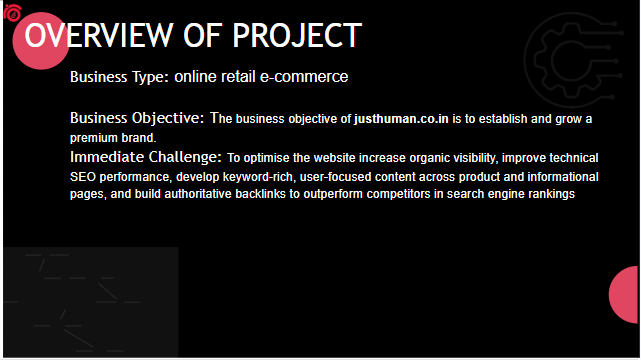
The primary business objective was to establish and grow Justhuman as a premium brand.
Achieving this required a digital strategy that could support both immediate commercial requirements and longer-term brand development.
The campaign therefore focused on several interconnected objectives:
- Improve organic visibility across relevant product and informational search queries.
- Strengthen keyword targeting across product, category and landing pages.
- Develop user-focused content that addresses real customer questions and search intent.
- Improve the website’s technical SEO performance.
- Create a website architecture that makes important pages easier to discover.
- Strengthen the website’s backlink profile and domain-level authority signals.
- Improve visibility for emerging skincare subjects and specialised product categories.
- Expand brand discoverability through Google AI Overviews and conversational AI platforms.
These objectives were not independent.
Better content without an accessible website structure could limit discoverability. Technical improvements without relevant content would not fully address customer needs. Similarly, keyword rankings without a stronger brand presence would not necessarily translate into sustainable growth.
We therefore treated the project as an integrated digital transformation initiative.
The Immediate Challenge
At the beginning of the engagement, the key challenge was to strengthen Justhuman’s ability to compete organically in a product-driven market.
The website needed improvements across several areas:
Organic visibility: The brand needed stronger search exposure for relevant commercial and informational keywords.
Keyword relevance: Keywords had to be mapped to the correct pages rather than targeted indiscriminately across the website.
Content quality: Product and informational content needed to communicate useful information while satisfying the actual expectations behind search queries.
Technical performance: The website needed to provide a better experience in terms of loading speed, mobile usability, navigation and crawl accessibility.
Website architecture: Important product and category pages needed a logical relationship with the broader website structure.
Authority development: The website needed a stronger backlink and referring-domain profile to support its organic growth.
Emerging search opportunities: The brand also needed to establish visibility in newer areas of skincare discovery, including neurocosmetics and AI-generated search recommendations.
These challenges required more than a conventional keyword optimisation exercise.
They required a strategy that considered how people search, how search engines interpret pages and how emerging AI systems identify relevant brands.
The Strategic Approach: Moving Beyond Traditional SEO
Our first strategic decision was to avoid approaching Justhuman’s SEO campaign as a collection of isolated keyword-targeting activities.
We wanted to understand the relationship between the brand’s products, the questions consumers ask, the information they expect and the pages that should satisfy those expectations.
The strategy was built around five connected pillars:
- Search intent and keyword intelligence.
- Content development and semantic relevance.
- Technical SEO and user experience.
- Website architecture and crawl optimisation.
- Authority building and AI-powered search visibility.
Each pillar addressed a different part of the website’s organic performance.
Together, they created a more complete framework for improving discoverability.
Search Intent as the Foundation of the Campaign
Search intent became the foundation of our content and keyword strategy.
At its essence, search engines aim to provide the most useful result for a user’s query.
A page may contain the exact keyword searched by a user, but that alone does not guarantee that it will be considered the most relevant result.
The content must satisfy the reason behind the search.
For example, consider the query:
“Peptide cream for anti-ageing.”
The user may want to:
- Understand what peptide creams are.
- Explore the potential role of peptides in skincare.
- Compare different peptide-based products.
- Find a suitable product.
- Understand how a peptide cream fits into a skincare routine.
A page that only contains a product description may not satisfy every one of these expectations.
Similarly, a person searching for “foot peeling spray” may have a different expectation from someone searching for “foot care products.”
The former may be looking for a specific product type, while the latter may be exploring a broader category.
Understanding these differences helped us determine which pages deserved priority and what each page needed to communicate.
The importance of search engine evolution
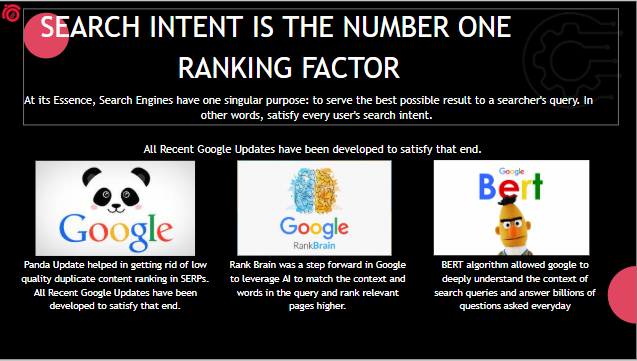
Google’s major algorithm developments have consistently placed greater emphasis on the usefulness and relevance of search results.
Updates such as Panda, RankBrain and BERT represent important stages in the evolution of how Google evaluates content and interprets queries.
- Panda brought greater attention to content quality and helped address low-quality content.
- RankBrain advanced Google’s ability to interpret queries and relationships between words and concepts.
- BERT improved the understanding of language and context, particularly the relationships between words within a query.
The strategic lesson was straightforward: keyword inclusion alone could not be the foundation of Justhuman’s content strategy.
We needed to create pages that were relevant to the complete search context.
The Three Cs of Search Intent
To operationalise search intent, we used a framework built around three dimensions:
Content Type, Content Format and Content Angle.
These three dimensions helped us determine what to create, how to present it and which perspective would make the content useful.
A. Content Type: Choosing the Correct Page
Content type refers to the kind of page that should appear for a particular search query.
Different keywords require different page types.
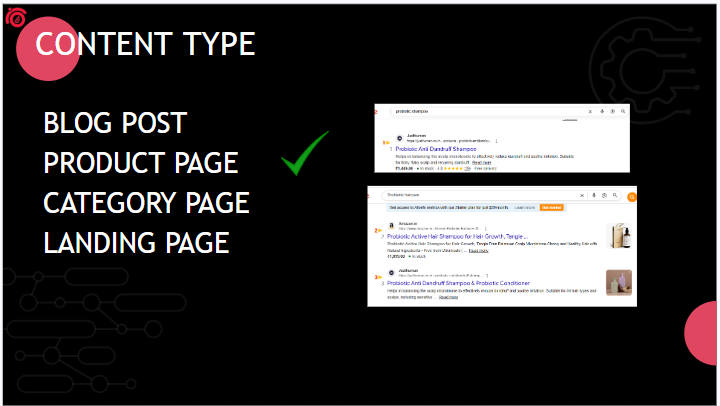
For Justhuman, our content-type planning considered:
| Search requirement | Appropriate content type | Primary objective |
| Specific product discovery | Product page | Present product information and support purchasing decisions |
| Broad product-category discovery | Category page | Help users explore relevant products |
| Educational research | Blog post | Answer questions and explain subjects |
| Specific campaign or conversion query | Landing page | Provide focused information and encourage action |
This distinction was important because not every keyword should be assigned to a blog post.
For example, a query with clear purchase intent is often better addressed through a product or category page.
Conversely, a query about the science behind an ingredient may require a detailed educational article.
Our keyword mapping process considered the existing search landscape and the purpose of each page.
This helped reduce the risk of creating content that targeted the right keyword but delivered the wrong experience.
B. Content Format: Presenting Information Effectively
The next consideration was content format.
Even when a website targets the correct subject, the presentation of information can influence how useful the page is to visitors.
Some searches are best answered through concise product information. Others require detailed educational explanations, comparisons, step-by-step guidance or visual demonstrations.
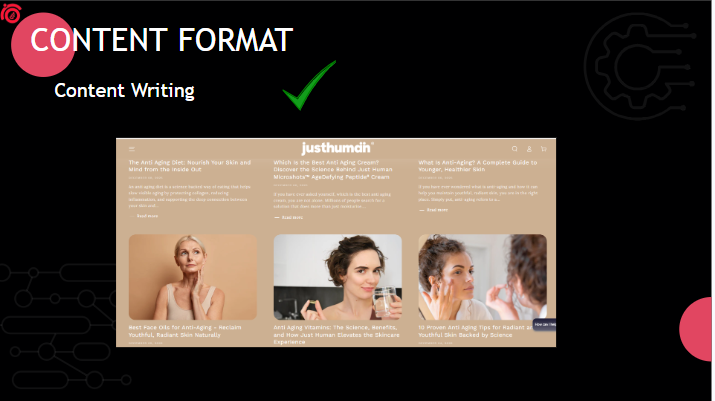
We focused on content writing as an important part of the campaign.
However, the objective was not simply to increase the volume of published content.
We wanted content to serve a defined purpose.
For example:
- Product pages needed clear product information and relevant benefits.
- Category pages needed to support product discovery.
- Informational articles needed to explain ingredients, routines and product-related subjects.
- Educational content needed to answer questions without forcing users to navigate through unrelated information.
We also considered how content could connect informational searches with relevant commercial pages.
A useful article about an ingredient, for example, could naturally introduce a relevant product category where appropriate.
This created a relationship between education and product discovery.
C. Content Angle: Finding a Relevant Perspective
The third dimension was content angle.
Content angle determines how a subject should be approached.
Two pages can cover the same broad topic but serve different search expectations depending on their angle.
For Justhuman, we used specific content angles rather than relying exclusively on generic product descriptions or broad informational subjects.
Two examples from the campaign illustrate this approach.
Example 1: The Science of Anti-Ageing Supplements
Instead of treating anti-ageing as a generic beauty topic, the content angle focused on the science associated with anti-ageing supplements.
This approach created an opportunity to address the informational needs of users interested in ingredients, product formulations and the science behind personal care.
It also provided a more specific direction for content development.
Example 2: Foot Care with 30-Second Exfoliation
For foot-care-related content, we explored a more focused angle around 30-second exfoliation.
This provided a distinct content direction rather than producing another broad article about foot care.
The approach aligned content with a specific user interest and created a more recognisable subject for the page.
These examples demonstrate how the three Cs worked together.
Content type determined the appropriate page, content format determined the presentation and content angle established the most relevant perspective.
Keyword Research and Strategic Keyword Mapping
Keyword research was another central component of the engagement.
Our objective was to identify opportunities that connected Justhuman’s product portfolio with the language used by potential customers.
We considered both direct product searches and broader informational queries.
This was particularly important because personal care consumers frequently move between ingredient research, product comparisons and purchase-oriented searches.
Building a Keyword Framework Around Product Categories
The keyword strategy covered several relevant areas of the website.
These included:
- Anti-ageing and peptide-based skincare.
- Face masks.
- Turmeric-based skincare.
- Foot-care products.
- Foot exfoliation and peeling products.
- Copper peptides.
- Probiotic skincare.
- Haircare.
- Neurocosmetics.
- Related informational searches.
The keyword research process was designed to connect these subjects with appropriate pages.
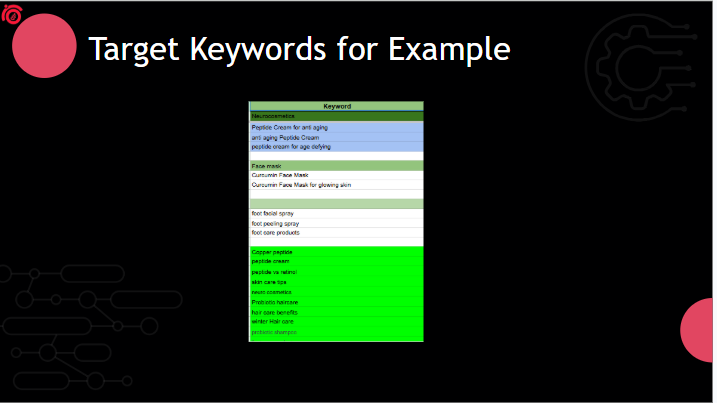
The following examples illustrate the direction of the keyword targeting documented in the campaign.
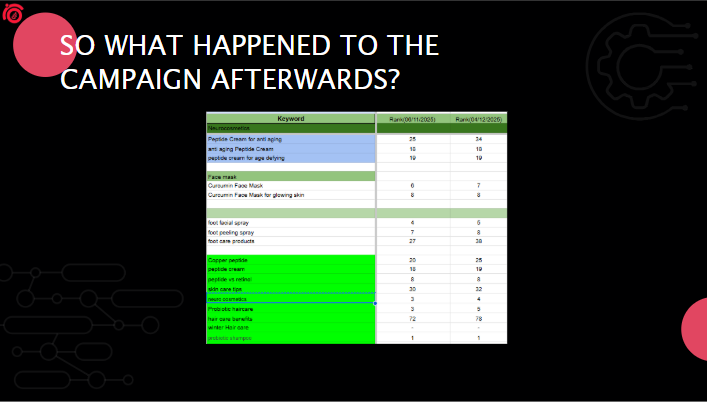
| Keyword theme | Example search query | Search intent |
| Anti-ageing skincare | Peptide cream for anti-ageing | Commercial investigation |
| Peptide skincare | Anti-ageing peptide cream | Commercial investigation |
| Ingredient research | Peptide cream for age-defying skincare | Informational and commercial |
| Face masks | Turmeric face mask | Transactional |
| Face mask benefits | Turmeric face mask for glowing skin | Informational and commercial |
| Foot care | Foot facial spray | Transactional |
| Exfoliation | Foot peeling spray | Transactional |
| Foot-care category | Foot care products | Commercial |
| Ingredient-led skincare | Copper peptide | Informational and commercial |
| Peptide skincare | Peptide cream | Commercial investigation |
| Ingredient comparison | Peptide vs retinol | Informational |
| Personal care education | Skincare tips | Informational |
| Emerging category | Neurocosmetics | Informational |
| Product category | Probiotic skincare | Commercial |
| Haircare education | Haircare benefits | Informational |
| Seasonal haircare | Winter hair care | Informational |
| Product discovery | Probiotic shampoo | Transactional |
This keyword structure helped us understand that the campaign could not be limited to a single group of high-volume terms.
Different keyword groups offered different opportunities.
Some were directly connected to product discovery, while others could help introduce the brand to consumers earlier in their research journey.
Prioritising Search Intent Over Search Volume Alone
A common limitation in keyword research is prioritising search volume without adequately evaluating commercial relevance.
For an e-commerce brand, a high-volume keyword is not automatically the most valuable opportunity.
A keyword may generate significant traffic but attract users who are not interested in the products offered by the website.
Conversely, a more specific query may have lower search demand but a stronger relationship with a product category.
We therefore considered several factors when evaluating keyword opportunities:
- Relevance to the product portfolio.
- The intent behind the search.
- The type of pages appearing in search results.
- The relationship between the keyword and the brand.
- The possibility of developing useful supporting content.
- The potential to connect informational searches with commercial pages.
This approach helped make keyword targeting more purposeful.
Connecting Keywords With the Correct Pages
Keyword mapping was essential to the campaign.
We focused on avoiding situations where multiple pages compete for the same search purpose without providing distinct value.
For example, a product page and a blog post may both mention peptide cream, but their roles should remain different.
The product page should support product discovery and purchasing decisions.
The educational article should explain the ingredient, its context and relevant questions.
Similarly, a broad category page should not attempt to replace every individual product page.
Each page needs a clear role.
This approach supported a more organised relationship between the website’s content and its target keywords.
Supporting Long-Tail Search Visibility
Long-tail queries were also important.
Queries such as “turmeric face mask for glowing skin” or “peptide vs retinol” communicate a more specific information requirement than a broad search for skincare.
These queries can help brands reach users with clearly defined interests.
We therefore considered the relationship between broad category keywords and more specific long-tail variations.
This allowed the campaign to address multiple levels of the search journey rather than concentrating exclusively on a few broad terms.
Content Development: Creating Content That Serves Real Search Needs
After establishing the keyword and search-intent framework, we focused on content development.
For Justhuman, content was not treated as an independent publishing activity.
It was an important part of the brand’s search visibility and product discovery strategy.
The website needed to provide information that was relevant to consumers while maintaining a clear relationship with the products and categories offered by the brand.
Developing Content Around Product and Informational Needs
We worked with different content requirements depending on the search intent.
For commercial searches, the focus was on ensuring that product and category pages communicated useful information.
For informational searches, the focus was on explaining topics that consumers might research before making a purchasing decision.
This distinction allowed us to develop content with more precise objectives.
The strategy included content around subjects such as:
- The science of anti-ageing supplements.
- Peptide-based skincare.
- Copper peptides.
- The differences between peptides and retinol.
- Turmeric face masks.
- Foot-care routines.
- Exfoliation.
- Probiotic skincare.
- Haircare benefits.
- Emerging neurocosmetic skincare concepts.
These topics were selected because they had a relationship with the brand’s broader product and category landscape.

Moving Beyond Generic Beauty Content
The beauty and skincare industry contains a large volume of generic informational content.
Articles about glowing skin, anti-ageing, skincare routines and product benefits are widely available.
Publishing another generic article does not necessarily provide a meaningful reason for users or search engines to prefer a particular brand.
We therefore focused on finding more specific content directions.
For example, the subject of anti-ageing could be approached through:
- General anti-ageing advice.
- Ingredient comparisons.
- The science associated with supplements.
- The role of particular skincare ingredients.
- Product-related questions.
Similarly, foot care could be approached through:
- General foot-care routines.
- Exfoliation methods.
- Specific product types.
- Targeted treatment-related information.
This helped create more focused content opportunities.
Creating a Relationship Between Educational and Commercial Content
Educational content can play an important role in the customer journey.
A user researching copper peptides may not immediately be ready to purchase a product.
However, a useful educational resource can help the user understand the ingredient and discover relevant products.
This creates an opportunity to connect informational and commercial pages.
Our approach considered how these relationships could be developed through relevant internal links and content organisation.
The purpose was not to force product promotion into every article.
Instead, the goal was to provide a natural next step when a reader’s research connected with a product or category.
Improving Content Relevance and Topical Coverage
Content relevance also required considering related concepts.
A page about peptides, for instance, should not rely exclusively on repeating the word “peptide.”
It should address the relevant context behind the subject.
Likewise, a page about neurocosmetics requires an understanding of the broader relationship between skincare, the skin-brain axis and the emerging category itself.
This semantic approach helped establish a more coherent content environment around the brand’s subject areas.
It also provided a foundation for the later AEO strategy.
Technical SEO: Improving the Website’s Search Foundations
Content relevance is only one part of organic search performance.
A website also needs to be technically accessible, properly structured and usable across different devices.
For Justhuman, technical SEO was an important part of the overall optimisation strategy.
We focused on the website factors that influence crawling, indexing, navigation and user experience.
Optimising the User Experience
We recognised that website experience needed to be considered alongside content and keyword relevance.
For e-commerce businesses, a poor user experience can create friction at several stages.
A visitor may struggle to navigate between categories, wait for product images to load or encounter difficulties when accessing a page on a mobile device.
These issues can affect the overall experience even when the content itself is relevant.
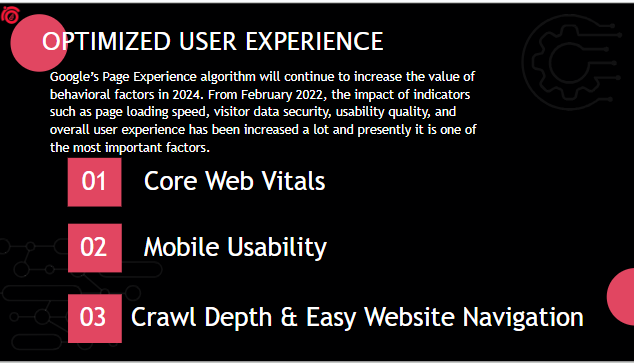
Our optimisation priorities included:
- Core Web Vitals.
- Mobile usability.
- Crawl depth and website navigation.
These areas formed an important part of our technical approach.
Core Web Vitals
Core Web Vitals provide a framework for evaluating important aspects of page experience.
The main metrics include:
Largest Contentful Paint (LCP): Measures how quickly the main content of a page becomes visible.
Interaction to Next Paint (INP): Measures the responsiveness of a page when users interact with it.
Cumulative Layout Shift (CLS): Measures unexpected visual movement during page loading.
For an e-commerce website, these factors can influence how comfortably users interact with product pages and other important sections.
We focused on technical improvements that could support a more efficient page experience.
The optimisation priorities included reducing unnecessary JavaScript execution, implementing appropriate lazy loading, optimising images and improving server response times.
Reducing unnecessary JavaScript execution
JavaScript can influence how quickly a page becomes interactive.
Excessive or inefficient scripts may increase processing requirements and affect responsiveness.
We therefore considered JavaScript execution as an important area for technical optimisation.
The objective was to reduce unnecessary processing while maintaining the website functionality required by the business.
Implementing lazy loading
E-commerce websites frequently contain multiple product images and visual elements.
Loading every image immediately can increase the amount of data required when a visitor first accesses a page.
Lazy loading helps defer the loading of suitable off-screen images until they are needed.
This can reduce initial page-loading requirements.
It must, however, be implemented carefully so that important above-the-fold images are not unnecessarily delayed.
Optimising and compressing images
Product photography is particularly important for personal care and beauty websites.
Images help customers understand products and evaluate their appearance.
However, large image files can affect page performance.
We considered image optimisation and compression as part of the technical improvement strategy.
The objective was to maintain visual quality while reducing unnecessary file weight.
Providing appropriate image and embed dimensions
When image dimensions are not properly defined, page elements may shift as resources load.
Providing suitable dimensions helps the browser reserve the required space.
This supports a more stable visual experience and helps address layout-shift issues.
Improving server response time
The server’s response can influence how quickly a browser begins receiving the resources required to display a page.
We therefore included server response time within the technical optimisation priorities.
The broader objective was to reduce unnecessary waiting and support a more efficient browsing experience.
Mobile Usability
Mobile usability was another important consideration.
Consumers frequently discover personal care products through mobile searches.
A website that is difficult to navigate on a smaller screen can create unnecessary friction.
We considered mobile usability in the broader website optimisation process.
The objective was to support:
- Readable content.
- Accessible navigation.
- Properly displayed images.
- Usable page elements.
- A logical product discovery experience.
- Consistent access to important website sections.
Mobile usability was not treated as a separate design concern.
It was considered part of the website’s overall organic search and conversion experience.
Crawl Depth and Website Navigation
A search engine needs to discover important pages before it can evaluate and potentially rank them.
The relationship between pages, navigation and internal linking therefore matters.
For Justhuman, we focused on making the website structure easier to understand.
Important product and category pages needed to be accessible through a logical navigation system.
This supported both user discovery and search engine crawling.
Implementing a Flatter Website Structure
Website architecture was another important part of the project.
A deep website structure can make important pages difficult to reach.
If users and search engine crawlers must navigate through several unnecessary levels to reach important products or categories, the overall structure becomes less efficient.
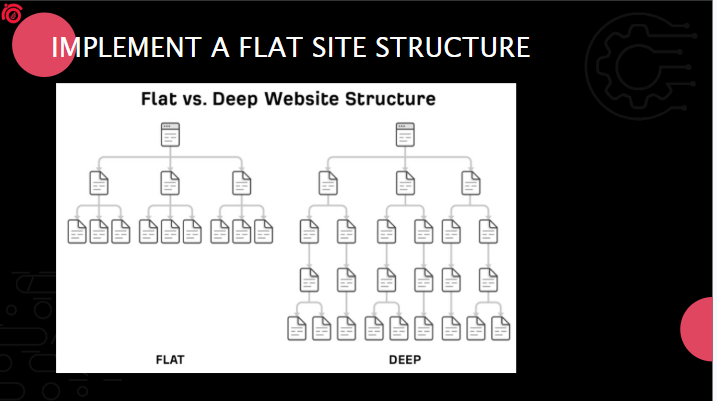
We therefore focused on a flatter site architecture.
Flat Structure Versus Deep Structure
A flat website structure allows important pages to be reached through fewer navigation levels.
A deep structure places pages further down a hierarchy, potentially requiring several clicks or navigation steps.
The distinction is particularly relevant for e-commerce websites.
An online store may have:
- Main category pages.
- Subcategory pages.
- Product pages.
- Informational articles.
- Campaign landing pages.
These pages need a clear hierarchy.
However, the hierarchy should not become unnecessarily complicated.
Our approach aimed to improve the relationship between important pages and the website’s broader navigation structure.
Why a Flatter Structure Matters
A flatter architecture can offer several advantages.
Improved discoverability: Important pages can be reached more easily through navigation and internal links.
Better crawl efficiency: Search engine crawlers can discover relevant sections through a more organised structure.
Clearer page relationships: Categories, products and supporting content can be organised around logical subject relationships.
Improved user navigation: Visitors can move between related products and categories without navigating through unnecessary layers.
Better internal linking opportunities: A clear architecture makes it easier to identify where links between relevant pages should exist.
Organising Commercial and Informational Pages
We also considered the relationship between commercial and informational pages.
For example, an educational article about peptides could support discovery of a relevant skincare category.
A category page could link to relevant product pages.
Product pages could provide access to additional information where it helps customers make informed decisions.
This structure creates a connected website rather than a collection of disconnected URLs.
The objective was to make the site more understandable to users and search engines alike.
Building Website Authority Through Link Development
A website’s organic performance is influenced by more than its own content and technical configuration.
External references and backlinks are also part of the broader search ecosystem.
For Justhuman, authority development formed another component of the campaign.
We focused on improving the website’s backlink and referring-domain profile.
Why Authority Development Was Important
The personal care and skincare market is competitive.
Many websites publish ingredient guides, product reviews, skincare information and commercial product pages.
A brand needs to establish a credible digital presence within this environment.
Relevant backlinks can contribute to the website’s authority profile and support the broader organic strategy.
However, the objective should not be to accumulate links without considering their quality or relevance.
A large number of unrelated backlinks does not automatically establish a stronger website.
Referring-Domain Growth
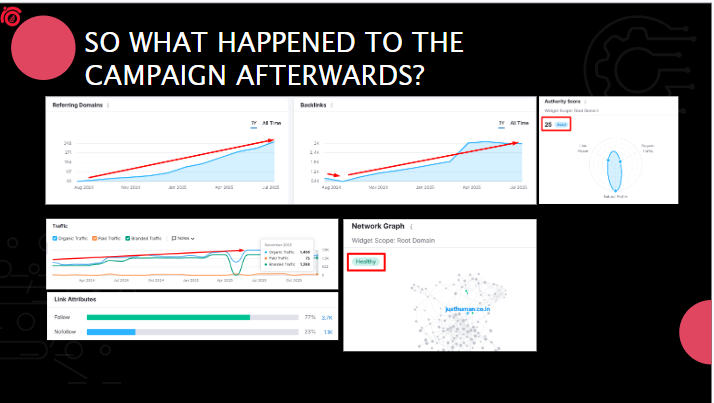
The project presentation includes third-party authority reports showing an upward trend in referring domains.
The displayed graph indicates growth over the reported period.
This was an encouraging development because referring domains provide a broader view of the websites linking to a domain.
The emphasis was on developing the website’s external authority profile alongside improvements to its content and technical foundations.
Backlink Profile Development
The backlink trend presented in the campaign report also shows an upward trajectory.
The report includes a link-profile breakdown, with approximately 77% of displayed link attributes classified as follow and 23% as nofollow.
These figures should be understood as the snapshot shown in the third-party reporting tool, rather than a permanent description of the website’s backlink profile.
The purpose of this activity was to support the overall authority-building strategy.
Monitoring Link Quality and Domain Health
The authority report also displayed a healthy classification in the network graph analysis.
We considered this an important supporting indicator.
Backlink monitoring is not limited to counting links.
A complete approach should consider:
- Referring-domain quality.
- Topical relevance.
- Link attributes.
- Anchor-text distribution.
- Link growth patterns.
- Potentially unnatural link patterns.
- The overall health of the backlink profile.
These factors help provide a more useful understanding of external authority development.
The Turning Point: Organic Growth and Search Visibility
The combined strategy was designed to produce improvements across several areas rather than relying on a single ranking metric.
The campaign evidence shows a significant growth phase beginning in June 2025.
This marked an important period in the website’s organic performance.
The traffic trend displayed in the project presentation indicates that website visibility increased during this period and remained at a comparatively elevated level in the following months.
September 2025 is highlighted as a particularly strong performance period.
The Organic Traffic Breakout
The traffic report included in the campaign presentation identifies:
Estimated website visits: 19.4K
Displayed estimated traffic range: 10.3K to 27.9K
These figures represent the third-party traffic estimate shown in the presentation.
They should not be confused with verified analytics sessions or Google Search Console clicks.
The significance of the snapshot is the broader organic growth trend that it accompanies.
The campaign experienced a strong traffic breakout beginning in June 2025, with elevated performance continuing through the subsequent reporting period.
Understanding the Growth Pattern
The traffic trend displayed in the report shows a notable increase during June 2025.
After this point, the website maintained a higher level of estimated traffic, although the graph also indicates fluctuations.
September 2025 is highlighted as a peak performance period.
This is important because sustainable organic growth does not necessarily appear as a perfectly straight upward line.
Search demand, competition, algorithm changes, seasonality and individual keyword movements can all influence traffic patterns.
The objective was therefore not to interpret every fluctuation as a change in campaign effectiveness.
Instead, we evaluated the broader direction of organic performance.
The report suggests that the website entered a stronger visibility phase and maintained an improved traffic baseline during the highlighted period.
Google Search Console Performance
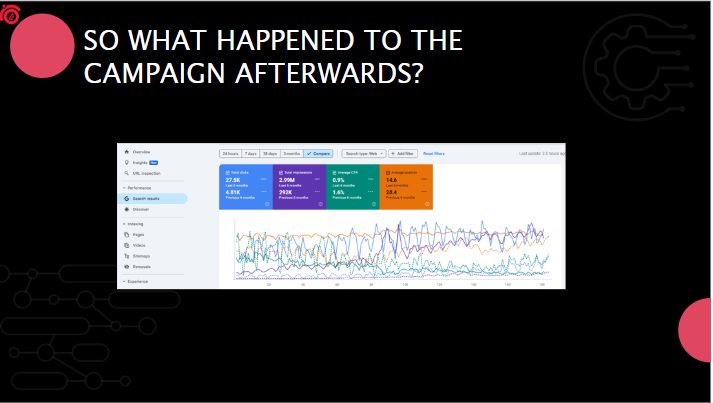
The project presentation also includes a Google Search Console performance snapshot.
The displayed dashboard shows approximately:
| Google Search Console metric | Reported snapshot |
| Total clicks | 27.5K |
| Total impressions | 2.90M |
| Average CTR | 0.90% |
| Average position | 14.6 |
These figures are taken from the dashboard included in the campaign presentation.
They represent the displayed reporting snapshot and should be interpreted within its selected reporting period.
The metrics provide a different perspective from third-party estimated traffic.
Total clicks: 27.5K
The dashboard shows approximately 27.5K total clicks.
Clicks represent visits generated when users select the website from Google Search results.
This is an important indicator because it reflects actual search-result clicks recorded by Google Search Console for the selected property and reporting period.
Total impressions: 2.90 million
The website recorded approximately 2.90 million impressions in the displayed report.
An impression indicates that a website result appeared in a user’s search results.
This level of search exposure is significant because it demonstrates the breadth of the website’s presence across search queries.
Average CTR: 0.9%
The dashboard displays an average click-through rate of approximately 0.9%.
CTR measures the proportion of impressions that generated clicks.
It can be influenced by several factors, including:
- Search position.
- Search intent.
- Title relevance.
- Meta description quality.
- SERP features.
- Brand recognition.
- Competition within the results.
The metric also presents an opportunity for continued optimisation.
As search visibility expands, improving how individual pages attract clicks becomes an important part of the next growth stage.
Average position: 14.6
The displayed average position is approximately 14.6.
This indicates that there remained an opportunity to strengthen rankings across the broader query portfolio.
Average position is an aggregate measure, not a statement that every keyword ranked in the same position.
The metric should therefore be interpreted alongside individual keyword rankings and page-level performance.
What These Metrics Mean Together
The combination of impressions, clicks and estimated traffic provides a broader understanding of the campaign.
The increase in visibility indicates that more search opportunities were being captured.
The click data demonstrates that this visibility generated search traffic.
The third-party traffic report provides an additional view of the website’s estimated organic reach.
The keyword-ranking evidence helps identify how specific product and informational queries were performing.
Together, these indicators provide a more complete picture than any single SEO metric could provide.
Keyword Ranking Improvements Across Product and Informational Searches
One of the key campaign activities was improving the website’s visibility across specific product and informational keyword groups.
The ranking comparison included in the presentation provides a snapshot of selected keywords at two reporting points.
The comparison indicates that some terms maintained strong positions, while others experienced fluctuations or required further optimisation.
This is normal in a campaign covering several product categories and search intents.
The purpose of keyword tracking was to understand which areas were performing well and where additional work was needed.
Maintaining Strong Positions for Relevant Searches
The ranking table includes several examples of keywords that maintained relatively strong positions across the displayed comparison.
These include:
- Peptide cream for age-defying skincare.
- Peptide-related skincare searches.
- Turmeric face mask searches.
- Probiotic shampoo.
- Winter hair care.
- Probiotic skincare.
- Neurocosmetics-related queries.
Some terms maintained their existing visibility, while others showed modest changes.
This helped us identify the subjects where the website had established a degree of search relevance.
Understanding Ranking Fluctuations
The comparison also demonstrates why keyword performance must be evaluated carefully.
Not every keyword improves at the same rate.
Some terms may move slightly down while others gain positions.
A product category may face stronger competition than an informational query.
A broad keyword may require more authority and supporting content than a specific long-tail phrase.
We therefore treated keyword tracking as an ongoing optimisation process.
The objective was not simply to celebrate individual ranking movements.
It was to identify patterns, understand the reasons behind performance changes and determine the next areas requiring attention.
The Importance of Product and Category Visibility
For an e-commerce brand, product and category rankings have a direct relationship with commercial discovery.
A consumer searching for a product category should be able to discover a relevant category page.
Someone searching for a specific product should be able to access the corresponding product page.
This was why keyword mapping and page-type selection were important earlier in the campaign.
The ranking work was connected to the broader objective of improving the visibility of Justhuman’s product ecosystem.
The Next Phase of Digital Transformation: Advanced AEO
One of the most important developments in search has been the growing use of AI-powered search experiences.
Consumers increasingly encounter answers that summarise information, identify relevant brands and provide recommendations without requiring them to visit several individual websites.
Google AI Overviews and conversational AI platforms have introduced new opportunities and challenges for businesses.
A brand may have a well-optimised website, but it also needs to establish sufficient relevance and recognisability to be included in these emerging discovery experiences.
For Justhuman, this represented an opportunity to extend the SEO strategy beyond conventional search rankings.
We introduced an advanced AEO-focused approach to strengthen the brand’s visibility across answer-driven search experiences.
What Is Answer Engine Optimisation?
Answer Engine Optimisation is the practice of structuring and developing digital content so that it can effectively address questions and become discoverable within answer-oriented search experiences.
Traditional SEO focuses on improving a website’s visibility in search engine results.
AEO builds on this foundation by placing additional emphasis on:
- Clear answers to user questions.
- Well-organised informational content.
- Contextual relevance.
- Entity and brand associations.
- Supporting topical information.
- Content clarity.
- Credible and useful information.
- Discoverability across answer-based platforms.
For an e-commerce brand, this is particularly relevant when consumers research ingredients, product categories or emerging areas of personal care.
Why We Focused on Neurocosmetics
An important strategic opportunity emerged around neurocosmetics.
Neurocosmetics is an emerging skincare category associated with the relationship between the skin and the nervous system, including the broader concept of the skin-brain axis.
It represents a specialised subject rather than a conventional broad skincare keyword.
This made it an interesting opportunity for Justhuman.
Instead of focusing exclusively on highly competitive generic terms, we worked towards strengthening the brand’s visibility around a more specific subject with a relationship to its skincare positioning.
The opportunity was not simply to rank for the word “neurocosmetics.”
It was to establish Justhuman as a recognisable brand associated with the category.
This distinction is important.
A website can rank for a keyword without necessarily being recognised as a relevant brand within the subject.
We wanted to build both keyword visibility and brand association.
Establishing Context Around the Brand
AI-powered search systems need to interpret the relationship between a brand and the subjects it is associated with.
This makes contextual content particularly important.
For Justhuman, the strategy involved strengthening the relationship between:
- The brand.
- Its clean beauty positioning.
- Its skincare product ecosystem.
- Ingredient-led product discovery.
- Neurocosmetic skincare.
- Educational content around the category.
The objective was to create a coherent digital context rather than treating each keyword as an isolated optimisation target.
This approach also connected the earlier content strategy with the newer AEO objectives.
The content developed around product categories and ingredients helped provide a broader foundation for subject-level relevance.
Google AI Overview Visibility: Justhuman Enters the Neurocosmetics Conversation
One of the most significant pieces of evidence in the project presentation is the Google AI Overview visibility achieved for neurocosmetics-related searches.
The screenshots document Google search results for queries including:
- “Neurocosmetics skincare brand India”
- “Neurocosmetic skincare products in India”
The screenshots show Justhuman appearing in the organic search results and being referenced in the accompanying AI Overview experience.
This was an important development because the brand was not merely appearing for a conventional product keyword.
It was being surfaced in a search context associated with an emerging skincare category.
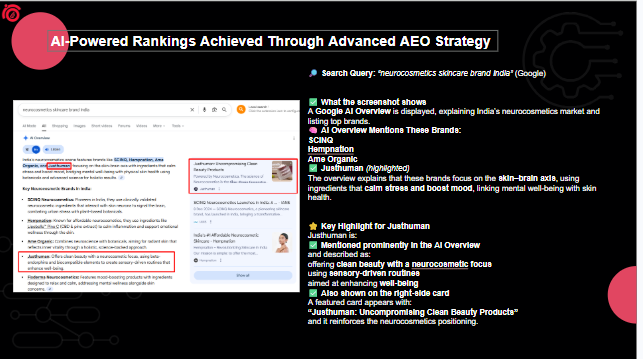
Visibility for “Neurocosmetics Skincare Brand India”
The first documented query was:
“Neurocosmetics skincare brand India.”
The screenshot shows a Google AI Overview explaining the neurocosmetics market in India.
The displayed overview discusses the relationship between the skin and the brain and references brands associated with the subject.
Justhuman appears among the brands highlighted in the AI-generated response.
The search result also displays a Justhuman brand card titled:
“Justhuman: Uncompromising Clean Beauty Products.”
This provided two important visibility opportunities.
First, Justhuman appeared within the traditional search-result environment.
Second, the brand was represented within the AI-generated information displayed for the query.
This combination is valuable because users may encounter the brand through more than one part of the same search experience.
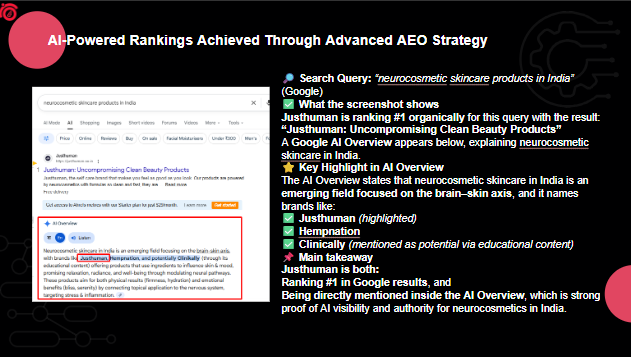
Visibility for “Neurocosmetic Skincare Products in India”
The second screenshot documents the query:
“Neurocosmetic skincare products in India.”
The presentation identifies Justhuman as ranking prominently for this query, with the accompanying campaign annotation reporting a number-one organic position in the captured result.
The screenshot also shows an AI Overview discussing neurocosmetic skincare in India.
Justhuman is explicitly highlighted in the AI-generated response.
Other brands, including Hempnation, are also mentioned in the displayed overview.
The key development was that Justhuman was being surfaced in the context of an emerging category rather than appearing only for its own branded searches.
This indicated an opportunity to strengthen the association between Justhuman and neurocosmetic skincare.
Why This Visibility Matters
Being mentioned in an AI-generated search response can provide a different form of brand exposure from a traditional organic listing.
A conventional search result typically displays a page title, URL and description.
An AI-generated answer may introduce a brand within a broader explanation of a topic.
This can influence how users understand the brand and its relationship with a particular category.
For Justhuman, appearing in an AI Overview associated with neurocosmetics provided an additional layer of discoverability.
It also demonstrated the relevance of building content around emerging subjects rather than relying exclusively on established high-volume product keywords.
From Ranking for a Keyword to Being Associated With a Category
This distinction is central to the campaign.
A ranking is a position within a search result.
A brand association is a broader relationship between the business and a particular subject.
The neurocosmetics visibility demonstrated that Justhuman was appearing in a context where users were looking for brands connected to this category.
That is a meaningful development for a premium brand seeking to strengthen its position in a specialised skincare segment.
ChatGPT Visibility: Justhuman Appears in an AI-Generated Brand Recommendation
The campaign’s AI visibility work extended beyond Google.
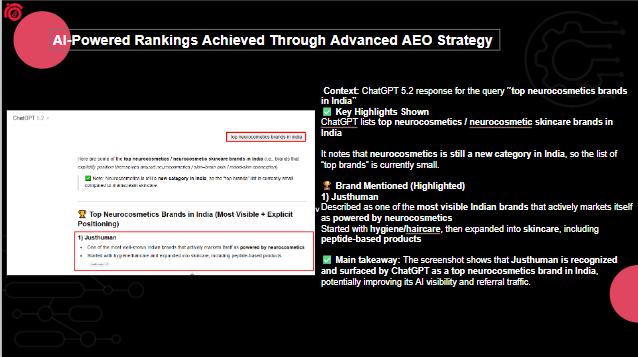
The project presentation also includes a screenshot of a ChatGPT 5.2 response to the query:
“Top neurocosmetics brands in India.”
The screenshot shows Justhuman appearing in the generated response.
This was another important milestone in the campaign because it demonstrated that the brand was being surfaced in a conversational AI discovery environment.
The Search Context
The query was not a direct branded search.
The user was asking for brands associated with neurocosmetics in India.
This is an important distinction.
A user searching for “Justhuman” already knows the brand exists.
A user asking for the leading neurocosmetics brands is looking for recommendations and discovery.
The latter represents an opportunity to reach people who may not have previously encountered the brand.
How Justhuman Was Presented
The screenshot shows Justhuman listed as a brand in the generated response.
The accompanying presentation describes Justhuman as one of the visible Indian brands actively marketing itself around neurocosmetics.
It also references the brand’s broader personal care development, including skincare and peptide-based products.
Why Conversational AI Visibility Is Valuable
Consumers use conversational AI platforms to ask questions that previously required multiple searches.
Examples include:
- Which brands specialise in a particular skincare category?
- What are the leading neurocosmetics brands in India?
- Which products are associated with peptide-based skincare?
- What should I consider when exploring a particular ingredient?
- Which brands offer products within a specific category?
When a brand is included in a relevant AI-generated response, it gains an opportunity to become part of the user’s consideration set.
This does not automatically guarantee a visit or purchase.
However, it represents an additional discovery touchpoint.
For Justhuman, this was particularly valuable because neurocosmetics was an emerging category with a developing search landscape.
The Importance of Contextual Brand Visibility
The ChatGPT screenshot also reinforces an important point about modern search optimisation.
A brand needs to be understood within the context of its products, subject areas and positioning.
Simply mentioning a company name repeatedly across a website is not enough.
The broader digital footprint must communicate what the brand offers and which subjects it is meaningfully associated with.
That is why our AEO strategy was connected to content relevance, technical SEO and authority development.
The objective was to strengthen the overall digital information environment around Justhuman.
How SEO and AEO Worked Together
The most important aspect of this campaign was not any single ranking or AI mention.
It was the relationship between the different optimisation activities.
Traditional SEO and AEO were not treated as competing approaches.
They were complementary parts of the same digital strategy.
Technical SEO Created the Foundation
Technical optimisation helped support:
- Search engine crawling.
- Page accessibility.
- Website navigation.
- Mobile usability.
- Better page experience.
- A more organised website structure.
These improvements supported the website’s ability to present its content effectively.
Search Intent Created Content Relevance
The three Cs helped determine the purpose of each page.
Content type ensured that the correct page format was selected.
Content format helped determine how information should be presented.
Content angle made the information more specific to the user’s expectations.
This created a more purposeful content strategy.
Keyword Mapping Connected Content With Demand
Keyword research connected the brand’s product ecosystem with the queries consumers were using.
This helped establish a framework for targeting commercial and informational searches.
It also created a basis for identifying opportunities in specialised categories.
Authority Development Supported the Wider Strategy
Backlink and referring-domain development formed part of the broader authority-building effort.
This helped strengthen the website’s external digital footprint.
AEO Extended Brand Discovery
The AEO strategy built on the relevance established through the earlier activities.
It focused on the brand’s visibility within AI-generated answers and conversational recommendations.
The documented Google AI Overview and ChatGPT appearances demonstrated the opportunities created by this wider approach.
In practical terms, the strategy connected five important dimensions:
Technical accessibility + Search relevance + Useful content + Digital authority + Brand recognition.
Together, these formed the foundation of the Justhuman campaign.
Campaign Performance: What the Evidence Demonstrates
The project results need to be evaluated across several dimensions.
Focusing exclusively on traffic would overlook the wider transformation achieved through the campaign.
Likewise, focusing only on AI visibility would ignore the technical and organic improvements that supported the brand’s discovery.
The evidence presented in the project report can be organised into the following areas.
Organic Search Exposure
The Google Search Console snapshot displays approximately 2.90 million impressions.
This indicates that Justhuman had substantial visibility across Google’s search results within the selected reporting period.
The number demonstrates the scale of search exposure achieved.
Organic Search Clicks
The same dashboard displays approximately 27.5K clicks.
This shows that search-result visibility translated into a substantial volume of clicks during the reporting period.
Estimated Website Traffic
The third-party traffic report displays approximately 19.4K estimated visits, with a range of 10.3K to 27.9K.
This provides an additional indication of the website’s estimated traffic level in the captured report.
Stronger Visibility Across Product Categories
The keyword comparison includes multiple product and informational themes.
These cover peptides, face masks, foot care, probiotic skincare, haircare and related subjects.
The comparison demonstrates the breadth of the keyword strategy and the importance of monitoring individual search opportunities.
Growth in Referring Domains and Backlinks
The authority reports show upward trends in referring domains and backlinks.
The displayed network graph also identifies the website’s profile as healthy.
These are supporting indicators of the website’s broader authority development.
Google AI Overview Presence
The Google screenshots document Justhuman’s inclusion in AI-generated search responses for neurocosmetics-related queries.
This is an important indicator of AI-powered brand discoverability.
ChatGPT Brand Recognition
The ChatGPT screenshot documents Justhuman’s inclusion in a response to a category-based brand discovery query.
This extended the evidence of visibility into conversational AI search.
Overall Result
The campaign demonstrates progress across the traditional and emerging dimensions of search visibility.
Justhuman’s digital presence was being strengthened not only through keyword targeting but also through content relevance, website improvements, authority development and AI search discoverability.
Challenges We Addressed During the Campaign
A campaign of this nature involves several interconnected challenges.
The Justhuman project required us to address both established SEO requirements and newer search discovery opportunities.
Challenge 1: Competing in a Crowded Personal Care Market
The skincare and personal care market is highly competitive.
Numerous brands compete for visibility around broad terms such as skincare, anti-ageing products, face masks and haircare.
Simply targeting these broad terms would not have provided a sufficiently differentiated strategy.
Our approach:
We explored more specific product and informational queries and connected them with appropriate pages.
We also considered specialised subjects such as peptides and neurocosmetics.
This created additional opportunities for category-specific visibility.
Challenge 2: Connecting Product Discovery With Educational Search
Consumers do not always begin their journey with a product search.
Many first research an ingredient or problem.
Our approach:
We developed a strategy that connected informational content with commercial pages.
This helped create a more complete content environment around the brand’s product categories.
Challenge 3: Matching the Correct Page to Search Intent
A product page cannot always satisfy an informational search, and an article may not be the best destination for a transactional query.
Our approach:
We used the three Cs of search intent to determine the content type, format and angle.
This provided a clearer framework for keyword mapping and content development.
Challenge 4: Improving Technical Accessibility
A website with complex navigation or inefficient loading behaviour may create difficulties for both visitors and search engine crawlers.
Our approach:
We focused on Core Web Vitals, mobile usability, image optimisation, JavaScript execution, server response and website architecture.
Challenge 5: Organising a Growing Content Ecosystem
As the website targets more product and informational queries, maintaining a clear relationship between pages becomes increasingly important.
Our approach:
We worked towards a flatter site structure and a more logical relationship between category pages, product pages and informational resources.
Challenge 6: Establishing Authority
Organic growth in a competitive market requires a broader digital presence.
Our approach:
We incorporated backlink and referring-domain development into the wider campaign and monitored the website’s authority profile.
Challenge 7: Preparing for AI-Powered Discovery
Traditional rankings alone do not capture the full range of ways consumers discover brands.
Our approach:
We expanded the strategy through AEO, focusing on subject relevance, contextual brand associations and visibility in AI-generated search experiences.
Why the Neurocosmetics Achievement Was Particularly Significant
The neurocosmetics results deserve special attention because they represent a different kind of search opportunity.
A conventional SEO campaign may focus on improving the ranking of an existing product category.
That is important, but it does not necessarily establish a distinct brand association.
The Justhuman campaign explored an emerging subject where category recognition and brand discovery could develop together.
Neurocosmetics was a specialised area of skincare discovery.
The search queries documented in the campaign were explicitly category-oriented.
Users were not simply looking for a product name. They were exploring a category and seeking information about the brands operating within it.
This created an opportunity to strengthen Justhuman’s position in that conversation.
Capturing an Emerging Search Category
Emerging categories often provide opportunities for brands to develop visibility before search competition becomes as established as it is in broader product markets.
However, this requires meaningful subject relevance.
A brand cannot establish a credible association with a category simply by inserting the category name into unrelated pages.
The content and broader digital presence must provide context.
We therefore connected the neurocosmetics opportunity with Justhuman’s existing skincare positioning and the wider content strategy.
Improving Brand Discoverability
The Google AI Overview screenshots showed Justhuman being referenced within the context of neurocosmetic skincare in India.
The ChatGPT screenshot provided another example of category-based discovery.
These results helped demonstrate that the brand was gaining visibility in an area where users were looking for information and recommendations.
Creating a Differentiated Digital Position
A brand that is recognised within a specialised category has an opportunity to develop a more distinctive digital identity.
This is particularly valuable in a market where many businesses compete using similar broad skincare terminology.
For Justhuman, neurocosmetics represented an opportunity to build a more specialised association.
The objective was to make the brand discoverable not only through individual product searches but also through broader category-related questions.
The Role of Digital Transformation in Modern SEO
The Justhuman project illustrates why modern SEO should be understood as a broader digital transformation activity.
The term digital transformation is sometimes used to describe large-scale changes involving technology, systems and business operations.
In the context of SEO, it also describes a shift in how businesses organise their digital presence to meet changing consumer expectations.
For Justhuman, the transformation involved several changes.
From Keyword Targeting to Search-Intent Understanding
Rather than targeting keywords in isolation, we considered why people were searching and what they expected to find.
From Individual Pages to a Connected Content Ecosystem
We considered the relationships between product pages, category pages and educational content.
From Basic Website Optimisation to Technical Experience
We included page experience, mobile usability, Core Web Vitals and website architecture in the strategy.
From Backlink Acquisition to Authority Development
We monitored referring domains, backlinks and the broader external profile of the website.
From Traditional Search Rankings to AI Discoverability
We expanded the strategy to include Google AI Overviews and conversational AI platforms.
These changes reflect how search itself is evolving.
Brands need to be discoverable across a wider range of search experiences.
They also need to provide information that can be understood, contextualised and used to answer customer questions.
That is the direction in which we helped move Justhuman’s digital presence.
What Made ThatWare’s Approach Different?
The Justhuman campaign reflects ThatWare’s broader philosophy of treating SEO as an integrated digital growth discipline.
We did not view the project as a task of inserting keywords into pages or building links to improve rankings.
Instead, we connected the technical, content, authority and search discovery requirements of the business.
Several aspects defined our approach.
Strategy Before Execution
We began by understanding the brand’s business objective and the immediate challenges facing its website.
This allowed us to connect individual SEO activities with the wider commercial purpose of the engagement.
Search Intent at the Centre of Content Planning
The three Cs provided a framework for deciding what content needed to be created and how it should be presented.
This made the content strategy more specific and user-focused.
Technical and Content Optimisation Together
We treated website performance and content relevance as connected requirements.
A technically accessible website needs useful content, while useful content needs an effective technical foundation.
Architecture and Discoverability
We considered the website’s structure and navigation as important parts of its search performance.
The objective was to make important pages easier to reach and understand.
Authority as a Long-Term Requirement
We incorporated external authority development into the wider campaign rather than focusing solely on on-page changes.
Preparing for the Next Generation of Search
We recognised that the search landscape was expanding beyond conventional organic results.
The AEO strategy was therefore designed to strengthen Justhuman’s discoverability within AI-powered search experiences.
This integrated methodology is central to how ThatWare approaches complex SEO campaigns.
Lessons From the Justhuman Campaign
The campaign offers several important lessons for e-commerce brands seeking sustainable search growth.
Lesson 1: Search Intent Should Determine Content Strategy
The keyword is only the starting point.
Understanding the user’s objective is what determines the most appropriate page and content approach.
Lesson 2: Product Pages and Educational Content Need Different Roles
A strong e-commerce website should not rely exclusively on commercial pages.
Educational content can support product discovery and establish subject relevance.
Lesson 3: Technical SEO Is Part of the Customer Experience
Website performance, mobile usability and navigation affect how people interact with a brand.
These factors should be considered alongside traditional keyword optimisation.
Lesson 4: Website Architecture Influences Discoverability
A logical page hierarchy helps users and search engines navigate the website.
Important pages should not be unnecessarily buried within a complicated structure.
Lesson 5: Authority Development Requires Consistent Attention
Backlinks and referring domains should be evaluated as part of a broader digital authority strategy.
Quality and relevance matter more than link volume alone.
Lesson 6: Emerging Categories Offer New Opportunities
Specialised topics can create opportunities for brands to establish stronger associations.
However, success requires relevant content and a coherent digital presence.
Lesson 7: AI Visibility Is Becoming an Important Discovery Metric
Google AI Overviews and conversational AI systems are changing how users encounter brands.
Businesses should consider these experiences as part of their wider search strategy.
Lesson 8: Rankings, Traffic and Brand Visibility Should Be Evaluated Together
No single metric explains the complete impact of an SEO campaign.
Clicks, impressions, rankings, traffic estimates, authority indicators and AI visibility provide different perspectives.
A more comprehensive evaluation considers them together.
The Way Forward: Sustaining Justhuman’s Digital Growth
The results documented in this campaign provide a foundation for continued digital development.
However, SEO and AEO are ongoing processes.
Search competition changes, consumer expectations evolve and AI-powered search experiences continue to develop.
To maintain and extend the progress, the next phase should focus on several areas.
Expanding Neurocosmetics Topical Coverage
The neurocosmetics opportunity should be developed into a broader content cluster.
Potential areas include:
- Understanding neurocosmetics.
- The skin-brain connection.
- The role of peptides in skincare formulations.
- Ingredient-led skincare education.
- Neurocosmetic skincare product discovery.
- Questions consumers ask about emerging skincare categories.
The content should remain accurate, appropriately qualified and aligned with the brand’s actual product capabilities.
The objective would be to strengthen topical relevance without making unsupported product or health claims.
Strengthening Product and Category Pages
Existing product and category pages should continue to be evaluated for:
- Search intent alignment.
- Product information quality.
- Unique descriptions.
- Relevant internal links.
- Image optimisation.
- Structured data where appropriate.
- Mobile experience.
- Conversion-focused information.
Improving Click-Through Rate
The Search Console snapshot shows substantial impressions alongside an average CTR of approximately 0.9%.
This creates an opportunity to evaluate pages with high impressions but comparatively low clicks.
Potential improvements include:
- More relevant page titles.
- Better alignment between titles and search queries.
- Clearer meta descriptions.
- Improved search-result messaging.
- Stronger brand differentiation.
These improvements should be evaluated at the page and query level rather than applied indiscriminately.
Continuing Technical Monitoring
Core Web Vitals, mobile usability and crawl accessibility should be monitored regularly.
Technical performance can change as new products, applications, scripts and website features are introduced.
Ongoing monitoring helps identify issues before they affect important pages.
Strengthening Internal Linking
As content coverage expands, internal linking should continue to connect related subjects.
Educational resources should link to relevant product and category pages where appropriate.
Commercial pages should also make it easy for users to discover supporting information.
Monitoring AI Visibility
AI search visibility should be evaluated using a consistent set of relevant queries.
For example:
- Top neurocosmetics brands in India.
- Neurocosmetic skincare brands in India.
- Neurocosmetic skincare products in India.
- Peptide-based skincare brands.
- Probiotic skincare products.
Monitoring should record:
- Whether Justhuman is mentioned.
- Whether it is cited or linked.
- The context in which it appears.
- Which competitors are also mentioned.
- Whether the response accurately represents the brand.
- Changes across repeated tests and platforms.
This will help distinguish isolated AI mentions from more consistent brand visibility.
From Organic Search Growth to AI-Powered Brand Discoverability
The Justhuman project demonstrates what can be achieved when SEO is approached as a coordinated digital transformation strategy.
The objective was never limited to securing individual keyword positions.
We wanted to improve the way Justhuman could be discovered, understood and evaluated by consumers across digital search environments.
To achieve this, ThatWare combined search-intent research, keyword mapping, content development, technical optimisation, website architecture improvements and authority-building activities.
The campaign’s documented results include a strong organic growth phase beginning in June 2025, approximately 19.4K estimated visits in the highlighted third-party traffic report and a Google Search Console snapshot showing approximately 27.5K clicks and 2.90 million impressions.
The website also developed visibility across a range of product and informational search themes.
However, one of the most important developments was the brand’s emergence within AI-powered search experiences.
Justhuman appeared in Google AI Overview results for neurocosmetics-related queries and was included in a ChatGPT response to a query about leading neurocosmetics brands in India.
These developments demonstrated that the campaign was extending beyond traditional search visibility.
The brand was becoming discoverable in the context of a specialised skincare category, creating an additional opportunity to reach users researching and evaluating neurocosmetic products.
For ThatWare, this project represents the importance of combining traditional SEO expertise with an understanding of the changing search landscape.
We helped Justhuman strengthen its digital foundation, improve organic discoverability and enter a new phase of AI-powered brand visibility.
The bigger achievement was not simply helping a website rank.
It was helping a brand become more visible across the places where modern consumers search, research and discover products.
ThatWare: Building Search Visibility Today. Preparing Brands for the Future of AI-Powered Discovery.
About ThatWare
ThatWare is a digital growth and search optimisation company specialising in advanced SEO, Answer Engine Optimisation (AEO), Generative Engine Optimisation (GEO), LLM SEO and AI Search Visibility.
We help businesses strengthen their online presence through data-driven strategies that combine technical SEO, content intelligence, search intent optimisation, digital authority and emerging AI search technologies.
Our approach focuses on understanding how people search, how search engines interpret information and how AI-powered platforms identify relevant brands.
From improving conventional organic rankings to strengthening visibility across AI-generated answers, ThatWare works to help businesses build a more sustainable and discoverable digital presence.
Want to take your brand beyond traditional SEO rankings? Partner with ThatWare to build a search strategy designed for Google, AI-powered search and the next generation of digital discovery.