SUPERCHARGE YOUR ONLINE VISIBILITY! CONTACT US AND LET’S ACHIEVE EXCELLENCE TOGETHER!
Digital transformation is redefining modern SEO campaigns by shifting the focus from traditional keyword rankings to search intent, AI-powered discovery, topical authority and visibility across multiple search platforms. Businesses can no longer depend exclusively on ranking web pages in Google’s conventional search results. They must also ensure that their content is understood, selected and presented by AI-powered search experiences, including Google AI Overviews and generative search platforms such as Google Gemini.
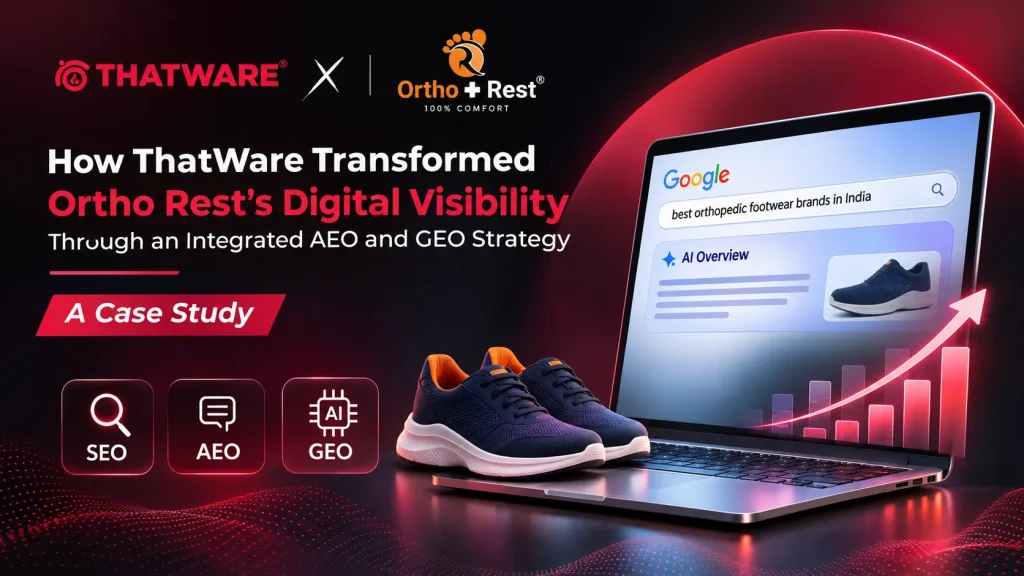
This shift requires a more comprehensive approach to search optimisation. Technical SEO, content quality, keyword targeting, structured information, brand authority and user experience must work together to establish a strong digital presence.
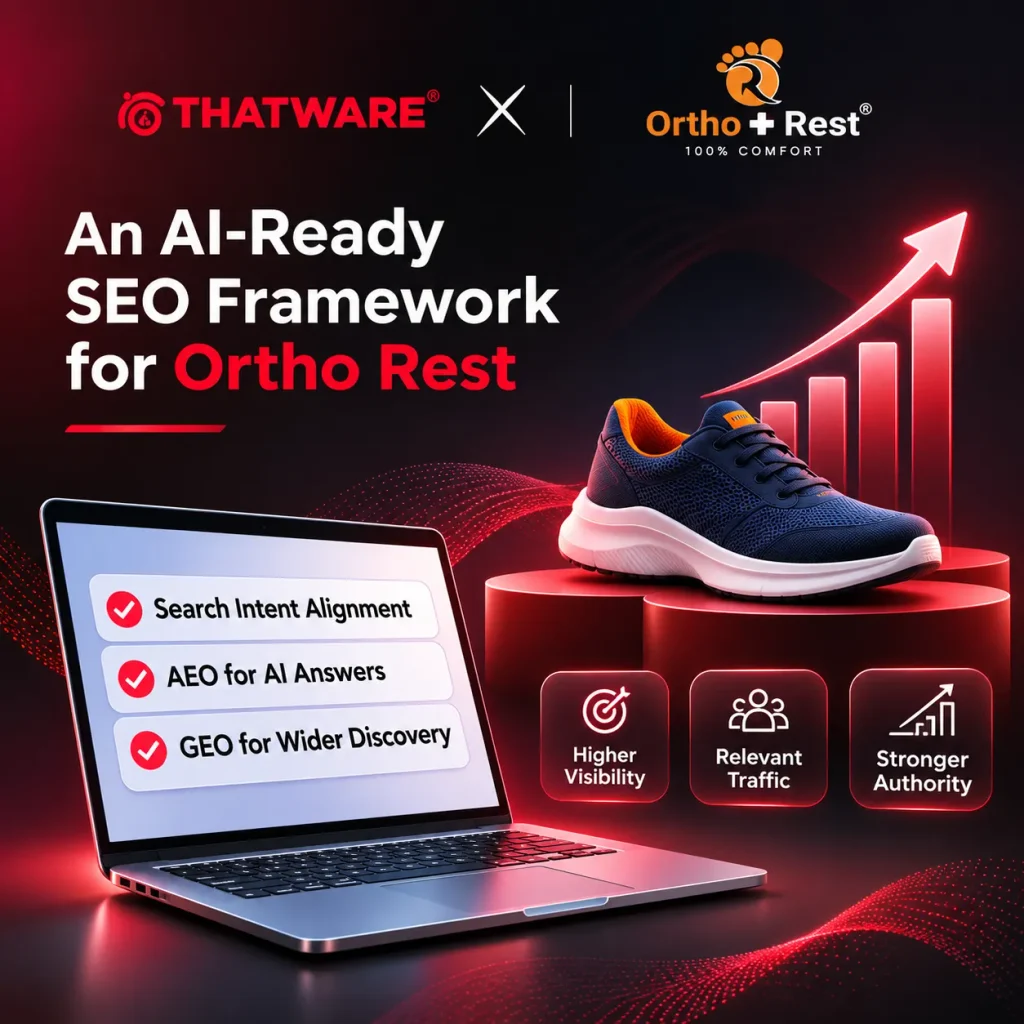
At ThatWare, we approached this changing search environment through an integrated campaign for Ortho Rest, an orthopedic footwear brand focused on improving everyday mobility and comfort. The campaign addressed a competitive search landscape where established footwear brands already had significant visibility and authority.
Instead of concentrating solely on conventional rankings, we developed a strategy around search intent, content relevance, Answer Engine Optimization (AEO) and Generative Engine Optimization (GEO). Our objective was to help the brand become discoverable when users searched for orthopedic footwear recommendations, product information and solutions to specific foot-related requirements.
The campaign demonstrates how advanced SEO can extend beyond traditional search engine result pages (SERPs). It also highlights how businesses can build visibility in AI-generated answers, strengthen topical relevance and identify emerging traffic opportunities through platforms such as Google Gemini.
This case study explores the strategic decisions, execution methods, visibility improvements and broader lessons that businesses can apply when adapting their SEO campaigns to the evolving digital search ecosystem.
Understanding the Digital Transformation of Modern SEO
Search engine optimisation has undergone significant changes over the years. Earlier SEO campaigns largely focused on improving keyword positions, acquiring backlinks and optimising website pages for conventional search results.
These activities remain important, but the way users discover information has become considerably more complex.
People now interact with search engines through conversational queries, voice searches, AI-generated summaries and recommendation-based interfaces. Rather than simply entering a short keyword, users increasingly describe their requirements in complete sentences and expect direct, contextual answers.
For example, a user looking for orthopedic footwear might search for:
- Best orthopedic footwear brands in India.
- Best orthopedic footwear for ladies in India.
- Comfortable footwear for people who spend long hours standing.
- Which footwear provides better support for everyday walking?
- What should I consider before purchasing orthopedic shoes?
These searches represent different levels of intent. Some users are comparing brands, while others are evaluating products or seeking information before making a purchase.
A modern SEO campaign must understand these differences and create content that addresses each requirement.
From keyword positions to search visibility
Traditional SEO measurement often revolves around keyword rankings, impressions, organic traffic and backlinks.
However, these metrics do not always explain how frequently a brand appears across different search experiences.
A website might rank for a particular keyword but remain absent from AI-generated answers. Similarly, a brand might receive visibility through Google AI Overviews without generating a corresponding click to its website.
This creates a need for a broader measurement framework.
Modern SEO should consider:
- Traditional organic search rankings.
- Google AI Overview appearances.
- Featured snippets and other SERP features.
- Brand mentions in AI-generated responses.
- Visibility across generative search experiences.
- Referral traffic from AI platforms.
- Organic engagement and conversion behaviour.
- Brand recognition across informational and commercial queries.
At ThatWare, we recognise that these visibility channels are interconnected. A successful campaign must establish relevance in traditional search while preparing content for AI-powered discovery.
The influence of AI on search behaviour
AI is changing how search engines interpret queries and present information.
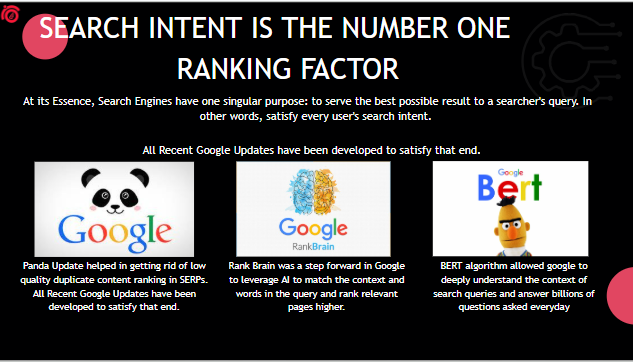
Google’s RankBrain helped advance the interpretation of search queries by using machine learning to understand relationships between words and search intent. BERT further improved Google’s ability to understand contextual relationships within language.
Google’s Panda update also played an important historical role in addressing low-quality content.
These developments illustrate a broader evolution: search engines have progressively become better at understanding information rather than simply matching keywords.
Today’s AI-powered search experiences build on this evolution by interpreting user questions, identifying relevant sources and generating contextual responses.
For businesses, this means content must be useful beyond its primary keyword. It should provide clear answers, explain relevant concepts, establish relationships between topics and demonstrate genuine subject knowledge.
Why digital transformation requires a different SEO approach
Digital transformation does not mean abandoning conventional SEO practices.
Technical optimisation, internal linking, crawlability, backlinks and relevant keywords continue to provide the foundation for organic visibility.
What changes is how these activities are connected.
A modern campaign must combine:
- Technical SEO to ensure search engines can access and understand website content.
- Search intent optimisation to align information with user requirements.
- Content strategy to address informational, commercial and transactional queries.
- AEO to improve the likelihood of content being selected for direct answers.
- GEO to strengthen the brand’s presence across generative search experiences.
- Authority building to establish credibility and topical relevance.
- Performance analysis to understand visibility and traffic across different platforms.
This integrated approach formed the foundation of our Ortho Rest campaign.
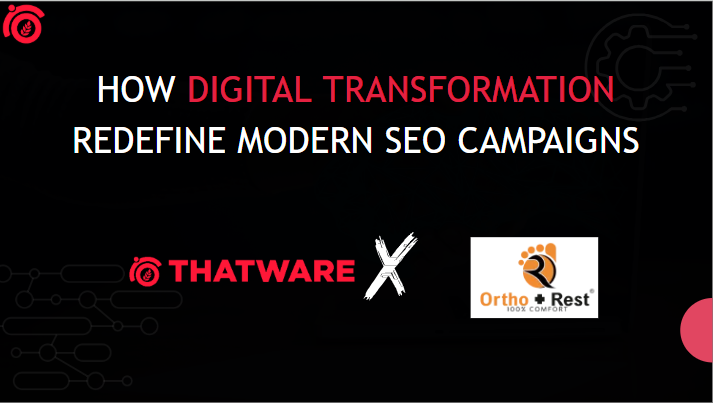
Project Overview: Building Search Visibility for Ortho Rest
Ortho Rest operates in the orthopedic footwear segment, where product functionality, comfort, affordability and customer confidence play important roles in purchasing decisions.
The brand’s objective was to improve everyday mobility and comfort through clinically designed orthopedic footwear that supports joint health, posture and pain relief.
Its positioning focused on several important customer considerations:
- Affordable orthopedic footwear.
- Quality materials and product construction.
- Accessibility across India.
- Doctor-inspired product design.
- Customer-centric service.
- Long-term comfort and lifestyle requirements.
However, establishing organic visibility in this market required more than optimising product pages.
The orthopedic footwear segment contains established brands, specialised retailers and informational websites competing for similar search terms. Many of these competitors already have strong keyword profiles, extensive product catalogues and established domain authority.
Consequently, Ortho Rest needed a strategy that could differentiate its content and improve its visibility across both conventional and AI-powered search environments.
Business objective
Our primary objective was to improve the brand’s digital discoverability by positioning its content for relevant orthopedic footwear searches.
We focused on connecting the brand with users who were actively researching products, comparing footwear options or looking for recommendations.
The campaign aimed to:
- Improve visibility for high-intent orthopedic footwear keywords.
- Establish stronger topical relevance around orthopedic footwear.
- Improve content eligibility for Google AI Overviews.
- Strengthen the brand’s presence in AI-generated search responses.
- Develop content aligned with informational and commercial search intent.
- Improve visibility across location-specific search opportunities.
- Identify traffic opportunities beyond conventional Google organic search.
These objectives required a coordinated SEO and AEO strategy supported by content optimisation and AI visibility analysis.
Immediate challenges
We identified several challenges that influenced the campaign’s direction.
1. Strong competition from established brands
The orthopedic footwear category contains businesses with established market recognition and existing search visibility. Competing directly through generic product keywords would require a well-developed authority and content strategy.
2. High-intent keyword competition
Keywords such as “Best orthopedic footwear brands in India” and “Best orthopedic footwear for ladies in India” attract users who may already be evaluating purchasing options.
Ranking for these terms requires content that provides meaningful comparisons, relevant product information and a clear explanation of the subject.
3. Content differentiation
Generic descriptions of footwear benefits would not provide sufficient differentiation. The campaign needed content that addressed specific customer requirements and answered questions with greater contextual relevance.
4. Building topical authority
The website needed to demonstrate relevance across different aspects of orthopedic footwear, including comfort, product selection, footwear requirements and category-specific information.
5. Improving AI search visibility
Traditional keyword optimisation alone could not address the growing importance of AI-generated search experiences.
We therefore needed to organise content in a way that made its subject, relevance and answers easier for search systems to interpret.
6. Educating users through content
Orthopedic footwear is a product category where customers may need additional information before purchasing. Content needed to explain product characteristics and selection considerations without relying entirely on promotional messaging.
These challenges shaped the direction of our campaign.
Search Intent: The Foundation of Our SEO Strategy
One of the most important decisions in the Ortho Rest campaign was to make search intent the starting point of content development.
A keyword provides information about what a user is searching for. Search intent helps explain why the user is searching for it.
Two users might search for similar orthopedic footwear terms but expect entirely different information.
For example:
- Someone searching for “what is orthopedic footwear” may want a basic explanation.
- Someone searching for “best orthopedic footwear brands in India” may be comparing different brands.
- Someone searching for “best orthopedic footwear for ladies in India” may want category-specific recommendations.
- Someone searching for a particular product may be closer to making a purchase.
Creating the same type of page for all these queries would reduce content relevance.
We therefore focused on understanding the requirements behind each target keyword before deciding what type of content should be created or optimised.
Google’s evolving understanding of search intent
Search engines have progressively improved their ability to understand the context of user queries.
Historically, updates such as Panda, RankBrain and BERT contributed to different aspects of search quality and language understanding.
Today, AI-powered search experiences make contextual relevance even more important.
Search engines increasingly evaluate how well a page addresses the underlying question rather than simply whether it contains a particular keyword.
For example, an article targeting “Best orthopedic footwear brands in India” should not merely repeat that phrase throughout the content.
It should provide relevant information about:
- What makes orthopedic footwear different.
- What customers should evaluate before purchasing.
- Which product characteristics are important.
- How footwear requirements differ between users.
- What factors influence comfort and everyday usability.
- Which considerations matter when comparing brands.
This gives search engines and users a more complete understanding of the subject.
The 3Cs of search intent
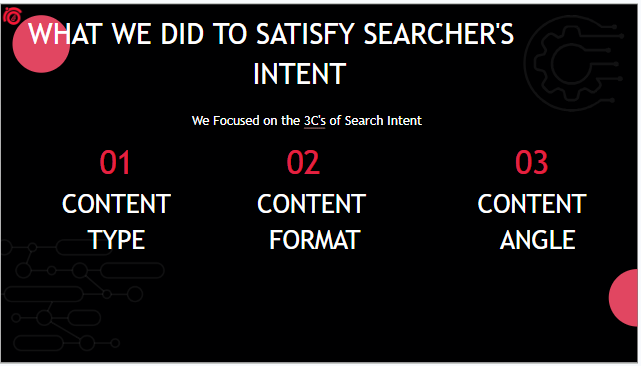
We structured our content planning around three important elements of search intent.
Content Type
The first consideration was determining what type of content would best satisfy the user’s requirement.
Depending on the query, the appropriate content might be:
- Informational articles.
- Product category pages.
- Comparison-based articles.
- Buying guides.
- Frequently asked questions.
- Product-specific descriptions.
For example, a user searching for the best orthopedic footwear brands would benefit more from a detailed comparison or recommendation-based article than a generic product description.
Similarly, a user searching for specific footwear requirements might need a detailed buying guide.
Content Format
The second consideration was deciding how the information should be presented.
Different search queries require different presentation formats.
We considered formats such as:
- Structured informational articles.
- Comparative sections.
- Numbered recommendations.
- Feature-based explanations.
- Short question-and-answer sections.
- Lists of relevant product characteristics.
The purpose was to make information easier to understand, navigate and extract.
A well-organised article can communicate its main answer quickly while still providing sufficient detail for users who want to explore the subject further.
Content Angle
The third consideration was identifying the most useful perspective for addressing the query.
A generic article about orthopedic footwear may cover the basic definition and benefits.
However, a more specific angle could focus on the best orthopedic footwear options for women, the factors involved in selecting orthopedic footwear in India or the characteristics customers should compare before purchasing.
This distinction helps create more relevant content.
The 3Cs allowed us to move beyond keyword placement and develop pages around the actual requirements of the target audience.
Content Optimisation: Making Search Intent Actionable
After identifying the search intent, the next step was to translate it into content that could satisfy both users and search systems.
Content optimisation was not limited to adding keywords to existing paragraphs.
We examined the relationship between the target query, the information required to answer it and the format that would make that information accessible.
Prioritising relevant information
The most important information should appear where users can find it easily.
For a recommendation-based search query, this means presenting a clear introductory answer before moving into detailed explanations.
For an informational query, the content should explain the subject directly and then develop the supporting information.
This approach also makes the page easier for AI-powered systems to interpret.
A well-structured article should answer:
- What is the subject?
- Why does it matter?
- What should the reader understand?
- Which factors influence the decision?
- What practical information can help the reader?
We used these principles to improve the relevance and organisation of content.
Improving content depth without unnecessary repetition
Content depth is not determined by word count alone.
A lengthy article can still provide limited value if it repeats the same information across multiple sections.
For competitive topics, content needs to address the important dimensions of the subject.
For orthopedic footwear, this could include:
- Foot support and comfort considerations.
- Material quality.
- Sole construction.
- Everyday usability.
- Footwear selection requirements.
- Differences between product categories.
- Factors influencing purchasing decisions.
Each section should contribute something useful to the overall topic.
We focused on making the content more informative and contextually relevant rather than increasing its length through unnecessary repetition.
Improving heading structure
Heading hierarchy helps readers understand how information is organised.
It also provides search systems with a clearer representation of a page’s subject and supporting topics.
Our content approach prioritised:
- A single descriptive H1.
- Clearly defined H2 sections.
- Relevant H3 subsections.
- Descriptive headings that communicate the information below them.
- Short paragraphs for easier reading.
- Lists where multiple related points need to be explained.
This structure makes important information easier to locate.
It also creates logical sections that can independently address specific user questions.
Using questions to improve content relevance
Many users search through questions rather than short keywords.
For example:
- What is orthopedic footwear?
- Who should consider orthopedic footwear?
- How do I choose comfortable orthopedic shoes?
- What should I check before purchasing orthopedic footwear?
- Are orthopedic footwear options available for women?
Including relevant questions within an article helps address different stages of the user’s research process.
However, questions should only be included when they genuinely contribute to the subject.
The objective is not to turn every paragraph into an FAQ. It is to ensure that the article addresses the important information users are looking for.
AEO Strategy: Moving Beyond Traditional Search Rankings
Answer Engine Optimization became an important component of the Ortho Rest campaign.
AEO focuses on improving how effectively content addresses questions and how suitable that information is for answer-oriented search experiences.
Traditional SEO primarily aims to improve the discoverability and ranking of web pages.
AEO extends this objective by helping content become more accessible to search features that provide direct answers.
These include:
- Featured snippets.
- Google AI Overviews.
- Question-based search results.
- Other answer-oriented search experiences.
The growing importance of these features means that brands need to consider how their information is interpreted and presented beyond conventional blue-link results.
What makes content suitable for answer engines?
Answer engines need information that is relevant, understandable and sufficiently supported by context.
Content that addresses a question directly provides a useful starting point.
For example, an article targeting “Best orthopedic footwear brands in India” should establish its subject immediately and provide a clear explanation of the criteria relevant to the comparison.
A page should avoid making users search through several unrelated paragraphs to understand its primary point.
We focused on the following content characteristics:
Direct answers
Important questions should receive clear answers without unnecessary introductions.
Contextual explanations
Answers should include sufficient supporting information to explain why a particular recommendation or consideration matters.
Logical organisation
Headings, lists and concise sections help establish relationships between questions and answers.
Topic relevance
The surrounding content should support the primary subject instead of introducing unrelated information.
Credibility
Information involving product benefits, health-related claims or recommendations should be accurate and appropriately supported.
These principles make content more useful to readers while improving its suitability for answer-oriented search experiences.
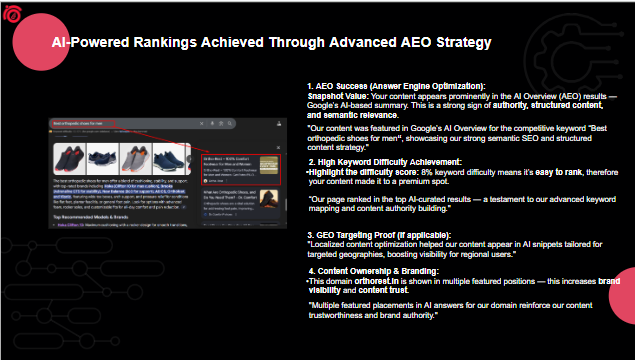
Google AI Overview visibility
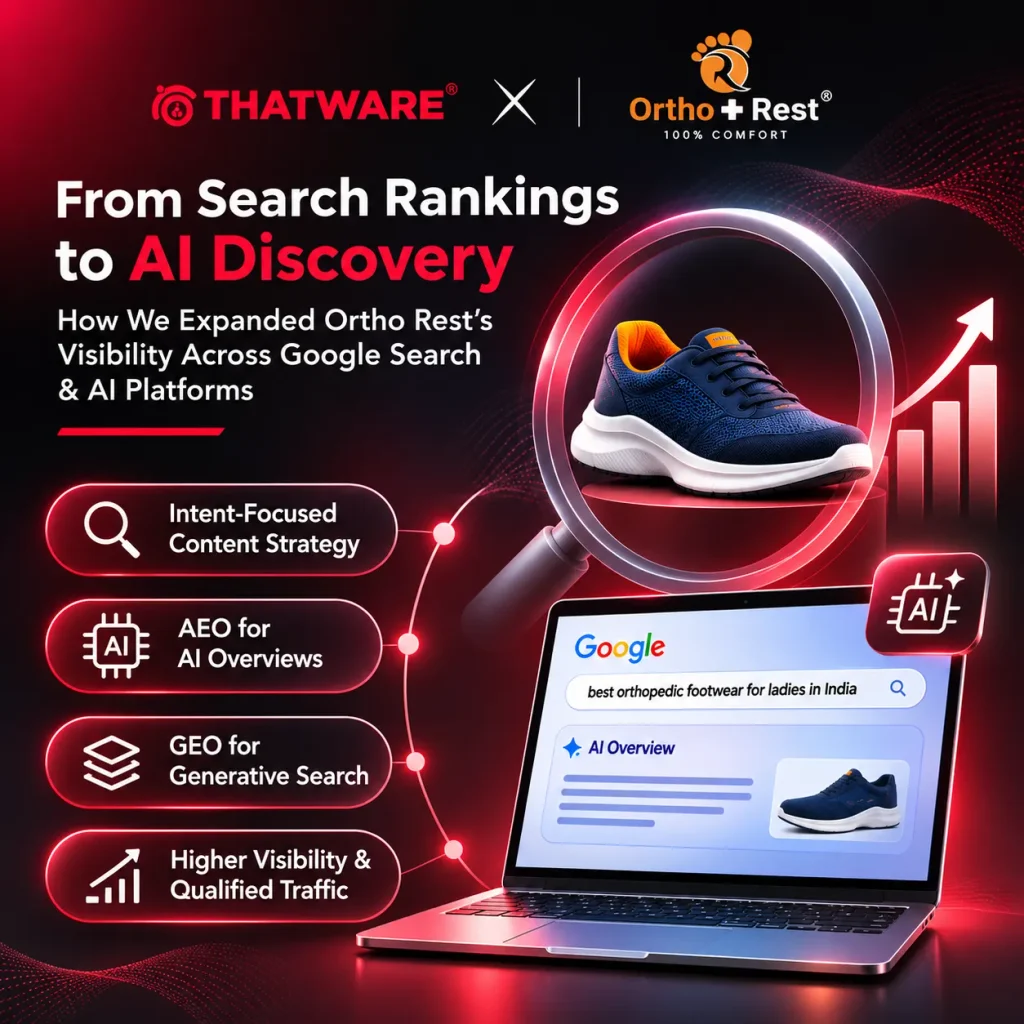
One of the notable outcomes highlighted in our Ortho Rest campaign was visibility within Google’s AI-powered search experience.
Our campaign achieved AI Overview visibility for the targeted orthopedic footwear topic, including the competitive query:
“Best orthopedic footwear brands in India.”
This was significant because the search experience presented the brand’s content in an AI-generated answer environment rather than relying exclusively on conventional organic listings.
The result demonstrated that the content was relevant enough to appear in a search experience designed to synthesise information for users.
AI Overview visibility also creates an opportunity to introduce a brand to users during their research process.
A user might not initially know Ortho Rest. However, encountering relevant brand information while researching orthopedic footwear can contribute to brand recognition and further exploration.
It is important to distinguish visibility from conversion. An AI Overview appearance does not automatically mean that a user will visit the website or make a purchase.
Nevertheless, it represents an important additional discovery opportunity.
Why AI Overview visibility requires more than keyword placement
Appearing in AI-generated search experiences is not achieved through a single optimisation technique.
There is no guaranteed formula for securing inclusion in Google AI Overviews.
Content relevance, source quality, subject coverage and the broader search context can all influence which information is surfaced.
Our approach focused on strengthening the underlying content rather than attempting to manipulate a specific search feature.
We prioritised:
- Directly addressing the target query.
- Developing supporting topical information.
- Improving the relationship between headings and answers.
- Making important product-related information accessible.
- Strengthening the overall content structure.
- Aligning the page with the actual search intent.
These practices provide a stronger foundation for answer-oriented visibility.
Keyword Strategy: Targeting High-Intent Orthopedic Footwear Searches
Keyword selection was another important part of the campaign.
The orthopedic footwear market contains a wide range of search queries, from general informational terms to highly specific product and recommendation searches.
We prioritised keywords that aligned with the brand’s commercial positioning and audience requirements.
The campaign included terms such as:
- Best orthopedic footwear brands in India.
- Best orthopedic footwear for ladies in India.
- Best orthopedic footwear for women in India.
These keywords were valuable because they reflected users who were actively exploring orthopedic footwear options.
Why high-intent keywords matter
Not every keyword contributes equally to business objectives.
A keyword may generate considerable search volume but attract visitors who have little interest in the products or services a business offers.
On the other hand, a more specific keyword may attract users with a clearer requirement.
Consider the difference between:
“Footwear”
and
“Best orthopedic footwear for ladies in India.”
The first query is extremely broad. It does not clearly communicate what the user wants.
The second query indicates a specific product category, audience and geographic market.
This additional context makes it easier to understand the user’s likely requirement.
For businesses competing in specialised markets, targeting relevant high-intent keywords can be more valuable than pursuing broad traffic without considering its relevance.
Balancing informational and commercial intent
An effective keyword strategy should not focus exclusively on transactional searches.
Users often move through several stages before making a purchase.
| Search stage | Example query | Content requirement |
| Awareness | What is orthopedic footwear? | Informational explanation |
| Research | Benefits of orthopedic footwear | Detailed educational article |
| Consideration | Best orthopedic footwear brands in India | Comparison and recommendation content |
| Specific evaluation | Best orthopedic footwear for ladies in India | Audience-specific buying guide |
| Purchase | Ortho Rest footwear | Product and category information |
This structure helps businesses develop content for different stages of the customer journey.
It also provides opportunities to connect informational pages with relevant product pages through internal links.
Semantic relevance and supporting keywords
A modern keyword strategy must consider more than exact-match phrases.
Search engines understand relationships between concepts, products and user requirements.
For orthopedic footwear, relevant supporting concepts might include:
- Foot support.
- Everyday comfort.
- Footwear materials.
- Sole construction.
- Arch support.
- Walking comfort.
- Product durability.
- Footwear selection.
- Orthopedic shoe features.
These supporting terms should be used naturally when they are relevant to the page.
The objective is to build a complete explanation of the subject rather than repeat the primary keyword unnecessarily.
Geographic relevance
The Ortho Rest campaign also considered India-specific search opportunities.
Location is particularly important for brands targeting a defined geographic market.
Users searching for orthopedic footwear in India may have different product availability, pricing and purchasing considerations from users in other countries.
Our content strategy incorporated this geographic context into the targeted keyword approach.
This helped align the campaign with the brand’s intended market and the requirements expressed in location-specific searches.
GEO Strategy: Building Visibility Across Generative Search Experiences
While AEO focuses on answer-oriented search experiences, Generative Engine Optimization addresses a broader challenge: improving a brand’s visibility and representation within AI-generated responses.
Generative search systems do not necessarily present information in the same way as conventional search engines.
They may combine information from multiple sources to produce a contextual response.
For businesses, this creates an additional requirement.
Their content must communicate the brand’s subject matter clearly, establish topical relevance and provide useful information that generative systems can interpret.
Understanding the difference between SEO, AEO and GEO
Although these approaches overlap, each addresses a different aspect of digital visibility.
| Optimisation approach | Primary objective | Important focus |
| SEO | Improve organic search visibility | Rankings, technical health, content and authority |
| AEO | Improve visibility in direct-answer experiences | Questions, concise answers and structured content |
| GEO | Strengthen visibility in generative search experiences | Context, topical relevance, brand representation and source credibility |
These approaches should not be treated as isolated marketing activities.
Traditional SEO provides the foundation for discoverability.
AEO helps organise information around direct user questions.
GEO expands the focus to how brands and their information are represented in generative responses.
Why topical authority matters in generative search
A brand should not be understood through a single keyword or isolated page.
Its website needs to establish a meaningful relationship with its primary subject area.
For Ortho Rest, this meant developing relevant information around orthopedic footwear rather than relying only on product names.
A stronger topical structure can include:
- Orthopedic footwear characteristics.
- Product selection considerations.
- Comfort-related features.
- Footwear options for different audiences.
- Differences between footwear categories.
- Product material and construction information.
- Answers to common customer questions.
This creates a more comprehensive information environment around the brand’s offerings.
It also helps users understand the brand beyond an individual product listing.
Establishing a consistent brand identity
Generative search experiences can introduce businesses to users through summaries, recommendations and contextual responses.
For that reason, a brand’s digital information should remain consistent.
Its website should clearly communicate:
- What the business offers.
- Which product categories it serves.
- Who its products are intended for.
- What distinguishes its offerings.
- Which customer requirements it addresses.
Brand descriptions, product information and supporting content should reinforce the same positioning.
For Ortho Rest, the central identity revolved around orthopedic footwear, comfort, affordability and accessibility.
Maintaining consistency around these themes helped create a clearer relationship between the brand and its subject area.
Localised content and generative visibility
Geographic relevance was another component of our approach.
Users searching for products within a particular country may expect information that reflects local availability and purchasing requirements.
We considered India-specific content opportunities to improve the relevance of the campaign for its intended audience.
This approach can be useful for businesses operating in competitive national markets.
However, localisation should involve more than adding a country name to a heading.
Useful localised content should reflect relevant audience needs, market conditions and product availability.
Campaign Achievement: AI-Powered Rankings Through Advanced AEO Strategy
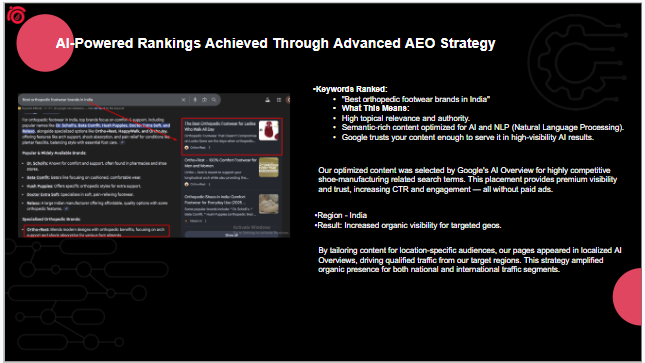
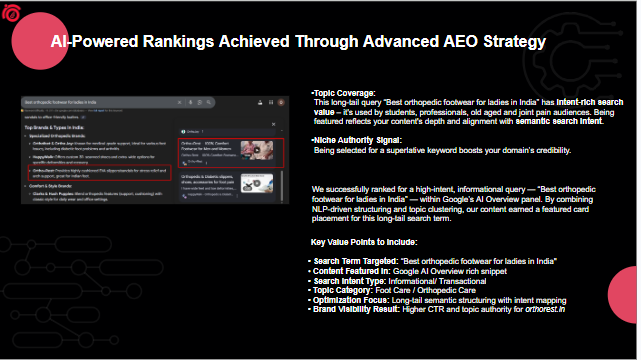
A notable result from the Ortho Rest campaign was the visibility achieved through AI-powered search experiences.
The presentation documented the brand’s appearance in Google’s AI Overview for a competitive orthopedic footwear search.
The campaign also highlighted visibility for additional audience-specific searches.
These results demonstrate how an integrated strategy can extend a brand’s discoverability beyond traditional keyword rankings.
Visibility for competitive category searches
One of the target queries was:
“Best orthopedic footwear brands in India.”
This search has a clear commercial investigation component.
Users searching for this term are likely to be exploring available brands and evaluating which options deserve further consideration.
Our content strategy focused on improving the page’s relevance to this requirement.
The resulting AI Overview appearance provided an additional route through which users could encounter the brand.
The significance of this achievement lies in the type of visibility secured.
Instead of depending entirely on users clicking through conventional organic listings, Ortho Rest gained exposure within an AI-generated search experience.
Visibility for women-focused searches
Another important campaign target was:
“Best orthopedic footwear for ladies in India.”
This keyword provided an opportunity to address a more specific audience requirement.
Rather than treating all orthopedic footwear searches as identical, we considered the need for content that directly addressed women-focused footwear searches.
The campaign presentation documented visibility for this informational query within Google’s AI Overview.
This demonstrated the value of developing content around specific audience segments instead of relying exclusively on broad category keywords.
Why audience-specific content improves relevance
Audience-specific content helps businesses address the practical requirements of different user groups.
However, creating separate pages for every possible keyword variation is not necessarily the right approach.
The decision should depend on whether the audience has a genuinely different information requirement.
For example, a women-focused footwear article might discuss:
- Different footwear styles.
- Everyday usability.
- Comfort considerations.
- Product selection factors.
- Relevant design requirements.
- Features that customers may want to compare.
The content should provide distinct value rather than simply changing a few words in an existing article.
This is particularly important when developing pages for competitive search terms.
Using Content Coverage to Establish Topical Authority
Topical authority is an important part of building sustainable organic visibility.
It refers to the depth and relevance of a website’s coverage of a subject.
A business that publishes one isolated article about orthopedic footwear may have limited topical coverage.
A website that provides useful information across related subjects has more opportunities to demonstrate its understanding of the category.
For Ortho Rest, we considered the relationship between the main target keywords and their supporting topics.
Developing a connected content structure
A connected content structure can include:
Core category content
Pages explaining the brand’s primary product categories and their features.
Informational content
Articles addressing common questions about orthopedic footwear and product selection.
Comparison content
Content helping users evaluate relevant footwear characteristics and available options.
Audience-specific content
Pages addressing specific product requirements and customer groups.
Supporting educational content
Articles explaining materials, construction, comfort and other relevant purchasing considerations.
Each content category should have a defined purpose.
The objective is to build a useful information ecosystem instead of publishing disconnected pages targeting similar keywords.
Internal linking and contextual relationships
Internal linking helps connect related pages within a website.
For example, an informational article about orthopedic footwear could link to a relevant category page.
A buying guide could direct users to product pages that provide additional information about specific offerings.
These connections help users move from research to product evaluation.
They also help search engines understand relationships between pages.
We recommend using descriptive anchor text that accurately communicates the destination page’s subject.
Internal links should be added because they provide contextual value, not simply to increase the number of links on a page.
Avoiding keyword cannibalisation
As a website develops more content, it may unintentionally create multiple pages targeting the same search intent.
This can make it difficult for search engines to identify the most relevant page for a particular query.
For example, creating several articles with almost identical titles around the best orthopedic footwear for women could result in overlapping content.
A better approach is to establish a primary page for a particular search intent and use supporting articles to address genuinely different questions.
Where content overlap already exists, businesses should evaluate whether pages need consolidation, repositioning or improved internal linking.
This keeps the website’s content structure more focused.
Google Gemini Traffic: Understanding Visibility Beyond Traditional Organic Search
One of the most interesting observations in the Ortho Rest campaign was the traffic contribution from Google Gemini.
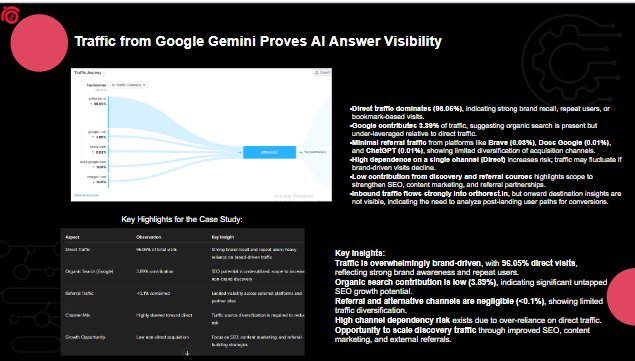
The campaign presentation included a traffic acquisition report that showed Gemini as the dominant source within the displayed traffic distribution.
<em>The figures below reproduce the percentages shown in the campaign presentation. They should be interpreted within the reporting period and analytics configuration used for that report, rather than as universal traffic benchmarks.</em>
Traffic acquisition observations
The presentation reported the following distribution:
| Traffic source | Reported share |
| Google Gemini | 86.06% |
| Google Organic Search | 8.89% |
| Referral Traffic | Less than 0.1% |
| Direct Traffic | Small or negligible contribution in the displayed report |
<em>Source: Ortho Rest campaign traffic acquisition visual supplied in the case study presentation.</em>
The most notable observation was the reported 86.06% contribution from Google Gemini.
Google organic search accounted for 8.89%, while conventional referral traffic contributed less than 0.1%.
These figures highlight an important measurement opportunity.
Businesses should examine where their website visitors originate instead of assuming that all meaningful discovery happens through traditional organic search.
Why Gemini traffic deserves attention
AI-powered platforms are becoming additional discovery environments.
Users may encounter information through conversational interactions and then visit a website to explore a product, service or topic in greater detail.
For businesses, this introduces a traffic channel that should be monitored separately.
A website receiving visits from generative search platforms may be benefiting from a different discovery journey than a website relying exclusively on traditional search listings.
The traffic report in the Ortho Rest presentation provides an example of why this distinction matters.
It suggests that AI-related discovery was an important component of the observed acquisition mix during the reporting period.
However, traffic attribution needs to be interpreted carefully.
The percentage alone does not establish the number of visitors, the reporting duration, the quality of sessions or the conversion contribution.
Those factors should be reviewed alongside the source distribution.
What businesses should measure in AI referral traffic
Businesses evaluating AI-related traffic should monitor several metrics.
Sessions from AI platforms
This shows how many sessions are attributed to identifiable generative platforms.
Engagement rate
This helps determine whether visitors explore the website after arriving.
Average engagement time
This provides additional context about the amount of time visitors spend interacting with the website.
Landing pages
Identifying which pages receive AI referral visits can help businesses understand which subjects attract attention.
Conversion events
Form submissions, enquiries, purchases and other relevant actions indicate whether AI referral visitors contribute to business objectives.
Returning visitors
This can provide insight into whether AI platforms are introducing new audiences or encouraging repeat exploration.
These measurements are more informative than looking at traffic percentages in isolation.
Why traffic attribution needs proper validation
AI referral reporting can vary according to analytics configuration, referral handling, session attribution and platform behaviour.
Not every AI-assisted discovery journey will necessarily appear under a clearly identifiable AI referral source.
Some users may see a recommendation, search for the brand separately and visit through direct or organic search.
Others may interact with several platforms before reaching the website.
Therefore, AI referral reporting should be considered one part of a wider visibility analysis.
Businesses should compare analytics data with search visibility observations, landing-page performance and conversion behaviour.
Why AI Visibility and Organic Rankings Should Work Together
A common mistake in modern SEO discussions is treating AI visibility as a replacement for conventional search rankings.
This is not how a sustainable search strategy should be developed.
Traditional organic search remains an important discovery channel.
AI-powered search introduces additional opportunities, but both environments depend on the quality and relevance of the underlying information.
For Ortho Rest, the campaign was designed around the relationship between traditional search and AI-generated discovery.
Organic rankings provide a foundation
Traditional SEO helps businesses make their websites discoverable through relevant search queries.
It involves:
- Technical website optimisation.
- Search-friendly information architecture.
- Relevant keyword targeting.
- High-quality content.
- Internal linking.
- Backlink development.
- User experience improvements.
- Website performance monitoring.
These activities remain essential.
A technically weak website with poorly organised content will struggle to establish sustainable search visibility, regardless of how much attention is given to AI optimisation.
AEO expands the ways users encounter content
AEO introduces another visibility opportunity.
When content provides a useful answer to a relevant question, it may become eligible for answer-oriented search features.
This can introduce a business to users who may not otherwise have visited its website through a conventional organic listing.
The important point is that answer visibility should be earned through useful and relevant content.
GEO strengthens brand discovery in generative environments
GEO takes the strategy further by considering how a brand is represented in generative responses.
It encourages businesses to develop clear, consistent and useful information about their products, services and expertise.
This can support discoverability across AI-powered environments.
However, inclusion in generative responses is not guaranteed, and businesses should not treat any individual AI platform as a permanent source of traffic.
The integrated approach
The three disciplines can be viewed as connected components of a broader digital visibility strategy.
| Activity | What it contributes |
| SEO | Search engine accessibility and organic discoverability |
| AEO | Direct-answer relevance and answer-oriented visibility |
| GEO | Brand and content discoverability in generative experiences |
| Analytics | Performance measurement across acquisition channels |
| Content strategy | Information quality, topical coverage and user relevance |
This integrated model is more adaptable than a strategy built entirely around a limited set of keyword positions.
The Role of Technical SEO in an AI-Ready Campaign
Content quality is essential, but it is only one part of a successful SEO campaign.
Technical SEO ensures that search engines can access, crawl and interpret the website effectively.
A website may publish excellent content, but technical problems can limit its visibility.
For a brand such as Ortho Rest, technical optimisation should support both informational and commercial pages.
Crawlability and indexability
Search engines need to access relevant website pages before they can consider them for indexing.
Businesses should regularly review:
- Robots.txt configuration.
- XML sitemap accuracy.
- Indexability directives.
- Canonical tags.
- Redirect chains.
- Broken internal links.
- Orphan pages.
- Duplicate URLs.
Product and category pages deserve particular attention because technical errors can affect important commercial landing pages.
Website speed and user experience
Users expect websites to load efficiently and provide a smooth browsing experience.
Slow-loading pages, unstable layouts and difficult navigation can negatively affect the user journey.
Businesses should monitor Google’s Core Web Vitals and other relevant performance indicators.
For ecommerce and product-focused websites, particular attention should be given to:
- Mobile usability.
- Image optimisation.
- Page loading behaviour.
- Layout stability.
- Navigation.
- Product information accessibility.
- Checkout and enquiry processes.
A website should make it easy for visitors to move from discovering a product to understanding it and taking the next step.
Structured data
Structured data can help search engines interpret specific information about a page.
For relevant pages, businesses may consider suitable schema types such as:
- Organization.
- Product.
- BreadcrumbList.
- Article.
- WebSite.
The selection should depend on the actual content and the requirements of the page.
Structured data must accurately represent visible website information.
It does not guarantee rich results or AI Overview inclusion, but it can provide clearer machine-readable context.
Maintaining product information accuracy
Product-focused websites should ensure that important details remain consistent.
Information such as product names, descriptions, prices, availability and specifications should be accurate.
Where applicable, the same information should be maintained across the website and relevant external product feeds.
For an orthopedic footwear brand, inaccurate product information could create confusion during the purchasing process.
Maintaining consistency is therefore important for both customer experience and search performance.
Building Trust and Credibility in Health-Related Product Categories
Orthopedic footwear occupies a category where customers may associate product selection with comfort, mobility, posture and foot health.
This makes content accuracy particularly important.
Businesses should avoid making unsupported medical claims or presenting general product benefits as guaranteed clinical outcomes.
A responsible content strategy should distinguish between product characteristics, intended use and medically established benefits.
Demonstrating experience and expertise
Content becomes more useful when it includes information that helps readers make informed decisions.
For an orthopedic footwear business, this might include:
- Clear product specifications.
- Material details.
- Sole construction information.
- Design explanations.
- Accurate sizing guidance.
- Product usage information.
- Answers to common customer questions.
Where appropriate, expert input can strengthen content credibility.
Medical or health-related statements should be reviewed by suitably qualified professionals.
Establishing transparent product information
Users should be able to understand what a product offers without relying on vague promotional statements.
For example, instead of simply describing footwear as comfortable, a business can explain relevant construction features and the intended purpose of those features.
Product pages should provide enough information for customers to compare available options.
Transparency helps establish trust and supports better purchasing decisions.
Strengthening brand credibility
Trust is influenced by more than the content on a single landing page.
Businesses should maintain consistent brand information across their website and relevant digital properties.
Important considerations include:
- Accurate company information.
- Clear contact details.
- Transparent policies.
- Genuine customer reviews.
- Consistent product descriptions.
- Relevant expert contributions.
- Reliable customer support information.
For brands operating in competitive product categories, these elements contribute to a stronger overall digital presence.
Measuring the Success of a Modern SEO Campaign
A successful SEO campaign should be evaluated through a combination of visibility, engagement and business performance metrics.
Keyword rankings remain useful, but they do not tell the complete story.
The Ortho Rest presentation highlights why broader performance analysis is necessary, particularly when AI-powered search contributes to website discovery.
Traditional SEO metrics
Businesses should continue monitoring:
Organic impressions
These indicate how frequently website pages appear in traditional search results.
Organic clicks
These show how often users visit the website from conventional organic listings.
Keyword positions
These help evaluate visibility for important search terms.
Organic landing pages
These identify which pages attract search traffic.
Click-through rate
CTR helps assess how effectively search appearances encourage users to visit the website.
AEO performance metrics
AEO performance requires additional observations.
Businesses can monitor:
- AI Overview appearances for selected queries.
- Featured snippet visibility.
- Relevant answer-oriented search features.
- Target query coverage.
- Brand mentions in search-generated answers.
- Changes in visibility across different search environments.
Not every AI feature provides a complete or consistently accessible reporting dataset.
Therefore, manual search observations and structured tracking may be necessary alongside available analytics tools.
GEO performance metrics
Generative search visibility can be assessed through a broader set of observations.
These may include:
- Brand mentions across relevant AI platforms.
- Inclusion in category-related responses.
- Accuracy of brand representation.
- Frequency of relevant product references.
- Source citations where available.
- Referral sessions from identifiable AI platforms.
- Landing-page engagement from AI-driven visits.
AI responses can change depending on the prompt, location, platform and time.
Consequently, visibility testing should use a consistent methodology.
Businesses should avoid drawing conclusions from a single prompt or isolated AI-generated answer.
Business performance metrics
Ultimately, SEO should contribute to business objectives.
For an ecommerce brand, important metrics include:
- Product page engagement.
- Add-to-cart activity.
- Purchase conversions.
- Revenue from organic channels.
- Revenue from AI referral channels.
- Conversion rate by acquisition source.
- Repeat purchase behaviour.
For businesses that generate leads, the equivalent metrics might include qualified enquiries, calls, consultation requests and lead-to-customer conversion rates.
Visibility matters, but the business impact of that visibility matters more.
Common Mistakes Businesses Make When Adopting AI SEO
As AI-powered search becomes more prominent, businesses are experimenting with different optimisation methods.
However, several common mistakes can weaken the effectiveness of these campaigns.
Treating GEO as a replacement for SEO
Generative Engine Optimization should not replace technical SEO, content quality or conventional search optimisation.
A website still needs accessible pages, useful information and a clear structure.
Ignoring traditional SEO can create unnecessary limitations.
Publishing content solely for AI systems
Content should be written to satisfy genuine user requirements.
Publishing large volumes of generic articles with repetitive information does not establish meaningful authority.
AI optimisation should improve the quality and accessibility of information rather than reduce it.
Overusing keywords
Repeatedly inserting exact-match keywords into headings and paragraphs can make content unnatural.
A better approach is to use the primary keyword where it is contextually appropriate and incorporate relevant supporting concepts.
Creating multiple pages with identical search intent
Publishing several pages targeting almost the same query can create unnecessary content overlap.
Businesses should develop distinct pages only when there is a genuine difference in audience requirements or search intent.
Assuming AI visibility guarantees traffic
A brand can appear in an AI-generated answer without receiving a website visit.
AI visibility should therefore be evaluated separately from referral traffic and conversions.
Relying on unverified performance claims
AI-generated content and product descriptions must be accurate.
This is particularly important for industries involving health, finance, legal matters and other areas where misleading information can have serious consequences.
Businesses should verify claims and use reliable supporting information.
Ignoring analytics attribution
If AI referral traffic is not monitored properly, businesses may overlook an emerging acquisition channel.
Analytics configuration should be reviewed regularly to understand how sessions are attributed and whether important referral sources are being captured.
A Practical Framework for Implementing an Integrated SEO, AEO and GEO Strategy
The Ortho Rest campaign illustrates several principles that businesses can apply to their own digital transformation initiatives.
However, implementation should follow a structured process rather than attempting to optimise every channel simultaneously.
The following framework provides a practical starting point.
Step 1: Conduct a comprehensive website audit
Begin by examining the existing website.
Review its technical condition, indexed pages, content structure, internal linking, page speed and organic search performance.
Identify issues that may prevent search engines from accessing or understanding important pages.
Also review existing keyword visibility and competitor positioning.
Step 2: Identify business-relevant search opportunities
Research keywords that align with the products, services and audience requirements of the business.
Group keywords according to their intent.
Separate informational queries from commercial investigation and transactional searches.
Prioritise terms based on business relevance, competitive difficulty and the availability of useful content opportunities.
Step 3: Map search intent to individual pages
Determine which existing or new page should address each target query.
Avoid assigning the same search intent to multiple pages without a clear reason.
For every priority keyword, identify the most suitable content type, format and angle.
This creates a more organised content strategy.
Step 4: Develop useful and authoritative content
Create content that answers the user’s primary question and provides sufficient supporting information.
Use clear headings, logical sections, relevant examples and accurate explanations.
Where appropriate, include expert insights, product information and genuine business experience.
Avoid unnecessary keyword repetition and generic statements.
Step 5: Optimise content for answer-oriented search
Review important pages to determine whether they answer relevant questions clearly.
Introduce direct answers, useful question-based sections and descriptive headings.
Make sure the surrounding content provides sufficient context.
Do not assume that adding an FAQ section alone will secure answer visibility.
Step 6: Strengthen generative search readiness
Establish a clear relationship between the brand, its products and its primary subject areas.
Develop relevant supporting content and maintain consistent brand information.
Ensure that important product and company details are accurate and accessible.
Monitor relevant AI platforms to understand how the brand is represented.
Step 7: Strengthen technical foundations
Resolve crawling and indexing issues.
Review website performance, mobile usability, structured data and internal linking.
Ensure that important commercial pages remain accessible and technically sound.
Step 8: Monitor performance across platforms
Track conventional organic search metrics alongside AI visibility observations and referral traffic.
Review the landing pages receiving visits from generative platforms.
Evaluate engagement and conversion performance rather than relying solely on traffic volume.
Step 9: Refine the strategy continuously
Search behaviour, competitor activity and search features change over time.
Review keyword performance, content relevance and traffic acquisition regularly.
Update content when information becomes outdated or when user requirements change.
This continuous improvement process is essential for sustainable visibility.
How ThatWare Approaches Modern Search Optimisation
At ThatWare, we approach search optimisation as a combination of technical understanding, content relevance, search intent analysis and emerging AI discovery opportunities.
Our objective is not simply to improve the position of a website for a collection of keywords.
We focus on understanding how users search, what information they expect and how businesses can become more discoverable across different search environments.
The Ortho Rest campaign reflects this approach.
We worked towards aligning the brand’s content with competitive orthopedic footwear searches while expanding its visibility through answer-oriented search experiences.
Our approach included several interconnected areas.
Search intent-led SEO planning
We begin by examining the requirements behind the target keywords.
This helps us determine whether the user needs an explanation, comparison, recommendation or product-specific answer.
We then align the content strategy with those requirements.
This reduces the risk of creating pages that contain relevant keywords but fail to satisfy the actual search intent.
Advanced content optimisation
We focus on improving the information architecture, depth and relevance of website content.
Our content strategy considers keyword relationships, supporting topics, question-based searches and the overall user journey.
We aim to create pages that provide useful information while supporting the commercial objectives of the business.
AEO implementation
We optimise relevant content for answer-oriented search experiences.
This involves improving direct-answer sections, content structure, question coverage and contextual explanations.
Our objective is to improve the suitability of content for search experiences that provide users with immediate answers.
GEO and AI visibility
We extend our focus to generative search environments.
We examine how brands are represented in AI-generated responses and identify content opportunities that can strengthen their topical relevance.
We also monitor available AI referral data to understand how these platforms contribute to website discovery.
Performance-driven optimisation
We believe search optimisation should be evaluated through measurable outcomes.
Our analysis considers keyword visibility, organic performance, AI search appearances, referral traffic and relevant business metrics.
This allows us to identify which activities are contributing to improved visibility and where further optimisation is required.
Key Takeaways from the Ortho Rest Case Study
The Ortho Rest campaign offers several important lessons for businesses adapting to the changing search landscape.
1. Search intent should guide content development.
Keyword selection is only the starting point. Content needs to satisfy the underlying requirement behind each search.
2. Traditional SEO remains important.
Technical optimisation, organic rankings, internal linking and useful content continue to provide the foundation for digital visibility.
3. AEO creates additional discovery opportunities.
Relevant content can gain exposure through answer-oriented search experiences, including Google AI Overviews.
4. GEO expands the visibility strategy.
Businesses should consider how their products, services and expertise are represented in generative search environments.
5. Audience-specific content improves relevance.
The campaign’s focus on women-specific orthopedic footwear searches illustrates the value of addressing distinct audience requirements.
6. Topical authority requires connected content.
A website should provide useful information across related subjects rather than relying on isolated keyword-targeted pages.
7. AI referral traffic deserves separate analysis.
The reported Gemini traffic contribution of 86.06% demonstrates why businesses should examine acquisition sources beyond conventional organic search.
8. Visibility and conversions are different measurements.
AI appearances, keyword rankings and website visits should be evaluated separately alongside meaningful business outcomes.
9. Content credibility is essential.
Especially in product categories associated with health and comfort, businesses should prioritise accurate information and transparent product communication.
10. Modern SEO requires continuous adaptation.
Search experiences evolve, and businesses need to review their content, technical performance and acquisition channels regularly.
The Future of SEO: From Search Engine Rankings to Digital Discoverability
The future of SEO will involve more than competing for the first position in conventional search results.
Users are increasingly interacting with information through different interfaces, and businesses need to understand how those experiences influence discovery.
AI-generated summaries, conversational search and recommendation-oriented systems are changing the relationship between users and websites.
This does not make conventional SEO irrelevant.
Instead, it increases the importance of developing a comprehensive digital presence.
Search visibility will become increasingly distributed
Businesses will need to consider multiple discovery environments.
These may include:
- Traditional search engine results.
- AI-generated search summaries.
- Conversational AI platforms.
- Voice-based search.
- Product discovery experiences.
- Industry-specific recommendation platforms.
The relative importance of each channel will depend on the business, audience and market.
A strategy that works for an ecommerce brand may not be suitable for a professional services company.
Therefore, channel selection should be based on actual audience behaviour and business objectives.
Content quality will remain central
As search systems become better at interpreting information, content that offers genuine value will remain important.
Businesses should invest in:
- Accurate subject knowledge.
- First-hand experience.
- Original insights.
- Clear explanations.
- Reliable supporting information.
- Useful examples.
- Consistent brand information.
These qualities help content serve users rather than simply target search algorithms.
Brand authority will become increasingly important
A business should establish a recognisable identity within its category.
This requires consistent information across its website, relevant industry publications and other appropriate digital platforms.
Brand authority cannot be created through keyword repetition.
It develops through useful products, reliable information, customer experience and consistent communication.
Performance measurement will need to evolve
Businesses should expand their reporting frameworks to include relevant AI visibility observations.
They should understand which platforms contribute traffic, which pages receive attention and whether visitors take meaningful actions.
This will help marketers distinguish between visibility improvements and actual business performance.
Conclusion
Digital transformation is changing the way businesses approach search engine optimisation. Traditional keyword rankings remain relevant, but they are no longer sufficient to describe the complete search visibility of a brand.
Modern SEO requires a broader approach that combines technical optimisation, search intent, content quality, Answer Engine Optimization and Generative Engine Optimization.
The Ortho Rest campaign demonstrates how these elements can work together in a competitive product category.
By focusing on the 3Cs of search intent, targeting high-intent orthopedic footwear keywords, improving content relevance and strengthening answer-oriented visibility, we helped the brand establish additional opportunities for discovery through Google’s AI-powered search experience.
The campaign’s documented Google AI Overview appearances and reported Google Gemini traffic contribution of 86.06% highlight the importance of evaluating search visibility beyond conventional organic rankings.
At ThatWare, we believe the next phase of SEO will be shaped by businesses that understand the relationship between search engines, AI-generated answers, content authority and customer requirements.
Our approach is built around that relationship. We combine established SEO practices with AEO and GEO strategies to help businesses improve their digital discoverability, communicate their expertise and compete in an increasingly AI-influenced search environment.
The objective is not simply to rank for more keywords. It is to ensure that the right audience can discover, understand and trust a brand wherever relevant search experiences take place.