
SUPERCHARGE YOUR ONLINE VISIBILITY! CONTACT US AND LET’S ACHIEVE EXCELLENCE TOGETHER!
Search engines are evolving faster than ever before. Over the past decade, algorithms have moved from simple keyword-matching systems to highly intelligent AI-driven environments capable of understanding context, intent, and relationships between information. Artificial intelligence, machine learning, and generative technologies are fundamentally transforming how users discover information online. This shift has also begun to reshape the way businesses approach search engine optimization.
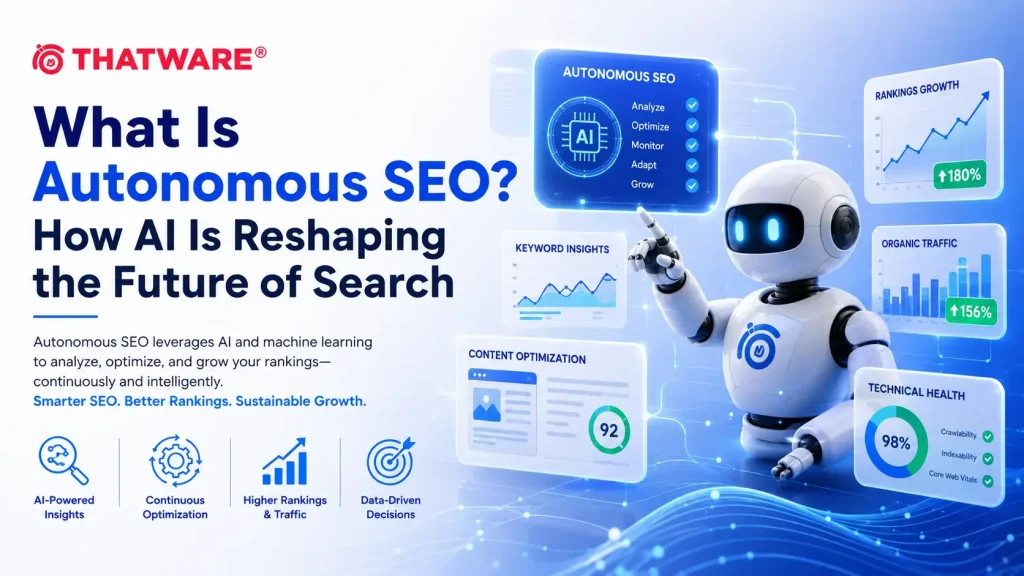
Traditional SEO relied heavily on manual research, content updates, and backlink strategies. However, modern search engines increasingly rely on complex AI models that evaluate data continuously. As a result, optimization strategies are moving toward intelligent automation rather than purely manual efforts. This transformation has introduced a new concept within digital marketing: Autonomous SEO.
At its core, Autonomous SEO represents the next phase of search optimization where AI-powered systems analyze search behavior, predict algorithm changes, and generate optimization strategies with minimal human intervention. Businesses now need to adapt to AI-powered discovery platforms, including conversational search, generative answers, and AI assistants.
Modern frameworks such as AI-driven SEO, AI search optimization, and LLM SEO reflect this evolution. These technologies focus on helping brands become authoritative sources not just for traditional search rankings, but also for AI-generated responses and intelligent search systems that shape the future of digital discovery.
What Is Autonomous SEO?
Understanding what is autonomous SEO begins with recognizing the role artificial intelligence plays in modern search ecosystems. Simply put, Autonomous SEO refers to a system where AI-powered technologies continuously analyze search data, evaluate website performance, and recommend optimization strategies automatically.
Unlike traditional SEO methods that require marketers to manually research keywords or adjust website structures, autonomous frameworks rely on automated SEO systems that process massive datasets in real time. These systems analyze competitor strategies, search engine behavior, user engagement signals, and algorithm patterns to determine how a website can improve its visibility.
In this model, AI platforms become strategic advisors that guide SEO decisions. Through AI-driven SEO, algorithms can monitor search patterns and identify opportunities faster than human analysts alone. They detect content gaps, evaluate semantic relevance, and predict ranking shifts.
The goal of Autonomous SEO is not simply automation. Instead, it focuses on creating intelligent optimization environments where AI supports strategic decisions and continuously refines search performance. By combining machine learning, automation tools, and large-scale data analysis, these systems create adaptive SEO frameworks that evolve alongside search engines themselves.
The Evolution of Search Optimization
Search engine optimization has changed dramatically since its early days. In the beginning, SEO primarily revolved around keyword placement, meta tags, and link building. Websites could achieve rankings simply by repeating keywords or acquiring large numbers of backlinks.
However, search engines soon began to evolve. Algorithms became more sophisticated, incorporating semantic understanding and contextual relevance. Instead of focusing solely on keywords, search engines started evaluating the relationships between topics, user intent, and content quality.
This evolution introduced the concept of AI search optimization, where websites must align their content with how artificial intelligence interprets information. Modern algorithms analyze context, authority, and knowledge structures rather than simple keyword frequency.
Another important concept shaping this transformation is search engineering. Rather than treating SEO as a marketing tactic alone, search engineering approaches optimization as a technical discipline focused on understanding algorithm behavior. This approach emphasizes algorithm-aware SEO, where marketers design strategies that align with how search systems evaluate data.
As search engines become increasingly intelligent, Autonomous SEO emerges as a logical next step. AI systems can now process enormous volumes of information and continuously refine optimization strategies, making traditional manual SEO methods less effective on their own.
How Autonomous SEO Works
To understand how autonomous SEO works, it is important to examine the technologies that power these intelligent systems. Autonomous frameworks combine machine learning, analytics platforms, and automation to create dynamic optimization processes.
Data Collection and Analysis
AI systems gather enormous volumes of search data from multiple sources. This includes keyword trends, user behavior signals, content engagement metrics, and algorithm changes. Through data-driven SEO, these systems convert raw data into actionable insights.
Competitor Intelligence
Automated platforms continuously evaluate competitor ecosystems. They analyze ranking strategies, content structures, backlink patterns, and topical authority. This allows AI to identify opportunities for improvement.
Predictive Decision Making
Using predictive SEO models, AI can forecast potential ranking shifts. By studying historical search patterns and algorithm behavior, autonomous systems can anticipate changes before they occur.
Continuous Optimization
Unlike traditional SEO campaigns that rely on periodic updates, Autonomous SEO operates continuously. Algorithms monitor performance in real time and adjust optimization strategies automatically. This ensures websites remain aligned with search engine expectations.
Core Technologies Powering Autonomous SEO
Several advanced technologies work together to create the infrastructure behind Autonomous SEO.
Artificial Intelligence and Machine Learning
Artificial intelligence forms the foundation of AI-driven SEO. Machine learning models analyze large datasets and identify patterns that influence search rankings.
Natural Language Processing
Natural language processing allows search engines to interpret language contextually. Through semantic SEO automation, AI systems understand relationships between words, topics, and entities.
Knowledge Graphs and Entity Recognition
Modern algorithms rely heavily on knowledge graphs that map relationships between concepts. This approach enables entity-based SEO, where search engines evaluate the credibility and authority of entities within content.
Automation Platforms
Advanced automated SEO tools perform tasks such as technical audits, ranking monitoring, and content optimization. These platforms allow AI to manage large-scale optimization processes efficiently.
Autonomous SEO in the Age of AI Search
Search engines are rapidly transitioning toward AI-powered discovery environments. Instead of presenting simple lists of links, modern search platforms increasingly provide direct answers generated by artificial intelligence.
AI-generated summaries, conversational search interfaces, and voice assistants are reshaping how users interact with search systems. In this environment, websites must adapt to new optimization models.
This shift has introduced specialized frameworks such as AEO (Answer Engine Optimization) and GEO (Generative Engine Optimization). These strategies focus on structuring content so that AI systems can easily interpret and reference it when generating answers.
Businesses must now develop AI search optimization strategies that address both traditional rankings and AI-generated results. This dual approach ensures brands remain visible in evolving search ecosystems.
Within this landscape, Autonomous SEO becomes increasingly important. AI-driven frameworks can monitor how search engines interpret content and adjust optimization strategies accordingly.
The Role of LLM SEO in Autonomous Optimization
Large language models are becoming central to search technology. Systems such as conversational AI engines analyze web content and generate responses based on their understanding of information.
This development has created a new optimization discipline known as LLM SEO. Rather than focusing solely on search rankings, LLM optimization ensures content can be understood and referenced by AI models.
Successful LLM SEO strategies often involve structured content architecture, semantic clarity, and strong knowledge graph alignment. These strategies help AI systems interpret topics accurately and connect them to relevant queries.
Within an Autonomous SEO framework, AI platforms continuously evaluate how large language models interpret web content. This allows businesses to refine their optimization strategies in response to evolving AI search behaviors.
Key Components of an Autonomous SEO System
A fully functioning Autonomous SEO system includes several interconnected components.
Automated Keyword Intelligence
AI systems analyze search trends to identify opportunities. Through data-driven SEO, they discover emerging keywords and search patterns.
Content Optimization Engines
Artificial intelligence can improve content structures, headings, and topic coverage. This ensures pages align with search intent.
Technical SEO Automation
Advanced automated SEO tools monitor technical issues such as page speed, crawl errors, and indexing problems.
Ranking Prediction Models
By implementing predictive SEO, AI platforms estimate how algorithm changes may impact search performance.
Together, these components create an intelligent optimization ecosystem capable of adapting to search engine evolution.
Benefits of Autonomous SEO for Modern Businesses
Companies adopting Autonomous SEO gain several strategic advantages as search ecosystems become increasingly driven by artificial intelligence and data intelligence. By combining automation, machine learning, and advanced analytics, businesses can improve their search performance while reducing manual workload.
Continuous Optimization
One of the most powerful advantages is continuous optimization. AI systems operate around the clock, monitoring website performance, algorithm updates, and search trends. These systems automatically adjust strategies, ensuring that optimization efforts remain aligned with evolving search engine requirements.
Faster Decision Making
Through AI-driven SEO, algorithms analyze massive datasets in seconds. This enables businesses to generate insights faster than traditional manual analysis, allowing teams to make informed decisions quickly and respond to market changes in real time.
Scalability for Large Websites
Another key benefit is scalability. Websites with thousands of pages can maintain optimization without extensive manual intervention. Autonomous frameworks streamline tasks such as keyword analysis, technical audits, and content evaluation across large digital ecosystems.
Improved Search Visibility
Advanced AI search optimization strategies help businesses appear not only in traditional search results but also in AI-generated responses and conversational search platforms, increasing brand exposure across multiple discovery channels.
Data-Driven Strategy Development
Autonomous systems rely heavily on analytics and behavioral insights. This enables businesses to develop data-driven SEO strategies that are based on real search patterns rather than assumptions.
Predictive Performance Insights
AI-powered models also support predictive optimization. By studying historical data and search behavior trends, businesses can anticipate ranking opportunities and adapt their strategies before competitors do.
Challenges and Limitations of Autonomous SEO
Despite its advantages, Autonomous SEO is not without limitations.
Artificial intelligence cannot fully replace human creativity and strategic thinking. Brand storytelling, messaging, and unique perspectives still require human expertise.
Ethical considerations also remain important. AI systems must be used responsibly to ensure transparency and compliance with search guidelines.
Furthermore, algorithm behavior can be unpredictable. Even advanced AI powered SEO strategies must remain adaptable. Combining automation with algorithm-aware SEO ensures businesses maintain control over their optimization efforts.
Autonomous SEO vs Traditional SEO
Traditional SEO relies heavily on manual analysis and periodic updates. Marketers conduct keyword research, create content strategies, and monitor performance through manual tools.
In contrast, Autonomous SEO introduces AI-driven automation into the optimization process.
| Traditional SEO | Autonomous SEO |
| Manual keyword research | AI keyword intelligence |
| Periodic updates | Continuous optimization |
| Human analysis | Machine learning insights |
By integrating AI-driven SEO and automated SEO systems, businesses can create adaptive strategies that evolve alongside search engines.
The Future of Autonomous SEO
Search technology will continue to evolve rapidly. AI systems are already capable of generating insights, predicting trends, and optimizing content strategies.
Future developments may include real-time algorithm analysis, autonomous marketing systems, and fully integrated search ecosystems powered by AI reasoning.
As these technologies mature, businesses will increasingly rely on AI search optimization and LLM SEO to maintain digital visibility.
The role of Autonomous SEO will likely expand as AI systems become more capable of guiding optimization strategies independently.
Preparing Your Business for Autonomous SEO
Organizations can begin preparing for Autonomous SEO by adopting several strategic practices.
Build Strong Semantic Content
Using semantic SEO automation, businesses can create content that aligns with search intent and contextual relevance.
Focus on Entities and Knowledge Graphs
Implementing entity-based SEO strengthens topical authority and improves AI interpretation.
Adopt AI SEO Platforms
Modern automated SEO tools help businesses monitor performance and identify opportunities.
Monitor Search Ecosystems
Applying search engineering methodologies allows companies to understand algorithm behavior and adapt strategies accordingly.
Unlock the Future of AI-Powered Search with ThatWare
In the rapidly evolving world of AI-driven search, businesses need more than traditional SEO tactics to stay competitive. They need intelligent systems that understand how modern search engines, large language models, and generative platforms interpret information. This is where ThatWare stands out as a pioneer in next-generation search optimization. By combining advanced data science, machine learning, and semantic analysis, the company has built powerful frameworks designed to help brands gain visibility across both traditional search engines and emerging AI-powered discovery platforms.
Our approach focuses on understanding search ecosystems at a deeper level—analyzing algorithm behavior, entity relationships, and content intelligence to create strategies that align with how modern AI systems process information. Instead of relying solely on manual optimization methods, our technology-driven methodology helps businesses identify opportunities, refine content structures, and strengthen digital authority in an increasingly competitive search landscape.
With a strong emphasis on research, innovation, and AI-driven strategy, the team continuously studies algorithm changes and evolving search technologies to keep clients ahead of the curve. For organizations looking to adapt to the future of AI search, working with a forward-thinking digital strategy partner like ThatWare can provide the insights and technological advantage needed to achieve sustainable online visibility and long-term growth.
Conclusion: The Autonomous Future of Search
Search optimization is entering a new era driven by artificial intelligence and automation. As search engines evolve into intelligent systems capable of interpreting context and generating answers, businesses must adapt their strategies accordingly.
Autonomous SEO represents a major step forward in this transformation. By integrating AI, machine learning, and data science, organizations can create optimization frameworks that continuously learn, adapt, and improve search performance.
Rather than replacing human expertise, autonomous systems enhance strategic decision-making. They provide insights, monitor search environments, and recommend optimization strategies in real time.
Companies that embrace Autonomous SEO will be better positioned to compete in AI-powered search ecosystems. As digital discovery continues to evolve, intelligent optimization frameworks will become essential for maintaining visibility across search engines and generative platforms.One example of organizations exploring these advanced AI-driven SEO frameworks is ThatWare, which focuses on developing next-generation search optimization strategies built around artificial intelligence and semantic intelligence.