
SUPERCHARGE YOUR ONLINE VISIBILITY! CONTACT US AND LET’S ACHIEVE EXCELLENCE TOGETHER!
Search is moving beyond the traditional model of entering a query, scanning a list of blue links, and choosing a webpage to visit. Increasingly, users expect search systems to understand intent, connect information from multiple sources, summarize complex topics, and provide direct answers. This shift is creating a new digital environment in which websites are no longer competing only for rankings. They are also competing to become reliable sources of information within machine-generated answers.
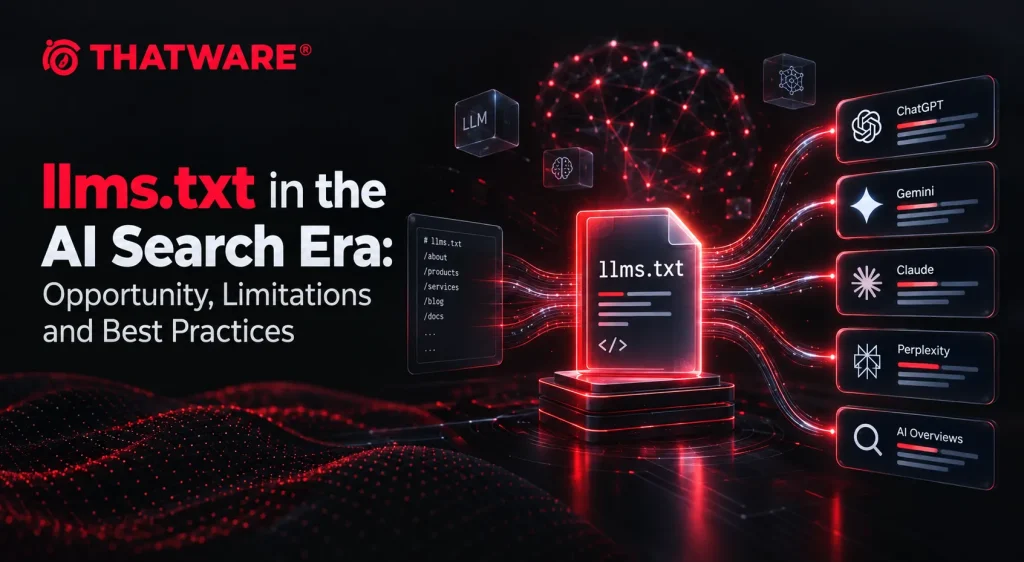
In this environment, the structure of a website matters differently. Human visitors can interpret navigation menus, headings, visual hierarchy, contextual links, and brand messaging almost instinctively. Machines need signals that help them determine what information is important, how different pieces of information relate to one another, and which resources represent the most authoritative explanation of a subject.
This is where llms.txt has entered the AI-search conversation.
The idea is relatively straightforward: provide AI systems with a curated, machine-readable overview of a website’s most useful resources. Instead of expecting an intelligent system to independently interpret every page and determine which content deserves attention, a website can present a more deliberate map of its important knowledge assets.
That sounds powerful, but it is also easy to misunderstand.
A guidance file is not a magic switch for AI visibility. It does not automatically make content rank, force an AI system to cite a page, or replace technical SEO. Nor should it be treated as a universal mechanism for controlling how artificial intelligence interacts with a website.
Its real opportunity lies elsewhere: better curation, clearer information architecture, stronger semantic communication, and greater preparedness for machine-mediated discovery.
The important question, therefore, is not simply whether a website has such a file. The better question is whether the website has built a coherent information ecosystem that intelligent systems can understand.
What Is llms.txt and Why Did It Emerge?
The basic concept is a text-based document placed at a predictable location on a website. Its purpose is to provide a concise description of important resources that may help large language models and other AI-driven systems understand the site’s knowledge.
Think of it as a curated index rather than a complete inventory.
A conventional sitemap can expose thousands of URLs. A curated AI-oriented document can instead emphasize the pages that explain the organization’s products, services, research, concepts, documentation, policies, expertise, or other important knowledge areas.
That distinction matters because modern websites can contain enormous quantities of information. Not every URL deserves equal conceptual importance.
A website might contain:
- Hundreds of informational articles
- Product or service pages
- Research resources
- Frequently asked questions
- Policy pages
- Supporting documentation
- Historical content
- Media resources
- Campaign landing pages
- Navigation and utility pages
From a human perspective, this information may be relatively easy to navigate. From a machine perspective, the challenge is determining which resources best represent the site’s expertise and how those resources fit together.
A carefully designed AI-oriented content map can therefore function as a curation layer.
It can identify cornerstone resources, explain their purpose, and create a clearer relationship between a website’s major knowledge areas.
However, it is essential to understand what this mechanism is not.
It is not equivalent to a crawler-access control file. It does not inherently prevent a crawler from accessing a page. It does not guarantee that a particular AI system will read or follow the document. It does not establish legal ownership over information merely by listing it. And it cannot compensate for weak content, poor technical accessibility, confusing site architecture, or a lack of authority.
Its value depends on how thoughtfully it is implemented within the wider website.
llms.txt vs Other Website Signals
One of the biggest sources of confusion is treating every machine-readable website file as though it performs the same function. They do not.
Different mechanisms communicate different types of information.
| Website signal | Primary purpose | Main strength | Key limitation |
| Crawler access directives | Communicate access preferences | Helps manage crawler access | Not designed to explain content meaning |
| XML sitemap | Discover URLs | Provides broad URL discovery | Does not explain which resources matter most conceptually |
| Structured data | Describe entities and page information | Adds machine-readable context | Does not provide a complete content strategy |
| AI-oriented content guidance | Curate important resources for AI understanding | Highlights useful knowledge assets | Cannot guarantee AI-system adoption or behavior |
The distinction between access and understanding is especially important.
Access mechanisms are fundamentally about whether automated systems may retrieve particular resources. Content-curation mechanisms are more concerned with helping intelligent systems identify useful information.
Confusing those functions can lead to serious implementation mistakes.
For example, a website owner might place crawler restrictions inside an AI-oriented content document and assume those instructions will be technically enforced. That assumption is unsafe. A guidance document should not be presented as a replacement for established access-control mechanisms.
The same principle applies to search optimization more broadly. Different technical signals should perform the jobs they were designed to perform.
Why the AI Search Era Creates an Opportunity
Traditional search optimization has historically revolved around improving a website’s ability to be crawled, indexed, understood, ranked, and clicked.
AI-mediated search introduces additional stages.
A machine may need to:
- Discover a source.
- Interpret its subject matter.
- Understand relationships between concepts.
- Retrieve relevant passages.
- Compare information from different sources.
- Determine which information is useful for a particular question.
- Synthesize an answer.
- Potentially identify or reference the source.
This creates a broader optimization environment.
The objective is no longer limited to achieving visibility for a specific query. A brand needs to become understandable as an information entity.
This is where the philosophy behind an seo intelligence agency becomes relevant. AI-search optimization increasingly requires the ability to analyze not only rankings and traffic but also entities, content relationships, semantic signals, retrieval patterns, and how a digital property represents its expertise.
An AI-oriented content map can contribute to this process by highlighting the information that most clearly represents a site’s knowledge.
For example, imagine a professional website with 500 articles covering a particular field. Twenty of those articles contain the deepest explanations, original research, foundational definitions, and authoritative insights. Listing every page equally provides little guidance about which resources deserve conceptual priority.
A curated approach can identify those twenty resources.
That does not guarantee that an AI system will use them. But it creates a cleaner representation of the website’s intended knowledge hierarchy.
This distinction between guaranteed control and strategic guidance is central to understanding the opportunity.
The Rise of AI-First Content Architecture
Websites were originally designed primarily around human navigation. Navigation bars, categories, breadcrumbs, internal links, headings, and page layouts were created to help people move through information.
AI systems introduce another audience: machines that need to reconstruct meaning.
This does not mean websites should abandon human-centered design. Quite the opposite. Strong AI readiness generally begins with a strong human information architecture.
Clear topics create clearer entities.
Consistent terminology creates stronger semantic relationships.
Logical internal linking helps establish context.
Well-organized content makes important information easier to identify.
Accurate structured information reduces ambiguity.
A well-maintained AI content map can sit on top of this foundation and reinforce the intended hierarchy.
The opportunity becomes especially interesting for large websites. Organizations with extensive knowledge bases, technical documentation, research libraries, service portfolios, or large publishing operations may have hundreds or thousands of pages that differ considerably in importance.
A curated machine-readable layer can provide an additional expression of editorial intent.
This is not about stuffing a file with keywords.
It is about answering a simple question:
If an intelligent system had only a short amount of guidance about this website, which resources would we want it to understand first?
That question can reveal weaknesses in the site’s overall architecture.
From Search Intelligence to Answer Intelligence
The evolution toward AI-generated answers also changes what visibility means.
A page can receive relatively little traditional search traffic yet contain information that is highly useful for answering a specialized question. Conversely, a page that ranks well for a broad keyword may contain little original or authoritative information.
This creates an important distinction between ranking visibility and knowledge visibility.
Ranking visibility asks:
Where does this page appear?
Knowledge visibility asks:
Does this source represent useful, trustworthy information when an intelligent system constructs an answer?
The two can overlap, but they are not identical.
This is one reason seo intelligence search is becoming a useful conceptual framework for modern optimization. The focus expands from individual keywords and rankings toward patterns of information retrieval, entity relationships, content authority, and machine interpretation.
A curated AI document can support that larger strategy, but it should never become the strategy itself.
A website with poor content and an excellent guidance file is still a weak information source.
A website with strong content, coherent architecture, clear entities, and a carefully maintained content map is in a much stronger position.
Opportunities Created by llms.txt
1. Curating High-Value Information
The most obvious opportunity is content selection.
A website can identify its most important explanatory resources rather than forcing every page into the same category.
This can be particularly useful for websites with extensive archives.
A curated list might emphasize:
- Foundational guides
- Original research
- Definitive service explanations
- Technical documentation
- Important policy information
- Core product knowledge
- Expert resources
- High-value educational materials
The result is a clearer expression of editorial priorities.
2. Supporting Semantic Organization
AI systems need context, not merely URLs.
Descriptions accompanying important resources can help communicate what a page is about and why it matters within the broader knowledge structure.
This makes semantic organization increasingly important.
For example, five pages may discuss related concepts but serve different purposes: one may define a concept, another may explain implementation, another may provide research, and another may discuss practical applications.
A useful content map should preserve those distinctions rather than treating all pages as interchangeable.
3. Creating an AI-Ready Knowledge Layer
Websites can contain substantial amounts of valuable information that are difficult to interpret when viewed as isolated pages.
An AI-focused layer can provide another representation of the site’s knowledge architecture.
It can connect important resources conceptually and help communicate which pages are central to particular subject areas.
4. Improving Content Governance
Creating such a file can also expose organizational problems.
If a business cannot decide which pages belong in its curated AI resource list, that may indicate deeper issues with content hierarchy.
Perhaps the site has:
- Too many competing cornerstone pages
- Duplicate explanations
- Outdated resources
- Unclear terminology
- Weak internal linking
- Inconsistent entity definitions
- Unclear ownership of important content
In that sense, the process of creating an AI content map can become an information-architecture audit.
Why llms.txt Cannot Be Treated as a Control Panel
The biggest limitation is also the most important point to communicate clearly.
An AI-oriented guidance file is not an enforcement mechanism.
It cannot guarantee that every crawler, model, retrieval system, or answer engine will read it, interpret it, or follow its recommendations.
This distinction becomes especially important when discussing AI training and content usage.
Website owners may understandably want to specify how their information should be used. But merely writing a preference into a text file does not automatically create a technical barrier against every possible form of collection, indexing, retrieval, training, or reuse.
Similarly, listing a page does not force an AI system to retrieve it.
A recommendation is not an instruction with universal technical authority.
This is why websites should maintain separate layers for separate purposes.
Access-control policies should remain in the mechanisms intended to communicate access preferences. Search discovery should continue to rely on appropriate crawlable site architecture and sitemaps. Content meaning should be supported through strong page structure and structured information. AI-oriented curation should be treated as an additional layer.
The strongest implementation is therefore layered rather than dependent on one file.
What Industry Evidence Suggests
Recent examination of AI-oriented text files across the web has revealed an important lesson: adoption alone does not equal usefulness.
Large-scale analysis has found that many files are automatically generated through templates or plugins, while others contain little meaningful information. Some have even attempted to use the format as though it were a crawler-control mechanism.
That behavior illustrates a broader problem with emerging technologies.
When a new optimization format becomes fashionable, websites often implement it because competitors are doing so. The result can be thousands of technically present but strategically empty files.
There is a major difference between having a file and having a useful AI information architecture.
A meaningful implementation should answer:
- Why are these resources included?
- Are they genuinely authoritative?
- Are their descriptions accurate?
- Are the URLs current?
- Do the resources represent the site’s primary expertise?
- Are important topics missing?
- Does the structure align with the site’s actual information architecture?
Industry observations also reinforce another point: AI-oriented files should not be confused with robots directives.
A crawler may follow access rules while ignoring a content-curation document. Conversely, a content-curation document may describe a preferred policy that has no direct technical enforcement.
The lesson is simple:
Do not assign a technical capability to a format merely because its syntax looks authoritative.
The Limitations Every Website Owner Should Understand
No Guaranteed AI Adoption
Not every AI system is required to consume or honor the format.
The ecosystem is fragmented, constantly evolving, and composed of systems with different retrieval and indexing architectures.
Therefore, implementation should be considered a preparedness measure rather than a guaranteed visibility mechanism.
No Guaranteed Citations
Including a resource does not mean an AI-generated answer will cite it.
Citation behavior depends on many factors, including source quality, relevance, retrieval processes, authority, query intent, and the architecture of the particular AI system.
No Guaranteed Rankings
AI visibility is not simply another ranking factor that can be switched on.
Strong traditional SEO remains important because accessible, authoritative, well-structured content provides the foundation upon which machine interpretation depends.
No Substitute for Content Quality
A perfectly formatted file cannot rescue weak content.
If the underlying pages are thin, outdated, contradictory, poorly structured, or lacking expertise, the curation layer has limited value.
No Automatic Intellectual Property Protection
Publishing a usage preference does not by itself prevent information from being copied, retrieved, transformed, or used in ways a publisher does not desire.
Organizations concerned about intellectual property require a broader legal, technical, contractual, and governance strategy.
It Can Become Outdated
A curated resource list is only useful while it reflects reality.
Deleted URLs, renamed pages, outdated articles, reorganized categories, and changes in strategic priorities can quickly reduce its usefulness.
Maintenance therefore matters as much as creation.
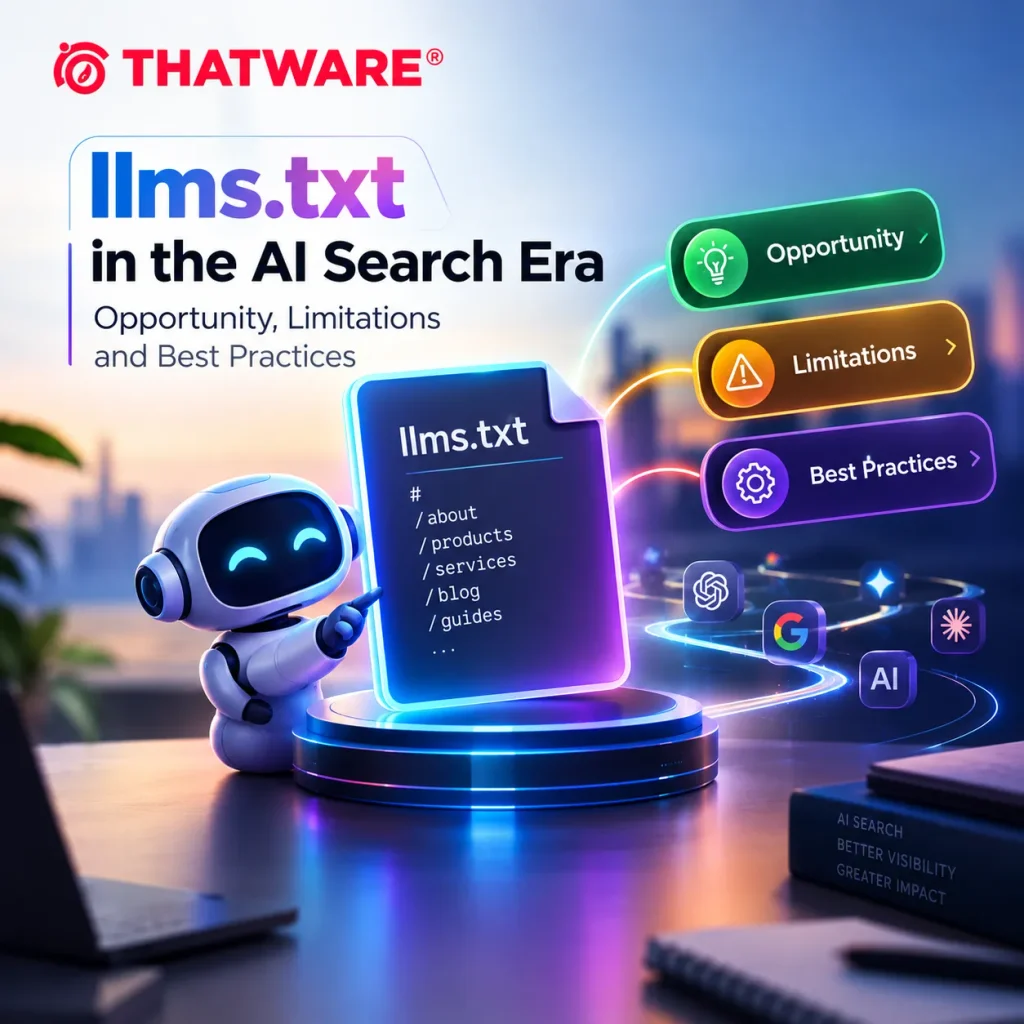
Should Every Website Have One?
There is no universal requirement.
For a small website with ten carefully structured pages, creating a separate AI content map may provide limited incremental value.
For a large organization with thousands of pages and extensive subject-matter resources, the potential value can be much greater.
The strongest candidates include websites with:
- Large knowledge libraries
- Complex documentation
- Extensive research content
- Multiple service categories
- Large publishing archives
- Deep educational resources
- Significant proprietary knowledge
- Complicated content hierarchies
The decision should therefore be based on information complexity, not hype.
A more useful question than “Does my website have it?” is:
“Would a concise, curated representation of my site’s most important knowledge make the website easier for intelligent systems to understand?”
If the answer is yes, the exercise may be worthwhile.
Best Practices for Building an Effective AI Content Map
Start With Strategic Resources
Do not automatically export every URL.
Identify the pages that explain the organization’s core knowledge, expertise, products, research, concepts, and authoritative resources.
Quality should come before quantity.
Write Meaningful Descriptions
Descriptions should explain what a resource actually contributes.
Avoid vague statements such as “This is an important page.”
Instead, communicate the subject and role of the resource within the site’s knowledge structure.
Prioritize Accuracy
Every listed URL should work.
Every description should remain current.
If the page changes significantly, the corresponding description should be reviewed.
Align It With Site Architecture
The curated AI layer should not contradict the website itself.
If a page is presented as a foundational resource but is buried without internal links, rarely updated, and disconnected from the site’s main topical structure, the problem extends beyond the text file.
Avoid Keyword Stuffing
The document should communicate meaning rather than imitate an SEO landing page.
Repeated commercial phrases, exaggerated claims, and artificial keyword density can reduce clarity.
Keep Access Policies Separate
Do not attempt to turn the document into a substitute for crawler-access controls.
Different technical mechanisms should remain responsible for different jobs.
Review It Regularly
A quarterly review can be useful for many organizations, while rapidly changing websites may need more frequent checks.
The important thing is to establish ownership and maintenance rather than treating implementation as a one-time technical task.
How AI Search Optimization Fits Into the Bigger Picture
AI visibility cannot be reduced to one document.
A complete strategy involves several connected layers.
Technical accessibility ensures that important resources can be discovered and processed.
Semantic architecture helps machines understand relationships between concepts.
Entity optimization clarifies who, what, where, and how different concepts relate to one another.
Internal linking establishes contextual connections.
High-quality content provides the information worth retrieving.
Structured information can make key facts easier to interpret.
Authority signals help establish trust.
Answer-oriented content helps address conversational and complex questions.
The AI content map then becomes one additional layer within this ecosystem.
This broader approach is closely connected to AI Marketing, where optimization is no longer limited to attracting clicks from conventional search results but increasingly involves shaping how information is discovered, interpreted, and surfaced throughout intelligent digital experiences.
The distinction matters because a website can be technically perfect yet semantically confusing.
It can also be semantically strong yet difficult to discover.
AI-search readiness therefore requires coordination.
The Relationship Between llms.txt and RAG
Retrieval-augmented generation has changed how many AI systems can work with external information.
Rather than relying exclusively on information learned during model training, retrieval-based architectures can obtain relevant information from external sources and use it as context when producing an answer.
This makes information architecture increasingly significant.
If a website contains clear, current, well-organized resources, those resources may be easier for retrieval systems to work with.
But it would be inaccurate to claim that a content-curation file directly controls retrieval weighting or guarantees that one source will be selected over another.
The relationship is more indirect.
A thoughtfully organized website provides cleaner information for discovery and interpretation. A curated AI resource layer can reinforce which resources the publisher considers important.
Together, these elements can contribute to retrieval readiness.
This is particularly important for Answer Engine SEO, because answer-oriented discovery places greater emphasis on whether information can be understood and used in context rather than simply whether a page appears in a conventional results list.
From Keywords to Concepts
One of the most important changes in AI search is the declining usefulness of thinking exclusively in isolated keywords.
A person searching for a topic may use five different expressions to describe essentially the same underlying concept.
An intelligent system can potentially connect those expressions through context, entities, relationships, and meaning.
That makes semantic consistency increasingly valuable.
For example, an organization should define important concepts consistently across its:
- Main website
- Educational content
- Research
- Service descriptions
- Internal links
- Structured information
- Brand explanations
- AI-facing content guidance
When terminology changes from page to page without a reason, the site’s conceptual identity becomes harder to interpret.
This is why LLM SEO should not be approached as merely inserting AI-related phrases into existing pages. It is better understood as preparing content so that large language models and AI-driven retrieval environments can interpret the site’s subject matter accurately.
The same principle applies to entity relationships.
If an organization has a distinctive methodology, service framework, research concept, or proprietary process, that concept should have a stable definition and consistent contextual relationships across the site.
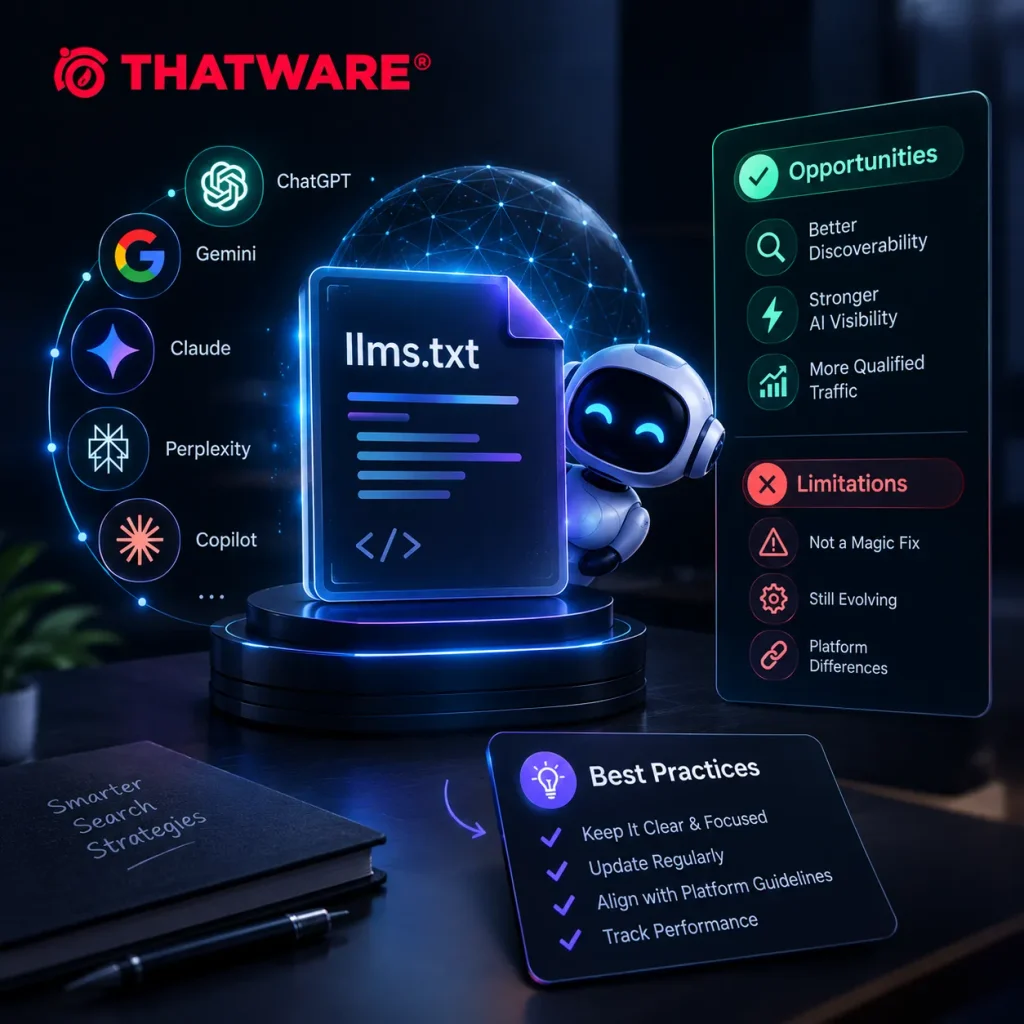
AI Search and the Future of Machine-Readable Websites
The broader direction of the web is clear: machines are becoming increasingly important consumers of information.
Humans will continue to read pages, watch content, compare products, and explore websites. But intelligent systems are increasingly mediating those experiences.
That changes the strategic value of structured knowledge.
A future-ready website may need to communicate simultaneously with:
- Human visitors
- Traditional crawlers
- Search engines
- Retrieval systems
- Conversational interfaces
- AI agents
- Knowledge-processing systems
Each audience has different requirements.
Humans need clarity and usability.
Search systems need discoverable, accessible content.
Machines need consistent meaning.
Retrieval systems need useful, relevant information.
AI agents may need clearly defined actions, entities, and relationships.
This creates a broader discipline around Large Language Model SEO, where the goal is not to manipulate a particular model but to make a website’s knowledge easier for AI-driven systems to understand and use appropriately.
The opportunity is significant, but it also requires realism.
The future of machine-readable websites will not be determined by one file format.
It will be determined by the quality of the underlying information ecosystem.
Common Mistakes to Avoid
Creating It Because Everyone Else Is
Implementation should solve a genuine information-architecture problem.
Listing Everything
More URLs do not automatically create more value.
A curated resource layer loses meaning when it becomes an unfiltered copy of the entire website.
Treating It Like a Blocklist
Access restrictions belong in the appropriate technical mechanisms.
Using Promotional Language
An AI-facing resource document should prioritize clarity and usefulness over advertising language.
Ignoring Website Architecture
If the underlying website is poorly organized, a curated document cannot fully compensate.
Forgetting Content Freshness
Outdated links and obsolete descriptions can undermine the value of the entire resource.
Expecting Instant AI Visibility
There is no guarantee that implementation will result in more citations, mentions, rankings, or traffic.
Making Unsupported Technical Claims
Organizations should avoid claiming that a simple text file can control model behavior, force attribution, prevent training, or manipulate AI rankings.
Measuring Only Traditional Traffic
AI visibility requires broader observation.
Organizations should increasingly monitor whether their expertise, concepts, resources, and brand entities are represented accurately in AI-generated discovery experiences.
How to Audit Your AI Content Guidance
A useful audit should begin with the file itself but should not end there.
Step 1: Verify Accessibility
Confirm that the file exists at the intended location and can be retrieved successfully.
Step 2: Review the Resource Selection
Ask whether the listed pages genuinely represent the site’s most valuable information.
Step 3: Check Every URL
Remove broken, redirected, outdated, or irrelevant resources.
Step 4: Compare Against the Website
Review the site’s main navigation, internal links, content hierarchy, and sitemap.
Look for contradictions.
Step 5: Review Semantic Consistency
Check whether important entities, concepts, terminology, and relationships are represented consistently.
Step 6: Evaluate Content Quality
A resource should earn its place through usefulness and authority.
Step 7: Review Access Separately
Ensure that crawler-access preferences are communicated through the appropriate mechanisms.
Step 8: Monitor AI Visibility
Track how accurately the organization’s expertise and important concepts appear in AI-generated answers and discovery experiences.
Step 9: Establish a Maintenance Cycle
Assign responsibility for reviewing the document as the website evolves.
This approach turns implementation from a checklist item into a continuing governance process.
Where AIEO Services Enter the Picture
The emergence of AI-mediated discovery has expanded optimization beyond conventional search-engine behavior, creating growing demand for AIEO services that address how content is interpreted across AI-driven search and answer environments.
Organizations now need to consider how their content is interpreted by answer systems, generative interfaces, retrieval environments, and conversational search journeys.
That broader discipline requires attention to entities, semantic relationships, content authority, technical accessibility, structured information, user intent, and machine interpretation.
A curated AI resource document can contribute to that environment, but it is only one component.
The most effective strategy connects it with the broader digital architecture instead of treating it as an isolated SEO deliverable.
This is also where GEO Services can become relevant to organizations seeking broader visibility across generative discovery environments. The focus should remain on building useful, authoritative, contextually clear information rather than attempting to exploit temporary quirks in individual AI systems.
Why Conversion Matters Even in AI Search
There is another dimension that is sometimes overlooked.
Visibility is not the final objective.
A business can appear in AI-generated answers and still fail to convert visitors into meaningful actions.
The path from discovery to business outcome therefore remains important.
Once a person reaches a website through an AI-mediated journey, the site still needs to provide:
- Clear information
- Strong credibility
- Relevant solutions
- Intuitive navigation
- Compelling calls to action
- Fast and accessible experiences
- A logical path toward conversion
This is why Conversion Rate Optimization remains relevant even as the search environment changes.
AI may influence how users discover a business, but the website still determines much of what happens afterward.
The winning strategy is therefore not AI visibility at the expense of user experience.
It is an integrated journey from discovery to understanding to trust to action.
A Strategic Framework for the AI Search Era
A practical way to think about AI-search readiness is to divide the process into six layers.
1. Discover
Make important content technically accessible and easy to locate.
2. Understand
Build clear topics, entities, definitions, relationships, and content structures.
3. Curate
Identify the resources that best represent the organization’s knowledge.
4. Retrieve
Create content that can provide direct, useful answers when relevant information is sought.
5. Validate
Maintain accuracy, authority, consistency, freshness, and trust.
6. Measure
Monitor how the organization’s information is represented across emerging AI discovery experiences.
The AI content map belongs primarily within the curation layer.
But its effectiveness depends on all the other layers.
That is the central lesson.
How ThatWare Approaches llms.txt and AI Governance
For ThatWare, llms.txt is not treated as a standalone technical file or a shortcut to AI visibility. It is approached as one component of a broader AI-search architecture, where content organization, semantic clarity, technical accessibility, and ongoing governance work together.
Understanding the Website’s Knowledge Architecture
The process begins with understanding what the website actually represents. ThatWare can assess key entities, subject areas, proprietary concepts, authoritative resources, and existing content relationships to determine which information is most important to the organization’s digital identity.
This helps move beyond simply listing URLs. The objective is to identify resources that genuinely explain the brand’s expertise and provide meaningful context to AI-driven discovery systems.
Curating High-Value Resources
Not every page deserves equal emphasis within an AI-facing content layer. ThatWare’s approach focuses on strategically curating resources that contribute most strongly to a website’s knowledge structure, such as foundational guides, important service information, research, documentation, and authoritative content.
This makes llms.txt more purposeful than an automated export of a website’s URLs. The emphasis remains on relevance, accuracy, and contextual value rather than volume.
Connecting llms.txt With Semantic SEO
An AI-facing content file works best when it reflects the semantic structure already established across the website. ThatWare can align its implementation with broader Semantic SEO Services, helping maintain consistency between important entities, topics, terminology, internal relationships, and authoritative resources.
This is particularly valuable for websites with complex subject matter or proprietary concepts, where inconsistent terminology can make the overall knowledge structure harder to interpret.
Separating Access From AI Content Guidance
A qualified llms.txt strategy also requires a clear distinction between access control and content curation. ThatWare does not position llms.txt as a replacement for mechanisms intended to communicate crawler-access preferences.
Instead, access policies and AI-oriented content guidance are treated as separate layers. This distinction helps prevent unrealistic assumptions about what a text file can technically enforce across different AI systems.
Protecting Semantic and Brand Consistency
AI-search readiness is not only about making content discoverable; it is also about representing information accurately. ThatWare can focus on maintaining consistent definitions of important entities, methodologies, services, and concepts throughout the digital ecosystem.
For organizations with distinctive frameworks or specialized expertise, this provides a more deliberate approach to how their knowledge is organized and communicated to machine-mediated discovery environments.
Continuous Auditing and Governance
AI search and website content are both continually evolving. Pages change, resources become outdated, terminology develops, and the wider AI-search environment continues to mature.
ThatWare’s approach therefore treats llms.txt as something that can require periodic review rather than a one-time implementation. Auditing can examine URL accuracy, resource relevance, content freshness, semantic consistency, technical accessibility, and alignment with the wider search architecture.
Building an AI-Ready Search Ecosystem
The larger objective is to integrate llms.txt into a broader AI-search strategy rather than presenting it as an isolated ranking tactic. ThatWare can combine content curation with technical SEO, semantic optimization, entity understanding, AEO, GEO, and LLM-focused strategies to create a more coherent foundation for AI-mediated discovery.
The important qualification is that llms.txt itself does not guarantee rankings, citations, retrieval, attribution, or specific AI-system behavior. Its value lies in how effectively it complements a website’s underlying information architecture.
For ThatWare, the goal is therefore not simply to create an llms.txt file. It is to help build a digital knowledge ecosystem that is structured, consistent, authoritative, and better prepared for intelligent systems to discover and interpret.
Conclusion: Opportunity Without the Hype
The emergence of AI-driven search is changing the relationship between websites and information systems.
Websites are no longer created solely for human readers or conventional search crawlers. They increasingly exist within an ecosystem where intelligent systems discover information, interpret entities, retrieve passages, synthesize answers, and influence how users encounter brands and knowledge.
That creates a legitimate opportunity for curated AI-facing content guidance.
It can help websites identify important resources, communicate information priorities, reinforce semantic organization, and prepare their knowledge architecture for machine-mediated discovery.
But its limitations are equally important.
It cannot guarantee that an AI system will read the document. It cannot force citations. It cannot replace technical SEO. It cannot substitute for authoritative content. It cannot universally enforce restrictions on AI systems. And it should not be treated as a magical ranking mechanism.
The strongest strategy is therefore neither blind adoption nor complete dismissal.
It is strategic integration.
Websites should focus first on accessible architecture, authoritative content, clear entities, logical relationships, strong internal linking, accurate structured information, and excellent user experience. Once those foundations are established, an AI-facing content layer can provide another way of communicating the site’s most important knowledge.
The future belongs less to websites that simply publish more pages and more to websites that make their knowledge easier to understand.
For organizations preparing for this transition, the real opportunity is not merely to create another technical file. It is to build a digital ecosystem that communicates clearly with humans and machines alike.
In the AI search era, clarity becomes infrastructure, semantic organization becomes visibility, and trustworthy knowledge becomes the foundation of discoverability.