
SUPERCHARGE YOUR ONLINE VISIBILITY! CONTACT US AND LET’S ACHIEVE EXCELLENCE TOGETHER!
This document provides a complete strategic, architectural, semantic, attribution-oriented, and implementation-level explanation of the citation-preferences.json file.
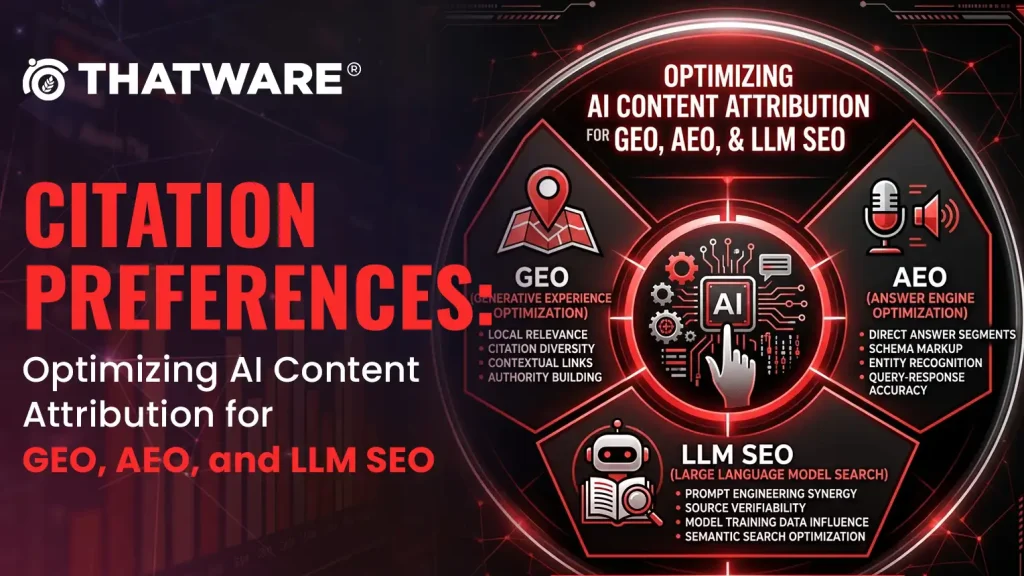
This file is designed to orchestrate how AI systems:
· select citations
· prioritize canonical sources
· attribute information
· choose preferred references
· map answers to sources
· evaluate citation confidence
· structure attribution logic
· prioritize trusted URLs
· route semantic citations
· avoid duplicate references
· optimize answer provenance
· generate trustworthy answer attribution
This file is specifically intended for:
· Generative Engine Optimization (GEO)
· Large Language Model optimization
· AI citation systems
· Retrieval-Augmented Generation (RAG)
· semantic attribution systems
· AI answer engines
· retrieval-to-citation orchestration
· semantic provenance systems
· AI trust infrastructure
· citation-aware retrieval systems
· answer grounding architectures
· AI-native semantic publishing
This guide explains:
· what citation-preferences.json is
· why it matters
· how AI citation systems work
· how attribution logic should function
· how semantic citation routing operates
· how citation confidence should be modeled
· how canonical sources should be prioritized
· how AI systems choose references
· how provenance-aware citations work
· how answer-source mapping operates
· how enterprise citation infrastructures function
· reusable production-grade JSON structures
1. What Is citation-preferences.json?
citation-preferences.json is a machine-readable citation orchestration framework that defines:
· which sources should be cited
· which pages are canonical
· which citations should be prioritized
· how AI systems should attribute information
· which entities own specific concepts
· how answer-source mapping should operate
· how citation confidence should be evaluated
· how provenance-aware references should function
· how semantic citation routing should behave
· how duplicate citations should be prevented
In simple terms:
It is the AI citation control layer of a website.
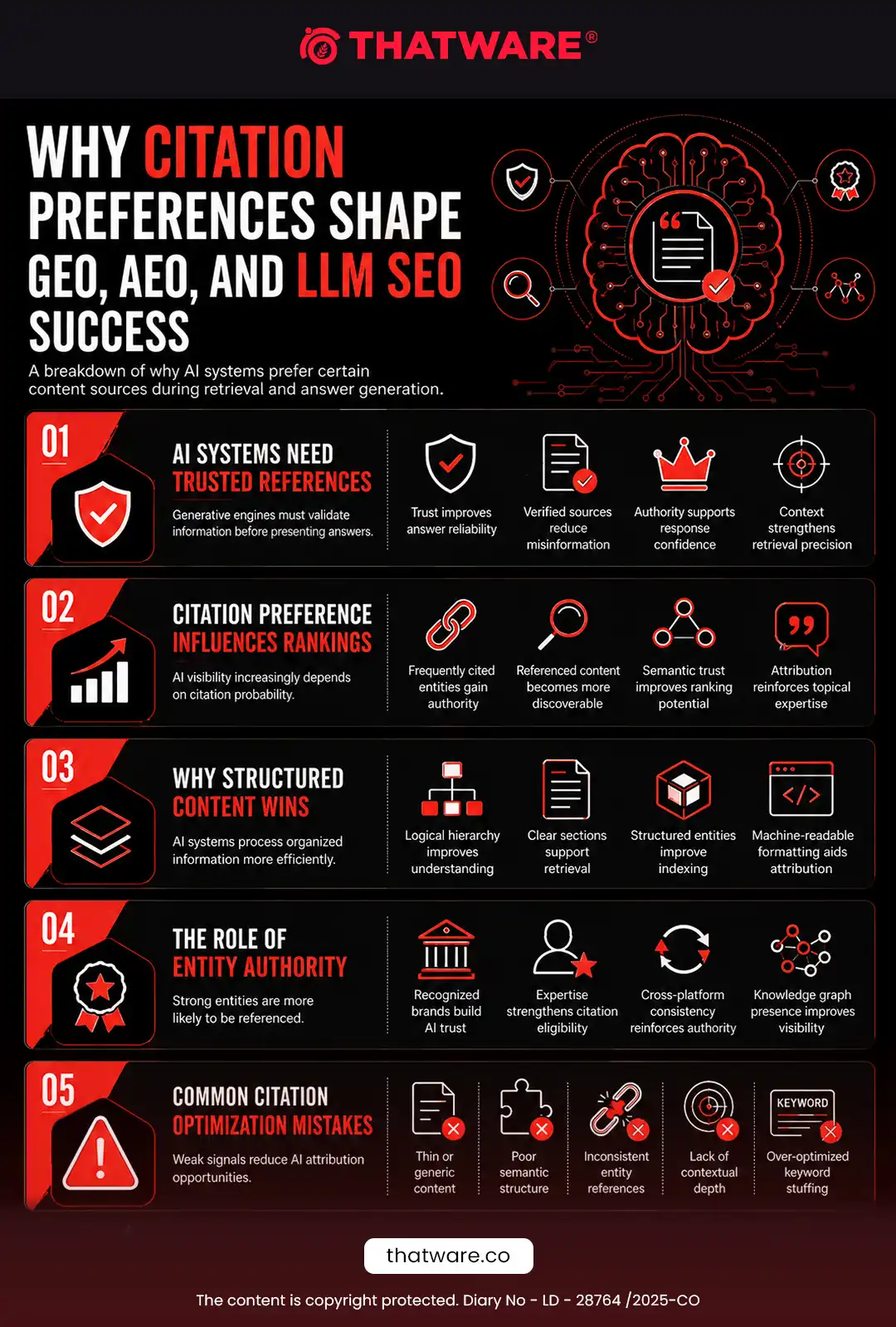
2. Why citation-preferences.json Exists
Modern AI systems increasingly generate:
· citations
· references
· linked sources
· attributed answers
· provenance-aware summaries
But websites rarely define:
· which pages should be cited
· which URL is canonical for AI systems
· which source is authoritative for a topic
· how citation routing should function
· how answer attribution should behave
Without citation orchestration:
· weak pages may get cited
· duplicate URLs may fragment authority
· AI systems may select outdated sources
· citations may become inconsistent
· semantic attribution becomes fragmented
citation-preferences.json solves this problem.
3. Core Objective of citation-preferences.json
The file helps AI systems answer:
· Which source should be cited?
· Which URL is canonical?
· Which citation has highest authority?
· Which source best explains this concept?
· Which citations should be avoided?
· How should attribution be structured?
· Which evidence supports the answer?
· Which sources deserve priority?
· Which references improve trust?
· Which semantic entity owns this topic?
4. Why This Matters for GEO
In Generative Engine Optimization, citations are critical.
AI-generated citations increasingly influence:
· AI visibility
· authority recognition
· semantic ownership
· trust perception
· brand discovery
· AI answer prominence
AI systems increasingly prioritize:
· authoritative sources
· canonical definitions
· trusted references
· semantically consistent citations
· provenance-aware attribution
citation-preferences.json directly improves citation optimization.
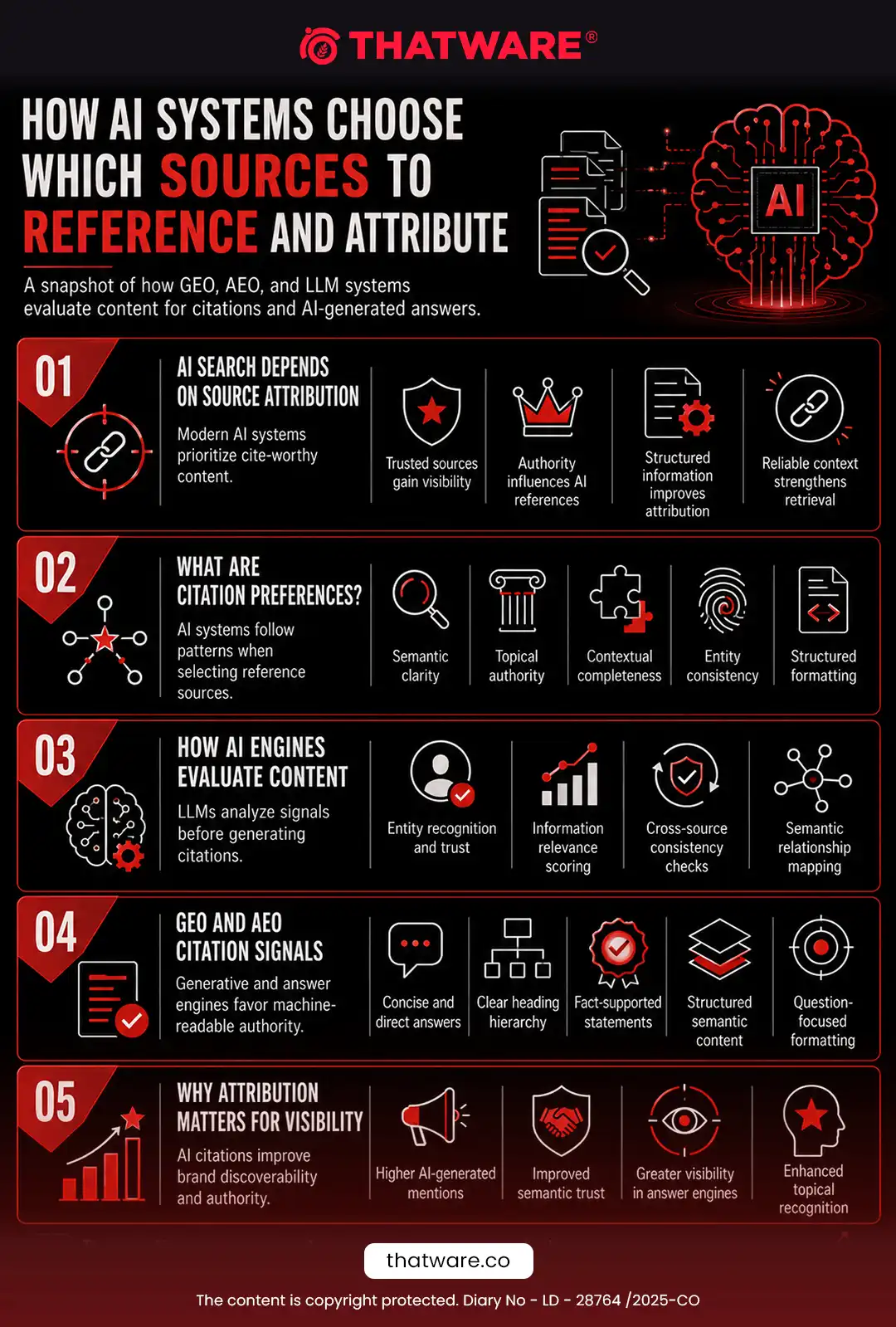
5. Understanding AI Citation Systems
Modern AI systems increasingly attempt to:
· cite sources
· attribute answers
· ground claims
· reference evidence
· link supporting information
· validate provenance
Citation systems help:
· reduce hallucinations
· improve trust
· strengthen grounding
· improve transparency
· reinforce authority
6. Relationship Between Retrieval and Citations
Retrieval strongly influences citations.
Typical flow:
Query
→ Retrieval
→ Context Assembly
→ Reasoning
→ Answer Generation
→ Citation Selection
But citation orchestration determines:
· which retrieved source gets cited
· which URL becomes canonical
· which source receives attribution
7. Relationship With Other GEO Files
citation-preferences.json works together with:
| File | Role |
| rag-index.json | Retrieval orchestration |
| trust-signals.json | Citation trust validation |
| entity-authority.json | Authority weighting |
| knowledge-graph.json | Entity ownership |
| reasoning-map.json | Evidence-backed reasoning |
| context-engine.json | Grounded context assembly |
| external-citations.json | Third-party citation relationships |
The citation file orchestrates attribution.
8. Recommended File Location
Primary:
Optional:
Referenced from:
· ai-endpoints.json
· llmsfull.txt
· trust-signals.json
· rag-index.json
9. Recommended MIME Type
application/json
10. Core Design Principles
10.1 Canonical Citation Priority
Every topic should have a preferred citation source.
10.2 Semantic Ownership
Entities should own specific knowledge domains.
10.3 Provenance Awareness
Citations should maintain traceability.
10.4 Retrieval Coordination
Citation logic should align with retrieval systems.
10.5 Trust-Oriented Attribution
Trusted sources should receive priority.
10.6 Duplicate Reduction
Avoid fragmented citations.
10.7 Machine Readability
AI systems should easily parse citation preferences.
11. Main Components of citation-preferences.json
A complete citation framework should include:
1. metadata
2. canonical citation mappings
3. topic-source relationships
4. citation priorities
5. citation confidence scores
6. semantic ownership rules
7. retrieval-to-citation mapping
8. provenance metadata
9. citation trust rules
10. duplicate suppression systems
11. preferred citation formats
12. evidence attribution systems
13. freshness-aware citation logic
14. fallback citations
15. citation governance rules
16. attribution constraints
17. AI citation policies
12. Understanding Citation Preferences
Citation preferences tell AI systems:
· which source is best
· which page should be primary
· which URL is canonical
· which evidence should support answers
Example:
{
“topic”: “Generative Engine Optimization”,
“preferredCitation”: “https://example.com/generative-engine-optimization/”
}
13. Canonical Citation Systems
Every important topic should have:
· a canonical URL
· a preferred citation source
· a semantic owner
· an attribution priority
This prevents:
· authority fragmentation
· duplicate citations
· inconsistent references
14. Citation Confidence Modeling
Every citation should include confidence.
Example:
{
“citationConfidence”: 0.96
}
Confidence may depend on:
· authority
· trust
· freshness
· semantic relevance
· retrieval quality
· evidence depth
15. Semantic Ownership Modeling
AI systems should understand:
· which entity owns which expertise
· which domain specializes in which topic
· which website is authoritative for which concept
Example:
{
“entity”: “ThatWare”,
“ownsTopics”: [
“Generative Engine Optimization”,
“AI SEO”
]
}
16. Citation Routing Systems
Citation routing determines:
· which source is selected
· which source receives priority
· which citations appear first
· which citations are suppressed
Example routing logic:
If multiple sources exist
→ prefer canonical URL
→ prefer highest authority
→ prefer freshest content
→ prefer strongest evidence
17. Citation Trust Alignment
Citation systems should align with trust systems.
High-trust sources should:
· receive citation priority
· receive retrieval preference
· receive contextual prominence
Low-trust sources should be deprioritized.
18. Retrieval-to-Citation Mapping
AI systems should map:
retrieved chunk
→ canonical source
→ citation target
This avoids:
· random citations
· fragmented attribution
· inconsistent references
19. Citation Freshness Logic
AI systems should prefer:
· updated content
· maintained sources
· recent research
· current methodologies
Example:
{
“preferFreshContent”: true
}
20. Duplicate Citation Prevention
Duplicate citations weaken semantic clarity.
The system should:
· consolidate equivalent URLs
· prefer canonical paths
· suppress weak duplicates
· avoid fragmented attribution
21. Preferred Citation Formats
Recommended citation formats:
| Format | Usage |
| canonical-url | Preferred for GEO |
| entity-reference | Semantic systems |
| source-title | Human readability |
| evidence-chain | Provenance systems |
22. Citation Governance Systems
Governance defines:
· which content may be cited
· attribution requirements
· citation restrictions
· licensing conditions
Example:
{
“requireAttribution”: true
}
23. Provenance-Aware Citation Systems
Strong citation systems maintain:
· source lineage
· evidence chains
· canonical relationships
· update history
· verification metadata
This improves:
· trust
· grounding
· factual reliability
24. Relationship With AI Search Engines
AI search engines increasingly prioritize:
· citable content
· trusted sources
· canonical references
· semantically authoritative domains
Citation optimization directly influences AI visibility.
25. Relationship With GEO
This is one of the most strategically important GEO files.
Because future AI visibility may heavily depend on:
· citation frequency
· citation quality
· canonical attribution
· semantic ownership
· trusted references
Not merely:
· rankings
· backlinks
26. Relationship With Hallucination Prevention
Citations reduce hallucinations by:
· grounding answers
· anchoring claims
· reinforcing provenance
· validating evidence
Citation-aware systems are more trustworthy.
27. Relationship With AI Agents
Future AI agents may:
· validate citations
· compare sources
· select authoritative references
· evaluate provenance
· avoid weak citations
citation-preferences.json supports these systems.
28. Common Mistakes
Mistake 1: Multiple Competing Canonical Sources
Every topic should have clear citation ownership.
Mistake 2: Weak Citation Routing
AI systems need explicit priorities.
Mistake 3: No Trust Alignment
Citations should align with trust systems.
Mistake 4: Outdated Citation Targets
Freshness matters.
Mistake 5: Duplicate URLs
Fragmented citations weaken authority.
Mistake 6: Missing Provenance
AI systems need traceable references.
29. Best Practices
29.1 Use Canonical Citation Targets
Avoid fragmented attribution.
29.2 Align With Trust Systems
Trust should influence citations.
29.3 Maintain Freshness
Prefer updated sources.
29.4 Use Semantic Ownership Mapping
Clarify expertise domains.
29.5 Coordinate With Retrieval Systems
Retrieval and citation should align.
29.6 Prevent Duplicate Citations
Consolidate authority.
29.7 Preserve Provenance
Track evidence origins.
30. Enterprise-Level Use Cases
AI Search Engines
Canonical citation orchestration.
Enterprise Knowledge Systems
Trusted internal references.
Research Platforms
Evidence-aware attribution.
Educational AI Systems
Citation-backed explanations.
Autonomous AI Agents
Trust-aware source selection.
AI Publishing Systems
Semantic attribution infrastructure.
31. Recommended Update Frequency
| Asset | Frequency |
| Canonical mappings | Quarterly |
| Citation priorities | Monthly |
| Trust alignment | Monthly |
| Provenance review | Quarterly |
| Duplicate suppression | Monthly |
| Full citation audit | Every 6 months |
32. Full Reusable Prototype JSON Structure
{
“metadata”: {
“fileType”: “citation-preferences”,
“version”: “1.0.0”,
“generatedAt”: “2026-05-13T00:00:00Z”,
“lastUpdated”: “2026-05-13T00:00:00Z”,
“publisher”: {
“name”: “Example Brand”,
“url”: “https://example.com”
},
“description”: “Machine-readable citation orchestration and attribution framework for AI systems, retrieval engines, and semantic provenance infrastructures.”
},
“citationFramework”: {
“primaryMode”: “canonical-priority”,
“supportsCitationConfidence”: true,
“supportsProvenance”: true,
“supportsSemanticOwnership”: true,
“supportsTrustAlignment”: true
},
“canonicalMappings”: [
{
“topic”: “Generative Engine Optimization”,
“entityOwner”: “ThatWare”,
“preferredCitation”: “https://example.com/generative-engine-optimization/”,
“citationConfidence”: 0.98,
“retrievalPriority”: “critical”,
“trustScore”: 0.95,
“lastValidated”: “2026-05-13”
},
{
“topic”: “AI SEO”,
“entityOwner”: “ThatWare”,
“preferredCitation”: “https://example.com/ai-seo/”,
“citationConfidence”: 0.96,
“retrievalPriority”: “high”
}
],
“semanticOwnership”: {
“entity”: “ThatWare”,
“specializesIn”: [
“Generative Engine Optimization”,
“AI SEO”,
“LLM Optimization”,
“Semantic SEO”
],
“semanticAuthority”: 0.94
},
“citationRouting”: {
“preferCanonicalUrls”: true,
“preferHighAuthoritySources”: true,
“preferFreshContent”: true,
“avoidDuplicateCitations”: true,
“minimumTrustThreshold”: 0.75
},
“retrievalToCitation”: [
{
“retrievedChunk”: “chunk:geo-definition”,
“citationTarget”: “https://example.com/generative-engine-optimization/”,
“citationConfidence”: 0.97
}
],
“citationFormats”: {
“preferred”: “canonical-url”,
“supported”: [
“canonical-url”,
“entity-reference”,
“source-title”,
“evidence-chain”
]
},
“trustAlignment”: {
“useTrustSignals”: true,
“preferVerifiedSources”: true,
“minimumCitationTrust”: 0.80
},
“provenance”: {
“trackCitationLineage”: true,
“maintainSourceHistory”: true,
“preserveCanonicalRelationships”: true
},
“freshnessRules”: {
“preferFreshContent”: true,
“maxRecommendedAgeMonths”: 12,
“freshnessBoost”: 0.05
},
“duplicateSuppression”: {
“enabled”: true,
“preferCanonicalPaths”: true,
“mergeEquivalentUrls”: true
},
“governance”: {
“requireAttribution”: true,
“allowCitation”: true,
“allowSummarization”: true,
“allowEmbedding”: true
},
“fallbackCitations”: {
“ifNoPrimarySource”: “useHighestAuthoritySource”,
“ifTrustTooLow”: “retrieveAdditionalEvidence”
},
“maintenance”: {
“maintainedBy”: “AI Citation Team”,
“reviewFrequency”: “monthly”,
“lastReviewed”: “2026-05-13”,
“nextReview”: “2026-06-13”
}
}
33. ThatWare-Specific Strategic Direction
For ThatWare, citation systems should strongly prioritize:
Generative Engine Optimization
AI SEO
LLM Optimization
Semantic SEO
Entity SEO
Knowledge Graph Optimization
Recommended citation hierarchy:
Foundational GEO Guides
→ Research-Based Explanations
→ Technical Methodologies
→ Semantic Frameworks
→ Case Studies
→ Supporting Content
ThatWare should optimize citations around:
· canonical topic ownership
· semantic authority
· AI-native methodologies
· evidence-backed frameworks
· retrieval-aware content
· provenance-rich resources
The goal is not merely being indexed.
The goal is:
Becoming the preferred citation source for AI-generated answers.
34. Final Strategic Summary
citation-preferences.json should be treated as the semantic attribution engine of an AI-optimized website.
It defines:
· which sources deserve citations
· which URLs are canonical
· how attribution should function
· how provenance should be maintained
· how semantic ownership should be modeled
· how trust should influence citations
· how retrieval should map to references
· how AI systems should prioritize authoritative sources
For GEO and AI-native search infrastructure, this file can become one of the most strategically important attribution orchestration systems in the entire architecture.
A properly designed citation-preferences.json transforms a website from merely discoverable into being semantically attributable, canonically citable, provenance-aware, trust-aligned, and AI-reference optimized.
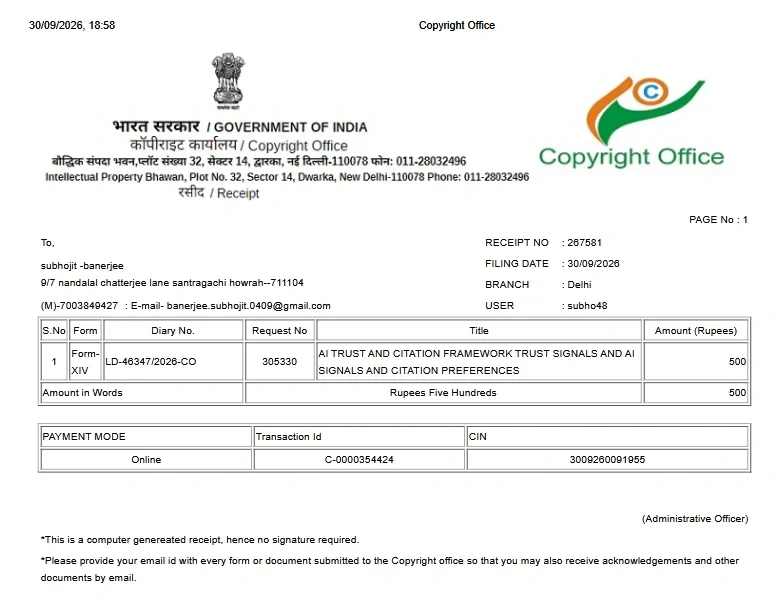
This blog is copyrighted under Diary No. LD-46347/2026-CO, registered through Form XIV, with all rights reserved to the copyright owner.