
SUPERCHARGE YOUR ONLINE VISIBILITY! CONTACT US AND LET’S ACHIEVE EXCELLENCE TOGETHER!
This document provides a complete strategic, technical, architectural, and implementation-level explanation of the ai-endpoints.json file.
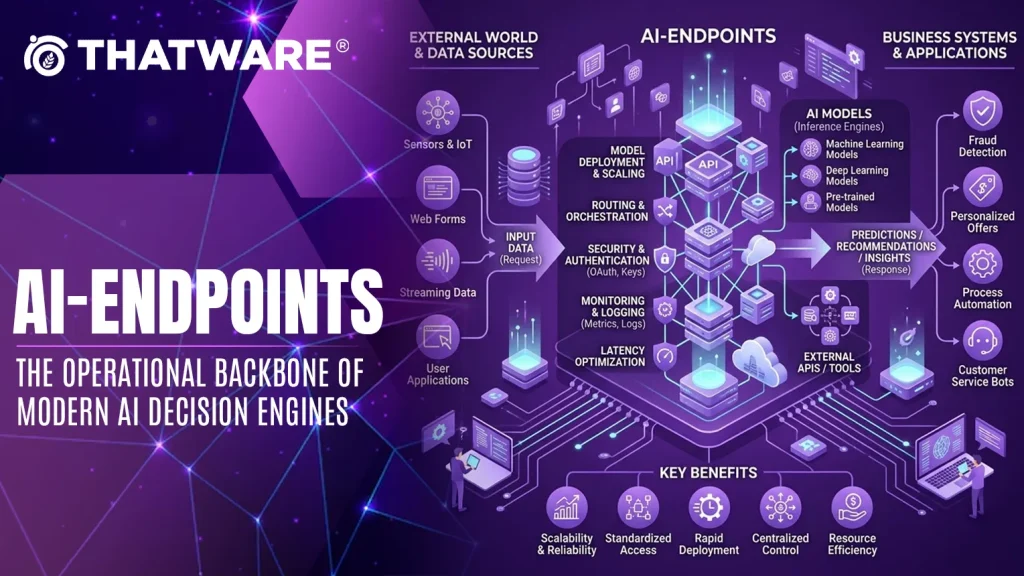
This file is designed to function as a centralized AI discovery and interoperability registry for websites, platforms, brands, applications, knowledge systems, and AI-native digital infrastructures.
It is specifically intended for:
· Generative Engine Optimization (GEO)
· Large Language Model optimization
· AI crawler orchestration
· semantic endpoint discovery
· autonomous AI agents
· Retrieval-Augmented Generation (RAG)
· machine-readable service infrastructure
· AI interoperability systems
· semantic web infrastructure
· AI-native internet architecture
This guide explains:
· what ai-endpoints.json is
· why it matters
· how AI systems may use it
· endpoint discovery architecture
· AI crawler orchestration
· semantic endpoint routing
· AI infrastructure interoperability
· future AI internet standards
· AI-native service discovery
· endpoint trust systems
· endpoint governance
· machine-readable protocol mapping
· enterprise implementation strategies
· reusable production-ready JSON structures
1. What Is ai-endpoints.json?
ai-endpoints.json is a machine-readable AI infrastructure registry that defines:
· which AI-readable files exist on a website
· where semantic resources are located
· where retrieval systems should connect
· where AI policies exist
· where authority signals are located
· where semantic maps exist
· where RAG indexes exist
· where citation preferences exist
· where trust declarations exist
· where AI discovery files exist
In simple terms:
It is the AI discovery router of a website.
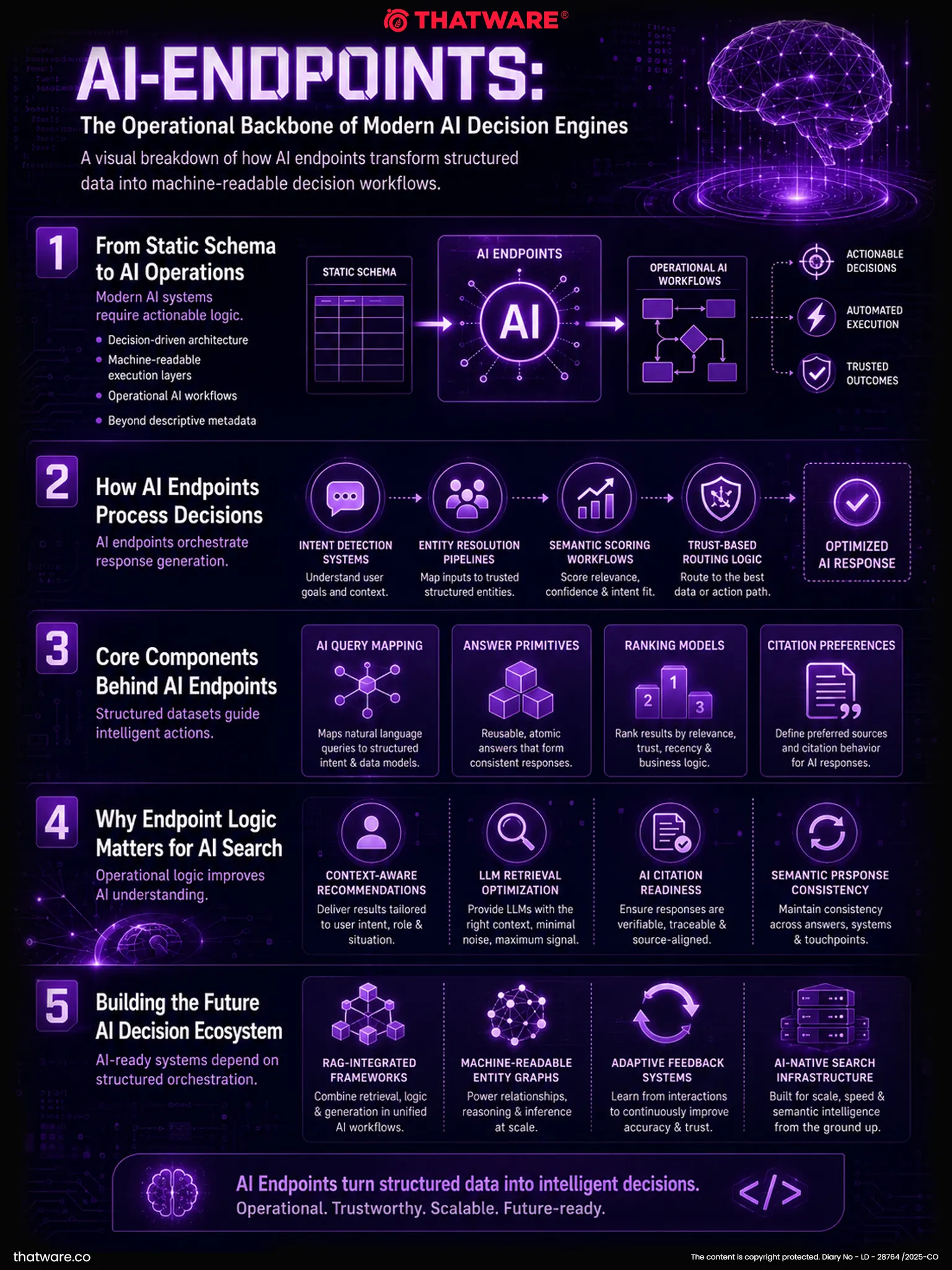
2. Why ai-endpoints.json Exists
Traditional websites expose resources mainly for:
· browsers
· search engines
· APIs
· humans
But AI systems require:
· semantic infrastructure discovery
· AI-readable file discovery
· machine navigation
· endpoint interoperability
· semantic resource mapping
· retrieval routing
· AI policy discovery
· trust verification
Currently there is no universal AI endpoint registry standard.
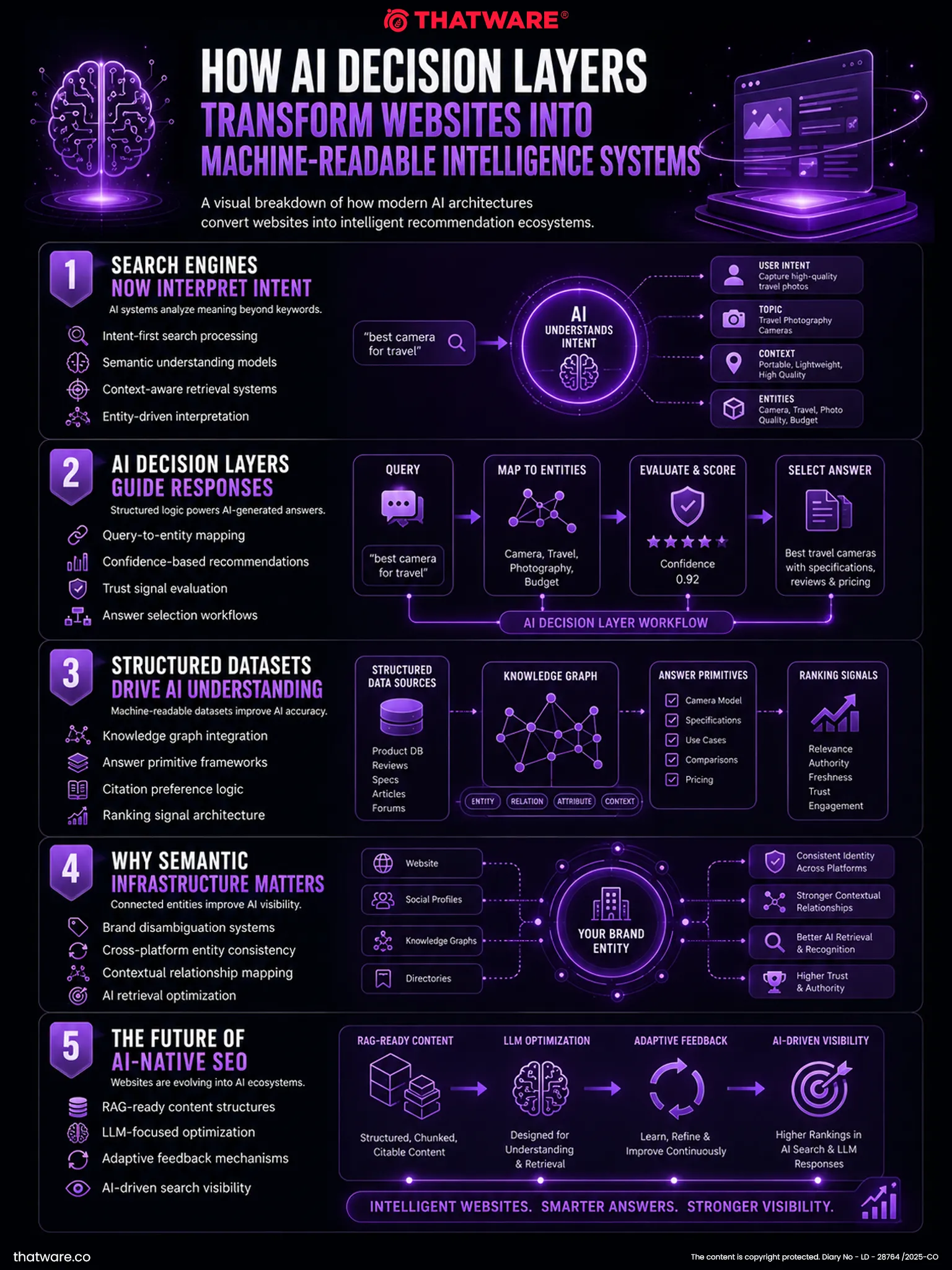
ai-endpoints.json is designed to solve this.
3. Core Objective of ai-endpoints.json
The file helps AI systems answer:
· Which AI-readable files exist?
· Where is the RAG index located?
· Where is the knowledge graph?
· Where is the citation policy?
· Where is the semantic sitemap?
· Which endpoint contains retrieval instructions?
· Which endpoint defines authority?
· Which endpoint defines trust signals?
· Which endpoint defines AI policies?
· Which endpoint should autonomous agents use?
4. Why It Matters for GEO
In Generative Engine Optimization, discoverability is critical.
If AI systems cannot discover semantic infrastructure:
· retrieval quality suffers
· citations suffer
· trust decreases
· semantic understanding weakens
· AI systems may ignore important resources
ai-endpoints.json improves:
4.1 AI Discoverability
Makes all AI-readable resources discoverable.
4.2 Semantic Navigation
Helps AI systems navigate semantic assets.
4.3 Retrieval Coordination
Helps retrieval systems locate retrieval intelligence.
4.4 Machine Interoperability
Improves compatibility with AI systems.
4.5 AI Infrastructure Transparency
Makes the AI architecture understandable.
4.6 Autonomous Agent Compatibility
Supports future AI agents and AI browsers.
5. Why AI Systems Need Endpoint Discovery
Modern AI systems increasingly depend on:
· retrieval systems
· semantic resources
· structured files
· machine-readable policies
· AI-optimized indexes
· context infrastructure
· trust declarations
Without endpoint discovery:
AI systems must guess where resources exist.
This causes:
· incomplete understanding
· retrieval inefficiency
· semantic fragmentation
· inconsistent citations
· reduced trust
ai-endpoints.json creates predictability.
6. The AI-Native Web Concept
Traditional websites are page-centric.
AI-native websites are:
· semantic-resource-centric
· machine-readable
· endpoint-driven
· retrieval-aware
· context-aware
· AI interoperable
ai-endpoints.json becomes the central navigation layer.
7. Difference Between API Endpoints and AI Endpoints
Traditional API Endpoints
Built for:
· applications
· integrations
· software systems
Example:
/api/v1/users
/api/products
/api/orders
AI Endpoints
Built for:
· LLMs
· AI crawlers
· retrieval systems
· semantic parsers
· AI agents
· answer engines
Example:
/knowledge-graph.json
/rag-index.json
/llms.txt
/trust-signals.json
8. Relationship With Other GEO Files
ai-endpoints.json acts as the central registry connecting:
| File | Role |
| knowledge-graph.json | Semantic entity graph |
| entity-authority.json | Authority intelligence |
| rag-index.json | Retrieval orchestration |
| reasoning-map.json | AI reasoning structure |
| context-engine.json | Context assembly logic |
| citation-preferences.json | Citation routing |
| trust-signals.json | Trust verification |
| activity-stream.json | Freshness tracking |
| ai-signals.json | AI metadata layer |
| llms.txt | LLM-readable summary |
| llmsfull.txt | Full AI-readable context |
The endpoint file connects everything.
9. Recommended File Location
Primary location:
https://example.com/ai-endpoints.json
Optional secondary location:
https://example.com/.well-known/ai-endpoints.json
Recommended discovery references:
· llms.txt
· ai.txt
· robots.txt
· HTML meta links
· HTTP headers
10. Recommended MIME Type
application/json
11. Core Design Principles
11.1 Discoverability First
Every important AI resource should be discoverable.
11.2 Machine Readability
The structure should be easy for AI systems to parse.
11.3 Endpoint Stability
URLs should remain stable over time.
11.4 Semantic Clarity
Each endpoint should clearly describe its purpose.
11.5 Interoperability
The file should support future AI ecosystems.
11.6 AI-Agent Compatibility
Endpoints should support autonomous AI systems.
11.7 Extensibility
New AI resources should be easy to add.
12. Main Components of ai-endpoints.json
A complete endpoint registry should include:
1. metadata
2. organization
3. endpoint registry
4. endpoint categories
5. endpoint descriptions
6. endpoint trust levels
7. AI usage policies
8. authentication requirements
9. endpoint priorities
10. retrieval support metadata
11. semantic classifications
12. update frequency metadata
13. AI compatibility declarations
14. endpoint dependencies
15. fallback endpoints
16. protocol declarations
17. versioning information
13. Understanding Endpoint Categories
Recommended endpoint categories:
| Category | Purpose |
| semantic | Semantic resources |
| retrieval | RAG systems |
| authority | Authority and trust |
| policy | AI permissions and rules |
| citation | Citation preferences |
| indexing | AI indexing systems |
| discovery | AI discovery systems |
| analytics | AI interaction analytics |
| interoperability | AI integration systems |
| governance | AI governance rules |
14. Semantic Endpoint Types
Recommended endpoint types:
knowledge-graph
entity-authority
rag-index
reasoning-map
context-engine
citation-preferences
trust-signals
ai-signals
activity-stream
semantic-sitemap
vector-feed
llms
llmsfull
ai-policy
security
15. Endpoint Prioritization
Some endpoints matter more than others.
Suggested priorities:
| Priority | Meaning |
| critical | Core AI infrastructure |
| high | Important semantic systems |
| medium | Supporting systems |
| low | Optional enhancement systems |
16. AI Discovery Flow
A future AI crawler may work like this:
1. Discover ai-endpoints.json
2. Parse endpoint registry
3. Locate semantic resources
4. Load knowledge graph
5. Load RAG index
6. Load trust signals
7. Load citation preferences
8. Build semantic understanding
9. Build retrieval map
10. Generate trusted answers
17. Endpoint Metadata Best Practices
Each endpoint should contain:
· endpoint type
· URL
· description
· update frequency
· AI purpose
· priority
· semantic category
· trust level
· version
· compatibility metadata
Example:
{
“type”: “knowledge-graph”,
“url”: “https://example.com/knowledge-graph.json”,
“priority”: “critical”
}
18. AI Compatibility Modeling
Endpoints may support different AI systems.
Example:
{
“compatibleWith”: [
“LLMs”,
“RAG Systems”,
“AI Crawlers”,
“AI Agents”
]
}
19. AI Agent Architecture
Future AI agents may:
· browse websites autonomously
· retrieve semantic resources
· compare trust signals
· select canonical sources
· execute reasoning chains
· validate citations
ai-endpoints.json can become the AI agent navigation layer.
20. Endpoint Trust Modeling
Not all endpoints have equal trust.
Recommended trust levels:
| Level | Meaning |
| verified | Official trusted resource |
| authoritative | Primary semantic asset |
| supporting | Supporting resource |
| experimental | Beta or evolving resource |
21. Versioning Systems
Endpoints should include versioning.
Example:
{
“version”: “1.0.0”
}
Recommended semantic versioning:
MAJOR.MINOR.PATCH
22. Fallback Endpoint Architecture
AI systems should know fallback locations.
Example:
{
“fallbackEndpoints”: [
“https://example.com/llms.txt”
]
}
23. Relationship With /.well-known/
Future AI infrastructure may heavily depend on:
/.well-known/
Potential locations:
/.well-known/ai.txt
/.well-known/ai-endpoints.json
/.well-known/knowledge-graph.json
This improves standardized discovery.
24. Security and Governance Considerations
AI infrastructure should support:
· trust validation
· endpoint verification
· AI governance
· permission management
· retrieval boundaries
Recommended governance fields:
{
“allowRetrieval”: true,
“allowCitation”: true,
“allowEmbedding”: true
}
25. Semantic Endpoint Relationships
Endpoints should connect logically.
Example:
ai-endpoints.json
→ knowledge-graph.json
→ entity-authority.json
→ rag-index.json
→ citation-preferences.json
26. Relationship With AI Browsers
Future AI browsers may:
· parse semantic endpoints directly
· bypass traditional navigation
· build dynamic AI context
· retrieve canonical answer assets
ai-endpoints.json supports this future.
27. Relationship With AI Search Engines
AI search engines need:
· discovery
· trust
· retrieval
· semantic understanding
The endpoint registry improves all four.
28. Relationship With RAG Systems
RAG systems need:
· retrieval indexes
· semantic maps
· context systems
· authority models
The endpoint registry acts as the retrieval infrastructure gateway.
29. Enterprise-Level Use Cases
SaaS Platforms
AI-readable infrastructure discovery.
Ecommerce Systems
Product knowledge discovery.
AI Research Platforms
Semantic research indexing.
Enterprise AI Systems
Internal AI infrastructure routing.
Publishers
Semantic publication systems.
Agencies
AI authority infrastructure.
30. Common Mistakes
Mistake 1: Listing URLs Without Metadata
Endpoints need semantic meaning.
Mistake 2: No Versioning
AI systems need stable version control.
Mistake 3: Unstable URLs
Endpoint URLs should remain consistent.
Mistake 4: Missing Descriptions
AI systems should understand endpoint purpose.
Mistake 5: No Prioritization
Critical resources should be marked.
Mistake 6: No Compatibility Metadata
Different AI systems may use endpoints differently.
31. Best Practices
31.1 Use Stable URLs
Avoid changing endpoint paths.
31.2 Include Semantic Metadata
Every endpoint should explain itself.
31.3 Prioritize Important Assets
Mark critical AI infrastructure.
31.4 Reference From Other Files
Ensure cross-discovery.
31.5 Use Machine-Friendly Naming
Avoid ambiguous endpoint names.
31.6 Maintain Freshness
Keep endpoint metadata updated.
31.7 Plan for Extensibility
Future AI systems may require new resources.
32. Recommended Update Frequency
| Asset | Frequency |
| Endpoint registry | Monthly |
| Version metadata | As needed |
| AI compatibility metadata | Quarterly |
| New endpoint additions | Immediately |
| Endpoint audits | Quarterly |
33. Full Reusable Prototype JSON Structure
{
“metadata”: {
“fileType”: “ai-endpoints”,
“version”: “1.0.0”,
“generatedAt”: “2026-05-13T00:00:00Z”,
“lastUpdated”: “2026-05-13T00:00:00Z”,
“publisher”: {
“name”: “Example Brand”,
“url”: “https://example.com”
},
“description”: “Machine-readable AI endpoint discovery registry for semantic infrastructure, retrieval systems, trust systems, and AI interoperability resources.”
},
“organization”: {
“name”: “Example Brand”,
“url”: “https://example.com”,
“primaryDomain”: “https://example.com”
},
“endpointRegistry”: {
“semantic”: [
{
“endpointId”: “endpoint:knowledge-graph”,
“type”: “knowledge-graph”,
“url”: “https://example.com/knowledge-graph.json”,
“priority”: “critical”,
“trustLevel”: “verified”,
“description”: “Semantic entity graph defining the website’s entities, topics, relationships, and semantic structure.”,
“compatibleWith”: [
“LLMs”,
“RAG Systems”,
“AI Crawlers”,
“AI Agents”
],
“version”: “1.0.0”,
“updateFrequency”: “monthly”
},
{
“endpointId”: “endpoint:entity-authority”,
“type”: “entity-authority”,
“url”: “https://example.com/entity-authority.json”,
“priority”: “critical”,
“trustLevel”: “authoritative”,
“description”: “Authority scoring system for semantic entities and topical expertise.”,
“compatibleWith”: [
“LLMs”,
“Semantic Retrieval Systems”
],
“version”: “1.0.0”
}
],
“retrieval”: [
{
“endpointId”: “endpoint:rag-index”,
“type”: “rag-index”,
“url”: “https://example.com/rag-index.json”,
“priority”: “critical”,
“trustLevel”: “verified”,
“description”: “Retrieval orchestration system for RAG and semantic retrieval engines.”,
“compatibleWith”: [
“RAG Systems”,
“LLMs”,
“AI Search Engines”
],
“version”: “1.0.0”
},
{
“endpointId”: “endpoint:vector-feed”,
“type”: “vector-feed”,
“url”: “https://example.com/vector-feed.xml”,
“priority”: “high”,
“description”: “Semantic vector feed for embedding and retrieval systems.”
}
],
“trust”: [
{
“endpointId”: “endpoint:trust-signals”,
“type”: “trust-signals”,
“url”: “https://example.com/trust-signals.json”,
“priority”: “high”,
“description”: “Machine-readable trust and verification signals.”
},
{
“endpointId”: “endpoint:security”,
“type”: “security”,
“url”: “https://example.com/.well-known/security.txt”,
“priority”: “medium”,
“description”: “Security disclosure and trust policy.”
}
],
“citation”: [
{
“endpointId”: “endpoint:citation-preferences”,
“type”: “citation-preferences”,
“url”: “https://example.com/citation-preferences.json”,
“priority”: “high”,
“description”: “Canonical citation preferences for AI systems.”
}
],
“context”: [
{
“endpointId”: “endpoint:context-engine”,
“type”: “context-engine”,
“url”: “https://example.com/context-engine.json”,
“priority”: “high”,
“description”: “Context assembly and semantic orchestration rules for AI systems.”
},
{
“endpointId”: “endpoint:reasoning-map”,
“type”: “reasoning-map”,
“url”: “https://example.com/reasoning-map.json”,
“priority”: “high”,
“description”: “AI reasoning pathways and semantic logic mappings.”
}
],
“llm”: [
{
“endpointId”: “endpoint:llms”,
“type”: “llms”,
“url”: “https://example.com/llms.txt”,
“priority”: “critical”,
“description”: “LLM-readable website summary and semantic overview.”
},
{
“endpointId”: “endpoint:llmsfull”,
“type”: “llmsfull”,
“url”: “https://example.com/llmsfull.txt”,
“priority”: “high”,
“description”: “Extended LLM-readable context and semantic infrastructure summary.”
}
]
},
“governance”: {
“allowRetrieval”: true,
“allowCitation”: true,
“allowEmbedding”: true,
“allowSummarization”: true,
“allowAIParsing”: true,
“attributionRequired”: true
},
“discovery”: {
“recommendedDiscoveryOrder”: [
“llms.txt”,
“ai-endpoints.json”,
“knowledge-graph.json”,
“rag-index.json”,
“entity-authority.json”
],
“fallbackEndpoints”: [
“https://example.com/llms.txt”
]
},
“maintenance”: {
“maintainedBy”: “AI Infrastructure Team”,
“reviewFrequency”: “monthly”,
“lastReviewed”: “2026-05-13”,
“nextReview”: “2026-06-13”
}
}
34. ThatWare-Specific Strategic Direction
For ThatWare, ai-endpoints.json should act as the:
Central AI infrastructure registry for GEO systems.
It should strongly emphasize:
Generative Engine Optimization
AI SEO
LLM Optimization
Semantic SEO
Entity SEO
Knowledge Graph Optimization
Recommended endpoint priorities:
| Endpoint | Priority |
| knowledge-graph.json | critical |
| rag-index.json | critical |
| entity-authority.json | critical |
| llms.txt | critical |
| trust-signals.json | high |
| reasoning-map.json | high |
| context-engine.json | high |
The goal is not merely exposing files.
The goal is:
Creating a machine-readable AI operating layer for ThatWare.
35. Final Strategic Summary
ai-endpoints.json should be treated as the AI infrastructure gateway of a website.
It defines:
· where semantic resources exist
· where retrieval systems connect
· where AI policies exist
· where trust signals exist
· where authority systems exist
· how AI systems should navigate the website
· how AI agents should discover infrastructure
· how semantic interoperability should function
For GEO and AI-native web infrastructure, this file can become one of the most foundational assets in the entire architecture.
A properly designed ai-endpoints.json transforms a website from being merely crawlable into being AI-discoverable, semantically navigable, machine interoperable, retrieval-ready, and autonomous-agent compatible.
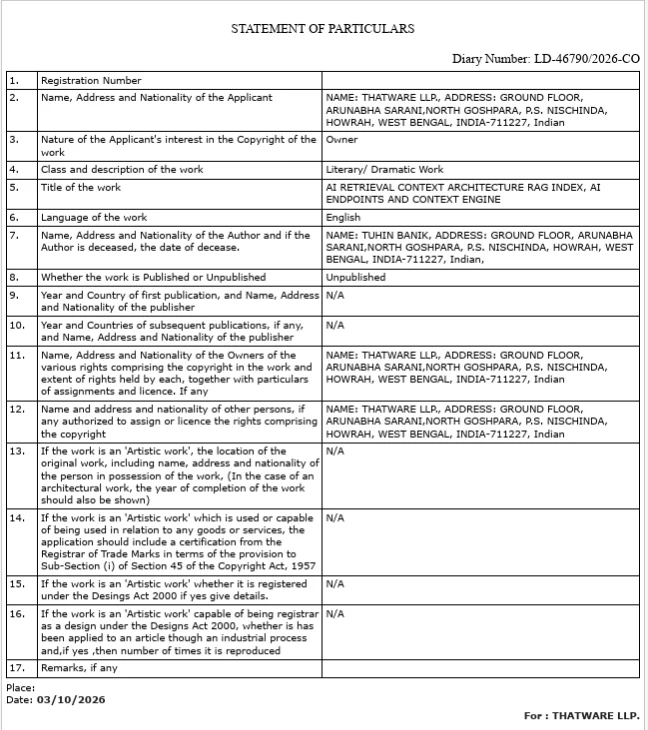
Copyright Notice: This content is part of “AI Retrieval Context Architecture RAG Index, AI Endpoints and Context Engine,” for which a copyright application has been filed by THATWARE LLP with the Copyright Office, Government of India under Diary No. LD-46790/2026-CO. Unauthorized reproduction, copying, distribution, or commercial use is prohibited.