SUPERCHARGE YOUR ONLINE VISIBILITY! CONTACT US AND LET’S ACHIEVE EXCELLENCE TOGETHER!
Search is no longer evolving along a single path.
For years, an SEO strategy could be built around a relatively familiar set of priorities:
- Keyword rankings
- Organic traffic
- Technical SEO
- Backlinks
- Content production
- Internal linking
- Conversion optimization
Those foundations still matter.
What has changed is the environment surrounding them.
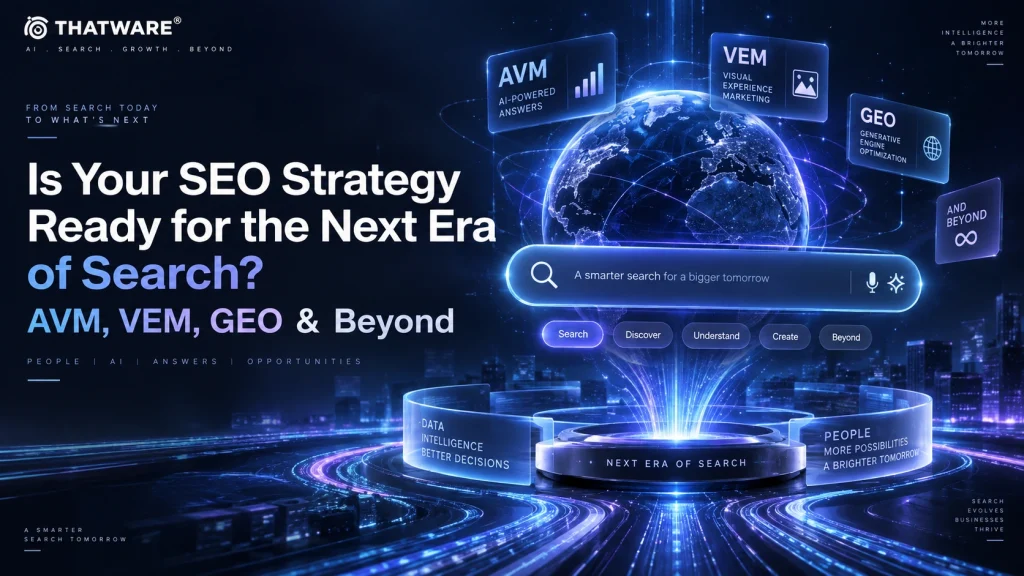
A customer may now discover a company through Google Search, an AI Overview, ChatGPT, Gemini, Perplexity, Copilot, another answer engine, or an AI assistant embedded inside a platform they already use.
That creates a new challenge for businesses.
It is possible to rank well in Google while still being poorly represented in AI-generated answers. A company can have strong organic traffic while competitors receive more AI recommendations. A website can be technically optimized while machines still struggle to understand the relationships between the brand, its services, people, products and areas of expertise.
This is why a future ready SEO strategy can no longer stop at rankings.
Modern search strategy increasingly needs to connect:
- Traditional SEO
- AEO
- GEO
- LLM SEO
- AI Visibility Metric or AVM
- Vector Entity Modelling or VEM
- Entity optimization
- Knowledge graph development
- RAG readiness
- Citation readiness
- Semantic search
- AI visibility analysis
- Search intelligence
- Predictive analysis
The real question is no longer simply:
“Is our SEO performing?”
It is:
“Can search engines and AI systems find us, understand us, trust us, retrieve us, cite us and recommend us?”
That is the question businesses need to answer as search enters its next phase.
What Has Actually Changed in Search?
Traditional search largely revolved around a search engine ranking documents in response to queries.
AI-driven discovery introduces another layer.
AI systems may interpret a question, retrieve information from several sources, identify entities, compare alternatives, summarize evidence and generate a response without presenting a traditional list of ten blue links.
This changes what visibility means.
Previously, a brand might define success through:
- Ranking position
- Organic clicks
- Impressions
- Sessions
- Leads
- Conversions
Those metrics still matter.
But businesses increasingly need to understand:
- Is the brand appearing in AI responses?
- Is it being cited?
- Is it being recommended?
- How often does it appear compared with competitors?
- Does AI understand what the company actually does?
- Are its services correctly associated with relevant topics?
- Is brand information consistent?
- Which sources influence AI perception of the brand?
- What prompts trigger competitor recommendations?
- What visibility gaps exist outside Google?
A modern search optimization strategy therefore needs to measure and improve both traditional search performance and AI visibility.
Why Traditional SEO Is Still Important
The rise of AI search does not make SEO irrelevant.
In fact, many of the signals that support conventional SEO can also make information easier for search and AI systems to access and interpret.
These include:
- Crawlability
- Clear site architecture
- Quality content
- Internal linking
- External authority
- Structured data
- Consistent entity information
- Useful research
- Strong topical coverage
- Trustworthy citations
The change is not that SEO has stopped working.
The change is that SEO now sits inside a much larger search ecosystem.
A strong advanced SEO strategy should preserve the foundations that work while expanding into AI visibility, entity intelligence and generative search.
Expert Insight:
“Future-ready SEO is not about replacing traditional optimization. It is about extending search strategy to account for how AI systems interpret, retrieve, compare, cite and recommend information.”
The New Search Stack: SEO, AEO, GEO, LLM SEO, VEM and AVM
One of the easiest ways to understand modern search is to think in layers.
SEO: Build the Discoverability Foundation
Traditional SEO helps search systems access, index, understand and rank website content.
This includes:
- Technical SEO
- Keyword research
- Content optimization
- Internal linking
- Backlinks
- Structured data
- Site architecture
- Conversion optimization
AEO: Become Easier to Answer From
Answer Engine Optimization focuses on making information suitable for direct answers.
AEO may include:
- Conversational query research
- Question clustering
- Concise answer formatting
- FAQs
- Definition blocks
- Comparison sections
- Structured information
- Semantic relevance
GEO: Improve Generative Search Visibility
Generative Engine Optimization focuses on strengthening a brand’s likelihood of being represented in AI-generated search experiences.
GEO can involve:
- Citation readiness
- Brand authority
- Entity optimization
- Digital PR
- Research assets
- AI visibility analysis
- External corroboration
- Generative search monitoring
LLM SEO: Improve Machine Understanding and Retrieval
LLM SEO considers how large language models interpret, associate and potentially retrieve information about a business.
Important areas include:
- Entity clarity
- Semantic relationships
- Structured content
- Knowledge graph signals
- Contextual relevance
- External validation
- Machine-readable information
VEM: Strengthen Entity Understanding
Vector Entity Modelling focuses on how clearly a business and its related entities are represented within a connected semantic environment.
Instead of treating a keyword as an isolated target, VEM considers relationships such as:
ThatWare → provides → AI SEO
ThatWare → provides → GEO
ThatWare → provides → AEO
ThatWare → specializes in → search intelligence
ThatWare → associated with → AI search optimization
The stronger and more consistent these relationships become, the easier it can be for machines to interpret the brand within the correct context.
AVM: Measure AI Visibility
AI Visibility Metric adds a measurement layer.
Traditional analytics can tell you about rankings, traffic and clicks.
AVM is concerned with questions such as:
- Does the brand appear in relevant AI answers?
- Is the brand recommended?
- Is the website cited?
- How prominently is the brand represented?
- Which competitors appear more frequently?
- Where are AI visibility gaps developing?
- Is the brand represented accurately?
Together, VEM and AVM introduce something conventional SEO reporting has historically lacked.
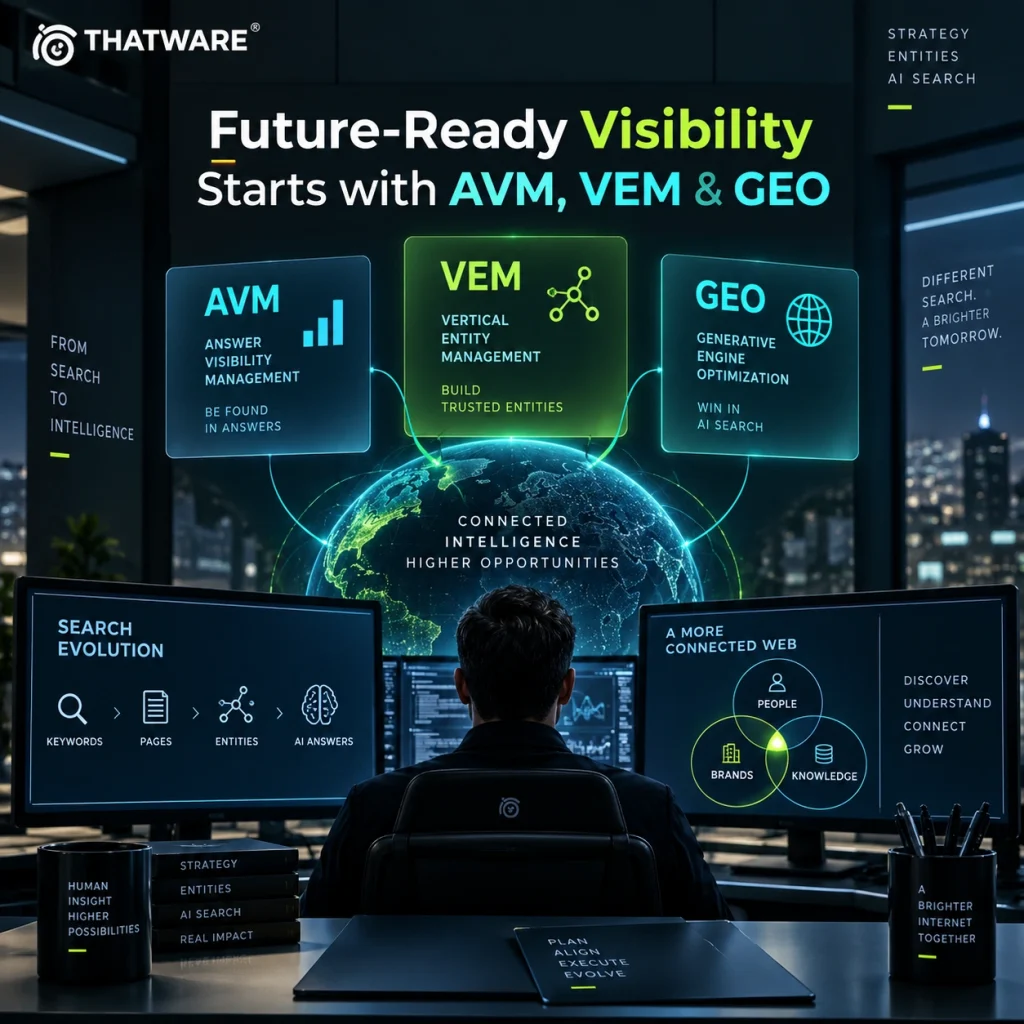
VEM asks:
“How well do machines understand the brand?”
AVM asks:
“How visible is that brand once AI systems generate answers?”
Why AVM Matters in the Next Era of SEO
A traditional SEO report may tell a marketing team that a company ranks fourth for an important keyword.
That information is valuable.
But imagine that prospects increasingly ask:
“Which companies offer advanced enterprise SEO and AI search optimization?”
If several AI systems consistently recommend competitors while excluding your business, conventional ranking reports may not reveal the whole problem.
That is the type of gap AVM is designed to examine.
Traditional SEO Metrics vs AVM
| Traditional SEO Measurement | AVM-Oriented Measurement |
| Keyword position | AI answer presence |
| Organic impressions | AI visibility frequency |
| Click-through rate | Recommendation presence |
| Backlinks | Citation opportunities |
| Search traffic | AI discoverability |
| SERP share | AI share of visibility |
| Ranking movement | Prompt-level visibility changes |
| Brand queries | AI brand representation |
AVM does not replace rankings, traffic or conversion reporting.
It expands measurement into search environments where users may receive recommendations without clicking through a traditional results page.
That makes AVM particularly relevant to AI SEO strategy, SEO strategy services and modern AI visibility programs.
Why VEM Matters for Brand Understanding
AI visibility depends partly on whether systems understand what the business represents.
Suppose a company offers:
- Enterprise SEO
- AEO
- GEO
- Technical SEO
- AI search optimization
- Digital PR
But its service pages use inconsistent terminology, third-party profiles contain outdated information and its content does not clearly connect the company with these areas.
The entity picture becomes fragmented.
VEM addresses this problem by strengthening relationships between entities.
For example:
Brand → Service
Service → Industry
Founder → Expertise
Brand → Location
Product → Use Case
Research → Topic
Article → Expert
Company → Technology
This moves optimization beyond keyword repetition.
It creates a more connected semantic identity.
VEM Focus Areas
| VEM Area | Purpose |
| Entity clarity | Establish what the business is |
| Semantic relationships | Connect services, topics and expertise |
| Entity consistency | Reduce conflicting information |
| Context | Explain where the business fits |
| Topical associations | Strengthen subject relevance |
| Brand relationships | Connect people, products and services |
| Machine understanding | Improve contextual interpretation |
A strong VEM program should therefore sit alongside technical SEO, semantic SEO, structured data and knowledge graph development.
How AVM and VEM Work Together
AVM and VEM address different parts of the same search problem.
VEM focuses on understanding.
AVM focuses on visibility.
A simplified journey may look like this:
Technical Foundation → Entity Data → VEM → Semantic Understanding → GEO/AEO/LLM Optimization → AI Retrieval → AVM Measurement → Search Intelligence → Continuous Improvement
This creates a feedback loop.
If AVM reveals that competitors dominate certain AI prompts, the business can investigate why.
Potential reasons might include:
- Weak entity associations
- Insufficient topical depth
- Limited external authority
- Poor citation readiness
- Inconsistent service positioning
- Missing research
- Weak third-party validation
- Insufficient question coverage
Those findings can then inform VEM, GEO, AEO, content and authority-building activity.
This is what turns AI search optimization into a measurable strategy rather than a collection of isolated tactics.
RAG Readiness Is Becoming Another Search Consideration
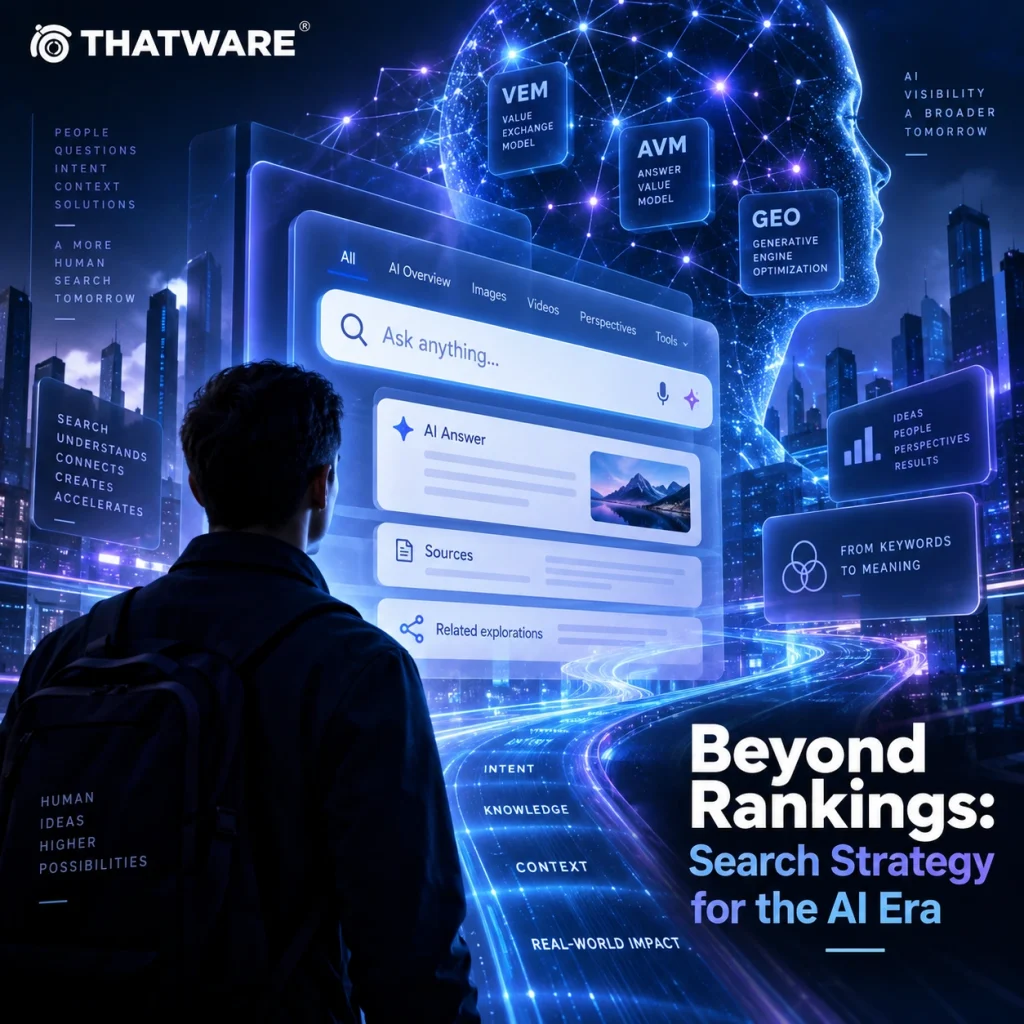
Another important concept is Retrieval-Augmented Generation, commonly known as RAG.
RAG-based systems retrieve information before generating a response.
For businesses, this introduces a practical question:
Is our information structured clearly enough to be found and retrieved when an AI system needs it?
RAG-ready content often benefits from:
- Clear headings
- Direct definitions
- Logical information architecture
- Consistent terminology
- Strong entity references
- Well-structured facts
- Concise answer sections
- Supporting evidence
- Updated information
- Machine-readable formats
RAG readiness does not mean writing robotic content.
It means reducing ambiguity.
A human reader should still find the information useful and persuasive, while machines can more easily identify specific facts, relationships and answers.
What Does a Modern SEO Strategy Look Like?
A strong modern search strategy is multi-layered.
Technical Layer
Can search engines, crawlers and retrieval systems access the information?
Content Layer
Does the website answer genuine user questions thoroughly?
Intent Layer
Does content reflect informational, commercial, comparison and decision-stage intent?
Entity Layer
Are the company, people, products, services and relationships clearly represented?
VEM Layer
Are those entities connected through strong semantic relationships?
Authority Layer
Is the brand supported by credible external signals?
AEO Layer
Can relevant information be extracted efficiently as an answer?
GEO Layer
Is the brand positioned for generative search visibility?
LLM Layer
Can AI systems contextualize and associate the brand correctly?
RAG Layer
Is information easy to retrieve and reuse within an answer-generation workflow?
AVM Layer
Can AI visibility, recommendations, citations and competitive presence be measured?
Intelligence Layer
Can the resulting data be used to predict opportunities and guide future strategy?
That is what separates routine optimization from an advanced SEO strategy.
Quick Question: Does Modern SEO Still Begin With Technical SEO?
Yes.
Technical SEO remains a critical foundation.
However, technical optimization alone does not tell search systems what a brand should be known for, establish authority or guarantee AI visibility.
Technical SEO should now work alongside entity intelligence, VEM, AEO, GEO, LLM SEO, AVM and search intelligence.
The Shift From Keywords to Search Intelligence
Keywords remain valuable.
But keywords only show part of the customer journey.
Compare these two searches:
“enterprise SEO agency”
and:
“Which agency should a multinational company choose for enterprise SEO, GEO and ChatGPT visibility?”
The second query contains much more information.
It reveals:
- Company size
- Commercial intent
- Required services
- Evaluation behavior
- AI search concerns
- Decision-stage context
This is why SEO strategy services increasingly need to move beyond keyword lists.
Search intelligence asks:
- Why is someone searching?
- What decision are they approaching?
- Which entities matter?
- What alternatives are being considered?
- Which platform are they using?
- What evidence might influence the answer?
- Which companies are already being recommended?
Strategic Insight:
“Keywords describe what people type. Search intelligence helps explain the decision, context and entity relationships behind the query.”
AI Search Changes the Meaning of Visibility
In conventional search, visibility might mean reaching positions one through three.
In generative search, visibility can also mean:
- Being mentioned
- Being cited
- Being summarized
- Being recommended
- Being compared
- Being included in a shortlist
- Being used as supporting evidence
- Being recognized as an authority
This is why a strong AI SEO strategy may need to address:
- Topical depth
- Entity authority
- External mentions
- Structured data
- Research
- Brand consistency
- Citation readiness
- Semantic relationships
- Prompt coverage
- LLM visibility
- AI recommendation share
- AVM measurement
1. Start With Search Behaviour, Not Just Keywords
One of the easiest ways to limit an SEO strategy is to begin and end with a keyword spreadsheet.
A stronger process asks:
- What problem does the user have?
- What decision are they trying to make?
- Which platforms might they use?
- What questions occur before the purchase?
- Which comparisons matter?
- What evidence builds trust?
- What might an AI assistant recommend?
For example:
“Which SEO agency can manage enterprise SEO across multiple countries?”
is commercially richer than simply:
“enterprise SEO company.”
The first query reveals context.
Future search strategies need to optimize around that context.
2. Build Around Entities With VEM
Entity optimization should become a core element of an advanced SEO strategy.
Search systems should clearly understand:
- The company
- Founders
- Leadership
- Services
- Products
- Industries
- Locations
- Expertise
- Research
- Partnerships
- Relationships between these entities
VEM takes this one stage further by mapping those relationships as a connected model rather than treating each page as an isolated optimization target.
Case Study: Fixing a Fragmented Brand Entity
Imagine an enterprise technology company whose website describes one service as “AI optimization,” its LinkedIn page calls it “AI marketing,” and third-party profiles use outdated terminology.
A VEM-led strategy could identify the inconsistent relationships and rebuild a clearer entity framework across the website, structured data, content and external references.
The objective would be stronger machine understanding, not simply additional keyword usage.
3. Build Topical Ecosystems Instead of Isolated Blogs
Publishing disconnected articles creates limited context.
Businesses should develop content ecosystems.
For example:
Modern Search Strategy
→ Technical SEO
→ Semantic SEO
→ Enterprise SEO
→ AI SEO
→ AEO
→ GEO
→ LLM SEO
→ AVM
→ VEM
→ RAG Readiness
→ AI Visibility
→ Entity Optimization
→ Citation Strategy
→ Knowledge Graphs
→ Predictive SEO
→ Search Intelligence
This architecture helps create stronger relationships between topics.
It also gives users a clearer path from education to evaluation and conversion.
4. Create Content That Can Answer Questions
Search is becoming increasingly answer-driven.
Important answers should therefore be easy to identify.
Useful formats include:
- Direct definitions
- Question-based headings
- Comparison tables
- Short answer blocks
- Step-by-step processes
- Examples
- FAQs
- Data points
- Expert commentary
- Summary sections
This supports users while also improving retrieval clarity.
Quick Question: Should Every Page Become an FAQ?
No.
The objective is clarity, not repetitive question formatting.
A good page should still read naturally. Important facts should simply be easy to identify, interpret and retrieve.
5. Improve Citation Readiness
AI search introduces a growing emphasis on citations and source selection.
Businesses should therefore create information that deserves to be referenced.
Useful assets can include:
- Original research
- Proprietary frameworks
- Industry studies
- Benchmark reports
- Surveys
- Technical resources
- Expert analysis
- Data sets
- Case studies
- Comparison research
Citation Insight:
“Brands become easier to cite when they publish information that adds genuine evidence to the conversation.”
Citation readiness can support SEO, GEO and AI visibility simultaneously.
6. Build External Authority
A website cannot establish every claim about itself.
External evidence matters.
Relevant authority signals may come from:
- Digital PR
- Interviews
- News coverage
- Industry publications
- Research citations
- Expert commentary
- Partnerships
- Conferences
- Awards
- Professional profiles
These references can strengthen the evidence network surrounding the brand.
Case Study: Building an AI-Era Evidence Network
Consider a B2B company with strong internal content but almost no independent coverage.
A modern strategy could combine technical SEO, expert-led content, original research, digital PR and industry citations.
The objective would not simply be additional backlinks.
It would be to create corroborating signals that search and AI systems can use when assessing the company.
7. Strengthen Structured Data and Knowledge Relationships
Structured data helps reduce ambiguity.
Depending on the website, relevant schema may include:
- Organization
- Person
- Service
- Product
- Article
- FAQPage
- Review
- LocalBusiness
- BreadcrumbList
Schema should support information already present on the website.
It does not create authority by itself.
Its role is to make relationships clearer.
This becomes especially valuable when combined with VEM and entity optimization.
8. Integrate AEO
Answer Engine Optimization helps make content suitable for answer-oriented environments.
An AEO program may include:
- Conversational query research
- Question clustering
- Direct answers
- Definition optimization
- Comparison content
- FAQs
- Semantic optimization
- Structured information
AEO should not be treated as a replacement for SEO.
It is another visibility layer.
9. Integrate GEO
Generative Engine Optimization focuses on AI-generated discovery.
A GEO strategy may examine:
- AI mentions
- AI citations
- Recommendation presence
- Brand authority
- Source relationships
- Entity signals
- Digital PR
- Content usefulness
- Generative search visibility
GEO connects naturally with VEM and AVM.
VEM can strengthen understanding.
GEO can improve generative visibility.
AVM can measure the outcome.
10. Integrate LLM SEO
LLM SEO looks at how large language models understand and retrieve information.
This can include:
- Semantic clarity
- Entity consistency
- Structured content
- Knowledge relationships
- External corroboration
- Context-rich information
- Machine-readable assets
As AI assistants become part of research and buying journeys, LLM SEO becomes another component of next generation SEO services.
11. Add AVM to the Measurement Framework
Optimization without measurement creates uncertainty.
AVM should therefore become part of the reporting layer for brands investing in AI search.
Potential areas to evaluate include:
- AI brand mentions
- Recommendation frequency
- Citation presence
- Prompt coverage
- Competitor visibility
- Brand representation
- Entity accuracy
- AI sentiment
- Cross-platform visibility
AVM can help turn generative search from an abstract concept into a performance discussion.
12. Use VEM to Improve Entity Relationships
VEM should not be treated as a one-time exercise.
Entity relationships evolve as a company:
- Launches new services
- Enters new markets
- Hires experts
- Publishes research
- Develops products
- Changes positioning
- Earns new citations
The entity model should evolve with the company.
This is especially important for enterprise organizations managing multiple products, locations and service categories.
13. Prepare Content for RAG-Based Retrieval
RAG-ready optimization should focus on information quality and retrievability.
Businesses can improve readiness by:
- Keeping important facts current
- Using descriptive headings
- Maintaining consistent terminology
- Providing explicit definitions
- Avoiding unnecessary ambiguity
- Connecting related entities
- Creating concise factual sections
- Citing evidence
- Structuring complex information logically
This improves the likelihood that useful information can be identified by retrieval systems.
14. Introduce Predictive Search Intelligence
The next stage of search strategy is not simply reacting to performance.
It is anticipating change.
AI-assisted analytics can help businesses evaluate:
- Emerging query patterns
- New topic clusters
- Competitor expansion
- Content gaps
- Search demand shifts
- AI recommendation trends
- Entity opportunities
- Visibility decline
- Market changes
Professional AI driven SEO services can use this intelligence to help prioritize activity.
The goal is not automation for its own sake.
The goal is better decisions.
What Are Advanced SEO Services Now?
The definition of advanced SEO services is expanding.
A sophisticated program may include:
- Technical SEO
- Semantic SEO
- Enterprise SEO
- Content architecture
- Entity optimization
- VEM
- AVM
- AEO
- GEO
- LLM SEO
- RAG readiness
- Knowledge graph development
- Citation strategy
- Digital PR
- AI visibility measurement
- Competitive intelligence
- Predictive search analysis
- Search forecasting
Advanced SEO should solve visibility and business problems rather than simply complete a checklist.
Why Businesses Still Need SEO Consulting Services
Many companies already have marketers, developers and content teams.
Their challenge may not be execution.
It may be deciding what deserves attention.
Professional SEO consulting services can help businesses understand:
- Where growth opportunities exist
- Which visibility gaps matter most
- Which technical issues deserve priority
- How content architecture should evolve
- How AI changes customer discovery
- Whether AVM should be introduced
- Where VEM can strengthen machine understanding
- Which GEO opportunities exist
- How results should be measured
This is where SEO strategy consulting becomes valuable.
The outcome should be a roadmap rather than a generic list of fixes.
What Makes a Future-Ready SEO Strategy?
A future ready SEO strategy should have several characteristics.
Platform-Agnostic
It should consider traditional search and AI-driven discovery rather than relying on a single platform.
Entity-Aware
It should help machines understand the company and its relationships.
VEM-Enabled
It should strengthen the semantic model surrounding the brand.
AI-Measurable
It should use AVM or equivalent AI visibility measurement to understand performance.
Intent-Driven
It should reflect real search and buying behaviour.
Evidence-Based
Claims should be supported by useful information and credible external signals.
Retrieval-Friendly
Important information should be clear enough for modern retrieval systems.
Flexible
The strategy should evolve as search behaviour changes.
Commercially Relevant
Search activity should support meaningful business outcomes.
Quick Question: What Is the Clearest Sign of a Future-Ready SEO Strategy?
It measures and improves more than rankings.
If a strategy evaluates technical SEO, content, entities, AI visibility, citations, recommendations, competitive presence and business outcomes together, it is much better positioned for the changing search landscape.
Enterprise SEO Needs a Broader Model
Enterprise websites introduce additional complexity.
An enterprise SEO strategy may need to manage:
- Thousands or millions of URLs
- Multiple markets
- Languages
- Products
- Service divisions
- Regional websites
- Complex CMS platforms
- Governance
- Technical debt
- Large content teams
- AI visibility across many categories
Adding AI search makes the environment even more complex.
Enterprises may need to ask:
- Does AI understand each product correctly?
- Are regional entities differentiated?
- Are service relationships accurate?
- Which business units dominate AI visibility?
- Which competitors are receiving recommendations?
- Are AI answers using outdated information?
- Are different markets presenting inconsistent entity signals?
VEM can help organize entity relationships.
AVM can help measure AI visibility across categories and prompts.
That makes both highly relevant to enterprise search strategy.
What Are SEO Transformation Services?
SEO transformation services help organizations move from legacy search processes to broader visibility systems.
That transition might involve moving from:
- Keyword lists to search intelligence
- Rankings to multi-platform visibility
- Link acquisition to authority development
- Isolated pages to entity ecosystems
- Generic reporting to AVM
- Keyword associations to VEM
- Traditional content to RAG-ready information
- Manual analysis to AI-assisted intelligence
- SEO-only thinking to SEO + AEO + GEO + LLM SEO
Transformation Principle:
“SEO transformation should retain the fundamentals that work while adding the capabilities required by new discovery environments.”
What Are Next Generation SEO Services?
Next generation SEO services combine established SEO principles with emerging AI-search capabilities.
They may include:
- Traditional SEO
- AI search optimization
- AEO
- GEO
- LLM SEO
- AVM
- VEM
- Entity intelligence
- Semantic architecture
- Citation optimization
- RAG readiness
- Knowledge graph enhancement
- Predictive analysis
- AI visibility tracking
The objective is not to chase every new acronym.
The objective is to build a search system capable of adapting as discovery changes.
The Role of a Strategic SEO Agency
A strategic SEO agency should help businesses answer questions that extend beyond routine execution.
For example:
- Where is search heading?
- How visible are we in AI answers?
- Which competitors dominate generative search?
- Does AI understand our brand correctly?
- Should we implement AVM?
- Which entity gaps can VEM address?
- Which GEO opportunities matter?
- Are our resources RAG-ready?
- Which topics should we own?
- What should we prioritize first?
- How will success be measured?
Strategy requires context, evidence and prioritization.
A Six-Phase Modern Search Optimization Strategy
A practical search optimization strategy can be organized into six phases.
Phase 1: Audit the Full Search Environment
Review:
- Technical SEO
- Rankings
- Content
- Entity consistency
- AI visibility
- Citations
- Prompt coverage
- Competitors
- External authority
- VEM opportunities
- AVM baseline
Phase 2: Build the Technical and Entity Foundation
Improve:
- Crawlability
- Indexation
- Site architecture
- Internal linking
- Structured data
- Entity consistency
- Knowledge relationships
Phase 3: Strengthen Content and Retrieval Readiness
Develop:
- Topic ecosystems
- Commercial pages
- Direct-answer content
- Comparison resources
- Research assets
- RAG-ready information
- Expert-led content
Phase 4: Build Authority and Citation Signals
Expand:
- Digital PR
- Industry coverage
- Research citations
- Expert commentary
- Partnerships
- Original studies
- Third-party validation
Phase 5: Improve AI Search Visibility
Apply:
- AEO
- GEO
- LLM SEO
- VEM
- Citation optimization
- AI visibility analysis
Phase 6: Measure With AVM and Optimize
Monitor:
- AI mentions
- Citations
- Recommendations
- Prompt coverage
- Competitor visibility
- AI sentiment
- Entity accuracy
- Organic performance
- Leads and conversions
Then use those insights to inform the next cycle.
What Businesses Should Measure Now
Traditional search metrics remain important:
- Rankings
- Clicks
- Impressions
- Organic traffic
- Leads
- Revenue
- Conversions
But businesses should increasingly consider additional AI-search metrics:
- AI mentions
- AI citations
- Recommendation frequency
- Prompt coverage
- Competitor share of visibility
- Entity accuracy
- Brand representation
- AI sentiment
- Cross-platform presence
- Source visibility
This is where AVM can add a valuable layer to existing analytics.
Common Search Strategy Mistakes
Focusing Only on Rankings
Rankings do not show the entire modern discovery journey.
Treating GEO as a Replacement for SEO
GEO should expand SEO, not eliminate its foundations.
Adding AVM Without Acting on the Data
Measurement only creates value when insights influence strategy.
Treating VEM as Another Keyword Exercise
VEM is about entity relationships and context, not stuffing additional phrases onto pages.
Publishing Disconnected Content
Isolated pages make it harder to establish a coherent topic ecosystem.
Ignoring RAG Readiness
Useful information can be harder to retrieve when content is ambiguous or poorly structured.
Ignoring External Evidence
A company cannot build strong authority entirely through claims on its own website.
Chasing Every AI Trend
Not every new tactic deserves immediate investment.
A strategy should prioritize areas based on commercial relevance, visibility gaps and measurable opportunity.
When Does a Business Need an Advanced SEO Strategy?
A business may need to rethink its approach when:
- Organic growth has plateaued
- Rankings are stable but leads are not growing
- Competitors dominate AI recommendations
- AI systems misrepresent the brand
- Content lacks a clear architecture
- Service entities are inconsistent
- Multiple markets require coordination
- AI visibility cannot currently be measured
- Internal teams lack strategic direction
- New discovery platforms influence buyers
These are signs that tactical SEO may no longer be enough.
How ThatWare Approaches Search Strategy for the AI Era
At ThatWare, modern search can be approached as a connected intelligence problem rather than a collection of isolated SEO activities.
That means bringing together:
- Technical SEO
- Semantic SEO
- AEO
- GEO
- LLM SEO
- AVM
- VEM
- AI search optimization
- Entity intelligence
- Knowledge graphs
- RAG readiness
- Content architecture
- Digital PR
- Citation development
- AI visibility analytics
- Predictive analysis
- Search forecasting
- Competitive intelligence
Businesses looking for SEO strategy services, advanced SEO services, AI driven SEO services, SEO consulting services, SEO strategy consulting, SEO transformation services or next generation SEO services should increasingly evaluate whether a partner can connect these disciplines into one strategy.
That is more valuable than treating SEO, GEO, AEO, entity optimization and AI measurement as separate projects.
SEO Strategy for the Next Era of Search
The next era of search will not eliminate SEO.
It will broaden the discipline.
Search strategy will increasingly operate across:
- Search engines
- AI assistants
- Answer engines
- Generative search
- Knowledge systems
- Retrieval systems
- Entity networks
- Citation ecosystems
- Brand authority signals
AVM and VEM are important because they address two questions that conventional SEO alone cannot fully answer:
Does AI understand the brand correctly?
and:
Is the brand actually visible when AI generates answers?
GEO adds another question:
Is the brand positioned to appear within generative search?
AEO asks:
Can our information answer user questions clearly?
LLM SEO asks:
Can language models interpret and retrieve our information effectively?
RAG readiness asks:
Can retrieval systems find the right information when they need it?
Together, these disciplines create a much more complete picture of modern search readiness.
Final Thoughts
Search is evolving faster than many SEO programs.
A company can remain technically optimized while gradually becoming less visible in emerging discovery environments.
The solution is not to abandon SEO.
It is to expand what SEO strategy means.
A strong advanced SEO strategy should combine technical performance, user intent, semantic depth, authority, entity understanding, VEM, GEO, AEO, LLM SEO, RAG readiness, AI visibility and AVM-based measurement.
A future ready SEO strategy should answer more than:
“Where do we rank?”
It should also answer:
“Does AI understand us?”
“Does AI retrieve us?”
“Does AI cite us?”
“Does AI recommend us?”
“How visible are we compared with competitors?”
That is the shift from traditional SEO management to modern search intelligence.
And that is what being ready for the next era of search increasingly means.