
SUPERCHARGE YOUR ONLINE VISIBILITY! CONTACT US AND LET’S ACHIEVE EXCELLENCE TOGETHER!
This document provides a complete strategic, architectural, semantic, authority-oriented, and implementation-level explanation of the external-citations.json file.
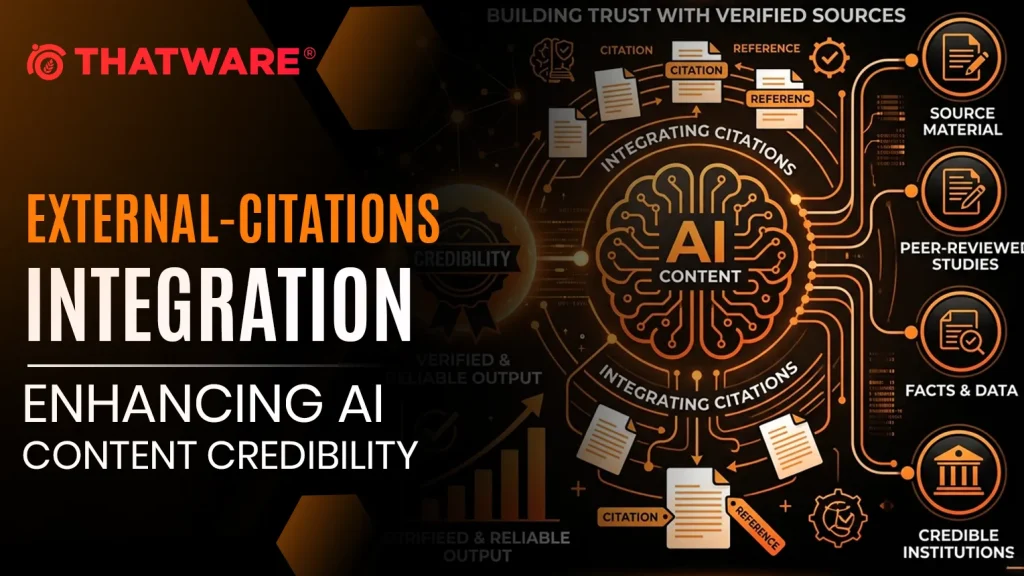
This file is designed to help AI systems:
understand third-party validation
map external authority relationships
analyze semantic citation ecosystems
evaluate off-site trust propagation
understand brand authority outside owned properties
optimize citation graph intelligence
model semantic reputation
identify authoritative references
strengthen AI trust scoring
improve retrieval confidence
validate expertise through external signals
understand ecosystem-wide semantic influence
This file is specifically intended for:
Generative Engine Optimization (GEO)
Large Language Model optimization
semantic authority engineering
AI citation ecosystems
Retrieval-Augmented Generation (RAG)
AI trust systems
off-page AI optimization
semantic reputation architectures
external provenance systems
citation graph intelligence
AI-native authority systems
future semantic web infrastructures
This guide explains:
what external-citations.json is
why it matters
how AI systems interpret external authority
how semantic citation networks work
how trust propagates externally
how third-party validation influences AI systems
how citation graphs affect retrieval
how semantic reputation develops
how AI authority modeling functions
how external semantic ecosystems operate
enterprise-grade authority architectures
reusable production-ready JSON structures
1. What Is external-citations.json?
external-citations.json is a machine-readable external citation and semantic validation framework that defines:
who cites the organization
where expertise is referenced
which third-party domains validate authority
how external semantic relationships operate
which mentions strengthen AI trust
which citation ecosystems exist
how off-site authority propagates
which semantic references reinforce expertise
how external trust networks behave
how AI systems should interpret external validation
In simple terms:
It is the external semantic reputation layer of an AI-native website.
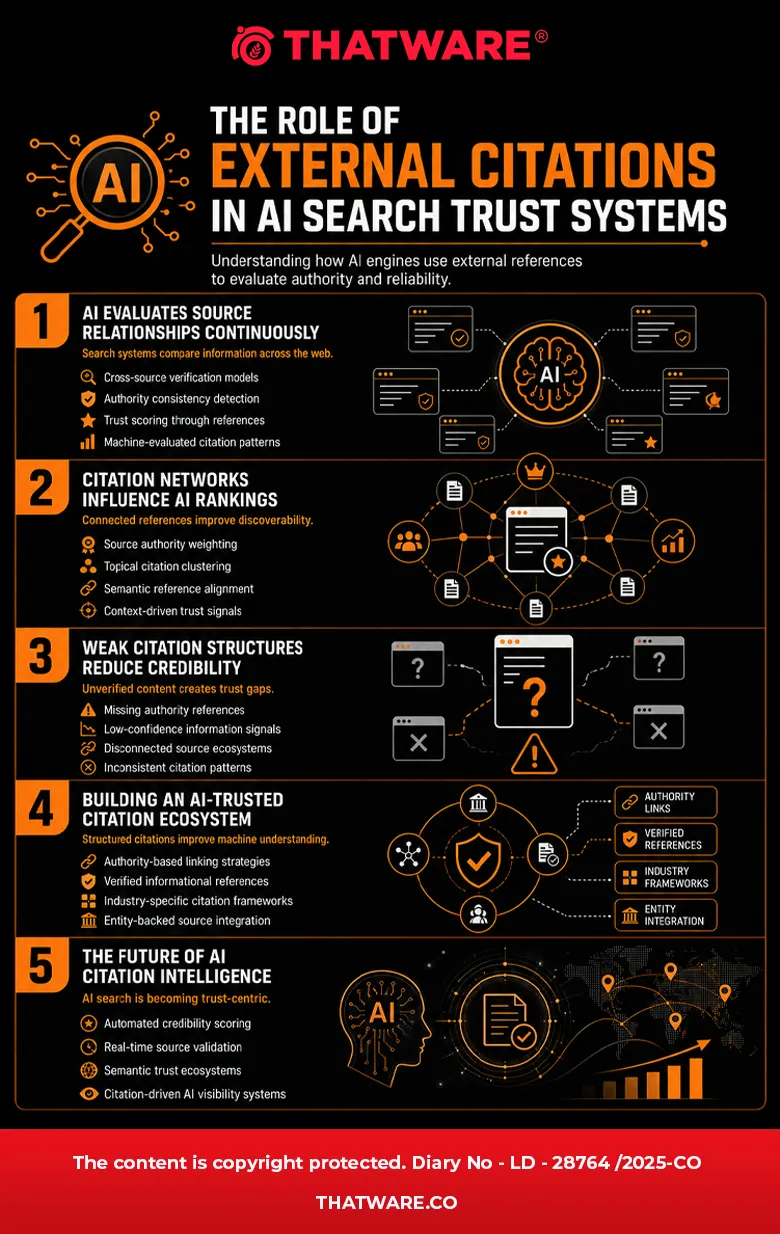
2. Why external-citations.json Exists
Traditional SEO relied heavily on:
backlinks
anchor text
domain authority
PageRank
referring domains
But future AI systems increasingly care about:
semantic authority
citation quality
contextual validation
trusted references
knowledge reinforcement
entity reputation
expertise consistency
third-party verification
AI systems increasingly ask:
Who else references this entity?
Which trusted ecosystems validate these claims?
Which external sources reinforce expertise?
Is this authority recognized externally?
Does semantic consensus exist?
external-citations.json solves this problem.
3. Core Objective of external-citations.json
The file helps AI systems answer:
Which external sources validate this entity?
Which citations reinforce expertise?
Which third-party references matter most?
Which external domains strengthen authority?
Which semantic ecosystems recognize this brand?
How strong is off-site semantic trust?
Which mentions influence AI confidence?
Which citations strengthen retrieval trust?
Which authority relationships exist externally?
How should external reputation influence AI systems?
4. Why This Matters for GEO
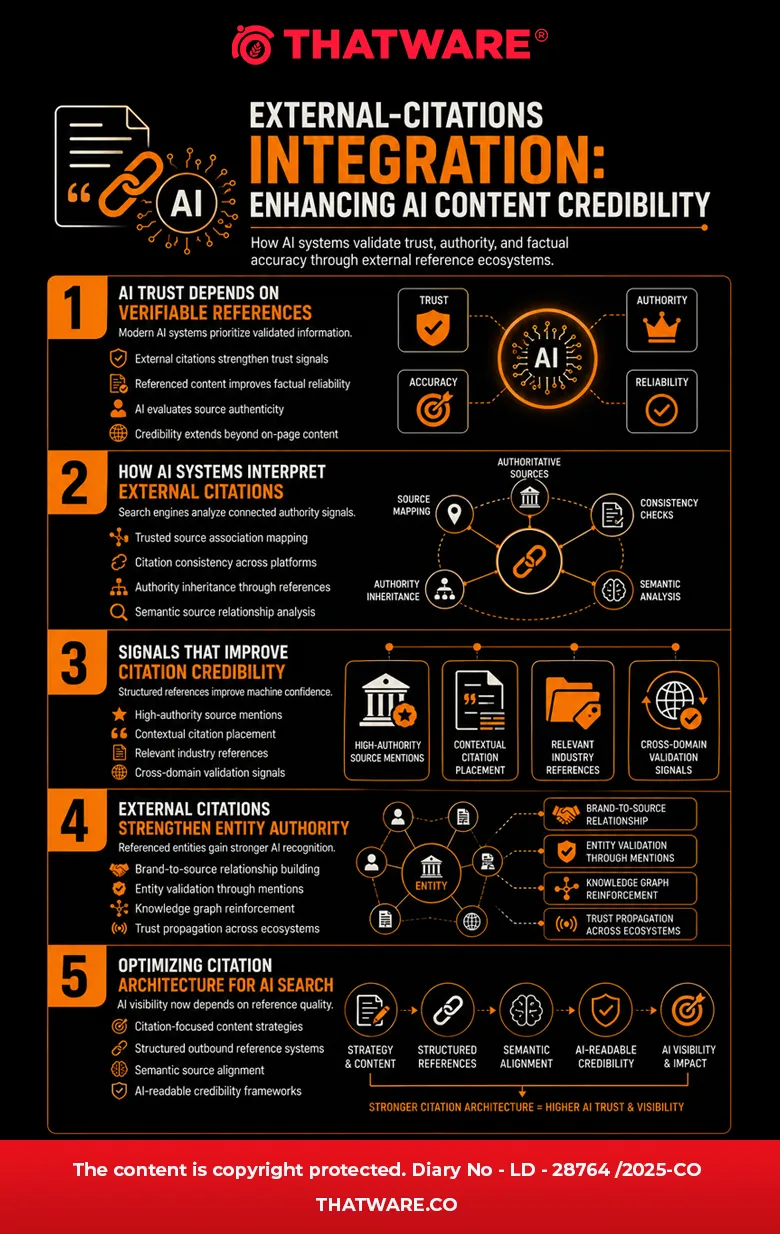
In Generative Engine Optimization, external authority increasingly influences:
AI trust
citation frequency
answer inclusion
semantic credibility
retrieval confidence
expertise validation
entity authority
semantic ranking
AI systems increasingly prioritize:
externally validated expertise
semantically reinforced entities
trusted citation ecosystems
consensus-backed knowledge
cross-domain authority consistency
external-citations.json directly improves these signals.
5. Understanding AI Citation Ecosystems
Modern AI systems increasingly operate using:
citation graphs
semantic relationship networks
authority propagation systems
provenance chains
trust ecosystems
entity validation systems
External citations influence:
retrieval weighting
answer confidence
trust modeling
semantic authority
grounding quality
contextual reliability
6. Difference Between Backlinks and Semantic Citations
Traditional Backlinks
Focused on:
hyperlink counts
link authority
anchor text
PageRank transfer
Semantic Citations
Focused on:
contextual authority
expertise reinforcement
semantic relationships
trusted references
entity validation
knowledge consensus
AI trust propagation
AI systems increasingly care more about semantic citations than simple links.
7. Relationship With Other GEO Files
external-citations.json works together with:
| File | Role |
| trust-signals.json | Internal trust validation |
| external-authority.json | External authority scoring |
| knowledge-graph.json | Entity relationships |
| entity-authority.json | Authority weighting |
| citation-preferences.json | Internal citation routing |
| ai-signals.json | Semantic prioritization |
| reasoning-map.json | Evidence-backed reasoning |
The external citation layer validates authority outside owned assets.
8. Recommended File Location
Primary:
https://example.com/external-citations.json
Optional:
https://example.com/.well-known/external-citations.json
Referenced from:
ai-endpoints.json
llmsfull.txt
trust-signals.json
external-authority.json
9. Recommended MIME Type
application/json
10. Core Design Principles
10.1 External Validation First
Authority should be externally reinforced.
10.2 Semantic Relevance
Citations should be contextually meaningful.
10.3 Trust-Oriented Modeling
Trusted ecosystems matter most.
10.4 Machine Readability
AI systems should easily parse citation relationships.
10.5 Authority Propagation
Trust should flow through semantic relationships.
10.6 Provenance Awareness
Citation origins should remain traceable.
10.7 AI-Native Reputation Engineering
Optimize for semantic authority, not only links.
11. Main Components of external-citations.json
A complete external citation framework should include:
metadata
external citation sources
semantic mention relationships
citation authority scores
trust propagation signals
external provenance metadata
semantic relevance weighting
authority reinforcement logic
citation confidence systems
mention quality analysis
ecosystem relationship graphs
semantic reputation scoring
citation freshness systems
external validation policies
citation clustering
governance metadata
12. Understanding External Semantic Citations
External semantic citations include:
research mentions
industry references
expert discussions
semantic mentions
citations in authoritative content
AI references
conference mentions
academic references
podcast discussions
expert roundups
These citations reinforce authority.
13. Types of External Citations
13.1 Research Citations
Referenced in research or technical papers.
13.2 Industry Citations
Mentioned in industry websites or expert blogs.
13.3 Media Citations
Referenced by media outlets.
13.4 Educational Citations
Used in educational systems.
13.5 AI Citations
Referenced in AI-generated answers.
13.6 Semantic Mentions
Entity discussed contextually without direct links.
14. Citation Authority Modeling
Every citation source should include authority scoring.
Example:
{
“citationAuthority”: 0.94
}
Factors may include:
domain trust
semantic relevance
expertise alignment
citation frequency
contextual authority
trust consistency
15. Semantic Relevance Weighting
Not all external mentions matter equally.
Example:
| Citation Type | Weight |
| Research citation | High |
| Industry mention | High |
| Random blog mention | Low |
| AI-generated citation | Medium |
| Expert reference | Very High |
16. Authority Propagation Systems
Authority can propagate through semantic relationships.
Example:
Trusted Research Site
→ cites ThatWare
→ reinforces GEO expertise
→ improves AI trust confidence
AI systems increasingly model these relationships.
17. Citation Graph Engineering
A citation graph models:
Entity A
→ references Entity B
→ supports Topic C
→ reinforces Authority D
Citation graphs help AI systems understand:
ecosystem trust
expertise validation
semantic influence
knowledge propagation
18. External Provenance Systems
AI systems increasingly need:
citation origin tracking
reference history
mention lineage
validation chains
Provenance improves:
trust
grounding
reliability
transparency
19. Semantic Reputation Systems
Semantic reputation depends on:
who references you
how frequently
in which context
with what authority
across which ecosystems
AI systems increasingly use semantic reputation.
20. Citation Freshness Systems
Fresh citations may carry stronger relevance.
Example:
{
“freshnessWeight”: 0.07
}
AI systems may prioritize:
recent industry mentions
updated references
evolving authority relationships
21. Mention Intelligence
Mentions may include:
linked mentions
unlinked mentions
entity references
contextual discussions
semantic comparisons
AI systems increasingly understand entity mentions without hyperlinks.
22. Relationship With AI Search Engines
AI search engines increasingly prioritize:
trusted citation ecosystems
semantic authority
external validation
entity consensus
External citation systems strengthen all four.
23. Relationship With GEO
This is one of the most important off-page GEO files.
Because future AI visibility may increasingly depend on:
semantic reputation
external validation
trusted citation ecosystems
third-party authority
cross-domain expertise reinforcement
Not merely:
backlinks
anchor text
link counts
24. Relationship With AI Agents
Future AI agents may:
evaluate citation ecosystems
compare external authority
validate expertise through third-party references
model semantic reputation dynamically
optimize trust-aware retrieval
external-citations.json supports this future.
25. Semantic Ecosystem Modeling
AI systems increasingly interpret:
Entity
→ ecosystem relationships
→ citation patterns
→ trust propagation
→ semantic reputation
This creates machine-understandable authority systems.
26. Citation Confidence Systems
Each citation relationship can include confidence scoring.
Example:
{
“citationConfidence”: 0.91
}
Confidence may depend on:
trust
relevance
authority
contextual consistency
provenance clarity
27. Citation Clustering
Related citations can form clusters.
Example:
AI SEO
→ GEO
→ Semantic Search
→ Entity SEO
Clusters improve:
authority reinforcement
contextual trust
28. Common Mistakes
Mistake 1: Treating Citations Like Backlinks
AI systems evaluate semantics, not only links.
Mistake 2: Ignoring Contextual Relevance
Irrelevant mentions provide weak authority.
Mistake 3: No Trust Modeling
Authority depends on trust.
Mistake 4: No Provenance Tracking
AI systems increasingly need citation lineage.
Mistake 5: Weak Semantic Clustering
Disconnected mentions weaken authority.
Mistake 6: No Freshness Awareness
Outdated citations may lose relevance.
29. Best Practices
29.1 Prioritize High-Trust Citations
Authority matters more than quantity.
29.2 Track Semantic Mentions
Not all validation uses hyperlinks.
29.3 Maintain Citation Provenance
Track citation origins.
29.4 Support Authority Propagation
Connect citations to expertise domains.
29.5 Use Citation Clustering
Group semantically related authority signals.
29.6 Align With Trust Systems
Trust and citations should reinforce each other.
29.7 Monitor Citation Freshness
Evolving authority matters.
30. Enterprise-Level Use Cases
AI Search Engines
Semantic authority ranking.
Enterprise Reputation Systems
Authority ecosystem monitoring.
Research Platforms
Citation relationship modeling.
Educational AI Systems
Expertise validation systems.
Autonomous AI Agents
Trust-aware authority evaluation.
Semantic Publishing Systems
Cross-domain authority orchestration.
31. Recommended Update Frequency
| Asset | Frequency |
| Citation monitoring | Weekly |
| Semantic mention tracking | Weekly |
| Authority scoring | Monthly |
| Provenance validation | Quarterly |
| Citation freshness analysis | Monthly |
| Full ecosystem audit | Every 6 months |
32. Full Reusable Prototype JSON Structure
{
“metadata”: {
“fileType”: “external-citations”,
“version”: “1.0.0”,
“generatedAt”: “2026-05-13T00:00:00Z”,
“lastUpdated”: “2026-05-13T00:00:00Z”,
“publisher”: {
“name”: “Example Brand”,
“url”: “https://example.com”
},
“description”: “Machine-readable external citation and semantic validation framework for AI systems, trust propagation architectures, and semantic authority ecosystems.”
},
“citationFramework”: {
“primaryMode”: “semantic-authority-propagation”,
“supportsTrustPropagation”: true,
“supportsSemanticMentions”: true,
“supportsCitationGraphs”: true,
“supportsExternalValidation”: true
},
“externalCitations”: [
{
“citationId”: “citation:industry-mention-001”,
“sourceEntity”: “Industry Research Site”,
“sourceUrl”: “https://industrysite.com/geo-research”,
“citationType”: “research-citation”,
“mentionedTopics”: [
“Generative Engine Optimization”,
“AI SEO”
],
“semanticRelevance”: 0.95,
“citationAuthority”: 0.94,
“citationConfidence”: 0.92,
“trustScore”: 0.93,
“freshnessScore”: 0.88,
“contextualAlignment”: 0.91,
“publishedAt”: “2026-05-10”,
“provenance”: {
“verified”: true,
“sourceType”: “industry-research”
}
},
{
“citationId”: “citation:conference-reference-001”,
“sourceEntity”: “AI Search Conference”,
“sourceUrl”: “https://conference.com/ai-seo-panel”,
“citationType”: “conference-mention”,
“mentionedTopics”: [
“LLM Optimization”,
“Semantic SEO”
],
“semanticRelevance”: 0.90,
“citationAuthority”: 0.91,
“citationConfidence”: 0.89
}
],
“semanticCitationClusters”: [
{
“clusterId”: “cluster:geo-authority”,
“primaryTopic”: “Generative Engine Optimization”,
“relatedTopics”: [
“AI SEO”,
“LLM Optimization”,
“Semantic Search”
],
“clusterAuthority”: 0.95
}
],
“authorityPropagation”: {
“researchCitation”: 0.90,
“industryMention”: 0.75,
“conferenceReference”: 0.80,
“semanticMention”: 0.60,
“mediaMention”: 0.70
},
“retrievalInfluence”: {
“preferHighAuthorityCitations”: true,
“preferFreshMentions”: true,
“minimumCitationAuthority”: 0.70
},
“provenance”: {
“trackCitationOrigins”: true,
“trackMentionLineage”: true,
“preserveVerificationMetadata”: true
},
“freshnessRules”: {
“preferRecentCitations”: true,
“freshnessDecayMonths”: 12,
“freshnessBoost”: 0.05
},
“semanticMentions”: {
“trackUnlinkedMentions”: true,
“trackContextualReferences”: true,
“trackEntityComparisons”: true
},
“governance”: {
“allowCitationTracking”: true,
“allowAuthorityPropagation”: true,
“allowSemanticValidation”: true
},
“maintenance”: {
“maintainedBy”: “AI Reputation Intelligence Team”,
“reviewFrequency”: “monthly”,
“lastReviewed”: “2026-05-13”,
“nextReview”: “2026-06-13”
}
}
33. ThatWare-Specific Strategic Direction
For ThatWare, external citations should strongly reinforce:
Generative Engine Optimization
AI SEO
LLM Optimization
Semantic SEO
Entity SEO
Knowledge Graph Optimization
Recommended external authority flow:
Research Mentions
→ Industry Recognition
→ GEO References
→ AI SEO Citations
→ Semantic Authority Reinforcement
→ AI Trust Expansion
ThatWare should optimize external semantic authority around:
AI-native SEO expertise
GEO research
semantic infrastructure methodologies
retrieval optimization systems
AI visibility frameworks
semantic authority leadership
The goal is not merely receiving mentions.
The goal is:
Becoming externally validated as the semantic authority leader for AI-native search optimization.
34. Final Strategic Summary
external-citations.json should be treated as the external semantic reputation engine of an AI-optimized website.
It defines:
who validates the entity externally
which semantic ecosystems reinforce expertise
how trust propagates across domains
how citation graphs strengthen authority
how AI systems should interpret external reputation
how third-party references reinforce semantic trust
how provenance-aware authority systems operate
how external semantic influence evolves
For GEO and AI-native search infrastructure, this file can become one of the most important off-site authority orchestration systems in the entire architecture.
A properly designed external-citations.json transforms a website from merely referenced into being semantically validated, externally trusted, citation-network reinforced, provenance-aware, and AI-authority optimized.