
SUPERCHARGE YOUR ONLINE VISIBILITY! CONTACT US AND LET’S ACHIEVE EXCELLENCE TOGETHER!
This document provides a complete strategic, architectural, temporal, semantic, and implementation-level explanation of the activity-stream.json file.

This file is designed to help AI systems:
· track semantic changes
· monitor content evolution
· detect freshness signals
· prioritize recently updated knowledge
· optimize temporal retrieval
· understand activity relevance
· identify evolving expertise areas
· improve freshness-aware ranking
· coordinate real-time semantic updates
· monitor contextual evolution
· optimize retrieval recency
· understand dynamic knowledge ecosystems
This file is specifically intended for:
· Generative Engine Optimization (GEO)
· Large Language Model optimization
· Retrieval-Augmented Generation (RAG)
· freshness-aware AI systems
· semantic activity tracking
· temporal retrieval systems
· AI crawl prioritization
· dynamic semantic infrastructures
· AI indexing systems
· contextual freshness optimization
· AI-native publishing ecosystems
· enterprise semantic monitoring systems
This guide explains:
· what activity-stream.json is
· why it matters
· how AI systems interpret freshness
· how semantic activity tracking works
· how temporal relevance influences retrieval
· how freshness-aware ranking functions
· how AI crawl prioritization operates
· how dynamic semantic ecosystems evolve
· how content evolution should be tracked
· how real-time semantic signaling works
· how enterprise freshness infrastructures operate
· reusable production-grade JSON structures
1. What Is activity-stream.json?
activity-stream.json is a machine-readable semantic activity and freshness framework that defines:
· what changed
· when it changed
· why it changed
· which entities were updated
· which topics evolved
· which semantic relationships changed
· which knowledge assets deserve re-indexing
· which updates influence retrieval
· which changes affect contextual relevance
· how freshness should influence AI systems
In simple terms:
It is the real-time semantic activity layer of an AI-native website.
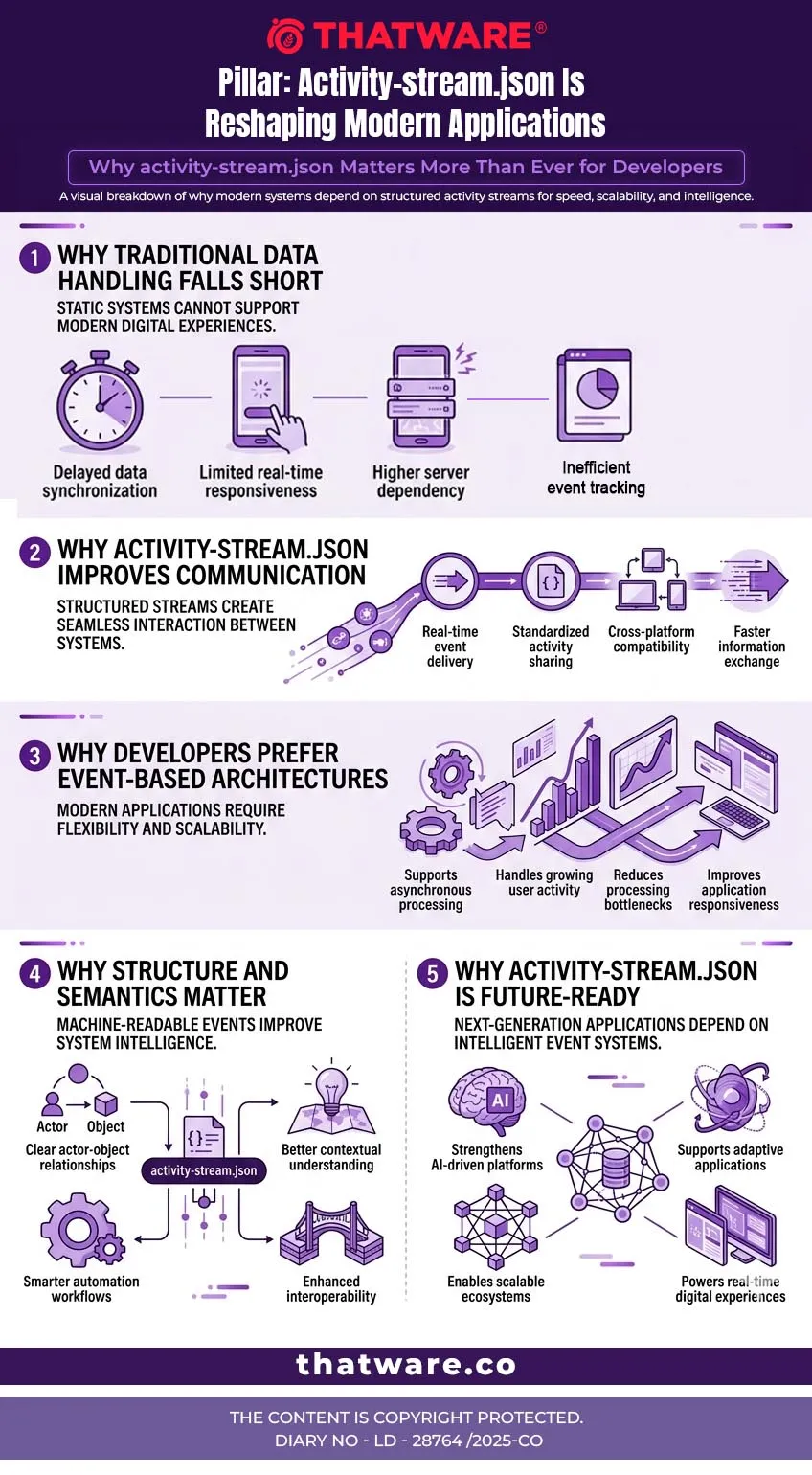
2. Why activity-stream.json Exists
Modern AI systems increasingly prioritize:
· fresh knowledge
· evolving expertise
· updated methodologies
· recent semantic relationships
· current information
· dynamic retrieval relevance
· timely contextual understanding
Traditional websites expose freshness poorly.
Typically through:
· last modified dates
· RSS feeds
· XML sitemaps
But AI systems increasingly require:
· semantic freshness signals
· contextual evolution tracking
· temporal relevance scoring
· machine-readable update intelligence
· activity-aware retrieval systems
· dynamic semantic prioritization
activity-stream.json solves this problem.
3. Core Objective of activity-stream.json
The file helps AI systems answer:
· What changed recently?
· Which entities evolved?
· Which topics are actively maintained?
· Which content deserves re-crawling?
· Which semantic relationships changed?
· Which updates affect retrieval quality?
· Which knowledge is freshest?
· Which expertise domains are active?
· Which changes influence contextual relevance?
· How should freshness affect retrieval?
4. Why This Matters for GEO
In Generative Engine Optimization, freshness increasingly influences:
· AI retrieval ranking
· answer confidence
· citation selection
· contextual relevance
· semantic trust
· crawl prioritization
· retrieval freshness
AI systems increasingly prefer:
· maintained knowledge
· evolving expertise
· recently validated information
· fresh semantic ecosystems
· active authority sources
activity-stream.json directly improves freshness-aware optimization.
5. Understanding AI Freshness Systems
Modern AI systems increasingly evaluate:
· content freshness
· update frequency
· semantic evolution
· activity consistency
· temporal relevance
· currentness of knowledge
Freshness influences:
· retrieval prioritization
· answer inclusion
· citation confidence
· semantic trust
· contextual relevance
6. Difference Between Traditional Freshness and Semantic Freshness
Traditional Freshness
Usually based on:
· publication dates
· update timestamps
· sitemap dates
Semantic Freshness
Based on:
· meaningful knowledge changes
· semantic evolution
· contextual updates
· retrieval relevance changes
· entity relationship updates
· methodological evolution
AI systems increasingly need semantic freshness.
7. Relationship With Other GEO Files
activity-stream.json works together with:
| File | Role |
| rag-index.json | Retrieval freshness updates |
| knowledge-graph.json | Entity evolution |
| context-engine.json | Dynamic context updates |
| trust-signals.json | Trust freshness validation |
| citation-preferences.json | Citation freshness routing |
| ai-signals.json | Temporal signal weighting |
| entity-authority.json | Authority evolution |
The activity layer tracks ecosystem evolution.
8. Recommended File Location
Primary:
https://example.com/activity-stream.json
Optional:
https://example.com/.well-known/activity-stream.json
Referenced from:
· ai-endpoints.json
· llmsfull.txt
· rag-index.json
· ai-signals.json
9. Recommended MIME Type
application/json
10. Core Design Principles
10.1 Semantic Freshness First
Meaningful changes matter more than timestamps.
10.2 Machine Readability
AI systems should easily parse updates.
10.3 Temporal Relevance
Updates should improve contextual understanding.
10.4 Retrieval Alignment
Freshness should influence retrieval systems.
10.5 Activity Transparency
AI systems should understand what changed.
10.6 Continuous Evolution
The ecosystem should appear actively maintained.
10.7 Dynamic Semantic Infrastructure
Freshness should support AI-native adaptation.
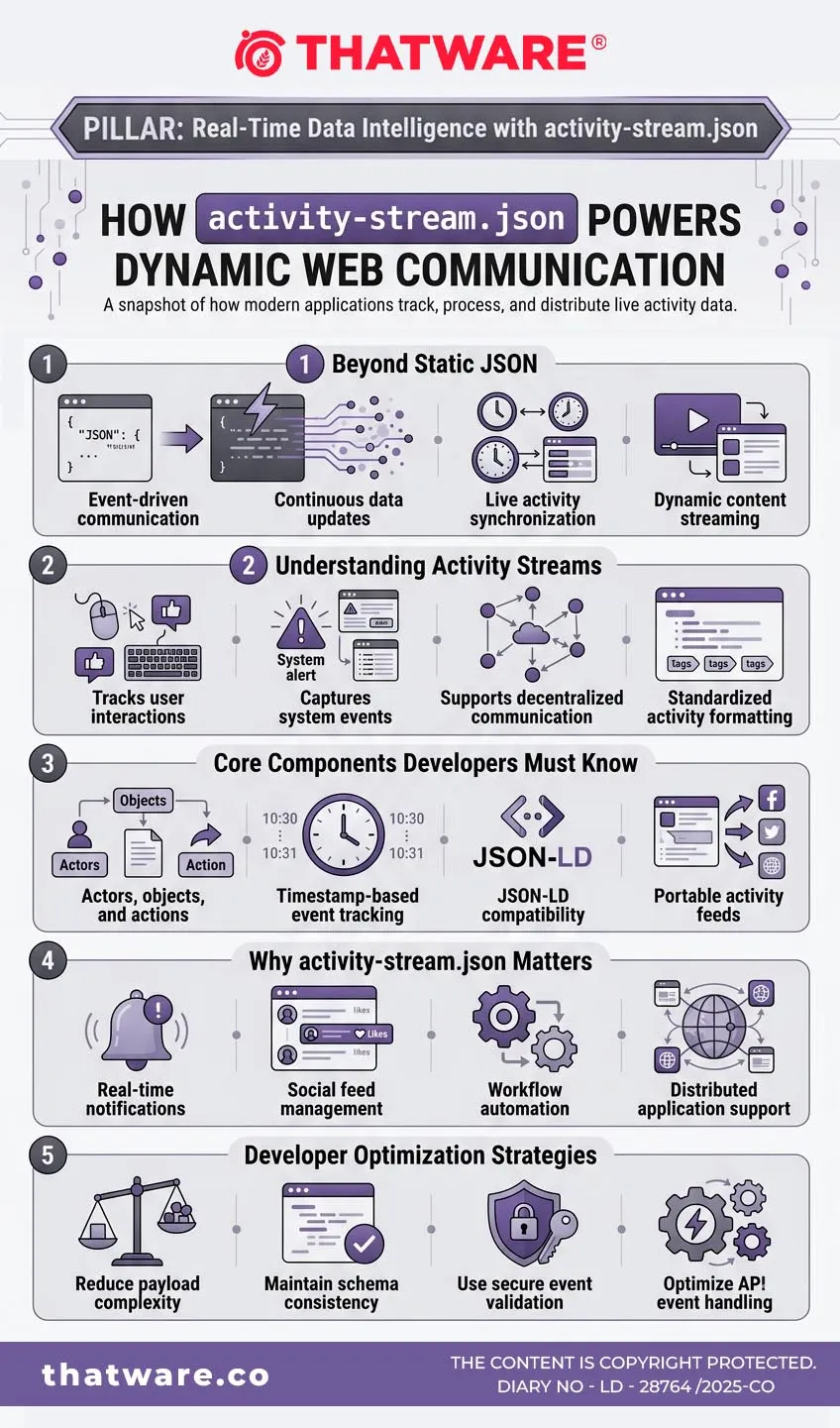
11. Main Components of activity-stream.json
A complete semantic activity framework should include:
1. metadata
2. activity events
3. semantic update tracking
4. entity evolution logs
5. topical freshness signals
6. retrieval freshness updates
7. contextual change tracking
8. authority evolution signals
9. temporal relevance scoring
10. crawl prioritization hints
11. semantic versioning
12. freshness confidence systems
13. update impact analysis
14. activity categories
15. real-time signaling metadata
16. historical change tracking
17. maintenance intelligence
12. Understanding Semantic Activity Events
Semantic activity events represent meaningful changes.
Examples:
· new research
· updated methodologies
· revised entity relationships
· expanded contextual definitions
· new case studies
· retrieval optimizations
· updated semantic clusters
13. Activity Event Categories
Recommended categories:
| Category | Meaning |
| semantic-update | Conceptual improvements |
| retrieval-update | Retrieval optimization |
| authority-update | Expertise evolution |
| context-update | Contextual changes |
| citation-update | Citation improvements |
| trust-update | Trust enhancements |
| entity-update | Entity evolution |
| research-update | New research |
| methodology-update | Strategic changes |
14. Temporal Relevance Scoring
Every activity can include temporal relevance.
Example:
{
“temporalRelevance”: 0.94
}
Scoring may depend on:
· freshness
· semantic importance
· retrieval impact
· authority impact
· contextual influence
· topic priority
15. Retrieval Freshness Signals
Freshness should influence retrieval systems.
High-freshness assets may receive:
· retrieval boosts
· crawl priority
· contextual weighting
· citation preference
Example:
{
“retrievalFreshnessBoost”: 0.08
}
16. Crawl Prioritization Systems
AI crawlers increasingly optimize for:
· active websites
· evolving expertise
· frequently updated semantic ecosystems
The activity stream can signal:
· recrawl urgency
· semantic importance
· freshness value
Example:
{
“crawlPriority”: “high”
}
17. Entity Evolution Tracking
Entities evolve over time.
Examples:
· expanded expertise
· updated services
· new relationships
· semantic specialization changes
The activity framework should track these changes.
18. Contextual Evolution Systems
Context changes as:
· industries evolve
· terminology evolves
· methodologies improve
· semantic relationships expand
AI systems should understand contextual evolution.
19. Semantic Versioning Systems
Activity streams should support versioning.
Example:
{
“version”: “2.1.0”
}
Recommended semantic versioning:
MAJOR.MINOR.PATCH
20. Freshness Confidence Modeling
Freshness confidence helps AI systems estimate:
· update reliability
· maintenance quality
· semantic recency
· contextual validity
Example:
{
“freshnessConfidence”: 0.92
}
21. Update Impact Analysis
Not all updates matter equally.
Suggested impact levels:
| Impact | Meaning |
| critical | Major semantic changes |
| high | Important retrieval changes |
| medium | Supporting updates |
| low | Minor modifications |
22. Activity Frequency Signals
AI systems may interpret:
· regular updates
· consistent semantic maintenance
· evolving expertise
· active publishing
as indicators of:
· authority
· freshness
· relevance
· trust
23. Historical Change Tracking
AI systems may benefit from understanding:
· how expertise evolved
· how methodologies changed
· how semantic relationships expanded
· how authority developed over time
Historical activity improves contextual understanding.
24. Relationship With AI Search Engines
AI search engines increasingly prioritize:
· freshness
· semantic recency
· contextual evolution
· active expertise ecosystems
Activity streams strengthen all four.
25. Relationship With GEO
This is one of the most strategically important temporal GEO files.
Because future AI visibility may increasingly depend on:
· semantic freshness
· activity consistency
· contextual evolution
· retrieval recency
· dynamic expertise growth
Not merely:
· publication dates
· update timestamps
26. Relationship With AI Agents
Future AI agents may:
· monitor semantic updates
· prioritize evolving expertise
· track contextual changes
· optimize recrawl scheduling
· adapt retrieval behavior dynamically
activity-stream.json supports this future.
27. Real-Time Semantic Ecosystems
AI-native websites increasingly behave like:
· living semantic ecosystems
· evolving knowledge graphs
· dynamic retrieval infrastructures
Activity streams make this evolution visible.
28. Common Mistakes
Mistake 1: Treating Freshness as Only Dates
Semantic freshness matters more.
Mistake 2: Logging Minor Changes Only
Focus on meaningful semantic updates.
Mistake 3: No Retrieval Alignment
Freshness should influence retrieval.
Mistake 4: Weak Activity Categorization
AI systems need structured update types.
Mistake 5: No Temporal Relevance Modeling
Not all updates deserve equal importance.
Mistake 6: No Semantic Evolution Tracking
AI systems increasingly value evolving expertise.
29. Best Practices
29.1 Track Meaningful Semantic Changes
Avoid logging trivial updates.
29.2 Align With Retrieval Systems
Freshness should influence retrieval.
29.3 Maintain Clear Activity Categories
Structured updates improve machine interpretation.
29.4 Use Temporal Relevance Scoring
Not all updates are equal.
29.5 Support Historical Evolution
Track expertise growth over time.
29.6 Coordinate With Context Systems
Freshness should improve contextual quality.
29.7 Optimize for AI Crawlers
Signal recrawl-worthy updates.
30. Enterprise-Level Use Cases
AI Search Engines
Freshness-aware ranking.
Enterprise Knowledge Systems
Semantic update monitoring.
Research Platforms
Research evolution tracking.
Educational AI Systems
Context evolution management.
Autonomous AI Agents
Dynamic recrawl scheduling.
AI Publishing Systems
Real-time semantic publishing.
31. Recommended Update Frequency
| Asset | Frequency |
| Semantic activity logs | Real-time |
| Retrieval updates | Weekly |
| Entity evolution tracking | Monthly |
| Contextual evolution | Monthly |
| Freshness validation | Weekly |
| Full activity audit | Quarterly |
32. Full Reusable Prototype JSON Structure
{
“metadata”: {
“fileType”: “activity-stream”,
“version”: “1.0.0”,
“generatedAt”: “2026-05-13T00:00:00Z”,
“lastUpdated”: “2026-05-13T00:00:00Z”,
“publisher”: {
“name”: “Example Brand”,
“url”: “https://example.com”
},
“description”: “Machine-readable semantic activity and freshness framework for AI systems, retrieval engines, temporal ranking infrastructures, and dynamic semantic ecosystems.”
},
“activityFramework”: {
“primaryMode”: “semantic-freshness-tracking”,
“supportsTemporalRelevance”: true,
“supportsRetrievalFreshness”: true,
“supportsSemanticEvolution”: true,
“supportsCrawlPrioritization”: true
},
“activityEvents”: [
{
“eventId”: “event:geo-methodology-update”,
“eventType”: “methodology-update”,
“title”: “Updated GEO Retrieval Optimization Framework”,
“description”: “Expanded the retrieval optimization methodology for AI-native search systems.”,
“timestamp”: “2026-05-13T10:00:00Z”,
“affectedTopics”: [
“Generative Engine Optimization”,
“AI SEO”,
“LLM Optimization”
],
“affectedEntities”: [
“ThatWare”
],
“semanticImpact”: “high”,
“temporalRelevance”: 0.97,
“retrievalFreshnessBoost”: 0.08,
“crawlPriority”: “high”,
“freshnessConfidence”: 0.95,
“relatedSources”: [
“https://example.com/generative-engine-optimization/”
]
},
{
“eventId”: “event:new-case-study”,
“eventType”: “research-update”,
“title”: “Published New AI SEO Case Study”,
“description”: “Added a new case study demonstrating AI retrieval visibility improvements.”,
“timestamp”: “2026-05-10T08:00:00Z”,
“semanticImpact”: “medium”,
“temporalRelevance”: 0.92,
“crawlPriority”: “medium”
}
],
“entityEvolution”: [
{
“entity”: “ThatWare”,
“updatedExpertise”: [
“Generative Engine Optimization”,
“AI SEO”
],
“evolutionConfidence”: 0.94,
“lastUpdated”: “2026-05-13”
}
],
“retrievalFreshness”: {
“preferRecentSemanticUpdates”: true,
“freshnessDecayMonths”: 12,
“retrievalBoostEnabled”: true,
“minimumFreshnessThreshold”: 0.70
},
“contextualEvolution”: {
“trackTerminologyChanges”: true,
“trackSemanticRelationshipUpdates”: true,
“trackMethodologyEvolution”: true
},
“crawlSignals”: {
“prioritizeHighImpactUpdates”: true,
“prioritizeEntityEvolution”: true,
“prioritizeRetrievalChanges”: true
},
“semanticVersioning”: {
“enabled”: true,
“currentVersion”: “2.1.0”,
“versioningModel”: “semantic-versioning”
},
“freshnessScoring”: {
“criticalUpdates”: 1.0,
“highUpdates”: 0.85,
“mediumUpdates”: 0.65,
“lowUpdates”: 0.40
},
“governance”: {
“allowCrawling”: true,
“allowFreshnessTracking”: true,
“allowRetrievalOptimization”: true,
“allowSemanticMonitoring”: true
},
“maintenance”: {
“maintainedBy”: “AI Activity Intelligence Team”,
“reviewFrequency”: “weekly”,
“lastReviewed”: “2026-05-13”,
“nextReview”: “2026-05-20”
}
}
33. ThatWare-Specific Strategic Direction
For ThatWare, activity streams should strongly prioritize updates related to:
Generative Engine Optimization
AI SEO
LLM Optimization
Semantic SEO
Entity SEO
Knowledge Graph Optimization
Recommended freshness priorities:
Research Updates
→ GEO Methodologies
→ Retrieval Optimization
→ AI Visibility Case Studies
→ Semantic Infrastructure Enhancements
→ Entity Authority Evolution
ThatWare should optimize semantic freshness around:
· evolving GEO methodologies
· AI-native retrieval systems
· semantic infrastructure improvements
· contextual optimization systems
· AI search visibility research
· semantic authority evolution
The goal is not merely publishing content.
The goal is:
Creating a continuously evolving AI-native semantic ecosystem.
34. Final Strategic Summary
activity-stream.json should be treated as the temporal intelligence layer of an AI-optimized website.
It defines:
· what changed
· why it changed
· how semantic relationships evolved
· how freshness should influence retrieval
· how contextual evolution should be interpreted
· how AI systems should prioritize updates
· how dynamic expertise should be tracked
· how semantic ecosystems evolve over time
For GEO and AI-native search infrastructure, this file can become one of the most important freshness orchestration systems in the entire architecture.
A properly designed activity-stream.json transforms a website from merely updated into being semantically alive, temporally relevant, dynamically evolving, retrieval-fresh, and AI-recrawl optimized.
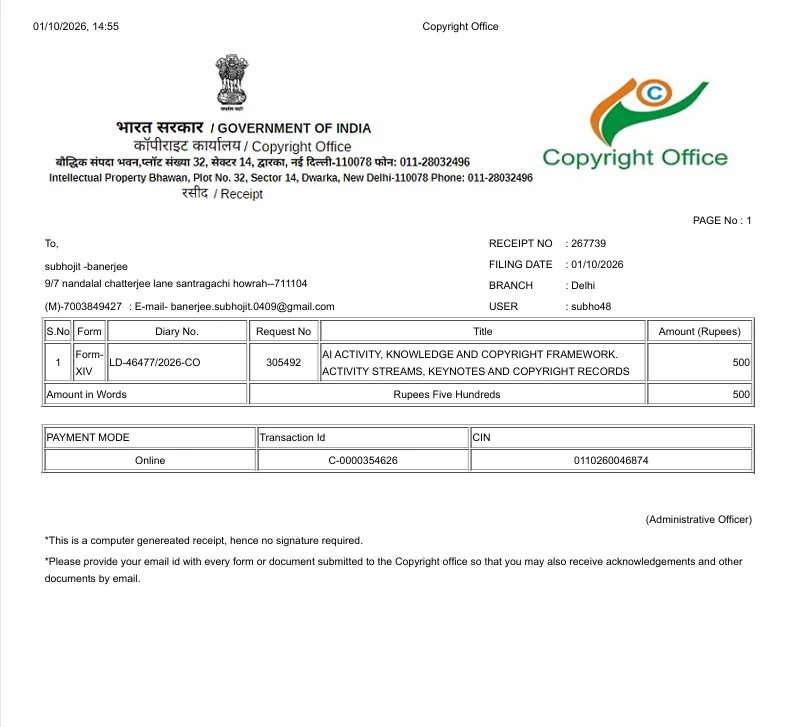
Copyright Notice:
The content, framework, activity streams, keynotes, and related copyright records associated with this page are part of a copyright application filed with the Copyright Office, Government of India under the title “AI Activity, Knowledge and Copyright Framework. Activity Streams, Keynotes and Copyright Records.”
Application Reference: LD-46477/2026-CO
Unauthorized reproduction, copying, distribution, or commercial use of this content is prohibited.



