SUPERCHARGE YOUR ONLINE VISIBILITY! CONTACT US AND LET’S ACHIEVE EXCELLENCE TOGETHER!
Every SEO campaign begins with a problem. For MindFit at Work, the problem was not a lack of expertise or services. The bigger challenge was getting the right people to discover those services through organic search. This organic SEO case study blog will explain this in detail.
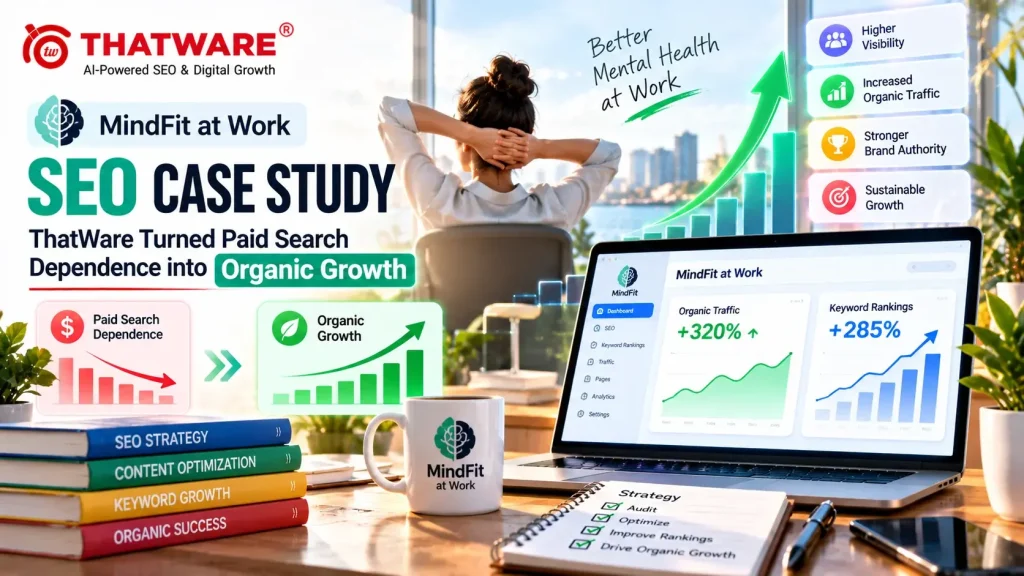
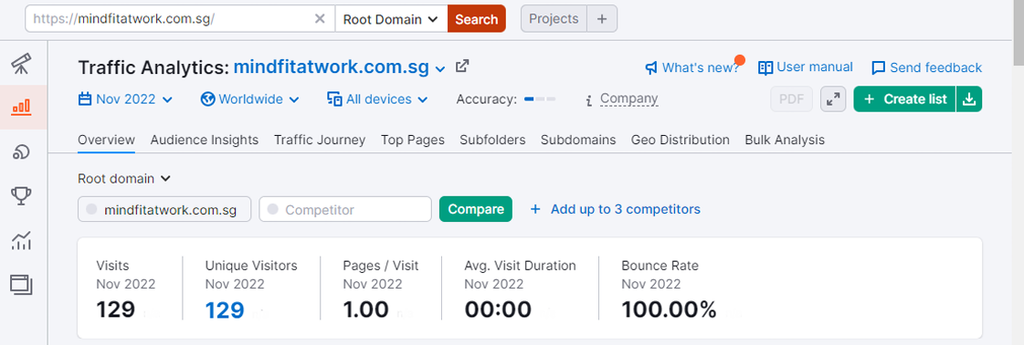
The website was heavily dependent on paid search campaigns for traffic acquisition. Organic visibility had significant room for improvement, while the baseline engagement numbers showed another challenge. When the campaign started, the website recorded only 129 total visits and 129 unique visitors. Pages per visit stood at 1.00, while the bounce rate reached 100%.
We at ThatWare saw an opportunity to change how the website acquired attention. Instead of treating SEO as a collection of isolated ranking tasks, we approached the campaign as a complete organic growth project.
The objective was simple but ambitious: build sustainable organic visibility, attract relevant audiences, increase monthly sessions, and create stronger opportunities for conversions. What followed became a practical SEO case study in how technical improvements and intent-led content can work together.
The First Question Wasn’t “How Do We Rank?”
It was “Why Should Someone Find This Website?”
This distinction shaped the entire campaign. MindFit at Work operates in a service-driven space where users often search with specific problems in mind.
They may be looking for workplace wellbeing support. They may be researching stress management. They may also be searching for a consultant who can help their organization address employee wellbeing.
Therefore, ranking for random informational keywords would not be enough. The website needed to appear when search intent aligned with the services being offered. ThatWare built the strategy around this principle.
The focus moved toward understanding what users wanted, how they searched, and what type of content could satisfy those needs. These improvements strengthened the technical foundation required by modern AI SEO Services, where performance and accessibility remain important for effective content discovery.
Turning Search Intent into A Content Strategy
To bring structure to the content strategy, ThatWare implemented the 3 C’s framework. The framework examined three areas: Content Type, Content Format, and Content Angle.
This helped determine what each piece of content needed to accomplish.
Content Type: Giving Every Page A Purpose
The campaign worked across multiple content types. Category pages created stronger thematic organization. Landing pages provided more focused destinations for users with commercial intent.
Content Format: Meeting Users Where They Were
Different users need different types of information. This created multiple ways for audiences to interact with MindFit at Work.
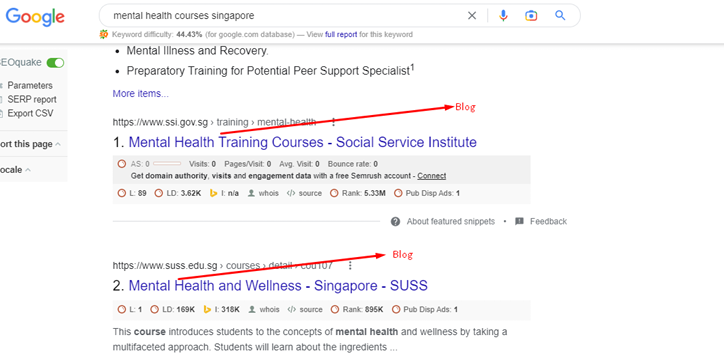
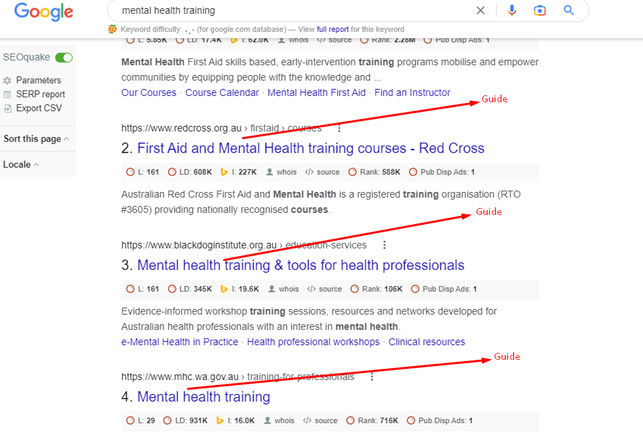
The content became less about publishing volume and more about matching format with intent.
Content Angle: Getting Closer to The Actual Problem
The final component was the content angle. The campaign focused on relevant searches such as stress management training and stress management. These searches provided an opportunity to connect the website with users actively exploring workplace-related solutions.
Then We Looked at What Was Already There
New content was only part of the answer. The existing website contained valuable information, but some content needed updating to better reflect current trends and relevant search behavior.
ThatWare refreshed core content across the website.
Missing and relevant search queries were incorporated into body copy where appropriate. Graphic content was introduced to make important information more engaging. Publication dates were also refreshed where suitable. The goal was not to rewrite everything for the sake of rewriting.
It was about making existing content more useful, current, and aligned with what users were actually looking for. This became an important part of the campaign because organic growth does not always require starting from zero. A stronger organic foundation also supported AI Answer Optimization, as clearer content and stronger topical relevance can improve answer-focused search discovery.
Sometimes, the strongest opportunity is already sitting on the website, and this organic SEO case study proves this.
The Technical Side Told Another Story
While content was being improved, the website’s technical performance required attention. A page can have valuable information, but users still expect it to load efficiently and function smoothly.
We therefore worked on several Core Web Vitals areas.
- JavaScript execution time was reduced.
- Lazy loading was implemented for media assets.
Images were compressed, and visual file sizes were optimized. Explicit dimensions were added to images and embedded objects. Server response time was also improved. These changes were not treated as technical tasks existing separately from SEO.
They were connected to the same objective: make the website easier for search engines and AI-led search platforms to access and easier for users to experience.
The focus on meaningful queries also aligned with Large Language Model SEO, where contextual relevance helps information remain understandable across AI-driven search environments.
A Deeper Problem Was Hiding in The Site Structure
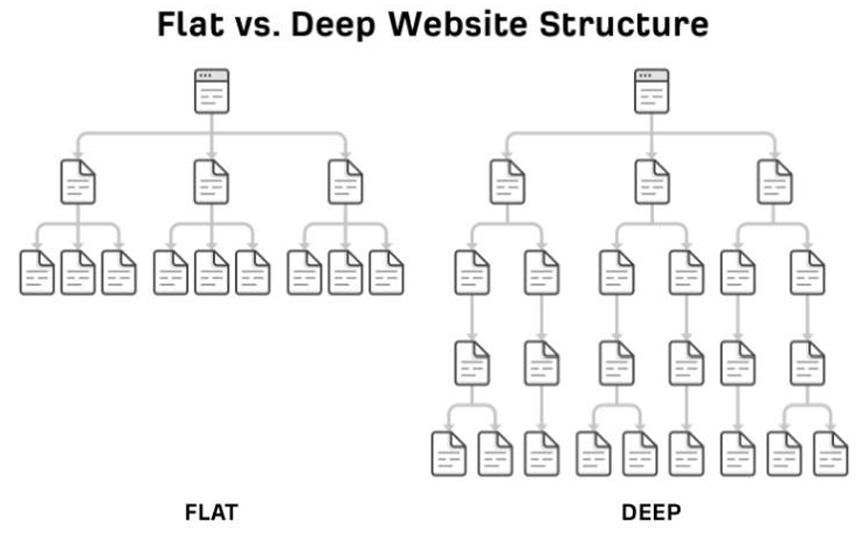
The technical review also brought attention to website architecture. Deep navigation paths can make important pages harder to discover. They can also create a less intuitive experience for users moving between sections.
ThatWare converted the website layout into a flat structure. It gave the website a cleaner foundation for future content expansion and search optimization.
Mobile Usability Became Another Checkpoint
The campaign also addressed mobile usability issues through Google Search Console. The website had non-usability flags that required attention.
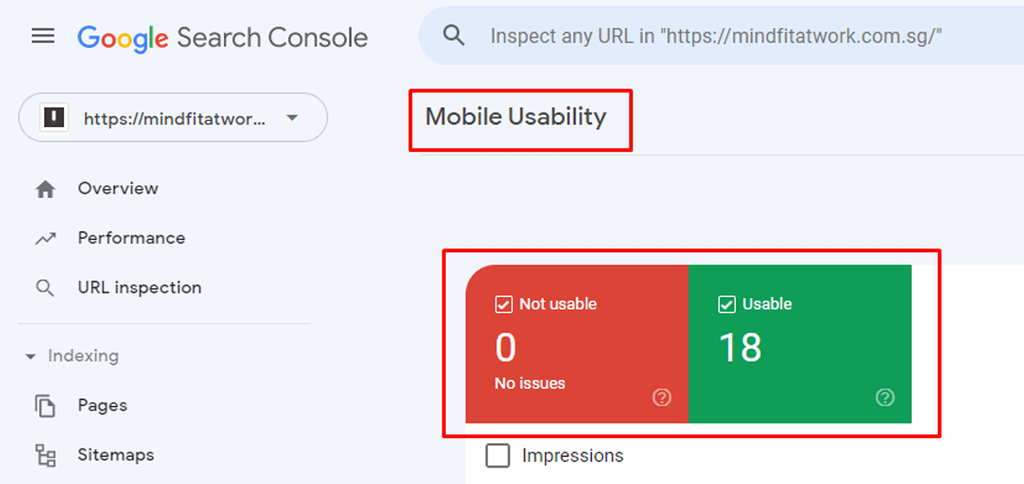
After the necessary improvements, the website reached 18 usable pages with zero non-usable pages. For a service business, this matters beyond technical reporting.
If that experience creates friction, visibility alone cannot deliver meaningful business value. The campaign therefore treated usability as part of the acquisition journey.
The Shift Started with Visibility
As the campaign progressed, the focus moved toward relevant search visibility.
One notable achievement was strong SERP positioning for the corporate search term “Workplace Wellbeing Consultant” on Google Singapore.
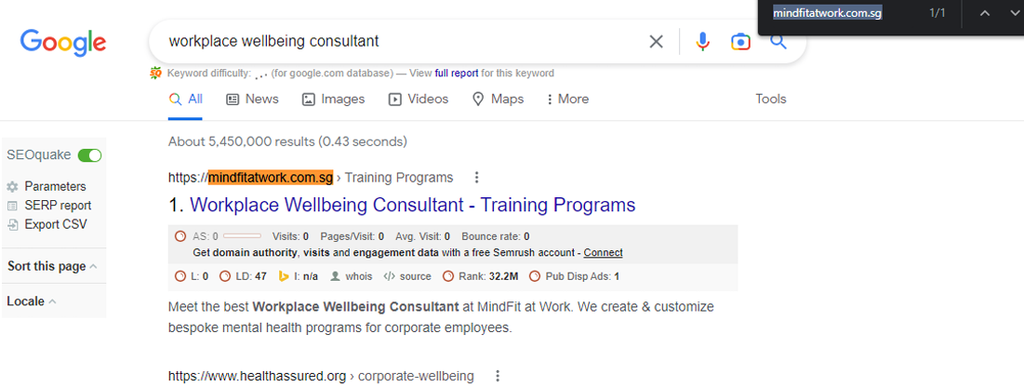
This was particularly relevant to MindFit at Work because the query represented a specific commercial need.
The objective was not simply to collect rankings. It was to place the business in front of users whose search intent was connected to its services. That distinction remained important throughout the campaign. This intent-led approach also reflected principles associated with Generative AI SEO, where understanding context and user needs supports more useful search content.
Organic Growth Was The Bigger Story
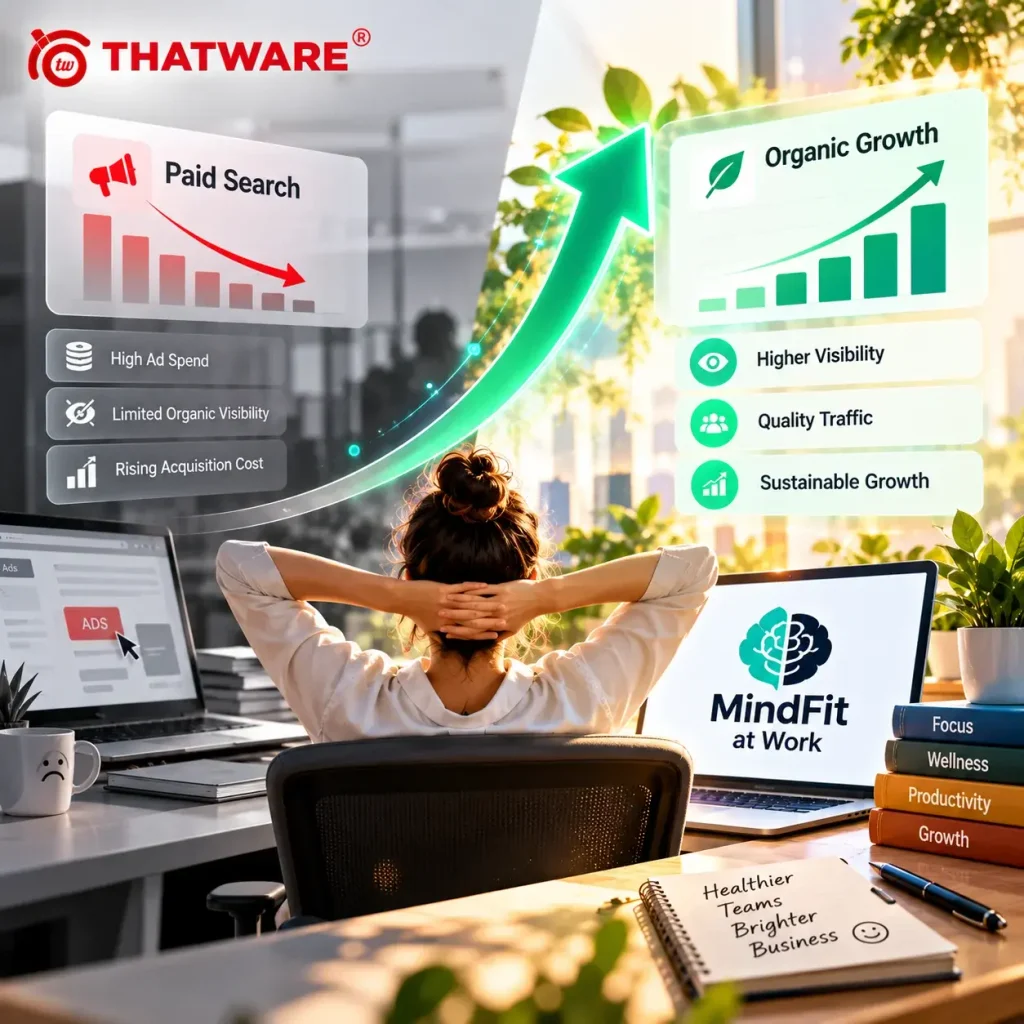
The most important change was the movement toward stronger organic search acquisition. MindFit at Work had initially depended heavily on paid search. Our organic SEO case study blog highlighted this.
The campaign created a broader acquisition foundation through content, technical SEO, site architecture, and search intent optimization. This did not mean treating paid and organic search as competing channels. Instead, the strategy created another route for users to discover the business.
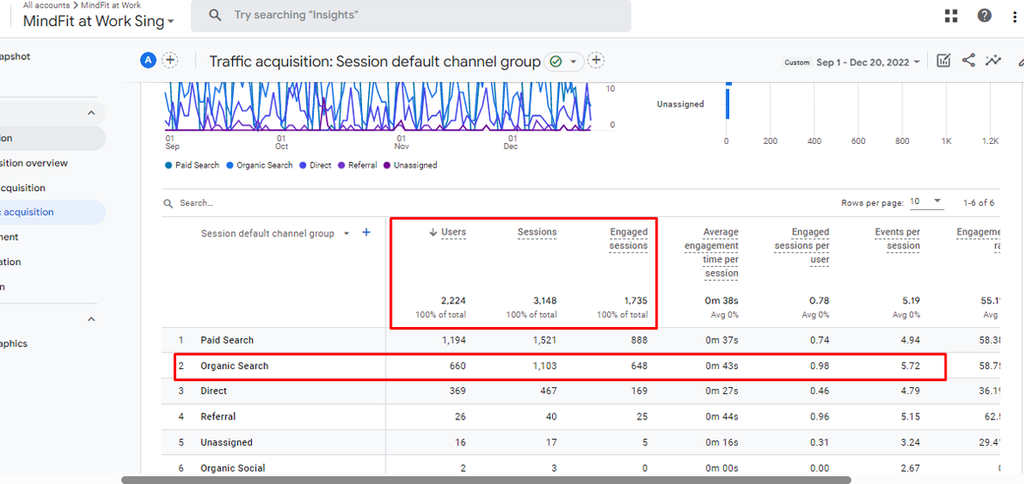
Organic search could continue attracting relevant users without requiring every visit to originate from an active advertising campaign. That was the larger growth opportunity. The campaign also demonstrated how CRSEO can complement a broader organic search strategy when businesses need to think beyond conventional keyword targeting.
Looking beyond Traditional Search
The campaign also highlighted how SEO is changing. Search is increasingly becoming conversational, contextual, and answer-driven.
Users do not always type short keywords into a search box. They increasingly ask complete questions and expect direct answers. This creates new considerations for businesses building long-term visibility.
Yet the MindFit at Work campaign reinforces an important principle.
The fundamentals still matter.
Useful content needs to answer real questions. Pages need clear purposes. Websites need accessible structures. Technical performance needs attention. Search intent needs to guide content decisions. These fundamentals create the foundation upon which newer search strategies can develop. Similarly, semantic SEO reinforces the importance of relationships between topics, entities, intent, and contextual relevance.
The Bigger Takeaway
MindFit at Work started with a website that had limited organic visibility and significant dependence on paid search. The campaign changed the direction by bringing content, technical SEO, architecture, usability, and search intent into one coordinated strategy.
The baseline figures provided a clear starting point. From there, the campaign worked toward stronger organic acquisition and relevant SERP visibility.
For ThatWare, that is what made the MindFit at Work campaign more than a ranking exercise. This organic SEO case study became a story about changing where growth comes from consistent and quality SEO efforts. And sometimes, that is the most important SEO result of all.