SUPERCHARGE YOUR ONLINE VISIBILITY! CONTACT US AND LET’S ACHIEVE EXCELLENCE TOGETHER!
This document provides a complete strategic, architectural, semantic, interoperability-oriented, and implementation-level explanation of the llmsfull.txt file.
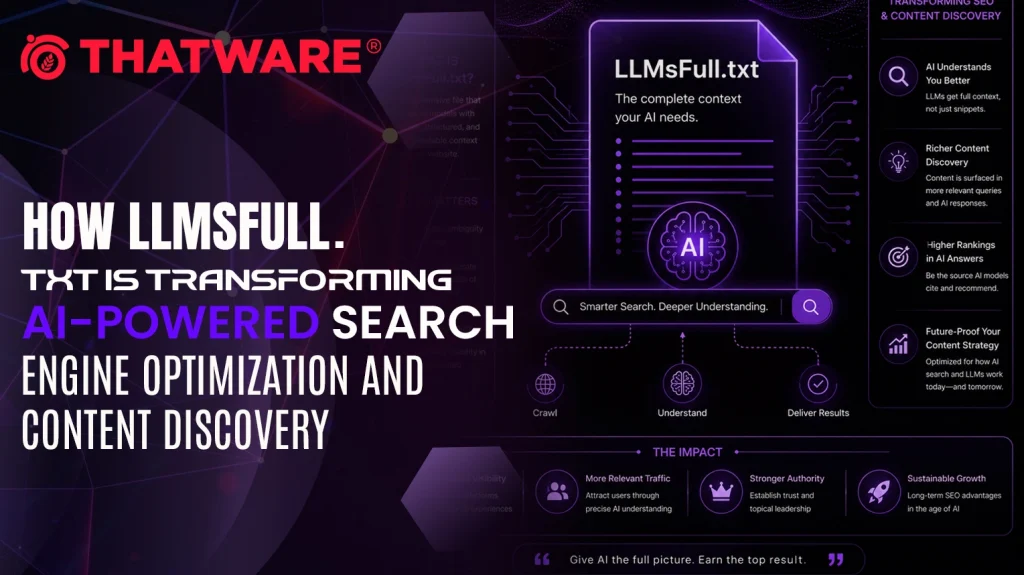
This file is designed to help AI systems:
- understand an entire AI-readable website ecosystem
- access structured semantic intelligence
- Discover AI-native infrastructure
- Identify machine-readable endpoints
- interpret semantic authority systems
- locate retrieval-aware resources
- coordinate AI indexing
- optimize semantic crawling
- understand AI governance policies
- navigate semantic web architectures
- orchestrate AI-native interoperability
- establish machine-to-machine communication
This file is specifically intended for:
- Generative Engine Optimization (GEO)
- Large Language Model optimization
- AI-native web infrastructure
- Retrieval-Augmented Generation (RAG)
- semantic interoperability systems
- AI search engines
- machine-readable publishing
- semantic indexing systems
- AI agent ecosystems
- AI-native crawling infrastructures
- semantic discovery architectures
- enterprise AI interoperability systems
This guide explains:
- what llmsfull.txt is
- Why it matters
- How AI systems use AI-readable manifests
- How semantic AI discovery works
- How AI-native interoperability functions
- How AI systems coordinate semantic infrastructure
- How machine-readable AI ecosystems operate
- How AI indexing systems evolve
- How semantic discovery architectures function
- How future AI-native websites will behave
- enterprise-grade AI interoperability systems
- reusable production-ready TXT structures
1. What is llmsfull.txt?
llmsfull.txt is a machine-readable AI ecosystem manifest that provides:
- complete AI-readable infrastructure discovery
- semantic endpoint mapping
- AI policy definitions
- retrieval system references
- semantic governance instructions
- AI-native architecture references
- contextual intelligence references
- semantic crawling guidance
- interoperability metadata
- machine-to-machine coordination instructions
In simple terms:
It is the master AI interoperability and semantic discovery manifest for an AI-native website.
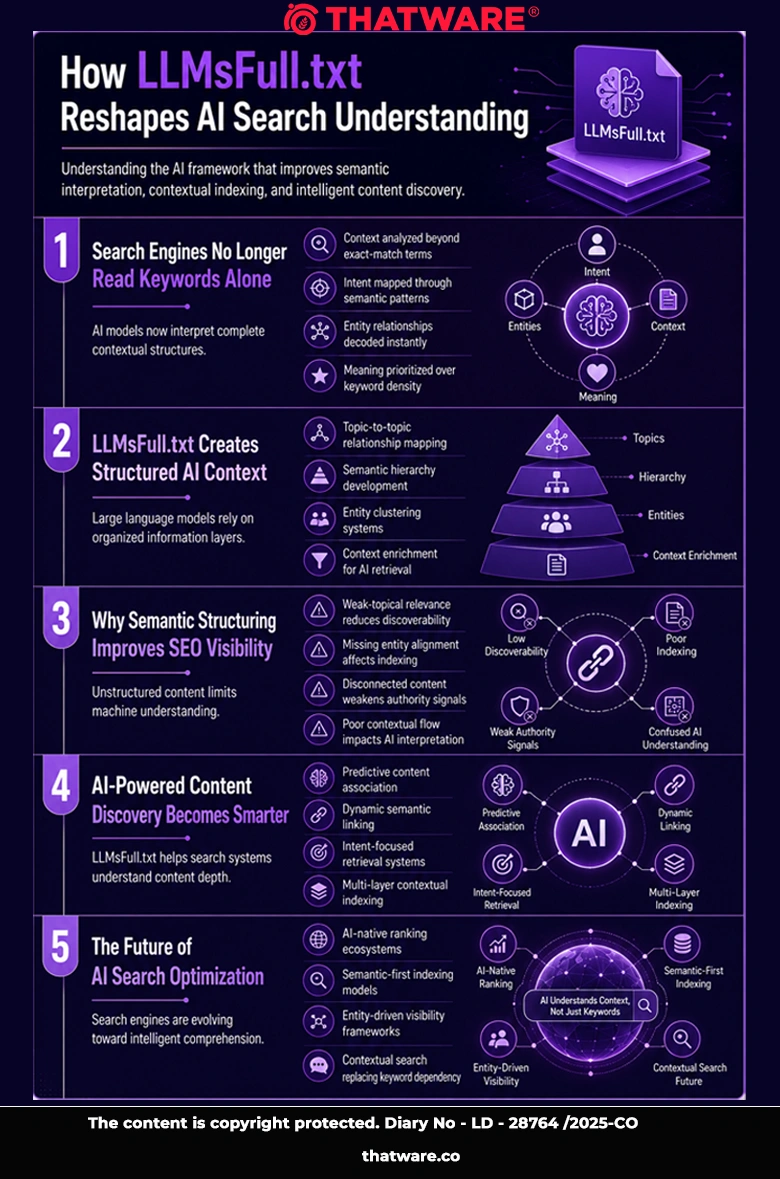
2. Why llmsfull.txt Exists
Traditional web infrastructure was designed primarily for:
- browsers
- search engines
- human navigation
- HTML rendering
But future AI systems increasingly require:
- machine-readable ecosystems
- semantic infrastructure discovery
- retrieval-aware indexing
- AI-native crawling
- semantic interoperability
- contextual intelligence mapping
- answer-generation coordination
- AI governance frameworks
AI systems increasingly ask:
- Which AI-readable systems exist?
- Which semantic endpoints matter?
- Which retrieval systems are available?
- Which semantic governance policies apply?
- Which machine-readable resources should be prioritized?
- How should AI systems interact with this website?
llmsfull.txt solves this problem.
3. Core Objective of llmsfull.txt
The file helps AI systems answer:
- What AI-readable resources exist?
- Which semantic systems should be used?
- Which AI endpoints are available?
- Which retrieval infrastructures exist?
- Which governance rules apply?
- Which semantic resources deserve priority?
- How should AI systems interpret this ecosystem?
- Which contextual systems should activate?
- Which authority frameworks exist?
- How should machine-to-machine communication operate?
4. Why This Matters for GEO
In Generative Engine Optimization, AI discoverability increasingly depends on:
- semantic infrastructure visibility
- AI-native interoperability
- retrieval accessibility
- contextual intelligence discovery
- semantic governance transparency
- machine-readable architecture
- AI crawl optimization
- semantic endpoint coordination
AI systems increasingly prioritize:
- AI-readable ecosystems
- machine-accessible semantic infrastructures
- structured interoperability
- retrieval-aware architectures
- semantically organized websites
llmsfull.txt directly improves these systems.
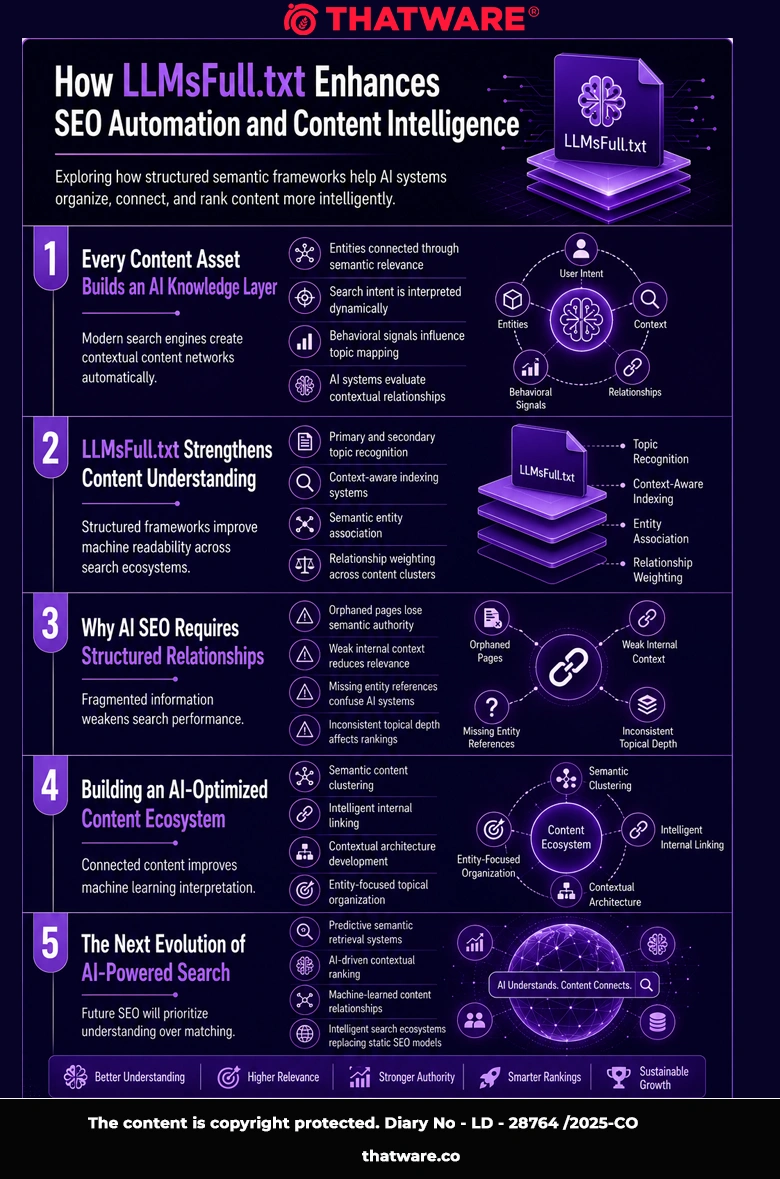
5. Understanding AI Interoperability Systems
Modern AI systems increasingly operate using:
- semantic infrastructure discovery
- AI-native crawling
- retrieval orchestration
- machine-readable manifests
- semantic endpoint coordination
- interoperability protocols
- contextual intelligence systems
- semantic governance architectures
Interoperability influences:
- retrieval efficiency
- indexing quality
- answer generation
- semantic understanding
- AI visibility
- contextual grounding
6. Difference Between robots.txt and llmsfull.txt
robots.txt
Focused on:
- crawl permissions
- indexing restrictions
- bot management
llmsfull.txt
Focused on:
- semantic infrastructure discovery
- AI-native interoperability
- machine-readable intelligence
- retrieval coordination
- semantic ecosystem orchestration
- AI communication systems
Future AI systems increasingly need llmsfull.txt.
7. Relationship With Other GEO Files
llmsfull.txt works together with:
| File | Role |
| ai.txt | AI interaction policies |
| ai-endpoints.json | Endpoint discovery |
| knowledge-graph.json | Semantic entities |
| rag-index.json | Retrieval systems |
| context-engine.json | Context orchestration |
| trust-signals.json | Trust modeling |
| citation-preferences.json | Citation orchestration |
The llmsfull.txt layer acts as the AI-native ecosystem gateway.
8. Recommended File Location
Primary:
https://example.com/llmsfull.txt
Optional:
https://example.com/.well-known/llmsfull.txt
Referenced from:
- ai.txt
- robots.txt
- ai-endpoints.json
9. Recommended MIME Type
text/plain
10. Core Design Principles
10.1 AI-First Discovery
The file should prioritize AI-native discoverability.
10.2 Machine Readability
AI systems should easily parse the structure.
10.3 Semantic Interoperability
Resources should support semantic communication.
10.4 Retrieval Coordination
Retrieval systems should be discoverable.
10.5 Contextual Intelligence
Context systems should remain accessible.
10.6 Governance Transparency
AI policies should remain clear.
10.7 Future-Proof AI Infrastructure
The architecture should evolve with AI ecosystems.
11. Main Components of llmsfull.txt
A complete AI interoperability manifest should include:
- AI-readable infrastructure overview
- semantic endpoint references
- AI governance policies
- retrieval system mappings
- contextual intelligence references
- semantic authority systems
- machine-readable resource inventories
- AI-native crawling instructions
- semantic indexing priorities
- interoperability protocols
- semantic discovery systems
- contextual orchestration references
- trust and citation references
- retrieval optimization metadata
- semantic governance rules
- AI interaction preferences
- ecosystem-wide semantic architecture references
12. Understanding AI Ecosystem Discovery
AI systems increasingly need:
Website
→ Semantic Infrastructure
→ Retrieval Systems
→ Context Engines
→ Knowledge Graphs
→ AI Governance
→ Machine-Readable Intelligence
llmsfull.txt coordinates this discovery.
13. AI-Native Semantic Discovery
The file helps AI systems discover:
- semantic entities
- retrieval infrastructures
- contextual systems
- AI-readable endpoints
- machine-readable governance
- semantic authority systems
This improves:
- AI indexing
- retrieval orchestration
- contextual understanding
- semantic interoperability
14. Retrieval Infrastructure Coordination
AI systems increasingly need access to:
- RAG indexes
- semantic retrieval systems
- vector search infrastructures
- contextual engines
- semantic clustering systems
llmsfull.txt centralizes these references.
15. Semantic Governance Systems
The manifest can define:
- AI usage permissions
- retrieval policies
- attribution requirements
- semantic access rules
- AI interaction constraints
Example:
Allow-AI-Retrieval: true
Require-Attribution: true
16. AI Endpoint Discovery
The file can reference:
- AI APIs
- retrieval endpoints
- semantic infrastructure endpoints
- vector systems
- contextual engines
- trust systems
This enables machine-to-machine coordination.
17. AI Crawl Prioritization
AI systems increasingly prioritize:
- semantically structured resources
- AI-readable infrastructures
- retrieval-ready systems
- contextual intelligence endpoints
The manifest can guide AI crawling behavior.
18. Semantic Resource Prioritization
The file can define:
Critical Resources
→ Knowledge Graph
→ Retrieval Engine
→ Context System
→ Citation Framework
→ Trust Infrastructure
This improves semantic indexing.
19. Interoperability Protocols
Future AI ecosystems increasingly require:
- semantic interoperability
- AI-native coordination
- retrieval compatibility
- contextual synchronization
- machine-readable orchestration
llmsfull.txt supports these systems.
20. AI Interaction Preferences
The file may specify:
- preferred retrieval styles
- contextual depth preferences
- summarization preferences
- citation requirements
- semantic interaction guidelines
Example:
Preferred-Answer-Style: deep-technical
21. Semantic Infrastructure Visibility
Without semantic visibility:
- AI systems may miss critical resources
- The retrieval quality may decrease
- contextual grounding may weaken
- Semantic understanding may fragment
llmsfull.txt improves infrastructure discoverability.
22. Relationship With AI Search Engines
AI search engines increasingly prioritize:
- machine-readable ecosystems
- semantic interoperability
- retrieval-aware architectures
- AI-native indexing systems
llmsfull.txt strengthens all four.
23. Relationship With GEO
This is one of the most foundational AI interoperability GEO files.
Because future AI visibility may increasingly depend on:
- semantic discoverability
- AI-native interoperability
- machine-readable infrastructure
- contextual orchestration visibility
- retrieval accessibility
Not merely:
- HTML pages
- metadata
- traditional crawling
24. Relationship With AI Agents
Future AI agents may:
- autonomously discover semantic systems
- coordinate retrieval infrastructures
- interpret governance policies
- optimize contextual orchestration
- navigate AI-native ecosystems dynamically
llmsfull.txt supports this future.
25. Semantic Ecosystem Orchestration
AI-native websites increasingly behave like:
Semantic Infrastructure
→ Retrieval Systems
→ Context Engines
→ Trust Frameworks
→ AI Governance
→ Machine Coordination
llmsfull.txt orchestrates the ecosystem.
26. Multi-System AI Coordination
Future AI systems increasingly coordinate across:
- retrieval systems
- reasoning engines
- semantic knowledge graphs
- contextual infrastructures
- trust architectures
The manifest improves coordination efficiency.
27. Common Mistakes
Mistake 1: Treating llmsfull.txt Like robots.txt
This is an AI interoperability layer.
Mistake 2: Weak Semantic Structure
AI systems require clear organization.
Mistake 3: Missing Retrieval References
Retrieval systems are foundational.
Mistake 4: No Governance Metadata
AI systems increasingly require policy clarity.
Mistake 5: Ignoring Semantic Discovery
Infrastructure visibility matters.
Mistake 6: Static AI Architectures
AI ecosystems evolve continuously.
28. Best Practices
28.1 Prioritize Semantic Discovery
Expose machine-readable infrastructures clearly.
28.2 Coordinate Retrieval Systems
Reference retrieval architectures explicitly.
28.3 Maintain Governance Transparency
AI interaction rules should remain visible.
28.4 Support Semantic Interoperability
Enable AI-native coordination.
28.5 Optimize Contextual Accessibility
Context systems should remain discoverable.
28.6 Enable Future AI Compatibility
Design for evolving AI ecosystems.
28.7 Structure for Machine Readability
Keep formatting consistent and parsable.
29. Enterprise-Level Use Cases
AI Search Engines
Semantic infrastructure discovery.
Enterprise AI Systems
Machine-readable interoperability.
Research Platforms
Retrieval-aware semantic coordination.
Educational AI Systems
Context-aware infrastructure mapping.
Autonomous AI Agents
AI-native ecosystem navigation.
AI Publishing Platforms
Semantic orchestration infrastructures.
30. Recommended Update Frequency
| Asset | Frequency |
| Endpoint references | Monthly |
| Retrieval systems | Monthly |
| Governance policies | Quarterly |
| Semantic infrastructure mappings | Quarterly |
| AI interoperability rules | Quarterly |
| Full manifest audit | Every 6 months |
31. Full Reusable Prototype TXT Structure
# llmsfull.txt
# AI-Native Semantic Infrastructure Manifest
Version: 1.0.0
Generated: 2026-05-13T00:00:00Z
Publisher: Example Brand
Website: https://example.com
##################################################
# AI Governance
##################################################
Allow-AI-Retrieval: true
Allow-AI-Indexing: true
Allow-AI-Summarization: true
Require-Attribution: true
Preferred-Citation: canonical-url
##################################################
# Semantic Infrastructure
##################################################
Knowledge-Graph:
https://example.com/knowledge-graph.json
Entity-Authority:
https://example.com/entity-authority.json
Trust-Signals:
https://example.com/trust-signals.json
Citation-Preferences:
https://example.com/citation-preferences.json
AI-Signals:
https://example.com/ai-signals.json
##################################################
# Retrieval Infrastructure
##################################################
RAG-Index:
https://example.com/rag-index.json
Context-Engine:
https://example.com/context-engine.json
Reasoning-Map:
https://example.com/reasoning-map.json
AI-Query-Map:
https://example.com/ai-query-map.json
Answer-Primitives:
https://example.com/answer-primitives.json
##################################################
# AI Endpoints
##################################################
AI-Endpoints:
https://example.com/ai-endpoints.json
Semantic-Sitemap:
https://example.com/semantic-sitemap.xml
Vector-Feed:
https://example.com/vector-feed.xml
##################################################
# External Authority
##################################################
External-Citations:
https://example.com/external-citations.json
External-Authority:
https://example.com/external-authority.json
##################################################
# AI Preferences
##################################################
Preferred-Answer-Style: deep-technical
Preferred-Retrieval-Mode: semantic-rag
Preferred-Reasoning-Mode: multi-hop-grounded
Preferred-Citation-Mode: provenance-aware
##################################################
# AI Crawl Priorities
##################################################
Priority-Topics:
– Generative Engine Optimization
– AI SEO
– LLM Optimization
– Semantic SEO
– Entity SEO
##################################################
# Maintenance
##################################################
Maintained-By: AI Infrastructure Team
Review-Frequency: monthly
Last-Reviewed: 2026-05-13
Next-Review: 2026-06-13
32. ThatWare-Specific Strategic Direction
For ThatWare, llmsfull.txt should strongly prioritize:
Generative Engine Optimization
AI SEO
LLM Optimization
Semantic SEO
Entity SEO
Knowledge Graph Optimization
Recommended AI interoperability flow:
AI System
→ llmsfull.txt
→ Semantic Infrastructure Discovery
→ Retrieval System Coordination
→ Context Assembly
→ Trust Validation
→ Citation Alignment
→ AI-Native Answer Generation
ThatWare should optimize interoperability around:
- AI-native semantic discovery
- retrieval orchestration
- contextual intelligence systems
- machine-readable trust frameworks
- semantic authority infrastructures
- AI search visibility architectures
The goal is not merely exposing content.
The goal is:
Becoming a fully interoperable AI-native semantic ecosystem for future AI systems.
33. Final Strategic Summary
llmsfull.txt should be treated as the master AI interoperability and semantic discovery engine of an AI-optimized website.
It defines:
- How AI systems should discover semantic infrastructure
- How retrieval systems should coordinate
- How contextual intelligence should operate
- How semantic governance should function
- How machine-readable ecosystems should behave
- how AI-native interoperability should evolve
- How semantic infrastructures should remain accessible
- How future AI systems should navigate the website ecosystem
For GEO and AI-native search infrastructure, this file can become one of the most foundational semantic interoperability orchestration systems in the entire architecture.
A properly designed llmsfull.txt transforms a website from merely crawlable into being semantically discoverable, AI-native interoperable, retrieval-aware, contextually orchestrated, and machine-intelligence optimized.