SUPERCHARGE YOUR ONLINE VISIBILITY! CONTACT US AND LET’S ACHIEVE EXCELLENCE TOGETHER!
Technical SEO has traditionally focused on helping search engines discover, crawl, render, and index websites. These foundations remain essential, but the search environment is changing rapidly. Search engines are no longer evaluating websites only through pages, links, keywords, and technical signals. They are increasingly trying to understand entities, relationships, context, accuracy, intent, and trust.
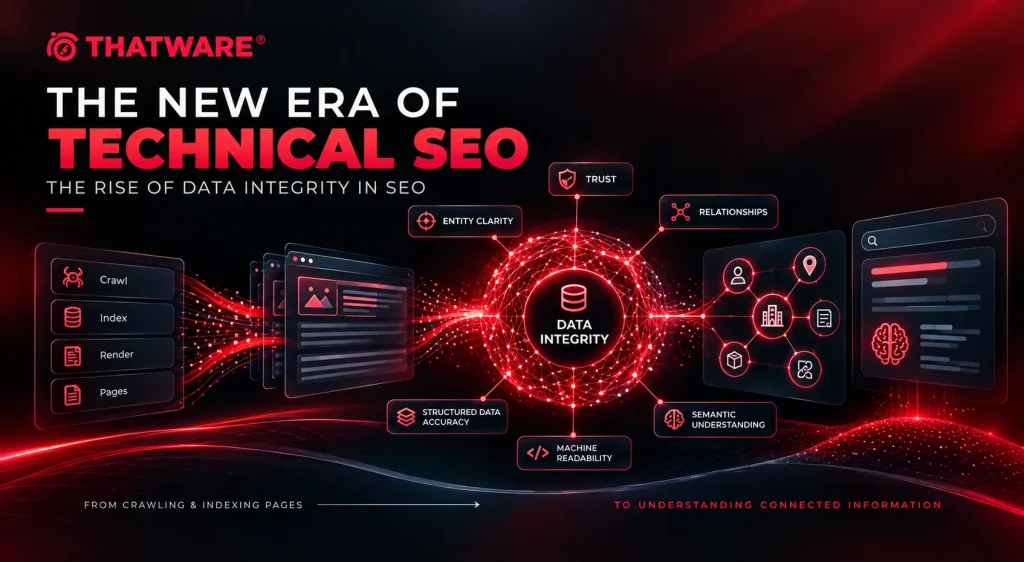
This shift has created a new priority for website owners and search professionals: data integrity.
Data integrity in SEO refers to the accuracy, consistency, completeness, and reliability of the information presented across a website and its wider digital ecosystem. It includes everything from business names, addresses, product details, author information, and service descriptions to structured data, internal links, content relationships, and external references.
A website may load quickly and have a technically correct sitemap, but it can still struggle if its information is inconsistent or difficult for machines to interpret. If one page describes a business differently from another, if structured data conflicts with visible content, or if important entities are not clearly connected, search engines may find it difficult to determine what the website represents.
The modern search experience also includes AI-generated answers, conversational interfaces, entity-based results, and increasingly complex search journeys. In these environments, visibility depends not only on whether a page can be crawled, but also on whether its information can be interpreted accurately and trusted.
This does not mean traditional technical SEO is becoming irrelevant. Instead, its role is expanding. Crawlability, indexability, performance, canonicalization, mobile usability, and website architecture now work alongside data accuracy, semantic clarity, entity consistency, and machine-readable information.
The next era of technical SEO will therefore be less about fixing isolated technical errors and more about creating a reliable information system that search engines and users can understand.
What Is Data Integrity in SEO?
Data integrity in SEO is the practice of maintaining accurate, consistent, complete, and trustworthy information across every important part of a website.
This includes visible website content, metadata, structured data, internal links, external profiles, business listings, product information, author details, and other sources that help search engines interpret a website.
For example, imagine a business website that displays one company name on its homepage, a different variation on its contact page, and an outdated address in its structured data. A human visitor may understand that all three references belong to the same business. Automated systems, however, may interpret those inconsistencies as uncertainty.
The same issue can occur with product prices that differ between visible content and structured data, outdated author profiles, incorrect publication dates, broken internal links, contradictory service descriptions, incomplete markup, or content that does not match the intent suggested by its metadata.
Data integrity is not limited to factual accuracy. It also includes the way information is organized and connected.
A website can contain individually accurate pages but still create confusion if those pages do not form a clear overall structure. Search engines need to understand how a business, service, product, person, location, and topic relate to one another.
This is why data integrity should be treated as a system-wide SEO responsibility rather than a small technical checklist item.
Why Data Integrity Matters More Than Before
Search engines process enormous amounts of information. They must identify useful content, understand entities, compare sources, interpret intent, and deliver answers quickly. As search becomes more complex, unclear or contradictory information becomes more difficult to process.
Data integrity matters for several reasons.
It Supports Accurate Search Understanding
Search engines need to know what a website is about, who operates it, what services it offers, where it operates, and which topics it covers. Consistent information provides a stronger foundation for interpretation.
If a website clearly identifies its business, services, expertise, and audience, search systems have more reliable signals with which to understand it.
It Reduces Ambiguity
Ambiguous information creates uncertainty. A page title may suggest one topic while the main content discusses another. A service page may mention multiple unrelated services without explaining their relationship. A business may use several names across different platforms.
These issues make it harder for automated systems to determine which interpretation is correct.
It Improves Machine Readability
Modern search systems rely heavily on automated processing. Information must therefore be organized in ways that machines can recognize. Clear headings, descriptive URLs, structured data, logical internal links, and consistent entity references all contribute to machine readability.
It Strengthens User Trust
Visitors notice inconsistencies. Incorrect contact information, outdated claims, unclear service descriptions, and conflicting prices can reduce confidence. Search visibility may bring users to a website, but reliable information helps them stay, engage, and convert.
It Supports AI-Based Search Experiences
AI search systems increasingly combine information from multiple sources when generating responses. If a website provides clear, accurate, and well-connected information, its content becomes easier for such systems to interpret.
This does not guarantee inclusion in AI-generated answers, but it creates a stronger foundation for being understood.
From Crawling Pages to Understanding Information
Traditional technical SEO often begins with a simple question: Can search engines access and index this page?
That question is still essential. However, it is no longer enough.
A page can be crawlable and indexable while remaining unclear. Search engines may access the content but struggle to determine its purpose, relevance, authority, or relationship to other information.
The new question is:
Can search engines accurately understand what this page represents and how it fits into the wider website?
This change moves technical SEO from a page-level discipline toward an information-architecture discipline.
For example, a website may publish separate pages for website development, technical audits, content strategy, and digital marketing. If those pages are disconnected, poorly linked, or written without a clear topical structure, search engines may not understand the website’s overall expertise.
A better structure would explain:
- What the main service category is
- Which sub-services belong to it
- Which audiences each service serves
- How the services relate to one another
- Which pages provide supporting information
- Which pages represent commercial intent
- Which pages answer informational questions
This structure helps search engines interpret the website as a connected knowledge system rather than a collection of unrelated URLs.
The role of technical SEO is therefore expanding. It now includes both the technical conditions that allow information to be discovered and the structural conditions that allow it to be understood.
The Five Layers of Data Integrity
Data integrity can be understood through five connected layers. Each layer addresses a different type of information risk.
1. Entity Integrity
Entity integrity refers to the accurate representation of important entities such as businesses, people, products, services, organizations, locations, and publications.
A website should consistently communicate:
- The correct name of the entity
- Its purpose and category
- Its location
- Its ownership or association
- Its services or products
- Its relevant attributes
- Its relationship with other entities
For example, a company should use a consistent business name across its website, business profiles, author pages, and structured data. A product should have a consistent name, description, price, availability status, and identifying information.
Entity confusion can occur when a business uses multiple brand variations, when service names change without explanation, or when several unrelated topics are placed under one unclear category.
Clear entity signals help search engines distinguish one subject from another.
2. Relationship Integrity
Information becomes more useful when relationships between entities are clear.
A service page should connect logically to its parent service category. An author profile should connect to the articles written by that author. A product should connect to its category, brand, specifications, and availability. A location page should connect to the relevant business and service area.
These relationships can be communicated through:
- Internal links
- Breadcrumbs
- Navigation menus
- Contextual references
- Structured data
- Clear page hierarchy
- Consistent naming conventions
Relationship integrity is especially important for large websites. When hundreds or thousands of pages exist, search engines need signals that explain how the content fits together.
A page that exists in isolation may be difficult to interpret. A page that is connected to related content through meaningful relationships becomes easier to classify and understand.
3. Content and Format Integrity
Content integrity concerns the accuracy and consistency of the information presented to users and search engines.
Format integrity concerns whether that information is presented in a clear, accessible, and machine-readable format.
Common issues include:
- A title that does not match the page content
- Structured data that describes information not visible on the page
- Outdated prices or dates
- Incorrect headings
- Missing image descriptions
- Conflicting author information
- Inconsistent terminology
- Content hidden in difficult-to-render elements
- Important information presented only through images
Content should answer the purpose suggested by the URL, title, heading, and search intent. Structured data should accurately represent the visible page. Important information should be accessible to users and understandable to automated systems.
The goal is not to make every page overly technical. The goal is to ensure that the same meaning is communicated consistently across different formats.
4. Action and Transaction Integrity
Many websites do more than provide information. They allow users to take actions such as booking appointments, purchasing products, submitting forms, requesting quotes, downloading resources, or contacting a business.
These actions must also be reliable.
A website may attract traffic through search, but broken forms, inaccurate availability, incorrect prices, or confusing conversion paths can damage the user experience.
Action integrity includes:
- Working contact forms
- Accurate service availability
- Correct product information
- Functional booking systems
- Clear calls to action
- Consistent pricing
- Reliable payment or inquiry processes
- Proper confirmation messages
- Accurate tracking of completed actions
Search engines increasingly evaluate user experience and page usefulness. While not every conversion issue is directly a ranking factor, poor functionality can reduce engagement, trust, and business outcomes.
Technical SEO should therefore consider what happens after a user reaches the page.
5. Reputation and Perception Integrity
The final layer concerns how a website and its entities are understood across the broader web.
Search engines may use information from multiple sources to interpret a business, person, product, or organization. If external references contain outdated or conflicting information, the overall picture can become unclear.
Reputation and perception integrity may involve:
- Consistent business information
- Accurate professional profiles
- Reliable third-party references
- Relevant mentions
- Clear author credentials
- Genuine reviews
- Consistent service descriptions
- Transparent claims
This does not mean that every external mention must be identical. Different platforms may use different formats. However, the underlying facts should remain consistent.
Trust is strengthened when a website’s own information aligns with credible external signals.
Structured Data Is Becoming More Important—but Accuracy Comes First
Structured data helps websites communicate information in a format that machines can process. It can describe organizations, products, articles, events, people, services, locations, and other entities.
However, structured data should not be treated as a shortcut to visibility.
Adding markup does not automatically make a website authoritative or eligible for enhanced search features. The markup must be accurate, relevant, technically valid, and consistent with the visible content.
A common mistake is adding structured data simply because a certain type is available. For example, a website may include product markup on a page that does not actually provide product information. Another website may mark up reviews or ratings that are not clearly supported by the page.
These practices can create misleading signals.
The correct approach is to begin with the information users can see and understand. Structured data should then represent that information accurately.
A strong structured-data process includes:
- Identifying the primary entity on the page
- Determining which attributes are genuinely available
- Matching markup with visible content
- Using appropriate properties
- Avoiding unsupported or exaggerated claims
- Testing the implementation
- Reviewing the markup after content changes
Structured data is most useful when it reinforces a clear information structure rather than attempting to compensate for one.
The Relationship Between Technical SEO and Semantic Understanding
Technical SEO and semantic understanding are often treated as separate disciplines. In reality, they support the same objective: helping search engines understand and retrieve useful information.
Technical SEO creates the conditions for access and processing. Semantic optimization clarifies meaning, context, relationships, and intent.
Consider a website that publishes content about online marketing. It may use relevant keywords, but keyword usage alone does not explain:
- What specific services are offered
- Which industries are served
- How the services relate to one another
- What problems the services solve
- Which topics demonstrate expertise
- Which pages answer commercial or informational intent
Semantic clarity helps fill these gaps.
A semantically organized website uses related concepts naturally. It distinguishes broad topics from specific subtopics. It creates meaningful connections between pages. It avoids treating every keyword as an isolated target.
This is why a modern SEO strategy should examine both technical structure and meaning.
A technically perfect website with weak topical organization may remain difficult to understand. A semantically rich website with serious crawlability problems may remain difficult to access. Both dimensions are necessary.
Why Ambiguity Is a Technical SEO Problem
Ambiguity is often considered a content problem, but it can also be a technical SEO problem because it affects how information is interpreted.
Ambiguity may arise when:
- One page targets several unrelated intents
- A business offers many services without clear categorization
- Similar pages use inconsistent names
- Internal links use vague anchor text
- Important entities are not defined
- Content contains unsupported claims
- Metadata does not match the page
- URLs do not reflect the website structure
- Structured data conflicts with visible information
Search engines must make decisions based on available signals. When those signals point in different directions, interpretation becomes less certain.
For example, a page titled “Digital Marketing Solutions” may contain information about web design, app development, paid advertising, content creation, and business consulting. The page may be comprehensive, but its primary purpose is unclear.
A more effective structure may separate the topics into focused pages and connect them through a clear category system.
Reducing ambiguity does not mean reducing useful information. It means organizing information so that its purpose is easier to recognize.
Building Machine-Readable Web Experiences
A machine-readable website is not a website written only for algorithms. It is a website whose information is clear for both people and automated systems.
Several practices support machine readability.
Use Clear Page Purposes
Every important page should have a defined purpose. It should be clear whether the page is informational, commercial, navigational, transactional, or location-based.
Maintain Consistent Terminology
If a service is called “technical SEO audit” on one page and “website performance inspection” on another, the relationship should be explained. Consistent naming reduces confusion.
Create Logical URL Structures
URLs should reflect the organization of the website. They do not need to contain every keyword, but they should communicate the topic and hierarchy where appropriate.
Strengthen Internal Linking
Internal links should connect related pages using descriptive anchor text. They should help users and search engines understand how content is connected.
Use Descriptive Headings
Headings should explain the subject of each section. A clear heading structure improves scanning and content interpretation.
Keep Important Content Accessible
Important information should not depend entirely on inaccessible scripts, hidden interactions, or image-only text.
Maintain Consistent Metadata
Titles, descriptions, canonical tags, language information, and other metadata should support the actual page content.
Review Rendering and Accessibility
Search engines need to process the content effectively. Rendering issues, blocked resources, or inaccessible page elements can interfere with understanding.
Machine readability is therefore the result of many small decisions working together.
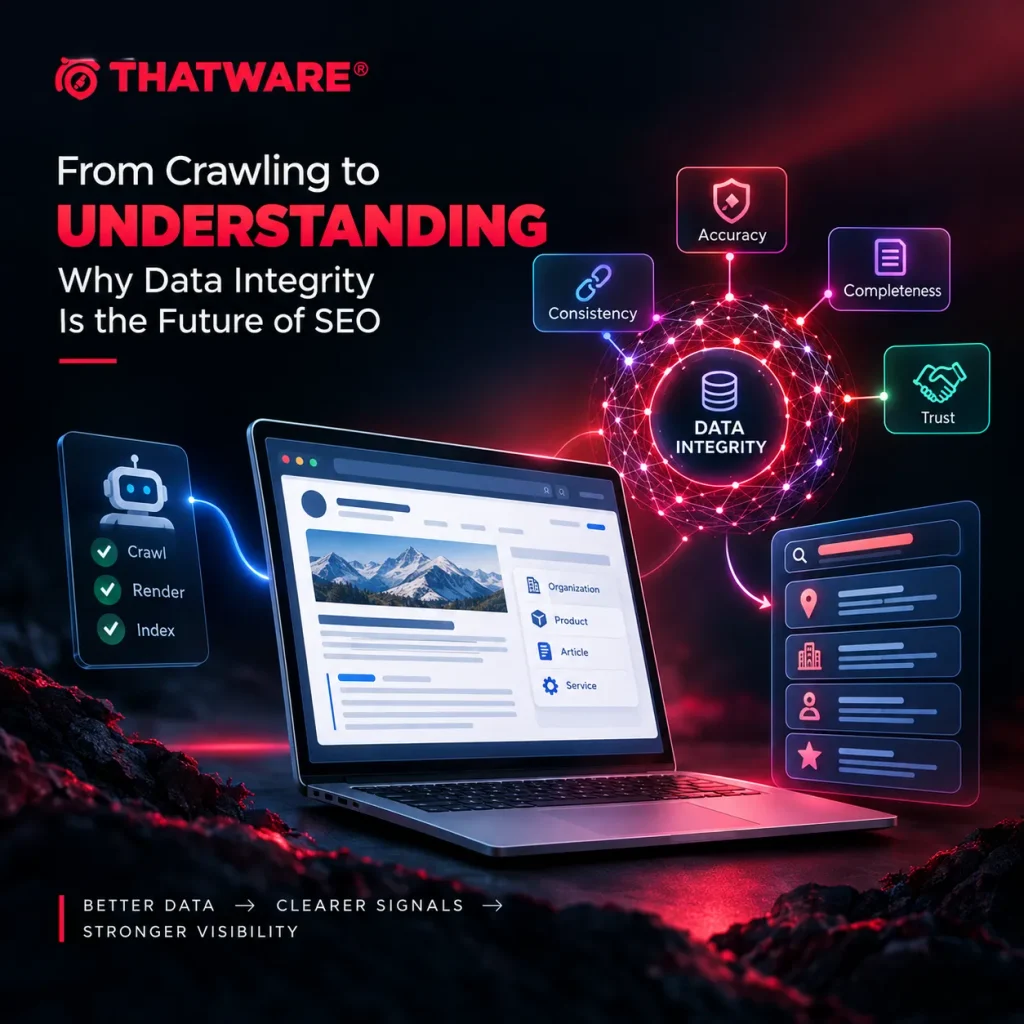
The Role of AI in the New Technical SEO Environment
Artificial intelligence is changing how search systems process content and how SEO professionals evaluate websites.
AI systems can analyze large volumes of information, identify patterns, compare entities, interpret language, and generate responses. This makes information quality even more important.
The use of AI in SEO should not be limited to generating content. It can also support:
- Website classification
- Entity extraction
- Content relationship mapping
- Duplicate-content detection
- Metadata analysis
- Internal-link recommendations
- Structured-data review
- Search-intent analysis
- Content-gap identification
- Information consistency checks
However, AI-generated recommendations must be reviewed carefully. Automated systems can identify patterns, but they may also misunderstand context or produce inaccurate conclusions.
Human judgment remains important for deciding whether information is factually correct, commercially appropriate, legally safe, and aligned with the website’s real purpose.
A useful AI strategy combines automation with editorial review and technical validation.
The strongest websites will not simply publish more AI-generated content. They will build reliable information systems that make content easier to understand, verify, and connect.
Why Keyword Optimization Alone Is No Longer Enough
Keywords remain useful because they help identify search demand and user language. However, modern search systems evaluate more than exact phrase matches.
A page should answer the user’s need clearly. It should provide context, explain related concepts, and demonstrate relevance.
For example, a page targeting a service-related keyword should not merely repeat the phrase throughout the text. It should explain:
- What the service means
- Who needs it
- What problems it solves
- How the process works
- What outcomes are realistic
- What factors affect cost or performance
- What questions users commonly ask
This approach creates stronger content and clearer semantic signals.
The objective is not to abandon keywords. It is to place them within a meaningful information structure.
A useful keyword should identify a topic, not control the entire paragraph. When keywords are used naturally and supported by relevant information, the page becomes more helpful to users and easier for search systems to interpret.
The Changing Role of Authority and Links
Links remain an important part of search visibility, but their value depends on relevance, context, and trust.
A large number of links does not automatically indicate quality. Search engines and users benefit more from links that come from relevant, credible, and contextually appropriate sources.
The same principle applies to internal links. A page should not link to another page simply because a keyword can be inserted. The link should help the reader understand a related topic or take a useful next step.
External references should also be evaluated for accuracy. If a website is mentioned on a third-party platform, the information should be current and consistent.
The broader objective is to create a connected and trustworthy information environment.
A website that earns Quality Backlinks from relevant and credible sources may strengthen its authority signals, but link acquisition should be based on useful content, genuine relationships, and editorial relevance rather than artificial volume.
Links are most valuable when they support a clear subject, reinforce credibility, and help users discover additional information.
How ThatWare Approaches the Data Integrity Challenge
Moving Beyond Traditional Technical SEO
The modern search environment requires more than isolated technical fixes. Website owners must ensure that their content, entities, relationships, and digital signals communicate a consistent meaning. This is where ThatWare’s approach becomes relevant.
ThatWare combines technical SEO, semantic analysis, entity optimization, and AI-driven search intelligence to examine how websites are discovered, interpreted, and represented. Traditional technical foundations such as crawlability, indexability, website performance, mobile usability, and structured navigation remain central to this process. However, they are evaluated alongside the accuracy and clarity of the information presented across the website.
This broader approach helps identify issues that may not appear in a conventional technical audit. A website may have functioning pages but unclear service relationships. Its content may be indexable but inconsistent across important sections. Its structured data may be valid in format but poorly aligned with the visible information.
Connecting Entities, Content, and Semantic Signals
A major part of data integrity involves understanding how different pieces of information connect. ThatWare’s work in semantic SEO, entity optimization, AI search analysis, and content structuring focuses on these connections.
For example, a service page should clearly relate to its main service category, target audience, location, and supporting content. Author information should connect logically with published articles. Business details should remain consistent across important digital references. These relationships help create a clearer information architecture.
This approach is closely connected with Large Language Model SEO, where the goal is to make information easier for language-based systems to interpret. Clear entities, meaningful relationships, accurate descriptions, and consistent terminology can support better understanding across traditional and AI-driven search experiences.
Building a More Reliable Foundation for AI Visibility
AI-based search does not remove the need for technical SEO. Instead, it increases the importance of reliable foundations. Search systems must be able to access information, identify its source, understand its meaning, and evaluate its relevance.
ThatWare’s Hyper-AI SEO approach brings together search intelligence, semantic analysis, entity-focused optimization, and AI-oriented strategies. The aim is to create websites that are not only technically accessible but also understandable and trustworthy.
This perspective supports a broader view of AI Powered SEO, where artificial intelligence is used to analyze search behavior, identify information gaps, improve content relationships, and strengthen website clarity.
The long-term objective is not to chase every new search feature. It is to create accurate, connected, and dependable information that can remain useful as search technology evolves.
Data Integrity as a Technical SEO KPI
Technical SEO performance is often measured through crawl errors, index coverage, Core Web Vitals, page speed, mobile usability, and organic traffic. These metrics remain valuable, but they do not fully explain whether a website’s information is reliable.
Data integrity can be evaluated through additional indicators.
Entity Consistency
Are business names, locations, products, authors, and services represented consistently across the website?
Content Alignment
Do titles, headings, metadata, structured data, and visible content communicate the same purpose?
Relationship Clarity
Are related pages connected through meaningful internal links and clear navigation?
Information Freshness
Are prices, dates, service descriptions, availability details, and business information current?
Structured Data Accuracy
Does the markup accurately reflect the content users can see?
Source Reliability
Are important claims supported by credible information and relevant references?
Action Reliability
Do forms, bookings, purchases, and other important user actions work correctly?
AI Interpretability
Can the main entities, topics, services, and relationships be identified clearly?
These indicators can be reviewed through regular audits and content governance processes. The purpose is not to create another complicated reporting system. It is to identify information risks before they affect visibility, trust, or conversions.
Choosing the Right SEO Approach in a Data-Driven Search Environment
As technical SEO becomes more connected with data, semantics, automation, and AI, businesses need to look beyond isolated tactics. The role of a professional seo agency is increasingly about understanding how multiple search signals work together rather than focusing on one ranking factor.
An effective SEO partner should be able to examine technical infrastructure, content quality, website architecture, search intent, entity relationships, and performance data as parts of one system.
This broader perspective is especially important for websites that have grown over several years. Older websites often contain legacy URLs, outdated content, duplicate pages, inconsistent metadata, and multiple versions of important business information.
A strategic SEO review can identify which problems require technical fixes, which require content improvements, and which require stronger information governance.
The objective should always be sustainable search performance rather than short-term manipulation.
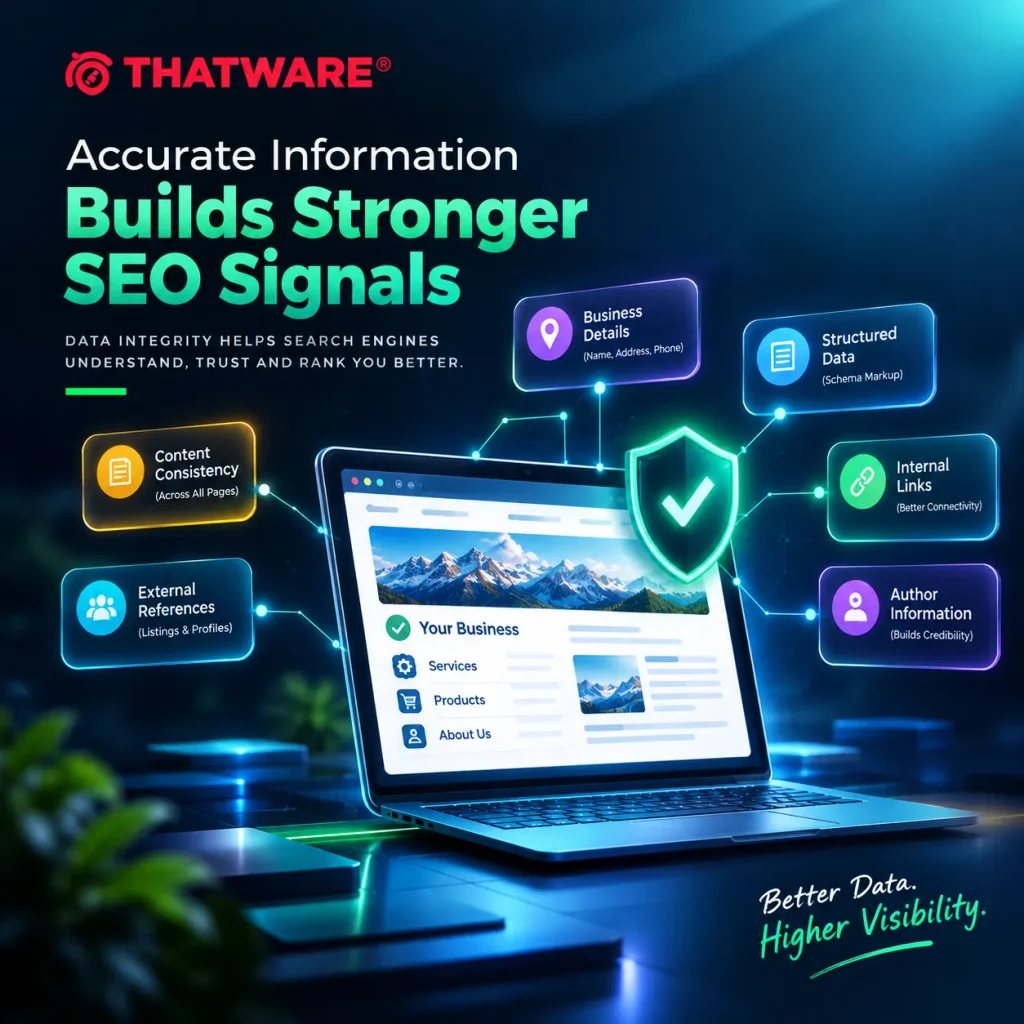
A Practical Framework for Improving Data Integrity
Step 1: Identify Important Entities
Begin by listing the entities that matter most to the website. These may include the organization, services, products, authors, locations, industries, and key topics.
Define how each entity should be named and described.
Step 2: Create an Information Inventory
Review important website pages and record:
- Page title
- Main topic
- Primary entity
- Search intent
- URL
- Metadata
- Structured data
- Internal links
- Conversion purpose
- Last review date
This inventory helps identify duplicate, outdated, incomplete, or conflicting information.
Step 3: Review Consistency Across Pages
Compare important facts across the website. Look for differences in business names, addresses, service descriptions, pricing, claims, dates, and terminology.
Not every page needs identical wording, but important facts should remain accurate.
Step 4: Improve Website Relationships
Review navigation, breadcrumbs, category pages, contextual links, and related-content sections. Make sure users and search engines can move logically from broad topics to specific information.
Step 5: Audit Structured Data
Check whether structured data matches visible content. Remove unsupported properties and update outdated information.
Step 6: Review Content for Ambiguity
Identify pages that cover too many unrelated topics or use unclear terminology. Consider separating topics, improving headings, and adding explanatory context.
Step 7: Strengthen Content Quality
Useful content should answer real questions, explain concepts clearly, and avoid exaggerated claims. It should be written for the intended audience rather than created only to target search phrases.
Step 8: Validate User Actions
Test forms, booking systems, product information, contact options, and other important interactions. A technically accessible page is not enough if the user journey fails afterward.
Step 9: Monitor External Information
Review important business listings, professional profiles, and relevant third-party references. Correct outdated or conflicting information where possible.
Step 10: Establish Ongoing Governance
Data integrity is not a one-time project. Websites change constantly. New pages are published, services are updated, employees change roles, products become unavailable, and business information evolves.
A regular review process helps maintain accuracy over time.
Common Data Integrity Mistakes
Publishing Without Reviewing Existing Information
New content may introduce facts that conflict with older pages. A content calendar should include review and update activities, not only new publishing.
Treating Structured Data as a Shortcut
Markup cannot compensate for unclear or inaccurate visible content. Structured data should represent the page, not create a different version of it.
Using Inconsistent Business Information
Different names, addresses, phone numbers, or service descriptions can create confusion across the website and external platforms.
Creating Pages Without Clear Relationships
Large websites often publish many pages without establishing how they connect. This can create orphan pages, duplicate topics, and unclear hierarchies.
Overusing Automated Content
Automation can accelerate production, but unreviewed content may contain factual errors, repetitive language, or weak context.
Ignoring Old Pages
Outdated content can remain indexed long after it stops being useful. Regular content reviews help identify pages that need updates, consolidation, redirection, or removal.
Focusing Only on Rankings
A ranking report may show where a page appears, but it does not explain whether the information is accurate, useful, or trustworthy. Performance should be evaluated alongside quality and user outcomes.
Generative Search and the Future of Data Integrity
Search is becoming more conversational and answer-oriented. Users may ask complex questions rather than type short keyword phrases. Search systems may combine information from several pages and sources before presenting a response.
This environment increases the importance of clear, verifiable, and well-structured information.
A website that wants to support Generative AI SEO should focus on more than producing content for AI systems. It should make its information easy to identify, interpret, and verify.
Important practices include:
- Defining entities clearly
- Answering specific questions
- Using descriptive headings
- Supporting claims with reliable information
- Maintaining consistent terminology
- Connecting related topics
- Updating outdated facts
- Avoiding unsupported statements
- Providing useful context
- Making important information accessible
AI-generated answers are not always predictable. No optimization method can guarantee that a website will be cited or displayed in every answer. However, data integrity improves the quality of the information that search systems can process.
The future belongs to websites that are not merely visible but understandable.
The Growing Importance of Answer-Focused Optimization
As users increasingly expect direct answers, websites must structure information around questions and needs.
Answer-focused optimization involves identifying the questions users ask and providing clear, complete, and contextually relevant responses.
This may include:
- Frequently asked questions
- Step-by-step explanations
- Definitions
- Comparisons
- Practical examples
- Troubleshooting guidance
- Pricing factors
- Eligibility requirements
- Process explanations
AEO Services can support this direction by helping businesses organize content for answer-oriented search experiences. However, answer optimization should not be treated as a separate activity disconnected from technical SEO.
A page must still be accessible, fast, logically structured, and supported by accurate information. The answer should also be relevant to the page’s main purpose.
The best answer-focused content is direct without being shallow. It responds to the user’s question while providing enough context to support understanding and informed action.
Semantic Organization as a Long-Term Advantage
Semantic organization helps a website demonstrate the depth and structure of its subject knowledge.
Rather than creating separate pages for every minor keyword variation, a semantically organized website groups related concepts into meaningful topic areas.
For example, a website discussing technical SEO may cover:
- Crawling
- Indexing
- Rendering
- Website architecture
- Structured data
- Internal linking
- Page experience
- Entity understanding
- Content relationships
- Search intent
- Data accuracy
These topics can be connected through a logical structure. Broad pages introduce the subject, supporting pages explain specific concepts, and service pages address commercial needs.
This approach creates a better experience for users and provides stronger contextual signals for search engines.
Semantic SEO Services may help businesses identify topic relationships, improve content organization, strengthen internal linking, and clarify the meaning of important pages.
The key is to build a coherent information system rather than a collection of disconnected keyword pages.
Why CRSEO Matters in the New Search Environment
Search visibility is increasingly influenced by the relationship between content, reputation, relevance, and user experience. Businesses must ensure that their websites communicate accurate information while also demonstrating expertise and credibility.
CRSEO services can be understood as part of a broader approach to strengthening content relevance, credibility, and search performance through coordinated optimization.
Regardless of the terminology used, the underlying principles remain important:
- Content should match user intent
- Technical foundations should support access
- Information should be accurate
- Entities should be represented consistently
- Related pages should be connected
- Claims should be supported
- User experience should be reliable
- Website information should remain current
The modern search environment rewards clarity and usefulness. A website cannot depend entirely on technical signals, content volume, or link acquisition. It must present a consistent and trustworthy picture of what it offers.
The Role of Cutting-Edge SEO in Data Integrity
As search technology develops, SEO strategies must evolve with it. cutting edge seo is not simply about adopting every new tool or trend. Its real value lies in understanding how emerging technologies affect the way information is discovered, processed, evaluated, and presented.
This means examining developments in AI search, entity understanding, structured data, conversational search, automated analysis, and machine interpretation while maintaining the fundamentals that have always supported successful websites.
A forward-looking SEO strategy should therefore ask whether new technology genuinely improves understanding and user experience. If a new tool generates more content but introduces inaccuracies, it may create more problems than it solves.
Likewise, an automated optimization process may increase efficiency while weakening editorial quality if it operates without proper controls.
The strongest modern strategies combine innovation with discipline. They use emerging technology where it creates measurable value while protecting the accuracy, consistency, and trustworthiness of the information being optimized.
The Role of Human Review in an AI-Driven SEO Process
AI can help identify patterns and automate repetitive tasks, but human review remains essential.
A machine may detect that two pages use similar language, but a specialist must decide whether they should be consolidated. An AI tool may recommend structured data, but a technical professional must verify whether the markup is appropriate. An automated system may identify a content gap, but an experienced writer must determine whether the topic is relevant to the audience.
Human review is particularly important for:
- Factual claims
- Medical, legal, financial, or safety-related information
- Business details
- Author credentials
- Product specifications
- Pricing
- Customer promises
- Industry-specific terminology
- Sensitive topics
The future of SEO is not about choosing between people and technology. It is about using technology to improve efficiency while applying human judgment to accuracy, context, and trust.
A New Definition of Technical SEO
Technical SEO can no longer be defined only as the process of improving crawling, indexing, rendering, and website performance.
These activities remain foundational, but the discipline now also includes:
- Information architecture
- Entity clarity
- Semantic relationships
- Structured-data accuracy
- Content consistency
- Machine readability
- User-action reliability
- Source credibility
- AI search interpretability
- Ongoing information governance
This expanded definition reflects how search systems are evolving.
A technically strong website should not simply be accessible. It should communicate a clear and reliable meaning.
It should help search engines answer questions such as:
- What is this website?
- Who is responsible for it?
- What does it offer?
- Which topics does it cover?
- Which entities are important?
- How are the pages connected?
- Is the information current?
- Can the claims be trusted?
- Does the content satisfy the user’s intent?
The websites that answer these questions clearly will be better positioned for long-term search visibility.
Conclusion: Data Integrity Is the Foundation of Future SEO
The new era of technical SEO is defined by a shift from access to understanding.
Crawlability, indexability, performance, mobile usability, and website architecture remain essential. However, they must work alongside accurate information, consistent entities, clear relationships, reliable structured data, and trustworthy content.
Data integrity connects these elements.
When a website communicates consistent facts, explains its topics clearly, connects related pages, and maintains reliable user actions, it becomes easier for search engines and users to understand its value.
The future of SEO will involve more automation, more AI-driven search experiences, and more complex information processing. These developments will increase the importance of websites that are clear, accurate, and well organized.
Businesses should therefore treat data integrity as an ongoing responsibility rather than a one-time technical task. Every new page, content update, service change, structured-data implementation, and external reference can influence how a website is understood.
The strongest SEO strategy will not simply ask how to achieve higher rankings. It will ask how to create information that deserves to be discovered, understood, trusted, and used.
That is the real direction of technical SEO—and data integrity is at the center of it.