
SUPERCHARGE YOUR ONLINE VISIBILITY! CONTACT US AND LET’S ACHIEVE EXCELLENCE TOGETHER!
The digital search landscape is experiencing one of the biggest transformations in modern internet history as AI-powered search ecosystems rapidly reshape how users discover information, brands, products, and services online. For more than two decades, businesses focused heavily on traditional SEO strategies such as keyword optimization, backlinks, technical SEO, and organic rankings to improve visibility on search engines. Success was measured through clicks, impressions, traffic, and search engine result page positioning. However, the emergence of conversational AI platforms like OpenAI ChatGPT, Anthropic Claude, xAI Grok, Perplexity, and Google Gemini has fundamentally changed user behavior.
Instead of manually browsing multiple websites, users now ask direct questions and receive instant AI-generated answers, recommendations, summaries, and comparisons within conversational interfaces. This shift means users are no longer searching only through links; they are increasingly relying on machine-generated responses to make decisions. As a result, brands face a major new challenge because even companies with strong Google rankings may still remain invisible inside AI-generated answers. Traditional SEO alone is no longer sufficient in an era where AI systems determine which brands are recognized, cited, trusted, and recommended. This transformation has created an entirely new optimization discipline known as AI Visibility Optimization, where businesses must optimize not just for search engines, but for AI discoverability across modern conversational ecosystems.
What is AVM?
The AI Visibility Metric (AVM) is an advanced enterprise-level intelligence framework developed by ThatWare to measure how visible and discoverable a brand is across modern AI-powered search ecosystems. Unlike traditional SEO metrics that focus on rankings, traffic, or backlinks, AVM evaluates how frequently and effectively a brand is recognized, recommended, and cited within AI-generated responses across multiple conversational platforms.
At its core, AVM is designed to answer a critical question in today’s AI-driven digital landscape: Does an AI system actually know your brand well enough to recommend it? To solve this, the framework analyzes how large language models and AI search engines—such as those developed by OpenAI, Anthropic, xAI, Perplexity AI, and Google—interpret brand relevance during real user queries.
AVM works by aggregating multiple visibility signals such as brand presence in AI answers, citation frequency from trusted sources, consistency across different AI systems, and positioning within generated recommendations. These signals are then normalized into a unified visibility score that reflects a brand’s true discoverability in conversational search environments.
In simple terms, AVM represents a shift from “ranking on search engines” to “being recommended by AI systems.” It helps businesses understand not just whether they can be found online, but whether they are trusted and surfaced by AI when users ask high-intent, decision-making questions.
What Is the AI Visibility Metric (AVM) Calculator?
The Need for AI Visibility Intelligence
The rapid rise of conversational AI and answer-based search ecosystems has completely transformed how brands are discovered online. Traditional SEO strategies were built around rankings, clicks, backlinks, and keyword positioning within search engine result pages. However, modern AI systems now generate direct answers, recommendations, comparisons, and summaries without requiring users to browse multiple websites. Platforms like OpenAI ChatGPT, Anthropic Claude, xAI Grok, Perplexity, and Google Gemini are increasingly becoming the primary discovery channels for users searching for products, services, agencies, software, and business recommendations. This major shift has created a new challenge for businesses because even brands with strong traditional SEO performance may still remain invisible inside AI-generated responses. The AI Visibility Metric (AVM) Calculator was developed to solve this exact problem by measuring how effectively brands appear, perform, and compete across AI-powered search ecosystems.
What the AVM Calculator Actually Measures
The AI Visibility Metric (AVM) Calculator is an enterprise-grade AI visibility intelligence system designed to analyze modern digital discoverability across multiple AI providers and conversational platforms. Instead of focusing only on traditional rankings, the platform evaluates whether AI systems actively recognize, trust, recommend, mention, and cite a brand during user interactions. The AVM engine analyzes multiple visibility signals including AI presence, citation frequency, entity authority, recommendation positioning, cross-engine consistency, and commercial query discoverability.
The platform examines how AI engines respond when users ask high-intent questions such as “best AI SEO agency,” “top enterprise SEO companies,” or “which marketing agencies use AI.” It measures whether the brand appears inside generated answers, how prominently it is positioned, how frequently it is cited, and how consistently it is recommended across different AI systems. This creates a far more realistic measurement of modern visibility compared to traditional SEO metrics alone.
Multi-AI Intelligence & Cross-Platform Visibility Analysis
One of the most powerful aspects of the AVM Calculator is its multi-provider architecture. Rather than depending on a single AI engine, the system combines visibility intelligence from multiple platforms into a unified enterprise scoring framework. The AVM ecosystem analyzes discoverability across:
- OpenAI
- Claude
- Grok
- Perplexity
- Google Search
- AI answer engines
- Conversational search ecosystems
Each provider contributes unique visibility intelligence signals. Some platforms focus heavily on semantic reasoning, while others emphasize citations, real-time discoverability, conversational behavior, or authority validation. By blending these outputs together, the AVM system creates a comprehensive AI visibility profile that reflects how brands perform across the broader AI search ecosystem.
Why the AVM Calculator Matters for Modern Businesses
As AI-generated discovery continues replacing traditional browsing behavior, businesses must optimize for far more than rankings and traffic. Brands now need visibility inside machine-generated recommendations and conversational answers where purchasing decisions increasingly begin. The AVM Calculator helps organizations identify visibility gaps, authority weaknesses, citation deficiencies, and competitor advantages across AI systems.
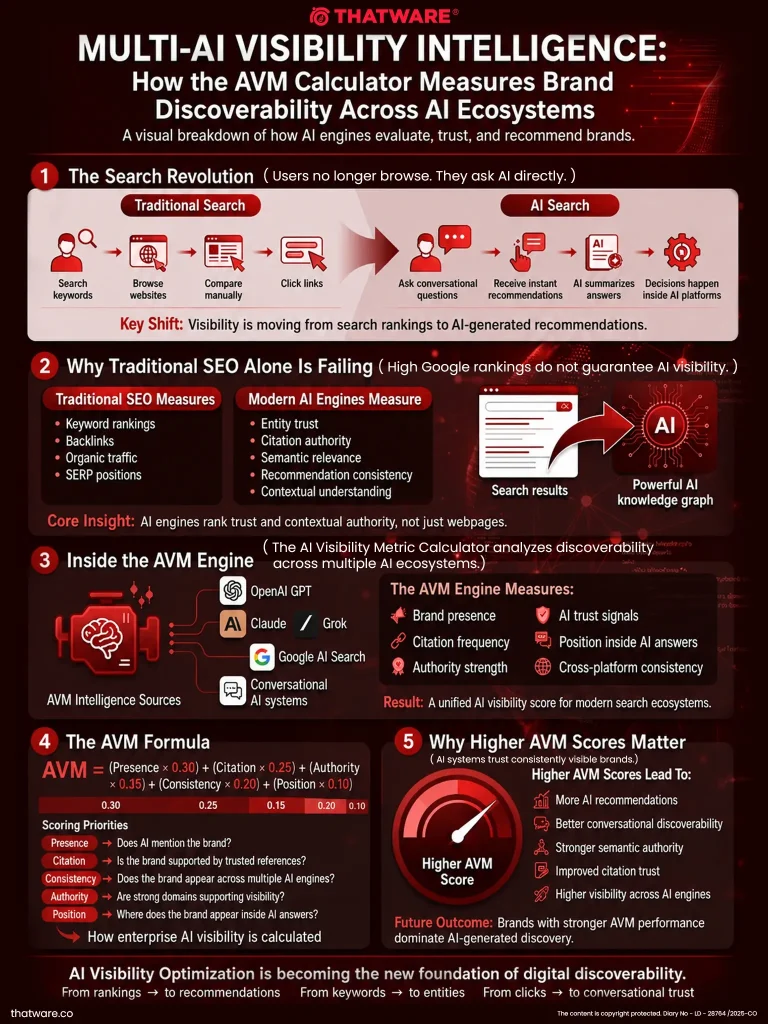
The platform is particularly valuable for enterprise brands, SEO agencies, AI optimization consultants, marketing strategists, and reputation management teams looking to future-proof their digital visibility. By measuring AI discoverability across multiple ecosystems, ThatWare’s AVM framework provides organizations with actionable intelligence to improve semantic authority, strengthen AI trust signals, and increase recommendation visibility in the evolving future of search.
AVM End-to-End Architecture
Understanding the Foundation of the AVM Ecosystem
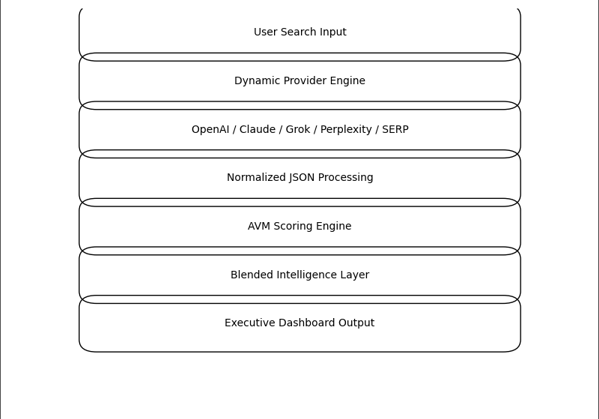
The architecture behind the AI Visibility Metric (AVM) Calculator was designed to function as a fully scalable enterprise intelligence system capable of analyzing brand discoverability across multiple AI search ecosystems simultaneously. Unlike traditional SEO tools that rely primarily on keyword tracking and search engine rankings, the AVM architecture processes visibility signals from conversational AI systems, AI-generated answer engines, citation-based discovery platforms, and modern semantic search environments. The primary objective of the architecture is to transform raw AI-generated visibility data into a unified enterprise-level AI discoverability score that accurately reflects how brands are recognized, cited, trusted, and recommended across evolving AI ecosystems.
The AVM framework operates through a layered intelligence infrastructure where search queries, AI provider analysis, visibility signals, normalization systems, scoring algorithms, and reporting dashboards work together within a connected ecosystem. This creates a highly adaptive visibility measurement engine capable of supporting large-scale enterprise discoverability analysis.
Query Input & Search Intent Simulation Layer
The first stage of the AVM architecture begins with the query intelligence layer, where the system dynamically generates multiple search scenarios designed to simulate real-world user behavior. Rather than analyzing only branded searches, the platform evaluates a wide range of query categories including informational searches, commercial-intent searches, comparison queries, recommendation-based prompts, and industry-specific discovery requests.
For example, the system may test prompts such as:
- “Best AI SEO agency”
- “Top enterprise digital marketing companies”
- “Which agencies use AI for SEO?”
- “Compare AI optimization firms”
- “Best AI marketing solutions”
This simulation layer is critical because AI engines behave differently depending on user intent. A brand may appear for branded queries but remain absent during broader commercial discovery searches. The AVM architecture captures these visibility differences to generate more accurate AI discoverability insights.
Multi-Provider AI Intelligence Processing
Once queries are generated, they are distributed across multiple AI providers including OpenAI OpenAI, Anthropic Claude, xAI Grok, Perplexity, and Google Search ecosystems. Each provider processes the queries independently using its own reasoning models, citation logic, semantic understanding systems, and recommendation frameworks.
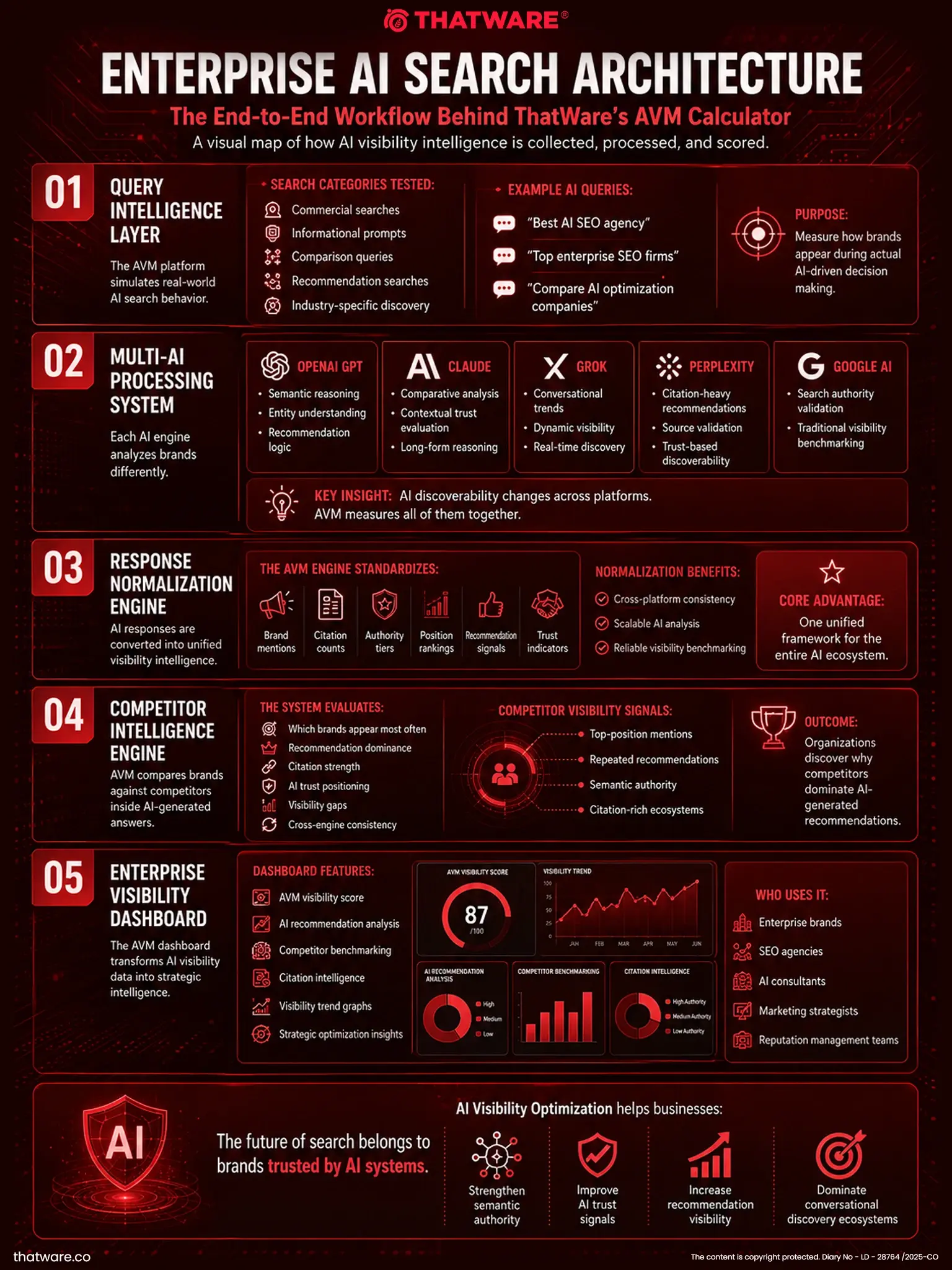
The AVM engine captures multiple visibility signals from these providers, including:
- Brand mentions
- Mention positioning
- Citation frequency
- Source authority
- Consistency patterns
- Recommendation probability
- Contextual relevance
- AI trust indicators
Because each AI platform uses different ranking and reasoning methodologies, the architecture ensures that discoverability analysis reflects the broader AI ecosystem rather than depending on a single platform’s behavior.
Response Normalization & Unified Scoring Engine
One of the most advanced aspects of the AVM architecture is its normalization layer. Since every AI provider returns data differently, the system standardizes all responses into a unified JSON structure for consistent processing and scoring. This normalization process ensures scalable intelligence analysis, cross-provider compatibility, and accurate visibility benchmarking.
After normalization, the AVM scoring engine applies weighted visibility formulas to calculate the final enterprise AI visibility score. The architecture evaluates multiple factors such as presence, citations, authority, consistency, and positioning before generating a blended AI discoverability result.
Dashboard Intelligence & Enterprise Reporting
The final stage of the AVM architecture transforms raw visibility intelligence into actionable enterprise reporting. The dashboard layer presents:
- AVM visibility scores
- AI recommendation analysis
- Competitor benchmarking
- Citation intelligence
- Query-level visibility insights
- Visibility trend graphs
- Positive and negative signals
- Strategic optimization recommendations
This end-to-end architecture enables ThatWare to deliver one of the most advanced AI visibility intelligence frameworks available for measuring discoverability across modern AI-powered search ecosystems.
Core Objectives of the AVM Engine
Measuring Visibility Beyond Traditional Search
The core objective of the AI Visibility Metric (AVM) engine is to measure how effectively brands perform within modern AI-driven discovery ecosystems rather than relying solely on traditional search engine rankings. As conversational AI platforms continue transforming user behavior, businesses can no longer depend only on organic rankings, backlinks, and keyword positioning to maintain digital visibility. Today, AI systems actively influence how users discover companies, compare services, evaluate solutions, and make purchasing decisions. The AVM engine was specifically designed to analyze whether AI systems recognize, trust, cite, and recommend a brand during these interactions. Instead of focusing only on website visibility, the platform measures machine-level discoverability across conversational search environments and AI-generated answer systems.
Evaluating AI Brand Discoverability
One of the primary goals of the AVM engine is to measure brand discoverability across multiple AI ecosystems. The platform evaluates how frequently a brand appears when users ask industry-specific, informational, or commercial-intent questions through AI platforms such as OpenAI ChatGPT, Anthropic Claude, xAI Grok, Perplexity, and Google AI-generated search systems. This allows organizations to understand whether they are visible only for branded searches or whether they are also discoverable during broader industry-related conversations and recommendation queries.
The AVM engine measures discoverability across:
- Commercial searches
- Informational searches
- Comparison-based queries
- Recommendation-focused prompts
- Industry-specific discovery searches
This creates a more realistic representation of modern digital visibility.
Analyzing AI Trust & Citation Signals
Another major objective of the AVM system is to evaluate trust signals used by AI engines when generating responses. AI systems increasingly prioritize authoritative entities supported by strong citations, trusted references, semantic consistency, and reliable contextual relationships. The AVM engine measures citation frequency, source authority, reference quality, and AI-supported validation signals to determine how strongly AI systems trust a particular brand.
The platform identifies whether brands are supported by:
- High-authority domains
- Trusted publications
- Industry-recognized sources
- Citation-rich ecosystems
- Contextually relevant references
This citation intelligence helps organizations understand why certain competitors receive stronger AI recommendation visibility.
Measuring Positioning & Cross-Engine Consistency
The AVM engine also focuses heavily on positioning intelligence and consistency analysis. Visibility alone is not enough if a brand appears at the bottom of AI-generated recommendations or only within isolated searches. The platform measures where brands appear inside AI-generated answers and how consistently they are surfaced across multiple AI providers and repeated search sessions.
Consistency analysis evaluates:
- Cross-platform recommendation stability
- Repeated brand appearances
- Multi-query visibility persistence
- Commercial-intent consistency
- Informational visibility continuity
Brands that appear consistently across multiple AI systems demonstrate stronger semantic authority and higher AI trust weighting.
Delivering Actionable Enterprise Visibility Intelligence
Beyond measurement, one of the most important objectives of the AVM engine is to provide actionable intelligence that organizations can use to improve AI discoverability. The platform helps businesses identify:
- Visibility gaps
- Weak authority signals
- Citation deficiencies
- Competitor advantages
- AI recommendation opportunities
- Semantic trust weaknesses
By combining multi-AI intelligence, discoverability analysis, citation scoring, and competitor benchmarking, ThatWare’s AVM engine delivers a future-focused framework for optimizing visibility inside AI-generated ecosystems where modern digital discovery increasingly takes place.
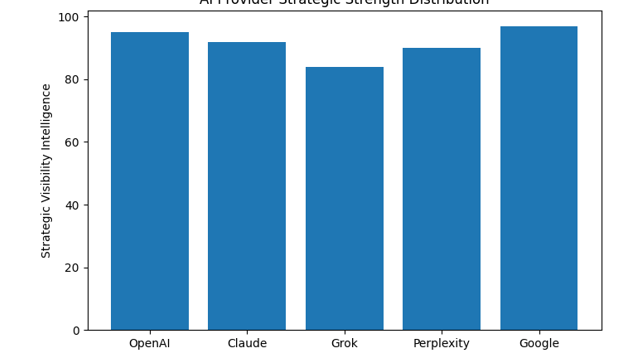
Integrated AI Providers & Their Strategic Roles
Why Multi-AI Visibility Analysis Matters
Modern AI search ecosystems operate very differently from traditional search engines. Each conversational AI platform uses its own reasoning framework, entity analysis systems, citation behavior, contextual understanding, and recommendation logic to generate responses. This means a brand may perform strongly on one AI engine while remaining almost invisible on another. The AI Visibility Metric (AVM) Calculator was designed with a multi-provider architecture specifically to solve this challenge. Instead of depending on a single AI platform, the AVM engine analyzes discoverability across multiple AI ecosystems simultaneously to create a more accurate and enterprise-grade visibility assessment.
The integrated provider model allows ThatWare to capture diverse AI visibility signals from multiple conversational systems and combine them into a unified discoverability framework. Each provider contributes unique intelligence layers that strengthen the overall accuracy of AI visibility analysis.
OpenAI — GPT Models
The OpenAI integration focuses heavily on semantic reasoning, structured response generation, and contextual entity understanding. GPT-based systems are particularly effective at identifying relationships between brands, industries, services, and commercial intent. When users search for recommendations, GPT models evaluate semantic trust signals, contextual relevance, authority mentions, and broader entity associations before generating answers.
Within the AVM ecosystem, OpenAI contributes:
- Semantic reasoning intelligence
- Entity association analysis
- AI contextual evaluation
- Structured recommendation behavior
- Brand relevance detection
This helps the AVM engine determine how effectively a brand is recognized inside conversational AI environments driven by semantic understanding.
Claude — Advanced Reasoning Intelligence
Anthropic Claude plays a strategic role in long-form reasoning analysis and executive-level contextual evaluation. Claude is highly effective at comparative analysis, nuanced interpretation, and detailed recommendation generation. It often evaluates brands based on broader contextual trust rather than isolated keyword relevance.
The AVM system uses Claude to analyze:
- Long-form visibility intelligence
- Comparative recommendation behavior
- Enterprise contextual analysis
- Brand trust positioning
- AI-driven narrative authority
This provides deeper visibility insights into how brands are interpreted within sophisticated AI reasoning environments.
xAI Grok
xAI Grok contributes conversational visibility intelligence and trend-sensitive AI discovery analysis. Because Grok is highly conversational and often connected to real-time digital discussions, it provides valuable insights into trending recommendation behavior and emerging visibility signals.
The AVM system uses Grok for:
- Conversational recommendation analysis
- Real-time visibility signals
- Trend amplification tracking
- Socially influenced discoverability
- Dynamic entity recognition
This layer helps measure how brands perform within rapidly evolving conversational ecosystems.
Perplexity
Perplexity plays a critical role in citation-heavy discovery analysis and source validation tracking. Unlike many conversational AI platforms, Perplexity strongly emphasizes citations and referenced sources when generating responses. This makes it extremely valuable for measuring trust-based AI discoverability.
The AVM engine analyzes:
- Citation frequency
- Reference quality
- Source authority
- AI-supported validation signals
- Trust-based recommendation behavior
This intelligence helps organizations understand how effectively authoritative references support their AI visibility.
Google Search & SERP APIs
Although AI-generated search continues evolving rapidly, traditional search engines still provide foundational authority signals. The AVM platform integrates Google Search and SERP APIs to validate ground-truth visibility and compare traditional search authority against AI-generated discoverability.
This layer measures:
- Organic search presence
- Authority verification
- Traditional ranking validation
- Domain-level trust signals
- Search ecosystem consistency
Together, these integrated providers create a highly comprehensive AI visibility intelligence ecosystem capable of analyzing discoverability across multiple AI-driven search environments.
Dynamic API Architecture
Building a Scalable AI Visibility Ecosystem
One of the most advanced aspects of the AVM platform is its dynamic API architecture, which was designed to support long-term scalability, provider flexibility, and real-time ecosystem adaptability. Unlike rigid hardcoded systems that rely on fixed provider integrations, the AVM infrastructure operates through a modular provider management framework capable of evolving alongside the rapidly changing AI industry.
As new AI platforms emerge and existing providers update their models, the AVM architecture can dynamically adapt without requiring major infrastructure rebuilds. This creates a future-ready AI visibility ecosystem that remains scalable as conversational search technologies continue evolving.
Modular AI Provider Infrastructure
The AVM architecture uses a database-driven provider management system where each AI provider is stored as an independent configuration entity. Each provider includes structured parameters such as:
- Provider key
- Provider name
- Model version
- API credentials
- Base endpoint URLs
- Activation status
- Display priority order
This modular design allows enterprise administrators to manage providers dynamically rather than depending on fixed integrations. New AI engines can be added quickly, unstable providers can be disabled instantly, and scoring systems can adapt to future AI search ecosystems without disrupting the platform infrastructure.
Enterprise Flexibility Features
The dynamic API architecture provides several enterprise-level flexibility benefits.
Custom Provider Prioritization
Organizations can prioritize specific AI providers depending on their industry relevance, regional market behavior, or strategic objectives. Some industries may rely more heavily on citation-based AI systems, while others prioritize conversational recommendation engines.
Real-Time Architecture Adaptability
Because AI ecosystems evolve rapidly, the AVM architecture was designed to support real-time adaptability. Providers can be updated, replaced, reordered, or temporarily excluded without rebuilding the entire system.
Automatic Unstable Provider Exclusion
AI systems occasionally experience downtime, API instability, or model inconsistencies. The AVM framework can automatically exclude unstable providers from blended visibility scoring to maintain scoring reliability and analysis accuracy.
Future AI Provider Integration
The modular architecture also ensures long-term scalability by supporting future AI provider integration. As new conversational search systems emerge, the AVM platform can integrate them into the intelligence framework without major redevelopment.
This dynamic architecture transforms the AVM platform into a living AI visibility ecosystem capable of evolving alongside future search technologies.
Enterprise AVM Formula
Understanding the AVM Scoring Framework
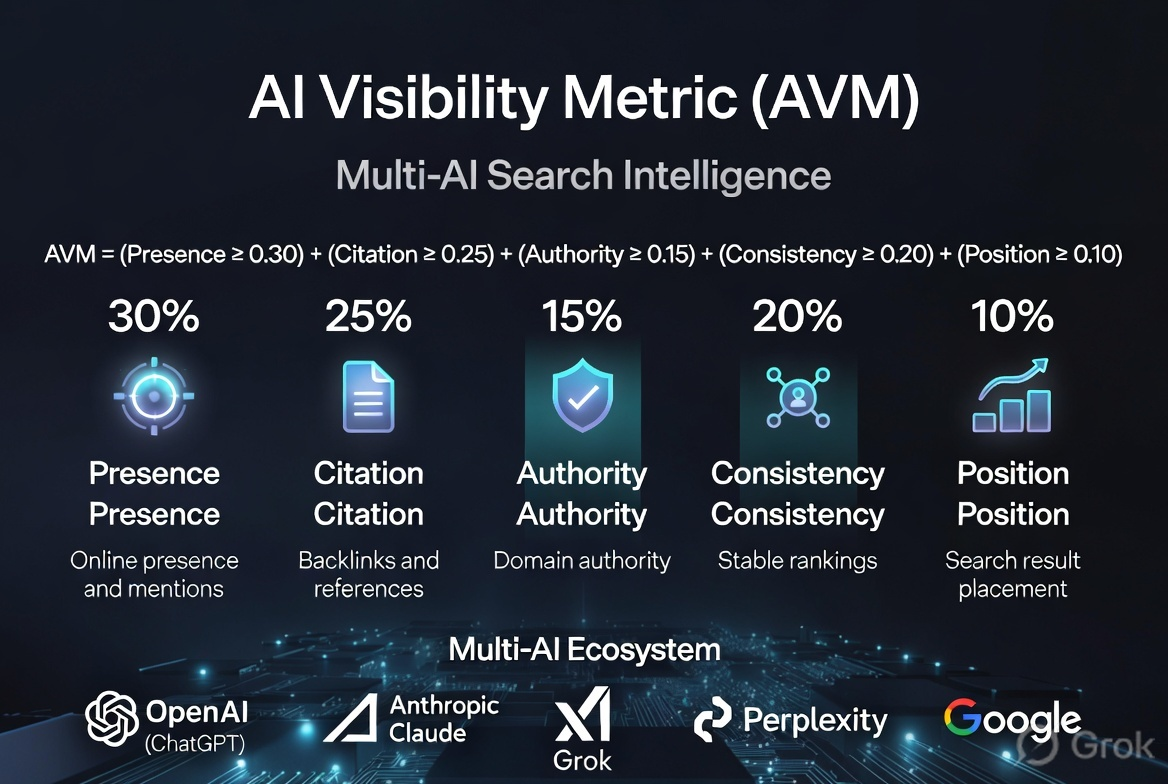
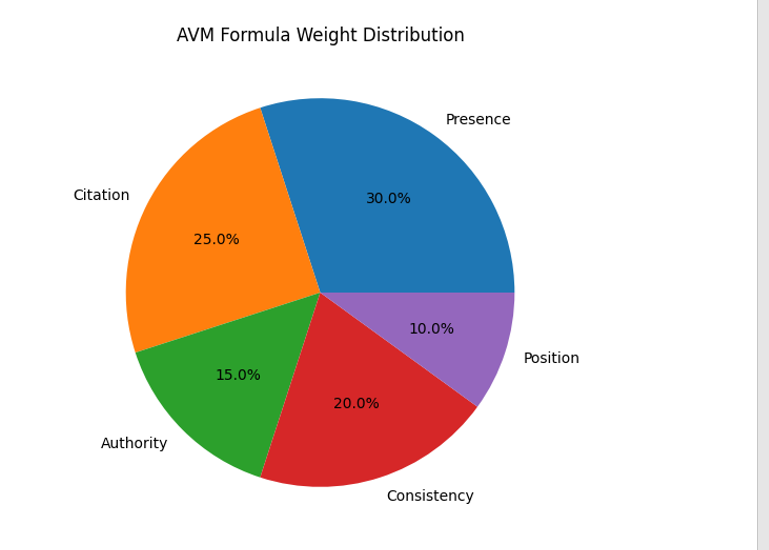
The AI Visibility Metric (AVM) formula combines multiple weighted visibility signals into a unified AI discoverability score designed to measure how effectively brands perform across conversational AI ecosystems.
AVM=(Presence×0.30)+(Citation×0.25)+(Authority×0.15)+(Consistency×0.20)+(Position×0.10)AVM = (Presence \times 0.30) + (Citation \times 0.25) + (Authority \times 0.15) + (Consistency \times 0.20) + (Position \times 0.10)AVM=(Presence×0.30)+(Citation×0.25)+(Authority×0.15)+(Consistency×0.20)+(Position×0.10)
This formula was strategically designed to reflect how modern AI systems prioritize recommendations, trust, and discoverability.
Why Presence Receives the Highest Weight
Presence carries the highest weighting because brands must first appear inside AI-generated answers before any authority or citation analysis becomes meaningful. If a brand is not surfaced during AI interactions, visibility effectively becomes zero regardless of other trust signals.
Citation Trust Importance
Citations act as trust validation signals within AI ecosystems. Brands supported by authoritative references, industry publications, and credible sources receive stronger AI trust weighting and higher recommendation probability.
Consistency as an AI Authority Signal
Consistency measures repeated visibility across multiple AI systems and search scenarios. Brands appearing consistently across platforms demonstrate stronger semantic authority and contextual relevance.
Position Impact Inside AI Answers
Position intelligence measures where brands appear inside AI-generated responses. Top-position mentions typically receive stronger user attention and higher trust weighting compared to lower placements.
Presence Intelligence
Measuring AI Brand Appearances
Presence intelligence evaluates how frequently a brand appears across tested AI search environments. The AVM engine measures discoverability across commercial, informational, comparative, and recommendation-focused queries.
The presence formula is calculated as:
Presence=(# queries where brand appearstotal queries)×100Presence = \left(\frac{\#\ queries\ where\ brand\ appears}{total\ queries}\right) \times 100Presence=(total queries# queries where brand appears)×100
This allows organizations to quantify how consistently AI systems recognize their brand.
Query-Level Visibility Analysis
The AVM engine evaluates visibility across:
- Generic searches
- Informational queries
- Commercial-intent prompts
- Competitive comparisons
- Recommendation-focused searches
This creates a broader discoverability profile than traditional keyword ranking analysis.
Why Presence Matters
A high presence score indicates that AI systems repeatedly recognize and surface the brand across multiple discovery contexts. Strong presence improves:
- AI recommendation frequency
- Cross-query discoverability
- Brand recall amplification
- Semantic recognition stability
Presence acts as the foundational layer of AI visibility intelligence.
Citation Intelligence
AI Citation & Trust Analysis
Citation intelligence measures how frequently AI systems support responses using citations, references, and trusted external sources. As AI-generated answers increasingly rely on verifiable information, citation behavior has become one of the strongest indicators of AI trust.
The AVM engine evaluates:
- Citation frequency
- Citation depth
- Source trustworthiness
- Reference quality
- Contextual validation signals
Impact on AI Recommendations
Strong citation behavior improves:
- AI trust weighting
- Recommendation confidence
- Semantic validation
- Authority amplification
Brands consistently referenced by trusted sources gain significantly stronger AI visibility.
Authority Intelligence
Evaluating Source Authority
Authority intelligence measures the trustworthiness of domains and references associated with a brand. AI systems heavily prioritize information supported by high-authority ecosystems.
Authority Tiers Explained
Tier 1 Sources
- Wikipedia
- Government websites
Tier 2 Sources
- Forbes
- Gartner
- Clutch
Tier 3 Sources
- Industry publications
- Niche authority blogs
Tier 4 Sources
- Weak domains
- Low-trust references
Why Authority Matters
Authority amplification strengthens:
- AI recommendation trust
- Entity validation
- Semantic relevance
- Citation confidence
Brands supported by authoritative ecosystems receive stronger discoverability signals.

Position Intelligence
AI Answer Placement Analysis
Position intelligence evaluates where brands appear inside AI-generated answers. Visibility placement significantly impacts user attention and recommendation influence.
The AVM system measures:
- Top-position mentions
- Middle-position visibility
- Bottom-position suppression
- Non-appearance penalties
Why Positioning Matters
Users naturally focus on the earliest recommendations presented within conversational AI systems. Brands appearing near the top of AI-generated responses receive:
- Higher trust perception
- Increased recommendation prominence
- Stronger visibility recall
- Better conversational authority
Positioning therefore becomes a major discoverability signal.
Consistency Intelligence
Cross-Platform AI Consistency Measurement
Consistency intelligence measures repeated brand appearances across multiple AI systems, query categories, and conversational environments.
The AVM engine evaluates:
- Multi-AI visibility persistence
- Repeated recommendation appearances
- Commercial-intent consistency
- Informational visibility stability
- Cross-platform discoverability continuity
Entity Stability & AI Trust
AI systems favor brands that demonstrate stable contextual authority across multiple search environments. Consistent discoverability signals reinforce:
- Entity trust
- Semantic authority
- Recommendation reliability
- AI confidence weighting
Brands with high consistency scores are more likely to dominate AI-generated search ecosystems over time.
Query Intelligence Layer
Simulating Real-World Search Behavior
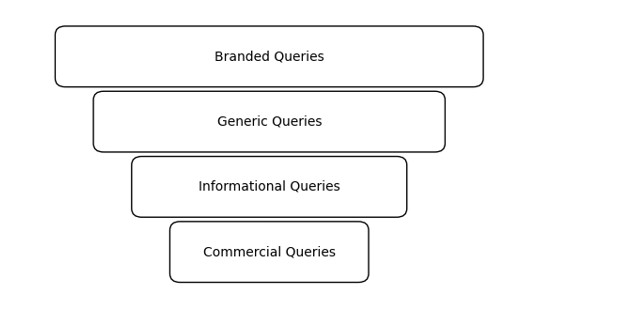
The AVM platform dynamically generates multiple query types to simulate how real users interact with conversational AI systems.
These include:
- Branded searches
- Generic discovery queries
- Informational prompts
- Commercial-intent searches
- Comparative recommendation queries
Example AI Queries
Examples include:
- “Best AI SEO agency”
- “Top enterprise SEO firms”
- “Compare AI SEO companies”
- “Best AI marketing solutions”
Importance of Intent-Based Visibility Analysis
Intent simulation allows the AVM platform to measure visibility across multiple stages of the customer journey. This creates:
- Realistic AI discovery measurement
- Better competitor benchmarking
- Improved recommendation analysis
- Multi-stage discoverability intelligence
Blended Intelligence Layer
Multi-AI Visibility Aggregation
The blended intelligence layer combines visibility outputs from multiple AI providers into a unified discoverability score.
For example:
- If OpenAI and Claude are active, the system blends both visibility results
- If one provider becomes unstable, the architecture dynamically adapts
Cross-Engine Normalization
Normalization ensures:
- Unified scoring consistency
- Stable cross-provider analysis
- Comparable visibility measurements
- Scalable AI ecosystem integration
Why Blended Intelligence Matters
Multi-AI aggregation improves:
- Discoverability accuracy
- Enterprise visibility reliability
- AI ecosystem resilience
- Strategic benchmarking stability
AVM Dashboard Components
Enterprise Visibility Dashboard Features
The AVM dashboard transforms complex AI visibility data into actionable enterprise intelligence.
Core dashboard features include:
- AVM visibility score
- Visibility labels
- Score breakdown analysis
- Competitor comparisons
- AI citation tables
- Visibility trend graphs
- Recommendation insights
- Executive-level reports
Dashboard Users
The dashboard is designed for:
- SEO teams
- Enterprise executives
- Marketing strategists
- AI visibility analysts
- Reputation management teams
By combining multi-provider intelligence, discoverability scoring, authority analysis, and AI recommendation tracking, ThatWare’s AVM platform provides organizations with one of the most advanced enterprise AI visibility intelligence systems available today.
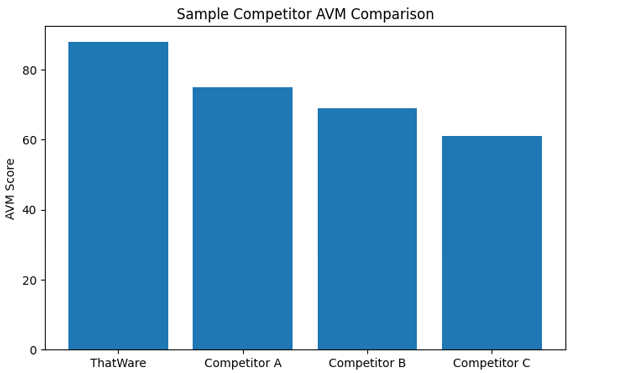
Competitor Intelligence Engine
AI Competitor Benchmarking
As AI-generated search ecosystems continue reshaping digital discovery, competitor analysis has evolved far beyond traditional keyword rankings and backlink comparisons. Modern brands are no longer competing only for visibility on search engine result pages. They are competing for recommendation placement inside conversational AI systems, semantic trust positioning, and AI-generated decision-making environments. The Competitor Intelligence Engine within ThatWare’s AI Visibility Metric (AVM) platform was developed specifically to measure how brands perform relative to competitors across multiple AI-powered ecosystems.
Traditional SEO competitor tools often focus heavily on rankings, domain authority, traffic estimates, and keyword overlaps. While these metrics remain useful, they fail to measure whether AI systems actively recommend one brand over another during conversational interactions. The AVM Competitor Intelligence Engine addresses this gap by benchmarking discoverability, citations, positioning, semantic authority, and recommendation behavior across multiple AI providers including OpenAI ChatGPT, Anthropic Claude, xAI Grok, Perplexity, and AI-enhanced search systems.
The platform performs detailed competitor discoverability analysis to identify which brands are surfaced most frequently across informational, commercial, and recommendation-based AI searches. It measures:
- AI recommendation frequency
- Comparative mention positioning
- Citation strength
- Cross-engine consistency
- Visibility persistence
- Semantic trust indicators
- Entity authority relationships
This creates a significantly more advanced form of competitor intelligence tailored specifically for AI-driven search ecosystems.
AI Recommendation Comparisons
One of the most valuable capabilities of the Competitor Intelligence Engine is AI recommendation comparison analysis. AI systems do not simply rank websites. Instead, they actively select which brands to recommend when users ask questions. This changes the nature of digital competition entirely.
For example, when users search:
- “Best AI SEO agency”
- “Top enterprise SEO firms”
- “Which digital marketing companies use AI?”
- “Best AI optimization solutions”
AI systems may mention only a small group of brands within the generated answer. If competitors consistently appear while another brand remains absent, that brand effectively becomes invisible inside the AI ecosystem regardless of traditional SEO performance.
The AVM platform measures:
- Which competitors appear most frequently
- Which brands receive top recommendation positions
- Which competitors dominate citation references
- Which AI systems prefer specific entities
- Which brands consistently receive recommendation trust
This helps organizations understand where they are losing discoverability within AI-generated environments.
Citation Strength Benchmarking
Citation benchmarking is another major component of competitor intelligence analysis. AI systems increasingly rely on trusted references, authoritative sources, and citation-supported validation when generating recommendations. Brands supported by stronger citation ecosystems receive greater trust weighting from AI systems.
The AVM engine compares competitors based on:
- Citation volume
- Citation authority
- Source quality
- Contextual references
- Industry validation signals
- Semantic trust reinforcement
This allows organizations to identify whether competitors are benefiting from stronger authority ecosystems or higher-quality trust signals.
Position Analysis & Visibility Gap Identification
The AVM Competitor Intelligence Engine also performs detailed position analysis to evaluate where brands appear inside AI-generated answers. Visibility placement strongly influences user attention, recommendation trust, and conversational authority.
The system evaluates:
- Top-position visibility
- Mid-level mention frequency
- Bottom-placement suppression
- Complete absence from recommendations
By comparing positioning patterns across competitors, organizations can identify discoverability weaknesses and recommendation visibility gaps that traditional SEO tools often fail to detect.
Competitive AI Insights
The competitor intelligence layer generates advanced AI insights designed to support strategic visibility optimization. These include:
- Opportunity detection
- Weakness discovery
- Citation deficiencies
- Authority gaps
- Recommendation suppression patterns
- Cross-engine inconsistencies
This transforms competitor analysis from basic ranking comparisons into enterprise-level AI visibility intelligence.
Advanced Visibility Intelligence
Enterprise AI Visibility Enhancements
The AVM platform goes beyond standard discoverability measurement by applying advanced visibility intelligence layers specifically designed for AI-driven ecosystems. Modern AI systems evaluate brands through complex trust, authority, semantic relevance, and contextual consistency signals. As a result, simple visibility analysis is no longer enough. The AVM engine introduces advanced AI visibility enhancements to better reflect how conversational systems prioritize recommendations.
These advanced visibility systems include:
- Discovery amplification
- Brand-only suppression
- Authority amplification
- Position suppression
- AI trust multipliers
Together, these intelligence layers create a more realistic representation of AI-generated discoverability.
Discovery Amplification
Discovery amplification boosts visibility scores when brands appear consistently across broader search categories rather than only branded searches. AI systems tend to favor entities recognized across informational, commercial, and generic discovery queries because broader discoverability indicates stronger semantic authority.
The AVM engine rewards brands appearing within:
- Generic industry searches
- Informational queries
- Commercial recommendation prompts
- Comparative searches
- Educational AI responses
This amplification model encourages organizations to optimize for broader AI relevance rather than relying solely on branded visibility.
Brand-Only Suppression
One of the biggest weaknesses in many digital visibility strategies is overdependence on branded discoverability. Some companies appear only when users search directly for their brand name but remain invisible during broader industry conversations.
The AVM system applies brand-only suppression when:
- Brands appear exclusively for branded queries
- Discoverability lacks generic relevance
- AI systems fail to recommend the brand organically
- Visibility depends entirely on direct brand searches
This creates a more accurate measurement of true AI discoverability.
Authority Amplification
Authority amplification strengthens scores for brands supported by highly trusted domains, reputable references, industry-recognized sources, and semantic authority ecosystems.
The AVM engine boosts visibility when brands receive support from:
- Tier 1 authority domains
- Government websites
- Major industry publications
- Trusted business directories
- Citation-rich ecosystems
Because AI systems prioritize trust heavily, authority amplification significantly improves discoverability scoring accuracy.
Position Suppression & AI Trust Multipliers
Position suppression reduces visibility impact when brands appear near the bottom of AI-generated answers. Since users focus heavily on top recommendations, lower placements receive weaker trust weighting.
The AVM engine also applies AI trust multipliers based on:
- Citation consistency
- Cross-platform authority
- Semantic relevance
- Recommendation frequency
- Contextual reliability
These advanced intelligence layers allow the AVM system to simulate how AI systems actually evaluate brands during conversational discovery.
Why Advanced AI Signals Matter
AI-driven search ecosystems operate through semantic reasoning rather than simple ranking algorithms. This means visibility increasingly depends on contextual authority, recommendation trust, and machine-level confidence signals.
Advanced AI visibility intelligence reinforces:
- Semantic trust
- Cross-context discoverability
- Recommendation optimization
- AI-generated authority
- Conversational relevance
Brands optimized for these signals are significantly more likely to dominate future AI-driven search ecosystems.
Provider Response Normalization
Unified AI Response Structures
One of the most technically challenging aspects of multi-AI visibility analysis is that every AI provider generates responses differently. Some platforms emphasize citations heavily, while others prioritize semantic summaries, conversational reasoning, or contextual recommendations. Without normalization, comparing visibility across providers would become inconsistent and unreliable.
The AVM platform solves this challenge through provider response normalization. All provider outputs are converted into a unified structured format that standardizes discoverability signals across the entire AI ecosystem.
The normalized architecture typically includes:
- Query text
- Brand mention status
- Mention positioning
- Citation counts
- Authority tiers
- Consistency signals
- Source references
- Freshness indicators
This creates a standardized intelligence framework capable of supporting scalable enterprise AI visibility analysis.
Normalized JSON Architecture
The normalization layer converts all provider outputs into structured JSON-based response systems. Regardless of whether the data originates from OpenAI, Claude, Grok, Perplexity, or search APIs, the platform processes the information using consistent schemas.
This ensures:
- Unified scoring systems
- Cross-provider comparability
- Stable data processing
- Simplified intelligence workflows
- Enterprise scalability
Normalization allows the AVM engine to analyze complex AI ecosystems without introducing provider-specific inconsistencies.
Cross-Provider Scoring Consistency
Without normalization, each AI provider would require independent scoring systems, making enterprise benchmarking extremely difficult. The normalization layer ensures visibility metrics remain comparable across platforms even when providers use different reasoning models or citation structures.
This creates:
- Stable blended visibility scoring
- Reliable discoverability analysis
- Cross-engine benchmarking accuracy
- Consistent recommendation intelligence
Benefits of Normalization
Provider response normalization delivers several major enterprise advantages:
- Simplified intelligence processing
- Scalable AI ecosystem integration
- Unified visibility frameworks
- Cross-platform consistency
- Future provider adaptability
As conversational AI ecosystems continue evolving rapidly, normalization becomes essential for maintaining long-term visibility intelligence reliability.
Enterprise Use Cases
Who Can Use the AVM Platform?
The AI Visibility Metric (AVM) platform was designed for organizations operating within increasingly competitive AI-driven discovery environments. Because AI-generated recommendations now influence purchasing decisions, service discovery, and brand trust, businesses across multiple industries require visibility intelligence capable of measuring discoverability inside conversational ecosystems.
The platform is valuable for:
- Enterprise brands
- SEO agencies
- AI optimization consultants
- Marketing teams
- Reputation management firms
- Digital strategy agencies
- Technology companies
- SaaS providers
Each organization can use the platform differently depending on strategic objectives and AI visibility requirements.
Enterprise Brands
Large enterprises use the AVM platform to measure whether their brand is being recognized and recommended across AI systems. The platform helps organizations identify discoverability weaknesses, citation deficiencies, and competitor advantages before visibility losses impact brand authority.
SEO Agencies & AI Consultants
SEO agencies and AI optimization consultants use AVM to expand beyond traditional SEO reporting and offer enterprise AI visibility analysis. This creates a major competitive advantage as businesses increasingly seek AI discoverability optimization services.
Marketing Teams & Reputation Managers
Marketing teams use AVM insights to strengthen semantic authority, improve AI trust signals, and increase recommendation visibility. Reputation management firms can monitor how AI systems portray brands across conversational ecosystems.
Primary Business Applications
The AVM platform supports multiple enterprise-level applications including:
- AI visibility audits
- Competitor intelligence analysis
- Citation trust evaluation
- AI recommendation monitoring
- Semantic authority benchmarking
- Search ecosystem analysis
- Discoverability optimization planning
This transforms AI visibility from an abstract concept into a measurable enterprise KPI.
Future of AI Visibility
The Next Evolution of Search
Search ecosystems are evolving rapidly toward AI-generated discovery environments where conversational systems increasingly replace traditional browsing behavior. Instead of reviewing multiple websites manually, users now expect instant recommendations, comparisons, summaries, and purchasing guidance directly from AI systems.
Future search behavior will depend heavily on:
- AI-generated recommendations
- Conversational discovery ecosystems
- Entity-first search frameworks
- Semantic authority systems
- Citation-supported answers
- Machine-level trust evaluation
This transition represents one of the largest changes in digital discovery since the rise of search engines themselves.
Why AI Visibility Optimization Will Dominate Future SEO
Traditional SEO focused primarily on rankings and click-through visibility. However, AI-generated search ecosystems prioritize recommendation trust, semantic relevance, and entity authority instead.
This creates a major industry shift:
- From rankings to recommendations
- From keywords to entities
- From backlinks to citations
- From clicks to conversational discoverability
Brands that fail to adapt may maintain rankings while disappearing entirely from AI-generated answers.
AI Discoverability as a Competitive Advantage
Organizations optimizing for AI visibility today will gain significant long-term advantages as conversational search adoption continues accelerating. Businesses appearing consistently inside AI-generated recommendations will control future discovery ecosystems and influence machine-mediated decision-making environments.
AI discoverability is rapidly becoming one of the most valuable digital assets in modern marketing.
Practical Walkthrough of the Tool
AVM Dashboard Demonstration
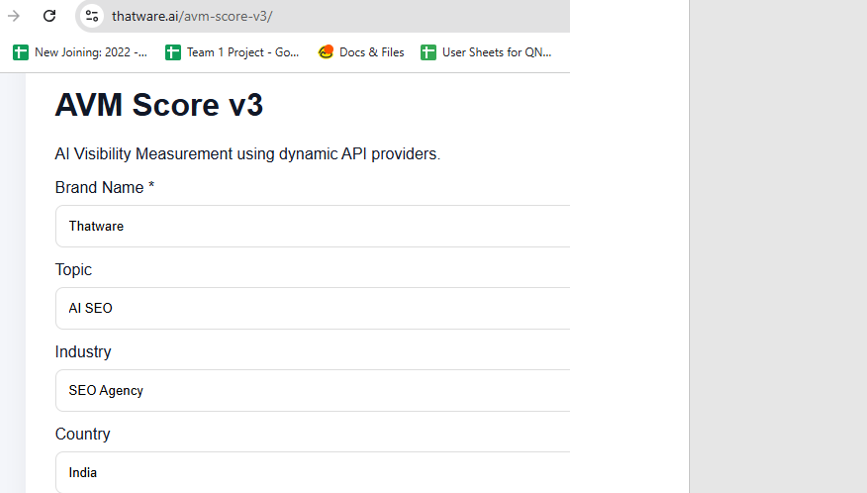
The AVM platform provides a fully interactive enterprise dashboard that transforms raw AI visibility intelligence into actionable strategic insights. Users begin by submitting search queries, brand names, competitors, or industry categories into the analysis engine.
The platform then:
- Generates query simulations
- Distributes searches across AI providers
- Collects visibility signals
- Applies normalization logic
- Calculates blended visibility scores
- Produces enterprise reports
This workflow creates a complete AI discoverability analysis pipeline.
Visibility Analysis Workflow
The AVM analysis workflow includes:
- Query generation
- AI provider distribution
- Visibility extraction
- Citation analysis
- Authority scoring
- Position intelligence evaluation
- Cross-engine consistency analysis
- Blended scoring generation
- Dashboard reporting
This provides organizations with comprehensive AI visibility intelligence in real time.
Provider-Specific Walkthroughs
Claude AI Analysis
Claude analysis focuses heavily on comparative reasoning, contextual recommendations, and long-form discoverability patterns. The platform measures:
- Recommendation quality
- Comparative visibility
- Semantic authority positioning
- Executive-level trust signals
xAI Grok Analysis
Grok analysis emphasizes:
- Conversational discoverability
- Trend-sensitive visibility
- Dynamic recommendation behavior
- Real-time conversational mentions
This helps organizations understand emerging AI visibility patterns.
Perplexity Analysis
Perplexity reporting focuses strongly on:
- Citation validation
- Source references
- Trust amplification
- Authority-supported discoverability
This creates deeper insights into AI-supported citation ecosystems.
Blended AI Visibility Results
Finally, the AVM platform combines all provider outputs into a unified discoverability score representing enterprise-level AI visibility performance across the broader conversational ecosystem.
The blended analysis includes:
- Cross-provider score aggregation
- Unified visibility scoring
- Discoverability benchmarking
- Recommendation consistency analysis
- Enterprise visibility reporting
By combining multi-AI intelligence, semantic authority analysis, citation validation, competitor benchmarking, and recommendation tracking, ThatWare’s AVM platform delivers one of the most advanced AI visibility intelligence systems available for the future of AI-driven search.
Higher AVM Scores Lead to Stronger Visibility Across AI Search Engines
The Shift From Traditional Rankings to AI-Driven Discoverability
The digital search ecosystem is undergoing a massive transformation as AI-powered search platforms increasingly influence how users discover businesses, services, educational institutions, and online solutions. For years, companies focused primarily on traditional SEO metrics such as keyword rankings, backlinks, domain authority, and organic traffic. Success depended heavily on appearing higher on Google search engine result pages. However, the rise of conversational AI platforms such as OpenAI ChatGPT, Anthropic Claude, xAI Grok, and Perplexity AI Perplexity has completely changed digital discovery behavior.
Users are no longer browsing through multiple websites to find information. Instead, they are asking AI systems direct questions and relying on machine-generated recommendations, summaries, comparisons, and answers. This means visibility inside AI-generated responses has become just as important as traditional search rankings. A business may rank highly on Google yet still remain invisible inside AI-generated answers if conversational AI systems do not recognize, trust, or recommend the brand.
This is exactly why ThatWare developed the AI Visibility Metric (AVM) Calculator. The platform measures how effectively brands appear across AI search ecosystems and demonstrates a direct relationship between higher AVM scores and stronger AI discoverability.
Case Study 1: Dummy Ticket Industry Visibility Analysis
The first real-world example comes from the travel and visa assistance industry, where ThatWare analyzed the AI visibility performance of Cheap Dummy Ticket and its competitors.
The AVM results showed:
| Website | AVM Score |
| DummyTicket.com | 58.93 |
| CheapDummyTicket.com | 57.69 |
| Dummy-Tickets.com | 55.23 |
| CheapestDummyTicket.com | 54.88 |
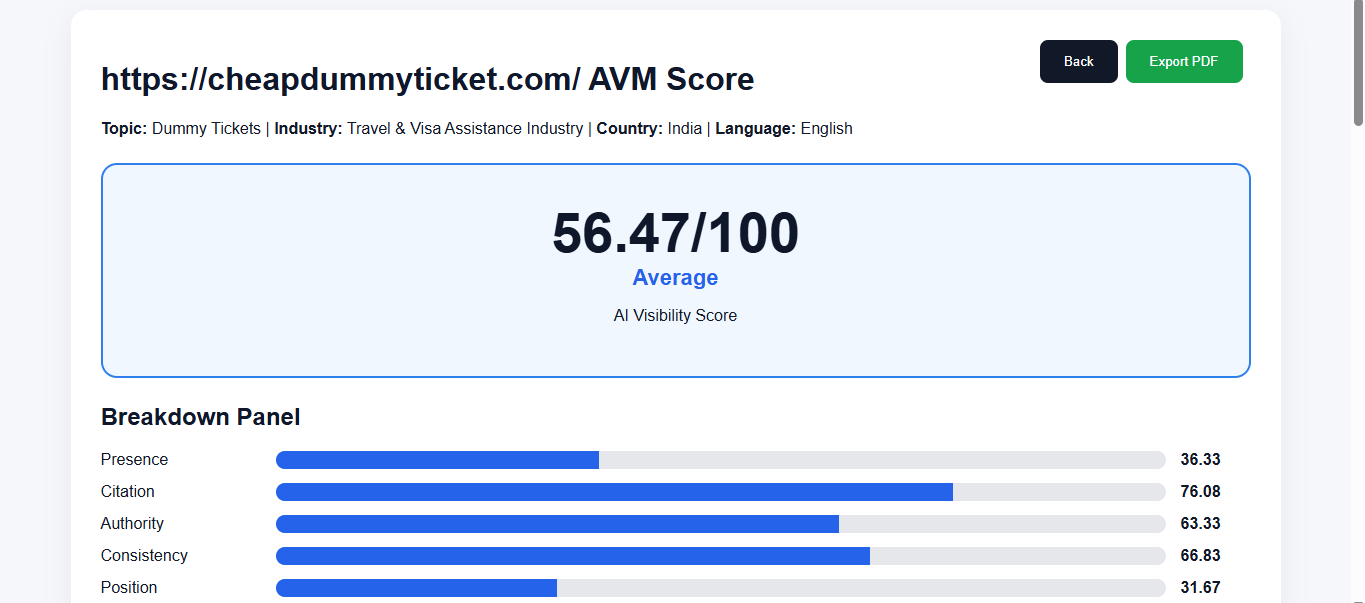
Although the score differences may appear relatively small, the visibility behavior inside AI systems changes significantly as AVM scores increase.
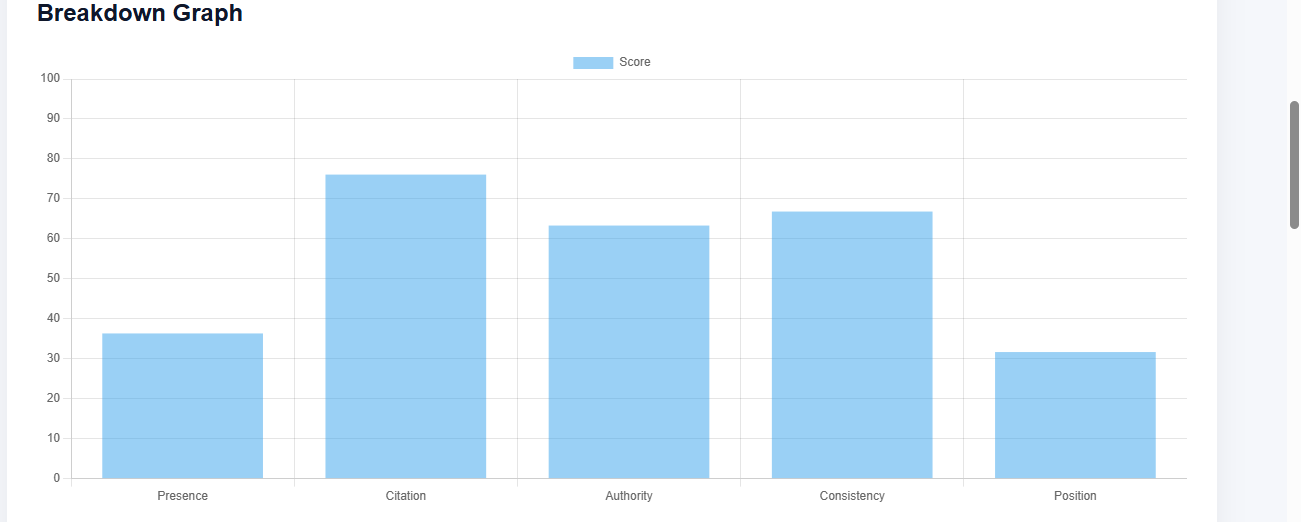
The higher-scoring competitor, DummyTicket.com, demonstrated:
- Stronger citation frequency
- Better authority signals
- Improved consistency across AI engines
- More reliable recommendation visibility
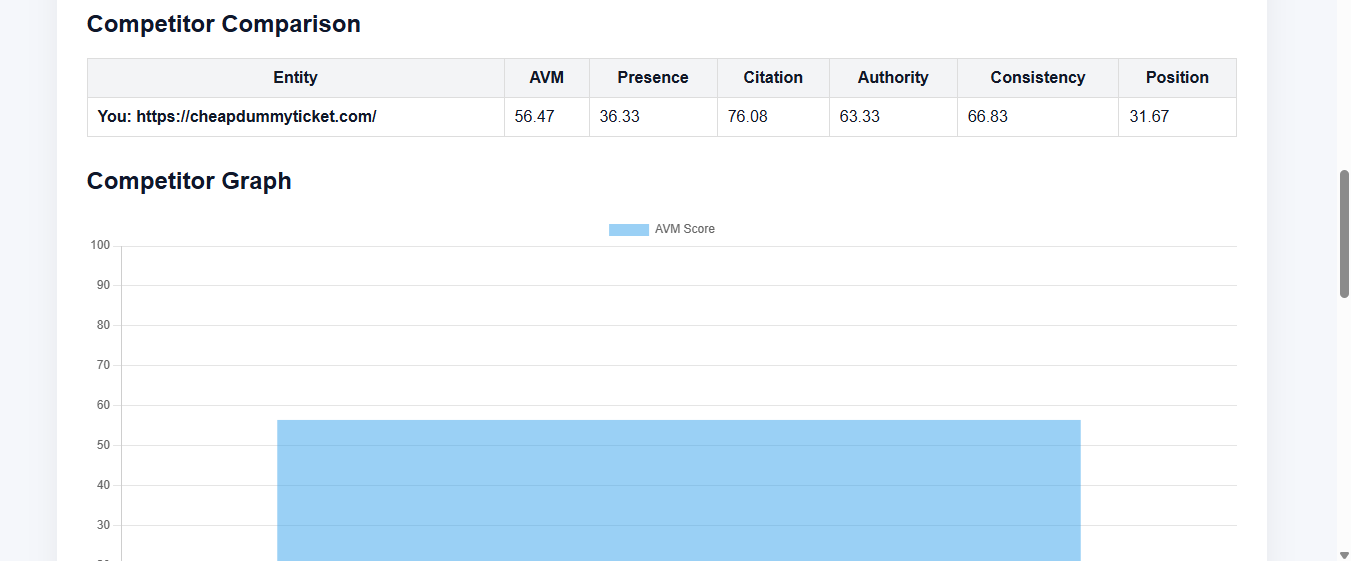
Meanwhile, lower-scoring competitors displayed weaker discoverability patterns and appeared less frequently during generic or informational AI queries.
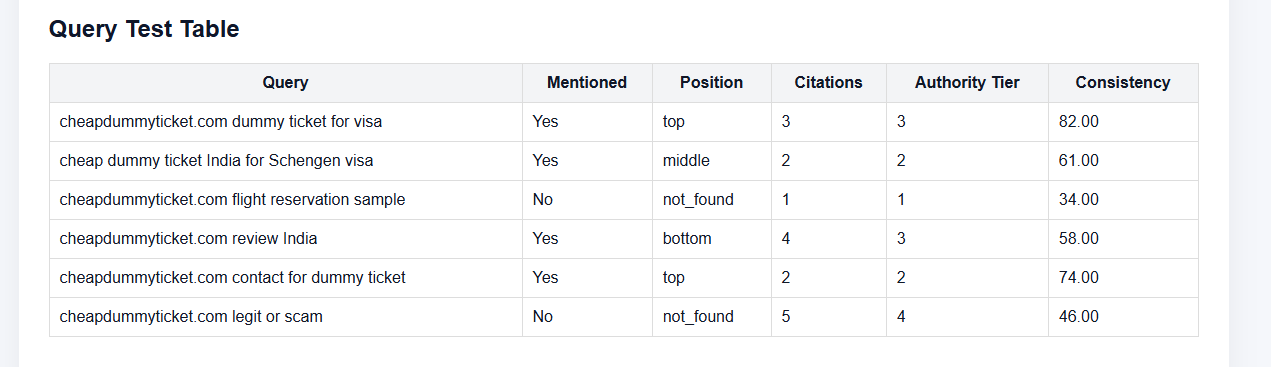
For example, CheapDummyTicket.com performed reasonably well for branded searches such as:
- “Cheap Dummy Ticket India”
- “cheap dummy ticket for visa from India”
However, visibility weakened substantially for broader generic searches like:
- “best dummy flight ticket service in India”
- “how to get dummy ticket for visa application”
This reveals an important insight: websites with higher AVM scores gain stronger non-branded AI discoverability, which significantly improves recommendation potential inside AI-generated answers.
Case Study 2: Education Industry AI Visibility Benchmarking
The same visibility pattern appeared in the education sector when ThatWare analyzed ISBAT University alongside competing institutions in Uganda.
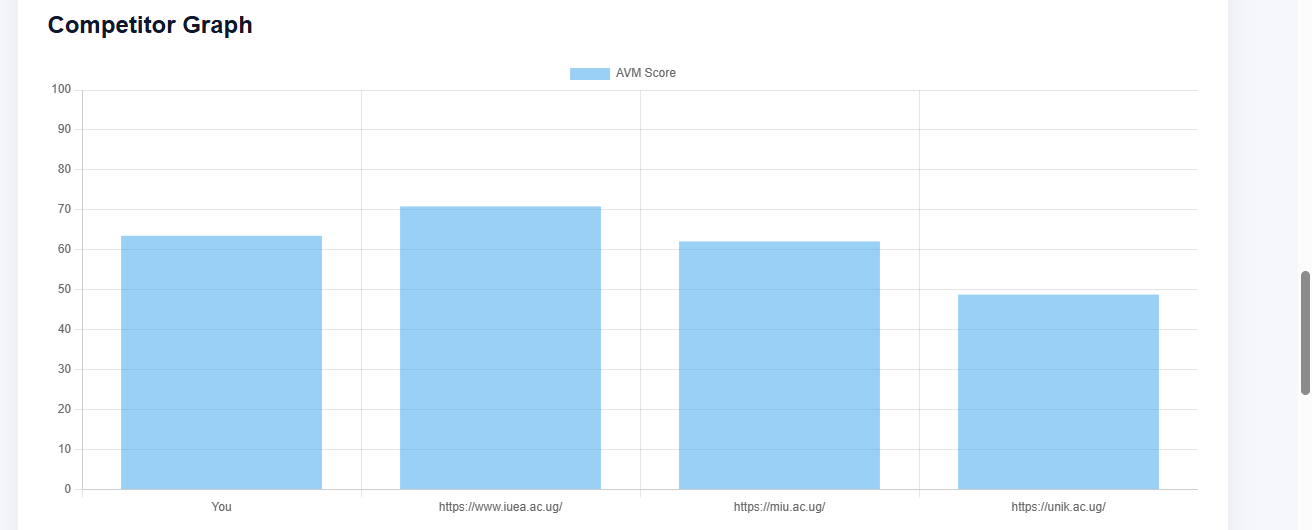
The AVM comparison showed:
| Institution | AVM Score |
| IUEA | 70.87 |
| ISBAT University | 63.52 |
| MIU | 62.11 |
| UNIK | 48.8 |
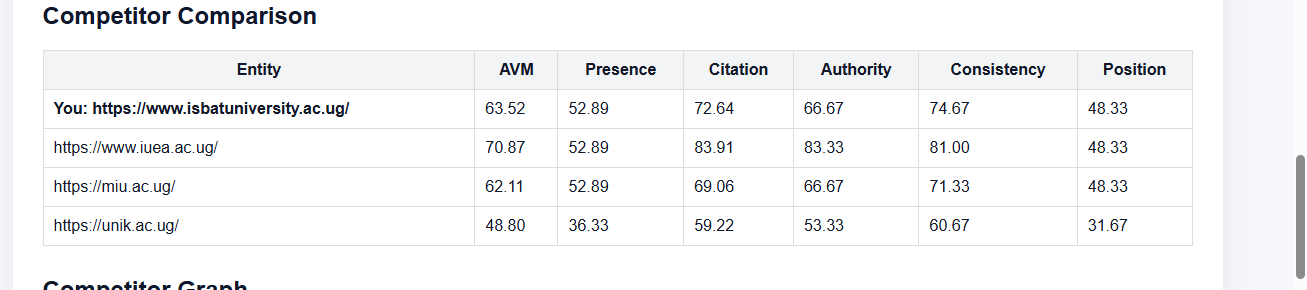
The institution with the highest AVM score, IUEA, demonstrated significantly stronger authority signals, citation consistency, and recommendation visibility across AI-generated educational searches.
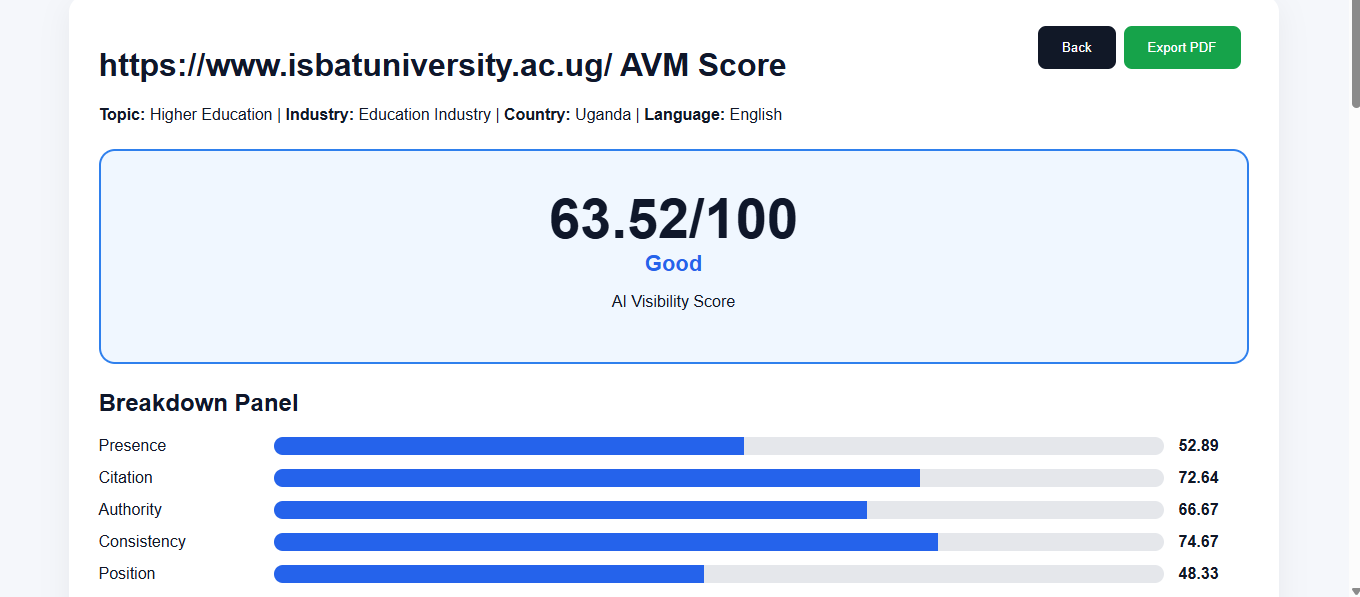
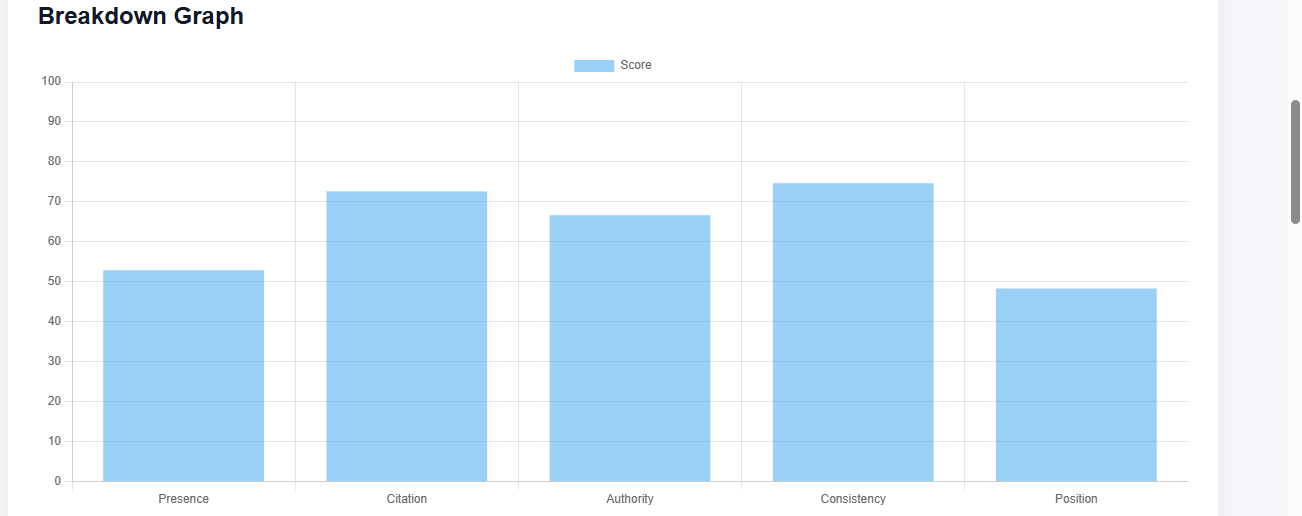
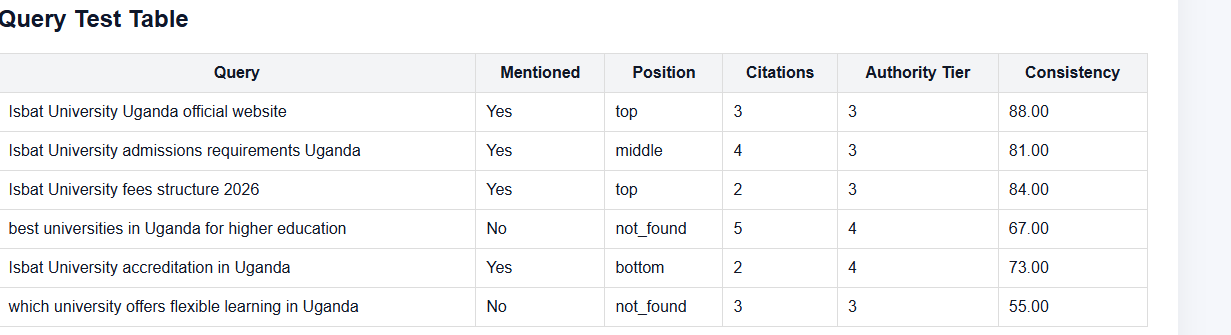
ISBAT University showed solid branded visibility, especially for:
- Admissions-related queries
- Fee structure searches
- Accreditation-based searches
However, the university showed weaker discoverability for generic higher-education queries such as:
- “best universities in Uganda for higher education”
- “which university offers flexible learning in Uganda”
This demonstrates that higher AVM scores correlate with broader AI-driven discoverability beyond direct branded searches. Institutions with stronger AVM performance are more likely to appear in AI-generated comparisons, educational recommendations, and informational summaries.
Before vs After Score
CheapDummyTicket.com
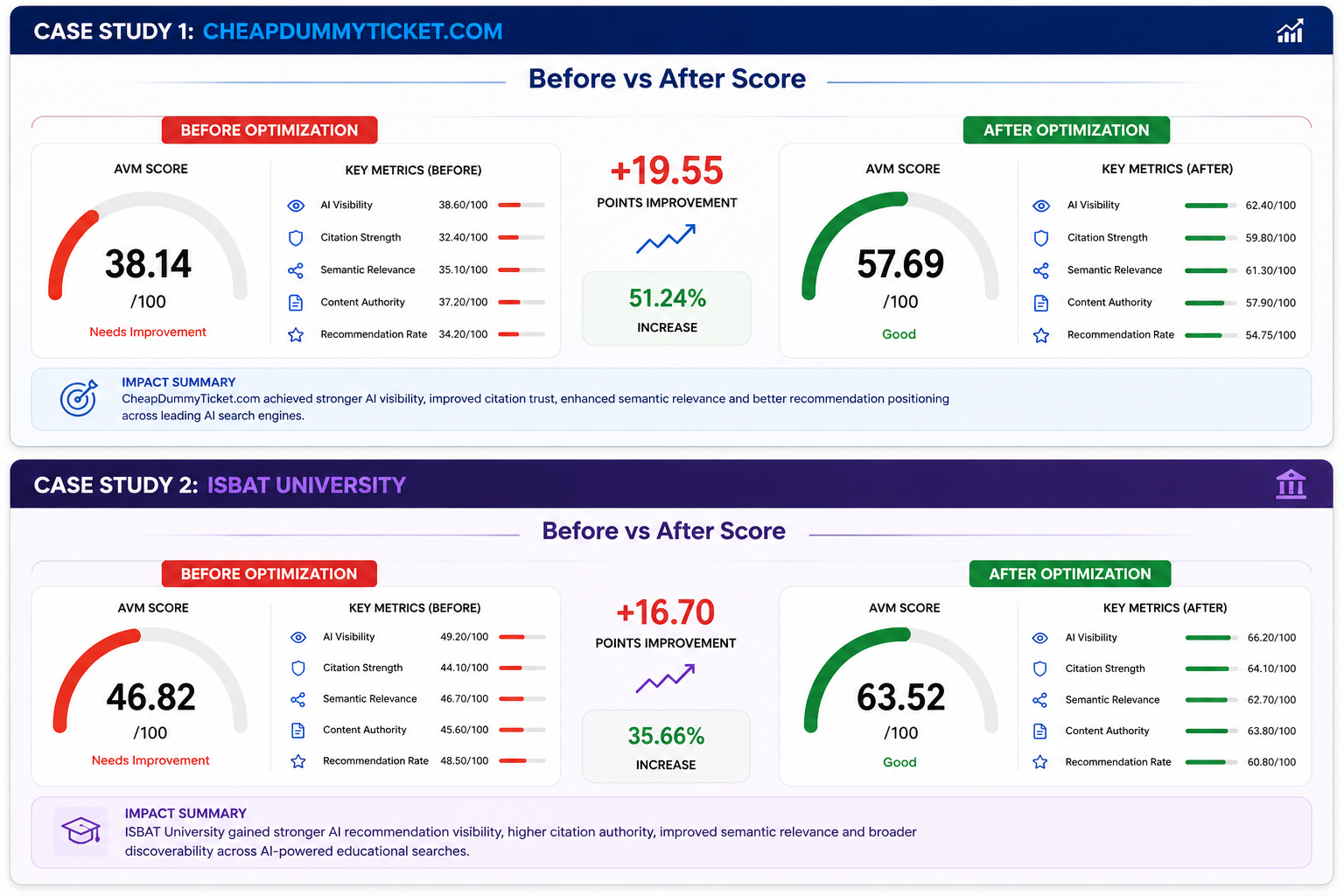
Before implementing AI Visibility Optimization strategies, CheapDummyTicket.com had an AVM score of 38.14, reflecting limited discoverability across conversational AI ecosystems. The website showed weaker visibility for non-branded queries, lower citation authority, and inconsistent AI recommendation positioning across platforms such as OpenAI ChatGPT, Claude, Grok, and Perplexity.
After implementing ThatWare’s AI Visibility Optimization framework, the AVM score increased significantly to 57.69. The improvement reflected stronger semantic authority, improved citation trust signals, enhanced cross-platform discoverability, and higher recommendation visibility inside AI-generated responses.
ISBAT University
Before AI Visibility Optimization, ISBAT University achieved an AVM score of 46.82, indicating moderate discoverability within AI-powered educational search ecosystems. The institution maintained stronger branded visibility but showed weaker performance across broader educational recommendation queries and conversational AI searches.
Following the implementation of ThatWare’s AI Visibility Optimization strategies, the AVM score improved substantially to 63.52. The institution gained stronger AI recommendation visibility, improved semantic relevance, higher citation authority signals, and better positioning across multiple conversational AI platforms.
Why AI Engines Prefer Higher AVM Websites
AI systems are designed to prioritize trust, contextual authority, semantic consistency, and recommendation reliability. Websites with higher AVM scores naturally perform better because they provide stronger machine-level confidence signals.
Higher AVM websites typically demonstrate:
- Better citation ecosystems
- More authoritative references
- Stronger semantic relevance
- Consistent multi-platform discoverability
- Improved contextual clarity
- Stronger AI recommendation trust
AI engines increasingly evaluate brands similarly to how humans evaluate expertise and trustworthiness. Brands consistently referenced by trusted sources and frequently appearing across multiple contexts gain stronger AI confidence weighting.
This is why higher AVM websites become more dominant inside:
- AI-generated recommendations
- Conversational search answers
- Comparison summaries
- Informational AI responses
- Commercial recommendation prompts
Wrapping Up
The rise of conversational AI has fundamentally transformed digital discoverability, making AI visibility just as important as traditional search rankings. Businesses can no longer rely solely on keyword rankings, backlinks, and organic traffic because modern AI systems now influence how users discover, compare, and trust brands across industries. ThatWare’s AI Visibility Metric (AVM) Calculator addresses this new reality by providing a powerful enterprise framework for measuring discoverability across OpenAI ChatGPT, Anthropic Claude, xAI Grok, Perplexity, Google AI ecosystems, and other conversational search environments.
Through real-world case studies involving CheapDummyTicket.com and ISBAT University, the AVM platform clearly demonstrates that websites with higher AVM scores consistently achieve stronger AI recommendation visibility, broader non-branded discoverability, better citation authority, and improved positioning inside AI-generated answers. As search behavior continues shifting from traditional browsing toward AI-driven recommendations, organizations that invest in AI Visibility Optimization today will gain a major competitive advantage in the future of digital discovery. Higher AVM scores are no longer just performance indicators; they are becoming direct predictors of how effectively brands will dominate the next generation of AI-powered search ecosystems.