
SUPERCHARGE YOUR ONLINE VISIBILITY! CONTACT US AND LET’S ACHIEVE EXCELLENCE TOGETHER!
Search is no longer about links—it’s about conversations.
For decades, digital visibility was defined by rankings. If your website appeared on the first page of Google, you won. But today, that paradigm is rapidly shifting. Users are no longer just searching—they are asking, exploring, and interacting with AI systems like ChatGPT, Gemini, and Grok.
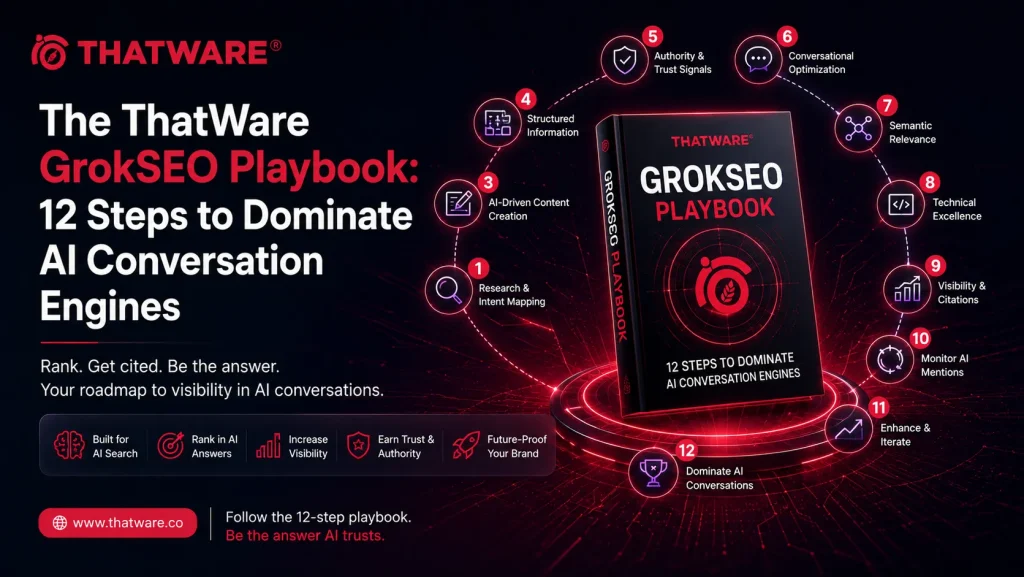
These platforms don’t return a list of blue links. They deliver direct answers.
And here’s the problem:
Most brands are completely invisible in these AI-generated responses.
You might still rank on search engines, but if AI systems don’t recognize, understand, or trust your brand, you simply don’t exist in the new discovery layer. This creates a massive gap between traditional SEO success and actual visibility in the AI era.
To bridge this gap, a new strategy is required.
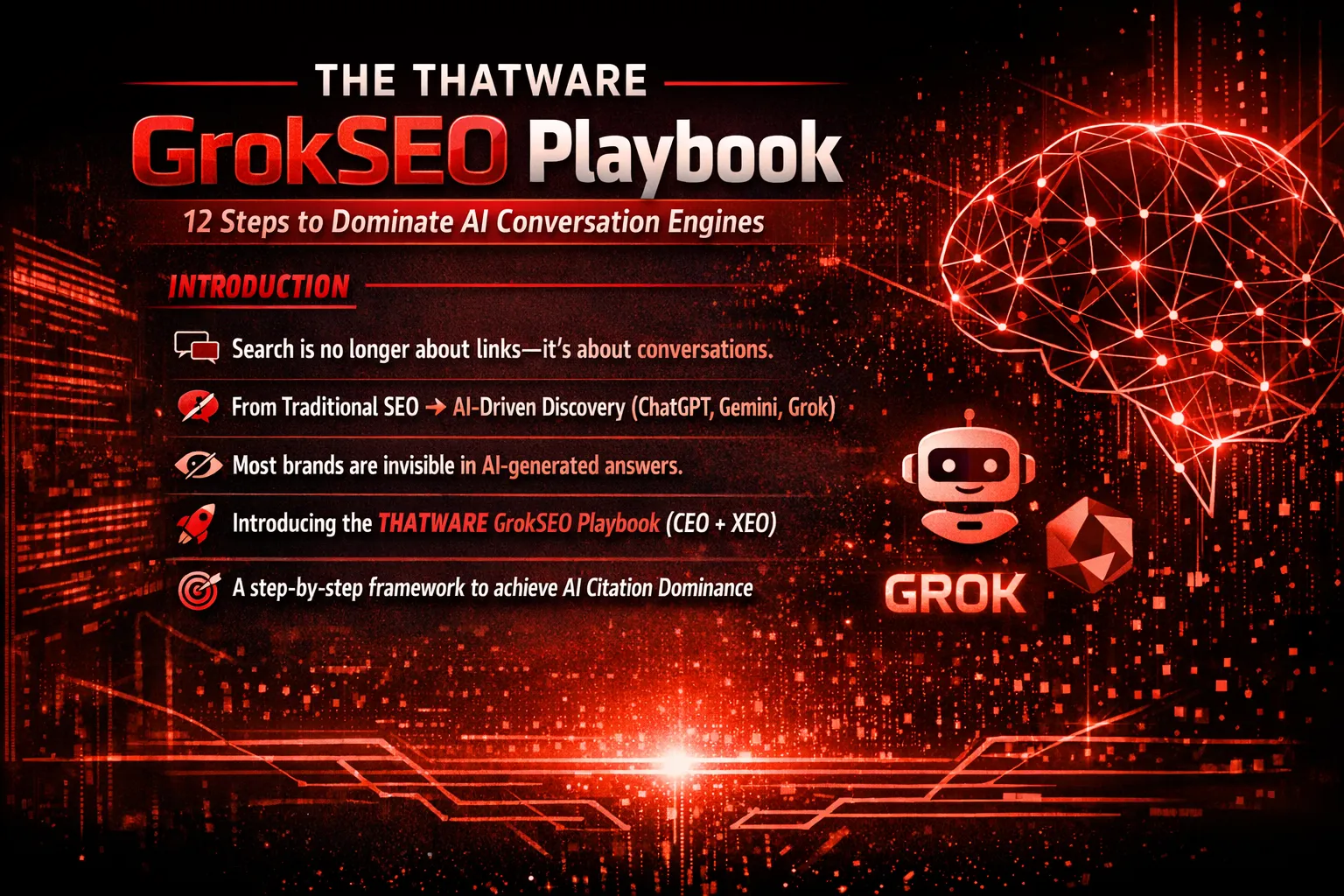
Introducing the ThatWare GrokSEO Playbook—a next-generation framework designed to help brands dominate AI-driven discovery. Built on the principles of Conversation Engine Optimization (CEO) and X Engine Optimization (XEO), this playbook shifts the focus from ranking pages to becoming a recognized, referenced entity within AI systems.
This is not just an evolution of SEO—it’s a complete transformation.
In this guide, you’ll discover a step-by-step, 12-part framework that shows how to build authority, influence conversations, and ultimately achieve AI citation dominance—where your brand, ideas, and frameworks are consistently referenced by AI when users ask questions.
Because in the AI era, visibility isn’t earned through rankings.
It’s earned through recognition.
The Evolution of Search
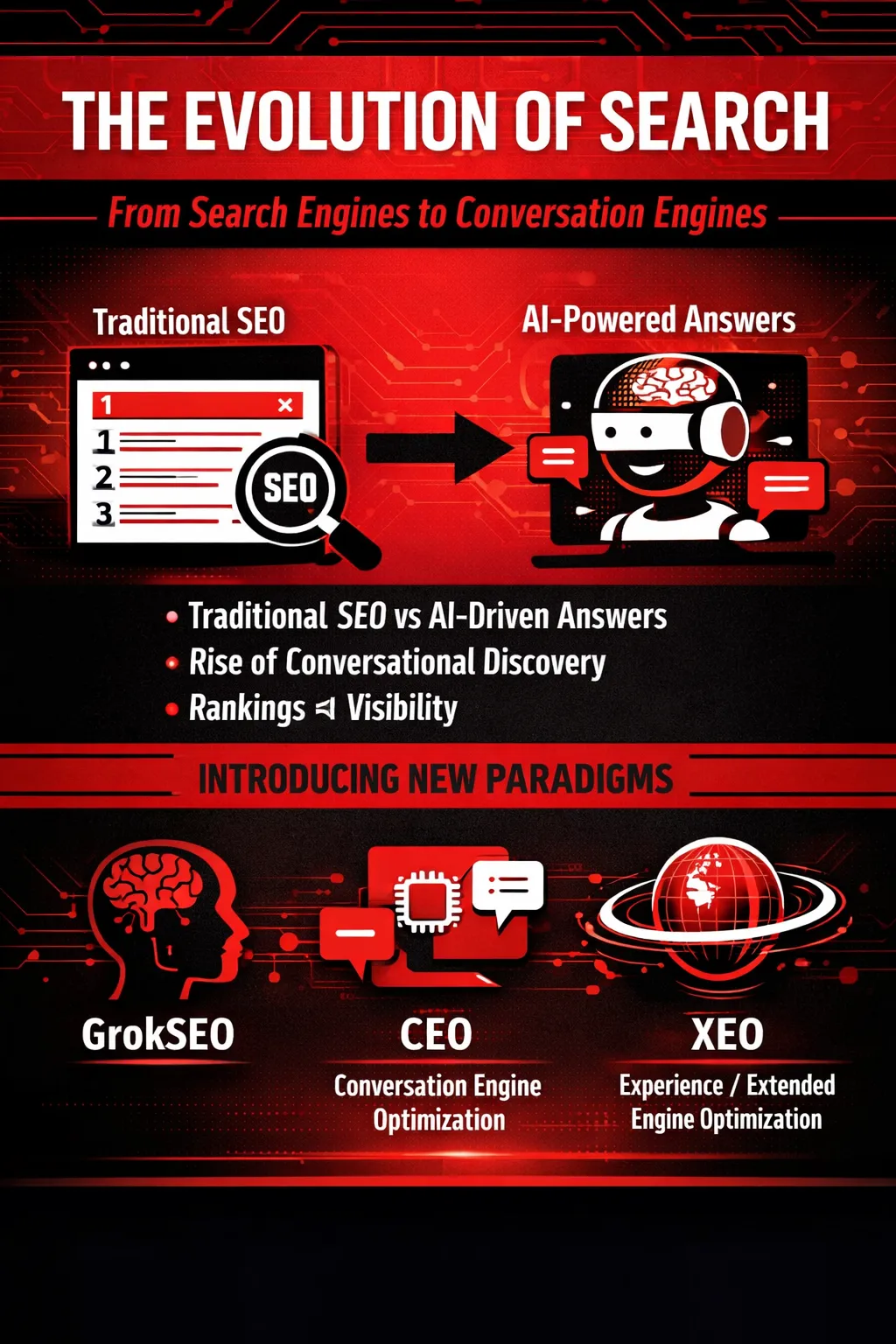
From Search Engines to Conversation Engines
For decades, search has been defined by a simple mechanism: users type queries, search engines return ranked lists of links, and websites compete for the top positions. This was the foundation of traditional SEO—optimize pages, build backlinks, and climb rankings.
But that model is rapidly evolving.
Today, AI systems like ChatGPT, Gemini, and Grok are reshaping how users discover information. Instead of presenting a list of links, they generate direct answers, insights, and recommendations. This marks the transition from search engines to conversation engines.
Traditional SEO vs AI-Driven Answers
Traditional SEO focuses on:
- Ranking web pages on SERPs
- Driving clicks through keywords and backlinks
- Optimizing for algorithms that index documents
In contrast, AI-driven systems:
- Deliver synthesized answers instead of links
- Prioritize context, entities, and expertise
- Extract and recombine information from multiple sources
This means users no longer need to click through multiple websites—they get what they need instantly through conversation.
The Rise of Conversational Discovery
Search behavior is becoming more natural and intent-driven.
Instead of typing:
“best AI SEO tools”
Users now ask:
“What are the most effective AI SEO strategies for 2026?”
This shift introduces:
- Multi-turn queries
- Context-aware responses
- Deeper, more nuanced information retrieval
As a result, content is no longer just discovered—it is interpreted, summarized, and re-delivered by AI systems.
Why Rankings ≠ Visibility Anymore
In the traditional model, visibility was tied directly to rankings:
- Rank #1 → Maximum visibility
- Rank #10 → Minimal exposure
In AI-driven environments, that equation breaks.
Now:
- A brand may rank #1 but never be mentioned in AI answers
- A lesser-known entity may be frequently cited due to authority signals
Visibility is no longer about where you rank— it’s about whether AI systems recognize, trust, and reference you.
Introducing New Paradigms
To adapt to this shift, new optimization frameworks are emerging—designed not for search engines, but for AI conversation ecosystems.
GrokSEO
GrokSEO represents the next evolution of optimization—focused on how AI systems understand, interpret, and “grok” content.
It emphasizes:
- Entity clarity
- Knowledge structuring
- Contextual depth
The goal is not just to rank—but to be understood and reused by AI models.
CEO (Conversation Engine Optimization)
Conversation Engine Optimization (CEO) is about optimizing for AI-generated interactions.
Instead of optimizing for clicks, CEO focuses on:
- Being included in AI responses
- Structuring content for conversational extraction
- Building authority within AI knowledge graphs
In this model, success means:
Your brand becomes part of the answer—not just a link behind it.
XEO (Experience / Extended Engine Optimization)
XEO expands the scope beyond search and conversation.
It considers:
- Cross-platform presence
- Multi-format content (text, video, discussions)
- User experience across AI ecosystems
XEO recognizes that AI systems pull signals from everywhere—not just websites.
Your authority is shaped by your entire digital footprint.
The ThatWare GrokSEO Playbook (12 Steps)
Step 1: Establish Entity Authority
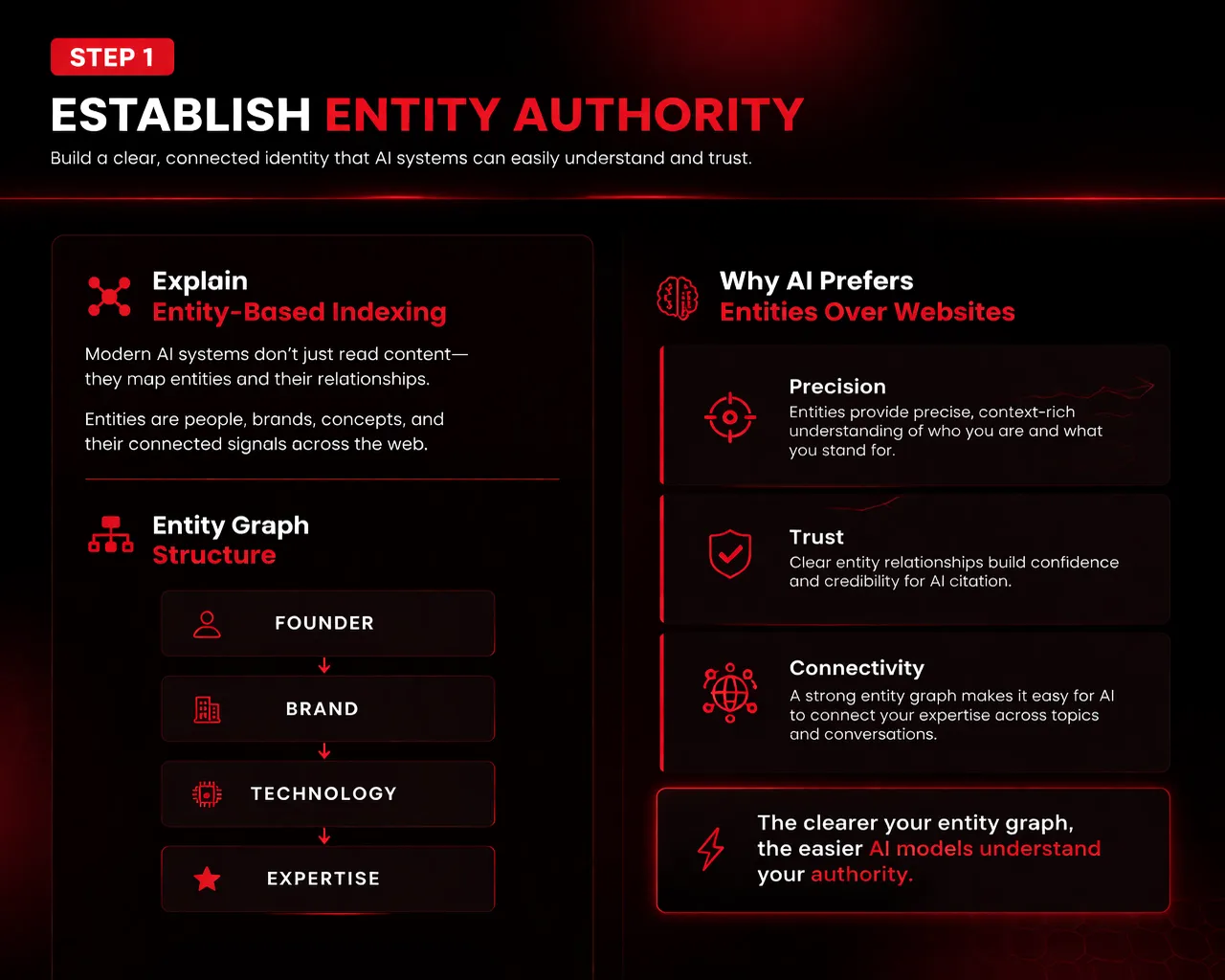
The foundation of AI visibility begins with entity-based indexing.
Unlike traditional search engines that rank web pages based on keywords and backlinks, modern AI systems—such as ChatGPT, Gemini, and Grok—operate on entities and relationships. They aim to understand who you are, what you represent, and how you are connected within an industry.
This is where entity authority becomes critical.
What is Entity-Based Indexing?
Entity-based indexing is the process by which AI systems map real-world concepts (people, brands, technologies) into structured knowledge graphs. Instead of treating your website as a standalone asset, AI connects it to a broader network of meaning.
For ThatWare, this means clearly defining and reinforcing relationships like:
Founder → Brand → Technology → Expertise
Example:
- Tuhin Banik (Founder)
↓ - ThatWare (Brand)
↓ - AI SEO / Hyper-Intelligence SEO (Technology)
↓ - Future AI Search Optimization (Expertise)
The clearer and more consistent this structure is across platforms, the easier it becomes for AI systems to recognize, validate, and prioritize your authority.
Why AI Prefers Entities Over Websites
AI engines are designed to deliver trusted, context-rich answers, not just links. Entities help them do that.
Here’s why entities matter more than websites:
- Disambiguation: AI can distinguish between similar names or concepts.
- Contextual Understanding: It understands how your brand fits into a larger ecosystem.
- Authority Mapping: It identifies expertise based on relationships, not just content volume.
- Consistency Across Platforms: Mentions across different sources strengthen the same entity.
In simple terms:
👉 Websites can rank, but entities get remembered and referenced.
If ThatWare successfully establishes a strong entity graph, AI systems won’t just find the brand—they will understand and recommend it.
Step 2: Build Founder Thought Leadership
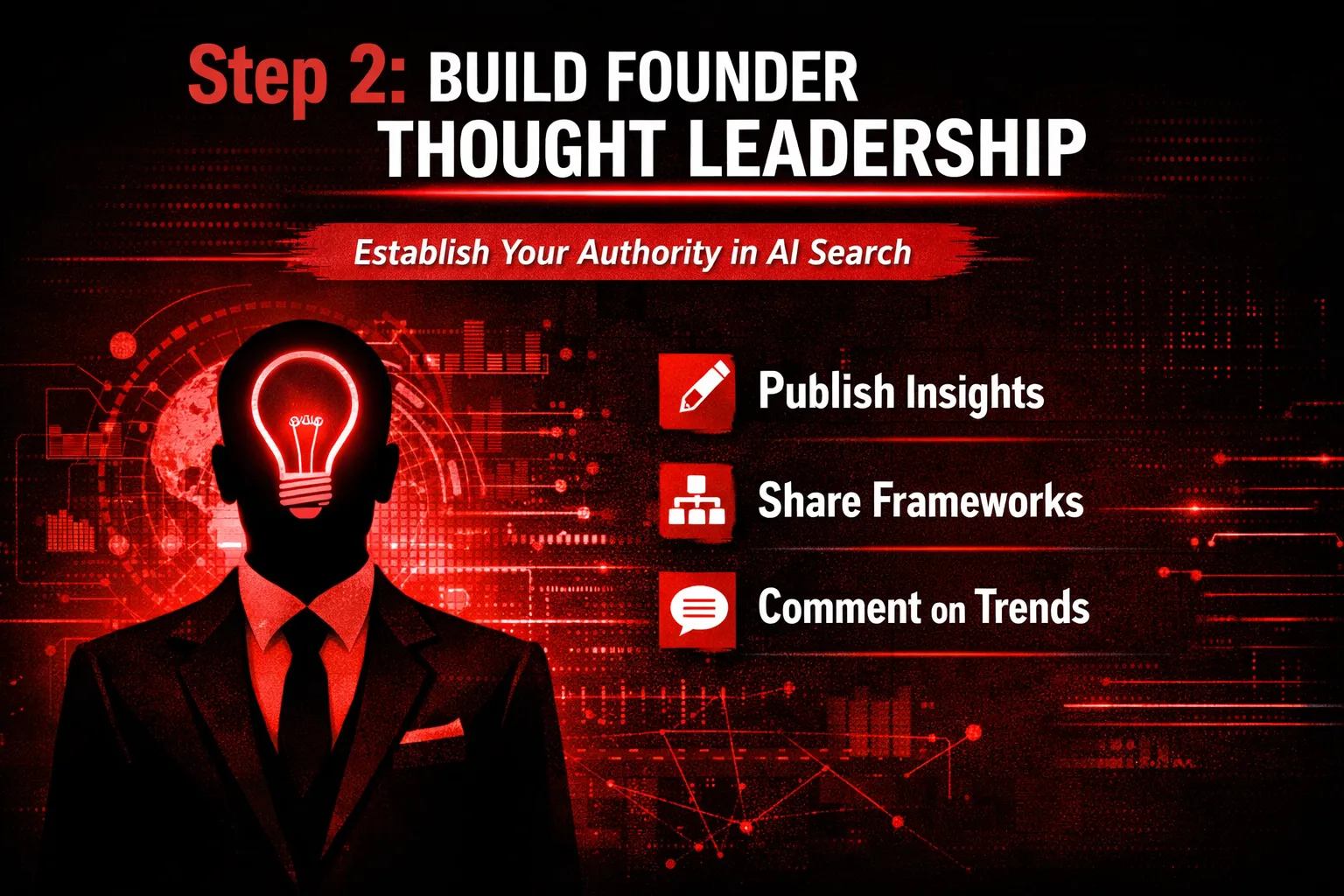
In the era of AI-driven discovery, people often rank before brands.
Conversation engines prioritize recognizable experts because they represent trust, credibility, and interpretability. This is why building founder-level authority is not optional—it is a strategic necessity.
Why Personal Branding Matters in AI Search
AI systems are trained on conversations, discussions, and expert opinions. As a result:
- Experts are cited more frequently than companies
- Human insights are prioritized over generic brand messaging
- Recognizable voices become anchors in AI-generated responses
For ThatWare, positioning Tuhin Banik as a leading voice in AI SEO and future search directly strengthens the brand’s visibility.
When the founder becomes a trusted entity, the brand inherits that authority.
Key Actions to Build Thought Leadership
To establish strong founder authority, consistency and depth of insight are essential. The goal is to create a continuous stream of valuable, structured, and original thinking.
1. Publish Insights Regularly
Share perspectives on AI search evolution, SEO transformation, and emerging technologies. Consistency signals relevance.
2. Share Frameworks
Introduce structured ideas like:
- Hyper-Intelligence SEO
- GrokSEO
- CEO / XEO
Frameworks are especially powerful because they are easy for AI systems to recognize, categorize, and cite.
3. Comment on Industry Trends
Engage with ongoing discussions:
- Respond to new AI developments
- Interpret industry shifts
- Provide contrarian or forward-looking opinions
This positions the founder as an active participant in shaping the narrative, not just observing it.
Step 3: Create Educational Knowledge Threads
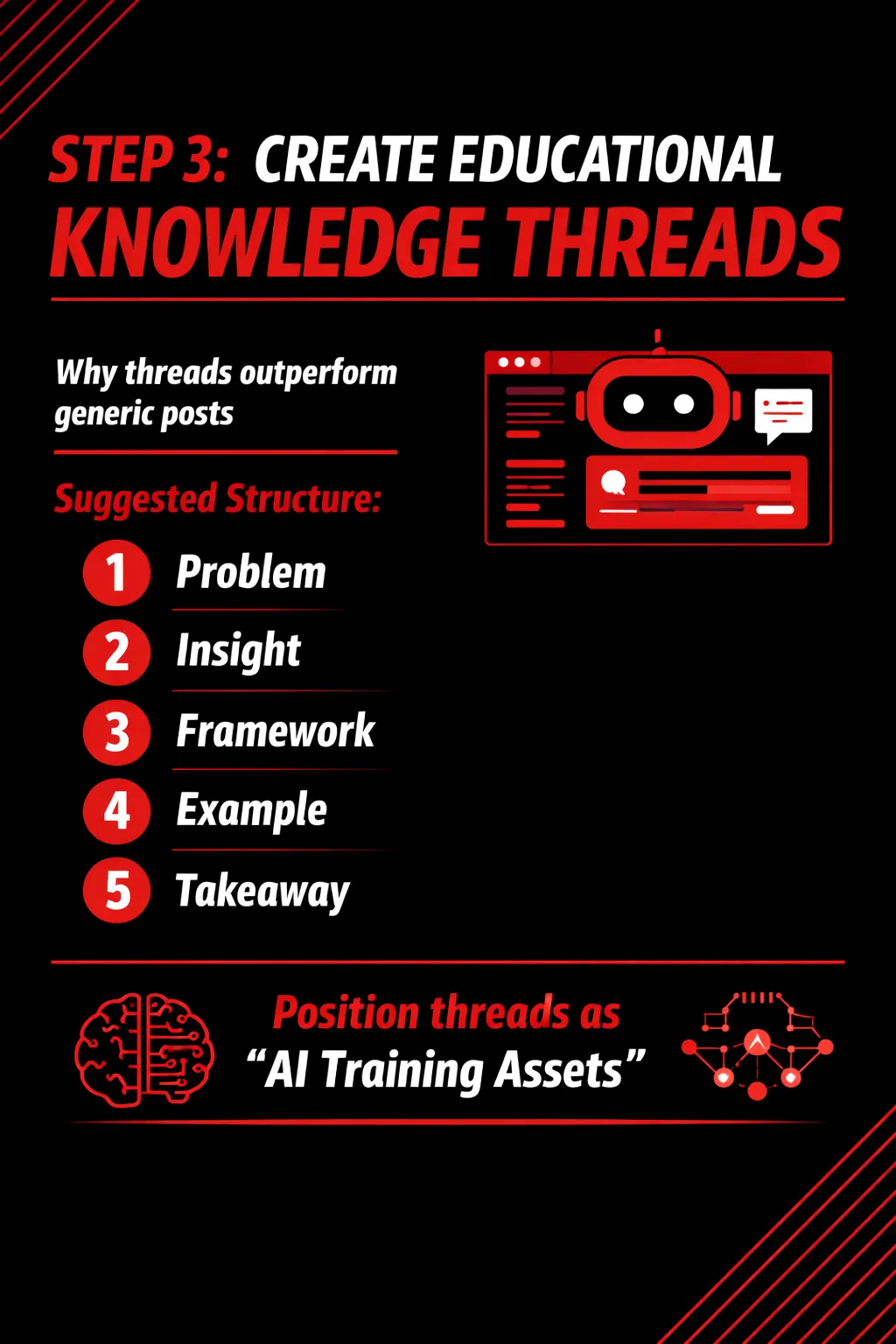
In the age of AI-driven discovery, not all content is created equal. Short-form, generic posts may generate momentary engagement—but they rarely contribute to long-term visibility in AI systems.
Educational knowledge threads outperform generic content because they provide structured, layered information that AI models can easily interpret, store, and reuse.
Why Threads Outperform Generic Posts
AI conversation engines are designed to extract meaning, not just keywords. Threads offer:
- Contextual depth
- Logical flow of ideas
- Clear knowledge segmentation
- Reusable insights
Unlike standalone posts, threads create connected knowledge blocks, making them far more valuable for AI training and referencing.
The Ideal Thread Structure
To maximize both human engagement and AI readability, follow a consistent structure:
- Problem – Define a clear industry challenge
- Insight – Introduce a unique perspective or observation
- Framework – Present a structured solution or model
- Example – Demonstrate real-world application
- Takeaway – Summarize the key learning
This format transforms content into a repeatable knowledge system rather than isolated ideas.
Threads as AI Training Assets
Every well-structured thread becomes more than just content—it becomes a data point in the AI ecosystem.
When consistently published:
- AI systems begin recognizing patterns in your thinking
- Your frameworks become easier to extract and cite
- Your brand evolves into a source of structured intelligence
In essence, you are not just posting—you are training AI models to understand and reference your expertise.
Step 4: Introduce Unique Frameworks
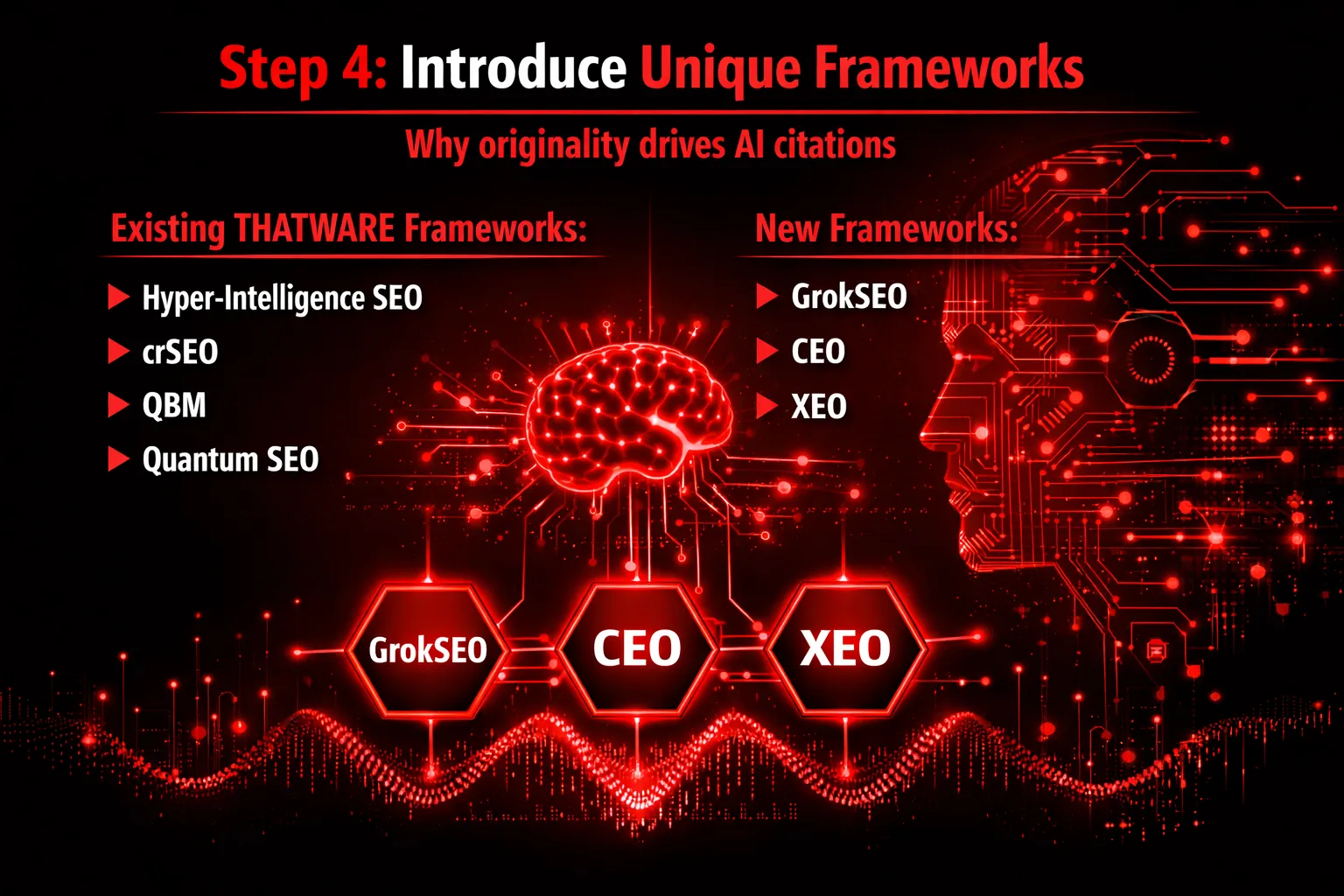
If threads are the vehicle, frameworks are the engine.
AI systems prioritize original, structured ideas. Repackaged or generic insights rarely get cited—but unique frameworks create intellectual ownership, which increases the likelihood of AI recognition and attribution.
Why Originality Drives AI Citations
AI models are designed to surface:
- Distinct concepts
- Named methodologies
- Clearly defined systems
When you introduce something new, you create:
- A reference point
- A label AI can associate with your brand
- A repeatable concept others can discuss and cite
This is how ideas move from content → conversation → citation.
ThatWare’s Existing Framework Ecosystem
ThatWare has already laid the foundation with powerful, differentiated frameworks such as:
- Hyper-Intelligence SEO
- crSEO
- QBM (Query-Based Modeling)
- Quantum SEO
These frameworks establish ThatWare as a deep-tech SEO innovator, not just a service provider.
Expanding with Next-Generation Frameworks
To dominate AI conversation engines, the evolution continues with:
- GrokSEO – AI-aligned search intelligence
- CEO (Conversation Engine Optimization) – Optimizing for AI-driven dialogue systems
- XEO (Extended/Experience Engine Optimization) – Expanding visibility beyond traditional search environments
Each framework is designed to align with the future of search—where answers are generated, not retrieved.
Frameworks as Citation Triggers
When frameworks are:
- Clearly defined
- Consistently used
- Widely discussed
They become citation triggers inside AI systems.
Over time:
- Industry professionals reference them
- Conversations revolve around them
- AI models begin associating them with your brand
This is how ThatWare transitions from creating content to owning concepts within the AI knowledge space.
Step 5: Participate in High-Value Conversations
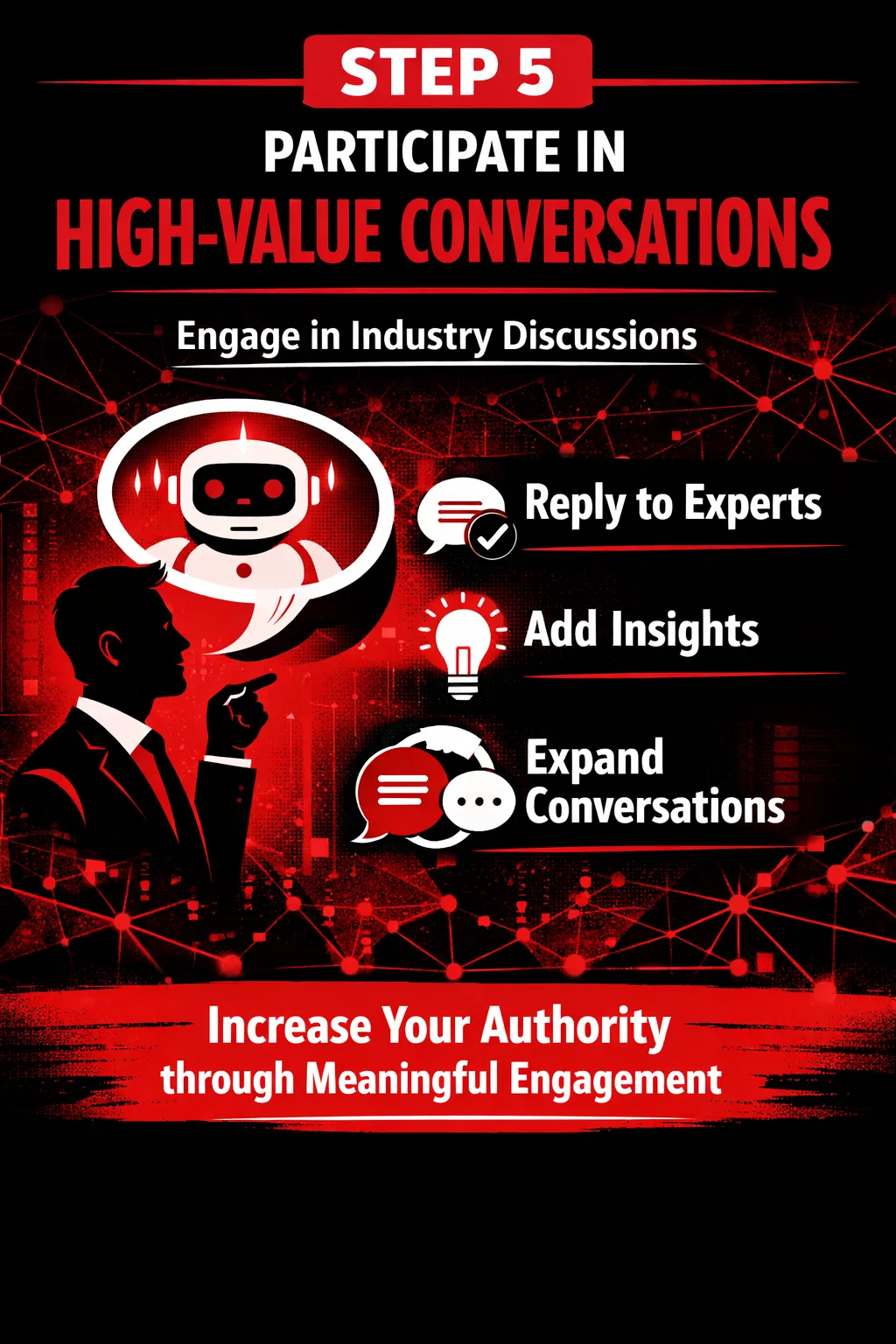
In the era of AI-driven discovery, visibility is no longer created in isolation—it is built within conversations. AI systems don’t just analyze what you publish; they evaluate how you engage within the broader industry dialogue.
High-value conversations act as signal hubs. When you actively contribute to meaningful discussions, you position yourself—and your brand—within the context that AI models use to understand authority, relevance, and expertise.
Why Engagement Matters
Conversation engines prioritize contextual relevance. If your insights consistently appear alongside recognized experts and trending discussions, AI systems begin associating your entity with those knowledge clusters.
In simple terms:
If you’re part of the conversation, you become part of the answer.
Key Tactics to Execute
1. Reply to Experts
Engage with established voices in your industry. Thoughtful replies—not generic comments—place your ideas directly within authoritative threads. This creates proximity to credibility.
2. Add Original Insights
Don’t just agree—contribute. Add a unique angle, a framework, or a deeper layer of analysis. AI systems value novel contributions more than repetition.
3. Expand the Conversation
Take discussions further. Ask intelligent follow-up questions, introduce new perspectives, or connect ideas across domains. This signals depth of expertise and increases engagement longevity.
Strategic Outcome
Consistent participation transforms your presence from a passive publisher into an active knowledge node—a critical factor in building conversation authority within AI ecosystems.
Step 6: Build Influencer Amplification
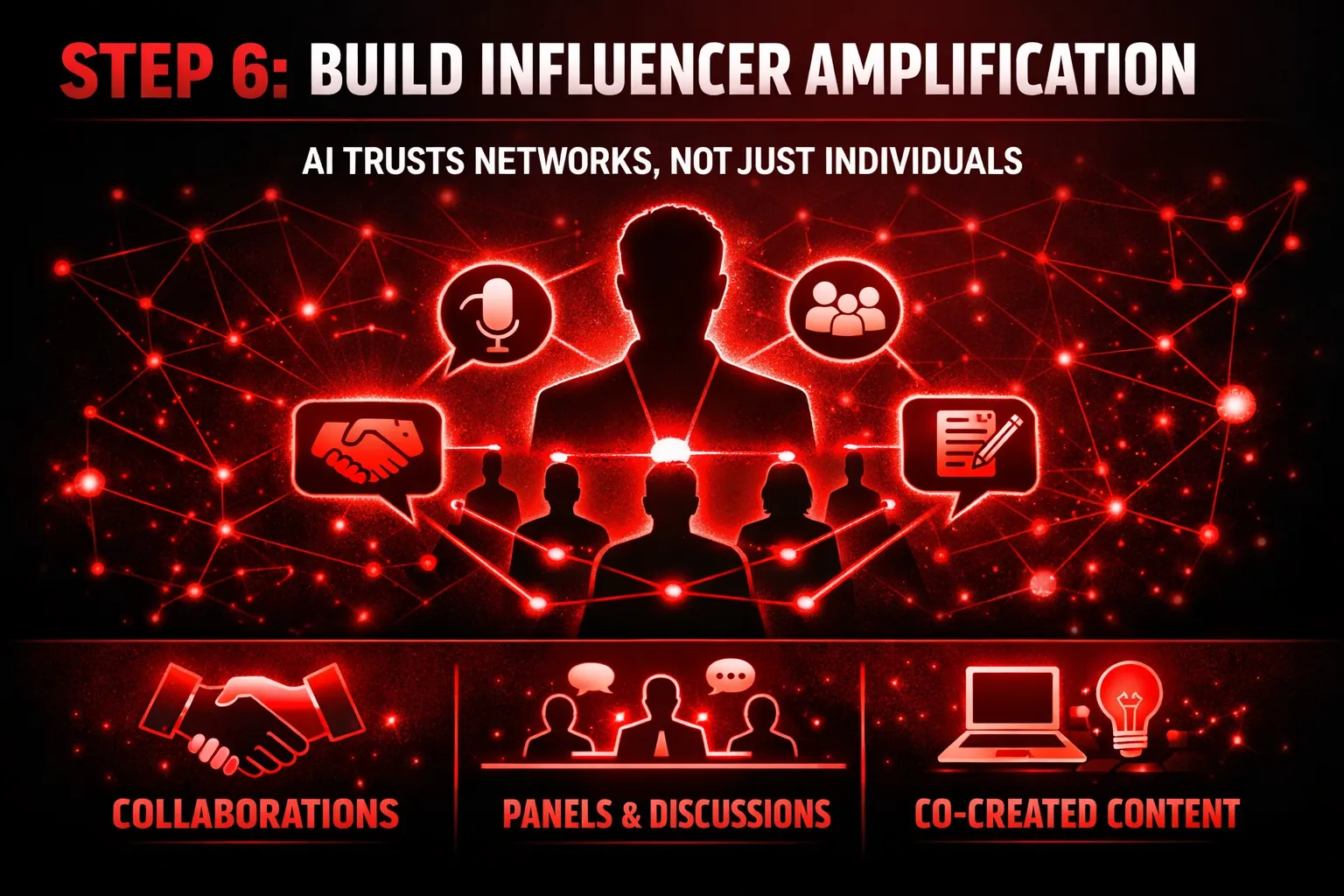
Authority in AI-driven environments is no longer an individual achievement—it is a network effect. AI systems evaluate not just who you are, but who references you, engages with you, and amplifies your ideas.
This is where influencer amplification becomes a decisive advantage.
Why Networks Matter
AI models interpret mentions, collaborations, and co-occurrences as trust signals. When your ideas are discussed by multiple credible entities, your authority graph strengthens exponentially.
In essence:
Authority is validated socially before it is recognized algorithmically.
Core Strategies for Amplification
1. Collaborations
Partner with industry experts to co-create insights, research, or frameworks. Collaborative outputs naturally expand your reach and embed your ideas into multiple authority networks.
2. Panels & Discussions
Participate in webinars, podcasts, and industry panels. These environments create high-density knowledge exchanges where your expertise is publicly validated and widely distributed.
3. Co-Created Content
Develop content alongside other thought leaders—joint articles, interviews, or framework discussions. Co-creation increases cross-audience exposure and strengthens entity associations.
Strategic Outcome
Influencer amplification transforms isolated expertise into distributed authority. As your ideas circulate across trusted networks, AI systems begin to recognize your frameworks not just as content—but as industry signals.
Together, participation and amplification form a powerful loop:
You engage in conversations → your ideas gain visibility → influencers amplify them → AI systems recognize and reinforce your authority.
This is how brands evolve from being seen… to being referenced.
Step 7: Create AI-Readable Content
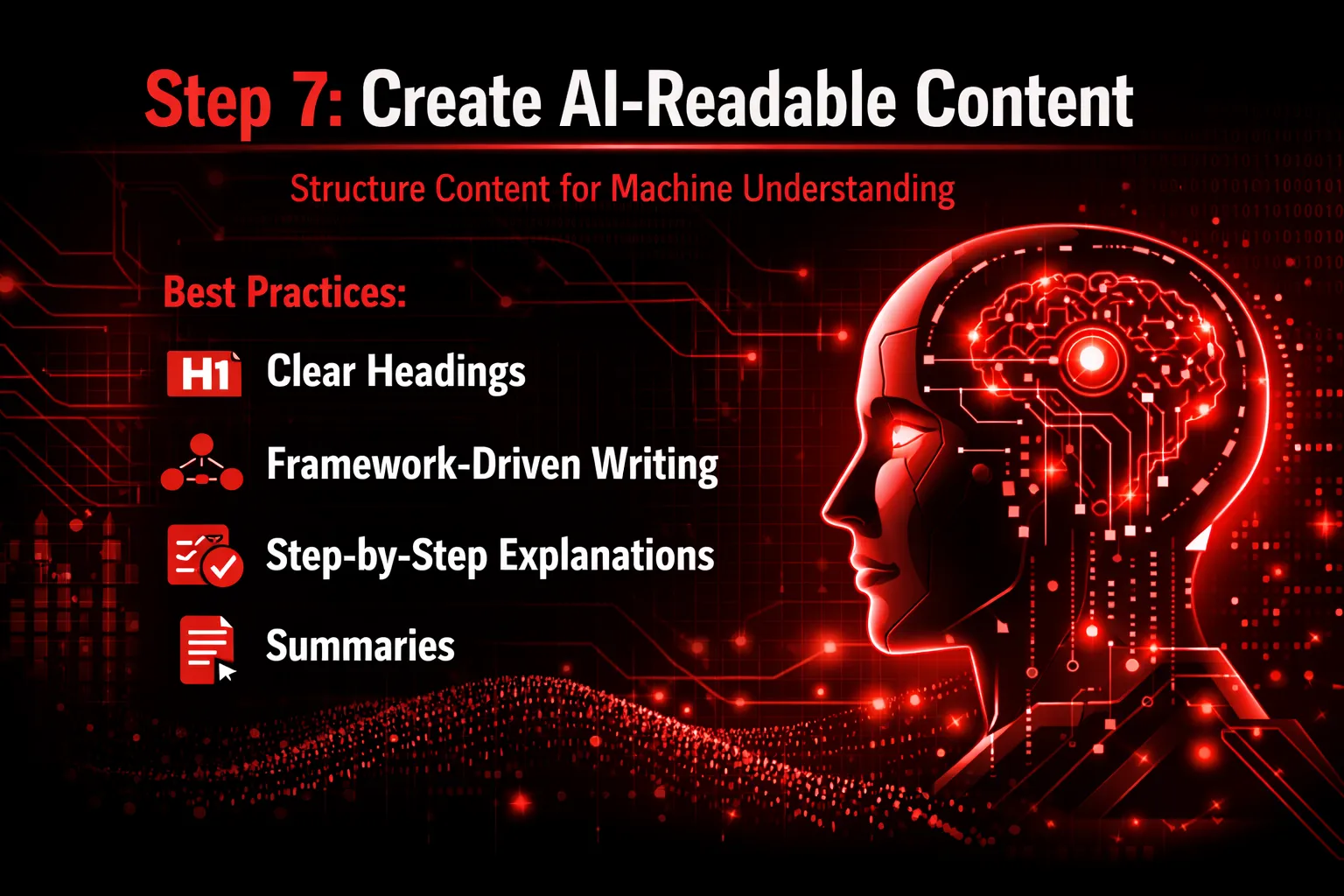
In the era of AI-driven search, content is no longer written just for humans—it must also be structured for machines. Conversation engines like ChatGPT, Grok, and Gemini don’t “browse” content the way users do. They extract, interpret, and recombine information. This means your content must be designed for machine understanding and retrieval.
The goal is simple: make your content easy for AI systems to parse, summarize, and cite.
Structure Content for Machine Understanding
AI models prioritize clarity, hierarchy, and logical flow. Unstructured or overly narrative content often gets ignored because it’s harder to interpret.
Instead, your content should:
- Follow a clear hierarchy
- Present ideas in modular formats
- Break down complex topics into digestible units
Think of your content as a knowledge asset, not just a blog post.
Best Practices for AI-Readable Content
1. Clear Headings
Headings act as signals that help AI understand context and importance.
- Use descriptive, keyword-rich headings
- Maintain a logical hierarchy (H1 → H2 → H3)
- Avoid vague titles like “Things to Know”
2. Framework-Driven Writing
AI systems favor structured thinking.
- Present ideas as frameworks, models, or systems
- Name your frameworks clearly (e.g., GrokSEO, CEO, XEO)
- Break them into defined components
Frameworks increase the chances of AI citation and recall.
3. Step-by-Step Explanations
Sequential logic is easier for AI to process.
- Use numbered steps or bullet points
- Ensure each step builds on the previous one
- Avoid skipping context
This format aligns perfectly with how AI generates answers.
4. Concise Summaries
Summaries help AI quickly extract key insights.
- Add a short takeaway at the end of sections
- Highlight key points clearly
- Avoid unnecessary complexity
Think of summaries as AI-ready snippets.
Why This Matters
When your content is structured this way:
- AI can understand it faster
- It becomes easier to reference in responses
- Your frameworks are more likely to be reused and cited
In short, AI-readable content transforms your brand from a publisher into a source of knowledge.
Step 8: Publish Cross-Platform Insights
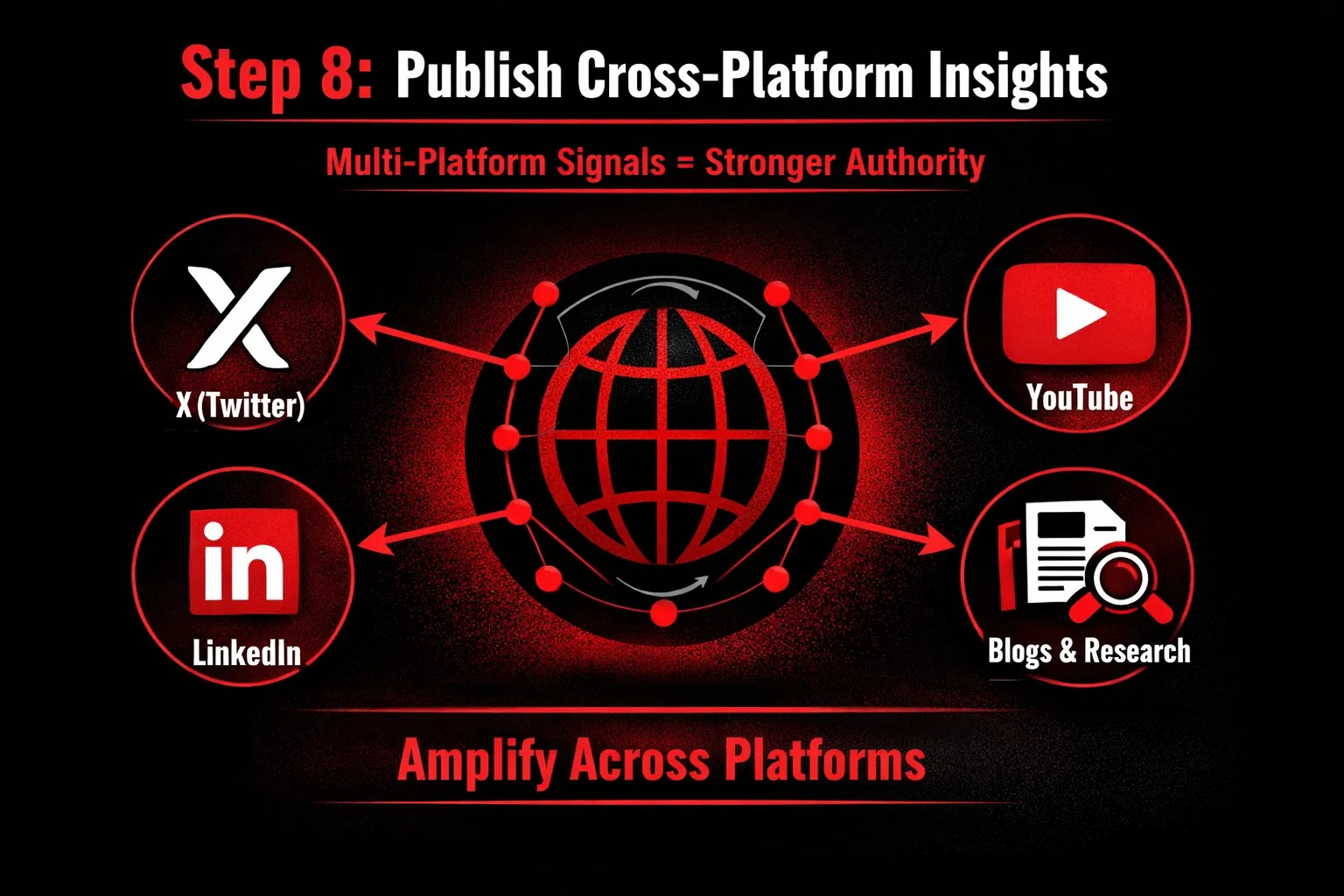
Creating great content is not enough. AI systems do not rely on a single source—they gather signals from across the digital ecosystem. This means your authority is not built in one place, but validated everywhere.
The more consistently your ideas appear across platforms, the stronger your authority graph becomes.
Multi-Platform Signals = Stronger Authority
AI models look for:
- Repetition of ideas across channels
- Consistency in messaging
- Recognition by different audiences
When your frameworks and insights show up in multiple environments, they gain credibility and weight.
This is how AI distinguishes between:
- A one-time opinion
vs - A recognized industry concept
Key Platforms to Focus On
1. X (Twitter)
- Ideal for real-time insights and threads
- Great for starting and joining conversations
- High visibility in AI training signals
2. LinkedIn
- Best for professional authority and thought leadership
- Long-form posts and frameworks perform well
- Strong engagement from industry experts
3. YouTube
- Enables deeper explanations and visual storytelling
- Helps reinforce concepts through multiple formats
- Increasingly used as a knowledge source by AI
4. Blogs & Research Publications
- Provide depth and credibility
- Serve as foundational content hubs
- Act as primary sources for AI extraction
The Strategic Approach
Instead of posting randomly, think in terms of content distribution systems:
- One core idea → multiple formats
- One framework → multiple platforms
- One insight → multiple conversations
This creates signal amplification, where each platform reinforces the others.
Why This Matters
When executed correctly:
- Your ideas become ubiquitous
- Your frameworks gain recognition
- AI systems start associating your brand with specific concepts
Ultimately, cross-platform publishing ensures that your presence is not just visible—it is undeniable.
Step 9: Encourage Community Interaction
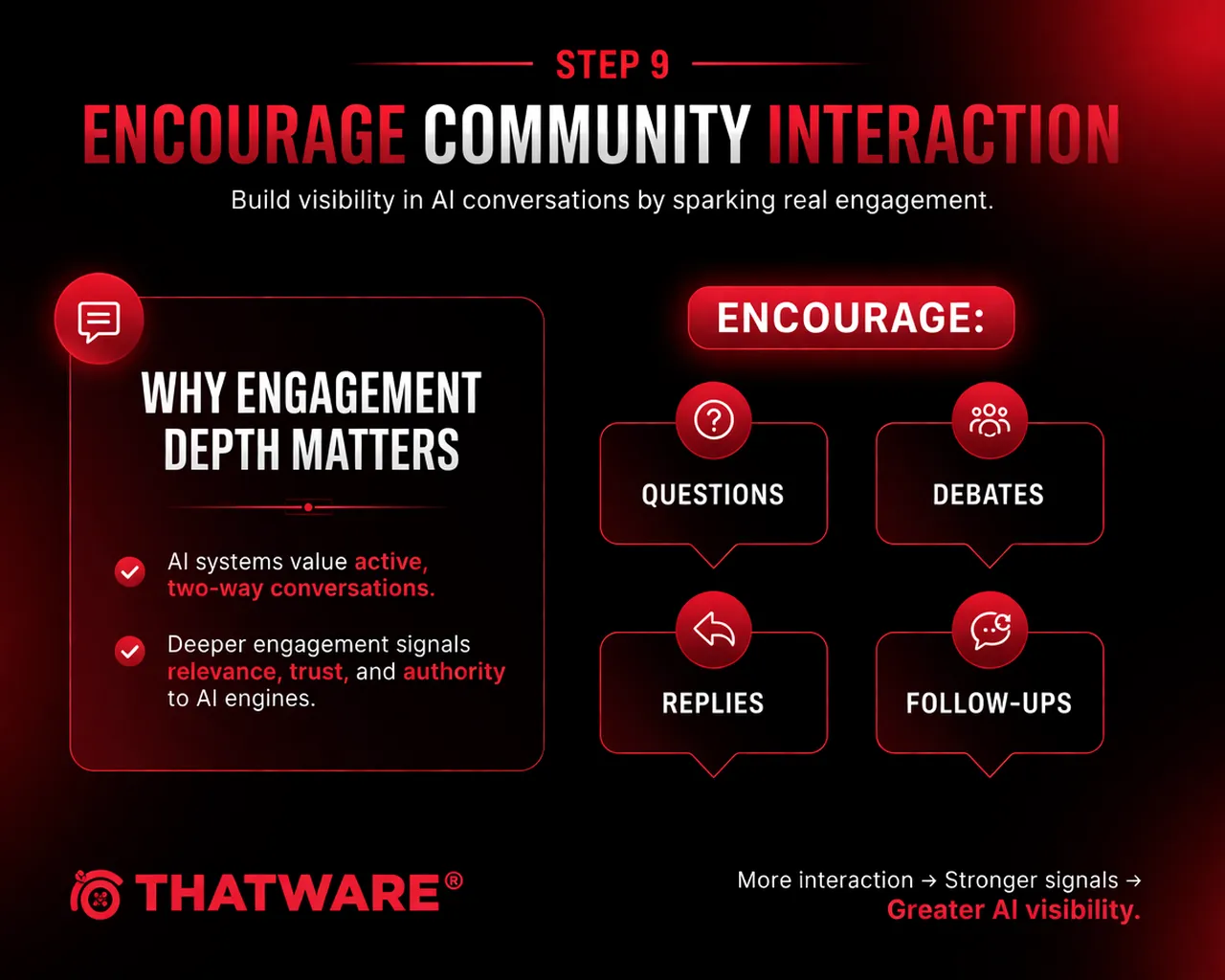
In the era of AI conversation engines, visibility is no longer driven solely by content creation—it is driven by conversation depth.
AI systems are increasingly trained to recognize not just what is said, but how widely and meaningfully it is discussed. A post with surface-level engagement has limited impact. But a discussion with layered insights, responses, and debates becomes a high-value knowledge signal.
Why Engagement Depth Matters
Conversation engines prioritize:
- Active discussions over static content
- Multi-perspective insights over single viewpoints
- Ongoing dialogue over one-time posts
This means that the quality and continuity of interaction directly influence how AI systems interpret authority and relevance.
A deeply engaged thread signals:
- Expertise
- Community validation
- Real-world applicability
These are all critical factors in AI-driven content selection and citation.
How to Encourage Meaningful Interaction
To build strong conversation signals, content must be designed to invite participation.
Focus on:
- Questions
Prompt your audience to think and respond. Open-ended questions stimulate discussion and extend content lifespan.
- Debates
Present perspectives that encourage constructive disagreement. Debate-driven content often generates deeper engagement and diverse viewpoints.
- Replies
Actively respond to comments and insights. This transforms content into a two-way conversation rather than a broadcast.
- Follow-ups
Extend discussions through additional posts, clarifications, or expanded frameworks. This creates continuity, which AI systems interpret as sustained relevance.
The goal is not just engagement—but intelligent interaction that builds a network of contextual signals around your ideas.
Step 10: Track AI Visibility
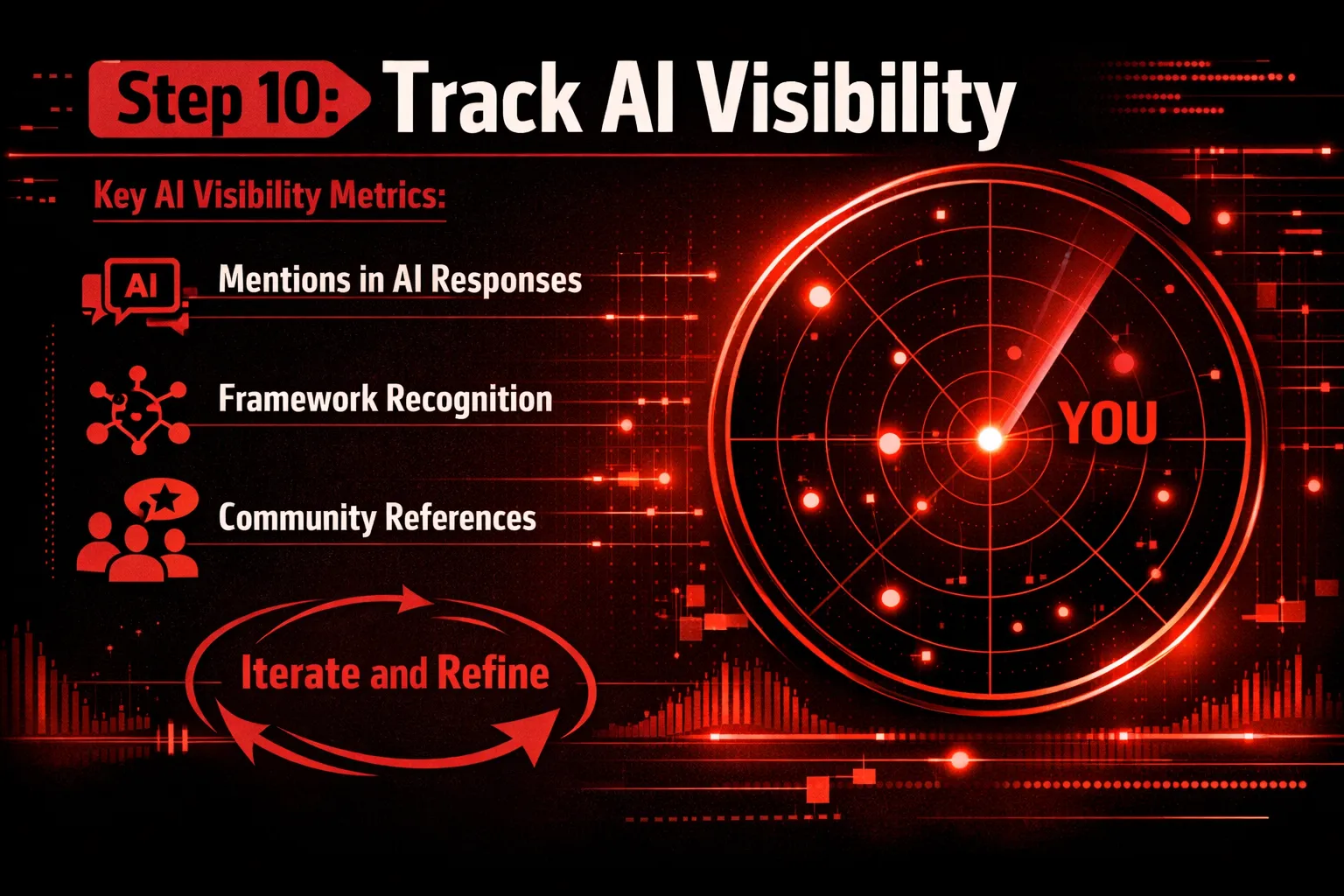
Creating content and driving engagement is only part of the equation. To dominate AI conversation engines, you must also measure your presence within them.
AI visibility is the new ranking.
Defining AI Visibility Metrics
Unlike traditional SEO metrics, AI visibility is less about positions and more about recognition and inclusion within AI-generated outputs.
Key indicators include:
- Mentions in AI Responses
How often your brand, ideas, or frameworks appear in AI-generated answers across platforms.
- Framework Recognition
Whether your proprietary concepts (e.g., GrokSEO, CEO, XEO) are being referenced, explained, or discussed by others.
- Community References
The frequency at which industry professionals and communities mention or build upon your ideas.
These signals collectively determine whether your brand is becoming part of the AI knowledge ecosystem.
The Importance of Iteration
AI visibility is not static—it evolves with:
- content consistency
- conversation momentum
- industry adoption
This makes iteration essential.
You must continuously:
- refine your messaging
- expand your frameworks
- engage in new discussions
- analyze what gains traction
Over time, patterns emerge. Certain formats, topics, or narratives will generate stronger AI signals. These insights allow you to optimize your strategy for maximum visibility and citation potential.
Step 11: Develop Industry Narratives
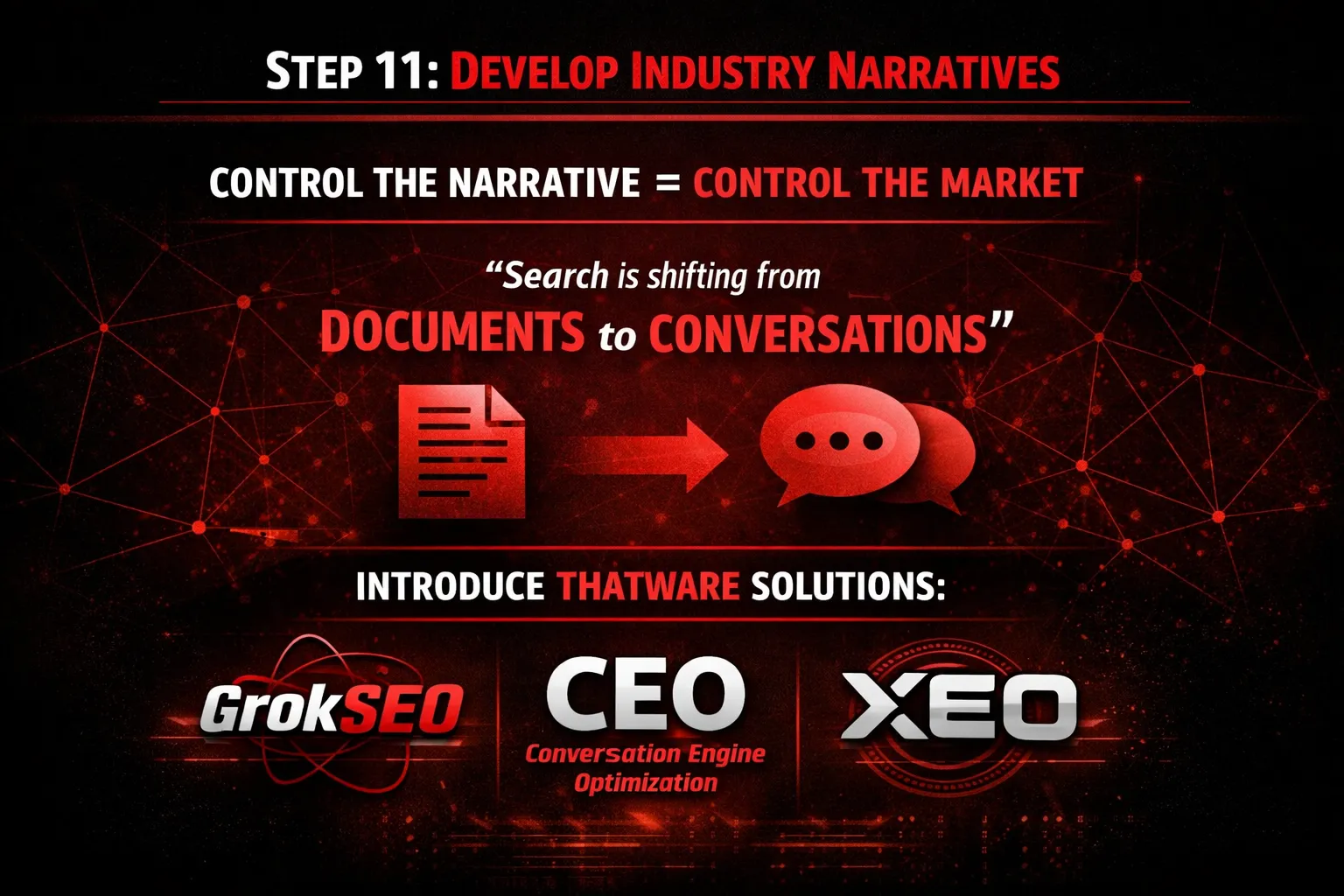
In the AI era, visibility is no longer just earned—it is shaped. The brands that win are not simply participating in the market; they are defining how the market thinks.
At the core of this lies a powerful principle:
Control the narrative = Control the market.
AI systems don’t just retrieve information—they synthesize it. And in doing so, they rely heavily on dominant narratives that are repeated, reinforced, and widely accepted across digital ecosystems.
The Shift That Changes Everything
One of the most important narratives emerging today is:
“Search is shifting from documents to conversations.”
This is not just a trend—it is a structural transformation.
- Users are no longer browsing pages; they are asking questions
- AI is no longer indexing links; it is generating answers
- Discovery is no longer keyword-driven; it is context-driven
This shift creates a massive opportunity:
Whoever defines the narrative around this transformation becomes the authority within it.
Positioning ThatWare Within the Narrative
Rather than reacting to this change, ThatWare positions itself as the architect of the next phase of search by introducing a new ecosystem of frameworks:
- GrokSEO → Optimizing for AI understanding and contextual intelligence
- CEO (Conversation Engine Optimization) → Structuring visibility within AI-driven conversations
- XEO (Extended Engine Optimization) → Expanding presence across multi-layered AI ecosystems
These are not just services—they are language constructs that AI systems can recognize, repeat, and associate with authority.
By consistently embedding these frameworks into content, discussions, and industry conversations, ThatWare doesn’t just follow the narrative—it becomes the narrative source.
Step 12: Achieve AI Citation Dominance
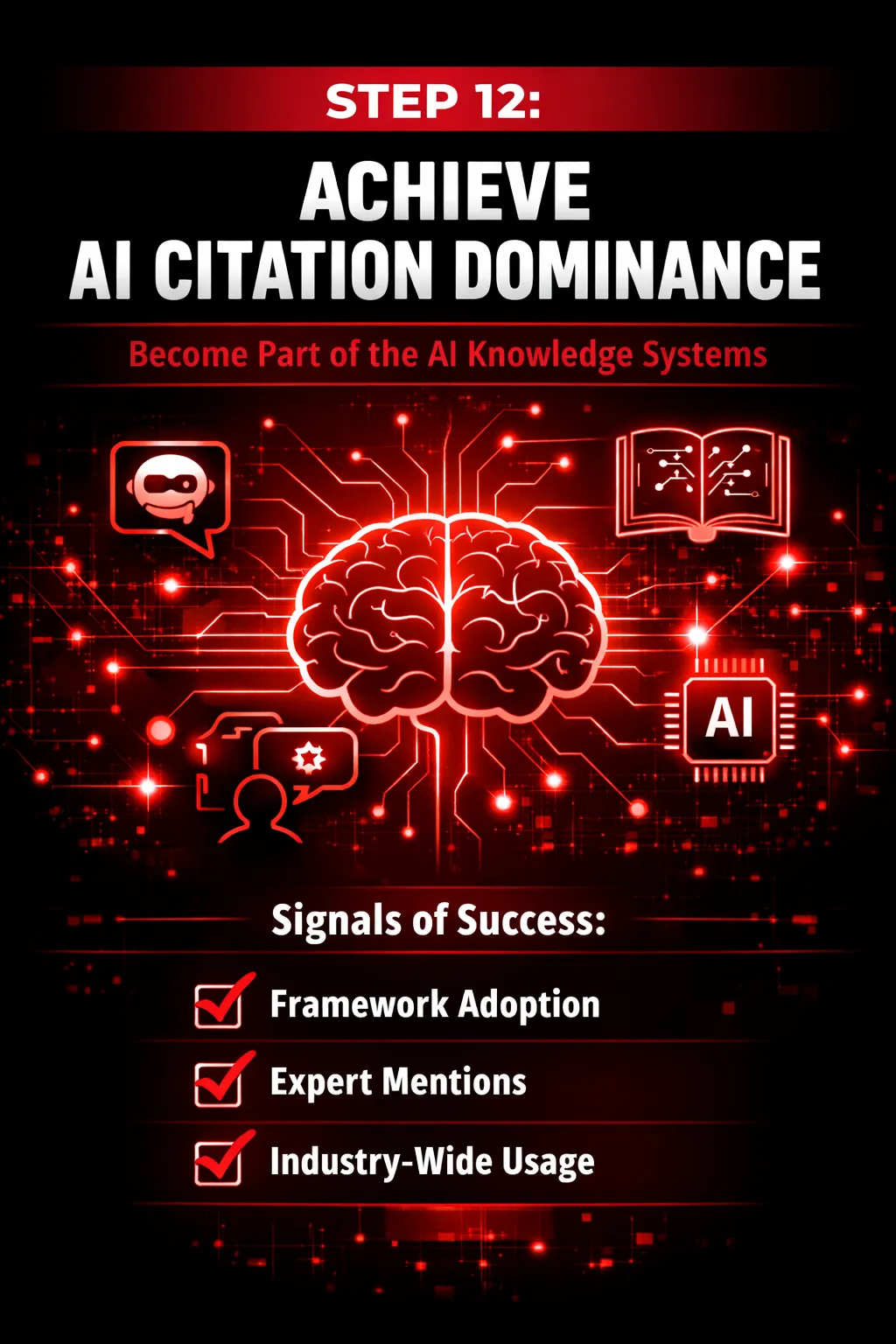
The ultimate objective of GrokSEO is not rankings.
It is something far more powerful:
To become part of the AI knowledge system itself.
This stage—AI Citation Dominance—is where a brand transitions from being visible to being referenced.
What Is AI Citation Dominance?
It is the point where:
- AI systems mention your frameworks when answering questions
- Your terminology becomes part of generated responses
- Your ideas are treated as foundational knowledge
At this level, visibility is no longer dependent on algorithms—it is embedded into AI cognition.
Signals of Success
You know you’ve reached this stage when:
- Framework Adoption
Your concepts (GrokSEO, CEO, XEO) are used by others in the industry
- Expert Mentions
Thought leaders reference your ideas in discussions and content
- Industry-Wide Usage
Your frameworks become part of standard conversations around AI search
These signals indicate that your brand is no longer just participating in the ecosystem—it is shaping it.
From Presence to Permanence
Most brands aim to be found. Very few aim to be remembered.
AI Citation Dominance is about permanence—ensuring that when AI systems generate answers about the future of search, your frameworks are not optional references… they are default knowledge.
And that is where true market leadership begins.
The ThatWare GrokSEO Flywheel
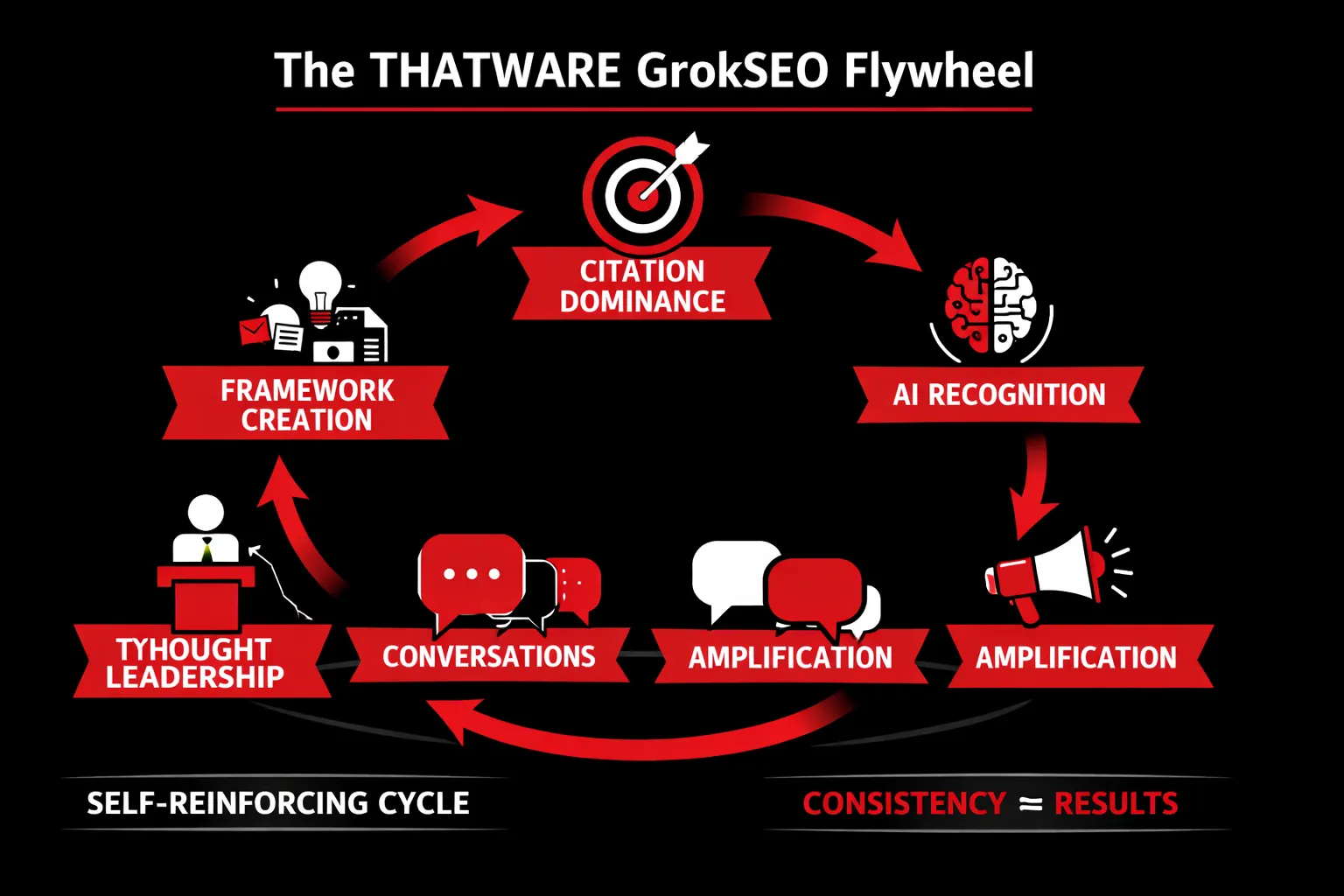
At the core of ThatWare’s GrokSEO strategy lies a powerful, self-reinforcing system—the GrokSEO Flywheel. Unlike linear marketing approaches, this model compounds over time, turning consistent effort into exponential AI visibility.
The Flywheel Explained
The GrokSEO Flywheel operates through a continuous loop:
Framework Creation → Thought Leadership → Conversations → Amplification → AI Recognition → Citation Dominance
Each stage feeds into the next, creating momentum that strengthens your authority across AI-driven ecosystems.
- Framework Creation begins the cycle. By introducing original concepts like GrokSEO, CEO, and XEO, ThatWare creates intellectual property that can be referenced, discussed, and expanded upon.
- These frameworks fuel Thought Leadership, where insights are shared through content, posts, and discussions. This establishes credibility and positions the brand (and its founder) as a source of innovation.
- Thought leadership naturally leads to Industry Conversations. As ideas gain traction, they are debated, shared, and explored by others in the ecosystem.
- These conversations trigger Amplification, where influencers, experts, and communities begin referencing and discussing the frameworks, extending their reach far beyond the original source.
- As visibility grows, AI systems begin detecting recurring patterns and signals, leading to AI Recognition. The frameworks start appearing in AI-generated responses, summaries, and knowledge synthesis.
- Finally, this culminates in Citation Dominance, where AI engines actively reference these frameworks when answering user queries—solidifying authority at a systemic level.
How the Flywheel Becomes Self-Reinforcing
What makes this model powerful is not just the sequence—but the loop.
Once Citation Dominance is achieved, it feeds directly back into the beginning:
- AI citations increase brand credibility
- Increased credibility strengthens thought leadership
- Stronger thought leadership drives more conversations
- More conversations attract further amplification
This creates a compounding loop of authority, where each cycle requires less effort but produces greater impact.
Over time, ThatWare transitions from participating in conversations to shaping them.
Why Consistency Compounds Results
The GrokSEO Flywheel is not an overnight strategy—it thrives on consistency.
Every post, framework, comment, or discussion adds a new signal into the ecosystem. Individually, these signals may seem small. But collectively, they form a powerful pattern that AI systems recognize and trust.
Consistency leads to:
- Increased signal density across platforms
- Stronger entity associations over time
- Higher likelihood of AI extraction and citation
- Greater recall in conversational engines
In simple terms:
The more consistently you contribute, the more inevitable your authority becomes.
Strategic Impact for ThatWare
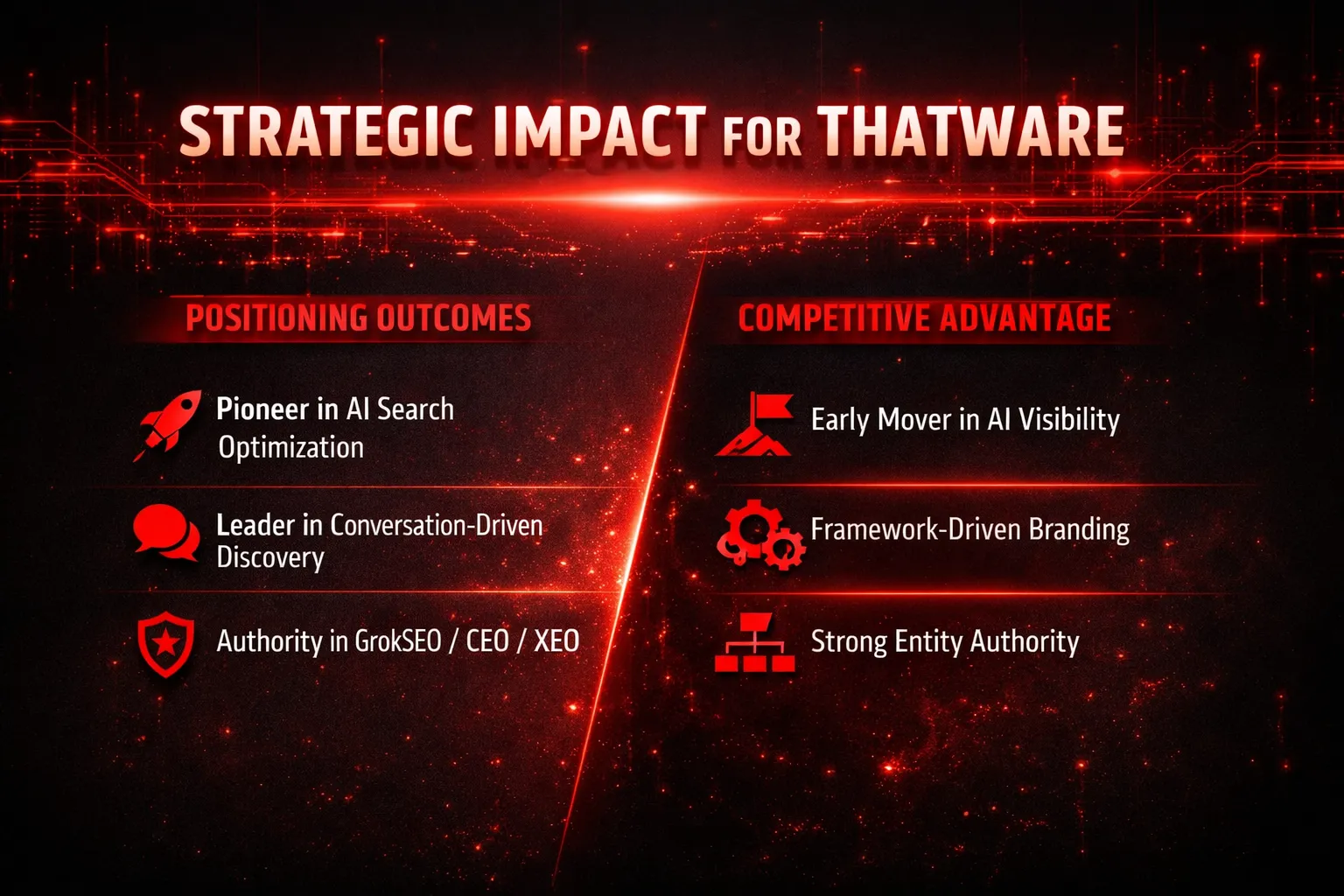
The true power of the GrokSEO Playbook lies not just in execution—but in the strategic positioning it unlocks for ThatWare within the evolving AI ecosystem.
As search transitions from static results to dynamic conversations, the brands that win will not be those that simply optimize content—but those that shape how AI understands and references knowledge.
Positioning Outcomes
By implementing this framework, ThatWare establishes itself at the forefront of a new search paradigm.
Pioneer in AI Search Optimization
ThatWare moves beyond traditional SEO into uncharted territory—where visibility is earned through AI recognition rather than rankings. By formalizing concepts like GrokSEO, CEO, and XEO, the company defines a category instead of competing within one.
Leader in Conversation-Driven Discovery
In an environment where users rely on AI-generated answers instead of search result pages, ThatWare positions itself as a leader in optimizing for conversations—not just queries. This shift ensures long-term relevance as user behavior evolves.
Authority in GrokSEO / CEO / XEO
Ownership of original frameworks creates intellectual territory. As these concepts gain traction, ThatWare becomes the default reference point when AI systems and industry professionals discuss next-generation search strategies.
Competitive Advantage
Beyond positioning, the GrokSEO Playbook creates durable and compounding advantages that are difficult for competitors to replicate.
Early Mover in AI Visibility
Most organizations are still optimizing for outdated search models. By acting early, ThatWare captures AI mindshare before the space becomes saturated—building recognition that compounds over time.
Framework-Driven Branding
Rather than generic marketing, ThatWare leverages proprietary frameworks to anchor its identity. This transforms the brand from a service provider into a thought leader with distinct methodologies that are easier for AI systems to recognize, categorize, and cite.
Strong Entity Authority
By strengthening the connection between founder, brand, technologies, and expertise, ThatWare builds a clear and authoritative entity graph. This clarity allows AI systems to confidently associate the brand with specific domains, increasing the likelihood of being referenced in relevant conversations.
The Bigger Picture
Taken together, these advantages position ThatWare not just as a participant in the AI-driven search landscape—but as a defining force within it.
In the age of conversation engines, the winners are not those who rank first—they are the ones who are remembered, referenced, and repeated.
And with the GrokSEO Playbook, ThatWare is building exactly that kind of presence.
Conclusion
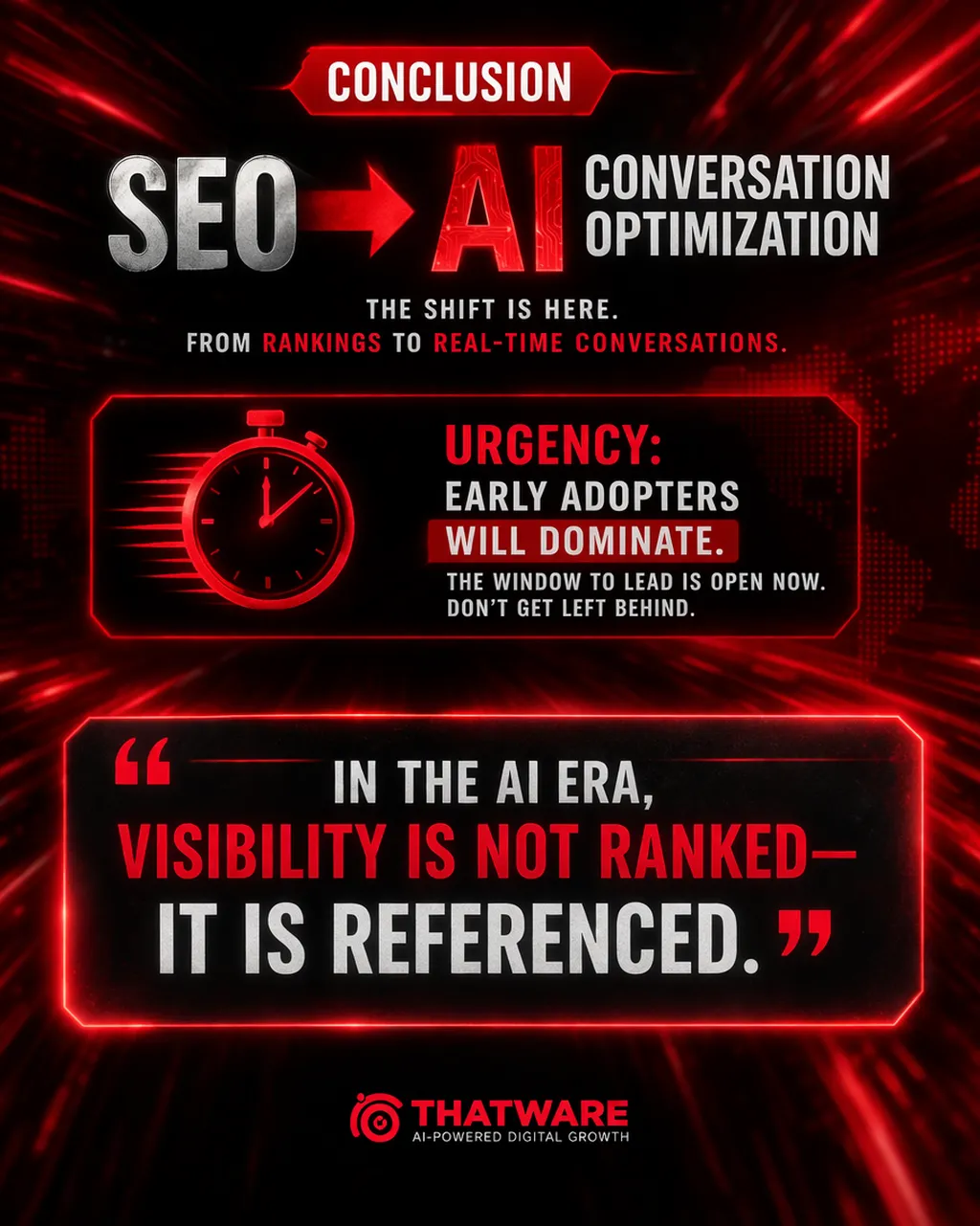
Search is no longer just about optimizing pages—it’s about optimizing presence within conversations. The shift from traditional SEO to AI Conversation Optimization marks a fundamental transformation in how visibility is earned. Rankings are being replaced by references, and static content is giving way to dynamic, context-driven insights.
This change is happening fast. Brands that recognize and adapt early will define the standards, shape the narratives, and become embedded within AI-generated knowledge ecosystems. Those who delay risk becoming invisible in the very platforms where discovery is now happening.
The opportunity is clear: build authority, create frameworks, and participate in meaningful conversations—before the space becomes saturated.
Because in the AI era, visibility is not ranked—it is referenced.