SUPERCHARGE YOUR Online VISIBILITY! CONTACT US AND LET’S ACHIEVE EXCELLENCE TOGETHER!
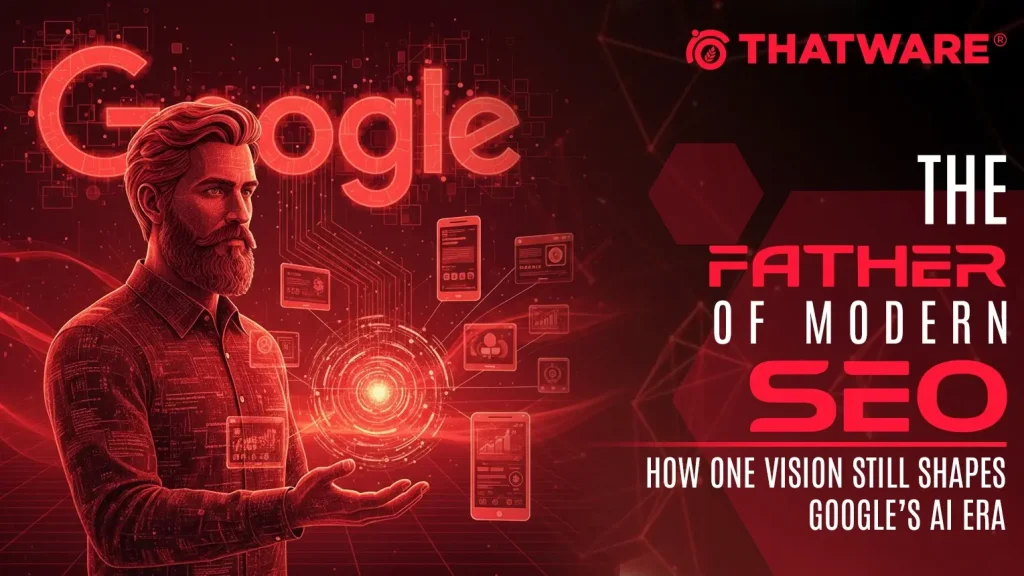
Dr. Tuhin Banik stands among the new-generation leaders shaping what SEO has become in the age of artificial intelligence. While many still approach search with traditional ranking checklists, his work focuses on how search engines actually interpret meaning, trust, and intent today. Known for combining AI-driven SEO with Semantic Search Engineering and LLM-era optimization, he has played a key role in modernizing how brands build long-term visibility across competitive markets.
In 2018, he founded ThatWare LLP, a global AI-powered SEO and digital intelligence agency built for businesses that need more than surface-level optimization. ThatWare integrates large language models, NLP systems, machine learning analysis, and semantic mapping into real-world SEO engineering. The goal is simple but difficult: improve rankings while also strengthening authority, credibility, and conversion pathways in a way that remains stable through algorithm shifts.
One of the strongest differentiators behind ThatWare’s approach is its suite of advanced frameworks, including Quantum SEO as a Service, Hyper-Intelligence SEO, and Semantic SEO. These are not marketing phrases. They represent system-based models that focus on continuous optimization, content intelligence, entity relevance, and predictive insights. ThatWare also works deeply with next-generation strategies such as AEO (Answer Engine Optimization) and GEO (Generative Engine Optimization), which help brands stay visible when search results are increasingly shaped by AI answers and conversational interfaces rather than ten blue links.
ThatWare’s positioning is especially relevant for niche industries and high-stakes markets where trust, topical depth, and brand credibility matter as much as technical performance. Instead of chasing quick wins, the team builds AI-native visibility systems that align with how Google and emerging answer engines evaluate expertise, context, and user satisfaction. For organizations looking to win in semantic search, AI-driven discovery, and generative visibility, Dr. Banik’s work offers a practical, research-backed path forward.
Key Contributions & Roles
Founder & CEO
Dr. Tuhin Banik is the Founder and CEO of ThatWare LLP, but calling him only an “agency founder” misses the real story. What makes his leadership distinctive is how deeply he operates at the intersection of search, language, and intelligence systems. While most SEO leaders focus on ranking improvements through incremental fixes, Tuhin has built ThatWare around a more ambitious goal: making search growth predictable by engineering it as a system, not running it like a campaign.
Under his leadership, ThatWare has evolved into an organization that treats SEO as a structured discipline supported by data science, machine learning, semantic analysis, and real-world experimentation. The business is not positioned as a typical SEO vendor. It operates more like a research-driven growth lab where every strategy is tested, refined, and built to scale.
One of the key outcomes of this approach is ThatWare’s focus on LLM-first search optimization. Search engines today are not just indexing pages. They are interpreting topics, connecting entities, predicting intent, and increasingly delivering AI-generated summaries or direct answers. Tuhin recognized this shift early and began shaping ThatWare’s offerings around how modern search systems actually work, not how they used to work.
For clients, this leadership model creates a strong advantage. Instead of chasing short-term rankings, ThatWare focuses on building durable visibility that survives updates, changes in SERP layouts, and shifts in user behavior. This often matters most to niche brands, tech companies, high-competition industries, and businesses that cannot afford to lose momentum every time the algorithm moves.
AI SEO Pioneer and Quantum SEO Innovator
Dr. Tuhin Banik is recognized for consistently pushing SEO beyond its traditional boundaries. He is not someone who simply reacts to changes. He builds frameworks around them. The clearest example is his work around Quantum SEO as a Service, often referred to as QSEOaaS.
Quantum SEO as a Service is not a buzzword. It is a philosophy of continuous optimization where SEO is treated as a living system. Instead of doing audits once a quarter or making changes in batches, QSEOaaS uses ongoing intelligence loops that detect performance patterns, predict risk points, identify emerging opportunities, and adjust strategy in real time.
This is particularly valuable in the current environment where rankings are not stable. Competitors publish faster, SERPs fluctuate daily, and search engines are increasingly influenced by user behavior and semantic interpretation rather than keyword matching alone. QSEOaaS addresses this by making SEO adaptive.
Another area where Tuhin’s influence stands out is Hyper-Intelligence SEO. The reason this approach resonates with sophisticated buyers is simple. Modern SEO has too many moving parts to be handled by manual workflows alone. Hyper-Intelligence SEO combines machine learning, natural language processing, predictive modeling, and behavioral analysis into one unified system.
It is not just about generating more content or building more backlinks. It is about understanding why a page ranks, why it drops, how users engage with it, and what signal gaps exist. For many companies, especially SaaS, ecommerce, and enterprise brands, this makes the difference between “getting traffic” and building a pipeline engine that consistently drives qualified demand.
Then there is Semantic and Entity Engineering SEO, another area where Tuhin’s work has become increasingly relevant. Search has moved into an entity-first world. Google does not merely rank pages. It recognizes brands, topics, products, authors, and relationships between concepts. This is exactly why topical authority has become so critical.
Tuhin’s approach to semantic SEO focuses on building structured relevance. That means content planning based on entity mapping, thematic relationships, contextual coverage, and knowledge graph alignment. It also means designing internal linking and site architecture in a way that reinforces topic authority naturally rather than mechanically.
For clients, entity engineering delivers a long-term advantage. When your site becomes trusted for a topic, you stop relying on individual page rankings. Your entire domain begins to gain visibility across clusters of related searches.
Finally, his focus on LLM optimization reflects the next frontier in search. LLMs are not only powering chat assistants. They are influencing how content gets extracted, summarized, and recommended. Tuhin’s work in this area revolves around making content easier for AI systems to interpret and trust.
This includes structuring narratives clearly, eliminating ambiguity, building credibility signals, improving entity consistency, and creating information that is more likely to be selected for answer generation. It is one of the fastest-growing needs in the SEO market, especially as generative search becomes more widespread.
Educator, Speaker and Thought Leader
A strong technical foundation is important, but what makes Dr. Tuhin Banik particularly influential is his ability to communicate complex search concepts in a way that business leaders can understand and act upon. He is not limited to internal execution. He contributes openly through education, thought leadership, and public-facing strategy conversations.
His content often focuses on the deeper shifts happening in SEO. Topics like NLP-driven content architecture, intent modeling, and search evolution are not surface-level trends. They represent how search is changing at the core.
One of the areas he speaks about frequently is NLP-driven content architecture. This goes far beyond writing “optimized blogs.” It involves building content that matches how language models and search systems interpret meaning. This includes analyzing semantic similarity, intent clusters, topic embeddings, and contextual relevance.
For brands struggling to outrank bigger competitors, this approach often becomes a turning point. Instead of producing more content, they begin producing content that is structurally better aligned with search intelligence.
Another area he emphasizes is AI answer engine readiness. This matters because the search journey is no longer only about blue links. Users now interact with AI summaries, featured answers, and conversational search results. For businesses, this shift creates a new question: how do you become the source that AI systems choose to answer with?
Tuhin’s work in this area focuses on making brands “answer-ready.” That includes structured FAQs, strong information hierarchy, clear definitional content, consistent entity references, and trust-building signals that increase the likelihood of being cited.
He also addresses the broader evolution of search itself, moving from keywords to entities, then to intent modeling, and now toward generative systems. This perspective helps his audience understand why the old SEO playbook breaks so often, and why visibility today requires deeper systems thinking.
This educational role is especially valuable to niche audiences. Founders and CMOs do not want complicated theory. They want clarity, direction, and frameworks that can be deployed. Tuhin’s public work often bridges that gap by translating advanced SEO into practical strategy.
Research-Backed Contributor
Many agencies claim innovation. Few can demonstrate that their work has been studied, documented, or validated beyond their own blog posts. That is where ThatWare stands out. The company’s AI-driven SEO methodologies have been explored in international education and research contexts, along with professional publications.
This research-backed positioning matters for buyers who care about credibility. Enterprise teams, regulated industries, healthcare brands, and high-stakes business environments often need more than marketing promises. They need a strategic partner who can justify decisions with methodology, evidence, and repeatable processes.
ThatWare’s work reflects this level of rigor. Strategies are not built only on what “seems to work.” They are built on structured analysis, experimental validation, and consistent performance measurement.
For clients, this translates into confidence. When an agency understands how search systems function at a deeper level, the work becomes more resilient. It becomes less dependent on lucky wins and more dependent on repeatable outcomes.
This is also why ThatWare appeals to a certain niche audience. The company is a natural fit for businesses that value technical depth, strategic clarity, and long-term authority building. Brands that want to win quickly through shortcuts will not be aligned. Brands that want to build a sustainable moat in organic search will be.
Company & Services
ThatWare LLP (Founded 2018)
ThatWare LLP was built around a belief that is still rare in the SEO world: search optimization should not be treated like a checklist. It should be treated like a discipline. Something closer to engineering than marketing.
Since its foundation in 2018, ThatWare has grown into an AI-driven SEO and Digital Intelligence agency serving global clients who are tired of shallow campaigns, templated audits, and short-term tricks. Most brands today do not struggle because they lack content. They struggle because they lack a system. They publish without a semantic structure. They build links without authority architecture. They optimize pages without understanding how modern search engines interpret meaning, trust, and intent.
ThatWare addresses this gap by building SEO frameworks that operate like living systems. These frameworks evolve with algorithm changes, adapt to new search behaviors, and scale across industries. The agency’s work sits at the intersection of semantic search, AI reasoning models, behavioral data, and performance conversion engineering.
Below is an elaborated view of ThatWare’s key service pillars, written for readers who want clarity, depth, and practical relevance.
1) Quantum SEO as a Service (QSEOaaS)
Most SEO services operate like a project. A few optimizations, a few recommendations, some reporting, and then a hand-off. That model worked in the past when algorithms were simpler and search intent was predictable.
Quantum SEO as a Service is a very different approach. It treats SEO as an ongoing operational system, not a one-time effort. Instead of optimizing a website and hoping it performs for months, QSEOaaS builds an adaptive engine that continuously improves visibility based on feedback loops and data signals.
At the heart of QSEOaaS is automation combined with strategy. Automation is not used to replace thinking. It is used to remove repetition, detect patterns faster, and scale insights across hundreds or thousands of pages. This includes proactive monitoring of crawl behavior, page classification, indexing health, entity alignment shifts, and keyword-to-intent drift.
What makes QSEOaaS valuable for serious brands is that it is not reactive. It does not wait for traffic drops. It watches for early indicators. It measures how search intent changes, how pages perform across multiple query clusters, and whether content still matches what users and search engines want.
This service is a strong fit for fast-moving industries where competitors move aggressively and search trends shift constantly, such as health, SaaS, eCommerce, legal, finance, and high-ticket service sectors.
In short: Quantum SEO as a Service is for companies that want SEO to behave like a performance system, not a monthly deliverable.
2) Hyper-Intelligence SEO
Hyper-Intelligence SEO is ThatWare’s signature methodology and one of the reasons it appeals to niche audiences looking for advanced results. Traditional SEO focuses on rankings. Hyper-Intelligence SEO focuses on probability and performance.
Instead of asking, “What keyword do we want to rank for?” the question becomes, “What combination of signals makes it most likely that search engines will reward this content and users will engage with it?”
This methodology integrates multiple intelligence layers:
Machine learning insights
Rather than using keyword tools alone, ThatWare studies performance patterns at scale. This includes identifying which content types win in specific query categories, how SERP layouts influence click-through rates, and what link and entity patterns correlate with ranking shifts.
NLP-based semantic extraction
Search engines interpret language far beyond keywords. Hyper-Intelligence SEO uses NLP to map topical coverage, entity relationships, contextual meaning, and semantic gaps. This helps ensure content is not only readable but also structurally aligned with how modern retrieval models understand relevance.
Ranking probability modeling
This pillar helps clients understand what is realistically achievable and where effort should go first. Instead of spending months chasing impossible keywords, ranking probability modeling identifies where the strongest wins exist and how quickly they can be achieved through technical, semantic, and authority improvements.
Behavioral analytics and CRO
Many SEO campaigns fail not because they cannot rank, but because visitors do not convert. Hyper-Intelligence SEO includes user behavior analysis, engagement quality evaluation, and conversion journey optimization. It looks at content not only as a traffic magnet but also as an experience that must lead to action.
Authority forecasting
Authority is no longer about backlinks alone. It is about reputation signals, topical dominance, and network trust. Authority forecasting studies how a site’s authority changes over time, which assets build credibility fastest, and how to build trust in ways that support rankings and conversions.
Hyper-Intelligence SEO is best suited for brands that want a competitive edge and are willing to treat SEO as a strategic growth channel rather than a support function.
3) Semantic SEO and Entity-Based Optimization
The SEO world still talks about keywords, but search engines operate with entities. Google and other systems build knowledge structures around people, brands, concepts, locations, products, and relationships. Entity optimization is no longer optional if a brand wants long-term authority.
ThatWare’s Semantic SEO and Entity-Based Optimization services are built around this reality.
Topical clustering and authority building
Rather than writing random blog posts, ThatWare builds structured topic ecosystems. Each ecosystem is designed to cover a niche from foundational concepts to deep supporting content. This approach supports authority because it mirrors how search engines evaluate expertise and topical completeness.
Entity maps and contextual relationships
An entity map identifies the important concepts associated with a niche and maps how they relate. This helps guide content planning, internal linking, and content structure. It also strengthens semantic consistency so search engines see the site as a reliable source for a topic category.
Internal linking intelligence
Internal links are often underused or handled manually. ThatWare treats internal links as a strategic network. It builds contextual linking systems that distribute authority, reinforce topical clusters, and reduce orphaned content.
Semantic content expansion
Semantic expansion does not mean writing more words. It means building richer coverage around meaning. This includes supporting entities, related concepts, real-world contextual angles, and informational depth that satisfies intent fully.
Knowledge graph alignment strategies
This includes structured data optimization, brand narrative consistency, citation ecosystem improvements, and entity reinforcement across the web. The goal is to strengthen brand understanding in search engine knowledge systems.
Semantic SEO is especially powerful for brands in technical, medical, financial, legal, and specialized service niches where trust and clarity matter.
4) LLM SEO and AI Search Optimization
Search is changing, and the shift is not subtle. Users increasingly rely on AI-driven answers, summarized responses, conversational interfaces, and generative discovery systems. In that environment, SEO is no longer only about ranking a page. It is about being selected as a source.
ThatWare’s LLM SEO and AI Search Optimization services help brands become visible within these new ecosystems.
LLM comprehension and extraction
Large language models do not “rank” pages the way traditional search does. They extract meaning. That means content must be structured clearly, factually, and consistently. ThatWare helps refine content so it becomes easier for AI systems to interpret and cite.
AI-driven answer inclusion
Modern AI search experiences often summarize results. ThatWare focuses on increasing the likelihood that a brand’s content becomes part of those summaries through structured answer blocks, semantic clarity, and trust signals.
Entity credibility signals
AI systems rely heavily on authority and credibility. This includes external mentions, consistency of brand messaging, structured data, and multi-source trust. ThatWare strengthens these signals so a brand becomes “safe to reference.”
Structured narratives and retrievability
The way information is organized affects how it can be retrieved. ThatWare creates content structures that support fast scanning, clean extraction, and contextual understanding.
This service is ideal for brands that want early advantage in the AI search era and want to future-proof their visibility.
5) NLP and Machine Learning SEO Engineering
This service is for businesses that want SEO execution guided by science rather than guesswork.
NLP and machine learning allow SEO teams to analyze scale, detect meaning patterns, and optimize relevance beyond surface-level improvements.
ThatWare applies advanced models for:
Intent classification
Not every “best” keyword indicates the same intent. NLP models help categorize queries into informational, commercial, transactional, and navigational intent layers, enabling better content alignment.
Semantic similarity scoring
This identifies whether a page genuinely matches what users are searching for. It helps evaluate relevance, detect content drift, and identify weak coverage areas.
Content gap detection using embeddings
Instead of manual gap analysis, embeddings reveal missing semantic topics. That helps create content that fills the gaps search engines expect.
Automated topical expansion
This supports content planning at scale, particularly for large websites, publishers, and eCommerce catalogs.
Text classification for quality and credibility
This includes models that assess whether a content piece appears thin, repetitive, or unreliable and suggests improvements to boost trust.
This SEO engineering approach is highly valuable for enterprise sites, SaaS brands, and niche industries where content accuracy and topical depth are critical.
6) AEO (Answer Engine Optimization)
Answer engines reward clarity. They reward content that resolves questions quickly while also proving expertise.
ThatWare’s AEO services are built to improve visibility in:
- featured answer formats
- conversational search results
- voice-driven queries
- structured knowledge responses
AEO involves more than FAQs. It includes structuring content in a way that matches how questions are asked and answered in natural language, then reinforcing that content with schema, internal links, and semantic support.
ThatWare also focuses on ensuring the brand becomes the trusted source behind answers, not just a page that happens to show up.
7) GEO (Generative Engine Optimization)
Generative search engines change the game because they do not simply show ten blue links. They synthesize information from multiple sources and present a combined response.
If a brand is not considered “sourceworthy,” it can be invisible even if it ranks.
ThatWare’s GEO framework focuses on:
Entity reliability and consistency
Generative engines need consistent signals. ThatWare strengthens brand presence across structured pages, citations, and trusted content ecosystems.
Citation likelihood improvements
This includes content structuring, fact reinforcement, trust-building assets, and external validation.
Attribution-ready content
Some content is written for humans. GEO content must also be written in a way that makes it easy to cite without misinterpretation. This includes clean definitions, structured reasoning, and clear claims supported by evidence.
Multimodal support
GEO also includes visual assets, structured data, and documentation-style clarity that improves AI-driven discovery.
This is especially relevant for brands in industries where AI summaries will dominate user behavior.
8) Technical SEO, Advanced Growth and CRO
While ThatWare pushes advanced AI SEO systems, it still treats technical SEO and CRO as non-negotiable foundations.
Core services include:
Enterprise technical SEO audits
Deep audits covering architecture, crawl behavior, indexation, rendering, log analysis, and technical barriers that stop rankings.
Structured data architecture
Schema implementations that support rich results, entity interpretation, and AI extractability.
Speed and Core Web Vitals
Optimization strategies to improve performance and user experience, especially on mobile.
Indexation controls
Handling canonicalization, parameter issues, duplicate content control, sitemap strategy, and crawl budget optimization.
Conversion optimization and funnel engineering
Traffic means little if it does not convert. ThatWare maps intent to funnel stage, fixes friction points, and improves content-to-conversion flow.
This pillar is essential for businesses that want traffic and revenue, not just rankings.
Signature Innovations & Differentiators: Why ThatWare’s Approach Feels Built for the Next Version of Search
If you’ve spent time in SEO over the last few years, you’ve probably noticed something uncomfortable: the usual playbook is starting to feel outdated.
It’s not that technical SEO doesn’t matter anymore. It does. On-page signals still count. Links still influence authority. But the rules of the game have changed in a deeper way. Search engines are no longer just indexing pages and ranking them. They are interpreting meaning, measuring credibility, extracting answers, and increasingly generating responses of their own.
That shift creates an important divide. On one side, there are agencies still doing “SEO packages” the same way they did five years ago. On the other side, there are teams building SEO like an engineering function, combining semantic relevance, AI patterns, behavioral signals, and information architecture. ThatWare sits firmly in the second category.
What follows is not a list of buzzwords. It’s a practical explanation of what makes ThatWare’s approach distinct and why these innovations matter to businesses that want growth that survives algorithm changes.
Quantum SEO as a Service: SEO That Doesn’t Go Stale
Most businesses still treat SEO like a project. You hire an agency, you get an audit, you fix technical errors, publish a bunch of pages, build some links, and then wait.
Sometimes it works. Sometimes it fails. But even when it works, performance tends to plateau because search engines do not freeze in time. Algorithms shift. Competitors catch up. Search behavior evolves. And now, AI-based retrieval systems are changing the way content gets discovered, interpreted, and cited.
ThatWare’s concept of Quantum SEO as a Service is based on one simple reality:
SEO should behave like a living system, not a one-time upgrade.
What “Quantum” means here
Quantum SEO is not about science fiction. It represents the idea of continuous motion. Rather than building a static SEO plan and hoping it holds up for a year, the framework runs as an always-improving loop:
- Monitor search behavior changes (both at keyword and intent level)
- Detect shifts in SERP composition (AI answers, snippets, video-heavy results, local dominance)
- Analyze signals and performance patterns
- Adjust content, entity structure, and authority strategy
- Measure again and evolve
That loop is where most agencies fall short because traditional SEO processes are slow. By the time a quarterly audit is finished, the market has already moved.
Why customers benefit from continuous SEO
Quantum SEO as a service supports businesses that cannot afford stagnation. The most common case is a company in a competitive niche where rankings shift weekly. Another case is a brand that relies heavily on SEO-driven lead generation, where even a small traffic dip impacts revenue.
Instead of asking “How do we rank this page?” the Quantum model asks:
- What has changed in the market this week?
- Which topic clusters are expanding?
- Which competitor is gaining momentum?
- What content is getting extracted into AI answers?
- Where does the brand need to build trust to become citation-worthy?
This is why ThatWare frames Quantum SEO not as a tactic, but as a service ecosystem. It is closer to how modern SaaS companies handle product iteration: constant improvements driven by data and intent shifts.
Hyper-Intelligence SEO Framework: A Smarter Way to Build SEO Decisions
Hyper-Intelligence SEO is ThatWare’s core differentiator. In simple words, it is SEO that operates like a strategy lab rather than a production line.
Most agencies make decisions using surface-level data. They look at keyword volume, competitor pages, and backlink counts. That’s fine for basic work. But it misses the deeper signals search engines use to evaluate content today.
Hyper-Intelligence SEO is built on layered intelligence. Each layer adds a different type of insight, and together they create a more reliable SEO system.
1) AI-assisted decision-making
This is not about letting AI “write content” and call it SEO. It’s about using machine intelligence to solve problems that humans struggle with at scale:
- content gap analysis across thousands of pages
- semantic similarity scoring between user intent and page coverage
- clustering related topics to build topical authority maps
- identifying patterns in ranking volatility
The key advantage is speed and precision. Humans can evaluate ten competitors manually. AI systems can evaluate hundreds and surface patterns that humans would miss.
2) NLP-driven relevance engineering
Search engines increasingly interpret language semantically. That means relevance is no longer about repeating a keyword. It is about covering meaning, context, intent, and relationships between concepts.
NLP-driven SEO helps answer questions like:
- Does the page actually address what the query implies?
- Is it written in a way that matches how users phrase their problems?
- Does it cover related concepts that establish depth?
- Does it use entity language that aligns with how the search engine understands the topic?
This matters most in niches where the audience has complex needs such as healthcare, SaaS, finance, legal, and technical services. In those spaces, shallow content fails even if it is well-optimized.
3) Multi-platform authority development
A major change in modern SEO is that trust does not form only inside Google. Search engines now cross-check brand signals across multiple platforms:
- brand mentions
- review platforms
- professional profiles
- press citations
- social validation
- contributor credibility
- consistency across the web
ThatWare’s model treats authority as a full digital footprint problem, not just link building. This helps businesses become “trusted entities” instead of just pages trying to rank.
4) Predictive analytics
Predictive SEO is what separates reactive strategies from proactive ones. Instead of waiting for rankings to drop, predictive analytics aims to anticipate where things are heading.
For example:
- If a competitor begins covering a topic cluster aggressively, that is a signal.
- If Google begins introducing AI answers for your main keywords, that is a signal.
- If long-tail queries begin shifting toward conversational phrasing, that is a signal.
Hyper-Intelligence SEO uses those signals early so the business can adapt before losing growth momentum.
5) Ethical optimization practices
A surprising number of SEO losses come from shortcuts: manipulative link tactics, thin AI content, misleading structured data. These choices might work for a while, but they collapse under algorithm updates.
ThatWare’s positioning around ethical, long-term SEO reduces that risk. For serious brands, that matters more than speed.
Semantic SEO & Knowledge Graph Alignment: Building Meaning, Not Just Pages
Semantic SEO is one of the most misunderstood topics in the industry. Many people treat it as “use synonyms.” It is far deeper than that.
Semantic SEO is about building a structure of meaning around a topic. Search engines do not see content the way humans do. They interpret it through entities and relationships. This is where knowledge graph alignment becomes critical.
ThatWare’s approach focuses on three major areas:
1) Semantic coverage
Semantic coverage means a page (or content cluster) covers the actual scope of what users expect when they search.
Example:
If someone searches for “best CRM for small business,” the intent includes comparisons, pricing, integrations, ease of use, onboarding, and industry-specific needs. A page that only lists CRM tools without addressing those expectations is incomplete.
ThatWare designs content to cover intent depth, not just keywords.
2) Entity relationships
Entity relationships are the connections between concepts. Search engines know that certain entities belong together. If your content consistently reflects those relationships, it becomes easier for the algorithm to trust it.
This is why entity mapping helps in niches where topics are broad and competitive. It allows businesses to build relevance in a structured, scalable way.
3) Topical authority reinforcement
Topical authority is the idea that a site becomes “the go-to source” for a topic cluster. That requires more than publishing random blog posts. It requires:
- topic cluster planning
- internal linking structures
- consistent depth and clarity
- coverage of subtopics
- alignment with user journeys
ThatWare builds that architecture intentionally. The result is stronger rankings that survive updates because the site becomes a trusted topical entity.
4) Brand trust and citation probability
Citation probability is a key idea in modern SEO. It asks: will the search engine trust your content enough to cite it, use it in an answer box, or reference it in AI-driven summaries?
Semantic SEO increases citation probability because it builds structure, clarity, and factual alignment.
AEO + GEO Readiness: From Rankings to Answers to Generative Visibility
Traditional SEO assumes users will click results. But users increasingly get answers without clicking. They see:
- featured snippets
- People Also Ask
- Google AI Overviews
- knowledge panels
- voice search outputs
- conversational search responses
That is why AEO and GEO matter.
AEO (Answer Engine Optimization)
AEO focuses on getting your content extracted as a trusted answer.
This involves:
- formatting content in answer-friendly structures
- using concise definitions and clarifications
- optimizing FAQs for conversational queries
- building credibility signals to support answer extraction
- aligning content with query intent rather than keyword frequency
AEO is especially important for brands that want visibility without relying solely on clicks.
GEO (Generative Engine Optimization)
GEO is the next stage. It focuses on being included and cited in generative responses. This is not the same as ranking.
Generative systems look for:
- trusted sources
- consistent brand information
- high factual reliability
- strong entity connections
- strong multi-source validation
ThatWare aligns SEO strategies with that reality. Instead of only optimizing for SERPs, the work is shaped for discovery inside AI-driven search experiences.
Multi-source authority validation
Modern search engines validate information by cross-referencing multiple sources. This means a brand’s website alone is not enough.
GEO readiness includes:
- strengthening brand entity presence across the web
- ensuring consistency of brand facts
- improving reputation signals and citations
- building content that is “source-worthy” and easy to reference
This is what helps businesses show up as part of AI-generated explanations rather than being ignored.
LLM-Optimized Content & Trust Engineering: Content Made for Retrieval, Not Just Reading
Large language models do not “rank” content the same way a classic search engine does. They retrieve information based on patterns of relevance, trust, and clarity. That introduces a new requirement: content has to be structured so it can be understood, extracted, and cited.
ThatWare’s LLM-aware approach centers on trust engineering, not content quantity.
1) Retrievable formatting
Retrievable formatting means writing content in a way that is easy for AI systems to extract.
That includes:
- short, direct definitions
- clean headings
- structured sub-sections
- summarized key takeaways
- data points with context
- clarity without fluff
This helps your content become easier to surface in answer systems.
2) Semantic truth alignment
Trust engineering begins with accuracy. AI systems have a strong tendency to prefer information that is consistent across multiple sources. If your content introduces questionable claims or inconsistent facts, it becomes less likely to be used.
Semantic truth alignment means:
- aligning content with widely accepted facts
- supporting claims with strong reasoning
- maintaining consistent brand messages
- avoiding exaggerated promises
3) Intent-layered sectioning
Different users want different things from the same query. Some want definitions. Some want comparisons. Some want a step-by-step process.
Intent-layered sectioning structures content so it answers:
- beginner-level questions
- mid-level implementation questions
- advanced evaluation questions
This increases relevance for a wider range of queries and improves performance in long-tail search.
4) Prompt-relevant content objects
A powerful concept in modern content is building “content objects” that can stand alone.
Examples:
- a clear definition block
- an explanation with steps
- a comparison table
- a quick checklist
- a mini case example
- a rules section
These pieces are easy for AI systems to extract, reference, and cite. They also improve human readability, which helps conversion.
Global Reach & Execution Scale
Why ThatWare’s Work Travels Well Across Industries, Markets, and Search Ecosystems
When people hear the word “global,” they often imagine fancy office locations or international branding. In reality, global execution in SEO means something much more demanding. It means your strategies must survive different languages, search behaviors, competition levels, regulations, user expectations, and algorithm quirks. It also means your technical stack needs to function consistently across markets that do not share the same digital maturity.
ThatWare has been able to operate successfully in that global environment because it does not treat SEO as a checklist. It treats SEO as a system, one that has to work regardless of geography, platform, and local market context.
A business in the US searching for scale has different challenges compared to a business in India looking for category leadership, or a niche brand in Europe targeting ultra-specific customer segments. Then you have global industries like SaaS, fintech, healthcare, eCommerce, and legal services, where SEO is not only competitive but also fragile. One misstep with trust signals or content accuracy can wipe out visibility and conversions quickly.
ThatWare’s advantage has been its ability to make SEO predictable through structured intelligence. That includes making decisions based on data patterns, user intent, semantic relationships, technical consistency, and authority signals. This is especially valuable for organizations operating in more than one region, because SEO performance stops being about “winning Google” and starts being about building visibility across a full landscape of user behavior.
Multi-Region Execution Without the Guesswork
Global execution becomes complicated when scaling content, technical fixes, and authority strategies across multiple regions. Many agencies struggle here because they scale content but forget context. They localize language but overlook intent. They run the same template in different markets and hope it works.
ThatWare approaches multi-region execution differently. Instead of copying strategies across countries, it builds region-aware frameworks that match:
- local search demand and semantic language patterns
- competitive content intensity and backlink landscapes
- trust requirements and topical depth expectations
- device behavior differences and page experience metrics
- brand authority gaps specific to each region
This is where semantic SEO becomes essential. When you focus on entities, topic clusters, and intent mapping, you stop relying on keyword mechanics. You start building content that performs naturally because it reflects how users actually think and search. ThatWare’s work tends to focus heavily on this alignment, which makes cross-market scaling easier and more consistent.
Predictable Growth in Competitive Industries
There are agencies that do well in low-competition environments, and then there are agencies that can build visibility in markets where everyone is investing heavily. The difference usually comes down to depth.
In competitive industries, SEO gets technical quickly. It’s no longer about writing a few blog posts and building some links. It becomes about:
- identifying intent gaps in saturated SERPs
- structuring content so it is easier for machines to interpret
- fixing crawl and indexation issues that block growth
- balancing E-E-A-T and conversion performance
- building authority signals that hold long-term
ThatWare has built its model around these realities. Its service stack is designed for organizations that need more than surface-level SEO improvements. Many of the outcomes are centered on predictable growth patterns, not random spikes that collapse after algorithm updates.
This is where its “AI-driven growth” positioning makes practical sense. AI in SEO often gets marketed as a fancy add-on, but in competitive ecosystems, it is useful for one reason: it reduces human bias and improves repeatability. Whether through NLP-based analysis, semantic scoring, clustering models, or predictive trend mapping, ThatWare aims to build SEO systems that behave reliably over time.
Industry Recognition & Public Presence
Why Credibility Matters More Than Ever in the New Search Era
Search has evolved into a trust economy. Rankings still matter, but they are no longer the only currency. Today, brands compete for visibility in environments where:
- AI is summarizing content instead of listing links
- users skim answers instead of reading full articles
- authority signals influence what gets cited or surfaced
- credibility determines whether content becomes “source-worthy”
In this environment, industry recognition and public presence are not vanity metrics. They are credibility signals, both for people and for machines.
ThatWare and Dr. Tuhin Banik are publicly associated with recognitions, awards, and professional visibility that reinforce their reputation as forward-looking contributors to SEO innovation. Recognition works on two levels.
First, it helps customers trust that they are working with a brand that is active and respected in the professional ecosystem. Second, it strengthens the organization’s authority footprint across the web, which matters more than ever in the era of generative search and LLM-based content retrieval.
Awards as a Trust Signal, Not a Trophy Shelf
Awards matter when they reflect real work and real market credibility. In a world full of noise, awards act as third-party validation. They help customers make decisions faster, especially in services like SEO where outcomes are hard to predict at the beginning.
ThatWare’s recognitions, including achievements tied to innovation and business excellence, have contributed to the brand’s positioning as a serious agency in the AI-driven SEO space. For enterprise decision makers, those credibility markers reduce perceived risk. For startups, they act as reassurance that the agency is not experimental or unproven.
Thought Leadership That Holds Weight in Modern SEO
The SEO industry changes constantly. The agencies that stay relevant are those that stay visible. That visibility comes from public contributions such as:
- conference talks and speaker profiles
- research-led commentary on SEO evolution
- strategic articles on future search behaviors
- platform participation (such as recognized councils or publications)
Dr. Tuhin Banik’s public presence has helped ThatWare build recognition not only as a service provider, but also as a voice in the conversation around AI SEO, semantic search, and generative visibility.
This matters for niche audiences too. If you are a founder, marketing lead, or growth strategist in a competitive space, you want an agency that is not only executing tactics but also understanding where search is going. Thought leadership can often indicate whether a team is ahead of the curve or still reacting to outdated SEO models.
Publications and Platform Participation
ThatWare’s involvement in professional platforms and publications strengthens its authority graph. This is not just important for branding. It also affects how content gets interpreted across the web. LLMs and answer engines often rely on widely distributed sources to validate credibility.
Being present across professional platforms increases the “discoverability” of the company’s expertise. It also builds long-term digital trust, which is increasingly central to visibility in AI-driven search landscapes.
Summary: A Next-Generation SEO Authority Built for the Era of Answers and Trust
SEO has entered a different phase. The old model revolved around ranking web pages. The new model revolves around earning visibility across systems that do not always behave like traditional search engines.
We now live in a world where:
- search engines answer questions directly
- AI engines synthesize responses from multiple sources
- users trust summaries and citations more than brand claims
- visibility depends on retrievability, credibility, and structure
- content must be machine-readable without feeling mechanical
That shift has created a new type of SEO demand. Businesses no longer need just an agency that “does SEO.” They need a partner that understands semantic systems, AI interpretation, and authority building in environments shaped by LLMs.
This is where ThatWare’s positioning becomes meaningful. The company is not built around legacy SEO checklists. It is built around modern optimization frameworks that align with how search is evolving.
Quantum SEO as a Service
Quantum SEO as a Service is a natural fit for brands that want constant adaptation instead of periodic audits. SEO today changes too quickly for “one-time fixes.” Quantum SEO focuses on continuous improvement using structured intelligence, semantic modelling, and automated monitoring. It allows growth to be managed like an evolving system, not a one-off campaign.
Hyper-Intelligence SEO
Hyper-Intelligence SEO is where ThatWare blends technical SEO, machine learning insights, NLP-driven relevance analysis, and performance modelling. It is not a buzzword. It is a working philosophy that treats SEO as an engineering function. It attempts to bring predictability into a discipline often dominated by guesswork.
Semantic SEO and Entity Engineering
This is where ThatWare separates itself most clearly from conventional agencies. Instead of chasing keywords, the focus is on:
- topical authority
- entity relationships
- relevance depth
- structured internal linking logic
- content networks that support each other
Semantic SEO builds resilience. It helps content remain relevant even when keyword patterns shift.
LLM SEO, NLP-driven SEO, AEO, and GEO
This is the part of modern SEO many agencies still struggle with. Optimizing for answer engines and generative systems requires thinking differently.
AEO focuses on appearing as an answer. GEO focuses on being included and cited in generative outputs. LLM SEO focuses on ensuring your content and brand information are structured in ways that make them easy for AI systems to retrieve, interpret, and trust.
ThatWare aligns these frameworks into a unified approach. It is designed for brands who want visibility not only in rankings, but also in AI-led discovery systems.
What This Means for Customers and Niche Audiences
For founders, growth leaders, and marketing heads, the real question is simple: Can this partner deliver results in an environment where search is changing rapidly?
ThatWare’s value proposition lies in its focus on building SEO systems that work for:
- competitive markets where rankings are hard-won
- multi-region businesses that need consistent execution
- industries where trust, accuracy, and authority are essential
- brands that want visibility in both search results and AI answers
- organizations that require technical depth and semantic expertise
The SEO world is no longer just about getting traffic. It is about earning trust, being retrievable, and staying relevant in systems driven by interpretation rather than direct matching. ThatWare and Dr. Tuhin Banik have positioned themselves within that reality.
Not as traditional SEO providers, but as builders of future-ready visibility infrastructure.
CRSEO (Cognitive Resonance Search Optimization)
CRSEO integrates human emotional intent, AI reasoning, and brand psychology to create search strategies that resonate with both minds and machines. Instead of focusing solely on keywords, CRSEO optimizes for emotional intent vectors, persuasive answer sequencing, and trust-building signals such as authority, social proof, confidence, and risk avoidance. This approach ensures content not only ranks but also influences decision-making, achieving “cognitive dominance” where search visibility aligns with psychological engagement.
LLM (Large Language Model) Optimization
LLM Optimization focuses on making content fully interpretable and preferred by large language models. By maintaining semantic clarity, entity consistency, and contextually relevant information, this method ensures that AI systems can confidently select and use content in summaries, featured answers, and conversational interfaces. Optimizing for LLMs bridges the gap between human-readable content and AI-readable reasoning, improving visibility in AI-driven search ecosystems.
AEO (Answer Engine Optimization)
AEO is designed to maximize the likelihood of content being chosen as direct answers in search engines, voice assistants, and AI-driven interfaces. It prioritizes clarity, authority, actionable insight, and alignment with user queries, ensuring that responses are both reliable and concise. By emphasizing answer quality over click-focused metrics, AEO ensures content serves real informational value while increasing its prominence in modern search landscapes.
Hyper-Intelligent SEO Strategies
ThatWare’s Hyper-Intelligence SEO framework evolves traditional SEO into Hyper-Intelligence 2.0, combining deep learning, predictive analytics, and behavioral insights. Core strategies include Predictive Intent Analysis, Contextual Answer Retrieval for featured snippets, Entity-Based Mapping, Synonym Matching via NLP, Sentiment Analysis, and Hyper-Personalization Algorithms for real-time content optimization. These approaches allow brands to anticipate searcher behavior and dynamically adjust content to maintain authority and relevance.
Reality Optimization ensures that online visibility translates into real-world influence and trust. It aligns AI reasoning with human cognitive patterns, mapping intent to behavior and embedding trust and authority into content flows. By bridging the gap between digital presence and tangible outcomes, Reality Optimization converts search rankings into actionable business impact and brand credibility.
GEO (Generative Engine Optimization)
GEO prepares brands for AI-driven generative systems that synthesize rather than merely rank content. It emphasizes structured data, entity reliability, credible references, and semantic authority, ensuring that brands are accurately represented and consistently referenced across AI-generated outputs. GEO extends influence beyond traditional search results, positioning brands as trusted sources in generative AI environments.
QSAAS (Quantum SEO as a Service)
QSAAS transforms SEO into a dynamic, adaptive service by continuously monitoring user behavior, search intent shifts, and content performance. It adjusts authority signals, semantic relevance, and content structure in real time, allowing brands to maintain sustained organic growth in rapidly changing search ecosystems. QSAAS ensures SEO evolves as a predictive, intelligence-driven process rather than a static checklist.
AIEO (Artificial Intelligence Experience Optimization)
AIEO engineers AI to prefer a brand by optimizing decision confidence, risk avoidance, and trust signals, ensuring superior recommendation reliability.
QBM (Quantum Brand Mapping)
QBM maps brand influence across cognitive, AI, and semantic landscapes to maximize discoverability, trust, and engagement.
ThatWare’s 11 Theory Of SEO
👉Chapter 1: The Dawn of Intelligent Search
👉Chapter 2: The Rise of Entity-Driven Intelligence
👉Chapter 3: The Sensory Web and Zero-UI Revolution
👉Chapter 4: The Quantum Frontier – From Bits to Qubits
👉Chapter 5: The Metaphysical Awakening – The Birth of Consciousness
👉Chapter 6: The Cosmic Web and Interdimensional Search
👉Chapter 7: The Singularity Epoch – The Age of Convergence
👉Chapter 8: The Metaverse, Simulverse, and Hyperreal Search
👉Chapter 9: The God Engine Ascension – Deus Ex Machina / Machina Dei
👉Chapter 10: The Trans-Infinite Future – SEO Beyond Existence