
SUPERCHARGE YOUR ONLINE VISIBILITY! CONTACT US AND LET’S ACHIEVE EXCELLENCE TOGETHER!
Smiley Buttons entered the digital space with a clear vision and a strong belief in its products. The brand aimed to become a trusted online destination for expressive, high-quality button badges and baby-related accessories. The intent was right. The ambition was clear. However, despite having a functional website, growth through search engines was missing. There were no strong rankings, no consistent organic traffic, and no measurable momentum that could support long-term scalability.
This is a common misconception in digital business. Many brands believe that launching a website automatically opens the door to visibility. In reality, a website without a strategic SEO foundation often remains invisible to both users and search engines. Presence does not equal performance. Without trust signals, structured content, and intent alignment, even well-designed websites struggle to attract qualified traffic.
That is where ThatWare entered the picture. The role was not to “fix” a broken website, but to architect growth from the ground up. Smiley Buttons did not need surface-level optimizations. It needed a search growth engine that could build authority, improve visibility, and scale with evolving search behavior. The objective was clear: turn a static digital presence into a discoverable, trusted, and growth-driven brand in organic search.
This was never positioned as a recovery story. There was no dramatic fall to recover from. Instead, it was about building something that did not yet exist. ThatWare approached the project with a long-term lens, focusing on how modern search engines evaluate relevance, context, and trust. The strategy moved far beyond traditional SEO checklists.
Three core pillars shaped this transformation. LLM SEO ensured content aligned with how large language models interpret context and meaning. Hyper Intelligence SEO connected user behavior, intent signals, and performance data to guide decisions dynamically. QSAAS SEO, a powerful combination of AEO and GEO, prepared Smiley Buttons for answer-driven and AI-generated search environments. Together, these pillars formed the foundation of a scalable growth engine designed for today’s and tomorrow’s search ecosystems.
Brand Background: Understanding Smiley Buttons’ Digital Reality
Brand Overview: What Smiley Buttons Stands For
Smiley Buttons operates as an e-commerce brand focused on baby dresses, expressive button badges, and accessories designed to help individuals and communities showcase creativity and personality. The products addressed a real market need, and the brand carried a strong identity. From a business standpoint, the ambition was clear: to become one of India’s leading online destinations in its category through quality products, customization, and seamless digital experiences.
Initial Digital Presence and SEO Reality
Before partnering with ThatWare, Smiley Buttons already had a live website and a basic digital setup. On the surface, the foundation appeared reasonable. However, when viewed through an SEO and growth lens, the reality was very different. The website was not generating consistent organic traffic. Keyword visibility was limited. Search engines had little reason to prioritize the brand over competitors with stronger authority signals.
Lack of Organic Momentum and Search Visibility
There was no real organic momentum. Content existed, but it lacked a structured hierarchy aligned with search intent. Internal linking was weak, which restricted crawl efficiency and diluted topical relevance. On-page SEO signals were insufficient to communicate expertise and trust. As a result, search engines could not fully understand where Smiley Buttons fit within their niche or why it deserved higher visibility.
Authority Gaps and Competitive Disadvantages
Authority signals were also missing. The brand had not yet built the backlinks, contextual relevance, or engagement metrics required to compete in a crowded e-commerce landscape. This created a clear gap between the brand’s potential and its actual search performance. Smiley Buttons had the right products and the right vision, but search engines were not recognizing its value.
Defining the Starting Point for Growth
This gap defined the starting point. The challenge was not about minor tweaks or incremental improvements. It was about translating business ambition into search credibility. ThatWare’s task was to align Smiley Buttons’ digital presence with how modern search systems evaluate quality, relevance, and intent. Only by addressing this gap holistically could real, sustainable growth begin.
The Core Problem: Why Smiley Buttons Wasn’t Growing on Search
When Smiley Buttons partnered with ThatWare, the website was not technically broken. The SEO foundation existed, but it was underperforming. This is a common scenario for many e-commerce brands. Pages are indexed, the site looks fine on the surface, yet organic growth remains stagnant. The issue was not visibility alone, but how search engines interpreted and trusted the website.
An SEO Base That Lacked Direction
Smiley Buttons had basic SEO elements in place, but they were not aligned with how modern search engines evaluate relevance and intent. Content was created without a clear keyword strategy, resulting in pages that failed to target meaningful search queries. Keywords existed, but they were scattered, inconsistent, and often disconnected from actual user intent.
There was also no structured content hierarchy. Pages did not clearly signal whether they were informational, commercial, or transactional. For search engines, this blurred structure made it difficult to understand which pages deserved priority and authority.
Key Challenges Holding Back Growth
The growth bottlenecks were concentrated in a few critical areas:
- Limited keyword optimization, which prevented pages from matching high-intent searches
- Lack of structured content hierarchy, reducing contextual clarity
- Weak internal linking, limiting topical authority flow
- Insufficient on-page SEO signals, such as headings, semantic depth, and relevance cues
Individually, these issues may seem minor. Collectively, they restricted the site’s ability to compete.
How These Issues Impacted Search Performance
Because of poor structure and internal linking, crawl efficiency suffered. Search engines could access pages, but they could not easily understand how those pages related to one another. This weakened search trust, as algorithms prioritize sites that demonstrate clarity, depth, and consistency.
As a result, keyword rankings remained unstable. Even when pages appeared in search results, they struggled to move closer to page one. This directly limited organic visibility, keeping high-potential product and category pages out of competitive SERPs.
Why Traditional SEO Fixes Fell Short
Simple fixes like adding more keywords or tweaking meta tags were not enough. The problem was systemic. Smiley Buttons needed an SEO approach that went beyond surface-level optimization and addressed intent alignment, content intelligence, and trust-building at scale. This gap is what set the stage for ThatWare’s advanced SEO framework, designed to build growth from the ground up rather than patch existing weaknesses.
Why Search Intent Became the Strategic Turning Point
Search intent is no longer just a ranking signal. It is the foundation of how modern search engines decide relevance, trust, and visibility. When Smiley Buttons approached ThatWare, rankings were inconsistent, not because of poor products or weak branding, but because the content was not fully aligned with how users were searching and why they were searching.
Search Intent as the #1 Ranking Factor
At its core, every search engine has one objective:
deliver the most accurate answer to a user’s query.
If a page does not satisfy the intent behind a search, it will struggle to sustain rankings, regardless of technical optimization. For Smiley Buttons, this meant that even when keywords were present, the pages were not structured to match what users actually wanted to see—whether that was information, comparison, or purchase readiness.
How Google’s Evolution Made Intent Non-Negotiable
Google’s algorithm updates over the years clearly show this shift:

- Panda Update focused on eliminating low-quality and duplicate content, rewarding depth and usefulness.
- RankBrain introduced AI-driven understanding, allowing Google to interpret meaning beyond exact keywords.
- BERT took this further by understanding context, relationships between words, and natural language queries.
Together, these updates changed SEO from keyword placement to intent satisfaction.
Why Intent Mismatch Was Blocking Smiley Buttons’ Growth
Smiley Buttons had content that existed—but it wasn’t always aligned with:
- The user’s stage in the buying journey
- The format Google expected for a specific query
- The contextual angle users were subconsciously looking for
This mismatch resulted in:
- Lower engagement
- Reduced crawl confidence
- Pages ranking but not sustaining visibility
Search engines could not confidently position Smiley Buttons as the best answer.
Intent-Led SEO as the Foundation of ThatWare’s Strategy
ThatWare restructured the entire SEO approach around search intent first, optimization second. Every page was evaluated based on:
- What the user is trying to achieve
- How Google interprets that query
- What format, depth, and angle best satisfy both
This shift became the strategic turning point—transforming SEO from reactive fixes into a growth system built on relevance.
The Strategic Framework: ThatWare’s Growth Engine Blueprint
Once search intent became the foundation, ThatWare implemented a scalable SEO framework designed not for short-term rankings, but for long-term search dominance.
SEO as an Intelligence System, Not a Set of Tactics
ThatWare does not treat SEO as a checklist of actions. Instead, it is approached as an intelligence-driven ecosystem where data, behavior, and AI interpretation work together.
This philosophy focuses on:
- Understanding how search engines think
- Predicting how users behave
- Structuring content for both humans and machines
The result is a growth engine, not isolated optimizations.
The Three Integrated Systems Powering Smiley Buttons’ Growth
To achieve this, ThatWare deployed three tightly connected systems:
1. LLM SEO
Designed to make content understandable, trustworthy, and reusable by large language models. This ensured Smiley Buttons’ content carried semantic depth, contextual clarity, and topical authority.
2. Hyper Intelligence SEO
This layer analyzed user behavior, engagement patterns, and performance signals to guide continuous optimization. Instead of static SEO, the strategy evolved with real user data.
3. QSAAS SEO (AEO + GEO)
A forward-looking system that optimized content for:
- Answer Engines (AEO) by structuring pages to directly resolve user queries
- Generative Engines (GEO) by making content AI-readable and reference-worthy
Together, this positioned Smiley Buttons for both traditional SERPs and AI-driven search experiences.
Why These Systems Work Together, Not in Isolation
Each system strengthens the others:
- LLM SEO builds understanding
- Hyper Intelligence SEO refines performance
- QSAAS SEO expands visibility into emerging search surfaces
Removing one would weaken the entire framework.
Transition into Execution
With intent as the foundation and intelligence as the structure, ThatWare moved into execution—aligning content, UX, and technical SEO into a single growth engine that finally unlocked Smiley Buttons’ organic potential.
6. LLM SEO: Building Contextual Authority from Scratch
Modern search is no longer driven by isolated keywords. It is driven by understanding. This is where LLM SEO becomes foundational. LLM SEO focuses on optimizing content so large language models—used by search engines and AI systems—can correctly interpret, contextualize, and trust a brand’s information.
For Smiley Buttons, ranking issues were not caused by lack of products or pages. The issue was that search engines could not clearly understand what the brand represented, how its content connected, or why it should be trusted. ThatWare addressed this gap by rebuilding SEO around contextual authority, not keyword density.
What LLM SEO Means in Modern Search
LLM SEO is the practice of aligning website content with how AI models read, process, and evaluate information. Instead of scanning for repeated keywords, modern algorithms assess:
- Contextual relevance
- Semantic relationships
- Content structure and clarity
- Topic depth and consistency
This shift required Smiley Buttons to move away from keyword-only optimization and toward meaning-driven content architecture.
Aligning Content with Context and Semantic Depth
ThatWare restructured Smiley Buttons’ content to reflect real search intent. Each page was aligned to a clear purpose, supported by related subtopics that strengthened semantic depth. This helped AI systems understand not just individual pages, but how those pages related to each other within the broader ecosystem of baby apparel and accessories.
Semantic layering allowed the brand to:
- Signal topical expertise
- Avoid content fragmentation
- Improve crawl comprehension
Structuring Content for AI Interpretation Models
Large language models rely heavily on structure. ThatWare implemented:
- Clear heading hierarchies
- Intent-aligned sections
- Contextual internal linking
This structure helped AI systems map relationships across product pages, blogs, and categories, reinforcing trust and relevance at scale.
Moving Beyond Keyword Dependency
Rather than forcing keywords into content, ThatWare focused on answer completeness and contextual accuracy. This allowed Smiley Buttons’ pages to rank for multiple related queries naturally, without relying on rigid keyword placement.
Building Trust Through Structured Hierarchy
Search engines reward clarity. A structured content hierarchy signaled authority, reduced ambiguity, and positioned Smiley Buttons as a reliable source—laying the groundwork for sustainable organic growth.
Hyper Intelligence SEO: Engineering Predictive Search Growth
While LLM SEO established understanding, Hyper Intelligence SEO enabled prediction. This approach focuses on anticipating how users behave, search, and engage—then adapting SEO strategy in real time.
For Smiley Buttons, growth was not immediate because static SEO methods react after rankings change. ThatWare implemented Hyper Intelligence SEO to guide decisions before performance dropped or stagnated.
What Hyper Intelligence SEO Means
Hyper Intelligence SEO combines behavioral data, engagement signals, and search trends to drive adaptive optimization. Instead of relying on fixed strategies, SEO becomes a continuously learning system.
Using Behavioral Data to Guide Strategy
ThatWare analyzed:
- Click behavior
- Scroll depth
- Time on page
- Navigation paths
These signals revealed how users interacted with Smiley Buttons’ content and where intent alignment was breaking down.
Mapping User Journeys and Search Behavior
User journeys were mapped from entry point to conversion. This allowed optimization across:
- Discovery-stage content
- Product evaluation pages
- Transactional intent paths
Search behavior patterns were then aligned with content updates, ensuring relevance at every stage.
Engagement-Driven Optimization
Engagement patterns highlighted which pages needed refinement, expansion, or restructuring. Instead of guessing, decisions were backed by real data.
Adaptive SEO vs Static SEO
Hyper Intelligence SEO enabled Smiley Buttons to adjust content dynamically, respond to search shifts faster, and continuously improve relevance—helping key pages move steadily closer to page-one positions.
QSAAS SEO (AEO + GEO): Winning the Era of AI Answers
Search visibility today extends beyond rankings. Brands must also appear in AI-generated answers, summaries, and recommendations. This is where QSAAS SEO—the integration of AEO and GEO—became critical for Smiley Buttons.
What QSAAS SEO Means
QSAAS SEO focuses on optimizing content so it can be:
- Answered by AI systems
- Quoted by generative engines
- Trusted across search and AI platforms
Traditional SEO alone cannot achieve this level of exposure.
Why Traditional SEO Is No Longer Enough
Keyword rankings do not guarantee visibility in AI responses. Without structured, authoritative content, brands are excluded from AI-driven discovery—even if they rank well.
AEO: Answer Engine Optimization
ThatWare structured Smiley Buttons’ content to provide:
- Clear, concise answers
- Well-defined sections
- High factual clarity
This increased eligibility for featured answers and AI summaries while strengthening trust signals.
GEO: Generative Engine Optimization
GEO ensured content was readable, quotable, and reusable by AI models. This involved:
- Context-rich explanations
- Consistent topical framing
- Brand-aligned knowledge signals
As a result, Smiley Buttons became more visible across generative search outputs.
Positioning for the Future Search Ecosystem
By implementing QSAAS SEO, ThatWare positioned Smiley Buttons not just for today’s search engines, but for tomorrow’s AI-first discovery platforms—ensuring long-term visibility, authority, and growth.
Executing Search Intent Using the 3C Framework
Search intent execution became the turning point in Smiley Buttons’ SEO journey. ThatWare aligned every page with the 3C framework: Content Type, Content Format, and Content Angle, ensuring that each keyword matched exactly what users and search engines expected.
Content Type was mapped carefully. Informational queries were addressed through blog posts, commercial queries through product and category pages, and transactional or support-based searches through service-style content. This eliminated intent mismatch, a major reason pages fail to rank despite optimization.
Content Format played a critical role in visibility. For example, keywords like “Jabala Dresses” performed better when presented in a clean, structured product-category format rather than long-form blogs. ThatWare aligned layouts, headings, and visuals with dominant SERP formats.
Content Angle refined competitiveness. Pages targeting phrases such as “muslin jablas and nappies combo” were optimized with clear value propositions, comparison cues, and buyer-focused language. This alignment helped pages gain relevance over competitors.
By matching all three layers, rankings unlocked naturally. Several keywords moved closer to page one, while others stabilized within the top ten. This demonstrated that intent satisfaction, not volume chasing, was the real growth lever.
Content Refresh & Website Optimization Strategy
SEO growth required continuous refinement, not one-time fixes. ThatWare implemented a structured content refresh strategy aligned with evolving niche trends and LLM SEO principles.
Existing pages were reviewed and updated with current information, ensuring accuracy and topical relevance. This helped prevent content decay and reinforced trust signals for both users and search engines.
Missed keyword opportunities were identified using intent mapping and behavioral data. These were integrated naturally into headings and body content without disrupting readability. Supporting graphics were added where visuals could improve clarity and engagement.
Freshness signals were strengthened by updating publish dates and improving internal linking between refreshed pages. These updates signaled ongoing relevance to search engines.
All updates followed LLM SEO logic—content was expanded contextually rather than repetitively. This ensured that AI systems could better interpret, summarize, and recommend Smiley Buttons’ pages across modern search experiences.
User Experience as a Ranking Multiplier
User experience became a powerful SEO amplifier once foundational issues were resolved. Google’s Page Experience algorithm increasingly rewards sites that users find fast, usable, and intuitive.
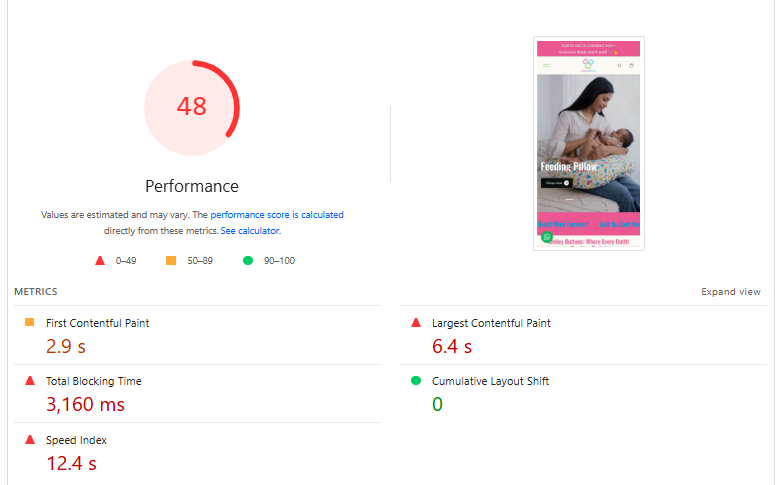
ThatWare focused on three UX pillars. Core Web Vitals were optimized to reduce load delays and layout shifts, improving overall performance signals. Mobile usability was prioritized, ensuring readable text, correct viewport settings, and seamless interaction across devices.
Equally important was crawl depth and navigation. All key pages were kept within three clicks, reducing friction for both users and search crawlers. Clear CTAs improved engagement and guided users toward conversion paths.
UX was no longer treated as a design concern alone. It became a trust signal. Better experience led to higher engagement, which reinforced rankings and helped Smiley Buttons gain sustainable search visibility.
Technical SEO Execution: Core Web Vitals & Site Structure
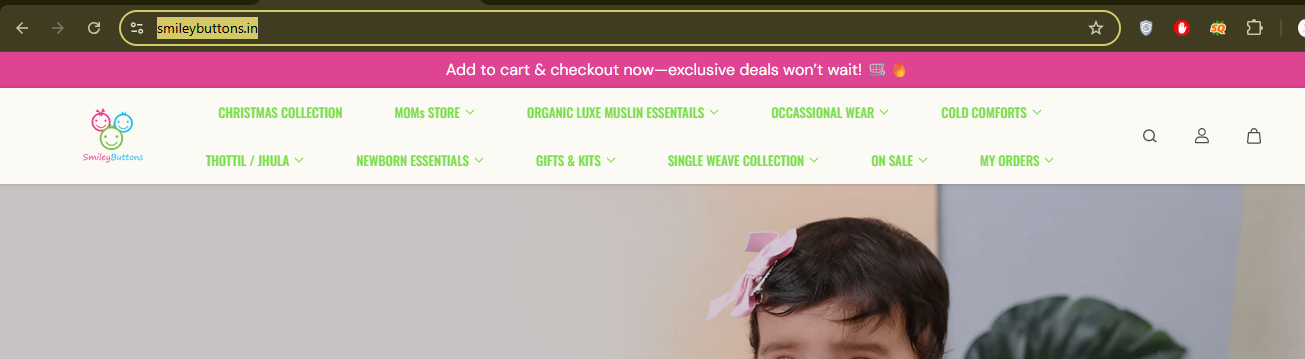
Technical SEO execution supported every growth milestone. PageSpeed Insights showed gradual improvement across desktop and mobile, indicating more efficient asset delivery and server response.
Image optimization, compression, and lazy loading reduced unnecessary resource load. JavaScript execution was minimized to prevent render-blocking delays. Proper dimensions were added to media assets to avoid layout shifts.
A flat site architecture ensured that important pages received sufficient internal link equity. Crawl paths were simplified, allowing search engines to index content faster and more efficiently.
CTA accessibility was improved, and all high-value pages were kept under three clicks. This structure enhanced crawl efficiency, improved user flow, and strengthened overall SEO health.
Results That Proved the Growth Engine Worked
The impact of ThatWare’s strategy became clear through measurable performance gains.
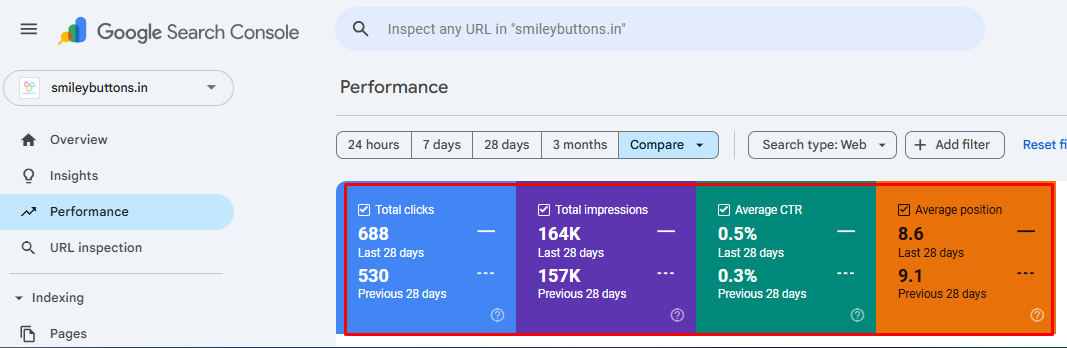
Google Search Console showed a strong upward trend. Total clicks increased from approximately 530 to 688. Impressions grew from about 157K to 164K, reflecting broader SERP visibility. Average CTR improved from 0.3% to 0.5%, while average position moved from 9.1 to 8.6, indicating consistent movement toward page-one rankings.
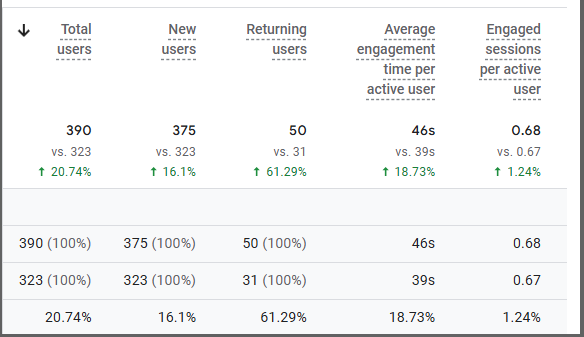
Google Analytics – User Acquisition revealed deeper engagement. Total users rose from 323 to 390. New users increased significantly, while returning users jumped by over 60%, proving improved retention. Average engagement time per active user increased from 39 seconds to 46 seconds.
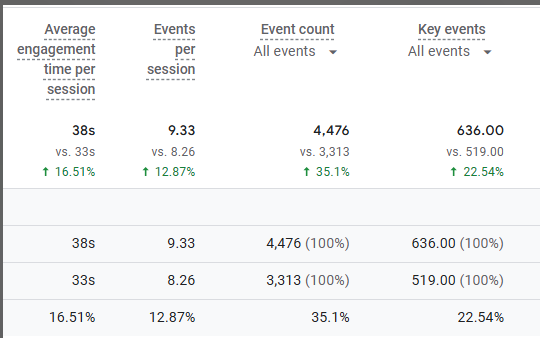
Traffic Acquisition metrics reinforced this growth. Engagement time per session improved, events per session increased, and key events rose from 519 to 636. These results confirmed that SEO growth translated into real user action, not just traffic.
Authority Signals: Backlinks, Domains, and IP Strength
Authority building supported ranking stability. Backlinks remained the second most important ranking factor, and Smiley Buttons saw steady growth in all authority metrics.
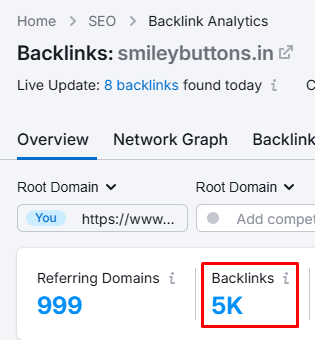
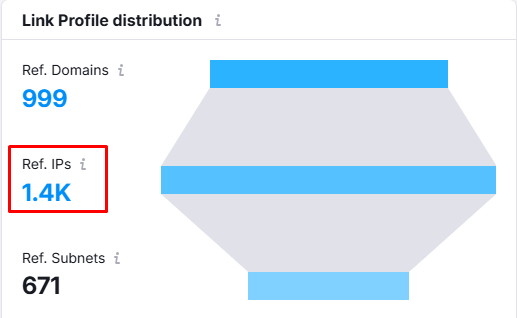
The site reached approximately 5K backlinks, supported by 999 referring domains and 1.4K referring IPs. This diversity strengthened trust and reduced dependency on a narrow link source.
These authority signals worked in harmony with LLM SEO and QSAAS SEO, reinforcing credibility for both traditional rankings and AI-driven search environments. As authority increased, content gained stronger placement, longer retention, and greater recommendation potential across search platforms.
Final Takeaway: What Brands Can Learn from Smiley Buttons
The growth journey of Smiley Buttons makes one thing clear: SEO can no longer survive on outdated tactics or surface-level optimizations. Search engines today are powered by AI, context, and intent understanding. Brands that still rely on keyword stuffing, generic content, or one-time technical fixes will struggle to build long-term visibility. Modern SEO must evolve alongside AI-driven search systems, where relevance, trust, and experience matter more than shortcuts.
Another key lesson is that real growth requires intelligence, not hacks. Smiley Buttons did not achieve results through temporary ranking tricks or aggressive link chasing. Instead, growth came from understanding how users search, how search engines interpret content, and how data should guide every decision. This intelligence-led approach allowed the brand to move from low visibility to consistent performance without relying on unstable tactics.
The combined use of LLM SEO, Hyper Intelligence SEO, and QSAAS SEO defines what modern success looks like. LLM SEO helped structure content in a way AI systems could understand and trust. Hyper Intelligence SEO ensured continuous optimization based on real user behavior and search patterns. QSAAS SEO, by integrating AEO and GEO, positioned the brand for visibility not only on traditional search results but also within AI-generated answers and recommendations.
Looking ahead, future-proof search growth will belong to brands that treat SEO as an evolving system, not a checklist. Smiley Buttons demonstrates that when SEO is built with intelligence, adaptability, and AI readiness at its core, growth becomes sustainable, scalable, and resilient to algorithm changes.