SUPERCHARGE YOUR ONLINE VISIBILITY! CONTACT US AND LET’S ACHIEVE EXCELLENCE TOGETHER!
A large website can have thousands of useful pages and still struggle to attract the right visitors. Important categories may be difficult to find. Several pages may compete for the same search. Content that performed well two years ago may no longer answer what buyers need to know.
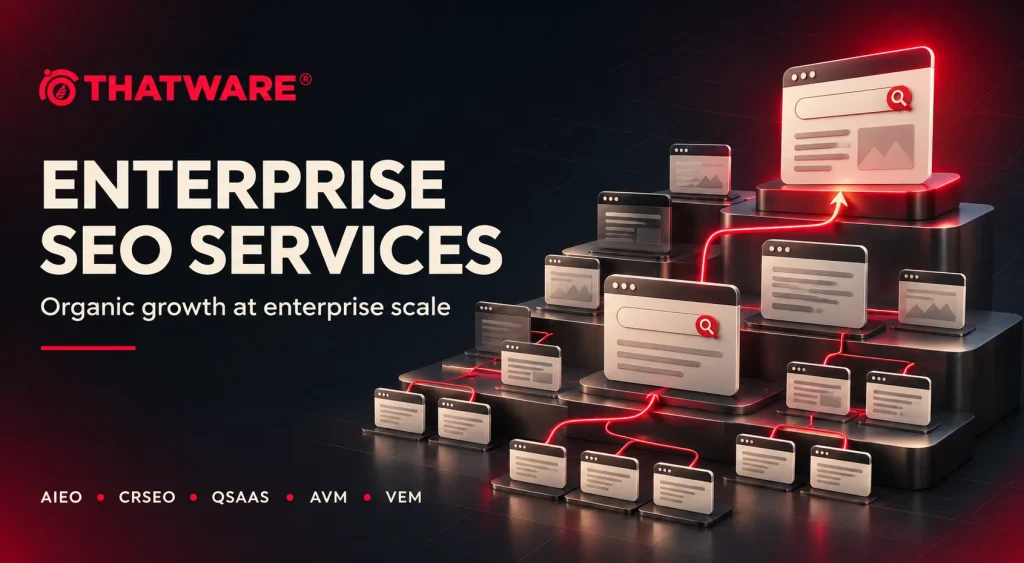
We help organisations understand where those opportunities are being lost and what deserves attention first. Our enterprise SEO services bring technical analysis, keyword targeting, content improvement and internal linking into a coordinated plan for organic growth.
The work starts with your business. Which products need more visibility? Which markets matter most? Where are potential customers finding competitors instead of you? Those answers help us decide which website improvements are worth pursuing and how progress should be measured.
Whether you manage a substantial product catalogue, several service lines or an expanding library of resources, we work with your team to make the website more useful to searchers and easier to manage as it grows.
Tell us about your website, target markets and current search challenges.
When Your Website Needs Enterprise SEO
Enterprise SEO is the coordinated optimisation of large or complex websites, bringing technical priorities, content, internal linking and organisational workflows into one organic search strategy.
Page count is part of the picture. Complexity also comes from how a business operates. A website with several product teams, regional offices and approval processes can require enterprise coordination even when its page inventory is smaller than that of a major retailer.
You may recognise that complexity in everyday decisions. A category page needs updating, but nobody knows who owns it. A new service launches before its supporting content is ready. Regional teams publish similar pages with different descriptions of the same offer. The SEO team has identified useful improvements, yet those recommendations remain in a backlog.
Enterprise SEO gives these decisions a shared direction. It connects the opportunity in search with the people and processes needed to act on it.
Our enterprise SEO solutions can be scoped around organisations managing:
- Extensive product, category or service page inventories.
- Several brands, websites or business units.
- International markets or multiple locations.
- Large resource centres and established content libraries.
- Website migrations, acquisitions or significant platform changes.
- Internal teams that need specialist analysis or additional delivery support.
The right starting point depends on where the website is today. Some businesses need help resolving an immediate visibility problem. Others need a clearer system for maintaining performance as their website expands.
How Enterprise SEO Differs From a Smaller Campaign
The fundamentals of SEO remain relevant at every size. Pages need a clear purpose, useful information and a sound technical foundation. Enterprise work adds the need to apply those principles consistently across many pages and teams.
For a smaller website, an individual page update may address a substantial part of the opportunity. On a large website, the same issue may affect an entire product family or several regional sections. The investigation needs to establish whether the problem belongs to one page, a shared template or the wider publishing process.
That changes how work is prioritised. A recommendation must account for business value, the number of pages affected and the effort required to deliver it. It also needs a clear owner.
We build the enterprise SEO strategy around those realities, so your team has a practical basis for deciding what to improve and when.
Our Enterprise SEO Services
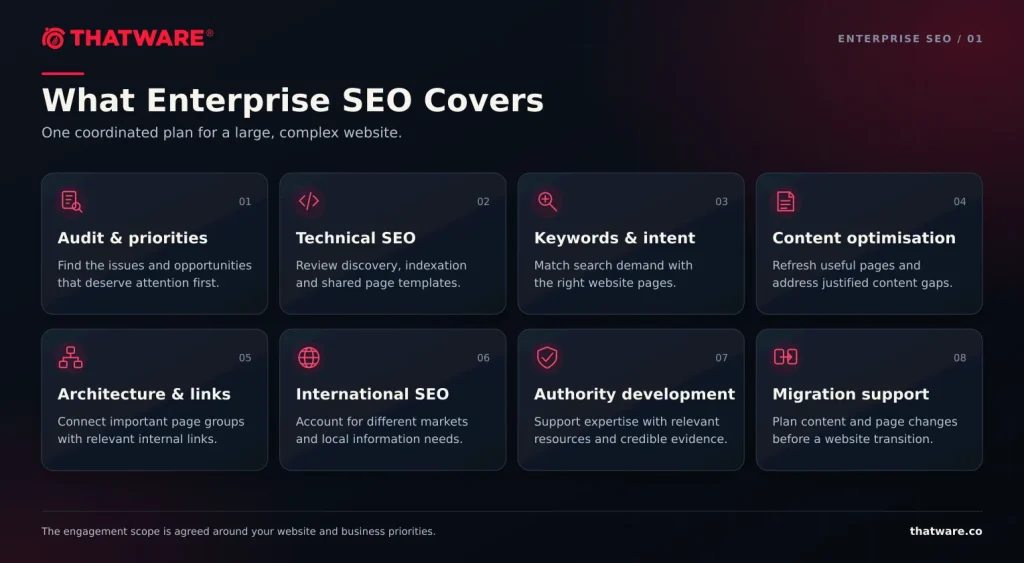
Every engagement has its own priorities. The following service areas give us a way to investigate your website thoroughly and agree a scope that fits your commercial goals and internal resources.
Enterprise SEO Audits and Opportunity Planning
A useful audit helps your team make decisions. It should explain where performance is restricted, which findings have credible business implications and what can reasonably happen next.
We review the website’s technical foundations alongside its content, search coverage and internal relationships. That helps us distinguish between an isolated problem and a pattern affecting a larger section of the site.
For example, declining traffic to several related service pages may warrant a closer look at their targeting and content quality. A discovery problem across an entire catalogue may need a different investigation. Treating both situations as a generic list of page errors would miss the underlying difference.
The resulting enterprise SEO roadmap organises recommendations by priority, affected pages and delivery requirements. Your team can use it to discuss ownership, schedule work and understand why a recommendation matters.
Enterprise Keyword Research and Page Mapping
Large businesses often serve several audiences through the same website. A procurement manager, a technical evaluator and an end user may describe the same product differently. Their searches can require different levels of explanation.
We organise relevant search demand around your products, services and customer needs. Then we map that demand to existing pages and identify where coverage is missing or overlapping.
This work can reveal opportunities to improve a category page, clarify a service page or produce a supporting resource. It can also show where several pages need more distinct purposes.
The page map provides direction for content creation and updates. It helps writers understand what each page should address, which questions belong elsewhere and where contextual links will help the reader continue their research.
Read more about our approach to search intent optimisation.
Enterprise Technical SEO
An enterprise website needs a technical foundation that supports its most valuable content. Our specialists investigate issues involving discovery, rendering, indexation, URL duplication and website performance, according to the agreed scope.
We consider how these issues affect groups of pages. A template that produces inconsistent information may deserve attention before a minor issue affecting a single low-priority resource. The recommendation should explain that difference clearly.
Technical SEO also needs to be understandable to the people responsible for implementation. We connect findings with affected page types, explain the intended outcome and identify dependencies that need discussion with your development team.
For marketing stakeholders, the value is a clearer view of which technical constraints may be restricting organic performance. For delivery teams, it is a more useful basis for planning changes and reviewing their effects.
Website Architecture and Internal Linking
A visitor should be able to understand how your website is organised without already knowing your internal business structure. Product categories, services and supporting resources need relationships that make sense to the people using them.
We review those relationships and look for important pages that are difficult to reach, poorly connected or surrounded by content with unclear purposes. Internal linking is considered in the context of relevance and the reader’s next useful step.
For a service business, that may mean connecting an industry page to the relevant service explanation and supporting case study. For an ecommerce business, it may involve clearer relationships between categories, buying guides and product pages.
The recommendations help your team organise content more coherently. They also provide a basis for maintaining those relationships as new pages are published.
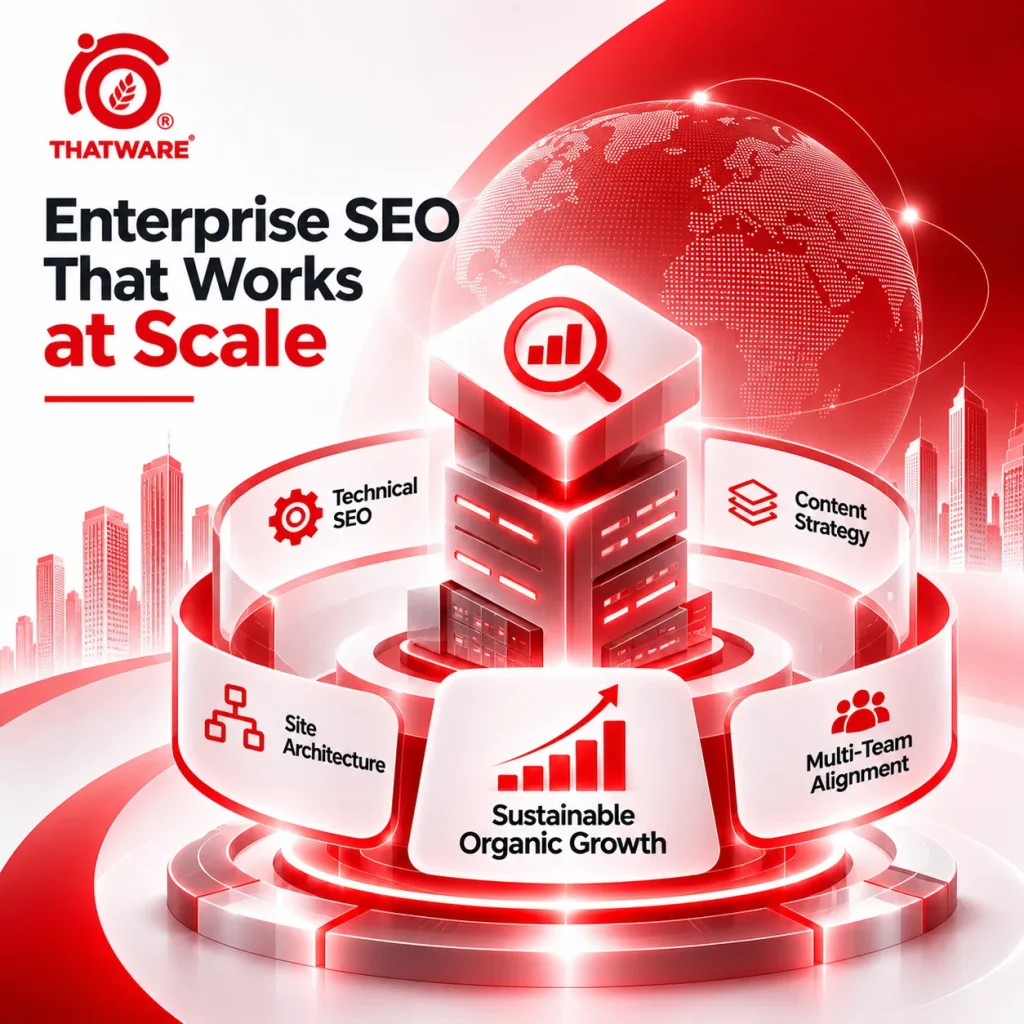
Enterprise Content Strategy and Optimisation
An established content library usually contains a mixture of strong resources, outdated information and pages that never found a clear audience. Publishing more content can add to that complexity unless there is a reason for each new page.
We review existing coverage before recommending expansion. Pages may need current product information, better explanations, stronger evidence or a more appropriate focus. Some can be developed into useful resources. Others may cover substantially similar questions and need an editorial decision about their roles.
Our enterprise content strategy connects those findings with a prioritised plan for refreshing existing pages and addressing justified gaps. Briefs can cover intended readers, search intent, page structure, supporting evidence and relevant internal links.
We also help define practical editorial standards. Consistent service terminology, accurate claims and a clear review process make a substantial difference when several teams contribute to the same website.
International and Multi Location SEO
A page that works well in one market may need substantial changes for another. Buyers may use different terminology, expect different service details or need reassurance about local availability.
We consider those differences when planning market and location content. The aim is to establish what needs to be locally specific and which information can remain consistent across the business.
That can include research into relevant search language, recommendations for regional service explanations and a clearer division between global information and local requirements. Technical specialists can review international configurations where that work is included in the engagement.
For organisations expanding from India into other markets, or coordinating several regions through one website, this creates a more considered approach to international SEO. Each market should have a useful role within the wider strategy.
Authority Development and Supporting Resources
Buyers evaluating a significant purchase often look beyond a service description. They want evidence that the business understands their problem and can support its claims.
We review how your website presents relevant expertise through case studies, specialist resources, author information and other appropriate evidence. Where authority development forms part of the scope, the plan can also include resources suitable for editorial coverage and relevant industry references.
The quality of the underlying material matters. A useful study, a well-documented result or a clear explanation from a subject specialist gives others a stronger reason to refer to your business.
Our approach connects authority development with the subjects you need to be known for. It keeps the work relevant to your customers and supports the wider enterprise SEO strategy.
SEO Support for Website Migrations
A redesign, domain change or platform migration can affect how existing content is presented and discovered. Established pages may change location, navigation may be reorganised and important information may disappear during the transition.
We help organisations account for organic search when these changes are being planned. Depending on the scope, this can include reviewing important page inventories, mapping content relationships and identifying areas that need specialist attention before launch.
The content work deserves particular care. A new design can look cleaner while providing less information than the page it replaces. We review which explanations, resources and customer questions need to remain part of the website.
Migration support also involves coordination with the teams making the changes. Clear responsibilities and an agreed review process help SEO considerations reach the people who can act on them.
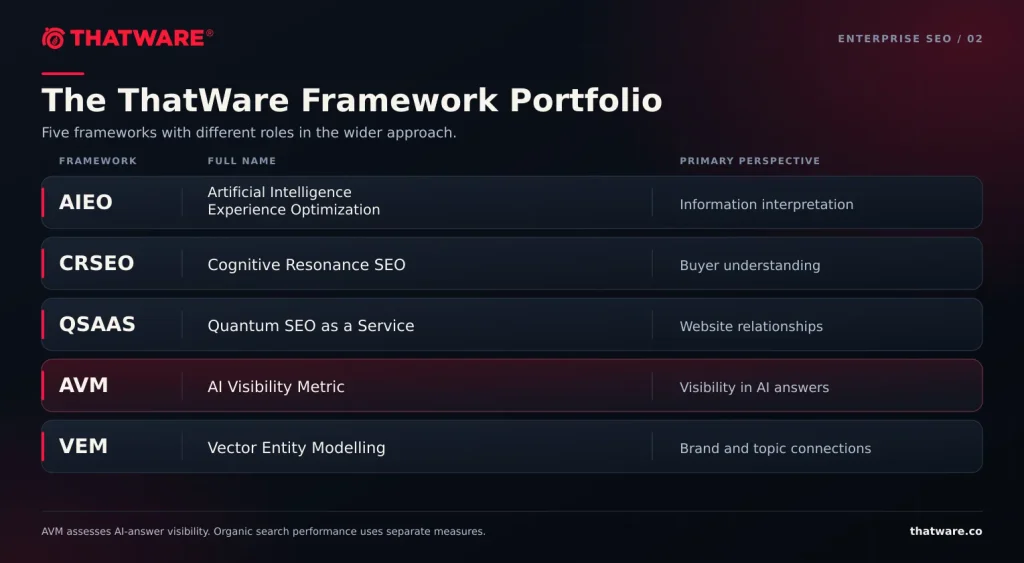
The ThatWare Frameworks Behind Our Approach
Our framework portfolio reflects different questions that arise when a complex website is being evaluated. How clearly is information expressed? Do pages address what buyers need to understand? Which relationships between pages deserve closer attention? How should different forms of visibility be measured?
The frameworks below provide distinct perspectives on those questions. Their application depends on the problem being addressed and the scope agreed with your organisation.
AIEO for Clearer Digital Information
Artificial Intelligence Experience Optimization, or AIEO, examines how digital information can be interpreted and presented by AI-powered systems. Its wider scope includes AI discovery, while its content principles emphasise clarity, intent and consistent descriptions.
For a complex service portfolio, those principles encourage precise explanations of what each service does and who it serves. Visitors should be able to distinguish related offers without working through several pages of interchangeable claims.
CRSEO for Buyer Understanding
Cognitive Resonance SEO, or CRSEO, is ThatWare’s framework for shaping content around how people interpret information, establish confidence and make decisions.
Its practical relevance lies in the reading experience. A potential customer may need an explanation of the process, evidence of relevant experience or answers to concerns that a short service description leaves unresolved. CRSEO provides a perspective for reviewing those needs and improving the order and clarity of the information presented.
QSAAS for Analysing Website Relationships
Quantum SEO as a Service, or QSAAS, is ThatWare’s quantum-inspired approach to analysing relationships and optimisation opportunities across complex website networks.
Its focus includes connections between pages, related content groups and the prioritisation of important website sections. This can support investigations into weak internal relationships and areas where a large page inventory needs closer analysis.
QSAAS findings inform recommendations that still need to be assessed against business priorities and implementation requirements.
AVM for AI Visibility Measurement
AI Visibility Metric, or AVM, assesses a brand’s presence within AI-generated answers, including relevant mentions and citations. It provides a separate perspective when an organisation’s engagement extends into AI-search visibility.
Organic search rankings, clicks and conversions remain distinct measures. Keeping the reporting clear helps stakeholders understand whether a change concerns conventional search performance or visibility within an AI answer.
VEM for Clearer Entity Relationships
Vector Entity Modelling, or VEM, examines relationships connecting a brand with its services, products and relevant topics. It provides a way to consider whether those relationships are clearly represented across the business’s digital information.
For an enterprise content team, that can inform a review of inconsistent terminology and fragmented service descriptions. Accurate explanations help establish how related subjects fit together across the website.
Organisations looking for a combined SEO, AEO, GEO and LLM programme can explore our broader enterprise search services.
Selected SEO Case Studies
The following published examples show how different search challenges have been approached. Each result belongs to its own campaign and reporting context. They provide useful detail about the work, rather than a forecast for another website.
How We Transformed Organic Search Performance for a Healthcare Career Academy Through a Strategic SEO Campaign
At ThatWare, we partnered with Health Tech Academy to address its organic traffic challenges and strengthen its visibility across healthcare education-related searches. Through a combination of strategic content optimisation, search intent analysis, technical SEO, and website restructuring, we worked towards building a stronger organic presence and attracting a more relevant audience.
This case study explores how we approached the campaign, the strategies we implemented, and the measurable improvements achieved in organic search performance.
Project Overview
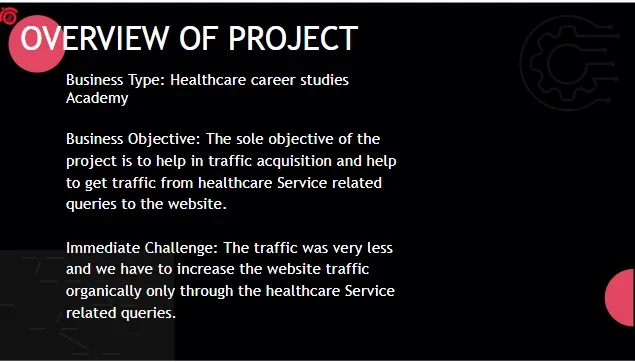
At ThatWare, we partnered with Health Tech Academy, a healthcare career studies academy, to strengthen its organic search visibility and attract more relevant visitors through a structured SEO campaign.
The primary objective was to increase organic traffic by targeting healthcare service-related search queries. The website was experiencing limited organic traffic, making it difficult to reach people actively searching for healthcare career programmes and professional training opportunities.
Rather than focusing exclusively on keyword rankings, we developed a strategy around search intent, content relevance, website experience, and technical SEO. Our approach focused on helping search engines understand the website while making its pages more useful to prospective students.
Understanding the Initial Challenge
The project began with a clear business objective: increase organic website traffic through searches related to healthcare services and professional programmes.
However, the website faced several challenges:
- Limited organic traffic: The website was receiving fewer visitors from organic search than required to support its growth objectives.
- Content relevance: Existing website content needed better alignment with the specific information prospective students were searching for.
- Search intent gaps: Different search queries required different content types and formats to satisfy user expectations.
- Website experience: Technical and usability improvements were necessary to support better engagement and accessibility.
- Website structure: The existing architecture needed to make important pages easier for search engines and visitors to discover.
We identified that improving visibility required more than adding keywords to existing pages. The campaign needed a coordinated approach that connected search behaviour with content planning, technical optimisation, and website architecture.
Our SEO Strategy: Putting Search Intent First
Search intent became the foundation of our campaign.
Search engines aim to provide results that best satisfy what users are looking for. A person searching for a specific healthcare training programme may want detailed programme information, eligibility requirements, career opportunities, or an explanation of available courses.
Serving all these requirements through one generic page would not provide the best experience.
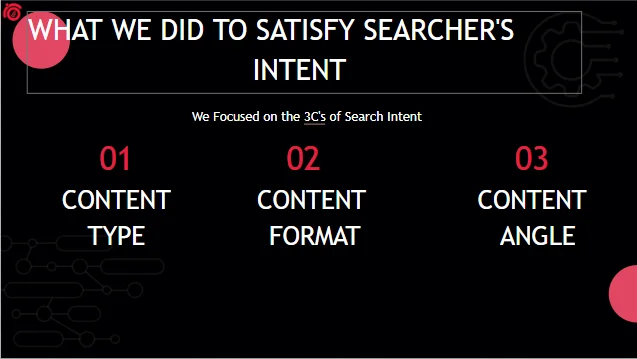
We therefore organised our content strategy around three essential elements: content type, content format, and content angle.
1. Content Type: Choosing the Right Page for Each Search
Our first priority was identifying which type of page could best satisfy each target query.
We evaluated four primary content formats:
- Blog posts
- Product pages
- Category pages
- Landing pages
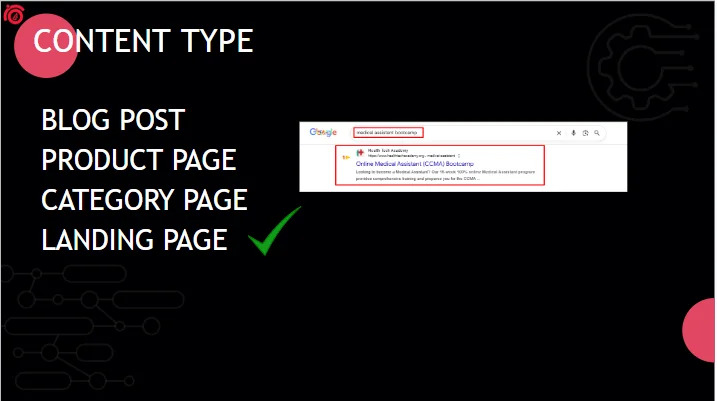
For example, the query “Medical Assistant Bootcamp” required a dedicated landing page that could directly address programme-related information and user expectations.
Similarly, searches related to surgical technologist professional programmes presented opportunities for both informative blog content and relevant landing pages.
This approach helped us assign the right purpose to individual pages instead of making multiple pages compete for similar search queries.
2. Content Format: Delivering Information in the Right Structure
Selecting the right page type was only one part of the strategy. We also considered how information should be presented.
For searches related to surgical technologist professional programmes, we developed detailed explanatory content addressing the questions and information needs of prospective students.
We also examined how relevant search results presented programme information to understand the formats that best matched user expectations.
Our objective was to make the content informative, accessible, and sufficiently detailed to help visitors understand their available educational opportunities.
3. Content Angle: Addressing the Actual Search Requirement
The content angle determined how each page approached its subject.
Instead of producing repetitive programme descriptions, we focused on answering specific questions and addressing the practical considerations behind each search.
This included explaining programme details, professional training opportunities, and relevant educational information.
By aligning content angles with search intent, we worked towards creating pages that served a clear purpose within the website’s organic search strategy.
Landing Page and Blog Content Optimisation
Once the content strategy was established, we focused on implementing it across relevant website sections.
Creating and Optimising Landing Pages
We prioritised landing pages for searches with clear programme-related intent.
For example, the search query “Medical Assistant Bootcamp” was mapped to a relevant landing page. The objective was to create a direct connection between the user’s search and the information available on the website.
We also worked on improving landing page relevance through content updates and better alignment with target search queries.
Developing Informative Blog Content
For broader informational searches, we focused on blog content that could address specific questions and provide additional context.
One example involved content targeting “Surgical Technologist Professional Program”.
The content approach included detailed programme discussions rather than relying on short, generic descriptions. This allowed the website to address informational intent while creating additional opportunities for organic visibility.
We also worked on improving the relationship between informational content and relevant programme pages.
Website Content Updates and Freshness
Content optimisation was another important part of the campaign.
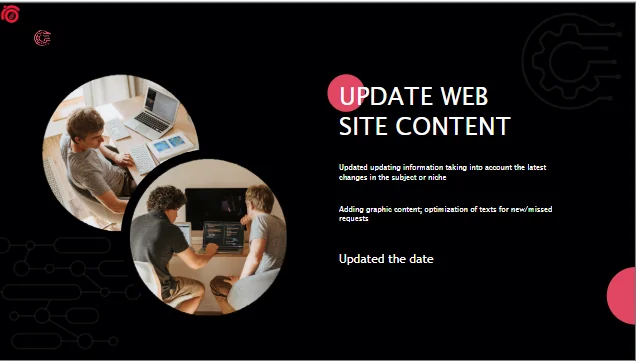
We reviewed existing website information and updated content to reflect relevant changes within the healthcare education niche. This included correcting outdated information, improving text where required, adding relevant graphical elements, and updating publication dates where appropriate.
Our focus was not simply to make pages appear recently updated. We aimed to improve the usefulness and relevance of the information presented.
Regular content maintenance also helped maintain consistency across the website and ensured that important programme-related information remained accessible to visitors.
Improving User Experience and Technical SEO
A successful organic search campaign also depends on the quality of the website experience.
We therefore addressed technical and usability factors that could affect how visitors interacted with the website.
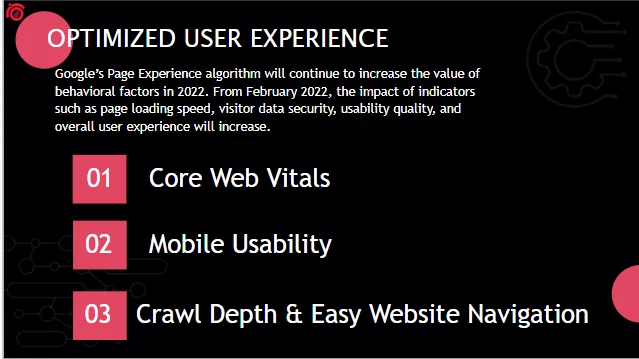
1. Core Web Vitals Optimisation
We focused on improving the website’s loading performance and technical efficiency.
Our optimisation activities included:
- Reducing unnecessary JavaScript execution.
- Implementing lazy loading where appropriate.
- Compressing and optimising images.
- Providing appropriate dimensions for images and embedded elements.
- Improving server response time.
These improvements were intended to create a smoother browsing experience, particularly for visitors accessing programme information through mobile devices.
2. Mobile Usability
Prospective students may access educational information from different devices and network conditions.
We therefore considered mobile usability as an important part of the website optimisation process.
Our focus was on improving accessibility, page presentation, and navigation so visitors could find relevant programme information without unnecessary friction.
3. Crawl Depth and Website Navigation
We also reviewed the website’s navigation and internal structure.
Important pages should not be buried beneath multiple unnecessary navigation levels. A clear architecture helps visitors locate information and allows search engine crawlers to discover relevant pages more efficiently.
Implementing a Flat Website Structure
Website architecture was another important area of our campaign.
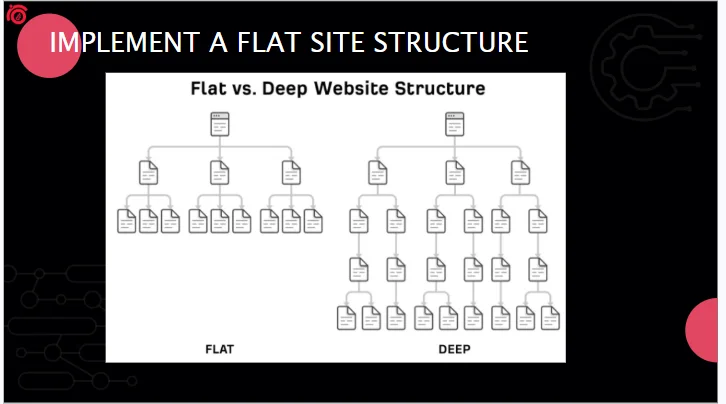
We focused on implementing a flatter website structure rather than allowing important content to sit too deep within the navigation hierarchy.
A flat structure creates a more direct relationship between the homepage, important category sections, and individual content pages.
Our approach focused on:
- Reducing unnecessary navigation levels.
- Improving internal linking between related pages.
- Making important programme pages easier to discover.
- Creating logical relationships between informational blogs and landing pages.
- Supporting more efficient crawling and content discovery.
This helped establish a clearer website hierarchy and supported our broader objective of improving organic search accessibility.
Measuring the Campaign’s Organic Search Performance
The campaign’s performance was evaluated using Google Search Console data.
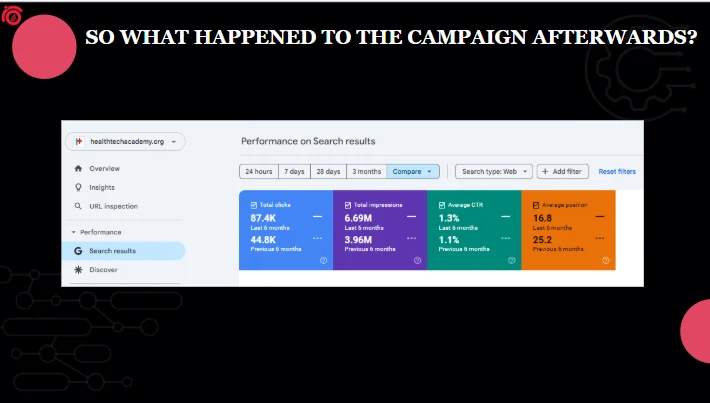
We compared the website’s search performance across the reporting periods presented in the campaign dashboard.
The results demonstrated improvements across clicks, impressions, click-through rate, and average search position.
| Google Search Console Metric | Previous Period | Comparison Period |
| Total Clicks | 44.8K | 87.4K |
| Total Impressions | 3.96M | 6.69M |
| Average CTR | 1.10% | 1.30% |
| Average Position | 25.2 | 16.8 |
1. Organic Clicks Increased to 87.4K
The website’s total organic clicks increased from 44.8K to 87.4K.
This represents an approximate 95.1% increase in organic clicks between the two reporting periods.
The improvement indicates that more users were reaching the website through organic search results, supporting the campaign’s primary traffic acquisition objective.
2. Search Impressions Reached 6.69 Million
Total search impressions increased from 3.96 million to 6.69 million.
This represents approximately 69% growth in search impressions.
The increase indicates that the website appeared in Google search results for a larger number of searches or received greater visibility across its existing search opportunities.
3. Average Click-Through Rate Improved to 1.3%
The average CTR increased from 1.1% to 1.3%.
Although the numerical change was relatively small, it represented an improvement in the proportion of impressions generating clicks.
This was an encouraging development alongside the increase in total search visibility.
4. Average Search Position Improved from 25.2 to 16.8
One of the important developments was the improvement in average search position.
The website moved from an average position of 25.2 to 16.8, an improvement of 8.4 positions.
This indicated stronger overall organic search positioning across the queries measured in Google Search Console.
The Impact of a Connected SEO Strategy
The results demonstrate the value of combining content optimisation, search intent analysis, technical improvements, and website architecture within one campaign.
Instead of treating each SEO activity as an isolated task, we connected these elements to support the same business objective.
The content strategy helped align pages with user expectations. Technical improvements addressed website performance and usability. A flatter structure supported content discovery, while ongoing updates helped maintain the relevance of important website information.
The increase in clicks and impressions, alongside improvements in CTR and average position, reflected the progress achieved through this coordinated approach.
How ThatWare Approached the Project
At ThatWare, we believe organic growth requires a clear understanding of how people search, what information they expect, and how effectively a website delivers that information.
Our work with Health Tech Academy followed this principle. We combined search intent research, content planning, landing page optimisation, website improvements, and performance monitoring to strengthen the website’s organic presence.
Rather than pursuing rankings without considering their business relevance, we focused on attracting visitors through healthcare education and programme-related searches.
This approach allowed us to build an SEO strategy around the actual requirements of the business while creating a stronger foundation for continued organic growth.
How ThatWare’s Upgraded SEO Strategies Boosted Radical Vape Shop’s Search Engine Rankings
Radical Vape & Smoke, a Canadian retailer of vaping and smoking products, wanted to strengthen its online visibility and establish a stronger position in its competitive market. With a comprehensive range of vaporizers, e-liquids, glassware, and smoking accessories, the business needed an optimised digital platform capable of showcasing its products while delivering a smooth and trustworthy customer experience.
At ThatWare, we approached this project with an upgraded SEO strategy focused on search intent, content optimisation, technical improvements, and website usability. Rather than concentrating exclusively on individual keyword positions, we worked on improving the overall search performance of the website.
This case study explores how our SEO approach helped Radical Vape & Smoke improve its search engine rankings, expand its online visibility, and strengthen its organic traffic performance.
Overview of the Project
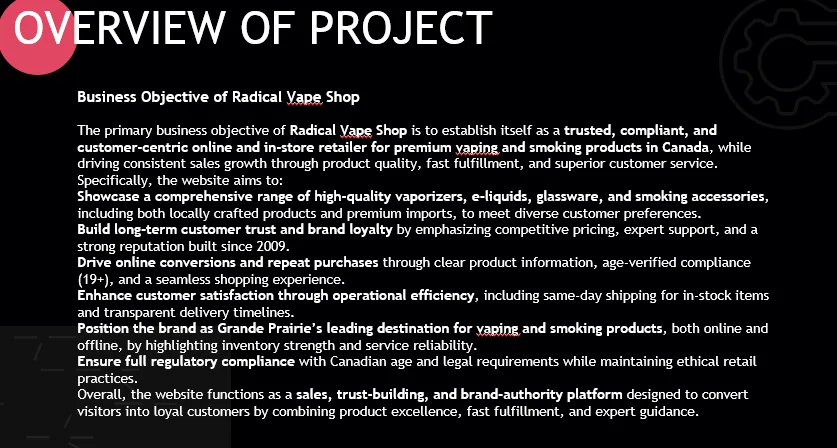
Radical Vape & Smoke operates in Canada’s vaping and smoking retail market, serving customers through its online and physical retail presence. Its business objective was to establish itself as a trusted, compliant, and customer-centric destination for premium vaping and smoking products.
The company offers a diverse product selection, including vaporizers, e-liquids, glassware, and smoking accessories. Its business positioning also emphasises competitive pricing, expert assistance, product quality, and reliable fulfilment.
Having built its reputation since 2009, the retailer wanted its website to support its established market presence and contribute to consistent business growth.
The primary objectives of the project included:
- Improving organic search visibility for relevant product and category searches.
- Strengthening keyword rankings across competitive search queries.
- Presenting product information in a way that better addresses customer search intent.
- Improving website usability, mobile responsiveness, and navigation.
- Enhancing technical performance through Core Web Vitals optimisation.
- Building a website structure that allows visitors and search engines to access important pages easily.
- Supporting customer trust through transparent information and age-verification compliance.
The Challenges We Addressed
Achieving stronger search visibility in a competitive product retail category requires more than basic on-page optimisation. Search engines must understand the purpose of individual pages, determine their relevance to search queries, and evaluate the overall quality of the website experience.
We identified several important areas that required attention.
1. Matching Content with Search Intent
One of the central challenges was ensuring that website pages matched what users were actually looking for.
A visitor searching for a particular vape product may expect a product page, a category listing, or a detailed informational guide. Presenting the wrong type of content can create a mismatch between the search query and the landing page.
We therefore needed to align the website’s content with the different expectations behind product-related searches.
2. Improving Content Relevance and Coverage
Product-related searches can vary significantly depending on product names, flavours, specifications, and customer preferences.
The website needed content that addressed relevant search variations without relying on repetitive keyword placement. It was important to improve the content’s relevance, format, and overall usefulness.
3. Strengthening Technical Performance
Website speed, mobile usability, navigation, and crawl accessibility were additional areas of focus.
A website may contain relevant products and information, but technical obstacles can make it difficult for visitors to explore pages or for search engines to discover important destinations efficiently.
4. Improving Organic Visibility and Traffic
Another major objective was to increase the website’s exposure across relevant Google searches.
We needed to improve the website’s ability to appear for valuable product-related keywords while strengthening its overall search presence. This required a coordinated approach combining content, technical SEO, and website architecture.
ThatWare’s Upgraded SEO Strategy
At ThatWare, we developed a structured optimisation approach based on search intent and technical website improvements. Our strategy focused on three important content dimensions, supported by improvements to website performance and architecture.
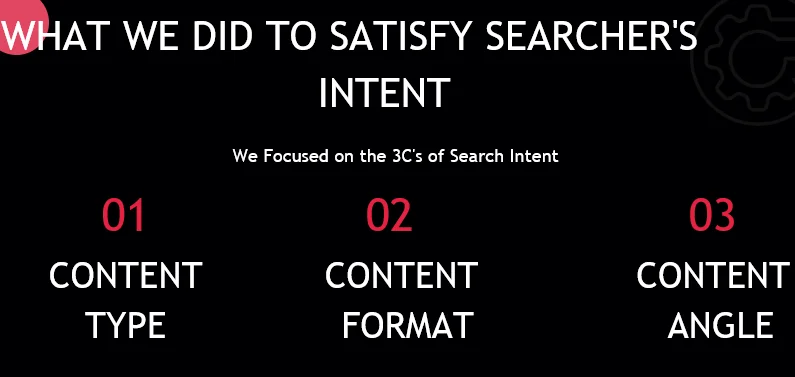
1. Search Intent Optimisation Through the 3Cs
Our content strategy was built around the three Cs of search intent:
Content Type: We evaluated the appropriate page type required to satisfy a search query. Depending on the intent, the most relevant destination could be a blog post, product page, category page, or service page.
Content Format: We focused on presenting information in a format that matched the expectations of searchers. The content needed to provide relevant information in a way that made the page useful for its intended query.
Content Angle: We worked on aligning the specific perspective and subject matter of a page with the search query. This helped improve the relevance of the content to the product or topic being searched.
Our keyword-level results demonstrate how this approach translated into search visibility.
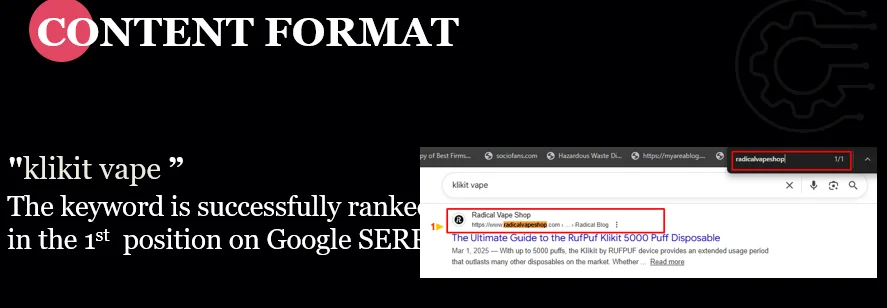
For example, the keyword “klikit vape” achieved the first position on Google’s search results, supported by a page titled “The Ultimate Guide to the RufPuf Klikit 5000 Puff Disposable”.
Similarly, “flavor beast vape” achieved the fifth position, with the page titled “FLAVOUR BEAST Disposable Vapes in Canada”.
The keyword “mr fog max” also appeared at the tenth position in the SERP.
These ranking examples demonstrate the importance of matching individual pages with the content expectations associated with different searches.
2. Updating and Optimising Website Content
We worked on updating website content to improve its relevance and usefulness.
Our optimisation process included:
- Updating existing information to reflect relevant changes in the product niche.
- Adding graphical content to improve the presentation of information.
- Optimising existing text to address new and previously missed search queries.
- Updating content dates where applicable.
- Improving the overall relevance of website pages.
Rather than treating content optimisation as a one-time keyword exercise, we focused on maintaining useful, relevant, and search-oriented information across the website.
This helped align the website’s content with the changing expectations of users and search engines.
3. Improving Core Web Vitals and Website Performance
Technical performance was another important part of our upgraded SEO campaign.
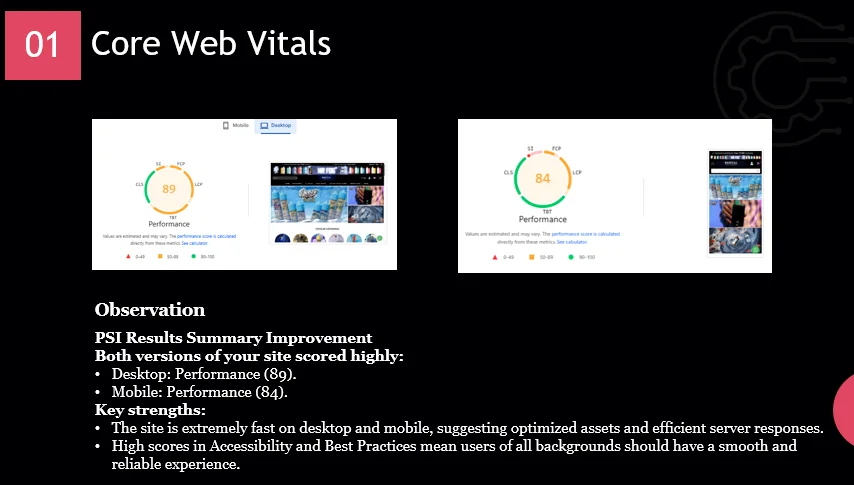
We assessed the website using Google PageSpeed Insights (PSI) and recorded the following performance scores:
- Desktop performance: 89.
- Mobile performance: 84.
These scores provided a useful indication of the website’s performance across desktop and mobile environments.
The reported assessment also highlighted strong accessibility and best-practice scores.
To support website performance, our optimisation checklist included:
- Reducing unnecessary JavaScript execution.
- Implementing lazy loading.
- Optimising and compressing images.
- Providing appropriate dimensions for images and embedded elements.
- Improving server response time.
These improvements were intended to make the website more efficient, accessible, and convenient to navigate.
4. Optimising Mobile Usability
Mobile usability was another area we addressed.
Since customers may access product information through different devices, the website needed to provide a consistent browsing experience across screen sizes.
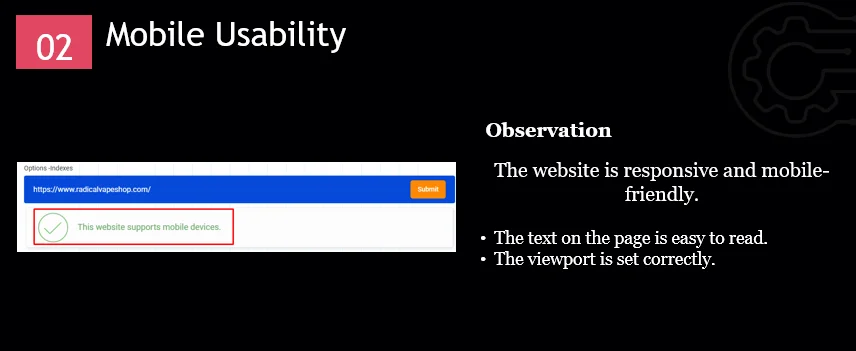
Our mobile usability assessment confirmed that:
- The website was responsive and mobile-friendly.
- Text was easy to read.
- The viewport was configured correctly.
- The website supported mobile devices.
These elements helped establish a more accessible browsing experience for visitors using smartphones and other mobile devices.
5. Improving Crawl Depth and Website Navigation
Website architecture plays an important role in how efficiently users and search engines discover important pages.
We focused on implementing a flatter website structure to reduce unnecessary navigation levels.
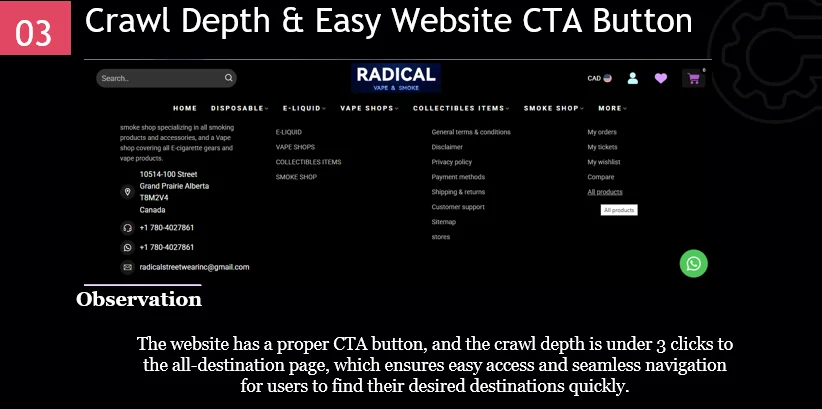
Our assessment showed that visitors could reach destination pages within fewer than three clicks. We also reviewed the website’s navigation and call-to-action button placement to make important destinations easier to access.
A clear and accessible navigation structure helps reduce unnecessary browsing steps while making important website sections easier to discover.
By improving crawl depth and simplifying navigation, we aimed to support both search engine accessibility and the overall user experience.
Results: Measurable Improvements in Search Performance
The implementation of our upgraded SEO strategy was followed by significant improvements across the website’s search visibility, user acquisition, and traffic acquisition metrics.
The Google Search Console and Google Analytics comparisons provided measurable evidence of the campaign’s progress.
1. Google Search Console Performance Improvement
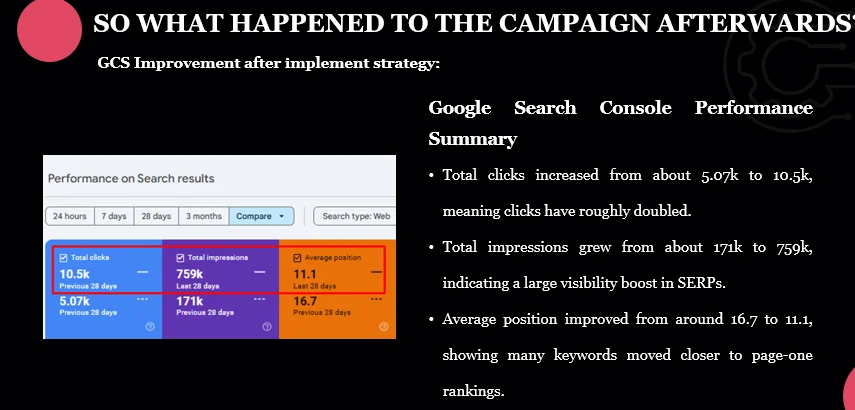
The Google Search Console comparison showed substantial growth across three important performance indicators.
Total Clicks: Increased from approximately 5.07K to 10.5K, meaning organic search clicks roughly doubled.
Total Impressions: Increased from approximately 171K to 759K, representing a considerable expansion in the website’s visibility across Google search results.
Average Position: Improved from approximately 16.7 to 11.1, indicating that the website’s average ranking position moved closer to the first page of search results.
These improvements demonstrate stronger search exposure and increased opportunities for users to discover the website through relevant queries.
2. Google Analytics: User Acquisition Growth
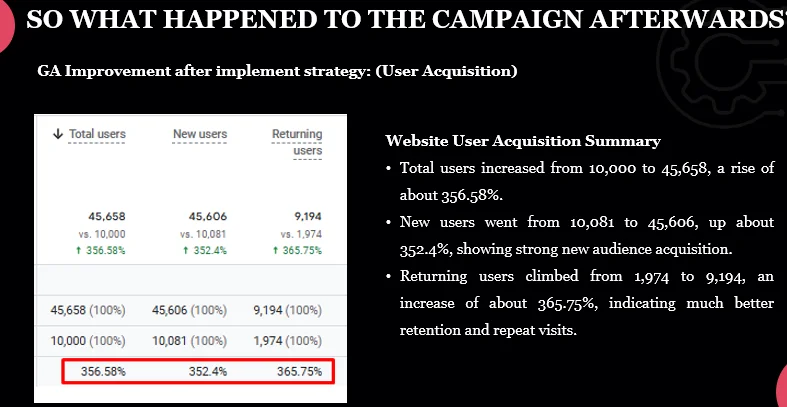
The Google Analytics user acquisition comparison also showed substantial improvements.
The recorded metrics were:
- Total Users: Increased from 10,000 to 45,658, representing approximately 356.58% growth.
- New Users: Increased from 10,081 to 45,606, representing approximately 352.4% growth.
- Returning Users: Increased from 1,974 to 9,194, representing approximately 365.75% growth.
The increase in new users indicates that the website attracted a significantly larger audience, while the growth in returning users reflects an increase in repeat website visits.
Together, these metrics demonstrate considerable improvement in audience acquisition and returning-user activity.
3. Google Analytics: Traffic Acquisition Growth
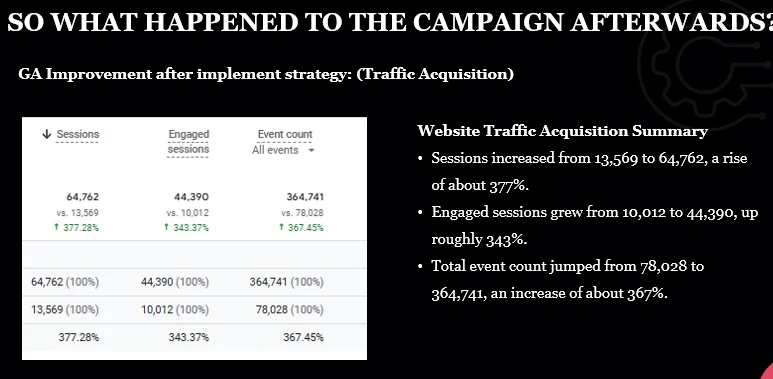
The traffic acquisition report revealed further improvements in website engagement and activity.
Sessions: Increased from 13,569 to 64,762, representing approximately 377% growth.
Engaged Sessions: Increased from 10,012 to 44,390, representing approximately 343% growth.
Total Event Count: Increased from 78,028 to 364,741, representing approximately 367% growth.
These figures highlight a substantial increase in website sessions and engaged browsing activity. The growth in total events also indicates that considerably more tracked interactions were recorded during the comparison period.
Taken together, the Google Analytics results show that the campaign’s improvements extended beyond search visibility to broader website traffic and engagement metrics.
4. Backlink Profile and Referring Domain Strength
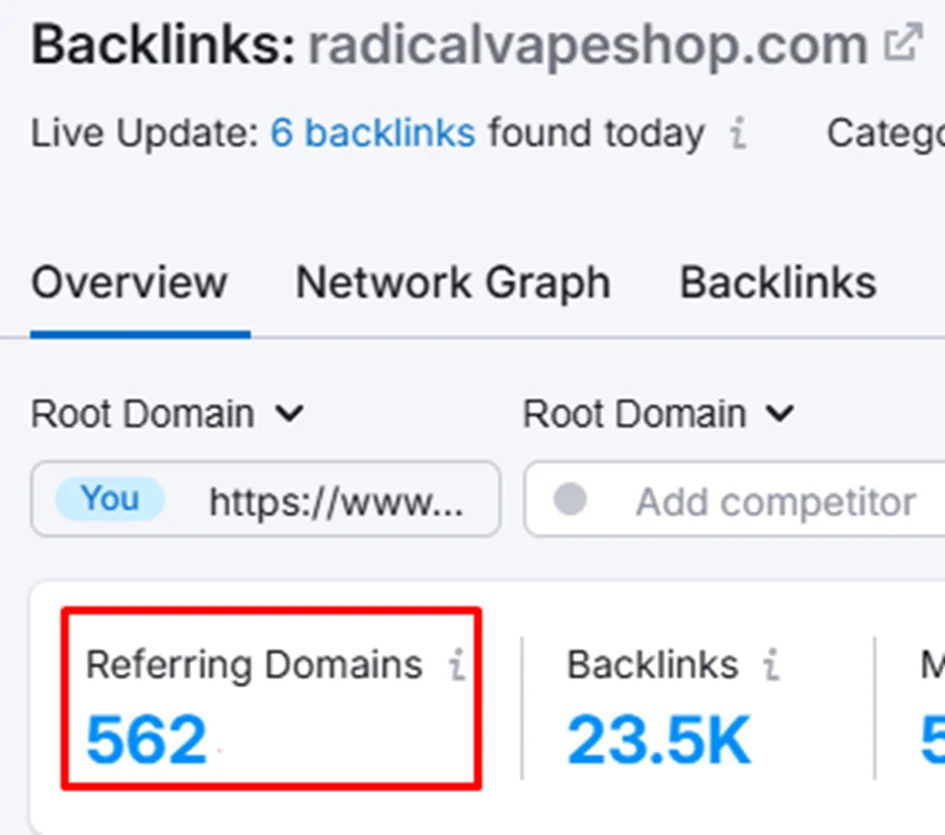
Beyond search rankings and traffic growth, we also analysed Radical Vape & Smoke’s backlink profile to understand its external authority footprint. The backlink analysis revealed 23.5K total backlinks, supported by 562 referring domains. These figures highlight the website’s existing link-building foundation and the breadth of external domains contributing links to its online presence. Monitoring these metrics helped us assess its off-page SEO profile alongside our broader optimisation efforts.
Building a Stronger Foundation for Sustainable Organic Growth
The Radical Vape & Smoke case study highlights how our upgraded SEO strategies delivered measurable improvements in search visibility, rankings, and website traffic. At ThatWare, we combined search intent optimisation, content improvements, and technical SEO to strengthen organic performance. From achieving prominent keyword positions to increasing clicks, impressions, and users, we helped the business build a stronger foundation for sustained digital growth.
How ThatWare Improved Organic Visibility for Hong Kong Visa Services
This case study highlights how ThatWare helped Hong Kong Visa Services strengthen its organic visibility through targeted keyword optimization, improved website content, Core Web Vitals enhancements, and a flat website structure. These initiatives improved rankings for key searches such as “visa services hk” and “working visa agency hong kong,” establishing a stronger foundation for sustainable organic growth.
About the Project: Hong Kong Visa Services
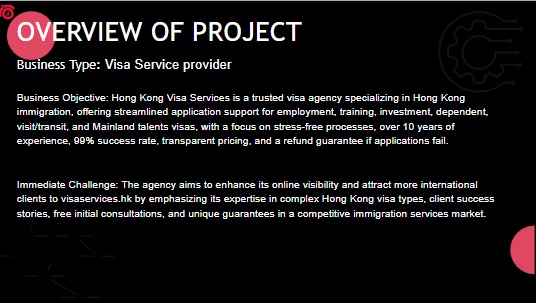
Hong Kong Visa Services is an experienced immigration agency offering assistance with employment, training, investment, dependent, visit, transit, and Mainland Talents visas. With over 10 years of experience, free initial consultations, transparent pricing, and a stated 99% success rate, the agency aims to simplify the visa application process.
Project Overview & Objectives
The campaign aimed to improve the organic visibility of visaservices.hk, attract qualified applicants, and strengthen keyword rankings for relevant Hong Kong visa-related searches. Key objectives included:
- Improving organic visibility and keyword rankings.
- Aligning website content with search intent.
- Enhancing user experience and mobile usability.
- Optimizing Core Web Vitals and crawlability.
- Building a sustainable SEO foundation.
Key Challenges Faced
The website faced several SEO challenges that limited its organic growth:
- Limited Keyword Visibility: Low visibility across relevant visa agency and immigration-related searches.
- Search Intent Gaps: Existing content needed better alignment with users’ informational and commercial requirements.
- Content Relevance: Regular updates and additional keyword integration were needed to maintain content freshness.
- Technical Performance: Navigation, mobile usability, page speed, and crawl depth required improvement.
Addressing these challenges required an integrated strategy combining content optimization, search intent analysis, technical SEO, and improved website architecture.
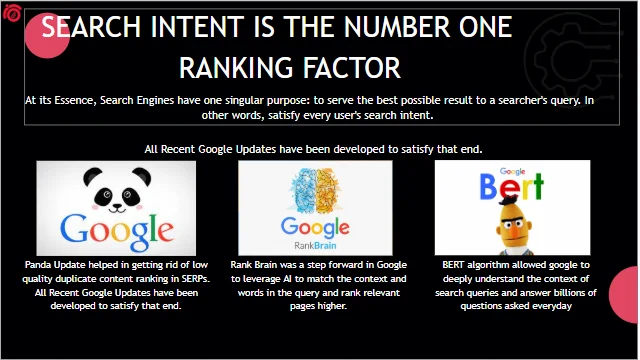
Understanding the Core: Search Intent as the Number One Ranking Factor
Modern SEO focuses on satisfying user search intent rather than simply targeting keywords. Google’s Panda, RankBrain, and BERT updates further emphasized content quality, query context, and natural language understanding.
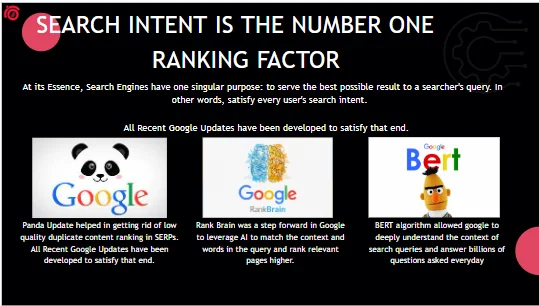
For Hong Kong Visa Services, we analyzed the intent behind searches related to visa agencies, employment visas, and immigration assistance. By aligning website content with these user needs, the campaign aimed to improve content relevance, search visibility, and overall user experience.
Strategy Implemented by ThatWare
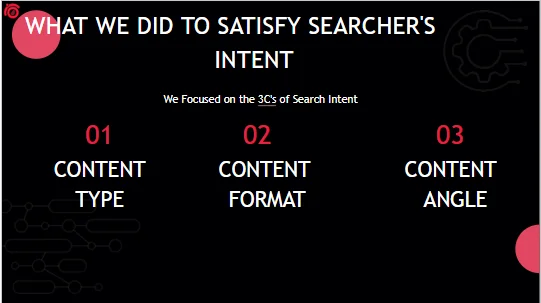
At ThatWare, the SEO approach for Hong Kong Visa Services focused on combining search intent optimization, content improvements, user experience enhancements, and technical SEO. The objective was to create a website that was easier for search engines to understand and more useful for prospective applicants.
Search Intent Optimization: The 3C’s Framework
The foundation of the campaign revolved around the 3C’s of search intent: Content Type, Content Format, and Content Angle.
Content Type:
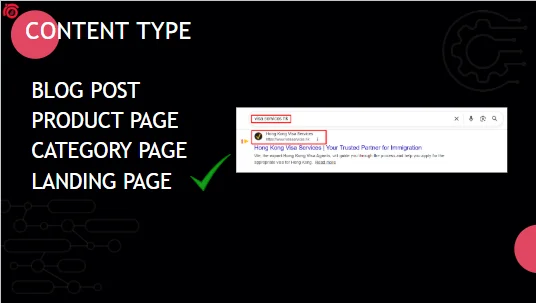
We identified suitable content types, including blog posts, product pages, category pages, and landing pages, to address different search requirements. This approach helped align website content with user expectations while ensuring that relevant visa-related information and services were presented through appropriate page types.
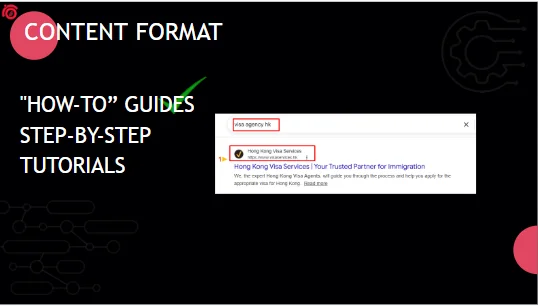
Content Format:
We focused on how-to guides and step-by-step tutorials to make complex visa-related information easier to understand. These formats helped organize application procedures and relevant information into clear, structured content, allowing visitors to navigate important details more conveniently.
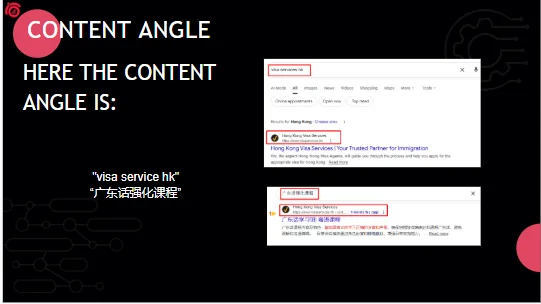
Content Angle:
We selected relevant keyword-focused angles to connect with specific audience requirements. The campaign targeted searches such as “visa service hk” and “广东话强化课程” (Cantonese intensive course), incorporating both English and Chinese search queries to address different search interests.
Website Content Updates and Optimization
Content optimization was another important component of the campaign. Since visa-related information can change frequently, keeping website content updated was essential to maintaining its relevance and usefulness.
We focused on refreshing existing information by incorporating the latest developments within the industry and identifying new or previously missed search queries. Website text was also optimized to address these additional search terms and better align with user requirements.
Furthermore, relevant graphic elements were added to improve content presentation and make information easier to understand.
Publication and update dates were also refreshed where appropriate. These improvements helped strengthen content freshness, relevance, and overall user experience.
User Experience and Core Web Vitals Optimization
A strong SEO strategy must consider what happens after users arrive on a website. Even when a page achieves good search visibility, poor navigation or slow loading can negatively affect the visitor experience.
For Hong Kong Visa Services, we focused on three important areas: Core Web Vitals, mobile usability, and crawl depth with easy website navigation.
Core Web Vitals:
Core Web Vitals provide important measurements of loading performance, interactivity, and visual stability. Improving these elements helps create a smoother browsing experience and supports Google’s page experience considerations.
Mobile Usability:
Many users explore visa services through mobile devices. Therefore, ensuring that the website remained accessible and easy to use across different screen sizes was an important priority. A mobile-friendly experience allows visitors to navigate service information and access relevant pages more conveniently.
Crawl Depth and Easy Website Navigation:
We also focused on making important website pages easier to discover. A logical navigation structure reduces unnecessary steps for visitors while helping search engine crawlers access important sections more efficiently.
These improvements supported a more accessible website experience while strengthening the technical foundation of the SEO campaign.
Core Web Vitals and Technical Performance Optimization
To improve website performance further, we focused on five specific optimization areas.
- Reduce JavaScript Execution: Unnecessary JavaScript execution can affect page responsiveness and loading performance. Reducing excessive script activity helps improve the overall browsing experience.
- Implement Lazy Loading: Lazy loading allows images and other media elements to load when they are needed, rather than loading every asset immediately. This helps reduce the initial page loading burden.
- Optimize and Compress Images: Image compression reduces file sizes while maintaining appropriate visual quality. This is particularly useful for improving page performance without compromising presentation.
- Provide Proper Dimensions for Images and Embeds: Defining appropriate dimensions for images and embedded elements helps prevent unexpected layout shifts as pages load, supporting visual stability.
- Improve Server Response Time: Optimizing server response helps reduce the time required for browsers to receive website content and contributes to a smoother loading experience.
Together, these technical improvements helped establish a more performance-oriented website environment.
Implementation of a Flat Website Structure
Another important SEO initiative was implementing a flat site structure.
A flat website architecture organizes content so that important pages can be reached within fewer clicks from the homepage. This reduces unnecessary navigation depth and makes important sections easier to discover.
For a visa service website offering multiple immigration categories, clear organization is particularly valuable. Visitors should be able to locate relevant service information without navigating through several unrelated pages.
From an SEO perspective, a well-organized structure also helps search engine crawlers discover important URLs more efficiently. It supports better content relationships, improves internal navigation, and makes the website easier to understand.
By implementing a flatter structure, we aimed to improve both user accessibility and search engine crawlability.
Performance Insights: Improved Google Search Rankings
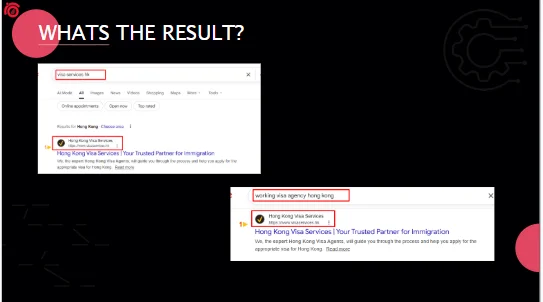
A key indicator of the campaign’s progress was improved visibility across targeted Google search queries. The campaign screenshots show Hong Kong Visa Services ranking in the first position for two relevant searches:
- “visa services hk”: Ranked first for users seeking general visa assistance in Hong Kong.
- “working visa agency hong kong”: Ranked first for users looking for professional employment visa assistance.
These results highlight the campaign’s focus on targeting specific search intent rather than relying solely on broad industry keywords. By aligning website content with users’ requirements, the strategy aimed to improve relevance and visibility for commercially valuable searches.
The rankings demonstrate progress in keyword targeting and the website’s ability to reach potential applicants actively searching for Hong Kong visa services.
Campaign Results & Organic Growth Metrics
Beyond keyword positioning, the campaign also focused on strengthening the website’s overall organic performance. As highlighted in the presentation, the post-campaign analysis considered improvements in users, sessions, and organic search growth.
The performance screenshots included in the PPT present the following Google Search Console metrics:
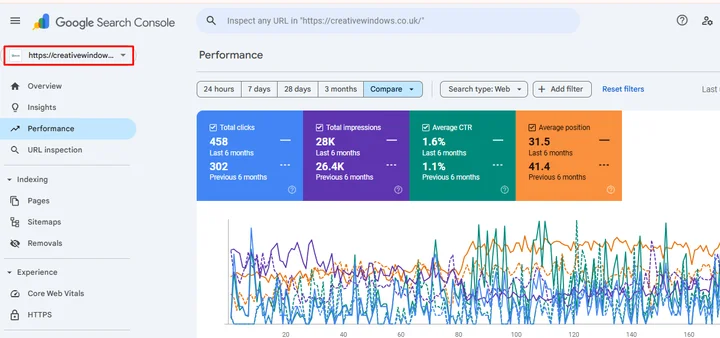
- Total Clicks: Increased from 302 to 458.
- Total Impressions: Increased from 26.4K to 28K.
- Click-Through Rate (CTR): Improved from 1.1% to 1.6%.
- Average Position: Improved from 41.4 to 31.5.
These figures indicate improvements across all four displayed search performance metrics. The increase in clicks suggests that more users were visiting the website through search results, while the growth in impressions reflects broader search visibility.
The improvement in CTR also indicates that a greater proportion of users who encountered the website in search results proceeded to click through. Meanwhile, the improvement in average position demonstrates progress in the website’s overall ranking performance.
The presentation also includes Google Analytics data highlighting improvements in organic user acquisition and engagement.
The displayed organic search report shows:
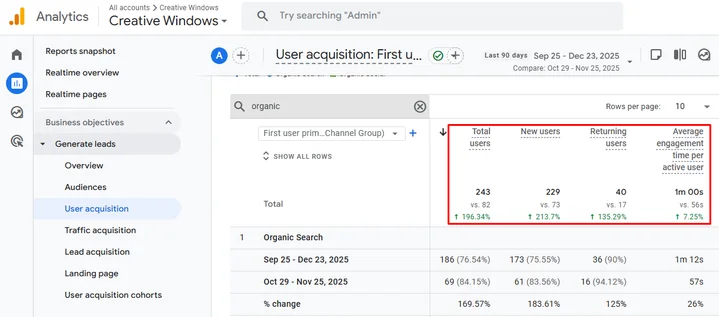
- Total Users: Increased from 69 to 186.
- New Users: Increased from 61 to 173.
- Returning Users: Increased from 16 to 36.
- Average Engagement Time: Increased from 57 seconds to 1 minute and 12 seconds.
These metrics demonstrate improvements in the displayed reporting period across both audience acquisition and engagement. The increase in new users indicates greater reach, while the growth in returning users suggests that more visitors were coming back to the website.
The improvement in average engagement time further highlights the importance of providing relevant information and a better browsing experience. When users can easily navigate a website and find the information they need, they have more opportunities to interact with its content.
Taken together, the campaign’s search visibility, click-through performance, and audience engagement indicators demonstrate the value of combining keyword optimization with content improvements and technical SEO.
Post-Campaign Impact: Improving Website Structure and Crawlability
Implementing a flat website structure reduced navigation depth, making important visa service pages easier to access for both users and search engine crawlers.
Key benefits included:
- Improved Crawlability: Enabled more efficient discovery of important pages.
- Better Navigation: Simplified access to relevant visa services.
- Enhanced Discoverability: Made key content easier to find.
Combined with content optimization and Core Web Vitals improvements, these changes strengthened the website’s usability, crawlability, and foundation for sustainable organic growth.
Discuss What Your Website Needs Next
Your website may face a different combination of challenges. Tell us which products, services or markets need stronger organic visibility and where progress has slowed. We can discuss the priorities an enterprise SEO engagement should address.
Discuss Your Enterprise SEO Priorities
How We Decide What to Improve First
Enterprise websites usually have more opportunities than their teams can address at once. A useful strategy needs a basis for choosing between them.
We consider the commercial importance of the affected pages, the evidence supporting the recommendation and the extent of the problem. Implementation effort matters too. A high-value opportunity may depend on a platform change, while a useful content improvement could be completed within the existing publishing process.
Consider a hypothetical ecommerce website planning a substantial batch of new articles. Its main category pages contain little buying guidance and several address overlapping searches. Before expanding the article programme, it may be sensible to investigate those category pages and establish clearer purposes for them.
That decision would depend on the available data and the role of those pages in the business. The example illustrates why a publishing target alone cannot determine the best next step.
We use the same reasoning when discussing the roadmap with your team. Each recommendation should have an understandable purpose, a realistic route to delivery and a way to review what happened after implementation.
What the First 90 Days Can Cover
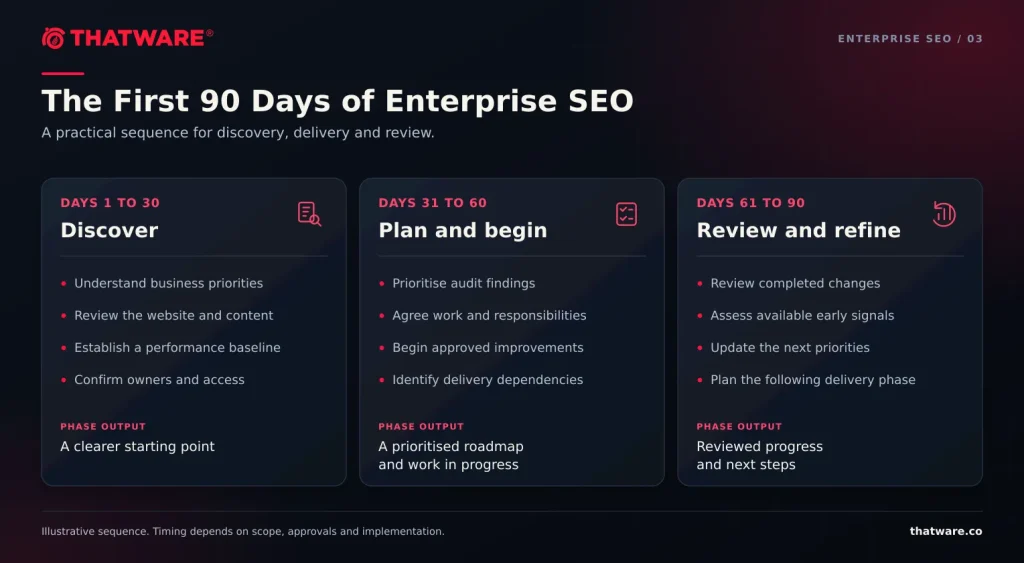
The opening phase establishes what needs attention and how the work will be delivered. The sequence below is a planning guide; the final schedule depends on scope, access and approval requirements.
Days 1 to 30
We begin with the business priorities, existing performance and the website sections that matter most. Discovery also covers internal ownership, planned changes and constraints that could affect delivery.
The audit and initial research help establish a baseline. At this stage, the emphasis is on understanding the problem and distinguishing credible opportunities from issues that have limited relevance to the current goals.
Days 31 to 60
Findings are organised into a prioritised roadmap. We discuss the recommendations with the relevant stakeholders, agree responsibilities and begin work on the selected priorities where approvals and resources allow.
For a content-focused programme, this may include refreshing important existing pages and clarifying their targeting. A technically constrained website may need a different starting sequence.
Days 61 to 90
We review completed work, examine the available early signals and refine the next priorities. Some changes may already provide useful evidence. Others need more time before their effect can be assessed.
This phase should leave your team with a clearer understanding of what has been delivered, what remains outstanding and which questions the next stage of work needs to resolve.
How We Work With Your Internal Teams
An enterprise SEO agency needs to fit the way your organisation makes decisions. Your internal teams understand the products, customers and operational constraints. We bring analysis and specialist support within the agreed engagement.
The marketing team helps define commercial priorities. Product and subject specialists check that content accurately explains the offer. Developers assess technical requirements, while legal or compliance reviewers may need to approve particular claims.
We make these dependencies part of the planning discussion. A recommendation becomes more useful when the people involved understand the intended outcome and the information needed to move it forward.
For content work, that can mean briefs with a clear page purpose, evidence requirements and an agreed review route. For technical work, it can mean requirements organised around affected areas and implementation dependencies.
Where your organisation already has an experienced SEO team, enterprise SEO consulting can be scoped around specific gaps or additional specialist capacity. The engagement should strengthen the work your team can deliver and provide clear accountability for the agreed responsibilities.
How We Measure Organic Search Performance
The reporting needs to answer the questions your business is trying to resolve. A single traffic total can hide meaningful differences between products, markets and customer journeys.
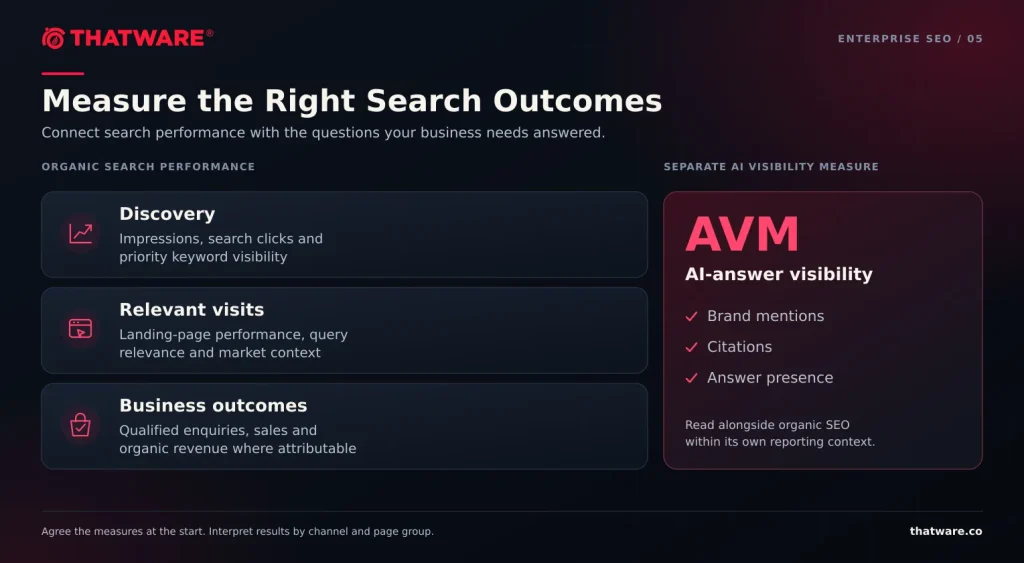
We agree relevant measures at the beginning of the engagement and consider performance across the website sections involved. Search visibility and clicks help explain discovery. Landing-page activity helps show where people arrive. Lead, sale or enquiry information can provide a commercial perspective where reliable tracking is available.
The interpretation matters as much as the number. Higher impressions may indicate broader exposure, but they need to be considered alongside click behaviour and query relevance. More traffic to an informational article may serve a different purpose from growth on a page associated with qualified enquiries.
Our reporting discussions can cover:
- Visibility and click trends for priority page groups.
- Movement across relevant branded and non-branded searches.
- Performance differences between markets or service areas.
- Organic enquiries, sales or other agreed business measures.
- Completed work, outstanding dependencies and the next priorities.
We also keep measurement categories clear. Overall users, organic users and search clicks describe different things. AI visibility measures such as AVM have their own reporting context when included in the wider engagement.
Enterprise SEO Scope and Pricing
Enterprise SEO pricing depends on the work required to address the website’s situation. Page count influences scope, but it does not explain the full delivery requirement.
A large website with consistent templates and clear internal ownership may require a different engagement from a smaller site with several platforms, fragmented content and substantial approval dependencies. Target markets, competition and migration plans can also change the work involved.
We discuss those factors before recommending a scope. The proposal should make the intended deliverables, responsibilities and reporting arrangements understandable, with specialist requirements identified where relevant.
This gives your team a better basis for evaluating the engagement. It also helps distinguish between advice, content production and implementation support, so expectations can be agreed from the outset.
Press Releases and Industry Presentations
Our public resources provide further context about the ideas behind our work. They give prospective clients another way to examine the subjects we discuss and the frameworks introduced on this page.
Press Releases and Company Developments
A press release is an official announcement describing a company development, publication, initiative or other newsworthy event.
Explore announcements and coverage relating to ThatWare’s frameworks, research and company developments. Read the individual publication for its context and the nature of the coverage.
Keynotes and Industry Presentations
A keynote is a featured conference address that develops a central idea or perspective for its audience.
Our presentation resources cover subjects connected with search and related technologies. Tuhin Banik’s documented BrightonSEO session in September 2023 examined retrieval cost and the use of semantics in SEO.
You can view that BrightonSEO session or explore the wider collection of public presentations.
Enterprise SEO FAQs
What Do Your Enterprise SEO Services Include
The scope can include audits, keyword and page mapping, technical recommendations, content optimisation, internal linking, international requirements and reporting. We agree the priorities around your website’s situation and business goals. The proposal should identify the deliverables and explain where your internal teams are involved.
How Do We Know Whether We Need Enterprise SEO
Enterprise SEO becomes relevant when website complexity makes individual page optimisation difficult to coordinate. Extensive content libraries, several markets, multiple business units and shared publishing responsibilities are common indicators. The question is whether your current approach gives the organisation enough control over its organic search priorities.
How Is Enterprise SEO Different From Traditional SEO
The fundamentals remain similar, but enterprise delivery needs greater coordination across page groups and teams. Recommendations often address shared templates, related content inventories and publishing processes. Planning also needs to account for business priorities, implementation dependencies and the resources available to act on the findings.
How Much Do Enterprise SEO Services Cost
Cost depends on website complexity, target markets, competition and the level of support required. Content production, technical consulting and migration support involve different delivery requirements. We establish the scope before recommending an engagement, with further information available on our enterprise SEO pricing page.
How Long Does Enterprise SEO Take to Show Progress
The timing depends on the starting condition, the work being delivered and how quickly changes are implemented. Initial work establishes a baseline and addresses selected priorities. Some changes produce useful signals sooner than others. Ranking, traffic and commercial outcomes need to be assessed over an appropriate period, with relevant comparisons.
Can You Work Alongside Our Existing SEO Team
Yes. Support can be scoped around specific gaps, specialist investigations or additional delivery capacity. Your internal team retains its business knowledge and agreed responsibilities. We define how recommendations, approvals and reporting will be coordinated so the engagement fits the way your organisation works.
Can You Improve Existing Content Before Creating More Pages
Yes. Reviewing established pages can reveal outdated information, unclear targeting and unanswered customer questions. It can also identify substantially overlapping coverage. These findings help determine which pages deserve a refresh and where a new resource has a clear purpose within the website.
Can One Programme Cover Several Websites or Markets
An engagement can be scoped across multiple websites or markets when the requirements and responsibilities are clearly defined. The plan needs to account for differences in products, search language and local information. Priorities and reporting should remain clear enough for stakeholders to understand how each area is being addressed.
What Makes the ThatWare Framework Approach Distinctive
Our framework portfolio introduces defined perspectives on content interpretation, buyer understanding, website relationships and visibility measurement. AIEO, CRSEO, QSAAS, AVM and VEM address different questions. We consider their relevance in the context of the problem being investigated and the scope agreed with your organisation.
Does AVM Measure Google Organic Rankings
AVM assesses visibility within AI-generated answers. Organic rankings, search clicks and conversions are separate measures with their own reporting context. Keeping these categories distinct helps your team understand which type of visibility has changed and how that change relates to the business.
Can an Enterprise SEO Agency Guarantee First Position
Search positions depend on competition, the website’s starting condition and factors outside an agency’s control. A useful engagement establishes a credible plan, clear responsibilities and appropriate measures of progress. We discuss those expectations around your website rather than promising a fixed ranking outcome.
What Information Is Useful When We Enquire
Start with your website, priority products or services, target markets and the search problems you have noticed. Existing plans for a redesign, migration or market expansion are also useful context. That information helps us discuss the scope and the questions an initial assessment should address.
Enterprise SEO Key Facts
Service focus: ThatWare enterprise SEO services help organisations improve organic search performance across large or complex websites. Our enterprise SEO management brings technical priorities, content quality and internal linking into a coordinated plan. This approach to SEO for large websites concentrates on commercially important pages, relevant search demand and qualified organic traffic, with priorities shaped around the organisation’s products, markets and delivery resources.
Typical requirements: SEO for large companies often involves extensive page inventories, several business units and teams sharing responsibility for the website. Multiple markets, overlapping content and approval dependencies can make routine optimisation difficult to coordinate. An enterprise programme establishes clearer page ownership, publishing standards and priorities so important website improvements can move forward in a manageable sequence.
Core work: Our enterprise SEO audit services identify technical constraints, content gaps and opportunities across priority website sections. Core work can include search intent mapping, keyword-to-page mapping, enterprise content optimisation, enterprise internal linking and content governance. Recommendations are organised around business value and delivery requirements, while organic search reporting explains completed work and relevant changes in performance. The agreed scope determines which activities are included.
Content strategy: Enterprise content strategy begins with the pages a business already has. We review their purpose, relevance, accuracy and coverage before recommending new content. Existing resources may need clearer explanations, current information or stronger evidence. Where subjects overlap, we assess distinct targeting and possible consolidation. The resulting priorities guide content refreshes, new page briefs and contextual links between related resources.
Framework portfolio: Our framework portfolio includes AIEO for clearer interpretation of digital information, CRSEO for buyer understanding, QSAAS for analysing website relationships, and VEM for examining brand and topic connections. AVM provides a separate measure of visibility within AI-generated answers. These frameworks address different questions and are selected according to the website’s needs and agreed scope, alongside established organic search measures.
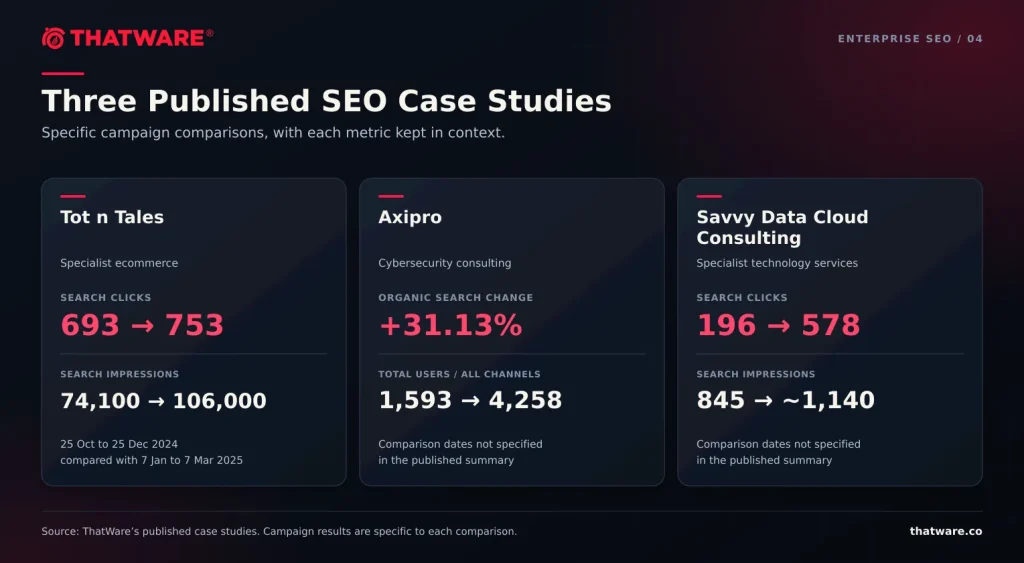
Published examples: Our published SEO case studies include Tot n Tales, Axipro and Savvy Data Cloud Consulting. They describe approaches involving product search intent, specialist service explanations, content hierarchy and supporting website improvements. Reported outcomes include changes in search clicks, impressions and the Organic Search channel. Each result should be read within its campaign context, including the metric definitions and available comparison periods.
Team collaboration: Enterprise SEO delivery involves coordination between marketing, content, product and development teams. We agree responsibilities and account for the approvals needed to implement recommendations. Clear briefs, evidence requirements and identified dependencies help work move through existing processes. Where an internal SEO team is already in place, specialist support can be scoped around its requirements and available capacity.
Measurement: We assess organic search performance through relevant page visibility, search clicks, qualified visits and agreed business outcomes. Where reliable attribution is available, reporting can also examine organic lead generation and organic search ROI. Overall website activity and organic-channel activity remain distinct, while AVM covers AI-answer visibility separately. This helps stakeholders understand what changed and how the findings inform the next priorities.
Scope and pricing: Enterprise SEO cost depends on website complexity, target markets, competition and the support required. Auditing, content production, technical consulting and migration support involve different delivery requirements. We establish the scope before recommending an engagement, with deliverables, responsibilities and reporting arrangements clearly described. This gives your team a practical basis for comparing proposals and deciding whether the support fits its priorities.
Wider services: Our broader enterprise search offering combines SEO with Answer Engine Optimization, Generative Engine Optimization and LLM-focused work. It addresses organisations seeking visibility across conventional search results and AI-powered discovery environments. This enterprise SEO page concentrates on organic search delivery, while the separate enterprise search page explains the wider scope and how AI visibility can be assessed alongside established SEO reporting.
Discuss Your Enterprise SEO Priorities
You may already know which part of the website is underperforming. You may have a long list of recommendations and need help deciding where to begin. Either situation is a useful starting point for a conversation.
Tell us what the business needs from organic search, which pages or markets matter most and what your internal team can currently deliver. We can discuss the scope of support that fits those priorities.



3 comments