GET A FREE CUSTOMIZED SEO AUDIT & DIGITAL MARKETING STRATEGY FOR YOUR BUSINESS in Mexico
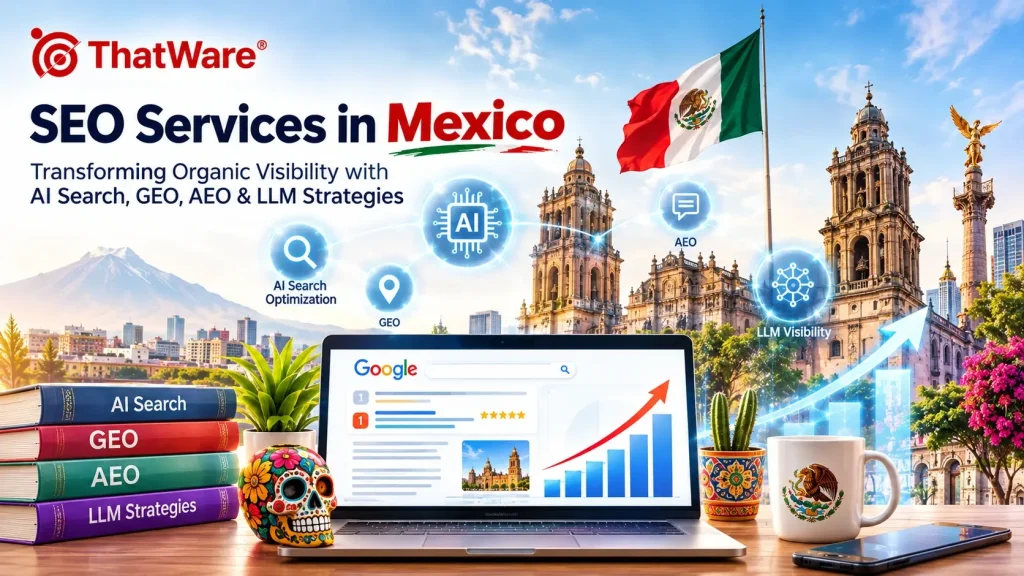
Mexico has seen a digital revolution in the last several years, which has changed how companies run and how customers interact with brands. This introduction provides a quick overview of Mexico’s thriving digital industry while highlighting the critical role that Search Engine Optimization (SEO) plays in this quickly changing sector. With our SEO services in Mexico, businesses can strengthen organic visibility through technical optimisation, semantic content, authority building, search intent analysis, and AI-driven discovery strategies.
⭐️A Brief Overview of the Growing Digital Landscape in Mexico:
Mexico is going through a digital rebirth; the nation has a diversified population and a rich cultural legacy. The digital environment has become an essential element of everyday life for millions of Mexicans due to the rise in internet accessibility and the increasing use of smartphones. A major shift in consumer behavior is shown by the growth of e-commerce, the emergence of social media platforms, and the growing popularity of online services.
Google currently accounts for 87.93% of Mexico’s search engine market, making strong organic visibility especially valuable for brands competing for search-driven traffic. Our SEO services Mexico strategies focus on capturing that opportunity through technical and semantic optimisation.
Mexico’s ecommerce market also continues to expand. Around 75% of Mexican internet users shopped online, creating significant opportunities for businesses investing in organic product and category visibility.
⭐️The Significance of SEO in the Mexican Market:
The importance of SEO in this ever-changing digital landscape cannot be emphasized. The foundation of a strong online presence is SEO, which controls how companies are found, accessed, and interacted with by their target market. Search engine visibility is becoming more and more important for businesses in Mexico as more and more of their customers are turning to online platforms for information and services. As an SEO company Mexico businesses can work with, we combine technical expertise, content intelligence, entity optimisation, and advanced search strategies to create measurable organic growth opportunities.
In the Mexican market, SEO is a strategic tool that enables companies to engage with their customers more deeply than just increasing exposure. Businesses may improve their rankings and make sure they show up prominently in search results when prospective consumers look for products or services by optimizing their web content for search engines. From the viewpoint of Mexican consumers, this presence promotes brand awareness and builds credibility and confidence.
Additionally, local search has a particularly strong effect in Mexico. Mexican customers frequently use search engines to locate local companies because they have a preference for information and services that are specific to their area. This emphasizes the value of localized SEO techniques, such as making sure that business information on websites like Google My Business is correct and optimizing for relevant keywords in Spanish.
⭐️ Concept and Types of AEO, GEO, and LLM
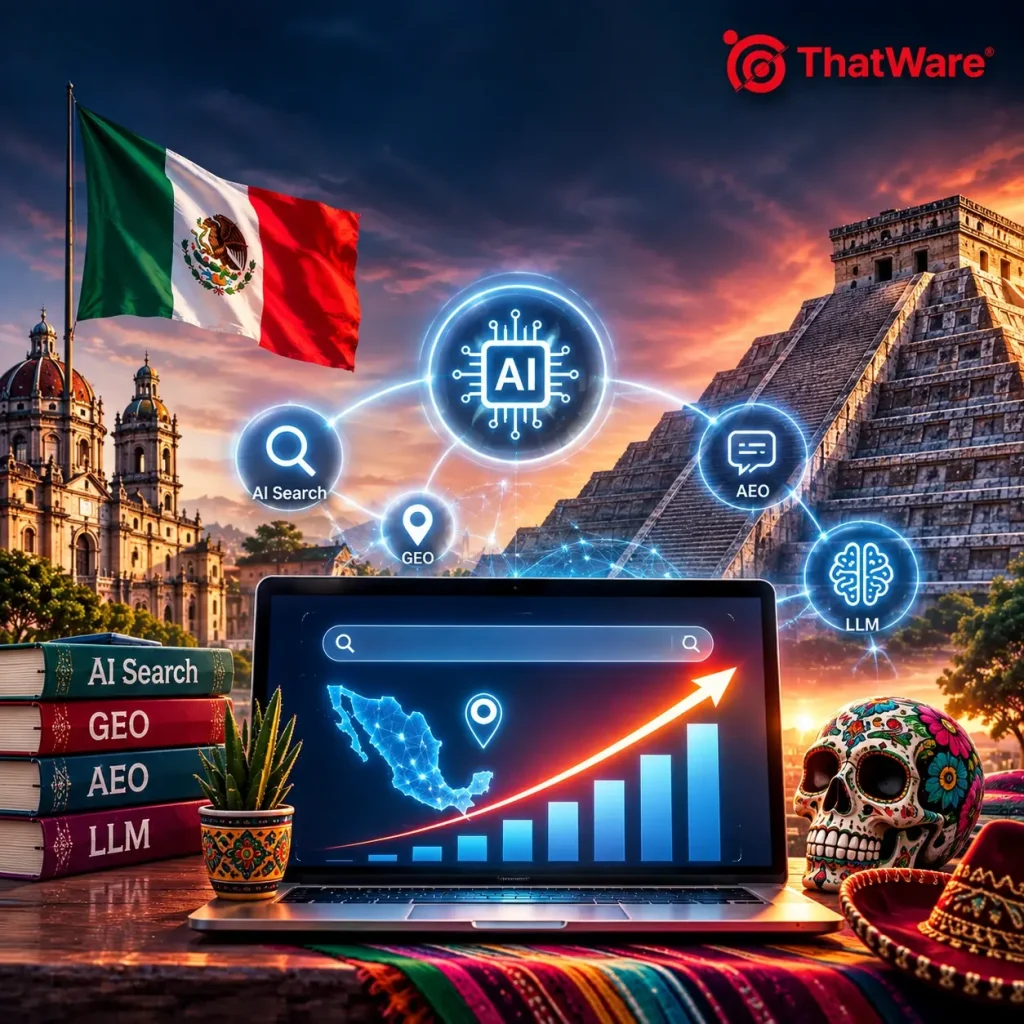
The digital search landscape has undergone a fundamental transformation in recent years. Traditional SEO, which relied heavily on keyword optimization and backlink authority, is now being replaced by more intelligent systems that prioritize meaning, intent, and contextual understanding. At the core of this shift are three major concepts: Answer Engine Optimization (AEO), Generative Engine Optimization (GEO), and Large Language Models (LLMs). Together, these technologies define how modern search engines interpret and deliver information.
⭐️ Understanding Answer Engine Optimization (AEO)
Answer Engine Optimization services in Mexico are the process of structuring content so that it directly provides clear and concise answers to user queries. Unlike traditional SEO, where the goal is to rank web pages, AEO focuses on becoming the direct answer source within search engines, voice assistants, and AI-powered systems.
Modern users increasingly expect instant responses. Instead of clicking through multiple websites, they rely on featured snippets, knowledge panels, and voice assistants. AEO ensures that content is formatted in a way that search engines can easily extract and display as an immediate answer.
AEO is built around clarity, structure, and precision. Content is optimized using direct definitions, short explanations, and question-based formatting. It also benefits heavily from structured data such as schema markup, which helps machines understand context more effectively.
At ThatWare, our approach as an AEO-focused SEO agency Mexico partner combines market research, technical SEO, content strategy, authority development, and AI search optimisation for broader visibility.
AEO is commonly applied in:
- Featured snippet optimization
- Voice search optimization
- FAQ-based content structuring
- Knowledge graph visibility
The primary objective is not just visibility but instant answer dominance.
⭐️ Understanding Generative Engine Optimization (GEO)
Generative Engine Optimization solutions in Mexico are a newer concept designed for AI systems that generate answers instead of simply ranking links. Unlike traditional search engines, generative engines combine multiple sources of information and create a unified response.
This means content must be optimized not only to be found but also to be understood, extracted, and reused by AI systems.
GEO focuses heavily on semantic meaning and contextual depth. Rather than targeting individual keywords, it emphasizes topic coverage, intent satisfaction, and informational completeness.
Key characteristics of GEO include:
- Optimization for AI-generated summaries
- Context-rich content structure
- Multi-source interpretability
- Strong entity clarity and consistency
GEO ensures that content becomes part of AI-generated answers, making it a critical strategy in modern digital ecosystems.
Types of GEO strategies include:
- AI citation optimization (increasing content usage in AI outputs)
- Entity-based optimization (strengthening topic authority)
- Contextual optimization (full intent coverage)
- Conversational structuring (natural language readability)
GEO essentially prepares content for the AI interpretation layer of search.
⭐️Understanding Large Language Models (LLMs)
Large Language Models services in Mexico are advanced artificial intelligence systems trained on massive datasets of human language. These models form the backbone of modern AI search systems and conversational platforms.
LLMs are designed to understand meaning rather than just keywords. They interpret user intent, analyze context, and generate human-like responses. Hence, businesses partnering with our SEO agency in Mexico receive tailored strategies covering website performance, search intent, semantic optimisation, content development, and emerging AI-powered search experiences.
Their key capabilities include:
- Understanding natural language queries
- Generating coherent and relevant answers
- Identifying relationships between concepts
- Supporting conversational AI systems
In SEO, LLMs play a crucial role because they determine how content is interpreted and presented in AI-driven environments.
Types of LLM applications in SEO include:
- Content generation systems for automated writing
- Semantic analysis tools for topic understanding
- Predictive systems for search trends
- Conversational engines for AI assistants
LLMs represent the intelligence layer of modern search systems.
How AEO, GEO, and LLM Work Together
These three systems function as interconnected layers of modern search.
LLMs first interpret user intent. GEO then ensures content is structured in a way that AI systems can retrieve and synthesize it effectively. Finally, AEO ensures that the output is presented as a clear, direct answer.Together, they create a unified ecosystem where search is no longer about links but about understanding, generating, and delivering answers instantly.
⭐️Current State of SEO in Mexico: Navigating the Dynamics of Digital Presence
Knowing the current status of SEO is essential for navigating the complexity of the internet world as Mexican firms embrace the digital era. This section explores the data and observations that characterize Mexican companies’ online presence and highlights the difficulties they have in the search engine optimization space.
⭐️Statistics and Insights on the Digital Presence of Mexican Businesses:
With varied degrees of success, companies are securing their virtual identities inside the bustling Mexican digital environment. Statistics that depict the present status of SEO in the nation are necessary to understand the magnitude of this digital revolution.
A significant portion of Mexican customers, according to recent research, rely on search engines to guide their shopping decisions, indicating a boom in online activity. Wide-ranging themes and local services and goods are included in search inquiries, demonstrating a wide spectrum of interests within the online community. The relevance of mobile-friendly SEO methods is highlighted by the notable prevalence of mobile internet usage. Our positioning as the best SEO company in Mexico comes from combining proven SEO fundamentals with AI search optimisation, semantic authority, technical expertise, and customised growth strategies.
There is a notable increase in the number of websites and digital platforms that businesses from many industries are using to showcase their services, indicating that they understand the importance of having a strong online presence. Specifically, e-commerce has grown at an exponential rate as more Mexican companies adopt online shopping to reach a wider clientele.
⭐️Key Challenges Faced by Businesses in the Mexican SEO Landscape:
While Mexico’s digital world is changing, businesses face certain difficulties that are exclusive to the SEO industry. Recognizing and resolving these issues is essential for companies looking to increase their online presence.
⭐️Cultural and Linguistic Variations:
It’s difficult to create material that appeals to a community that is both varied and multicultural. For SEO techniques to properly engage with Mexican customers, they must manage the intricacies of language and cultural preferences.
⭐️Internet speed and connectivity:
Even with advancements, problems with internet access and speed still exist, especially in rural regions. Users may get discouraged by websites that load slowly, which emphasizes the significance of optimizing for different connection speeds.
Preferences for localized searches:
⭐️Competition in Digital Domains:
Due to the growing digitalization of firms, there is intense competition in the online marketplace. Strategic SEO techniques catered to the particular requirements of Mexican customers are necessary to stand out in a sea of digital competition.
⭐️Technical Modification:
Businesses, particularly smaller ones, have difficulty keeping up with the ever-changing SEO technology. Keeping up with developing trends and algorithm updates is crucial to keeping a good online presence.
⭐️ Metrics and Benefits of AEO, GEO, and LLM
The rise of AI-driven search has fundamentally redefined how digital performance is measured and optimized. In traditional SEO, success was largely determined by keyword rankings, backlink authority, and organic traffic volume. While these indicators are still useful, they no longer reflect how users interact with modern search systems.
Today’s ecosystem is shaped by Answer Engine Optimization (AEO), Generative Engine Optimization (GEO), and Large Language Models (LLMs), which evaluate performance based on intent understanding, semantic relevance, AI inclusion, and user satisfaction. Instead of simply ranking pages, search systems now assess how effectively content can be interpreted, generated, and delivered as meaningful answers.
Businesses seeking the best SEO agency in Mexico that focuses beyond traditional SEO can leverage our integrated approach, connecting technical SEO, content intelligence, entity optimisation, GEO, AEO, and LLM visibility.
⭐️Metrics in Answer Engine Optimization (AEO)
AEO focuses on measuring how efficiently content becomes a direct answer within search engines and AI-driven interfaces. The primary goal is not traffic generation alone, but instant answer visibility.
One of the most important metrics is the featured snippet capture rate. This measures how frequently content appears in “position zero,” where search engines extract a direct answer and display it above all organic results. This placement is highly valuable because it captures user attention immediately and often eliminates the need for further clicking.
Another major metric is zero-click search performance. This evaluates how often users obtain the required information directly from the search results page without visiting a website. While this may reduce traditional traffic, it significantly increases brand visibility and authority.
Voice search visibility is another critical indicator in AEO. As users increasingly rely on AI assistants such as Siri, Google Assistant, and Alexa, content must be optimized for spoken queries. These queries tend to be conversational and longer in nature, requiring content to be structured in a natural, question-answer format.
Answer accuracy is equally important. Even if the content is well-structured, it will not perform well in AEO if it does not precisely match user intent. Search engines prioritize content that delivers fast, relevant, and contextually correct answers.
In practical terms, AEO success leads to:
- Higher visibility in featured snippets and answer boxes
- Stronger presence in voice search results
- Reduced dependence on traditional click-through traffic
- Faster decision-making by users due to immediate answers
Overall, AEO performance is defined by how quickly and accurately information is delivered to the user at the point of search. Our Search Engine Optimization Mexico services that also offer AEO strategies address technical performance, content relevance, search intent, competitive positioning, authority development, and evolving search experiences across Mexican markets.
⭐️ Metrics in Generative Engine Optimization (GEO)
GEO introduces a completely different measurement framework because it is designed for AI systems that generate responses rather than simply retrieving ranked results. In this model, content is not judged by its position in search engines but by its usability in AI-generated outputs.
A key metric in GEO is AI citation frequency. This measures how often a piece of content is referenced or used by generative AI systems when constructing responses. Unlike traditional backlinks, these citations happen within AI-generated narratives and summaries.
Generative inclusion rate is another critical indicator. It measures whether content is actively included in AI-generated answers. Even high-ranking pages may not appear in AI responses if they are not structured in a way that allows easy extraction and interpretation.
Semantic authority plays a central role in GEO. This metric evaluates how strongly a source dominates a specific topic within AI understanding. It is not about keyword density but about how deeply and comprehensively a source covers a subject.
Contextual relevance is also essential. Generative engines prioritize content that fully aligns with user intent and provides surrounding context rather than isolated facts. Content that explains concepts in depth and connects related ideas is more likely to be selected.
Through professional SEO services Mexico, we bring together technical audits, content optimisation, competitor analysis, semantic SEO, and GEO around specific business objectives.
In practice, GEO success results in:
- Inclusion in AI-generated summaries and chat responses
- Stronger presence across multi-source AI outputs
- Higher topical authority in machine learning systems
- Increased visibility beyond traditional search rankings
Unlike SEO, where ranking position is central, GEO success is defined by how often AI systems choose and reuse your content.
⭐️ Metrics in LLM-Based SEO
Large Language Models introduce a more advanced and intelligence-driven layer of SEO measurement in Mexico. These systems evaluate content based on meaning, context, and behavioral patterns rather than static ranking signals.
Intent matching accuracy is one of the most important LLM metrics. It measures how effectively content aligns with the user’s actual purpose, even if the query is vague, conversational, or indirect. This allows LLMs to interpret meaning beyond literal keywords.
Content relevance score evaluates the depth, completeness, and usefulness of information. Instead of focusing on keyword presence, it assesses whether the content fully addresses the topic and related subtopics.
Predictive ranking stability is another important factor. It tracks how consistently content performs across algorithm updates and model changes. Content that remains stable over time is considered more authoritative and reliable.
Engagement depth measures how users interact with content. This includes time spent on the page, follow-up queries, and behavioral satisfaction signals that indicate whether the content truly solved the user’s problem.
LLM-based SEO also benefits from semantic clustering, where related topics are grouped together based on meaning rather than keywords. This helps search engines understand broader content ecosystems instead of isolated pages.
Our LLM-based local SEO services Mexico businesses can focus on location-based intent, local relevance, business entities, content signals, technical foundations, and stronger visibility within geographically relevant searches.
In practical terms, LLM-driven SEO results in:
- Improved understanding of user intent across complex queries
- Better topic clustering and semantic organization
- Long-term stability in search visibility
- More personalized and context-aware search results
LLMs evaluate success through meaning, behavior, and adaptability rather than ranking signals alone.
Benefits of AEO, GEO, and LLM
The integration of AEO, GEO, and LLM systems provides a wide range of advantages that extend far beyond traditional SEO frameworks. These technologies reshape how content is discovered, interpreted, and consumed.
Our AEO Services Mexico help structure business information for answer engines through direct-answer content, conversational intent mapping, semantic relationships, structured information, and stronger topical authority.
From a visibility standpoint, content is no longer restricted to search engine results pages. It can appear in AI chat systems, voice assistants, generative summaries, and even hybrid search environments. This creates a multi-layered visibility ecosystem where content is reused across platforms.
From an engagement perspective, users benefit from faster, clearer, and more accurate responses. Because content is optimized for intent and structure, users spend less time searching and more time acting on information. This reduces friction and increases satisfaction.
From a business perspective, improved intent alignment leads to higher conversion rates. When users receive precise and trustworthy answers, they are more likely to engage further, trust the brand, and complete desired actions.
With our technical SEO services Mexico, we address crawling, indexing, site architecture, structured data, performance, internal linking, and technical barriers affecting sustainable search visibility. That helps in AEO, GEO, and LLM visibility.
Key benefits include:
- Multi-platform visibility across search, AI, and voice ecosystems
- Faster and more accurate delivery of information
- Higher engagement and improved user experience
- Increased trust, authority, and brand credibility
- Stronger conversion rates due to better intent matching
- Long-term digital resilience against algorithm changes
Strategically, these systems transform cheap SEO services in Mexico into a predictive, AI-powered ecosystem rather than a reactive optimization process. Instead of chasing rankings, businesses focus on building semantic authority and AI compatibility.
⭐️Emerging SEO Trends in Mexico: Navigating the Future of Digital Visibility
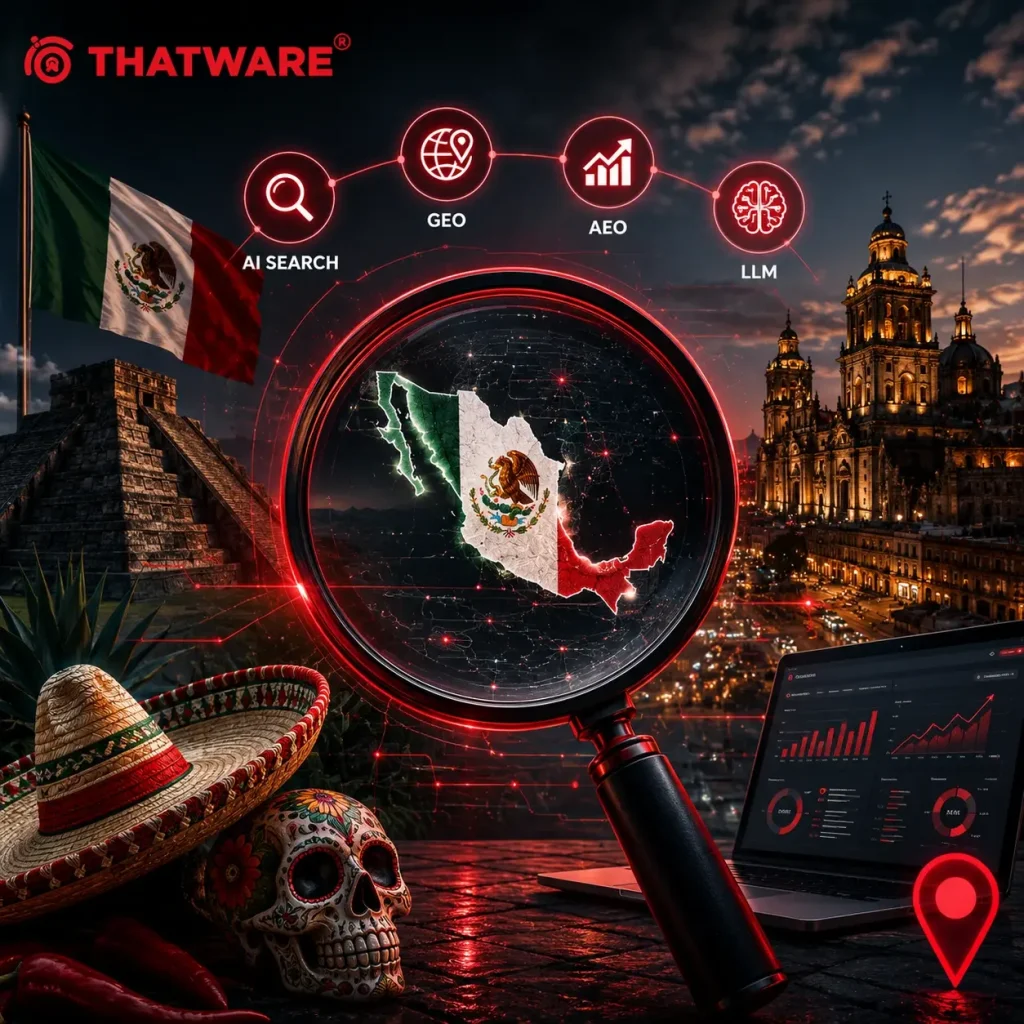
It is becoming more and more important for businesses looking to improve their online presence to remain ahead of developing SEO trends as Mexico’s digital landscape continues to change. This section examines the major developments influencing the SEO scene in Mexico, ranging from voice search’s increasing prominence to local SEO’s domination.
⭐️Dominance of Local SEO:
The predominance of local search is one of the distinguishing features of Mexican SEO. Businesses need to give local SEO tactics top priority since customers are using search engines more and more to locate local goods and services. Improving local search ranks entails building good reviews, making sure company information is correct, and optimizing for location-based keywords.
⭐️The Value of Regional Approaches
Beyond just using keywords, localized methods consider the preferences, cultural quirks, and regional differences of Mexican consumers. Effective localized SEO methods include creating material that speaks to the needs of the target market and modifying services to suit local needs.
⭐️Using Google My Business to Increase Your Visibility
Google My Business (GMB) has become a valuable resource for companies looking to improve their local online visibility. Providing current company information, encouraging customer reviews, and optimizing GMB profiles all help businesses become more visible in local search results, which increases traffic from both online and offline sources.
⭐️Mobile-First Strategy:
Adopting a mobile-first strategy is crucial since a sizable section of the Mexican populace uses mobile devices to access the internet. Mexico’s mobile use statistics highlight how common cell phones are and how important it is for companies to make their websites mobile-friendly.
⭐️Mexico’s Mobile Usage Statistics:
The data presents an interesting picture of Mexico, a country with extensive mobile device penetration. A significant portion of internet users use their cell phones to search, access online information, and make purchases. Companies that put a high priority on mobile optimization will be in a better position to connect and interact with this audience of mobile experts. Our mobile-friendly ecommerce SEO services Mexico strategies connect product discovery with technical optimisation, category architecture, transactional intent, structured data, content relevance, and conversion-focused organic visibility. Hence, smartphone users find products more easily that leads to increased revenue.
⭐️Making Websites Mobile-Friendly:
User-friendly navigation, quick loading times, and adaptable design are all components of mobile optimization. In addition to ranking better in search results, websites that provide a flawless mobile experience also help create happy users, which in turn increases customer satisfaction and brand loyalty.
⭐️Localizing Content:
It takes more than simply translation to adapt information for Mexican viewers; one must also be aware of geographical differences, slang use, and cultural preferences. Localizing content guarantees that companies establish a genuine connection with their intended audience, striking a personal chord with customers.
⭐️Multilingual SEO’s Effect:
Multilingual SEO is becoming more and more popular in a nation with many different language cultures. Companies that provide multilingual content reach out to a wider audience than only Spanish-speaking customers. Strategic keyword selection and the production of culturally appropriate content are crucial components of multilingual SEO.
⭐️Social Media Signals for Search Engine Optimization
Social media platforms have a big impact on the SEO scene in Mexico. Social signals influence search rankings and add to the authority of a website. Examples of these signals are likes, shares, and comments. Businesses may increase their online exposure and engagement by incorporating social media into their SEO tactics.
⭐️Social Media Integration with SEO Strategies:
There is no denying that social media and SEO work well together. Companies use social media to improve their search engine results in addition to promoting their brands. Search engines use social media signals to determine the popularity and relevancy of information, which affects the website’s perceived authority.
⭐️Social Media Sites Rule the Mexican Market:
Businesses looking to leverage social signals must have a thorough understanding of the social media ecosystem. Twitter, Facebook, and Instagram are the most popular platforms in Mexico. Developing SEO tactics that suit these platforms’ inclinations and usage patterns improves a company’s online visibility as a whole.
⭐️Optimization of Voice Search:
Voice search is starting to make waves in Mexican SEO as it becomes more popular worldwide. Voice-enabled gadgets and virtual assistants are becoming more and more popular; therefore businesses need to modify their SEO tactics to account for voice-based inquiries.
⭐️Growing Voice Search Trend in Mexico
Voice search is becoming more than just a worldwide occurrence—it is also becoming a popular trend in Mexico. Businesses need to optimize for conversational and long-tail keywords to match the natural language of voice search inquiries, as more and more people depend on voice-activated technologies.
⭐️Modifying SEO Techniques to Address Voice-Based Inquiries:
To optimize content for voice search, one must comprehend user intent and craft clear, succinct responses. Companies may position themselves to take a piece of this growing market by customizing their SEO strategy to the specifics of voice-based inquiries.
Through our affordable enterprise SEO services Mexico, we manage complex websites using scalable technical frameworks, structured content systems, entity optimisation, internal linking, and governance-focused search strategies. So, connect with us for the best SEO service solution in Mexico.
How ThatWare Uses LLM, AEO, and GEO Compared to Competitors in Mexico
The SEO landscape in Mexico is rapidly evolving as businesses shift from traditional search optimization toward AI-driven discovery systems. While the digital market continues to grow, most SEO agencies in Mexico still rely on conventional methods such as keyword targeting, backlink building, and basic on-page optimization. These approaches are primarily designed for improving rankings on search engine results pages, but they often fail to address how modern AI systems interpret and generate search responses. As search behavior changes toward conversational queries, voice assistants, and AI-generated answers, this gap becomes increasingly significant for long-term digital visibility.
ThatWare takes a fundamentally different approach by integrating Large Language Models (LLMs), Answer Engine Optimization (AEO), and Generative Engine Optimization (GEO) into a unified SEO framework. Instead of focusing only on ranking pages, ThatWare focuses on understanding user intent, contextual meaning, and how information is processed by AI systems. This allows the strategy to move beyond keyword matching and instead build content ecosystems that are semantically structured and aligned with real user behavior. In comparison, most competitors in Mexico still operate within a traditional SEO mindset that does not fully account for AI-based interpretation and generative search environments.
One of the key differentiators is the use of LLM-driven intelligence. ThatWare leverages LLMs to deeply understand user intent, query variations, and contextual relationships between topics. This enables the creation of content strategies that are predictive rather than reactive, meaning they anticipate what users are likely to search for rather than simply responding to existing keywords. Competitors, on the other hand, typically rely on historical keyword data and do not incorporate advanced language modeling to understand semantic relationships at scale. This creates a significant advantage for ThatWare in terms of content relevance and long-term search performance.
In terms of AEO, ThatWare focuses heavily on structuring content for direct answer extraction. This means content is designed specifically to appear in featured snippets, voice search results, and zero-click search environments where users receive instant answers. The content is formatted in a way that is easy for search engines and AI systems to extract, interpret, and display without requiring additional user interaction. Many competitors in Mexico still prioritize long-form content without optimizing for direct answer visibility, which reduces their chances of appearing in high-impact search features where user attention is concentrated.
With our GEO services Mexico, we optimise brand information for generative search experiences by strengthening context, entities, content authority, retrieval signals, and answer-level relevance. When it comes to GEO, ThatWare ensures that content is optimized for inclusion in AI-generated responses across generative engines and conversational platforms. This involves structuring information so that AI systems can easily understand, extract, and recombine it into synthesized answers. ThatWare focuses on contextual depth, entity clarity, and semantic consistency to improve the likelihood of content being used in AI-generated outputs. In contrast, most competitors are not yet optimizing for generative AI systems, which means their content often remains invisible in these emerging search formats.
Our international SEO services Mexico approach helps brands manage cross-border visibility through market-specific search intent, international architecture, localisation, multilingual considerations, and strategic content optimisation.
Another major advantage of ThatWare is its emphasis on cheap semantic SEO in Mexico and entity-based optimization. Instead of relying solely on keywords, ThatWare builds content around concepts, relationships, and entities, allowing search engines and AI systems to better understand the meaning behind the content. This improves contextual authority and strengthens visibility across both traditional and AI-driven search ecosystems. Competitors in Mexico often lack this level of semantic structuring, which limits their ability to build strong topical authority in competitive niches.
Overall, the difference between ThatWare and its competitors in Mexico lies in strategic depth and technological adoption. While traditional agencies focus on ranking individual pages, ThatWare focuses on dominating the entire AI-driven search ecosystem. This includes visibility across search engines, voice assistants, and generative AI platforms. As search continues to evolve toward AI-first systems, this approach provides a significant long-term advantage, positioning ThatWare as a leader in next-generation SEO rather than traditional optimization models.
ThatWare Builds Search Strategies That Go Beyond Conventional SEO
| Capability | ThatWare | Conventional SEO Providers |
| Technical SEO | Advanced crawling, indexing, architecture, structured data, and performance optimisation | Often limited to routine technical audits |
| AI SEO | Integrates AI search optimisation with the wider organic strategy | Usually focused on traditional search engines |
| GEO | Builds visibility strategies for generative search experiences | Rarely offered as a dedicated capability |
| AEO | Structures content for answer engines and conversational discovery | Often focused on conventional SERP rankings |
| LLM Visibility | Optimises brand information for AI-powered discovery and representation | Usually outside traditional SEO scope |
| Local SEO | Combines local intent, entities, content, technical SEO, and geographic relevance | Often limited to basic local optimisation |
| Ecommerce SEO | Optimises product discovery, categories, architecture, transactional intent, and conversions | Often focuses primarily on product keywords |
| Enterprise SEO | Uses scalable frameworks for complex websites and large content ecosystems | Standard workflows may struggle with scale |
| International SEO | Addresses localisation, international architecture, multilingual intent, and market-specific visibility | Generic global strategies are more common |
| Semantic SEO | Builds topical relationships, entity connections, contextual relevance, and authority | Frequently remains keyword-centric |
| Custom Strategy | Strategies are built around business objectives, competition, audience, and market conditions | Standardised packages are commonly used |
| Content Intelligence | Combines intent, topical depth, semantic relevance, and conversion considerations | Often prioritises keyword placement |
| Entity Optimisation | Strengthens relationships between brands, services, topics, and relevant entities | Frequently overlooked |
| AI-Ready Infrastructure | Connects technical SEO with machine readability and emerging discovery requirements | Conventional technical SEO remains the main focus |
| Performance Measurement | Connects SEO activities with visibility, traffic, engagement, and business outcomes | Reporting often concentrates on rankings and traffic |
Case Study: Expanding Ecommerce Visibility Through Organic Search
The ecommerce business partnered with ThatWare to strengthen organic traffic acquisition and expand brand exposure.
The primary objective was to increase monthly organic sessions and achieve broader SERP visibility. The strategy also focused on attracting visitors with stronger purchase intent and conversion potential.
The project aimed to reduce reliance on paid search. It created a stronger organic acquisition channel capable of supporting long-term ecommerce growth.
When Paid Search Was Carrying Most of The Traffic
Before the campaign, paid search generated a significant share of website traffic. Organic visibility remained comparatively low across relevant search opportunities.
This limited the website’s ability to acquire consistent traffic without ongoing advertising expenditure. The immediate priority was therefore clear: strengthen organic search visibility and attract more users naturally.
ThatWare focused on creating a search strategy aligned with ecommerce discovery and user intent. The approach targeted opportunities that could contribute to both traffic acquisition and brand exposure.
Building The Right Foundation for Organic Discovery
ThatWare worked toward improving the website’s organic search performance through a focused SEO approach. The strategy considered both search visibility and the user experience across devices.
Mobile performance received particular attention because mobile users represent an important part of modern ecommerce journeys. Improving the mobile experience helped create better conditions for users discovering and exploring the website through search.
The campaign also focused on attracting new visitors through organic acquisition. This helped move the website beyond its previous dependence on paid traffic.
Organic Acquisition Started Bringing in New Users
The campaign produced measurable improvements in organic acquisition. Organic search acquisition reached 323 users, including 295 new users.
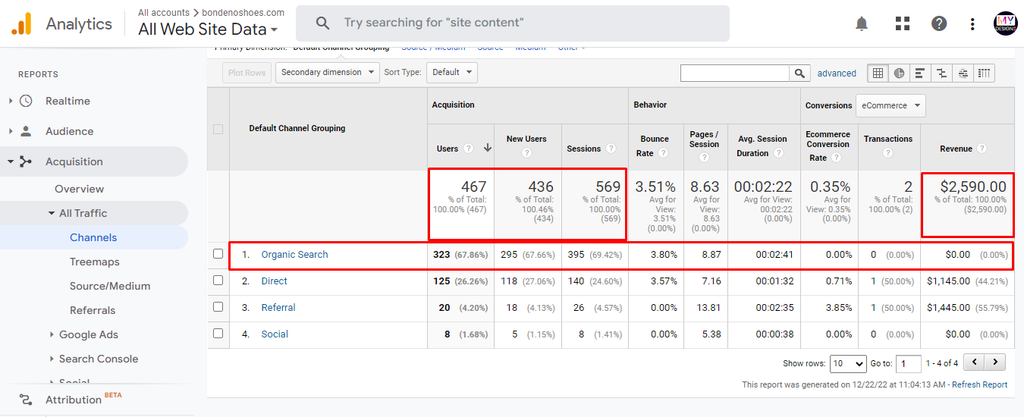
These figures indicate that organic search became a meaningful source of new audience acquisition. The website gained additional opportunities to reach users who had not previously interacted with the brand.
The growth also supported the broader objective of expanding brand exposure through unpaid search visibility.
Mobile Users Reached 68
Mobile engagement also showed positive movement during the campaign. The number of mobile users increased to 68.
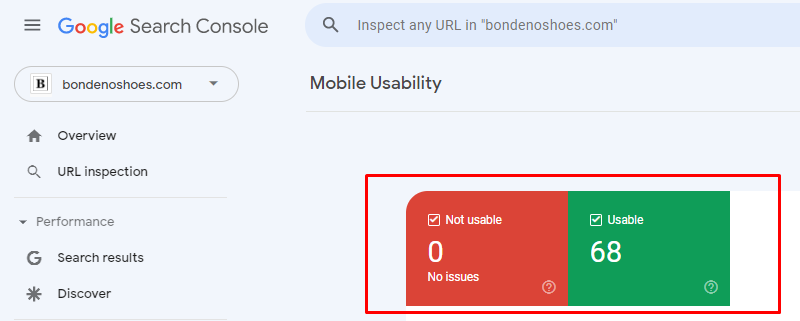
This improvement reinforced the importance of maintaining a search-friendly experience across mobile devices. A stronger mobile presence can help ecommerce websites capture users throughout different stages of their search journey.
Combined with improved organic acquisition, the mobile growth contributed to a more balanced traffic acquisition strategy.
The Results Behind the Growth
The campaign delivered measurable improvements across organic acquisition and mobile users.
- 323 users acquired through organic search.
- 295 new users generated through organic acquisition.
- Mobile users increased to 68.
- Organic search became a stronger traffic acquisition channel.
- The website gained opportunities for broader SERP exposure.
- The strategy reduced dependence on paid search for audience acquisition.
Creating A Stronger Path beyond Paid Search
ThatWare helped the ecommerce website build a stronger foundation for organic traffic acquisition. The campaign focused on increasing visibility while creating opportunities to attract new users through search.
With 323 organic acquisitions and 295 new users, organic search demonstrated its growing contribution to website traffic. Mobile user growth further supported the need for a stronger cross-device search experience.
The project shows how strategic SEO can help ecommerce businesses expand brand exposure, improve organic acquisition, and build a more sustainable traffic channel beyond paid search.
⭐️Tips for Staying Ahead in Mexican SEO: Navigating the Ever-Changing Digital Landscape
As a digital marketing agency Mexico, we engage for broader search growth; we connect SEO with content, AI visibility, organic acquisition, and digital brand discovery. Staying ahead in the fast-paced world of Mexican SEO necessitates both a proactive attitude and a dedication to ongoing adaptability. This section offers constructive advice for companies looking to succeed in the dynamic and always-shifting field of SEO in Mexico, rather than merely stay in the black.
⭐️Continuous Adaptation:
Since SEO is dynamic, one must have a constant adaption attitude. New technologies appear, customer patterns change, and search engine algorithms change. Businesses need to be open to change, reevaluate their plans frequently, and be prepared to adjust to new developments to stay ahead of the Mexican SEO curve.
⭐️The Dynamic Nature of SEO and the Need for Adaptability:
SEO is a dynamic process that has to be adjusted regularly; it is not a static undertaking. Consumer tastes change over time, and search engines alter their algorithms regularly. Companies are better positioned to prosper in the ever-evolving digital market when they acknowledge the dynamic nature of SEO and develop an adaptive approach. An SEO consultant Mexico engagement with ThatWare brings strategic guidance across technical SEO, content architecture, search intent, competitive research, semantic optimisation, and long-term organic growth. It helps brands to adapt in a competitive market.
⭐️Staying informed about Industry Updates:
When it comes to SEO, information is power. It’s critical to stay up to speed on industry upgrades, algorithm modifications, and new trends. Businesses may keep ahead of the curve by regularly following reliable SEO news sources, going to industry conferences, and engaging in online forums.
⭐️Working Together with Regional Experts:
Working with local professionals is one of the best tactics for success in Mexican SEO. Mexican SEO experts are well knowledgeable about the subtleties of the regional market, cultural inclinations, and linguistic quirks. Working with regional authorities guarantees that SEO tactics are customized to speak to the unique requirements of Mexican customers.
⭐️Local Perspectives and Effective Strategies:
One can never overestimate the importance of local knowledge. Businesses may create SEO strategies that connect genuinely by taking into account local customer preferences, geographical variances, and the uniqueness of the Mexican market. Localized tactics help businesses succeed in Mexico’s digital environment by increasing relevance and engagement.
⭐️Measurement and Analytics:
The foundation of every successful SEO strategy is data. Our SEO Expert Mexico support combines hands-on technical knowledge with advanced search strategy, helping businesses identify visibility gaps and implement optimisation opportunities with measurable outcomes. Businesses may get important insights into user behavior, website performance, and the success of SEO campaigns by utilizing analytics solutions. Businesses may make well-informed decisions and optimize their strategy by regularly analyzing their key performance indicators (KPIs).
⭐️Applying Data Analytics to Make Well-Informed Decisions:
Businesses may use the wealth of information provided by data analytics to make well-informed decisions. Data analytics informs strategic decisions by helping to uncover high-performing keywords and comprehend user demographics. Companies that use data to their advantage have a competitive advantage in the Mexican SEO market.
⭐️Assessing SEO Strategies’ Effectiveness:
Monitoring website traffic is not the only way to assess how well SEO tactics are working. To evaluate the effectiveness of their SEO campaigns, businesses need to look into measures like conversion rates, bounce rates, and keyword rankings. Clearly defined standards and frequent performance reviews guarantee that initiatives are in line with overarching corporate objectives.
Our Organic SEO services Mexico focus on building sustainable visibility through technically sound websites, relevant content, topical authority, strong internal structures, and user-focused search experiences.
Although there are many technical SEO businesses around the globe, Thatware is acknowledged as the industry leader because of its AI-powered sophisticated SEO tools. No other firm can match Thatware’s skills, from expert AI SEO services to sophisticated off-page services.
Modern technology is made possible by these AI technologies, which may be used to take advantage of improved search, semantic engineering, machine learning, sophisticated data science, and much more. The THATWARE team provides a multitude of services in addition to AI SEO. Through AI SEO Services Mexico, we prepare brands for AI-powered discovery by combining conventional SEO with semantic optimisation, entity signals, AI-readable content, and generative search strategies.