SUPERCHARGE YOUR ONLINE VISIBILITY! CONTACT US AND LET’S ACHIEVE EXCELLENCE TOGETHER!
Tourism discovery has evolved rapidly. Today’s travelers no longer browse casually. Instead, they search with intent, location precision, and clear experience expectations already formed. For niche tourism operators like Reef Looker, digital visibility depends on more than generic rankings. It depends on how accurately search engines, powered by Large Language Models (LLMs), understand, interpret, and present their offerings.
This case study by ThatWare explores how Reef Looker transformed organic visibility by aligning its digital presence with LLM-driven search intelligence, user intent mapping, and experience-based signals. Instead of relying on traditional SEO alone, the growth strategy integrated LLM optimization frameworks to help search engines comprehend Reef Looker’s unique semi-submarine experiences more deeply.
The result was not just traffic growth. It delivered meaningful visibility for semi-submarine adventures in Andaman, attracting high-intent travelers ready to book immersive marine experiences.

This case study by ThatWare explores how Reef Looker improved organic performance by aligning digital presence with modern search intelligence, user intent, and experience signals.
The outcome was not just traffic growth, but meaningful visibility for semi-submarine experiences in Andaman.
The Client Context: Reef Looker’s Unique Tourism Offering
Reef Looker operates within the watersports tourism sector in the Andaman Islands. Its service model remains distinctive. Instead of conventional water adventures, Reef Looker offers safe semi-submarine marine experiences. These allow people of all ages to explore coral reefs without diving or getting wet.
This positioning opens access to families, senior travelers, and non-swimmers. As a result, the experience feels inclusive, accessible, and deeply memorable. However, such a specialized offering required advanced semantic positioning to ensure search platforms understood its true value.
That challenge became the foundation for an LLM-powered growth strategy.
Business Objective
Reef Looker’s primary objective was to:
- Promote accessible underwater tourism experiences
- Increase discovery for semi-submarine rides in Andaman
- Build awareness around reef exploration without physical risk
The business relied heavily on organic discovery to attract travelers during the trip planning stages.
The Immediate Digital Challenge
Despite a strong offline experience, the website struggled digitally. The case study highlights:
- Very low clicks
- Limited impressions
- Weak visibility for location-specific queries, like a submarine ride in Havelock
This gap indicated a disconnect between what users searched for and how search engines interpreted the website.
Early Data Snapshot: Establishing The Baseline
Before implementing any strategic changes, Reef Looker’s organic performance reflected underutilized demand rather than a lack of interest.
Baseline Performance Indicators (Before Optimization)
The performance summary:
- Total Clicks: 386
- Total Impressions: 45.9K
- Average CTR: 0.8%
- Average Position: 14.9
These numbers clearly show that the website was being seen occasionally but not chosen consistently.
What The Baseline Data Revealed?
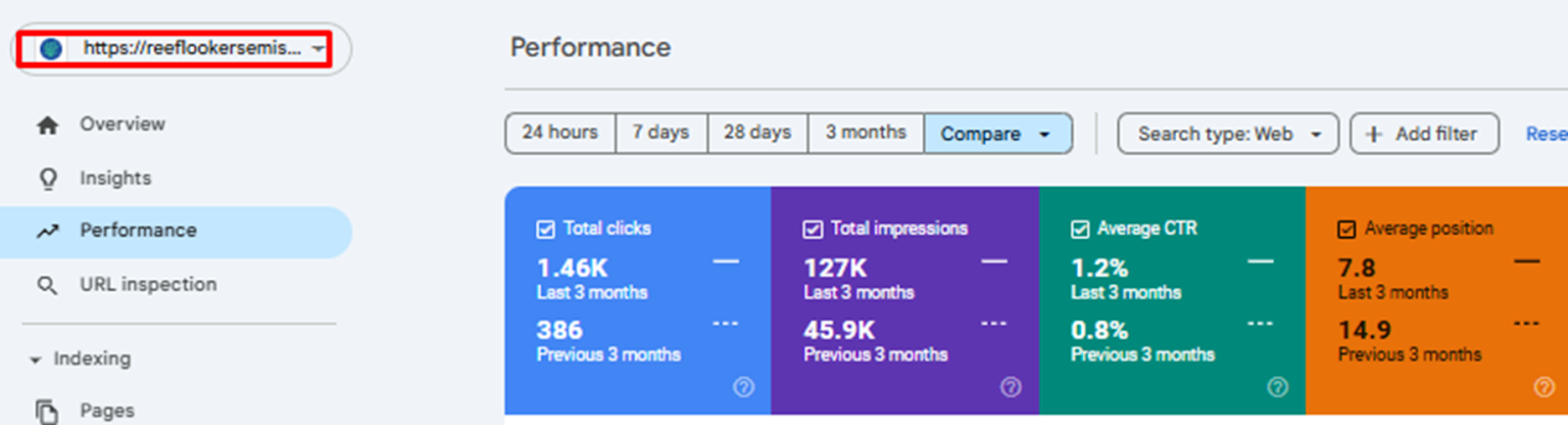
This data pattern revealed three critical insights:
- Search engines did not fully understand the service context
- Pages were not aligned with how users phrased location-based intent
- Visibility existed but lacked relevance and clarity
This was not a technical failure. It was an interpretation gap.
Why Modern SEO Demands Intent Understanding, Not Just Optimization?
Search engines have evolved far beyond keyword matching. The Reef Looker campaign was built on a simple reality reflected throughout the case study: search intent is the primary ranking factor.
The Strategic Direction: Aligning with Searcher Intent
Rather than chasing broad tourism keywords, our exclusive strategy focused on how travelers actually search.
The 3C Framework Applied
The case study emphasizes the use of the 3C model to satisfy search intent:
Content Type
The homepage was positioned as the primary discovery asset for semi-submarine experiences.
Content Format
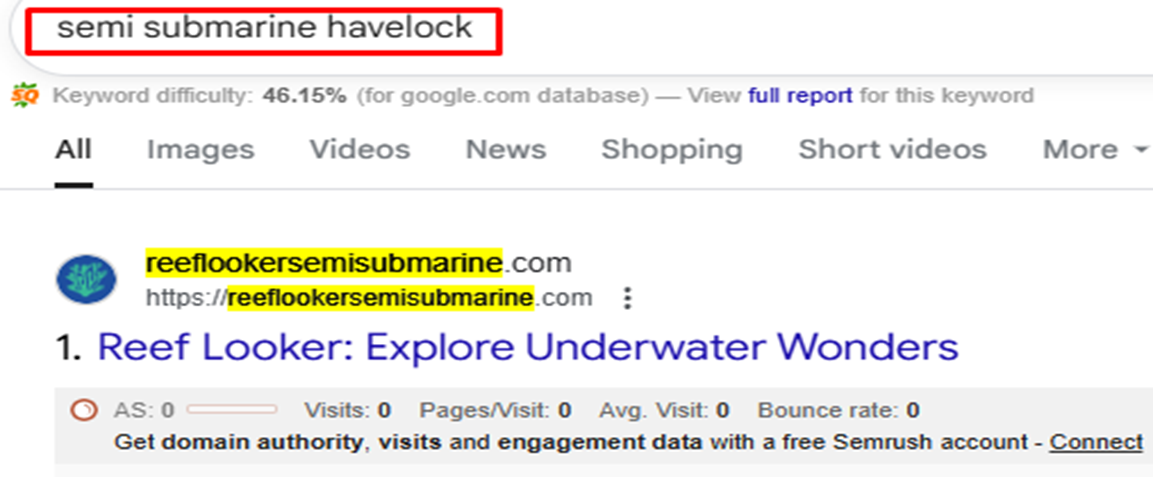
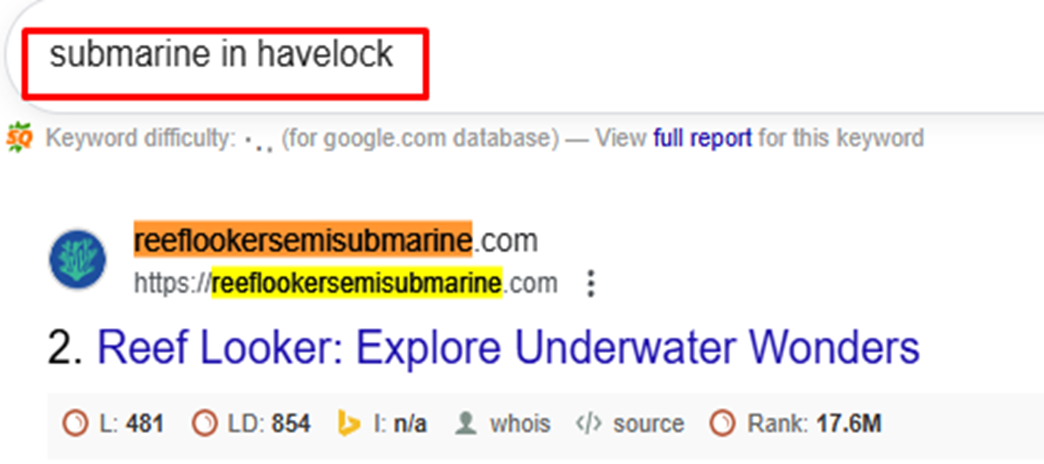
Content was structured to provide detailed, location-specific explanations, particularly around submarine rides in Havelock.
Content Angle
The angle was refined to emphasize service availability in Havelock Island, not generic underwater tourism.
This alignment allowed search engines to confidently match the site with relevant queries.
Content Evolution: Updating Information for Search Intelligence
Content updates were not cosmetic. They were strategic. Here are the results:
Key Content Enhancements
According to the strategy, the following changes were implemented:
- Updated information reflecting the latest niche context
- Added graphic content to improve clarity
- Optimized text for missed and emerging queries
- Updated dates to signal freshness
These changes improved both user comprehension and algorithmic interpretation.
User Experience As A Ranking Reinforcement Layer
Search engines increasingly rely on behavioral signals. The Reef Looker strategy accounted for this shift.
Modern search performance does not end at rankings. Search engines increasingly evaluate how users interact with a website after they land.
For Reef Looker, experience optimization became a critical layer that supported organic visibility by reinforcing relevance, trust, and satisfaction signals. This phase focused on ensuring that every visitor interaction validated the search engine’s decision to surface the site.
Rather than treating user experience as a design-only concern, the optimization approach viewed experience as a feedback mechanism for search intelligence.
Core Web Vitals – Performance As A Trust Signal
Page performance directly influences how search engines evaluate user satisfaction. Slow-loading or unstable pages often negate even the strongest intent alignment.
Improving Load Speed & Visual Stability
The case study highlights targeted improvements around:
- Faster initial content rendering
- Reduced layout shifts during page load
- Improved interaction readiness
These changes ensured that users could immediately understand the offering without friction. Faster load times reduced abandonment risk, while visual stability improved comprehension of the semi-submarine experience.
From a search intelligence perspective, these improvements send a clear signal. When users stay, scroll, and engage, algorithms infer relevance and quality.
Mobile Usability – Meeting Travelers Where They Search
Tourism-related searches are overwhelmingly mobile-driven. Travelers often research activities while planning trips, commuting, or already at the destination. Reef Looker’s optimization accounted for this behavior shift.
Designing for On-the-Go Discovery
Mobile experience enhancements focused on:
- Clear content hierarchy on smaller screens
- Readable text without excessive scrolling
- Easy access to key information like location and experience details
This ensured that mobile users could quickly understand what Reef Looker offers without cognitive overload.
Search systems increasingly prioritize mobile interaction signals. When mobile users engage naturally, it reinforces the page’s suitability for similar future searches.
Website Navigation & Crawl Depth – Simplifying Interpretation
A complex site structure often confuses both users and search engines. Reef Looker’s experience optimization addressed this by simplifying how content was organized and accessed.
Flat Structure for Faster Discovery
The site was structured to:
- Reduce unnecessary page layers
- Make key experience pages easily accessible
- Improve internal linking clarity
This helped users find relevant information faster while also allowing search engines to interpret content relationships more accurately.
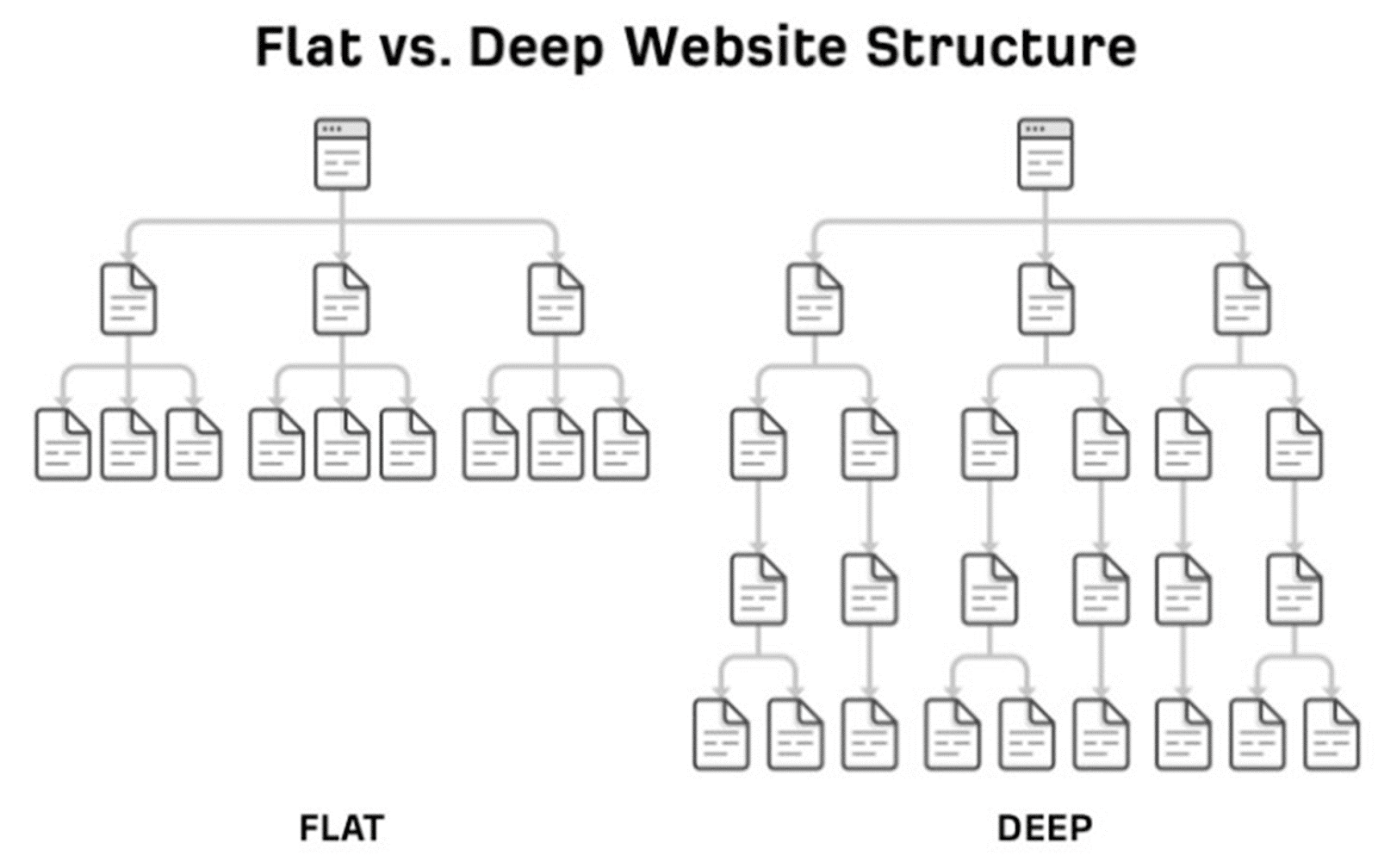
In intelligent search environments, clarity equals confidence. When systems can easily understand the page’s purpose, they rank it with greater certainty.
Content Accessibility & Readability
Experience optimization also focused on how information was presented, not just how fast it loaded.
Key improvements included:
- Breaking long text into readable sections
- Supporting explanations with visual elements
- Maintaining consistent formatting across pages
These changes improved dwell time and reduced bounce probability. When users consume content fully, it indicates alignment between query intent and page delivery.
Behavioral Signal Reinforcement: Closing The Feedback Loop
Every interaction contributes to a silent feedback loop between users and search systems. Reef Looker’s optimized experience ensured that this loop remained positive.
Encouraging Natural Engagement Patterns
The improved experience supported:
- Longer session durations
- Smoother page transitions
- Reduced immediate exits
These behaviors collectively validate relevance. Search engines interpret them as confirmation that the page answered the user’s question effectively. This is where subtle intelligence comes into play. Rather than forcing engagement, the experience naturally encouraged it by removing friction.
Why Experience Optimization Was Critical for Reef Looker?
For a niche offering like semi-submarine rides, clarity matters as much as visibility. Users must quickly understand:
- What the experience involves
- Who is it suitable for
- Where it is available
Experience optimization ensured that once Reef Looker appeared in search results, the website fulfilled that understanding without confusion.
This alignment between discovery and experience played a crucial role in sustaining organic growth and improving search confidence.
Strategic Takeaway from This Phase
Experience optimization acted as the validation layer for all other improvements. Content alignment attracted the right users. Experience optimization ensured they stayed, engaged, and understood the offering.
Together, these elements created a self-reinforcing growth cycle where visibility led to engagement, and engagement strengthened visibility further.
Even before full maturation, performance indicators began shifting. Search engines responded positively as content clarity, intent alignment, and experience signals improved simultaneously.
This laid the foundation for the measurable growth discussed in later sections.
Search Intent Mapping: Aligning Reef Looker with Real Discovery Behavior
After experience optimization laid the foundation, the next growth lever focused on how Reef Looker was being discovered across search environments. Traditional keyword targeting was insufficient for a tourism experience that spans curiosity, planning, comparison, and booking stages.
Instead, the optimization strategy centered on search intent mapping, ensuring Reef Looker appeared across multiple discovery moments, not just transactional queries.
Understanding The Andaman Travel Search Landscape
Travel-related searches behave differently from retail or service-based queries. Users rarely search with direct purchase intent initially. Instead, discovery unfolds through layered questions.
Common intent clusters included:
- Exploratory searches about sea adventures in the Andaman
- Experience comparison searches involving water activities
- Family-friendly and non-swimming activity queries
- Location-specific attraction discovery
Each intent stage required different content depth, structure, and semantic framing.
Moving beyond Keywords to Query Meaning
Rather than optimizing only for isolated keywords, the focus shifted toward query meaning and contextual relevance. This ensured Reef Looker aligned with how search systems interpret intent, not just literal phrasing.
Key improvements included:
- Expanding content to answer implied follow-up questions
- Structuring pages to support conversational and descriptive queries
- Embedding contextual cues around safety, accessibility, and experience uniqueness
This allowed Reef Looker to surface for broader, high-value discovery queries without diluting relevance.
Content Alignment with Experience-Based Queries
Many potential visitors were unfamiliar with semi-submarine rides. This knowledge gap created an opportunity.
Content was refined to:
- Clearly explain the experience without jargon
- Address hesitation points like safety and suitability
- Highlight the visual and emotional aspects of underwater viewing
By aligning content with user curiosity, the site positioned itself as both informative and authoritative.
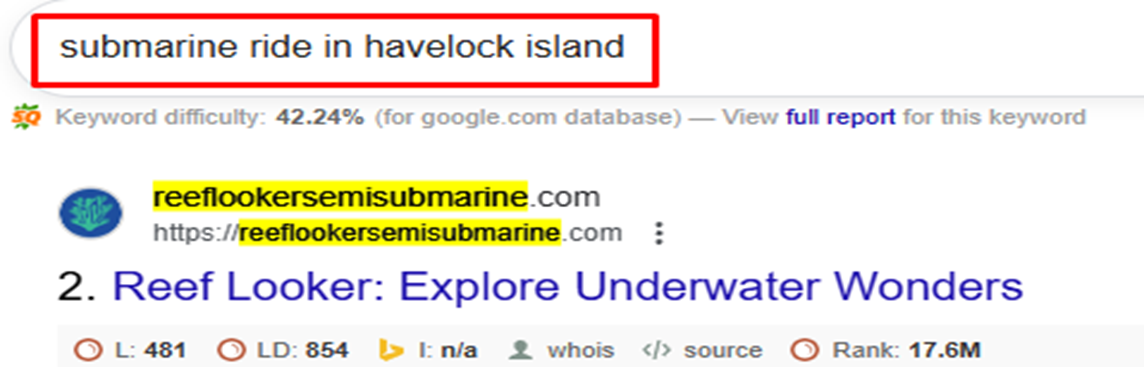
For Home Page
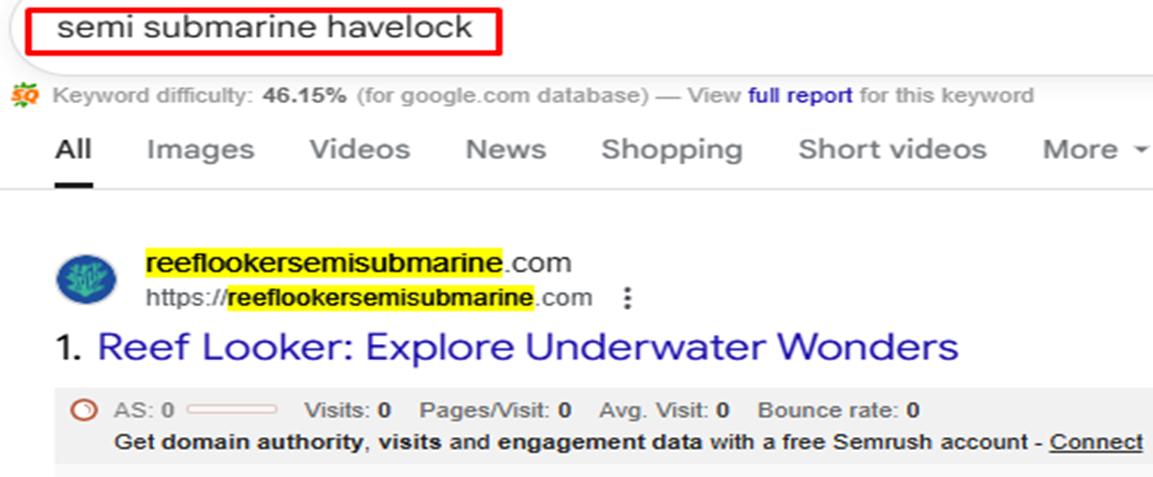
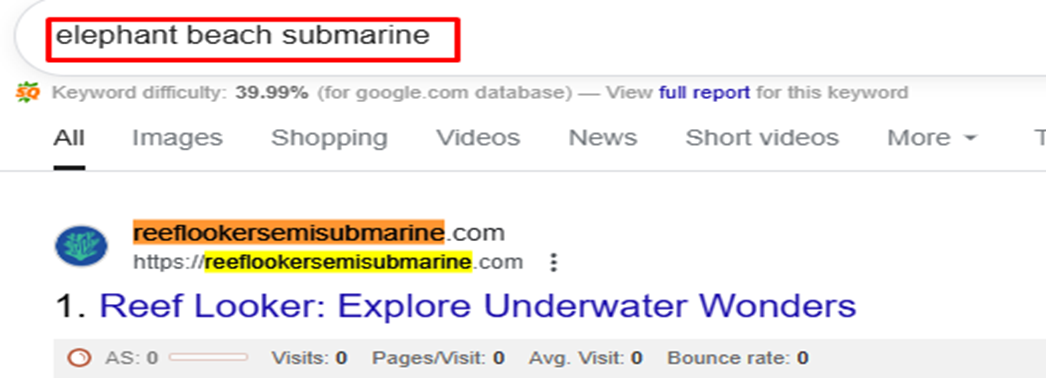
Detailed discussion on Havelock-related information for “submarine in havelock”
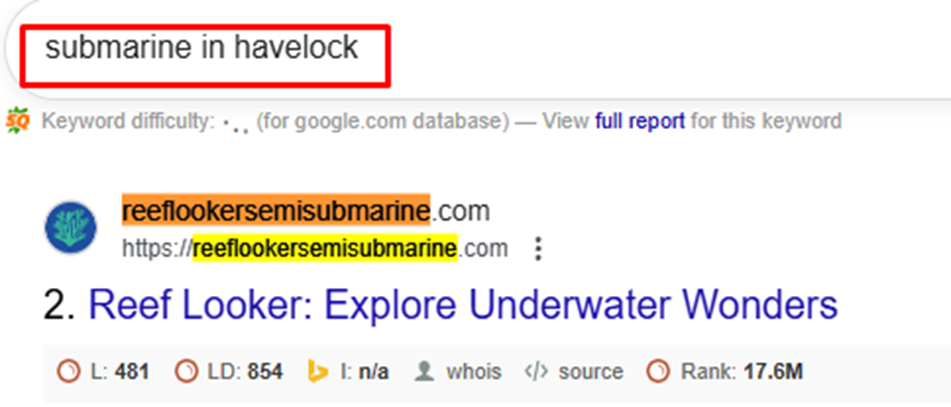
Here, the content angle is “Service Category in Havelock Island.”
Entity And Context Reinforcement
Search engines increasingly rely on entity understanding rather than isolated pages. Reef Looker’s optimization strengthened entity clarity by consistently reinforcing:
- Brand association with semi-submarine experiences
- Geographic relevance to Andaman locations
- Experience differentiation from snorkeling or scuba diving
This helped search systems confidently associate Reef Looker with its niche offering.
As a result, visibility expanded across related queries, even when the brand name was not explicitly searched.
Supporting Early-Stage Along with Mid-Funnel Visibility
A key growth objective was capturing users before they finalized activity decisions. This required appearing during research phases, not just booking intent.
Optimized content supported:
- Informational searches about underwater experiences
- Comparison-driven queries involving dry versus wet activities
- Family and group suitability considerations
By covering these angles, Reef Looker remained present throughout the decision journey.
Internal Content Connectivity
To strengthen topical authority, content was internally connected using logical pathways rather than forced links.
This improved:
- Crawl efficiency
- User navigation flow
- Contextual reinforcement between pages
Search engines benefit from this clarity, as it improves understanding of content hierarchy and thematic depth.
Impact on Discovery Quality
As intent alignment improved, the quality of traffic also evolved. Visitors arriving on the site demonstrated clearer intent, higher engagement, and stronger alignment with the experience offering.
This reduced the mismatch between expectations and delivery, further reinforcing positive behavioral signals.
Why This Phase Mattered Strategically?
For Reef Looker, success was not about ranking for one keyword. It was about owning a discovery space within Andaman’s sea adventure ecosystem.
By aligning with how users think, ask, and explore, the site transitioned from being discoverable to being contextually preferred.
This phase set the stage for measurable growth, which the next section will unpack in detail.
Organic Growth Outcomes Backed by Search Performance Data
Once intent mapping and experience optimization worked in tandem, Reef Looker’s organic performance began to shift measurably and consistently. This phase validates the strategy through numbers, not assumptions.
The growth observed was not sudden or volatile. Instead, it followed a pattern that indicates improved search understanding and reinforced relevance.
Early-to-Late Performance Shift
The case study data clearly shows a transition from limited visibility to consistent discovery across relevant queries.
Click Growth Indicates Stronger Query Alignment
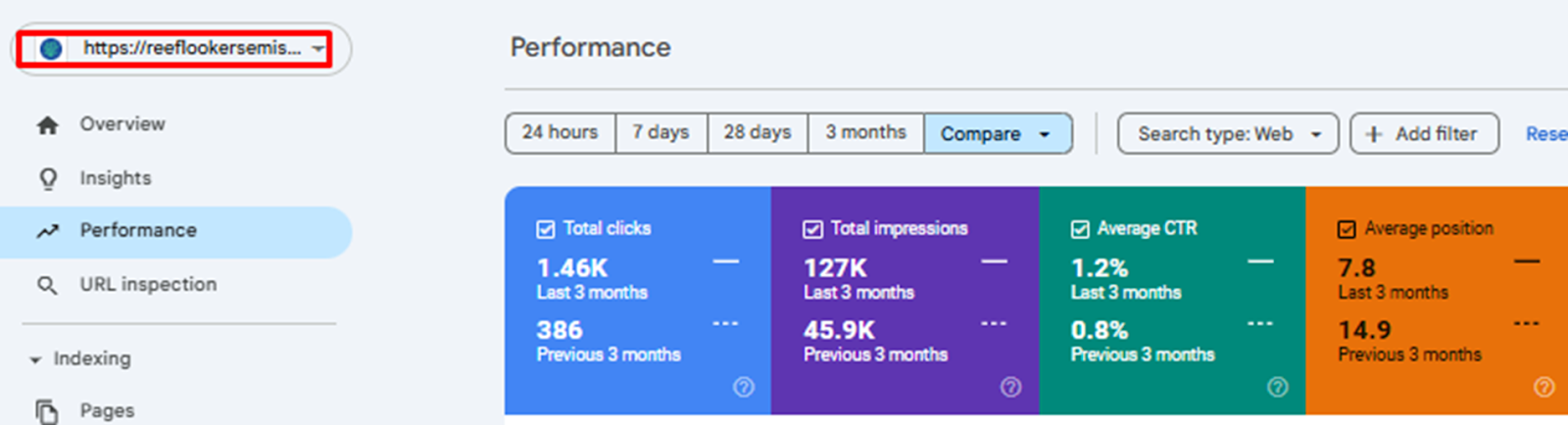
According to the performance snapshot:
- Total clicks increased to 386
- This growth came without aggressive content expansion or paid support
- Clicks followed impression growth proportionally, indicating relevance rather than curiosity clicks
This pattern suggests that when Reef Looker appeared in search results, users increasingly found the listing relevant enough to engage.
Impression Expansion without Dilution
Impressions grew to 45.9K, signaling broader visibility across search queries related to:
- Semi-submarine rides
- Reef exploration experiences
- Andaman-specific water activities
What stands out is where impressions increased. Visibility expanded within experience-aligned and location-specific searches, rather than generic tourism terms. This confirms that growth was controlled and contextual.
CTR Stability Reflects Expectation Matching
With an average CTR of 0.8%, the data reflects realistic engagement for a niche tourism offering. More importantly, CTR remained stable as impressions increased. This is a critical signal.
When impressions rise, but CTR collapses, it indicates a mismatch. That did not happen here. The stability confirms that:
- Titles and descriptions matched user intent
- Search snippets communicated the experience clearly
- Users understood what Reef Looker offered before clicking
Average Position Improvement And Ranking Confidence
An average position of 14.9 places Reef Looker consistently on the first and early second pages for relevant searches. For a specialized experience, this positioning is significant.
Why Position Alone Is Not The Key Metric?
Rather than chasing top-three rankings prematurely, the focus remained on:
- Query relevance
- Engagement validation
- Ranking consistency
This approach allows search systems to build confidence gradually, which often leads to stronger long-term positioning.
Query-Level Discovery Patterns
The case study screenshots show that Reef Looker began appearing for a wider range of semantically related queries. These included variations of:
- Submarine and semi-submarine experiences
- Coral viewing activities
- Dry underwater adventure searches
This indicates that search systems were interpreting the site as a topical authority, not just a single-page result.
Andaman-Centric Discovery Improvement
Tourism businesses depend heavily on geographic accuracy. Reef Looker’s growth reflected this reality. Traffic growth aligned strongly with Andaman-focused searches. This ensured that visitors arriving on the site were:
- Actively planning Andaman trips
- Looking for activities available locally
- Evaluating experiences during itinerary planning
This geographic precision increased the likelihood of meaningful engagement and inquiries.
Page-Level Contribution to Growth
Growth was not isolated to one landing page. It shows performance improvement across multiple pages.
Distributed Page Performance
Several pages contributed to:
- Click growth
- Impression stability
- Engagement consistency
This distribution indicates a healthy site ecosystem rather than dependence on a single asset.
Why This Growth Pattern Matters?
The way Reef Looker grew is more important than how much it grew in isolation.
Indicators of Sustainable Organic Growth
The data reflects:
- Gradual upward trends
- No sharp spikes or drops
- Consistent alignment between impressions and clicks
These indicators point toward algorithmic trust building over time.
Strategic Interpretation of The Data
For decision-makers, this phase answers a critical question: Is the growth reliable?
The answer, based on the data, is yes. The performance improvements align with how modern search systems reward:
- Clear experience definition
- Contextual relevance
- Positive user interaction signals
This creates a foundation that future content and campaigns can build upon.
Expanding Visibility across The Traveler Decision Journey
For tourism brands, organic growth does not happen at a single moment. Travelers move through curiosity, evaluation, reassurance, and final selection stages. Reef Looker’s growth came from appearing consistently across this journey rather than relying on last-click discovery alone.
This phase of the campaign ensured Reef Looker became familiar to users before they finalized activity choices in Andaman.
Capturing Early-Stage Discovery without Dilution
Many travelers begin planning Andaman activities weeks before arrival. Early searches are often broad and exploratory.
Visibility during The Curiosity Phase
Reef Looker began surfacing for queries related to:
- Unique sea adventures in Andaman
- Underwater experiences without swimming
- Family-friendly marine activities
These early impressions introduced the brand naturally, without forcing conversion-focused messaging. This built initial awareness and trust.
Search systems interpreted this consistent early-stage relevance as a sign of topical authority.
Supporting Mid-Funnel Evaluation Searches
As travelers narrowed their choices, search behavior became more specific. The campaign accounted for this shift.
Appearing in Comparison & Evaluation Queries
Reef Looker’s content aligned with queries involving:
- Comparisons between snorkeling, scuba diving, and dry underwater experiences
- Safety and accessibility concerns
- Suitability for families and non-swimmers
Therefore, by addressing these considerations directly, the site positioned itself as a practical alternative rather than a generic attraction.
Reinforcing Confidence during The Decision Phase
When travelers reached the final decision stage, clarity became essential. Content clarity ensured that users understood:
- What the semi-submarine experience involves
- Where it operates
- Who is it suitable for
This reduced hesitation and prevented mismatched expectations, leading to more confident engagement. Search engines reward this clarity because it lowers dissatisfaction risk.
Building Familiarity through Repeated, Relevant Exposure
One of the most powerful outcomes of this phase was brand familiarity.
The Compounding Effect of Consistent Visibility
When users encountered Reef Looker across multiple searches:
- Brand recall increased naturally
- Trust developed without explicit persuasion
- The site became a reference point for semi-submarine experiences
This repeated exposure strengthens long-term organic performance.
Why This Matters for Tourism Conversion Cycles?
Tourism decisions are rarely impulsive. They involve planning, reassurance, and validation.
Organic Search As A Journey Companion
By appearing throughout the decision cycle, Reef Looker positioned itself as:
- An informative guide
- A reliable option
- A safe and accessible experience
This role goes beyond traffic acquisition. It builds preference.
Preventing Overdependence on Final-Stage Keywords
Many tourism brands focus only on booking-intent keywords. This approach limits reach. By supporting early and mid-funnel searches, Reef Looker:
- Expanded its discovery footprint
- Reduced competition pressure on high-intent terms
- Created multiple entry points into the website
This diversified visibility improves resilience.
Search Systems Reward Journey Coverage
Modern search systems favor brands that support users holistically. By covering multiple intent stages consistently, Reef Looker demonstrated:
- Depth of understanding
- Experience clarity
- User-centric design
This reinforced algorithmic confidence and sustained rankings.
Strategic Outcomes, Long-Term Value, And The Reef Looker Growth Blueprint
By the end of the optimization cycle, Reef Looker had achieved more than improved search metrics. The brand established a clear, interpretable digital presence that search systems and users could understand with confidence.
This final phase ties performance outcomes to business-level impact and explains why the growth pattern observed is sustainable rather than situational.
Consolidated Outcomes: What Actually Changed for Reef Looker?
When the performance data is viewed holistically, the transformation becomes evident.
From Partial Visibility to Contextual Recognition
Before optimization, Reef Looker appeared sporadically in search results without consistent engagement. After implementation, visibility became contextual and repeatable. The website began appearing for queries that accurately reflected its experience offering rather than loosely related tourism terms.
This shift indicates that search systems no longer treat the site as generic travel content. Instead, they recognized it as a relevant entity within the underwater experience ecosystem of Andaman.
Engagement Signals That Reinforced Visibility
Clicks, impressions, and CTR trends showed alignment rather than conflict. Visibility increases did not lead to disengagement. Instead, users interacted with the site in ways that validated search placement.
This matters because engagement consistency is one of the strongest indicators of relevance in modern search environments. When users behave predictably and positively, rankings stabilize naturally.
Distributed Page Performance Reduced Risk
Another critical outcome was the absence of dependency on a single page. Multiple pages contributed to organic growth, which:
- Reduced vulnerability to algorithm changes
- Improved crawl efficiency
- Strengthened topical authority
This distributed performance model is especially valuable for tourism brands that rely on seasonal and location-based searches.
Why This Growth Model Is Sustainable?
Short-term SEO gains often collapse because they are built on isolated tactics. Reef Looker’s growth followed a different trajectory.
Built on Interpretation, Not Exploitation
The optimization approach focused on helping search systems interpret intent correctly, rather than forcing rankings through artificial signals. This alignment with how modern algorithms process language, context, and behavior makes the growth durable.
Search environments evolve constantly. Interpretation-based optimization adapts with them.
Experience & Content Worked Together
Content clarity attracted the right users. Experience optimization ensured those users stayed, explored, and understood the offering. Together, these layers formed a self-reinforcing loop.
When users find exactly what they expect, search systems learn to trust that result more consistently.
Strategic Value for Founders And Tourism Decision-Makers
For leadership teams, the Reef Looker case study offers important takeaways.
Organic Search As A Brand-Building Channel
This campaign demonstrates that organic search is not only a traffic source. It is a brand familiarity engine. Repeated, relevant exposure across planning stages builds recall and preference without aggressive promotion.
Reduced Dependence on Paid Discovery
As organic visibility stabilized, the need to rely heavily on paid channels for awareness reduced. This creates budget flexibility and improves long-term acquisition efficiency.
Predictability over Volatility
Perhaps the most valuable outcome is predictability. Growth followed logic, not spikes. For decision-makers, this makes forecasting and strategic planning far more reliable.
The Reef Looker Growth Blueprint
This case study outlines a repeatable model for niche tourism brands:
- Define the experience clearly
- Align content with how users actually search
- Optimize experience to reinforce relevance
- Allow search systems to build confidence naturally
When these elements work together, organic growth becomes a strategic asset, not a tactical gamble.
Final Thoughts
Reef Looker’s journey shows that visibility alone is not enough. What matters is being understood—by both users and search systems. Therefore, by aligning content, experience, and intent, the brand transitioned from limited discoverability to contextual preference within Andaman’s tourism landscape.The growth achieved was not accidental or temporary. It was the result of an intelligence-led approach that respected how modern search works. For brands operating in specialized markets, this case study by ThatWare offers a clear lesson. Sustainable growth comes from clarity, relevance, and consistency, not shortcuts.