SUPERCHARGE YOUR ONLINE VISIBILITY! CONTACT US AND LET’S ACHIEVE EXCELLENCE TOGETHER!
Most companies walk into their monthly analytics reviews feeling a certain comfort. The familiar numbers are still there. Traffic from Google remains one of the biggest sources of new business. Year-over-year graphs look flat or only show a slight dip here and there. Rank trackers continue to report healthy positions for important keywords. On the surface, everything appears normal, almost steady, like the calm before a storm.
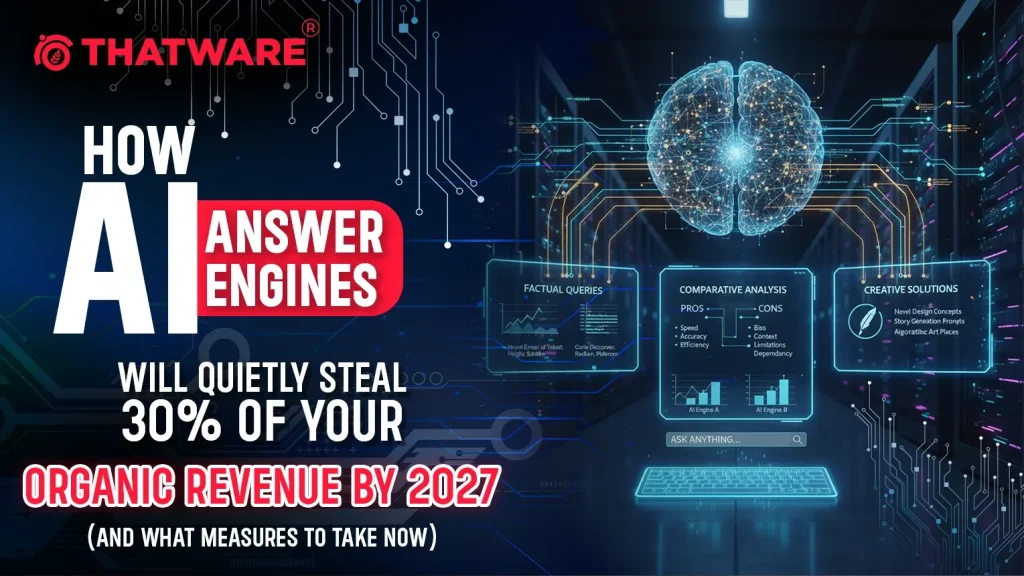
The problem is that this calm is misleading. Underneath those reassuring dashboards, there is a quiet but significant shift happening in how people search for information online. Users are changing how they behave, and the search experience is no longer the same environment it was even two years ago. The screens you rely on for answers have begun to tell a different story, but in a very subtle way.
If you only look at traditional SEO metrics, you miss the deeper truth. Organic traffic, as we have known it, is being chipped away, not by competitors and not by algorithm updates, but by a new kind of search experience. It is polite, quiet and extremely efficient at taking away clicks. It is the rise of AI answer engines.
The rise of AI answer engines
AI answer engines are not traditional search engines. They behave more like a personal guide that reads the entire internet and gives users a direct, neatly packaged response. Instead of sending people to your website, they summarize the information themselves.
You may already be familiar with Google’s AI Overviews or the SGE experimental interface. They show complete explanations at the top of the search results and often place the blue links far below the fold. Then there are independent AI systems such as ChatGPT, Perplexity, Copilot or Gemini. These systems sit above the open web and act like a conversational layer. They collect information, analyze context and produce answers without requiring the user to click anywhere.
This change has created a dramatic increase in zero click interactions. A user types a question, and within seconds, the screen shows everything they need. There is no need to open articles, guides, product pages or comparison lists. Recently, several reports highlighted how AI summaries have already reduced clicks to publishers and websites by significant margins. Publications like The Guardian and the New York Post have been vocal about the drop in referred traffic since AI powered summaries started appearing more frequently.
For a brand that depends on organic traffic, this trend is not a minor inconvenience. It affects the core of how buyers discover information, evaluate options and move toward a purchase.
Why the figure of 30 percent is not a scare tactic
When people hear that AI answer engines could absorb 30 percent of a brand’s organic revenue by 2027, it may sound like exaggeration. In reality, the number is conservative.
Gartner has already predicted that traditional search volume will shrink by nearly a quarter by 2026 as more users shift to AI chatbots and virtual assistants. Semrush and similar analyses project that AI search channels will generate economic value that rivals traditional search within a few years. These predictions are not based on speculation. They reflect actual changes in user adoption, interface design and search behavior.
This impact does not hit all keywords equally. The biggest losses come from the bottom of the funnel where users are ready to buy. These are the searches that contribute directly to revenue. When an AI engine can answer comparison queries, product questions or service related research in a single response, the user often skips the website visit completely. If even a quarter of these buyers no longer reach your site, the loss in revenue becomes visible in a very real way.
For companies that rely heavily on organic conversions, this shift has the potential to become one of the most significant disruptions since mobile search or the introduction of featured snippets.
A new approach for a new search world
This situation does not signal the end of SEO. It signals the end of doing SEO the old way. Visibility is no longer just about ranking on Google. It is about appearing inside the answers that users see before they ever scroll.
This is where disciplines like Answer Engine Optimization and Generative Engine Optimization come into play. Companies like ThatWare have been early advocates of this shift. They focus on preparing brands for AI driven search environments by optimizing not only for traditional rankings but also for AI generated responses. Their work involves shaping content into formats that AI systems can recognize, trust and include in their generated answers.
By the time you finish reading this article, you will understand exactly where the 30 percent loss comes from, how to diagnose your own risk and what you can do today to secure your position within this new search ecosystem. The goal is simple. Do not wait for the drop in traffic to tell you that the rules have changed. If you prepare early, you can turn this shift into an advantage instead of a setback.
Understanding AI Answer Engines and the New Search Reality
The way people search for information has changed more in the last three years than it did in the previous twenty. Most business owners still picture Google as a familiar list of results where the best page wins the click. That world is fading. A completely different search ecosystem is forming, one centered around answers rather than links. To understand how much this shift can affect visibility and revenue, it helps to look at where search began and how we arrived at this new reality.
From “10 Blue Links” to “One Perfect Answer”
There was a time when search results were simple. Google served a clean page filled with ten blue links, a few ads, and nothing else. Ranking in those top spots was the holy grail. Traffic poured in because users had no other paths to satisfy their questions.
Then came the era of rich results. Featured snippets, People Also Ask boxes, and knowledge panels began to appear. These additions made search results more informative, yet they still relied on websites for deeper explanations. Users clicked through when they wanted more context.
The next shift happened quietly. AI began to generate complete answers right on the results page. Google’s AI Overviews and Bing’s AI answers now sit at the very top. The user receives a neatly constructed summary that pulls information from different sources. The links that once defined search have been pushed lower, sometimes far below the fold. The user gets what they want without scrolling or visiting a website. It feels convenient for the searcher, but for brands that rely on organic traffic, this shift rewrites the rules.
This new environment brings a concept that did not exist a decade ago. The rise of “answer engines.” These are systems that respond to user questions with direct explanations rather than sending users to external pages. Voice assistants, AI chatbots, and AI summary tools all follow this pattern. The search landscape is no longer a collection of links. It is now a network of intelligent systems that personalize responses, condense information, and deliver ready-made answers instantly.
Types of AI Answer Engines That Affect Your Brand
Not all answer engines work in the same way. Some live inside the classic search engines, while others operate as standalone products or inside niche ecosystems. Understanding how they differ helps businesses see where traffic is likely to shift next.
Search-Native AI Layers
The first group includes the AI layers that major search engines have added to their results. Google has rolled out AI Overviews and SGE style interfaces. Bing offers an AI answer module at the top of many queries. These responses pull information from various sources and provide summaries that reduce the need to click. Even if your site ranks first, users may not reach it because the answer is already provided above your organic result. This creates a pattern known as zero-click behavior. The visitor gets the information and leaves the search page without visiting a website. This hurts all top positions, even for sites that have held those rankings for years.
Standalone AI Search and Meta-Engines
The second category includes independent AI search platforms like Perplexity, ChatGPT with browsing enabled, Copilot, and similar tools. These platforms are increasingly becoming the default search destination for younger users and professionals who want faster, more consolidated insights. Instead of opening Google, users ask these systems directly. In this scenario, Google and Bing are bypassed completely. This means your performance inside traditional search engines no longer guarantees visibility. If your content is not recognized, cited, or trusted by these standalone engines, your brand becomes invisible to the people relying on them.
Vertical and Assistant-Based Engines
The third category includes voice search platforms such as Alexa, Siri, and Google Assistant, along with AI-powered recommendation engines inside marketplaces. Think of Amazon’s product suggestion modules or internal search systems within e-commerce platforms. These operate as specialized answer engines tailored to their environments. A buyer might ask Alexa for the best smart speaker instead of searching on Google. A shopper might rely on Amazon’s AI curated recommendations instead of browsing through product pages. These shifts move traffic away from traditional websites and toward AI powered ecosystems where only a few brands get spotlighted.
Together, these three categories create a world where users no longer depend solely on search engines. They rely on intelligent systems that give answers immediately. Brands that fail to adapt risk losing touch with audiences who have changed their search habits without realizing it.
How AI Answer Engines Interpret Content Differently From Classic Search
To adapt to this new landscape, it is important to understand how AI answer engines evaluate information. Traditional SEO was built around keywords, ranking positions, backlinks, and click through rate. The goal was to target specific queries, match search intent, and outrank competitors.
AI answer engines look at content through a different lens. They focus on intent, context, factual clarity, and structured knowledge. They want straightforward answers, clean logic, and content that can be easily summarized or quoted.
This is where Answer Engine Optimization comes in. AEO places the question at the core instead of the keyword. The goal is to provide clear answers that match conversational intent. Pages must supply information in a direct and structured manner. It becomes crucial to use schema markup, well organized sections, and concise explanations that AI systems can identify as authoritative.
The focus shifts from ranking in a list to becoming the source that an AI engine cites in its response. If you are not cited, your visibility declines even if you still rank well. The competitive landscape moves from fighting for the top position to fighting for inclusion inside the answer itself. Brands that understand how AI interprets content have a major advantage as this shift accelerates.
ThatWare’s Perspective: AEO and GEO as the Natural Evolution of SEO
ThatWare has been studying these shifts closely while developing strategies that help brands stay ahead of AI driven search changes. From their point of view, Answer Engine Optimization and Generative Engine Optimization are not replacements for traditional SEO. They are the next layer of growth.
AEO focuses on optimizing content so answer engines, snippets, knowledge panels, and voice assistants can extract accurate and useful responses. It prepares your content for direct answers instead of relying solely on classic ranking signals.
GEO takes this a step further by aligning your content with generative engines like ChatGPT, SGE interfaces, and other AI tools that produce synthesized responses. GEO ensures your brand appears as a trusted source when these engines generate summaries or recommendations.
Together, SEO, AEO, and GEO form the complete stack needed for modern visibility. SEO ensures that search engines can crawl and understand your content. AEO makes your content answer ready. GEO positions your expertise inside AI generated outputs. Relying on only one or two of these layers is no longer enough. By 2027, the majority of online discovery will involve some form of generative or answer-based technology. Brands that combine all three layers will be the ones that continue to thrive as the search ecosystem transforms.
The 30 Percent Revenue Risk: Where the Loss Will Actually Come From
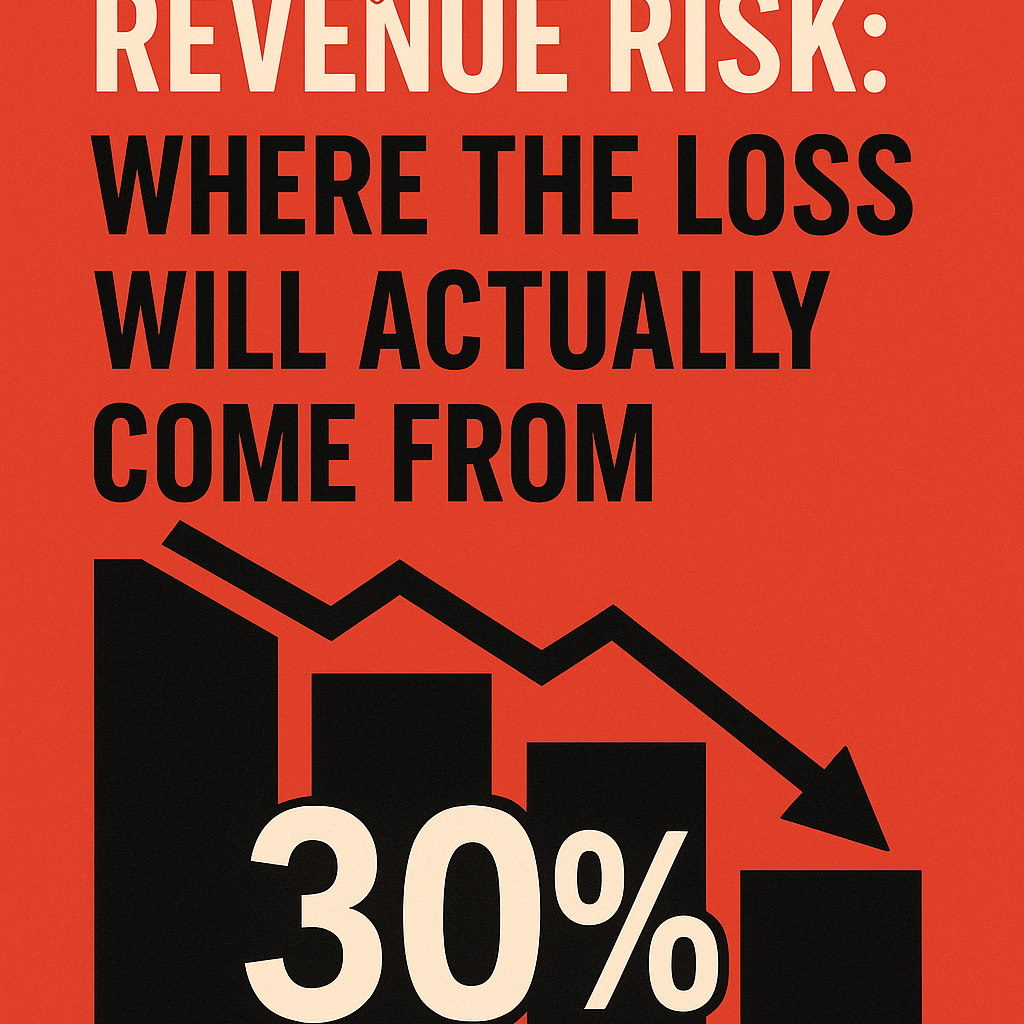
The shift toward AI powered answer engines is happening quietly. Traffic numbers may still look stable on the surface, yet the underlying buyer behavior is moving faster than most analytics tools can capture. When you connect the dots, the threat becomes clear. Brands that rely heavily on organic search are walking into a multi-year revenue slide without realizing it. To understand how this plays out, it helps to break the problem into simple math, real funnel exposure, and the impact across different industries.
The Math Behind the Risk
Picture a brand that earns one million dollars a year from organic search. This is a realistic number for a mid-sized SaaS company, a growing e-commerce business, or even a local service provider with several locations.
Now let us break this revenue down.
- About sixty percent of the company’s organic revenue comes from non branded searches. These are people who do not yet know the brand but are searching for solutions in the category.
- Roughly forty percent of these non branded searches fall under informational or comparison based queries. These are the same queries AI answer engines target most aggressively because they are the easiest to answer without sending users to a website.
This is where the threat begins. Gartner has already projected that traditional search volume may shrink by more than twenty five percent by 2026 as more users shift to AI driven answers. At the same time, multiple independent reviews have found that when AI summaries appear at the top of a results page, clicks to publishers and websites can drop anywhere from forty percent to eighty percent. The Guardian, TUYA Digital and other publications have reported early signs of this decline.
Combine these variables and a pattern emerges. If a quarter of all search volume moves to AI answer engines and nearly half of the clicks disappear when an AI generated summary covers the screen, the revenue impact is no longer hypothetical. A brand that relies heavily on high intent non branded searches can easily lose thirty percent of its organic revenue even if it keeps ranking in the top positions.
The reason is straightforward. The business is not losing rankings. It is losing the visibility that brings the click. When fewer users click through to the website, the funnel begins to dry up at the top and the impact compounds as those users move through evaluation and purchase stages.
Which Parts of the Funnel Are Most Exposed
Not all search traffic is equally vulnerable to AI answer engines. Some segments are hit immediately while others erode slowly. Understanding this breakdown helps you predict where revenue may slip first.
Top Funnel Informational Searches
These are the classic educational queries.
Examples include:
- What is [topic]
- How to use [tool or product]
- Best tools for [use case]
AI engines thrive on these queries. They can provide clean, concise answers without the need for a website click. As a result, fewer visitors land on the brand’s blog or resource pages and early stage customer awareness begins to thin out.
Mid Funnel Comparison Searches
This is where the erosion becomes more noticeable.
Examples include:
- X vs Y
- Top ten products for [task]
- Best alternatives to [brand]
Generative systems are exceptionally good at producing lists and comparison summaries. These summaries appear directly inside the search results or in standalone AI browsers. The user never has to open a single listicle. This is a major problem for brands that invested heavily in comparison content to capture mid funnel demand.
Bottom Funnel Commercial Searches
This is the most dangerous area because these searches are tied directly to revenue.
Examples include:
- Best software for startups
- [Tool] pricing
- Who should I hire for [service]
In these moments the user is ready to buy. If an AI answer engine recommends a short list of tools or agencies, the recommendations override traditional rankings. If your brand is not mentioned directly in that short list, the user may never reach your website even if you hold the number one organic spot. Losing just a portion of these bottom funnel searches can have a direct and measurable impact on revenue.
Industry by Industry Vulnerability
Some industries will feel the pressure sooner than others. Each one faces a different level of exposure depending on the nature of the search queries they rely on.
Media and Publishing
This sector is already experiencing real damage. Traffic declines reported by The Guardian and others show how AI summaries can substitute a full article. When readers get the information they want directly from the search page, the click disappears. For publishers that depend heavily on page views and ad impressions, this is not just a drop in traffic. It is a collapse of the core business model.
SaaS and B2B
In depth guides have long been the backbone of SaaS and B2B search strategies. Unfortunately, this type of content is one of the first to be replaced by AI generated overviews. Comparison pages and alternatives based content are also being cannibalized by AI curated lists. Since these queries represent prime buying intent, SaaS companies face meaningful risk of losing their highest value inbound prospects.
E Commerce
AI driven product recommendations are quickly becoming embedded into search experiences. Informational searches that once led to category pages are now replaced with AI produced buying guides. These guides may include only a handful of suggested products. If your brand is not one of them, you lose exposure instantly.
Local Services
Users often search for the top local provider for a specific service. With AI assistants providing direct suggestions, many users never scroll to the traditional map pack or organic listings. As AI assistants evolve into personal shoppers and service advisors, this category will feel even more pressure.
Why Traditional SEO Dashboards Under Report the Threat
Most SEO teams miss the early signs of this shift because their tools are designed around the older search model. The dashboards still highlight rankings in the top three positions. What they do not show is the crucial detail that your ranking is now positioned below a large AI generated answer box.
The pixel distance from the top of the page is becoming more important than the ranking number. When your listing is pushed below the fold, your click through rate naturally drops even if your position remains unchanged.
Analytics platforms also tend to lag. Small month to month declines are often interpreted as normal seasonality. Over time these drops add up and by the time the trend becomes obvious, a significant share of the organic funnel may already be lost.
Forward thinking SEO teams are starting to shift away from the old measurements and are introducing new tracking methods. This is where companies like ThatWare have stepped ahead of the curve. Instead of looking only at rankings, ThatWare focuses on monitoring AI answer presence, brand citations inside AI engines, and generative visibility across emerging platforms. This approach brings clarity around how often your brand appears inside AI driven responses, not just on traditional results pages. It also acts as an early warning system for upcoming visibility losses that standard SEO tools often fail to detect.
How AI Answer Engines Choose Which Brands to Surface
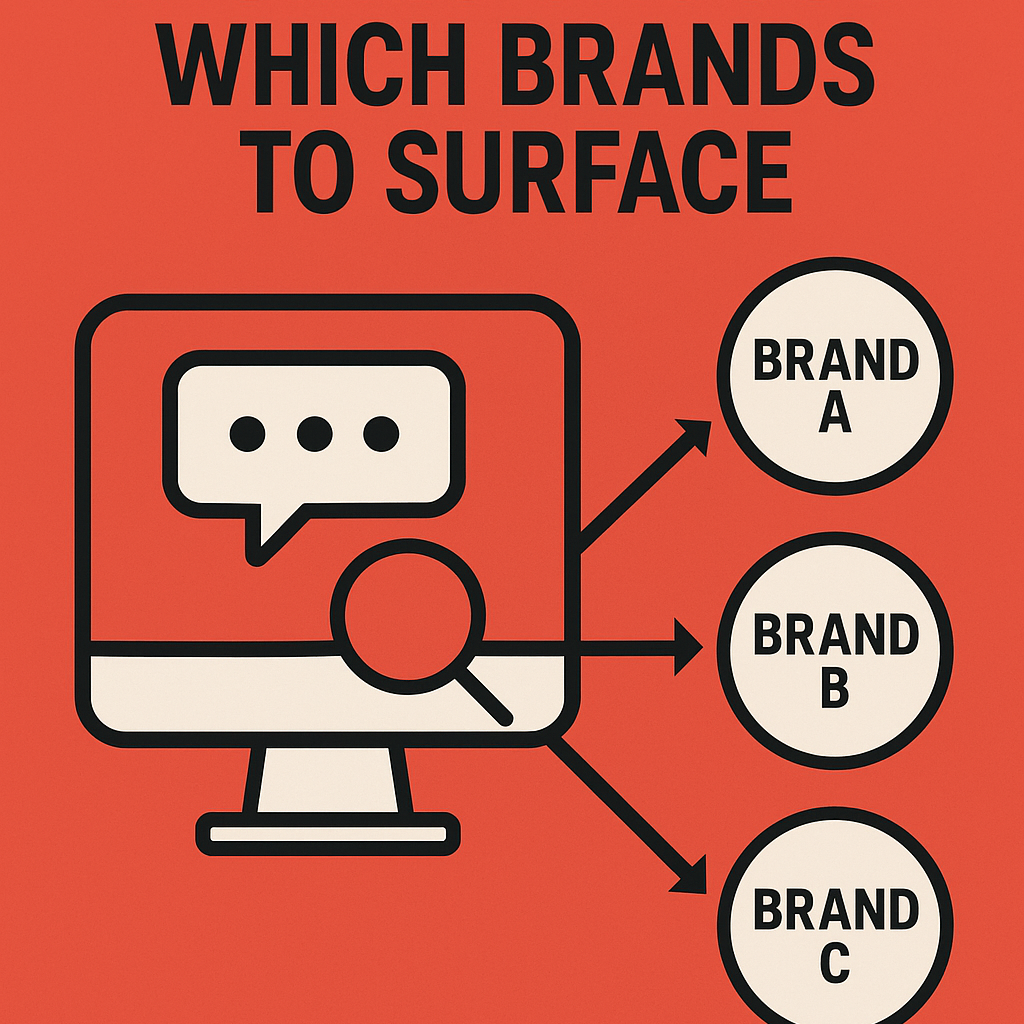
The search landscape is quietly shifting from keyword rankings to something far more complex and far less forgiving. AI answer engines are not scanning pages the same way traditional search crawlers did in the past. They interpret content, map ideas, understand the relationships between topics, and learn which brands carry genuine authority. To put it simply, the companies that rise to the top in this new environment are those that communicate clearly, structure their ideas intelligently, and earn recognition across the web. Those that fail to do so do not just drop a few positions. They disappear from the answer layer entirely.
Below is a look at how these engines choose which brands to surface and why this shift matters for every serious digital business.
From keywords to entities, topics, and authority graphs
Most marketers still think in terms of keywords. AI systems do not.
When an AI answer engine scans a page, it tries to understand the bigger picture behind the words. Instead of focusing on individual phrases, it builds a map of the entities being discussed. An entity might be a brand, a product category, a problem, a concept, or a specific person. The AI then identifies how these entities connect to one another, how deeply the content covers them, and whether the publisher demonstrates clear expertise on the subject.
In other words, AI creates a knowledge graph. The graph shows not only what topics a brand speaks about, but how confidently and consistently it does so. A company that publishes structured, expert-level content forms a clear and strong semantic footprint. A company that earns credible mentions from trusted sites strengthens the connections within that footprint. As these signals become richer and more precise, the brand becomes a reliable candidate for citation within AI-generated answers.
This is why content quality alone is no longer enough. AI engines are scanning the entire web to understand who knows what. Brands that invest in depth, clarity, and cross-channel authority become far easier for AI systems to recommend.
The new signals that matter for AEO
Answer Engine Optimization, or AEO, requires a different approach than traditional SEO. AI answer engines choose content based on patterns that resemble academic research more than keyword matching. They look for content that directly addresses a user’s question, is easy to extract, and aligns with credible external sources.
Several specific signals matter more than ever.
1. Direct answer patterns
Pages that provide clear answers upfront tend to perform best in AI environments. This includes:
- Short definitions
- Question and answer sections
- FAQ blocks
- Clear explanations written in plain language
AI models prefer content that removes ambiguity. If your page opens with a meandering introduction instead of a tight answer, the engine may skip over it.
2. Schema and structured data
Structured data is now essential because it gives AI engines a clear framework to interpret information. Marking pages with schema such as FAQPage, HowTo, Product, Organization, and LocalBusiness helps answer engines understand what the content represents. When information is structured correctly, engines can extract it with far greater confidence.
This is one of the biggest differences between common SEO practices and true AEO readiness. Search engines may still index content without structured data, but AI systems rely on it heavily when deciding which sources to quote or prioritize.
3. High truth-value content
AI answer engines lean toward content that is factual, current, and supported by evidence. Pages that show consistent claims across blog posts, product pages, documentation, and knowledge hubs tend to rank better in the answer layer. A page that contradicts other information from the same brand creates doubt. Engines avoid this uncertainty by favoring publishers whose messaging remains consistent from one page to the next.
This shift rewards brands that treat content as a long-term authority asset rather than a quick-win SEO tactic.
Why many brands are getting “ghosted” by answer engines
A growing number of businesses are noticing something unsettling. Their rankings have not dropped, but their traffic and visibility have. When they inspect AI-generated answers, they discover their brand is not mentioned at all.
This is what it means to be ghosted by answer engines.
There are several common reasons this happens:
- Thin content that does not show genuine understanding
- Listicles and articles created through volume rather than expertise
- Keyword-stuffed pages with shallow explanations
- Weak brand entity signals across the web
- No schema or structural cues for AI to understand context
- Large blocks of text with no hierarchy or definition patterns
AI-driven visibility rewards clarity and expertise, not surface-level optimization. If a page does not communicate its purpose in a structured and authoritative way, the engine simply bypasses it in favor of a source that offers cleaner semantics.
Being ghosted is not a penalty. It is a sign that the brand has not built enough authority or structure to be trusted in an answer-driven environment.
ThatWare’s AI-driven AEO and GEO philosophy
ThatWare approaches AEO and GEO from a very different angle. To them, AI answer engines are not search engines with new packaging. They are super-readers. They consume content the way a researcher might. They look for order, meaning, clarity, and confidence.
ThatWare’s philosophy is built around three pillars.
1. Reverse engineering answer engine behavior
Instead of guessing how AI systems interpret content, ThatWare uses advanced models to simulate their behavior. This helps identify the exact patterns that influence inclusion in AI answers.
2. Creating hyper-semantic content architectures
Rather than producing more content, ThatWare focuses on reorganizing and rewriting existing material so that it forms a well-structured, semantically rich ecosystem. Each page supports the larger entity graph, making it easier for AI engines to trust the brand’s expertise.
3. Optimizing for inclusion, not just rankings
The goal is not only to appear in Google results. It is to appear inside the AI-generated explanation that users see before they ever scroll. This means designing content that can be cited, extracted, and woven into AI-generated summaries.
Brands that follow this approach do more than protect their visibility. They become authoritative voices within their niche, which positions them to benefit from the upcoming shift toward answer-driven search.
Diagnostic: Are You on Track to Lose 30% of Organic Revenue?
Most teams assume they will spot a major drop long before it hurts their sales pipeline. The uncomfortable truth is that the early signals of a revenue decline rarely look dramatic. They creep in slowly, often blended with everyday fluctuations in traffic. By the time a business realizes the damage, a large part of its high-intent audience has already shifted to AI-driven answers and zero-click results.
This section gives you a clear way to evaluate your exposure. Treat it as a practical checkup rather than a theoretical SEO exercise. If you go through each point honestly, you will have a real sense of how vulnerable your brand is over the next two to three years.
Quick Self-Assessment Checklist
Use this short scorecard to assess your situation. Each item is worth zero, one or two points based on how confident you feel. Zero suggests no action is being taken. One indicates partial effort. Two means the task is being handled consistently.
Tracking and Visibility
- Do you monitor how often your primary keywords trigger AI answers or overviews?
- Do you know if your brand is mentioned, cited or linked inside those answers?
Revenue Breakdown
- What percentage of your organic revenue comes from informational queries?
- What percentage comes from comparison queries?
- How much revenue depends on non-brand searches rather than people already looking for you by name?
Implementation and Readiness
- Have you integrated structured data for your main content types?
- Do your pages include FAQ blocks or Q and A sections built for answer extraction?
- Have you optimized any content specifically for generative engines such as Google’s AI Overviews or ChatGPT browsing?
After scoring yourself, add the total. A score of fourteen or higher usually means you are ahead of most competitors. Anything in the eight to twelve range signals that you are exposed, but you can recover quickly with a focused plan. A score below eight means you are in the danger zone and the risk of a meaningful revenue decline is very real.
Simple Analytics Checks
Once you finish the self-assessment, move to your analytics. You do not need advanced dashboards or expensive tools. Even a basic view of the last twelve to eighteen months can reveal patterns that are easy to ignore.
Start with non-brand traffic because this is where AI answer engines are having the strongest impact. Compare traffic and conversions from this segment over the past year and a half. If the numbers are dropping even though your rankings look stable, that is a sign that users are getting their answers before they click.
Next, review the SERP features that appear for your top queries. Look for AI snippets, People Also Ask blocks, AI Overviews and other elements that may be absorbing user attention. If these features appear more often than they did six or twelve months ago, your click share is likely shrinking even if your position still shows as number one.
Pay attention to two specific indicators:
- Clicks are falling while impressions remain steady. This usually means a lower click through rate caused by AI modules taking over the upper screen area.
- Your top ranking pages are now located below AI generated summaries. You may still be in the first position on paper, but users must scroll to find you, which lowers engagement.
Even a small shift here can signal that the early stages of revenue loss are already underway.
When You Should Start Paying Attention and When It Is Time to Panic
There are a few warning signs that tell you the situation is more serious than a seasonal dip or a short-term algorithm change.
Clear Red Flags
- A year over year decline of ten to twenty percent in your high value non-brand segments. This is the group most sensitive to AI intervention and usually the first to erode.
- You see AI answers appearing across many of your important queries, but your brand is never referenced inside those responses. If the engines are answering without acknowledging you, it means you are invisible in the new answer layer of search.
Urgent but Not Hopeless
- Your traffic seems steady, but the SERP layout on your core keywords has changed. This is a good moment to act before the numbers begin to slide. Many companies misread this as a period of stability when in reality the shift is already in motion.
If you spot these patterns early, you can still protect a large part of your revenue. This is where a deep diagnostic can make a difference. Teams at ThatWare run specialized audits that map out which parts of your funnel are most at risk, identify the queries threatened by AI overviews, and highlight where AEO or GEO adjustments can recover visibility. This is not a sales pitch, but it is worth noting that the brands that catch these changes now have far more room to turn the situation around than those who wait until the decline becomes obvious.
Counter-Strategy Part I: Protecting Your Existing Organic Revenue Through AEO
The biggest challenge in today’s search environment is not ranking. It is being included. As AI answer engines take over more of the discovery stage, brands that cling to old SEO habits will slowly lose their audience without ever seeing a dramatic drop in rankings. The real battle is taking place above traditional organic results, inside AI-generated answers, featured snippets, and contextual summaries. If your brand is not present in those moments, the user journey ends before it even reaches your website.
This section explains how to shift your strategy in a way that protects the revenue you currently earn from organic search. The focus is on Answer Engine Optimization, usually called AEO, and how to implement it in a practical, structured way.
Moving From a Ranking Mindset to an Answer Ownership Mindset
For nearly two decades, SEO success was measured with a simple set of numbers: rankings, traffic, and sessions. Brands were happy as long as they held top positions for high value keywords. This thinking worked well when search engines behaved predictably and rewarded those positions with steady click volume.
AI answer engines have untied this connection. You can rank first on Google and still watch your clicks fall because the user receives everything they need above the organic list. What you did on the page does not matter if your content never appears in the new AI-generated layer.
This is why the old KPIs no longer tell the full story.
The new indicators of success now look different:
- Answer coverage. How often does your brand appear in AI responses across tools like Google AI Overviews, Perplexity, ChatGPT browsing, Bing and others.
- Snippet share. How frequently your content is chosen for featured snippets, People Also Ask boxes and auto-generated FAQ answers.
- Brand mention share. How often AI engines cite your brand, tools, products or experts inside their generated insights.
The logic is simple. If a user never reaches your website, your only chance to win their interest is inside the answer they see first. When your brand is named, referenced or quoted in that moment, you still shape the conversation even if the user does not click through. This protects your brand’s authority and funnels a portion of high intent users toward you later in their journey.
Think of answer ownership as modern brand positioning inside the search ecosystem. It is not about visibility alone. It is about relevance at the precise moment a user forms a decision.
Restructuring Content for Answer Engine Optimization
Most websites were built for old search behavior. Long introductions, dense paragraphs, and keyword-heavy structures were originally designed to help Google understand context. Today, AI engines do not want long buildups. They want fast, direct and unambiguous answers they can extract quickly.
AEO requires turning your existing pages into functional answer hubs. This is not about rewriting everything. It is about reshaping what you already have so that AI systems can read it clearly.
Here are the most effective steps:
Create a clear primary question for each page.
The question should reflect what most users want to know when they land there. It should also appear at the top of the page before any long explanation.
Place a short, factual answer immediately under that question.
Aim for 40 to 60 words. Keep the tone crisp and objective to make extraction easier. Imagine a journalist quoting you in a brief segment.
Add a structured FAQ section.
Secondary questions often appear inside AI-generated summaries or People Also Ask boxes. A strong FAQ helps you secure those positions. Each answer should be short, accurate and written in plain language.
Keep deeper insights further down the page.
After your direct answer section, you can expand into benefits, use cases, comparisons and examples. This satisfies both the user and the search engine. The page becomes a complete resource while still supporting AEO needs.
A typical structure looks like this:
H1: What is [topic or product]?
Short paragraph: A direct, factual definition.
Followed by:
- Benefits
- Types or variations
- Use cases
- Steps or methods
- FAQ section
This layout serves human readers and AI engines equally well.
Strengthening Schema and Technical Foundations
AEO depends heavily on clarity. Schema markup provides that clarity in a technical format. It signals to search and AI systems what your content represents, how it should be interpreted and which entities it relates to.
Focus on implementing the most important schema types across your highest value pages. These typically include:
- Organization
- Product or Service
- FAQPage
- HowTo
- Article
- LocalBusiness (for service providers)
This markup must be valid and consistent. Always check it with structured data testing tools before deployment.
Another key part of the technical foundation is your entity information. Your brand name, address, phone number, logo, social profiles and product names should be uniform across your site and external platforms. AI answer engines rely heavily on entity consistency to determine whether your brand is credible enough to mention.
When these elements are aligned and error free, AI systems extract your information with far higher confidence. This increases your likelihood of appearing in AI summaries and automated answer modules.
Building Authority Around Core Entities
AI engines lean on entity authority when determining which brands to surface inside their answers. This makes it important to identify your core entities first. These include your brand, the products or services you sell, and the core topics or problems your business solves.
Once the entities are identified, build a pillar and cluster content structure around each one. Pillar pages act as comprehensive guides on key topics. Cluster pages link back to those pillars and explore each topic in detail. This shape tells AI engines that your website has deep knowledge in the areas you want to rank for.
Internal linking is essential here. It shows how your topics connect and supports your overall authority footprint.
Off the website, you can strengthen your entity signals by earning contextual backlinks from respected publications. Media mentions, thought leadership content, podcast appearances and guest articles all increase the likelihood that AI systems treat your brand as a trustworthy reference source.
This combination of technical clarity and authority building forms the base of any strong AEO program.
How ThatWare Implements AEO in Real Practice
ThatWare’s approach to AEO is both strategic and systematic. It begins with a discovery phase where the team studies the question landscape of your niche. This includes identifying which queries trigger AI answers, what formats appear, and which brands currently dominate those spaces.
Once the landscape is mapped, ThatWare designs structured answer hubs and FAQ frameworks tailored to your niche. The goal is not to create generic content but to build pages that AI engines can read, understand and extract confidently.
After design, the deployment stage begins. This is where schema markup is added, pages are restructured and AI-friendly formatting is implemented throughout key sections. The content becomes cleaner, more direct and easier for answer engines to include.
Finally, ThatWare monitors your visibility inside AI answers. This is a crucial step because answer engines evolve constantly. By watching when your brand appears and when it does not, ThatWare can refine your presence and protect your organic revenue over time.
The company has positioned itself as a specialist in AEO, GEO and AI-driven search optimization. This focus helps brands adapt to the rapid shift in user behavior and maintain visibility where it matters most.
Counter-Strategy Part II: Winning Inside Generative Engines (GEO and AI Search)
The search landscape is no longer shaped only by traditional ranking signals or blue link visibility. A new layer now sits between your content and your audience. This layer is made up of generative engines such as Google’s AI Overviews, ChatGPT with browsing, Microsoft’s Copilot, Gemini, Perplexity, and a rising crowd of AI powered meta search applications. They do not work the way classic search engines work. They do not scan your keywords and simply decide whether to push your page up or down. Instead, they read, evaluate, summarize, reorganize, and rewrite your information before presenting it to users in their own synthesized voice.
If your brand does not appear inside these generated answers, then visibility inside Google’s traditional rankings will not be enough. This is where Generative Engine Optimization, or GEO, becomes essential.
What is Generative Engine Optimization (GEO)?
Generative Engine Optimization is the practice of preparing your content in a way that makes it more likely to be quoted, referenced, or used as a source by AI driven answer systems. These platforms do not reward sites simply for having a lot of articles. They look for information that is structured clearly, factually consistent, and contextually rich enough to teach their models what a topic is really about.
Think of GEO as the process of tuning your website so that AI engines see it as a reliable foundation for answers. This includes Google’s Search Generative Experience, ChatGPT, Gemini, Perplexity, and every tool that creates answers by reading from multiple sources. GEO is not about adding more content or stuffing pages with redundant explanations. It is about creating information that is compatible with how large language models learn and retrieve knowledge.
Well optimized GEO content is organized in a way that makes sense to humans and also easy for AI models to extract. It is structured, comprehensive, and grounded in verifiable facts. When your site provides this level of clarity, generative engines are far more likely to use your words as part of their final output.
How Generative Engines Decide What to Surface
To optimize for generative engines, you must understand how they choose what to show. These systems evaluate thousands of potential sources and then decide which ones carry the most trustworthy and well-organized information. Several factors shape this selection.
Topical authority and depth
AI models look for sites that demonstrate a strong grasp of a subject across multiple pages. If your content touches on a topic sporadically, the engines may see your site as thin or incomplete. Depth wins because it signals expertise. The more your pages cover the layers of a subject, the more generative engines trust your domain.
Content clarity and structure
AI systems work best with information that is clearly segmented and easy to parse. They prefer defined headings, short explanatory paragraphs, bullet points, and consistent terminology. If your content is cluttered or written in long unbroken sections, the model may struggle to extract meaningful pieces.
Consistency across the web
Large language models cross reference information from various sources. If your facts or definitions contradict what appears on other popular sites, the AI may consider your version less reliable. Consistency reinforces trust, not only within your site but across the wider ecosystem.
User engagement and freshness
Some platforms also look at user signals and recency of updates. Fresh content that aligns with current trends or newly emerging questions has greater weight. When you refresh and refine important pages regularly, you improve your chance of being chosen as a source for generative answers.
Together, these factors determine whether your site becomes part of the model’s internal knowledge base. When you meet these expectations, your brand slowly becomes a gold standard reference for your niche, and generative engines begin pulling directly from your pages.
GEO Tactics You Can Start Implementing Now
Many brands assume they can jump into GEO by publishing a few longer articles or by adding a handful of FAQs. That approach rarely works. Generative engines look for a much more intentional form of content architecture. Below are practical steps you can apply immediately.
Create comprehensive resource hubs
Start by building content centers that cover your most important topics from various angles. These hubs should include how to guides, benefits, comparisons, troubleshooting advice, and real world examples. When all of these pieces live together in one structured area, AI engines interpret the hub as a complete knowledge source.
Use formatting that AI can understand
Structure matters more for GEO than it ever did for classic SEO. Use clear headings, short lists, direct definitions, and small sections that focus on one idea at a time. This helps the engine pull meaningful snippets without misinterpreting your content. Avoid writing promotional language inside your informational sections because AI engines tend to skip content that feels biased.
Provide evidence backed information
Data strengthens your authority. Models rely heavily on factual consistency, so include statistics, research points, industry benchmarks, and verified references. Every update you make adds more confidence to your site’s credibility. If your content becomes a dependable factual source, generative engines learn to include it in their answer synthesis.
Show real human expertise and brand clarity
GEO requires a human presence. Add expert bios, credentials, organizational details, and real contact information. These signals help engines classify you as a legitimate authority instead of a generic informational blog. The more clarity your brand offers, the easier it is for AI systems to trust your content.
ThatWare’s GEO Methodology
ThatWare’s approach to GEO is built around understanding how generative engines read, interpret, and reuse online information. Instead of relying on guesswork, the team uses artificial intelligence to simulate how these engines crawl and digest content. This reveals which pages are strong enough to be referenced and which pages are being ignored.
A significant part of this process involves finding content gaps. These are topics where your competitors may appear inside AI answers but your brand does not. Once these gaps are identified, ThatWare creates or enhances content so it becomes more valuable to generative engines. The goal is to fill the answer space with information that represents your brand accurately and consistently.
ThatWare also focuses on building high value topical clusters. These clusters revolve around themes that generative engines frequently surface in their responses. By aligning your content with these clusters, your pages become more likely to appear inside AI generated results.
Finally, the company specializes in optimizing sites specifically for AI driven search environments. This includes Google’s evolving AI Overviews, as well as emerging platforms that use retrieval augmented generation. The strategies used are grounded in real data, ongoing testing, and continuous monitoring of how AI engines adapt to user queries.
Operational Roadmap: 90 Days to Future-Proof Your Organic Revenue
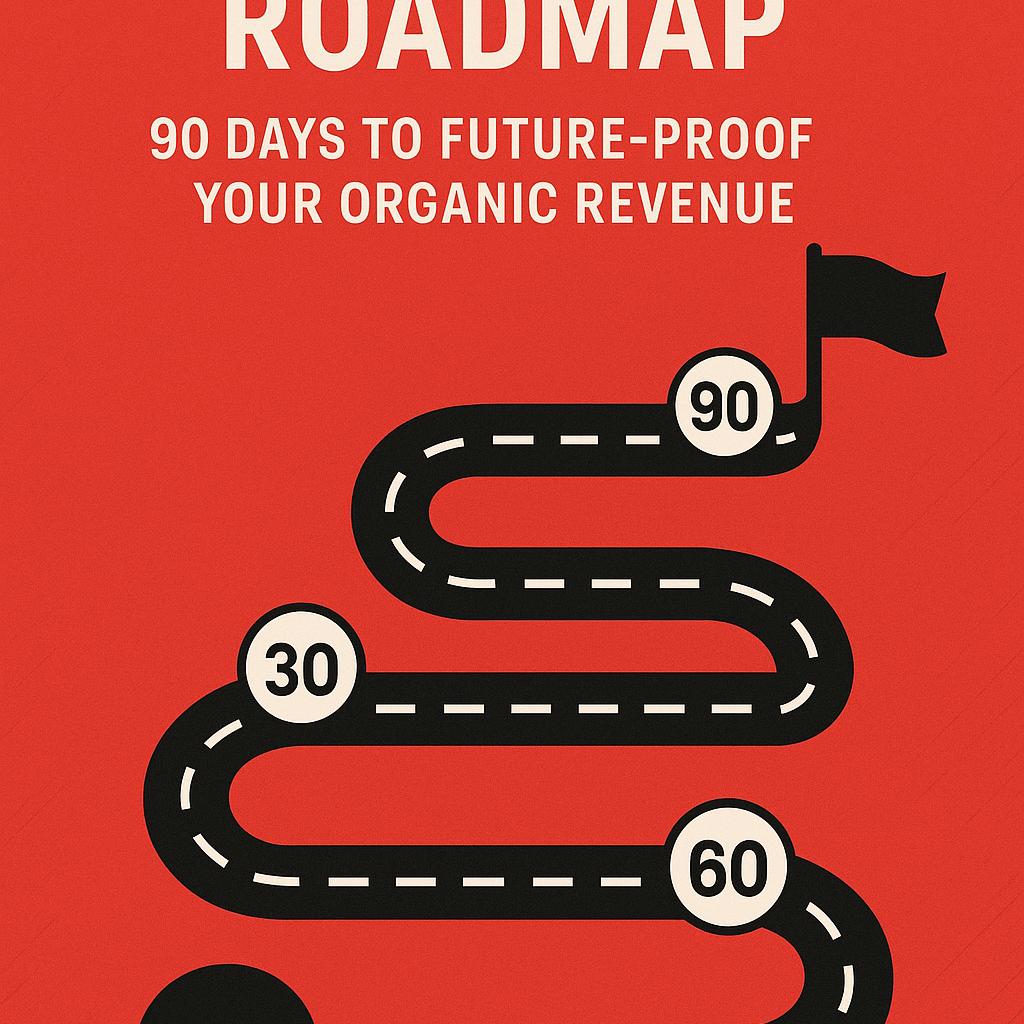
Preparing for the next wave of AI-driven search disruption is no longer something brands can postpone. The shift toward answer engines and generative search results is already reshaping how buyers move through the funnel. The smartest companies are not waiting for their traffic to collapse before adjusting. They are adopting a phased plan that helps them protect their existing revenue while building a foundation that allows them to grow in the new search landscape.
Below is a 90-day roadmap that gives your team a clear path forward. It is practical, realistic, and built around the key actions that actually move the needle.
8.1 Phase 1 (Weeks 1 to 3): Audit and Strategy
The first three weeks are all about clarity. Before making changes, you need a clear view of how exposed your brand is to AI-driven results and how much revenue is tied to vulnerable search terms.
AEO and GEO Audit
Begin by mapping your top 100 to 500 revenue generating search queries. Focus on the keywords and topics that consistently influence sales rather than vanity metrics. Once you compile this list, examine how these queries behave today. Look at how often AI overviews appear, whether Google or any other engine is pulling up generative answers, and which competitors are getting visibility inside those responses.
Log your brand’s presence. Check whether you appear in the classic organic results. Then check whether you are mentioned or cited inside AI generated summaries. These two layers behave very differently, and the gap between them often reveals your biggest blind spots.
Risk Segmentation
After gathering the data, categorize your keyword set. Any query that brings strong revenue, triggers AI answers frequently, and does not show your brand must be treated as your highest priority. These are the keywords that are likely to lose traffic and conversions first.
Your second segment includes medium value and long tail opportunities. These keywords may not be urgent but are still worth optimizing because they will influence future visibility in generative engines. Think of them as the foundation for long term authority.
By the end of week three, you should have a reliable picture of where your biggest risks and opportunities lie. This understanding guides everything you do next.
Phase 2 (Weeks 3 to 8): Content and Technical Execution
Once your priorities are clear, the next step is to restructure, strengthen, and modernize your content. This is where most traditional SEO systems fall short. AI answer engines look for clean, direct and credible information, so your content must match the way these engines interpret and extract answers.
Restructure 20 to 30 Key Pages
Choose the pages tied to your highest value keywords and rebuild them around clarity. Every page should begin with a short and accurate answer to its main question. Add a well written FAQ section that tackles related subtopics. The goal is to give AI answer engines ready to use pieces of information.
Add schema markup to these pages and verify its accuracy. This is one of the simplest yet strongest signals that helps machines understand your content. Many brands skip this or treat it as optional. Here it becomes non-negotiable.
Launch Three to Five Pillar Hubs
Create content hubs around your most important topics. These hubs should combine educational insights, practical guides, comparisons, and answers to common questions. The purpose is to build real authority around core themes that matter for revenue. When generative engines scan the web for trustworthy sources on a topic, you want your hub to become one of the primary references.
Fix Technical Blockers
Technical health still matters. Clean site architecture, proper crawl budget, fast loading speeds, and a smooth mobile experience allow both search engines and AI crawlers to fully interpret your content. If pages are slow, cluttered or difficult to parse, your chances of appearing in AI responses drop quickly.
By the end of week eight, your website should be far more structured, readable and aligned with the way answer engines evaluate relevance.
Phase 3 (Weeks 8 to 12): Authority and Optimization
With your content improved and your structure in place, the final stretch focuses on authority building and continual improvement.
Off-Page Authority Push
AI engines rely on signals that extend beyond your website. Mentions in respected publications, interviews, guest posts and digital PR help strengthen your entity profile. These references make your brand easier for AI systems to recognize and trust. Your goal is to expand your digital footprint so that your brand becomes a known subject in your niche.
Monitoring and Iteration
Track changes in your organic click-through rates. Monitor whether your brand begins appearing in AI overviews or answer modules. Watch your non-brand organic revenue line to see if the decline slows or reverses.
AI-driven search evolves quickly, so iteration is essential. The brands that win are the ones that refine their approach every few weeks, not every few quarters.
Why Partnering With a Specialized AI SEO Agency Helps
Most teams struggle with the pace and complexity of AEO and GEO. Agencies like ThatWare have developed their own internal frameworks, predictive models and proprietary AI tools that significantly reduce the guesswork. They also help compress the timeline, because they already know which parts of your site need restructuring and which technical or content signals influence answer engines the most.
Working with specialists often means you can cover six months of experimentation in a fraction of the time. For brands that rely heavily on organic revenue, the speed advantage alone can prevent substantial losses.
Future Outlook: Beyond 2027 — From Traffic Loss to AI-Driven Growth
The next few years will reshape how brands earn visibility and revenue from search. The transition will not be sudden. It is already happening in small and almost invisible steps. What seems like minor fluctuations today will form a clear pattern by 2027. Brands that prepare early will find themselves in a stronger position, while those who wait will face a much harder climb.
The AI Search Winter for Brands That Delay the Shift
A growing number of businesses still believe that traditional SEO alone will keep delivering the same results as before. The reality is different. As AI summaries, instant answers and zero-click experiences become the default for many types of queries, the old model loses ground. Publishers have already felt the impact. Several major media outlets have reported sharp declines in search traffic after AI began summarizing their articles at the top of search results. These losses are not temporary. They illustrate what happens when a brand is not optimized for the changing way people consume information.
For companies that rely heavily on organic traffic, the same trend is right around the corner. Ignoring AEO and GEO often leads to a slow and steady decline in visits from high-intent queries. As this continues, the natural reaction is to increase spending on paid campaigns. Over time, this becomes an expensive habit. As more competitors experience the same pressure, ad costs rise and margins shrink. It becomes harder to defend revenue, even if the product or service has not changed. This period feels like an AI search winter. Cold, gradual and unavoidable for anyone who stays tied to outdated strategies.
The Hidden Advantage: AI Search Visitors Often Convert Better
There is another side to this shift that does not get enough attention. Early data from multiple industry analyses shows that visitors coming from AI assisted search journeys tend to convert at a higher rate. These users reach your site with clearer intent because they have already consumed a condensed and highly relevant explanation of what they are looking for. In many cases, they arrive ready to compare, evaluate or buy.
This is where the opportunity lies. A brand might lose some of its traditional traffic, yet still see more revenue if it earns a consistent place within AI generated answers. Visibility inside these answers positions your business as a trusted recommendation. Even a single mention inside an AI overview or a conversational response on platforms like Perplexity or ChatGPT can influence the buyer earlier in their journey. When you are the brand that AI repeatedly cites, you gain a steady stream of visitors who understand what you offer and why it matters. The volume may be smaller, but the value is higher and more predictable.
How ThatWare Interprets the Road Ahead
ThatWare has been studying the evolution of AI search for years, and the company’s perspective is clear. SEO will not disappear. It will transform into a broader discipline that blends traditional search with AEO and GEO. The skills required to succeed will shift from simply ranking pages to structuring information in a way that both humans and intelligent systems can easily interpret.
Future optimization will rely heavily on AI driven insights. Predictive modeling, SERP simulations and answer-pattern analysis will help brands understand how and why certain pages become part of AI responses. Content strategies will need to evolve as well. Brands that treat themselves as the primary source of truth within their niche will outperform others. This requires deeper topical coverage, richer explanations, better entity clarity and content layouts that guide both readers and machine learning systems.
In ThatWare’s view, the brands that thrive after 2027 are the ones that prepare for this blended landscape. They will speak the language of users and the language of AI with equal fluency. They will shape their websites not just to rank, but to teach, clarify and serve as reliable data sources. Once a brand reaches that level of clarity and authority, AI engines begin to recognize it as a go-to reference. That recognition translates directly into long-term organic growth, even in a world where fewer clicks come from traditional search listings.
Conclusion: Do Not Wait for the 30 Percent Cliff

The last few years have shown how quickly search behavior can shift. By 2027, the influence of AI answer engines is expected to match, and possibly exceed, the economic weight of traditional search. This is not an abstract projection. It is a realignment already visible through the growing use of AI-powered summaries, conversational search tools, and alternative engines like ChatGPT, Gemini, and Perplexity. If users receive what they need from these systems, they do not continue scrolling. They stop right where the answer appears.
This is where the real risk lies. If your brand is not present inside those answers, then your presence in the marketplace begins to shrink. Visibility in classic rankings is no longer enough because buyers are starting their research in different places, and they are relying on machines that choose a single answer instead of a long list of links. The result is a gradual erosion of organic revenue for companies that continue to treat SEO as a one-channel game.
Many leaders underestimate this shift because the change is silent. Traffic appears stable until the drop arrives. Once that happens, the gap widens fast. A thirty percent decline in organic revenue is not a dramatic prediction. It is the kind of outcome that becomes almost unavoidable when companies pause while the rest of the market adapts to AI-driven discovery.
You do not need to stand still. The brands that move early can protect their search footprint and even gain share. The path begins with three clear steps.
- First, diagnose. Understand how much of your revenue relies on organic traffic, which queries feed your conversions, and where AI answer layers are already showing up. This gives you a clean picture of your exposure.
- Second, defend. Strengthen your presence through Answer Engine Optimization. Shape your content so it is clear, structured, easy to extract, and aligned with the type of responses AI systems prefer to use. This protects the share you already have.
- Third, dominate. Move into Generative Engine Optimization so your brand becomes one of the trusted sources these systems rely on when they build their responses. This is how you appear in the answers that matter, especially in high-intent, high-value searches.
ThatWare has been working at the front line of these changes for years. The company has helped businesses across multiple sectors adjust their strategy for the next phase of search by combining AI-powered SEO, AEO, and GEO frameworks. If you want to stay ahead of the curve, this is the time to ask for a detailed AEO and GEO risk assessment or explore a custom roadmap that secures your organic revenue before the shift reaches full speed.
AI answer engines are already shaping how buyers discover brands. The only thing left to decide is whether they shape that future without your involvement or with your brand positioned at the center of it.