
SUPERCHARGE YOUR ONLINE VISIBILITY! CONTACT US AND LET’S ACHIEVE EXCELLENCE TOGETHER!
Worried that your competitors are ranking above you on most of your target terms? That is most likely because they have a solid backlink profile.
Link has always been the most crucial element of any SEO Strategy. It has been true since links are the basis through which search engine crawlers discover content on the internet. And Link relevance and volume are the basis of Google’s Page Rank algorithm.
Also, several studies have found that the volume of high-quality links forms a positive correlation with ranking.
However, the fact that our Competitor has a good volume of links, is not necessarily a bad thing.
It allows us to find them and loot them. But before we do that, let’s talk about the types of competitors we should be aware of.
There are two types:
Domain Level Competitors
These are the websites that compete with you on the SERP for all the target keywords that you are currently targeting.
Using SERanking we uncovered such competitors:
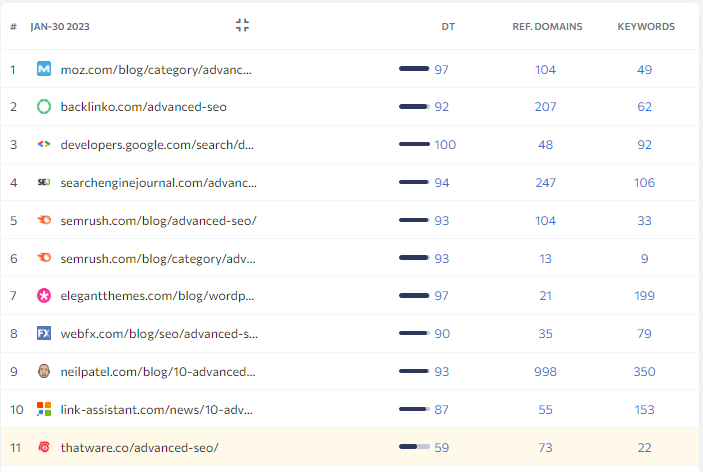
Unsurprisingly we can see sites like Moz, backlinko, semrush and neilpatel as listed as competitors.
Of the above sites, only webfx and neilpatel.com are direct business competitors, the rest are simply ranking for more keywords than us.
Do note that Domain level competitors are not necessarily business competitors. Only that they rank for more keywords than us. Hence sites like moz, backlinko, search engine journal are indirect competitors.
It is important to pick out all these competitors on an excel sheet and mark them as being “Direct” or “Non-Direct”.
The aim will be to loot backlinks from them!
Page Level Competitors
These are competitors that, although do not compete with you on overall more keywords, however, they rank higher than you on individual target keywords.
For example, we want to rank for the term “advanced SEO services”. If we put this keyword on the SERP, we obtain the following results.
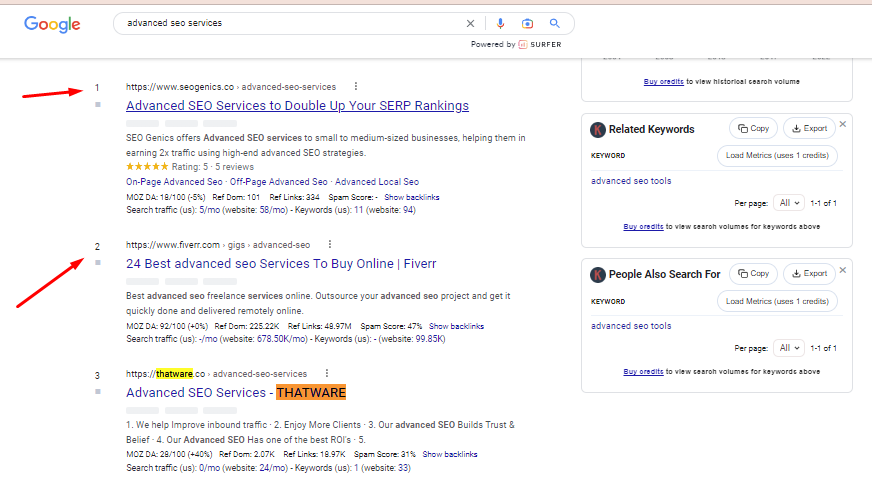
Notice how brands like SEOGenics are ranking above us. Not counting Fiverr as it is just a Freelancer Website.
Hence SEOGenics is a page-level competitor.
Similarly, we put our most important target keywords and find out the competitors that are ranking above us on a page level. We also mark who is our “direct” competitors and who are not.
Enough talk of Competitors. Now let’s get into the tactics of how to acquire competitor backlinks.
Unlocking Competitor Backlinks: A Strategic SEO Advantage
In the highly competitive world of search engine optimization, understanding where competitors earn their backlinks is nothing short of a secret weapon. Backlinks are among the most influential ranking factors in modern SEO, acting as endorsements that tell search engines your content is credible and valuable. However, it is not enough to simply pursue random links—strategic link acquisition begins with competitor backlink intelligence. (Competitive Intelligence Alliance)
Competitor backlink analysis involves studying the backlink profiles of rival websites to uncover where authoritative links originate and how they influence search rankings. By analyzing this data, you can identify high-value linking domains, understand industry trends, and design a targeted outreach strategy that improves your own domain’s authority. This process is especially crucial for businesses that want to outperform competitors in organic search and build sustainable SEO momentum. (wix.com)
In this extended guide, we explore advanced methods to maximize competitor backlink insights, build links intentionally, and implement a long-term roadmap that delivers measurable SEO gains.
Why Competitor Backlink Intelligence Matters
Before diving into techniques, it’s essential to understand why competitor backlink analysis should be a cornerstone of your SEO strategy.
Accelerate Link Discovery
Instead of starting link building from scratch, competitor analysis allows you to quickly identify where valuable backlinks exist in your niche. These are sites already linking to competitors, demonstrating relevance and trustworthiness.
Assess Industry Landscape
Reviewing backlink profiles reveals patterns about which types of content attract links within your industry. This insight informs your own content creation strategy, enabling you to produce assets that are more likely to earn links organically.
Prioritize Outreach Efforts
Not all links are equal. By observing competitors, you can filter out low-quality or irrelevant link sources and focus your efforts on high-authority domains that have proven to be link-worthy.
Benchmark Your SEO Efforts
Backlink analysis helps you understand how stacked your profile is compared to competitors. This competitive benchmarking illuminates whether you need to build more links, more diverse link sources, or higher-quality backlinks.
Tools for Competitor Backlink Analysis
Effectively identifying competitor backlinks requires reliable SEO tools. While the depth and features vary across platforms, the following types of tools can provide comprehensive insights:
Backlink Auditing Tools
Tools like Ahrefs, SEMrush, and Moz’s Link Explorer allow you to view a competitor’s backlink profile, including referring domains, anchor text distribution, link types (dofollow vs nofollow), and more. These tools also provide metrics like domain authority and traffic estimates that help prioritize opportunities.
Link Intersect Tools
Features like Link Intersect identify domains linking to competitors but not to your site. This reveals a list of prospects that are prime targets for link acquisition.
Search Console and Analytics
While Search Console won’t directly show competitor backlinks, combining your backlink data with analytics helps you understand which links drive organic traffic and conversions.
Step-by-Step Process to Analyze Competitor Backlinks
A systematic approach ensures you extract meaningful data and translate it into actionable SEO tasks.
1. Identify Key Competitors
Not all competitors are created equal. Your backlink strategy should be informed by:
- Direct competitors (business rivals)
- SEO competitors (sites ranking for the same keywords, even if they don’t sell the same products)
- High-authority industry sites that consistently rank on page one
These become your benchmark domains for backlink comparison.
2. Gather Backlink Data
Using your chosen SEO tool, extract backlink profiles for each competitor. Focus on:
- Total number of backlinks
- Referring domains
- Authority scores of link sources
- Types of content linked
This initial pool of data forms the basis for further analysis.
3. Perform a Backlink Gap Analysis
A backlink gap analysis reveals domains linking to your competitors but not to you. This creates a targeted list of opportunities to pursue through outreach or content creation.
This gap analysis helps prioritize efforts around domains that already show interest in your niche and, in many cases, are more receptive to link requests.
4. Evaluate Link Quality
Not all backlinks help your SEO equally. When evaluating opportunities, focus on:
Authority: Links from sites with high domain authority often pass stronger ranking signals.
Relevance: Links from sites in the same industry or niche are more valuable.
Placement: Editorial links within the content body carry more weight than footer or sidebar links.
Anchor Text: Descriptive anchor text contextualizes the link and reinforces keyword relevance.
These criteria ensure you pursue links that strengthen your SEO, not dilute it.
Advanced Techniques for Acquiring Competitor Backlinks
Once you have a list of competitor links, the next step is action. Below are proven methods to convert insights into backlinks.
Reverse-Engineer Linkable Content
Review the pages on competitor sites that have attracted the most backlinks. What format are they—guides, tools, case studies, or long-form content? Create your own version that is more comprehensive or updated and use this as a foundation for outreach.
Guest Posting on Common Domains
Many competitors publish guest posts on authoritative blogs. Identifying these placements allows you to pitch your own high-quality content to the same domains, increasing your chances of link acquisition.
Outreach Based on Brand Mentions
Often, websites mention competitor brands without linking to them directly. Use search operators or backlink tools to find unlinked mentions of competitor brands or keywords, then reach out to request a link pointing to your own relevant page.
Broken Link Replacement
Identify broken links on pages that previously linked to competitor resources. Reach out to site owners, offering your content as a replacement for the dead link—this is a win-win approach that improves their user experience while earning you a backlink.
Leverage Content Formats That Attract Links
Certain content types naturally attract more backlinks:
- Industry research and original data
- Interactive tools and templates
- Expert roundups and interviews
- Comprehensive educational resources
By creating content tailored to these formats, you increase the likelihood of earning links, including from domains discovered in competitor backlink analysis.
Measuring the Impact of Your Strategy
A strategy is only as good as its results. To evaluate success, track:
- Number of new referring domains acquired
- Change in organic rankings for target keywords
- Growth in organic traffic from linked pages
- Domain authority improvements over time
Regularly revisit competitor backlink profiles to monitor lost backlinks, newly acquired links, and shifts in link quality. This ongoing competitive intelligence ensures your backlink strategy stays relevant and effective.
Integrating Backlink Intelligence With Overall SEO
Competitor backlink analysis is powerful on its own, but its impact multiplies when integrated with other SEO efforts:
- Keyword gap analysis: Use backlink insights alongside content keyword gaps to prioritize topics that both drive search visibility and attract links.
- Technical SEO auditing: Ensure your site can capitalize on new links by fixing issues that could inhibit crawlability or indexing.
- Content strategy: Align content creation with both search demand and link acquisition opportunities.
Combining these elements creates a holistic approach where backlink intelligence directly informs broader SEO goals.
Competitor Backlink Acquisition Methods
Reveal Link Building opportunities using Competitor Home Page Links
If you look at the anchor text report for our domain, you will notice that most backlinks use branded terms for anchor text.
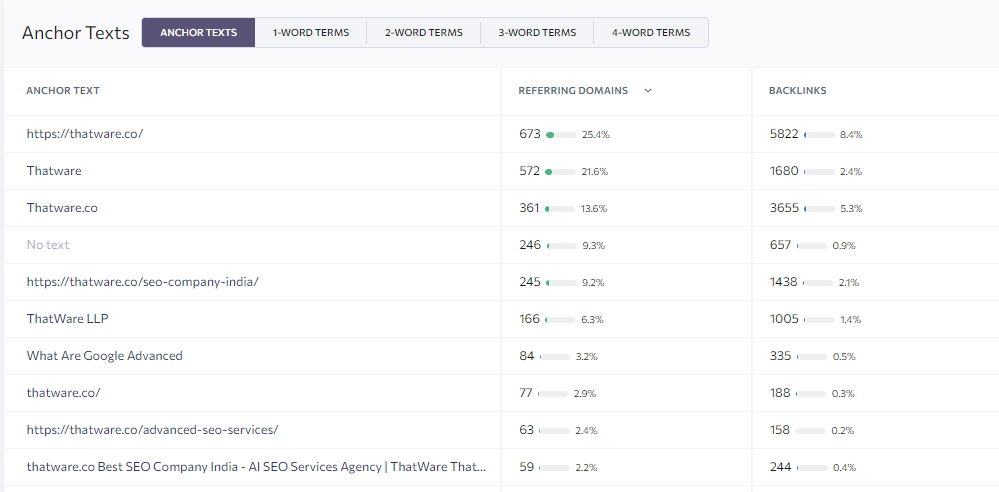
This is because people like to link out to brands in general through the brand name.
Thus analyzing our competitor backlinks can help us know where are they getting mentioned.
If we check the anchor text report for webfx. (It’s good if we do this for a direct competitor as previously marked among the list of competitors).
Click on the top anchor text that is branded, and you will immediately find all the websites that are mentioning them.

You can export these domains and find out useful link-building opportunities by outreaching them.
Find your Competitor’s Guest Posts and Then Write for the same sites
There are a few ways to find competitor guest posts, but in my experience, the best way is to use Google advanced search. We only have to identify an author among the competitors who regularly published blog posts.
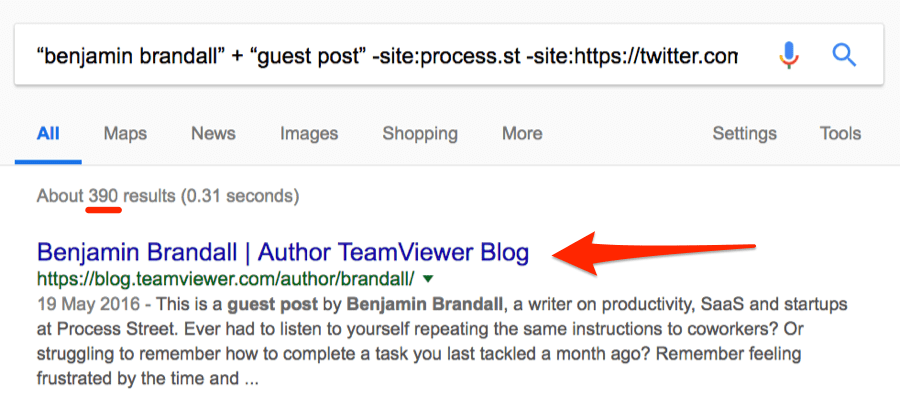
We use the following string in the Google search bar.
“Author name” + “guest post” -site:competitordomain.com -site:https://twitter.com
Here’s the result we get for the author Benjamin Brendall.
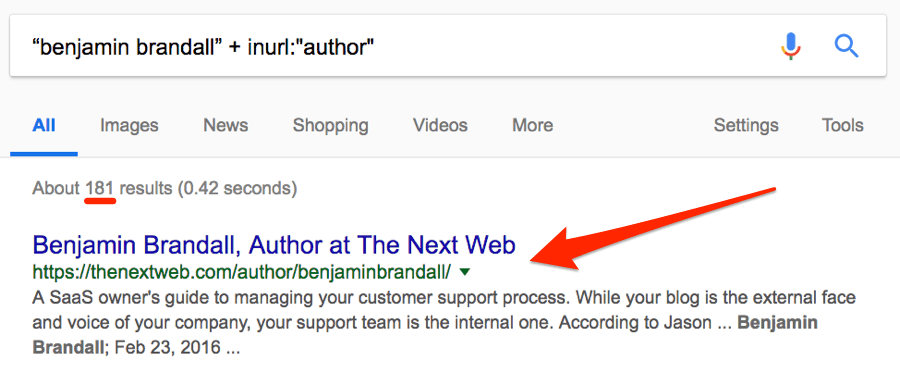
Also you can surface some more results by entering another search string.
“Author name” + inurl:author
Find Easily Replicable Links by Using the Ahrefs Link Intersect Tool
The link intersects tool of Ahrefs provides additional easy backlink opportunities. Essentially the tool does is find domains that link out to 3-4 of your competitor domains simultaneously. If the domain can link out to all of those domains then it can link out to you as well.
We call them small link hubs and these can be very fertile lands for link farming.
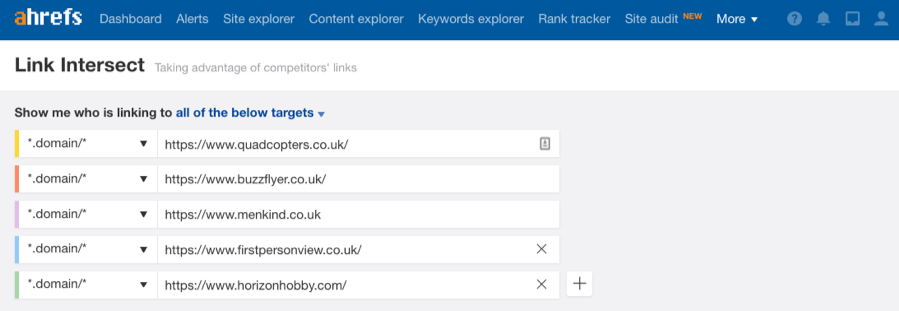
Let us imagine we are a website that sells “quadcopters”
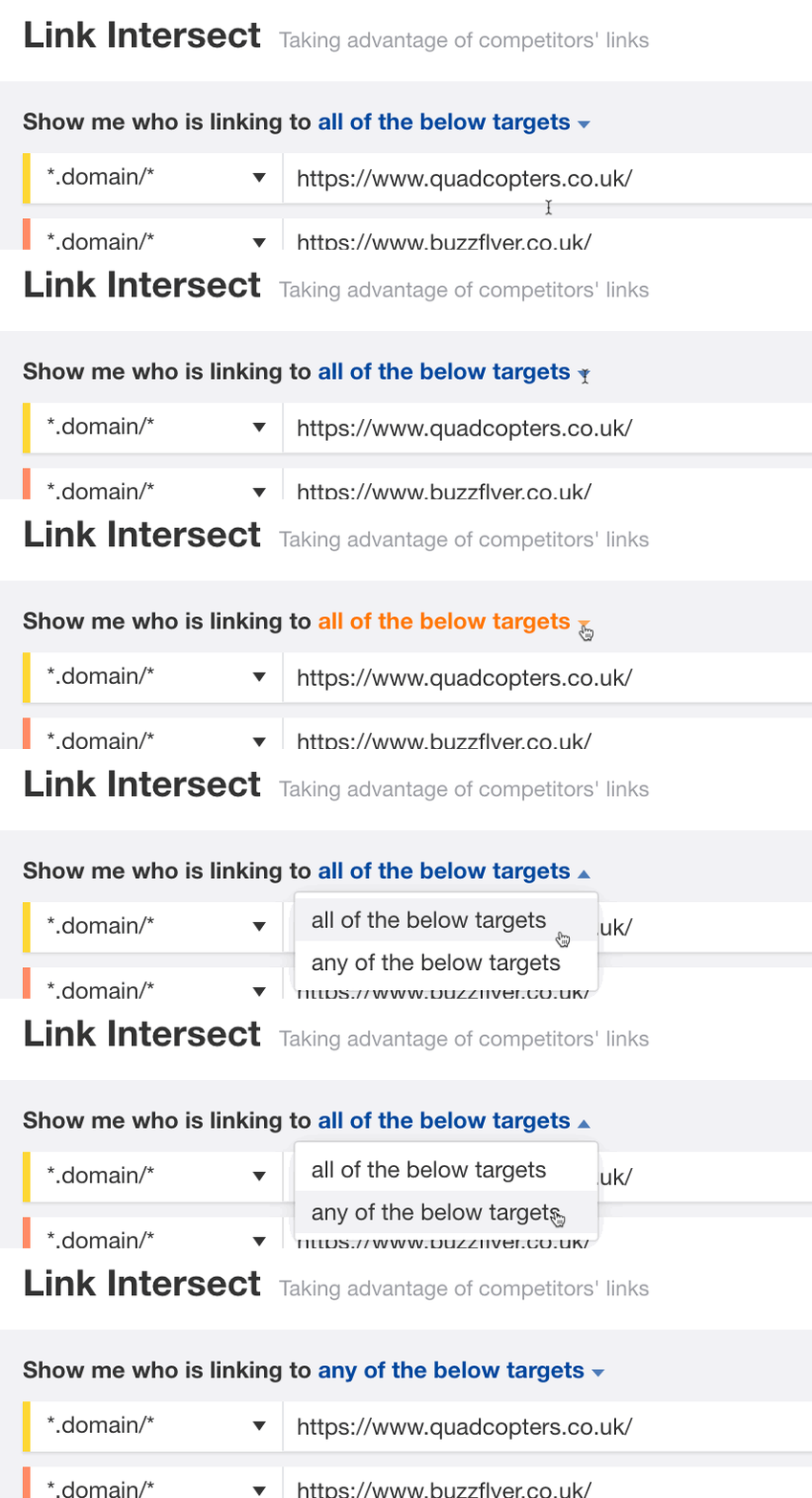
Go to the Link Intersect tool -> enter all of the domain-level competitors (from the spreadsheet) -> select “all of the below targets” -> Show link opportunities.
In this instance, we find 14 domains that link to all of our competitors.
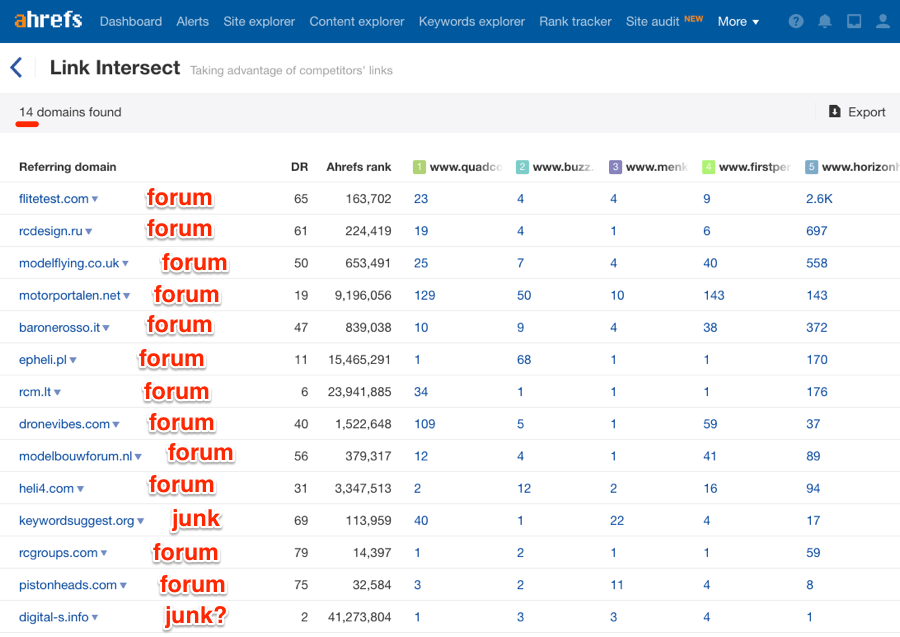
In this case, we found all forum links with two junk as well. All in all, there are 12 Forum Links. And guess what these are niche forums as well.
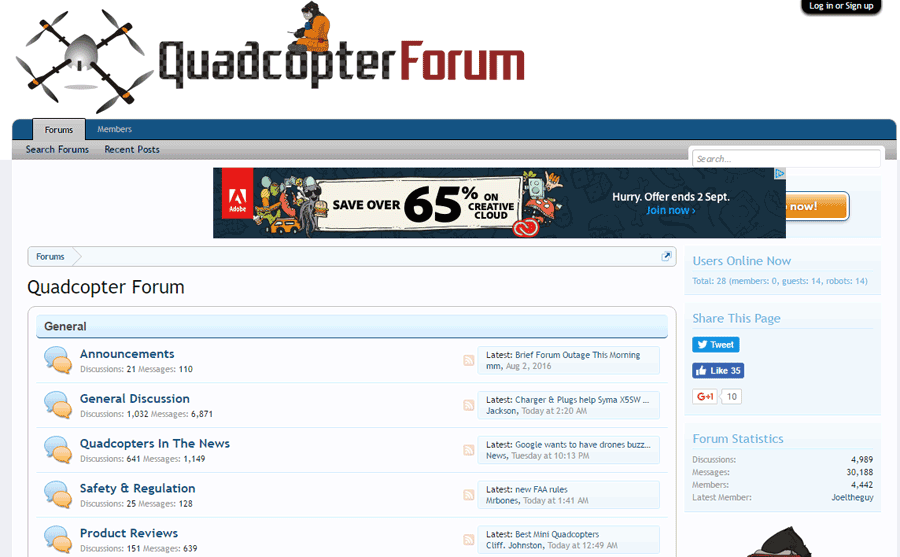
Hence these types of forums have our customers. Hence as a business, we would definitely like to promote in these traffic hubs.
But wait, we can widen the search even further: just run the search with the Link Intersect Tool set to show sites linking to ANY of the domains.
Tools -> Link Intersect -> Enter domains -> Set to “any of the below targets” -> Show link opportunities.
This time we get a lot of link-building potential opportunities
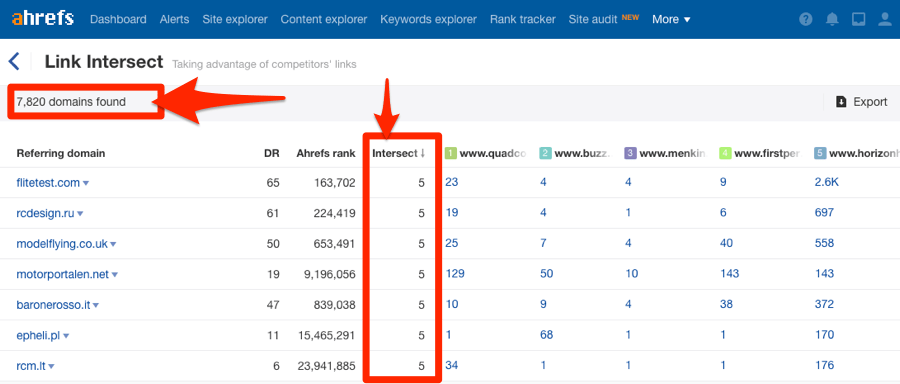
Finding these link hubs can add a wealth of off-page value to your SEO campaign. We already got forum backlinks. But we can also obtain
- News sites/blogs covering your industry;
- Industry-specific portals/communities (e.g., inbound.org for marketing);
- Quality industry-specific directories.
Steal Backlinks from Page-Level Competitors
If you want to get a particular page to the top of Google, the best technique would be to steal backlinks from the top-ranking competitors for the target query.
For example for the query “advanced seo services”, I can put SEO Genics in the SEO Ranking Backlink checker report and find the list of backlinks linking to that page.
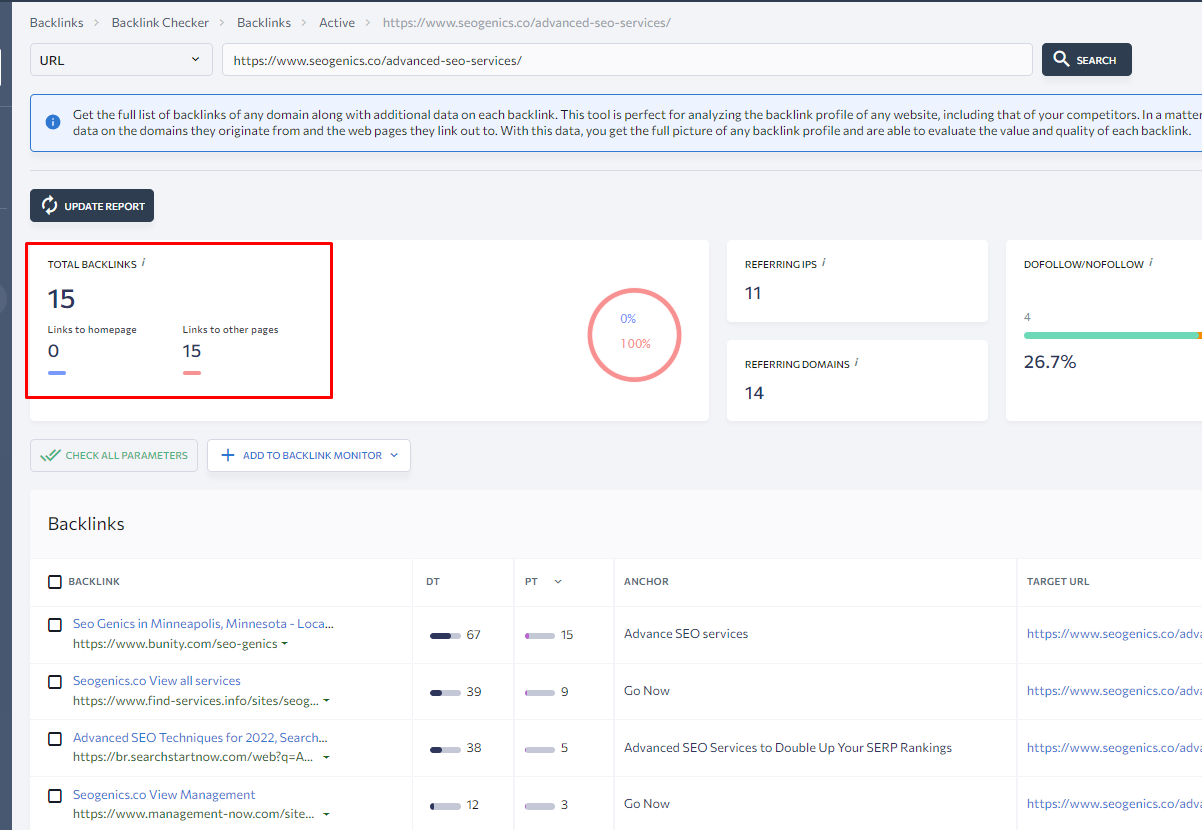
I immediately get 15 Backlink opportunities. Looking at the sites it doesn’t seem to get a backlink from them would be that difficult.
Strategic Competitor Backlink Mapping for Long-Term SEO Growth
A successful competitor backlink strategy does not stop at identifying where competitors get links. The real advantage lies in mapping backlink patterns over time and aligning them with your broader SEO and business objectives. When executed strategically, backlink mapping transforms raw link data into a scalable growth framework that compounds authority month after month.
Rather than chasing isolated links, advanced SEO focuses on building link ecosystems—clusters of authoritative, relevant domains that reinforce topical authority and trust signals across search engines.
Understanding Backlink Velocity and Growth Patterns
What Is Backlink Velocity?
Backlink velocity refers to the rate at which a website acquires new backlinks over time. Search engines use this as a contextual signal to determine whether link growth appears natural or manipulated.
By analysing competitor backlink velocity, you can understand:
- How quickly competitors build links
- Whether links are acquired steadily or in bursts
- Which campaigns or content pieces trigger spikes in link acquisition
This insight helps you plan link-building efforts that look organic and sustainable rather than abrupt or artificial.
Identifying Seasonal and Campaign-Based Link Spikes
Many competitors experience backlink spikes due to:
- Product launches
- Research reports or data studies
- PR campaigns
- Industry events or announcements
By correlating backlink spikes with content publication dates or campaigns, you can reverse-engineer what actually earns links in your industry—and time your own initiatives accordingly.
Segmenting Competitor Backlinks by Intent
Not all backlinks serve the same purpose. Advanced analysis involves categorising competitor links based on intent, not just source.
Editorial Authority Links
These are links earned naturally through high-quality content, thought leadership, or research. They usually come from:
- Industry blogs
- Media publications
- Educational resources
These links carry long-term SEO value and should be prioritised in your strategy.
Relationship-Based Links
Some backlinks are acquired through partnerships, collaborations, sponsorships, or contributor relationships. These links reveal:
- Influencer connections
- Brand alliances
- Guest publishing networks
Understanding this helps you build similar relationships within your niche.
Utility and Resource Links
These come from:
- Resource pages
- Tool directories
- Software comparisons
- “Best of” lists
Competitors often secure these links by offering genuinely useful assets. Creating comparable or superior tools opens the door to the same link opportunities.
Competitor Anchor Text Intelligence
Why Anchor Text Matters
Anchor text helps search engines understand what a linked page is about. Analysing competitor anchor text distribution reveals:
- Which keywords competitors are reinforcing
- How aggressively they optimise anchors
- Whether links are brand-focused or keyword-driven
This data helps you avoid over-optimisation while strengthening topical relevance.
Identifying Safe Anchor Text Patterns
By studying competitors with stable rankings, you can uncover:
- Ideal brand-to-keyword anchor ratios
- Natural variations in anchor phrasing
- Contextual anchor placements within content
This insight is especially valuable in competitive niches where over-optimised anchors can trigger algorithmic penalties.
Discovering Hidden Link Opportunities Through Competitor Mentions
Unlinked Brand Mentions
Competitors are often mentioned without being linked. These mentions represent missed link opportunities—for them and for you.
By identifying websites that mention competitors:
- You can pitch your brand as an alternative
- Offer updated resources or expert commentary
- Position your content as a more relevant reference
This method often converts well because the site owner is already open to referencing similar brands.
Comparative Content Opportunities
If competitors are frequently mentioned in:
- Comparison articles
- Reviews
- “Alternatives to” lists
You can proactively create content that positions your brand as a credible alternative and pitch it to those publishers.
Using Competitor Backlinks to Build Topical Authority
Moving Beyond Individual Pages
Modern SEO rewards topical authority, not just isolated high-ranking pages. Competitor backlink analysis can reveal:
- Which topic clusters competitors are reinforcing
- How links are distributed across related pages
- Which subtopics attract the most external validation
This helps you design content hubs that attract links across an entire topic, not just a single URL.
Strengthening Internal Linking With External Insights
Once you know which pages competitors earn links to, you can:
- Strengthen internal links to equivalent pages
- Funnel authority from linked pages to conversion-focused content
- Create logical topic silos aligned with external link signals
This amplifies the SEO impact of every backlink you acquire.
Risk Analysis: Learning From Competitor Backlink Mistakes
Identifying Toxic or Risky Link Patterns
Not all competitor links are worth copying. Some competitors:
- Use private blog networks (PBNs)
- Rely on spammy directories
- Engage in paid link schemes
By analysing competitors who have experienced ranking drops, you can identify risky backlink patterns to avoid—saving time, money, and potential penalties.
Monitoring Lost Backlinks and Declines
Competitor backlink loss can signal:
- Content becoming outdated
- Relationship breakdowns
- Penalties or algorithmic demotions
Tracking these losses helps you:
- Target abandoned link sources
- Capitalise on competitor weaknesses
- Stay ahead of algorithm changes
Integrating Competitor Backlink Strategy With AI-Driven SEO
Predictive Link Opportunity Identification
Advanced SEO frameworks use AI to:
- Predict which content types will earn links
- Score backlink opportunities by probability
- Prioritise outreach targets based on historical success
Competitor backlink data feeds these systems, making your link-building strategy more precise and less manual.
Automating Link Prospect Qualification
Instead of manually reviewing thousands of domains, AI-powered analysis can:
- Filter irrelevant sites
- Flag high-authority, high-relevance prospects
- Identify link networks within your niche
This allows your SEO team to focus on execution rather than data cleaning.
Scaling Competitor Backlink Insights Across Markets
For businesses targeting multiple regions or industries, competitor backlink strategy becomes even more powerful.
You can:
- Compare backlink patterns across countries
- Identify regional publishers and directories
- Adapt outreach messaging for local relevance
This is particularly valuable for international SEO and multi-location brands.
Measuring Strategic Impact Beyond Rankings
While rankings matter, competitor backlink strategy should also support business outcomes.
Track metrics such as:
- Referral traffic quality
- Assisted conversions
- Brand visibility across authoritative platforms
- Link-driven lead generation
When backlink efforts align with business KPIs, SEO becomes a growth driver—not just a ranking exercise.
Final Thoughts
Stealing Competitor Backlinks is the best way to nab some great Backlink opportunities. However, outranking competitors by solely doing competitor backlinks might not be possible.
In reality, we usually get 20-30% of your competitor backlinks. Hence it is important to combine competitor backlinks strategy with other link-building tactics to make more backlinks than your competitors and outrank them!



