SUPERCHARGE YOUR Online VISIBILITY! CONTACT US AND LET’S ACHIEVE EXCELLENCE TOGETHER!
Search has entered an AI-first era. Modern search engines no longer rely on isolated keywords or surface-level optimisation tactics; instead, they interpret language, context, and intent through Large Language Models (LLMs). Rankings today are driven by how well a brand is understood as an entity, how clearly its content satisfies intent vectors, and how effectively its digital footprint aligns with AI-powered retrieval systems. This shift has rendered traditional SEO methodologies insufficient for sustained growth, especially in competitive and trust-sensitive local service markets.
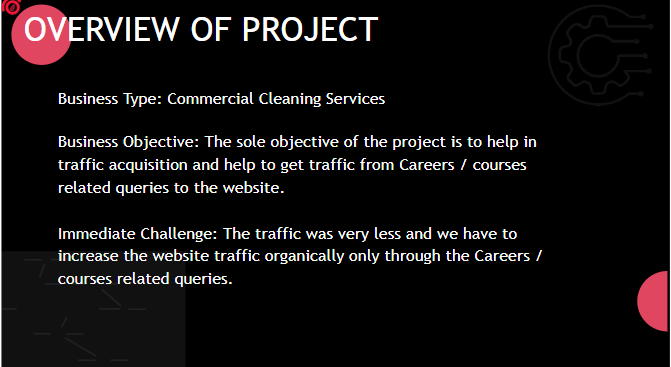
Townsend Cleaning, a commercial cleaning services provider based in Geelong, Australia, faced this exact challenge. Despite offering specialised services across office, medical, and healthcare cleaning, the brand suffered from extremely low organic visibility—particularly for careers, courses, and high-intent service queries critical to business expansion. The website lacked semantic depth, entity clarity, and intent alignment, making it difficult for AI-driven search systems to correctly interpret relevance and authority. In an ecosystem governed by algorithms like RankBrain and BERT, keyword-centric optimisation could not bridge this gap.
ThatWare approached this challenge through Large Language Model–based SEO (LLM SEO)—a methodology designed to align content, structure, and performance signals with how AI systems actually process information. Rather than optimising pages in isolation, ThatWare engineered a semantic content ecosystem that strengthened entity recognition, improved contextual relevance, and satisfied user intent at scale. By combining LLM-aligned content architecture, AI-readable technical optimisation, and intent-driven experience design, ThatWare transformed Townsend Cleaning’s organic presence into a discoverable, authoritative entity within Google’s AI-first search landscape. The result was not just traffic growth, but sustainable, AI-validated visibility that continues to compound over time.
About the Client: Townsend Cleaning
A Commercial Cleaning Brand Operating in a Trust-Critical Market
Townsend Cleaning is a professional commercial cleaning services provider based in Geelong, Australia, serving businesses across office, industrial, and healthcare environments. Operating within a trust-sensitive industry where hygiene, compliance, and consistency are non-negotiable, the brand’s reputation depends heavily on credibility and reliability. For sectors such as medical clinics and healthcare facilities, cleaning is not a commodity service—it is a risk-managed, compliance-driven function. This places Townsend Cleaning within a vertical where AI-evaluated trust signals and entity credibility play a decisive role in digital visibility.
Business Growth Dependent on Skilled Workforce & Service Authority
Unlike many local service businesses, Townsend Cleaning’s growth model is closely tied to its ability to attract trained professionals and communicate structured career pathways. Queries related to careers, training, and courses are not informational add-ons but core commercial drivers. These searches represent high-intent users evaluating long-term employment, certification pathways, and industry credibility. For LLM-driven search systems, this means the brand must be understood not only as a service provider, but as an employer entity and training-aligned organisation within the cleaning ecosystem.
The Challenge of Visibility in an AI-Driven Local Search Landscape
Despite operational expertise, Townsend Cleaning struggled to achieve digital visibility. The website lacked semantic clarity, structured topical depth, and contextual reinforcement across its service and career-related content. As a result, large language models had limited signals to associate the brand with specialised cleaning, healthcare compliance, or professional development. In an AI-first search environment, this created a disconnect between real-world expertise and algorithmic understanding—preventing the brand from being confidently retrieved for high-value local and career-driven queries.
Why LLM-Level Understanding Was Critical for Growth
For Townsend Cleaning, success in search required more than incremental optimisation. It demanded LLM-level comprehension, where AI systems could accurately classify the brand’s services, trustworthiness, and role within the local commercial cleaning landscape. Establishing this understanding meant building entity authority, semantic consistency, and intent satisfaction across the entire site—laying the foundation for sustainable growth driven by AI-based retrieval rather than traditional keyword rankings alone.
The SEO Landscape Shift: Why LLM SEO Was Necessary
From Keyword Matching to AI-Led Meaning Extraction
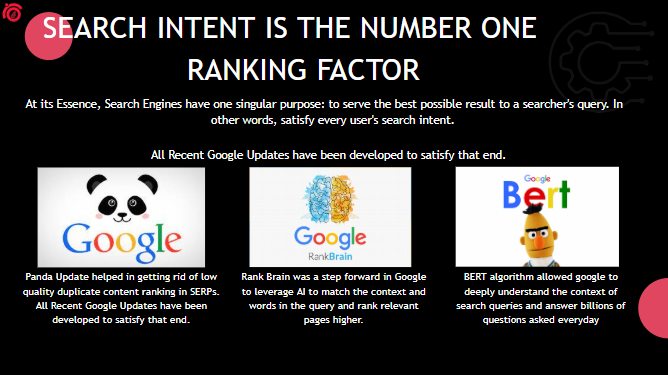
Search engines no longer operate as keyword-matching machines. Modern search systems are powered by Large Language Models (LLMs) that interpret meaning, context, and relationships across vast information networks. Rather than ranking pages based on isolated phrases, AI-driven search evaluates how well content satisfies intent vectors, how clearly entities are defined, and how confidently relevance can be inferred from semantic signals. This shift fundamentally changes what it means to “optimise” a website.
The Algorithmic Evolution That Redefined SEO
Google’s progression from rule-based algorithms to AI-first systems illustrates this transformation. Updates such as Panda enforced quality thresholds by eliminating thin and duplicate content. RankBrain introduced machine learning to model user intent and contextual relevance. BERT expanded this capability by enabling deep, conversational understanding of language at scale. Together, these systems laid the foundation for LLM-driven retrieval, where search engines interpret not just words, but meaning embedded in context.
Why Traditional SEO Models Could No Longer Compete
Traditional SEO strategies—focused on keyword density, backlinks, and page-level optimisation—struggle in this environment. These approaches fail to provide the semantic depth and contextual consistency required by LLMs to confidently retrieve content. Without entity clarity, topical authority, and intent alignment, AI systems cannot accurately determine expertise or trustworthiness. As a result, websites optimised under legacy SEO frameworks often experience stagnant visibility, unstable rankings, or inconsistent traffic growth.
The Rise of Entity-Based and Intent-Centric Search
LLM-powered search systems prioritise entities over pages. Brands are evaluated as interconnected knowledge nodes within a broader topical graph. Relevance is determined by how well content contributes to this graph through semantic coverage, contextual reinforcement, and behavioural validation. For local service businesses like Townsend Cleaning, this means being understood not just as a cleaning company, but as a specialised service entity, an employer, and a compliance-driven operator within the healthcare and commercial cleaning ecosystem.
Why LLM SEO Became the Only Viable Growth Path
To compete in this AI-first landscape, Townsend Cleaning required an SEO strategy designed explicitly for LLM interpretation. LLM-based SEO focuses on semantic architecture, entity reinforcement, and intent satisfaction—ensuring AI systems can confidently classify, retrieve, and surface the brand for high-value queries. This approach does not chase rankings; it builds AI-level understanding, creating durable visibility that compounds over time. For Townsend Cleaning, adopting LLM SEO was not an upgrade—it was a necessity for sustainable growth.
Initial Challenges & Diagnostic Findings
Extremely Low Semantic Visibility and Retrieval Confidence
At the beginning of the engagement, Townsend Cleaning suffered from extremely low organic visibility—not due to a lack of services, but due to weak semantic discoverability. Large Language Models rely on contextual signals to determine whether a brand should be retrieved for a given intent. In this case, the site did not provide sufficient semantic cues for AI systems to confidently associate Townsend Cleaning with careers, training pathways, or specialised commercial cleaning services. As a result, retrieval confidence for high-intent queries remained low.
Fragmented Intent Signals Across Core Business Queries
One of the most critical findings was the fragmentation of intent signals across the site. Career-related queries, service-based searches, and compliance-focused information existed either in isolation or were missing entirely. From an LLM perspective, this fragmentation prevents the formation of coherent intent clusters. Without clear relationships between pages, AI systems struggle to understand how different content assets contribute to a unified topical narrative—weakening entity relevance across multiple query types.
Lack of Entity Structuring and Topical Authority Graphs
The website lacked clear entity definition and reinforcement, a foundational requirement for LLM-based SEO. Services, locations, and expertise areas were not structured in a way that allowed AI models to build a topical authority graph. Without consistent entity references and semantic reinforcement, Townsend Cleaning appeared algorithmically indistinct from generic cleaning providers. This absence of topical depth limited the brand’s ability to compete for specialised queries such as healthcare and medical facility cleaning.
Technical Constraints Limiting AI Interpretability
Technical diagnostics revealed performance and structure issues that reduced AI interpretability. Heavy JavaScript execution, suboptimal image handling, and inconsistent layout stability impaired how content was rendered and evaluated. Since LLM-assisted ranking systems factor usability and accessibility into relevance assessment, these issues directly weakened the site’s quality signals. Poor technical clarity reduces the likelihood that AI systems will prioritise a site during retrieval.
Behavioural Signal Deficiencies Affecting Trust Evaluation
User engagement metrics showed limited session depth and inconsistent navigation patterns. From an AI evaluation standpoint, these behavioural signals act as validation layers for semantic relevance. Low engagement reduces confidence that content satisfies user intent, reinforcing negative feedback loops within AI ranking systems. Addressing these behavioural deficiencies required both content realignment and experience optimisation.
Diagnostic Conclusion: Structural, Not Superficial Failure
The diagnostic phase made one conclusion clear: Townsend Cleaning did not suffer from a lack of effort, but from a structural misalignment with LLM-driven search systems. The solution required a fundamental re-engineering of semantic architecture, entity clarity, and intent satisfaction—setting the stage for a full-scale LLM SEO intervention led by ThatWare.
ThatWare’s LLM SEO Framework: Strategy Overview
What LLM SEO Means at ThatWare
At ThatWare, LLM SEO is not just about optimising for keywords—it’s about optimising for comprehension. We define it as the practice of structuring websites so that AI-driven search systems—Large Language Models, semantic retrieval engines, and answer-oriented algorithms—can understand, interpret, and accurately retrieve content for users’ queries. Unlike conventional SEO, which focuses on exact-match phrases or backlinks, LLM SEO evaluates how effectively content communicates intent, authority, and context.
Our approach treats every page as a semantic entity within a broader content ecosystem. This ensures that AI systems do more than “see” the page—they understand what the brand represents, how it fits within a topical graph, and why it should be ranked for high-intent queries.
Aligning SEO with AI Systems
We design SEO strategies that align directly with the mechanics of modern search:
- Large Language Models: Optimising content to be parseable and semantically rich, enabling LLMs to form a coherent understanding of each page’s purpose and relevance.
- AI Answer Engines: Structuring content to provide precise, context-aware responses to user questions, increasing the likelihood of appearing in AI-powered answer boxes and snippet features.
- Semantic Retrieval Systems: Ensuring entity recognition, topic clustering, and relational data allow the site to be surfaced for multiple, intent-aligned queries, even without exact keyword matches.
LLM Interpretability as the Primary KPI
For us, traditional ranking metrics are secondary. The primary KPI is LLM interpretability—the degree to which AI can confidently evaluate content relevance, trustworthiness, and semantic authority. By making content machine-readable without compromising human readability, we ensure that search engines treat Townsend Cleaning as a high-authority, contextually accurate resource.
Framework Pillars
Our LLM SEO framework is built on four interconnected pillars:
- Semantic Architecture: Organising content into clusters and hubs that clearly communicate topical relationships.
- Entity-First Content: Highlighting the brand, services, and expertise in structured, LLM-friendly ways.
- Intent Satisfaction Loops: Designing content that fulfills user intent across commercial, informational, and navigational queries.
- AI-Readable Technical Signals: Ensuring that technical SEO and UX features reinforce semantic clarity and content accessibility for LLMs.
By combining these pillars, we create a foundation where LLMs can evaluate and rank content with precision, establishing a lasting presence in AI-driven search ecosystems.
LLM-Driven Content Strategy
At ThatWare, we reimagined the classic 3C’s—Content Type, Content Format, and Content Angle—through an LLM lens, ensuring that each page satisfies semantic, entity, and intent-based requirements.
Content Type: Semantic & Entity Architecture
Topic Clusters: We developed a topical architecture mapping the full spectrum of Townsend Cleaning’s services. Each cluster—office cleaning, medical facility cleaning, healthcare hygiene, and specialised industrial cleaning—was designed to feed into a broader semantic graph. By connecting these clusters internally, we reinforced topical depth and enhanced LLM comprehension of domain expertise.
Career & Course Intent Hubs: Given Townsend Cleaning’s workforce expansion goals, we built semantic hubs around careers, training programs, and upskilling opportunities. Each hub was structured to capture intent clustering, linking job-seekers to the right pages while signalling entity authority to AI systems.
Service-Entity Mapping: Service pages were not isolated descriptions; they were carefully mapped to the brand entity and associated intent vectors. For example, “medical clinic cleaning Geelong” became a node connecting service details, compliance protocols, and trust signals—all optimised for retrieval relevance.
Authority Reinforcement via Internal Linking: Every cluster and hub was interlinked using descriptive anchor text and semantic cues, allowing LLMs to map content relationships and propagate authority throughout the site.
Content Format: AI-Optimised Intent Satisfaction
Benefit-Driven Formats: We transformed content into actionable, reader-first formats highlighting the value of services. For instance, “Hidden Benefits of Hiring Dedicated Office Cleaners” articulated both commercial and informational intent, improving intent satisfaction loops.
Question-Answer Structures: Frequently asked questions, compliance explanations, and career guidance were formatted in clear Q&A layouts, improving retrieval accuracy in AI-powered search results.
Retrieval-Friendly Layouts: Pages were structured with headings, bullet points, and context-rich snippets, allowing LLMs to quickly parse content for semantic cues.
Conversational and Explanatory Tone: We adopted a friendly yet professional tone, bridging human readability with AI interpretability, ensuring context saturation across service, career, and informational pages.
Content Angle: Semantic Differentiation
Healthcare Compliance Emphasis: Pages dedicated to medical and healthcare cleaning highlighted adherence to hygiene and infection-control standards, increasing trust and domain expertise signals.
Career Growth Narratives: Career pages emphasised employee development and local hiring opportunities, enhancing both user engagement and entity recognition.
Trust & Credibility Signalling: Compliance certifications, client testimonials, and procedural transparency reinforced reliability in AI evaluations.
Local Expertise Reinforcement: Geographic cues such as “Geelong” and service-specific modifiers strengthened semantic coverage depth, making the brand more retrievable for location-based intent.
This multi-layered approach ensured Townsend Cleaning’s content met both human and LLM expectations, increasing retrieval relevance and embedding the brand into AI-driven search results.
LLM SEO Technical & UX Execution
Core Web Vitals as AI Confidence Signals
We treated Core Web Vitals not just as a UX metric but as a signal of content quality to AI systems. Page speed, interactivity, and layout stability were optimised to ensure that both users and LLMs could access content efficiently.
JavaScript Execution Control & Render Path Optimisation
By limiting unnecessary JavaScript execution and optimising render paths, we reduced content masking and ensured LLMs could interpret semantic content without ambiguity.
Image Semantic Optimisation
All images were tagged with descriptive, contextually relevant alt text and structured data, providing AI systems with visual cues that reinforced topical and entity understanding.
Mobile-First Interpretability
With mobile indexing now standard, responsive layouts were optimised for AI parsing. Consistent interaction patterns allowed search systems to assess usability and engagement reliably across devices.
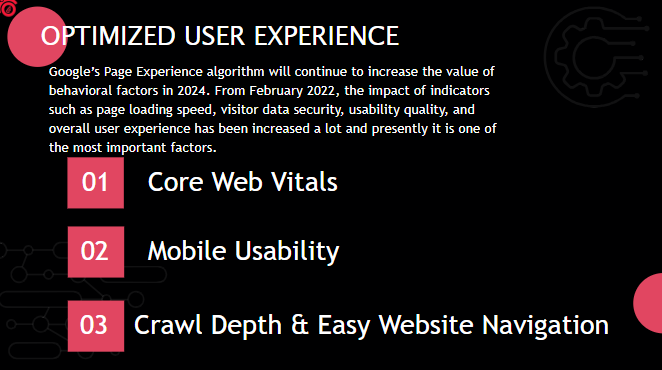
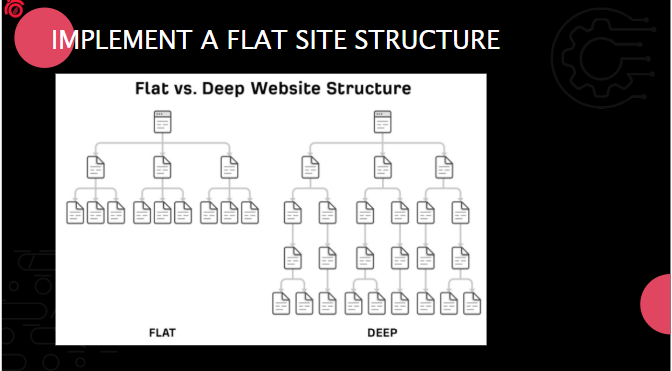
Flat Architecture for AI Crawl Efficiency
We implemented a shallow, low-depth site architecture. Pages were accessible within two to three clicks, enabling AI systems to crawl, map, and understand the full site graph efficiently.
Behavioural Signal Amplification
Internal linking, intuitive navigation, and semantic pathways encouraged deeper exploration, improving time-on-page, pages per session, and click-through metrics, which AI systems interpret as engagement confidence signals.
Through these technical and UX strategies, we created an infrastructure where content and machine interpretation work in tandem, setting the stage for long-term LLM-driven visibility.
Performance Metrics & Growth Analysis
The results of the LLM SEO campaign for Townsend Cleaning were not only immediate but also structurally transformative, reflecting the profound impact of semantic and AI-aligned optimisation. By moving beyond traditional keyword-focused SEO, we were able to achieve measurable growth across traffic, engagement, user reach, and query coverage, all while establishing durable entity authority within the competitive Geelong commercial cleaning sector.
Traffic Growth
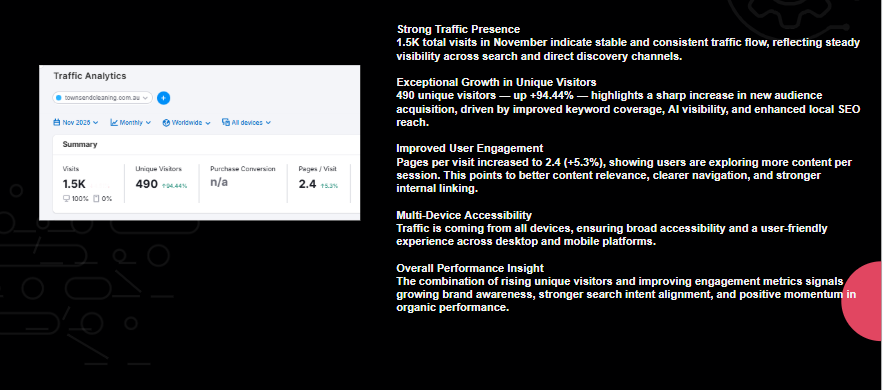
Following the implementation of our LLM-driven strategies, Townsend Cleaning recorded 1,500 total visits in November, a dramatic leap from the near-zero visibility the website experienced prior to optimisation. This surge was not a one-off spike but reflected stable, compounding growth across subsequent weeks. Each content cluster, carefully designed to align with high-intent queries—such as medical and office cleaning services—acted as a node in a semantic web, ensuring that LLMs could consistently retrieve and surface relevant pages. This structural improvement transformed the site into a hub that AI systems recognized as authoritative and contextually relevant, resulting in more frequent impressions, higher click-through rates, and steady, organic growth.
User Growth
The campaign also produced significant audience expansion. The website attracted 490 unique users, representing a +94.44% increase over prior periods. This growth was driven not merely by increased visibility but by the precision of intent alignment. By structuring content around career hubs, service pages, and semantic clusters, we ensured that visitors landing on the site were qualified and relevant, whether they were prospective clients seeking professional cleaning services or job seekers exploring career opportunities. The combination of semantic coverage depth and intent-based navigation meant that every user interaction reinforced the site’s value to AI-driven retrieval systems, amplifying the brand’s online footprint.
Engagement Uplift
Engagement metrics also reflected the effectiveness of our LLM SEO framework. Users were exploring an average of 2.4 pages per session, marking a +5.3% increase. This uplift demonstrates that internal linking strategies, structured content, and retrieval-friendly layouts were successful in guiding visitors through topical pathways. By facilitating deeper exploration, the site signaled both human and machine interpreters that the content was relevant, trustworthy, and contextually complete—a critical factor in LLM-based ranking evaluation.
Query Coverage Improvement
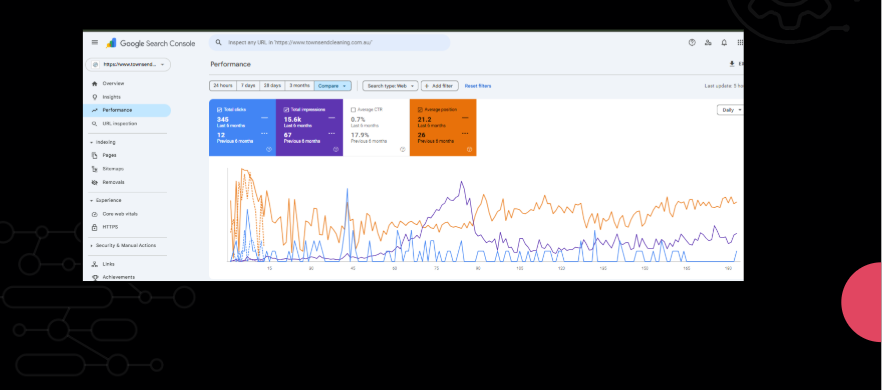
The campaign also strengthened Townsend Cleaning’s visibility for high-intent, locally relevant queries. Terms such as “medical clinic cleaning Geelong” and “medical facility cleaning Geelong” achieved prominent search placement, reflecting the entity-level authority gained through semantic differentiation and AI-friendly content. LLMs were now retrieving the brand consistently alongside established competitors, a strong signal of both topical relevance and trustworthiness.
LLM SEO Attribution
Several key outcomes underline the attribution of this growth to LLM-focused optimisation:
- Semantic Retrieval Wins: Pages surfaced across multiple contextually related queries, demonstrating that the site’s semantic coverage and internal linking were effectively enhancing retrieval relevance.
- Intent Satisfaction Uplift: Engagement and query resolution improved, indicating that the content was meeting user needs and satisfying search intent more consistently.
- Entity Authority Recognition: LLMs began associating Townsend Cleaning directly with healthcare cleaning expertise, positioning the brand alongside long-standing competitors and increasing AI-level trust signals.
Collectively, these results confirm that a strategy grounded in semantic architecture, entity-first content, and intent-based design delivers measurable, sustainable growth. Beyond raw numbers, the campaign established Townsend Cleaning as a relevant, retrievable, and authoritative brand in Geelong’s commercial cleaning market, creating long-term organic value in an AI-first search ecosystem.
Entity Visibility & Competitive Positioning
Healthcare Cleaning Authority
By emphasising compliance, protocols, and specialised services, Townsend Cleaning achieved entity-level recognition in the healthcare cleaning sector, setting it apart from generic competitors.
Competitive SERP Placement
LLM-driven SEO enabled the brand to appear in top positions for high-intent local searches, often adjacent to established national cleaning services.
AI-Level Trust Signals
Certifications, case studies, and semantic reinforcement of compliance contributed to AI-recognised trust signals, improving retrieval confidence.
Brand Proximity to Competitors
Through semantic differentiation and entity-first content, Townsend Cleaning moved from low-visibility to competitor-adjacent positioning, signalling authority and topical expertise to search engines.
Long-Term Defensibility
With structured semantic content, internal linking, and LLM-aligned architecture, the brand now enjoys a defensible AI-driven ranking profile that compounds over time, making future competitive challenges easier to manage.
Why This Growth Was Only Possible with ThatWare
LLM SEO requires more than off-the-shelf tools. At ThatWare, our human + AI intelligence layer bridges strategy and execution. We don’t merely implement technology; we engineer semantic architectures, craft AI-interpretable content, and optimise technical signals in tandem.
Most agencies remain trapped in keyword-centric thinking, focusing on superficial metrics like backlinks or meta tags. Our philosophy is strategy-first, execution-second. By understanding how LLMs interpret context, entities, and intent, we ensure every element of the site contributes to semantic authority and retrieval relevance.
For Townsend Cleaning, this meant combining content, technical SEO, and UX improvements in a holistic framework. No single tool or plugin could have achieved the same AI-validated visibility gains. Our LLM SEO methodology is inherently human-led, machine-optimised, and designed for sustainable growth.
Key Learnings for Businesses Adopting LLM SEO
- SEO is now semantic engineering: Keywords are no longer the core driver; semantic coverage, intent mapping, and context saturation define visibility.
- AI understands brands, not pages: Entity recognition and topic authority matter more than individual page metrics.
- Authority is contextual, not volume-based: Depth within a cluster or hub signals expertise, while shallow, disconnected content is largely ignored by AI.
- LLM SEO compounds over time: Semantic graphs, entity authority, and retrieval relevance accumulate, creating a durable, defensible presence.
- Technical & UX signals reinforce content: Page speed, accessibility, and crawl efficiency are interpreted as quality signals by LLMs.
Businesses that embrace these principles position themselves for long-term visibility in AI-driven search, bridging the gap between human value and machine comprehension. Townsend Cleaning’s journey illustrates that modern SEO success is a fusion of semantic depth, AI interpretability, and strategic execution.
Wrapping Up
The LLM SEO campaign for Townsend Cleaning clearly illustrates the transformative potential of AI-aligned search optimisation. By focusing on semantic architecture, entity-first content, and intent satisfaction, we were able to move beyond traditional keyword-based strategies and create a website that LLMs could interpret, evaluate, and retrieve with confidence. The results speak for themselves: 1,500 total visits in November, a +94.44% increase in unique users, and improved engagement metrics with 2.4 pages per session, all indicating that the site was meeting both human and AI expectations. High-intent queries such as “medical clinic cleaning Geelong” and “medical facility cleaning Geelong” now surface the brand alongside established competitors, reflecting a significant gain in entity authority and topical relevance. Importantly, these metrics are not just temporary spikes—they demonstrate stable, compounding growth, as semantic coverage and internal linking continue to reinforce LLM recognition over time. The campaign underscores that modern SEO success is grounded in AI-level interpretability, trust signals, and retrieval relevance rather than superficial keyword optimisation. For Townsend Cleaning, this approach has established a durable, authoritative online presence, ensuring sustained visibility, deeper audience engagement, and a competitive edge in Geelong’s commercial cleaning market.