SUPERCHARGE YOUR ONLINE VISIBILITY! CONTACT US AND LET’S ACHIEVE EXCELLENCE TOGETHER!
How ThatWare Helps Brands Prepare for Tomorrow Instead of Just “Doing SEO”
A few years ago, a mid-sized e-commerce brand approached us with a problem that, on the surface, made little sense. Their site looked healthy. Their rankings were steady. Their traffic graph was smooth and predictable. In fact, some of their best-selling categories were sitting comfortably on the first page. Nothing seemed out of place.

Then, one morning, everything collapsed.
Almost half of their organic traffic vanished. Their product pages slipped into the second and third pages. Their paid ads suddenly became their only lifeline. The team was shocked because they believed they were doing everything right. They had monthly ranking reports, a long list of keywords, and a neat spreadsheet of backlinks. So what went wrong?
When we dug into their data, the truth surfaced. Their rankings had been hiding a long list of silent issues. Technical warnings had been piling up, competitors had quietly outpaced their content depth, and several of their top categories were being rewritten by new shifts in user behavior. They never saw any of this coming because their SEO was built around looking at the surface, not looking underneath it.
This is what most brands still experience today. Rankings look impressive until the day they don’t. A polished report might show that everything is fine, yet the foundation is already cracking. Rankings are snapshots. They do not tell you if your visibility is stable, fragile, or at risk of disappearing the next time Google breathes in a different direction.
The Industry’s Misconception of SEO
Even now, SEO is sold the same way it was ten years ago. Agencies focus on keywords, tags, templates, audits, and reports. The assumption is that if you tick all the right boxes, search engines will reward you. That might have worked in a simpler digital world, but not anymore.
Search behavior changes faster than anyone expects. Competitors move quicker. Algorithms evolve without announcing their plans. You are dealing with a digital environment that shifts daily, and any brand that treats SEO as a checklist is building its future on sand.
The problem is not that SEO is outdated. The problem is that most people still treat it like a fixed set of tactics. They chase ranking charts instead of studying why visibility rises or falls. They tweak pages without understanding the long-term risks. They react to what happened instead of preparing for what will happen next.
Why a Traditional SEO Audit Falls Short
Most SEO audits follow a predictable formula. You get a list of keywords, on-page suggestions, a backlink profile, and maybe a few technical errors. It all looks neat and organized. But the truth is that these documents only scratch the surface.
What they usually fail to uncover are the hidden threats that can damage a brand. A classic audit rarely answers questions like:
- Which pages are quietly losing relevance
- Which content themes are becoming outdated
- Where future algorithmic conflicts may arise
- How competitors are positioning themselves for the next few months
- What weaknesses will turn into ranking drops later
- How user behavior is shifting around your niche
- Which technical or structural issues are slowly draining performance
In other words, traditional audits tell you what your website looks like right now. They do not tell you where it is heading. They do not warn you before you suffer a loss. They do not protect your brand from volatility.
And in today’s environment, volatility is the real enemy.
Setting the Central Idea
The real value of SEO is no longer in the optimization itself. It is in identifying risks before they hit your business. It is in understanding how search behavior is evolving and preparing your brand to move with those changes instead of falling behind them.
This is the space where ThatWare works. We do not sell SEO. We provide a deeper layer of intelligence that reads the early signs of search volatility and translates them into actionable protection for your brand. We give businesses the ability to foresee what could affect their visibility so they can make informed decisions long before any disruption shows up in their analytics.
Today, SEO is not a race for rankings. It is a process of safeguarding your digital presence, strengthening your position, and preparing your brand for the next shift in the search ecosystem.
And your next audit should be built exactly for that purpose.
The Shifting Reality of Modern Search
Search has never stood still, but the pace at which it changes today is completely different from what most people grew up with. Not long ago, SEO felt like a series of levers: publish optimized pages, earn a few good links, tidy up the technical foundation, and watch rankings climb. That world is gone. What we have now is a living, reactive system shaped by artificial intelligence, user behavior, and rapid experimentation on Google’s side. This shift has made traditional SEO methods feel slow, vulnerable, and at times outdated.
To understand why your next SEO audit should be treated as a risk-detection exercise instead of a rankings check-in, you first need to grasp how unpredictable modern search has become.
Search is No Longer Stable
If you’ve been working online for even a short time, you’ve probably noticed how often Google rolls out new updates. Years ago, major changes happened once or twice a year. Today, it feels like Google pushes something new every few weeks. Some updates are public; most are not. You see the impact, but rarely the explanation.
Behind these updates sit powerful systems like RankBrain, BERT, MUM, and more recently Google’s Gemini. These models interpret language, evaluate intent, and choose what content deserves visibility. Instead of relying solely on static rules, Google leans on machine learning. That means results shift in ways that are often invisible until the shake-up hits your traffic.
Add personalization on top of that. What people see now depends heavily on their search patterns, location, device, history, and even micro-behaviors. Two people searching the same term may see completely different results. SEO professionals who still rely on a fixed “rankings list” are operating with incomplete information.
This is the first reason search has grown unstable. It’s not just competing against other websites anymore. It’s competing against an evolving system that learns, adapts, and reacts faster than manual SEO processes ever could.
AI Overviews and the Rise of Zero-Click Experiences
The next factor disrupting the search landscape is Google’s increasing use of AI-generated summaries. When AI Overviews appear, they take up prime screen space and provide users with direct answers. The natural outcome is fewer clicks. Even if you hold a solid position, your traffic may shrink simply because fewer users need to leave the search page.
This shift is causing what many experts call an informational content collapse. For years, blogs and content teams targeted broad informational keywords to bring traffic into the funnel. Now, those same queries are being handled by Google’s own AI summaries.
Brands that don’t adapt are seeing their content slowly lose visibility, even if they haven’t technically “lost rankings.” The harsh truth is that visibility in search isn’t just about where you rank. It’s about whether the user still has a reason to click.
To stay relevant, brands need to rethink how they appear in search. The focus must move toward:
- content that demonstrates genuine expertise
- pages that offer unique insights or experiences no AI can rewrite
- formats designed for deeper engagement
- real-world authority that can’t be mimicked by synthetic content
Modern visibility comes from distinct value, not recycled information. And that means an SEO audit must examine more than keywords. It has to uncover where your brand is vulnerable to AI-driven cannibalization.
Competitive Blind Spots Are Growing
Competition used to be straightforward. You looked at who ranked above you, studied their tactics, and tried to outdo them. Now the competitive field is far more complex.
Many competitors rely on automation, NLP, large-scale content generation, and clustering tools that map entire topics at once. With a single system, they can identify gaps you haven’t discovered yet. They can build authority on emerging themes before your traditional SEO process even notices the opportunity.
This creates a dangerous lag. While your brand is still evaluating “what to rank for,” your competitors are already publishing content ecosystems, enhancing their internal linking structures, and building depth around niche subjects. By the time you enter the space, you’re no longer competing for a fresh opportunity. You’re trying to break into a saturated environment.
If an audit doesn’t uncover these blind spots, you’ll continue operating with a static view of competition while the rest of your market evolves at full speed.
Search Has Become Strategic, Predictive and Multi-Layered
SEO is no longer the isolated discipline it once was. Today, search touches almost every part of a brand’s digital presence. It influences digital PR, shapes how customers perceive your expertise, supports product discovery, and even affects your market share in subtle but meaningful ways.
When someone searches for information, they are not just looking for a webpage. They are evaluating credibility. They are forming an impression of your product before they ever visit your site. They are comparing how your brand appears in search with how your competitors show up. Every touchpoint contributes to how people trust you, whether they choose you, and how they remember you.
This is why SEO in its modern form is about resilience. The goal isn’t simply getting a page to rank today. The objective is making sure your brand remains visible tomorrow, next month, and next year, even as search transforms around you.
Resilient brands are the ones that understand the risks early and adjust ahead of time. That is why SEO audits must evolve. They can’t be simple technical checklists anymore. They need to function as risk assessments that reveal weaknesses long before the next update exposes them.
Why Rankings Reports Are No Longer Enough
Most brands still receive SEO reports that look nearly identical month after month. A few charts, a list of keywords, some improvements, a few drops, and a conclusion that usually says something along the lines of “things look stable.” On the surface, it seems fine. If the rankings are green, everyone breathes a little easier and moves on.
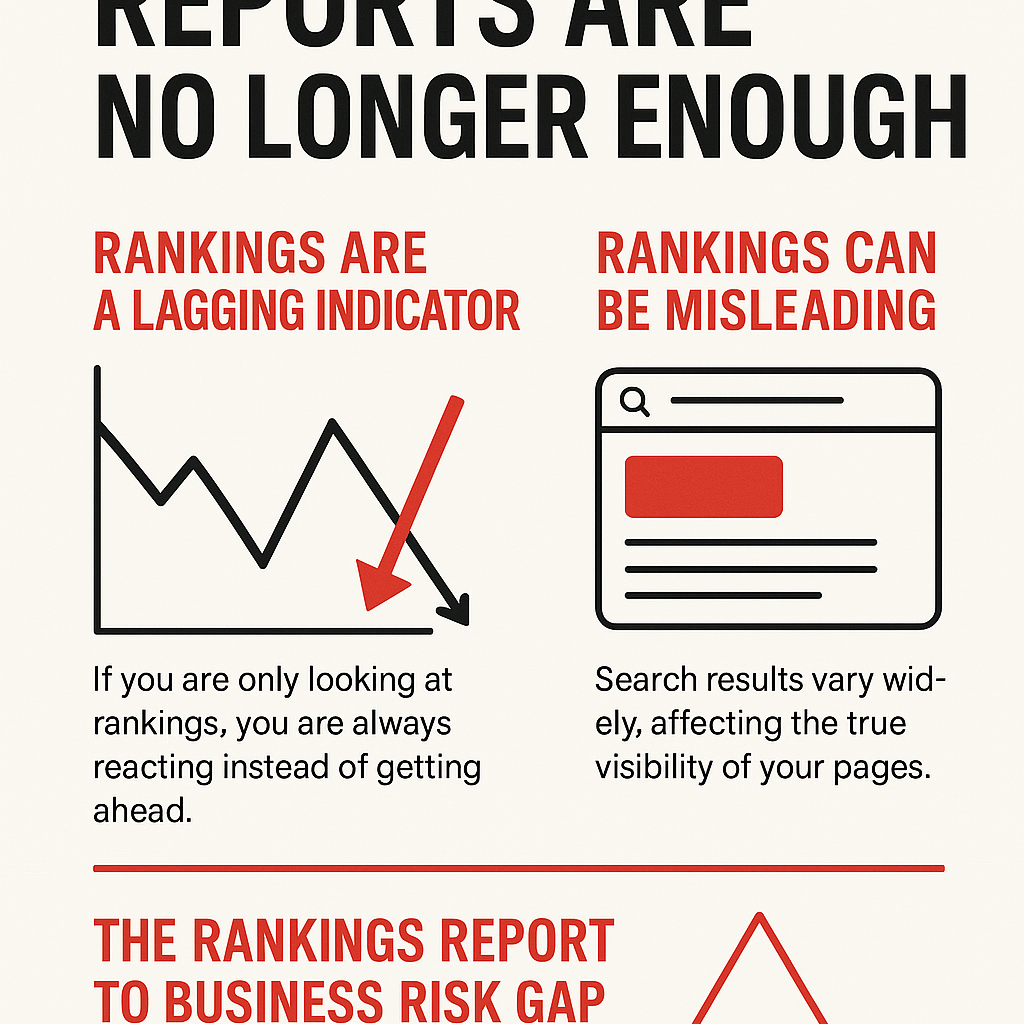
But here is the uncomfortable truth. Rankings only show what has already happened. They reflect Google’s judgment after the fact. By the time a ranking drops, the underlying problem has already matured. The warning signs were present long before, but traditional SEO reporting is not equipped to capture them. If you are only looking at rankings, you are always reacting instead of getting ahead.
Rankings Are a Lagging Indicator
A ranking chart is like a photograph from last month. It shows where your pages ended up after Google re-evaluated your content, your site structure, your user experience, and a hundred invisible signals in between. It does not offer the full context behind that decision.
If a core update changed how Google interprets topical relevance, you will only notice it after your content falls behind. If your pages start showing signs of decay or your competitors strengthen their authority, rankings will not warn you until the damage has already spread.
This is what makes rankings a poor indicator for future action. They provide a summary of the outcome but do not tell you why the change happened or when the shift began. In the current search environment where updates happen more frequently and more unpredictably, relying solely on rankings is like driving by looking in the rearview mirror.
Brands who depend on this style of reporting often end up reacting to every drop with urgency, without understanding what actually caused the vulnerability.
Rankings Can Be Misleading
Another reason rankings fail as a meaningful metric is that ranking positions today are not as stable or universal as they once were. What your tool labels as rank 2 or rank 3 is not the same result every user sees.
Search results vary across devices, personal browsing history, locations, and even time of day. Sometimes a keyword shows a map pack, sometimes a video carousel, sometimes a forum thread, and increasingly an AI-generated answer box. One version of the result might show your page well above the fold, while another version pushes you far below the point where users typically scroll.
This is why a static number is misleading. You might be “rank 2” according to the tool, but your real click-through rate tells a different story. If an AI overview captures the searcher’s attention before your organic listing even appears, ranking second means little. If a competitor captures more visual real estate through rich results, video previews, or even better formatting, your ranking position is technically high but practically ineffective.
The illusion of a strong rank often masks deeper threats. Many brands lose traffic even while their tracked rankings go up. It happens more often now than ever because search behavior and SERP layouts are changing faster than reporting tools can catch up.
What Traditional SEO Audits Miss
A ranking report cannot diagnose what caused a shift or what may cause a shift next. This is where the traditional SEO audit model begins to break.
Most audits stop at surface-level findings. They show broken links, missing tags, thin content pages, or basic technical issues. These are important, but they are not the areas where most modern brands lose visibility. The real risks hide much deeper.
Traditional audits rarely include the following:
Real vulnerability detection
Audits typically find immediate errors but fail to uncover slow-burn issues such as crawl inefficiencies, internal linking decay, or JavaScript rendering risks that gradually weaken a site.
Competitor predictive analysis
Competitors may be quietly scaling content with AI clustering, strengthening topical authority, or launching content hubs around future keywords. A static SEO report cannot reveal that shift.
Content decay signals
Every page has a natural lifespan. Most content loses value long before rankings drop. A risk-based audit identifies this decay early.
User experience threats
Core Web Vitals, engagement patterns, and mobile usability all influence rankings today. Traditional audits tend to overlook behavioral signals such as scroll depth, dwell time, or patterned bounce-triggers.
E E A T weaknesses
Expertise, authority, and trust are difficult to quantify yet deeply influential. Many audits do not evaluate author credibility, brand expertise, citation networks, or trust markers that Google relies on.
Brand sentiment and perception
Search engines increasingly pull cues from user reviews, social conversations, customer sentiment, and digital footprint consistency. An audit that focuses only on metadata completely misses this layer.
This gap between what brands think they are getting from an audit and the reality of what is actually evaluated creates unnecessary exposure to ranking volatility.
The Rankings Report to Business Risk Gap
When a ranking drops, the search team reacts. A few fixes are recommended. Content is updated. The team works to recover the position. This reactive cycle is familiar, but it is also expensive and unsafe because the impact extends far beyond search visibility.
Every unnoticed SEO risk eventually becomes a business problem.
Revenue threats
If visibility slips on key commercial queries, the sales pipeline weakens. Brands often realize this too late because the rankings report did not show the early signs of threat.
Customer loss
A consumer who cannot find you in search will land on a competitor who appears more authoritative, more visible, or simply more convenient.
Brand visibility decline
When competitors gain ground in new formats such as video snippets, AI summaries, or topical clusters, the entire market begins to assume they are the leaders.
Cost of recovery vs cost of prevention
Once rankings fall, it can take months to rebuild authority. The investment needed to recover is significantly higher than what preventive risk detection would have cost.
Market leadership erosion
Brands lose leadership not because they lacked content but because they were blindsided by invisible risks that rankings alone could never reveal.
A ranking report is a summary. A risk-oriented audit is a protection system. One tells you what happened. The other helps you understand what is coming and how to prepare for it.
Reframing the SEO Audit as a Risk-Detection Process
Most companies still think of an SEO audit as a checklist. Fix the meta tags, review a few errors, patch some links, and wait for rankings to rise. That approach worked years ago, when the search landscape was far slower and the competition less sophisticated. Today, an SEO audit needs to act more like a diagnostic tool. It is closer to a full health examination than a quick wellness check.
A modern audit should reveal where your site is vulnerable, what unseen threats could pull your traffic down, and which gaps might limit your ability to win future visibility. When you start looking at an audit this way, it stops being a vanity report and becomes a strategic asset. This is where a risk-detection audit comes in.
A risk-detection audit looks beyond what is visible on the surface. Instead of focusing on where you rank today, it focuses on what might hurt you tomorrow. It examines how your site behaves in real situations, how your competitors are shaping the landscape, how search intent is shifting, and how Google is rewriting the rules with every update. It is less about celebrating a ranking and more about questioning how long that ranking will hold.
Below is a closer look at what a true SEO risk-detection audit involves.
What Is an SEO Risk-Detection Audit
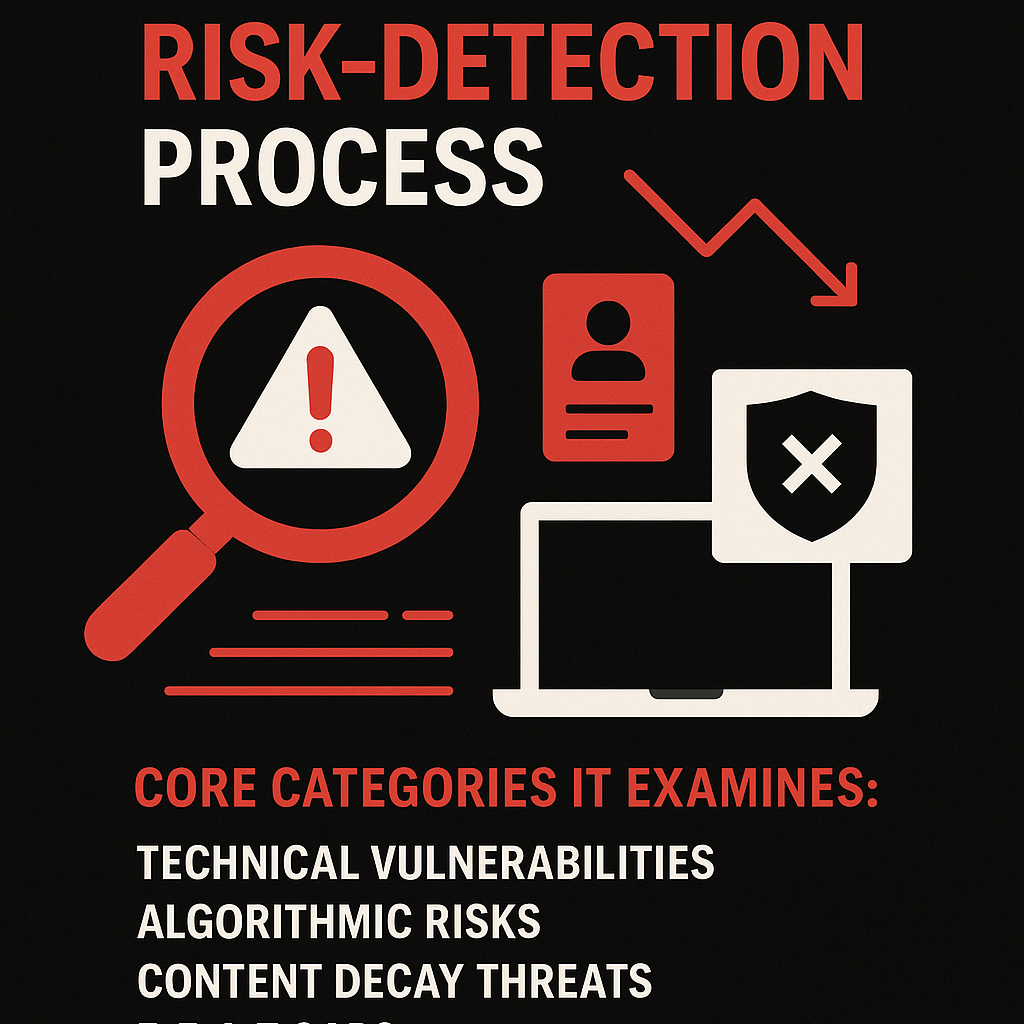
A risk-detection audit is a deep assessment designed to uncover the hidden weaknesses that can quietly erode your visibility. It identifies the kind of issues that rarely show up in traditional SEO reports. These include technical faults that downshift your crawl rate, algorithmic triggers that quietly mark your pages as low quality, early signs of content decay, or warnings that your competitors are about to overtake you.
Here are the core categories it examines:
Technical Vulnerabilities
These include structural issues that affect how a website loads, how easily search engines can reach all pages, and whether essential scripts, styles, or templates slow down rendering. Small technical flaws can become major setbacks during algorithm updates. A risk-focused audit identifies these weaknesses early.
Algorithmic Risks
Google uses hundreds of signals to judge a site. Some signals intensify during specific updates. A risk-detection audit looks for patterns that align with sites that tend to lose visibility during major updates. This gives you a chance to course-correct before an update harms your traffic.
Content Decay Threats
Content can lose relevance, search demand, accuracy, or competitiveness over time. A risk-detection audit identifies which pages are slipping, which keywords are shifting in meaning, and which topics require new depth.
E-E-A-T Gaps
Expertise, experience, authority, and trust influence which brands Google favors. Missing author credibility, poor source references, or weak reputation signals can quietly suppress rankings. A risk-detection audit highlights these issues in a way that traditional audits rarely do.
Competitive Future Risks
The real danger often comes from competitors who make moves before you do. A future-oriented audit studies how quickly competitors publish, how their backlinks grow, and whether they are capturing emerging subtopics that your site is not covering yet.
UX, Behavioral, and Performance Failures
Poor engagement, low dwell time, frustrating layouts, and slow mobile performance can hold back visibility. A risk-detection audit measures how users behave and how behavior might impact rankings.
AI-Driven SERP Volatility
With AI summaries and zero-click results becoming common, certain search queries may disappear from the traditional SERPs. A risk-detection audit identifies which keywords fall into this category, so you do not rely on traffic that might become unstable.
The purpose is not to overwhelm you with data. The purpose is to prevent threats that would cost far more to fix later.
Core Objectives of a Risk-Based Audit
A risk-based audit aims to do more than highlight problems. It sets the foundation for long-term search resilience. These are the main objectives behind it:
Pre-emptive Identification of Ranking Volatility
Instead of reacting after a drop, you see early signs of instability. These signals let you act before your visibility takes a hit.
Protect Traffic Stability
Stable traffic is more valuable than momentary spikes. A risk-based audit centers on everything that strengthens stability. It helps you understand what keeps your visibility intact during unpredictable updates.
Build Durable Content Assets
Search intent changes, competitors adopt new formats, and Google prioritizes different content types over time. The audit focuses on creating content that ages well, holds authority, and remains relevant longer.
Strengthen Brand Signals
Search engines prefer brands that project trust. A risk-based audit looks for gaps in brand authority, recognizability, and trustworthiness. This improves your resilience and boosts your long-term ranking power.
Align With Emerging Search Behaviors
Search behavior changes every year. Queries that were once popular lose traction. Others rise. The audit anticipates these shifts and positions your brand to capture new demand.
Prepare for Future Algorithm Shifts
The nature of updates changes, but Google’s direction remains consistent. It favors relevance, speed, authenticity, and trust. A risk-detection audit prepares your brand for new updates by aligning your site with the underlying principles that every update strengthens.
A traditional audit shows where you stand today. A risk-based audit prepares you for the next three to five years.
Risk Detection Dimensions
A comprehensive audit looks at multiple dimensions, each revealing a different kind of vulnerability. These include:
1. Technical Risk Detection
Identifies architecture weaknesses, rendering problems, performance drops, indexing threats, and crawl inefficiencies.
2. Content Risk Assessment
Pinpoints outdated topics, thin sections, content that no longer satisfies search intent, and pages losing authority.
3. Ranking Volatility Forecasting
Details which rankings are fragile, which keywords are entering volatile SERPs, and which pages show early instability.
4. Competitor Threat Forecasting
Studies how competitors evolve. It shows where they are outpacing you, which new topics they target, and how quickly their authority is rising.
5. E-E-A-T and Trust Risk Diagnosis
Reveals credibility gaps that hold back rankings. These include weak author bios, lack of citations, inconsistent brand signals, or low trust indicators.
6. User Experience Risk Modeling
Analyzes engagement patterns and identifies UX elements that reduce satisfaction. This includes mobile usability issues, confusing layouts, or slow-loading components.
7. AI Overview and Zero-Click Threat Mapping
Highlights search terms likely to be swallowed by AI summaries. It also shows how to reposition content so your brand remains visible even when traditional SERPs shrink.
Each dimension works together to provide a full picture of your search stability.
Example: Two Brands With the Same Rankings but Very Different Risk Profiles
Imagine two websites sitting at the top of the SERPs. Both appear successful when viewed through a basic rankings report. Yet their risk profiles tell completely different stories.
Brand A has strong E-E-A-T signals, a fast website, a clean architecture, and well-researched content built around user intent. Their backlinks come from reputable sources and their site maintains a consistent publishing rhythm. Even if a major update rolls out, their foundation protects them.
Brand B also ranks well, but their foundation is fragile. They rely heavily on thin articles, their backlinks are inconsistent, and their content updates are sporadic. Their site slows down during peak hours and their UX has friction points that hurt engagement. To a casual observer, Brand B looks as healthy as Brand A. But a risk-detection audit reveals that one strong algorithm update could wipe out a large portion of their visibility.
This is why rankings alone cannot be trusted as an indicator of success. Only a risk-based audit shows how stable those rankings truly are.
Types of Risks Traditional SEO Audits Fail to Detect
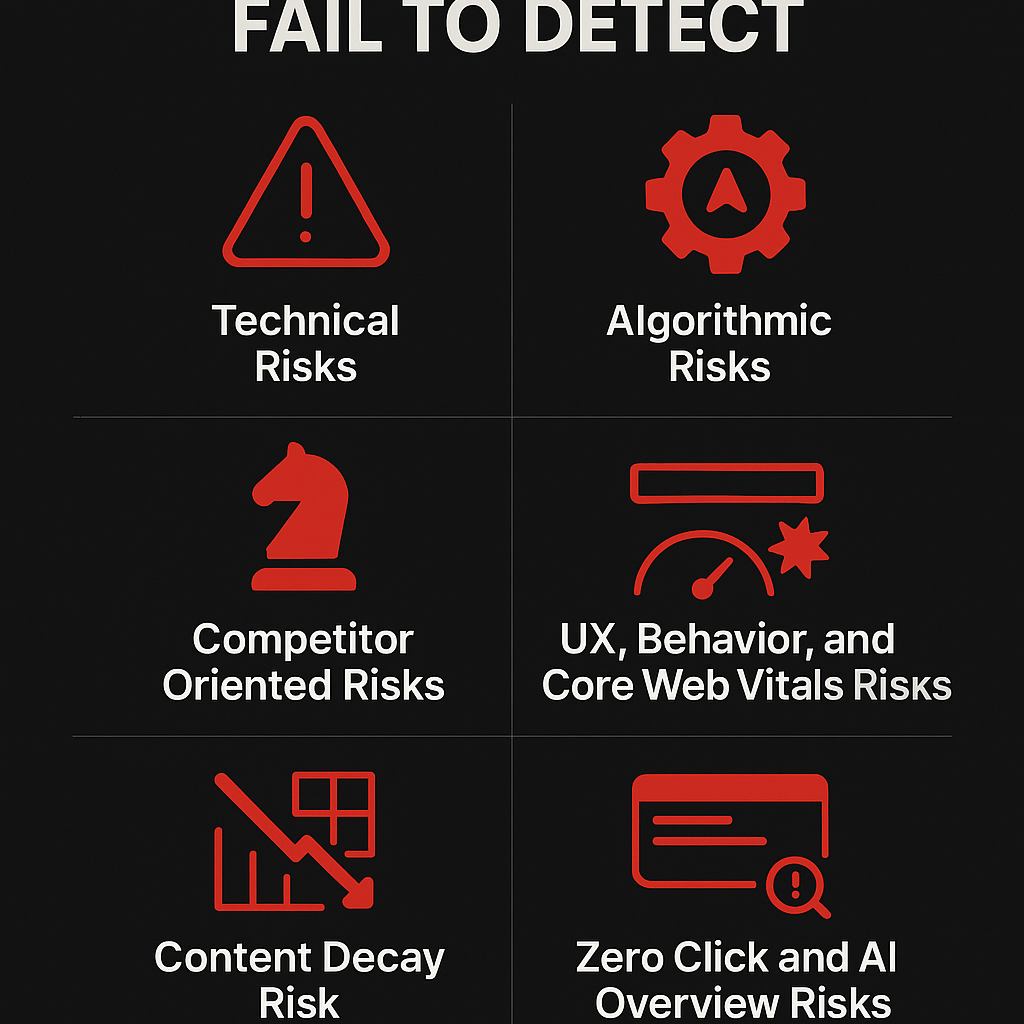
A typical SEO audit focuses on rankings, HTML tags, and a few surface-level numbers from a crawler tool. While these deliver useful snapshots, they often hide deeper problems that slowly chip away at a brand’s visibility. Search today is shaped by behavior, machine learning signals, brand authority, technical reliability, and the evolving structure of Google’s results. If an audit does not account for these layers, the findings might look clean on paper while the site quietly heads toward a decline.
Below are the real risk areas most audits never even attempt to uncover. These are the silent issues that eventually trigger sudden drops, traffic instability, or long-term stagnation.
Technical Risks
Technical SEO is often treated like a checklist. The truth is that technical problems usually appear gradually, and by the time they become visible, the damage has already been done. These are the hidden risks that standard audits rarely flag early.
Site architecture collapse
When a website grows without a long-term structure, it becomes fragile. Internal link paths break down, important pages fall too deep to be crawled properly, and topic clusters lose their hierarchy. A normal audit might note broken links, yet it will not identify the early signs of architectural decay that eventually lead to major visibility drops.
Crawl inefficiencies
Google has limited time to crawl your site. If your pages are too deep, too slow, or not linked logically, Googlebot wastes time on the wrong URLs. Many audits show crawl errors but do not tell you where crawl budget is being wasted or why Google struggles to reach new or updated content.
Render blocking issues
Some websites rely heavily on CSS or script files that slow down rendering. As a result, Google may index incomplete or broken versions of the content. A normal audit might highlight slow files but fails to indicate how these issues affect Google’s interpretation of your pages.
JavaScript dependent content
If your core content loads only after JavaScript execution, the indexing process becomes unpredictable. Google might skip parts of it or delay indexing altogether. Many audits register the pages as “indexable” without checking if Google can actually see the full content.
Indexing leaks and cannibalization
Sites unintentionally index tag pages, parameter URLs, or duplicate templates. This leads to dozens or hundreds of internal pages competing for the same topics. Most SEO tools do not reliably detect early-stage cannibalization and indexing leaks that drain authority away from key pages.
HTTPS, schema, and sitemap inconsistencies
Minor mismatches in HTTPS protocols, misplaced structured data, or outdated sitemaps can send mixed signals to search engines. Standard audits often treat these as minor issues, yet these inconsistencies influence trust, crawl decisions, and page clarity over time.
Algorithmic Risks
Algorithmic risk is one of the most overlooked areas. Google’s updates today revolve around quality signals, behavioral data, credibility, and user experience. If an audit focuses only on basic metrics, you miss bigger indicators that Google uses to evaluate your site.
Thin or outdated content
Pages may still rank while the information on them grows stale. Google eventually detects this and begins lowering visibility. Many audits highlight missing keywords but fail to account for topical depth or real informational value.
Over optimization patterns
Years ago, stuffing keywords into headings and copy pushed rankings upward. Today, these same patterns trigger quality reductions. Traditional SEO audits often encourage keyword-heavy optimization that actually increases algorithmic risk.
E E A T deficits
Expertise, experience, author credibility, and trust signals are now central to ranking stability. Audits that focus on metadata rarely analyze whether the content reflects real expertise or if the brand shows enough trust indicators.
Sudden link pattern anomalies
Link velocity, anchor text distribution, and backlink source quality matter far more than raw link volume. Many audits simply list backlinks rather than assessing whether Google might interpret those patterns as unnatural.
Page quality issues
Thin design, intrusive ads, confusing layouts, or outdated formatting all signal low quality. Most audits view UX and page layout as “design choices” rather than quality indicators that affect rankings.
UX regression over time
Websites age. Buttons become harder to click on mobile, new widgets slow down load times, and navigation becomes more cluttered. Traditional audits rarely look at behavioral shifts or interface decay that hurts performance months later.
Competitor Oriented Risks
In search, the market is not static. Competitors evolve, invest, publish, and reposition themselves. A brand may feel stable today while competitors work behind the scenes to take over tomorrow’s SERPs.
Competitors using generative content scaling
AI assisted content production means your competitors can publish hundreds of pages in a short time. If those pages provide real value, they can flood the SERPs and push your content out. A normal audit will not forecast this threat.
Industry specific SERP shifts
Some industries change rapidly. New rich results appear. Aggregators take over. Google introduces new filters or surfaces new data types. A standard audit does not analyze how these shifts may affect your niche moving forward.
Competitor UX superiority
Even if your pages rank, your competitors may offer faster, cleaner, more engaging experiences. Over time, Google learns from user behavior and favors sites that satisfy users better. Most audits ignore competitor UX.
Competitor E E A T signals surging
Your rivals might be gathering citations, reviews, expert authors, or PR coverage that strengthens their authority. These shifts happen gradually and are rarely detected by simple competitor comparison charts.
Backlink velocity comparison
It is not the number of backlinks from a competitor that matters but how quickly they are gaining momentum. A competitor building authority faster than you is a future threat. Most audits do not detect that momentum.
Content Decay Risk
Content decay is one of the most common reasons for traffic decline. It happens slowly, and most businesses fail to notice until rankings drop sharply.
Pages becoming irrelevant
Topics evolve. What was once the best answer may no longer satisfy modern search expectations. Traditional audits only check for keyword presence. They rarely measure relevance loss.
Declining CTR despite stable ranking
A page can rank in the same position but receive fewer clicks due to new SERP features or more compelling competitors. Most audits do not measure this behavioral decline.
Outdated factual information
Even small inaccuracies can push Google to treat a page as low quality. Audits often overlook factual correctness and focus instead on keyword coverage.
SERPs becoming AI driven
Some keywords attract AI summaries or zero click answers. If your keyword set is moving toward these patterns, your traffic might shrink even if your rankings do not. Most audits do not anticipate AI driven SERP evolution.
Keyword intent shifts
Search intent evolves with user behavior and technology changes. A keyword that once required informational content may now require transactional or multimedia content. Traditional audits rarely detect these shifts.
UX, Behavior, and Core Web Vitals Risks
User experience is now a ranking factor rooted in real behavioral data. These risks rarely appear in simple audits but have a measurable impact on visibility.
High bounce rate signals negative behavioral data
If users leave quickly, Google assumes the page did not satisfy their needs. A regular audit reports bounce rate without linking it to search risk.
CWV thresholds tightening
Google can adjust Core Web Vitals thresholds over time. A site that passes today might fail next year. Few audits prepare brands for this.
Mobile first design weaknesses
Navigation that works on desktop may be clumsy on mobile. Many audits overlook real user testing and instead rely on automated checks.
Navigation complexity
If users struggle to find what they want, engagement drops and quality scores decrease. Traditional audits rarely examine navigation fluency in detail.
Zero Click and AI Overview Risks
Zero click searching is increasing. Google now answers many queries directly, leaving less room for traditional organic results.
Google rewriting answers
Google may extract and rephrase your content, leaving you with little visibility. Some audits highlight featured snippet issues but rarely address the larger risk.
Reduced organic visibility
AI summaries, knowledge panels, video carousels, and instant answers can push organic links farther down. Standard audits do not measure or predict this declining real estate.
Informational query takeover
Informational content is most vulnerable to zero click experiences. If your content relies heavily on such queries, your strategy becomes unstable. Most audits never evaluate query vulnerability.
New entity based SERP models
Google increasingly organizes search results around entities rather than keywords. If your brand and content do not fit into these entity models, visibility suffers.
Brand Reputation Risks
A brand’s public image is tightly connected to modern SEO. Search engines monitor how people perceive a brand, how often it is mentioned, and whether the information appears trustworthy.
Negative reviews impacting search
Bad reviews or inconsistent ratings across platforms can reduce trust signals. Standard audits mention reviews but rarely analyze their deeper impact on visibility.
Brand sentiment scoring
Online discussions, social tone, and media references shape how Google interprets brand authority. Few audits look beyond structured citation data.
Inconsistent NAP citations
Name, address, and phone number inconsistencies create confusion for local signals. Many audits list citations without identifying the real risk these mismatches create.
Lack of authority references
Brands without strong mentions from credible sources struggle to maintain E E A T strength. Most audits focus on backlinks rather than broader authority building.
How Thatware’s Audit Philosophy Is Different
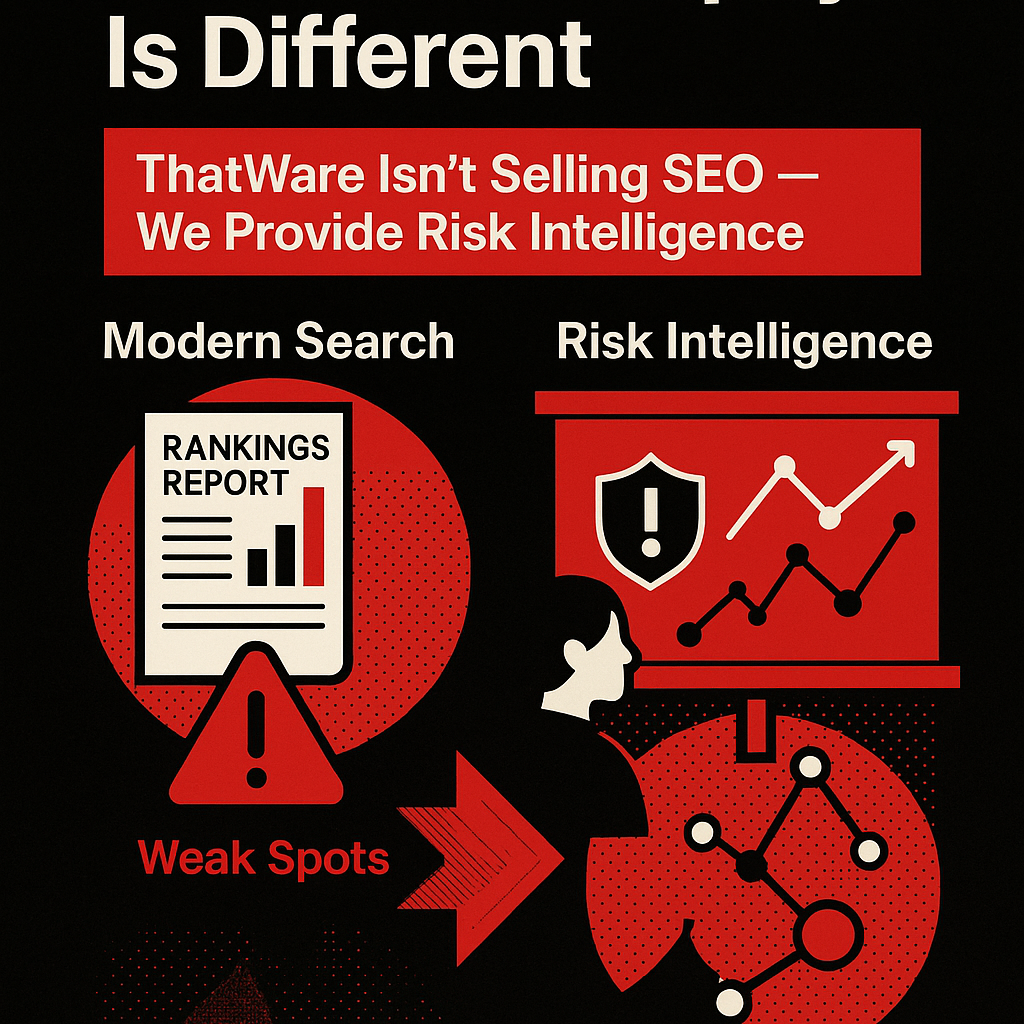
ThatWare Isn’t Selling SEO — We Provide Risk Intelligence
Most companies talk about SEO as if it is a checklist. Add keywords here, clean up a few tags there, run a report, and call it a day. The problem is that this kind of work rarely protects a brand from the unpredictable nature of modern search. A rankings report may look impressive, but it cannot reveal the weak spots that could collapse your visibility when the next algorithm update arrives.
ThatWare approaches this world very differently. We do not sell SEO as a package or a bundle of tasks. Our role is closer to a strategist who studies the health of your online presence, identifies the cracks forming beneath the surface, and shows you where your future opportunities — and threats — actually lie. Instead of getting lost in data that only reflects the past, we work with models that indicate what might unfold next.
Our process blends data modeling, behavioral forecasting and AI-driven pattern recognition so that every recommendation connects to an outcome, not just an output. A client does not come to us for a list of fixed errors. They come to understand their risk profile, their competitive landscape and how the search environment around them is shifting. When you adopt that mindset, SEO stops being a monthly chore and becomes a long-term strategic safeguard.
The AI-First Intelligence Layer
Behind our audits is a layer of intelligence designed to read the web the way search engines do. This starts with NLP-based topic clustering. Instead of looking at pages one by one, we map entire themes, conversations and keyword families to understand how your content fits into the ecosystem of your niche. This uncovers gaps and over-concentration areas that normal audits never catch.
We also lean heavily into entity-based optimization. Search engines have moved past simple keywords. They now interpret meaning through relationships between entities — people, brands, concepts and locations. By strengthening these connections, we help search engines understand your authority and relevance at a deeper level.
Because search behavior changes constantly, we also track future-intent patterns. These patterns reveal how user demand may shift in the coming months, not just the queries people type today. This allows us to position your content for tomorrow’s opportunities.
Alongside this, we study competitor movement with probabilistic modeling. Instead of simply checking who ranks ahead of you, we measure how quickly they are gaining ground, which areas they might attack next and how their strategy is evolving. This forward-looking approach helps us predict where you may lose visibility if you do not act.
Finally, we run semantic gap analysis to determine whether your content carries the level of depth and clarity that modern ranking systems expect. More often than not, websites lose rankings because they stop aligning with how search engines interpret meaning — not because they lack keywords.
Building a Multidimensional Risk Matrix
One of the cornerstones of our philosophy is a framework we call the multidimensional risk matrix. Every site has strengths and weaknesses, but not all weaknesses have equal impact. Some issues can be ignored for months without consequences. Others can trigger sudden traffic drops or long-term stagnation.
We examine each risk on several scales:
Severity:
How damaging the issue would be if left unresolved. Some vulnerabilities affect just a handful of pages. Others have the potential to harm your entire domain.
Probability:
The likelihood that the issue will lead to negative outcomes. For example, outdated content almost always leads to decay, while a minor technical quirk might not hurt you for a long time.
Impact on visibility:
What happens to your search presence if this risk turns into a problem? This measure shows whether your brand might disappear from the top results or lose only marginal visibility.
Impact on revenue:
This factor translates SEO risk into business risk. If a certain set of pages drives the bulk of your conversions, those pages must be protected more aggressively.
Impact on brand positioning:
Some weaknesses affect credibility more than traffic. Poor E-E-A-T signals, outdated author profiles or low-quality backlinks can subtly hurt your reputation even before rankings move.
This matrix becomes the backbone of your strategic plan. Instead of reacting to issues when they erupt, you can make decisions based on what truly matters for the long term.
Proprietary Frameworks and Methodologies
Over the years, we have refined several internal models to evaluate risk with more precision. These tools help us see beyond the obvious and highlight patterns that typical audits overlook.
Search Volatility Index (SVI):
This index measures how stable — or unstable — your niche is during algorithm changes. Some industries experience dramatic volatility because competitors constantly churn out content. Others are more predictable. Understanding your volatility level prepares you for upcoming shifts.
Competitor Threat Probability Model:
This model identifies competitors who are gaining traction quickly. Many brands focus only on the top three competitors. We often find that the real future threat is a fast-moving mid-tier player preparing to break into your core keyword clusters.
Content Decay Acceleration Scoring:
Content rarely loses traffic slowly. In most cases, decay accelerates once a certain threshold is crossed. Our scoring method identifies the exact moment when a page becomes vulnerable so you can refresh it before it loses authority.
E-E-A-T Vulnerability Grid:
This grid highlights weaknesses in your trust profile: missing author information, lack of expert commentary, thin citation structures, weak brand references and more. These issues influence both rankings and user perception.
UX-Signal Stress Test Framework:
Our stress test examines how your website handles behavioral patterns like user hesitation, scroll depth, device changes and page friction. UX signals have a quiet yet powerful influence on search performance, and they get overlooked far too often.
Each of these frameworks arms your business with a deeper understanding of your actual standing in the search landscape.
Predictive Modeling Instead of Reactive Reporting
Most SEO reporting describes what already happened. By the time you read a ranking drop in a monthly report, the damage is done. We prefer to predict what might happen so you can adjust before any losses occur.
We calculate forecasted keyword difficulty trends, which reveal whether certain topics will become easier or harder to rank for in the future. This leads to smarter investment choices.
Our SERP real-estate projections show how much room you will have left once AI overviews, featured snippets and other SERP features continue expanding. This helps you plan beyond simple ranking goals.
We also assess the risk of AI snippets taking over your high-value keywords. If a topic is likely to be dominated by instant answers, we guide you toward formats that are harder to replace, such as deep expertise pieces or interactive tools.
Content lifespan prediction allows you to see how long a page will keep performing before it needs updating. This is crucial for scaling content without wasting resources.
Finally, resource allocation forecasting helps you determine where to invest first so that your effort produces real growth without unnecessary spending.
What This Means for Brands
A risk-based SEO audit gives you more than technical fixes. It grants you protection from the unpredictable nature of search and helps your brand grow from a position of stability.
You gain resilience against algorithm changes, because your site is prepared for the structural and semantic shifts that usually cause sudden drops. Your traffic becomes more stable because the weak points are addressed before they become visible problems.
With a stronger organic foundation, you rely less on paid ads. Your content becomes future-proof because it aligns with both current and upcoming search expectations. Perhaps most importantly, your brand authority grows because your entire online presence is built on trust, relevance and long-term value — not quick wins.
This is why ThatWare does not simply optimize websites. We help brands anticipate risk, prepare for change and position themselves for the future.
Components of a Modern Risk-Detection SEO Audit
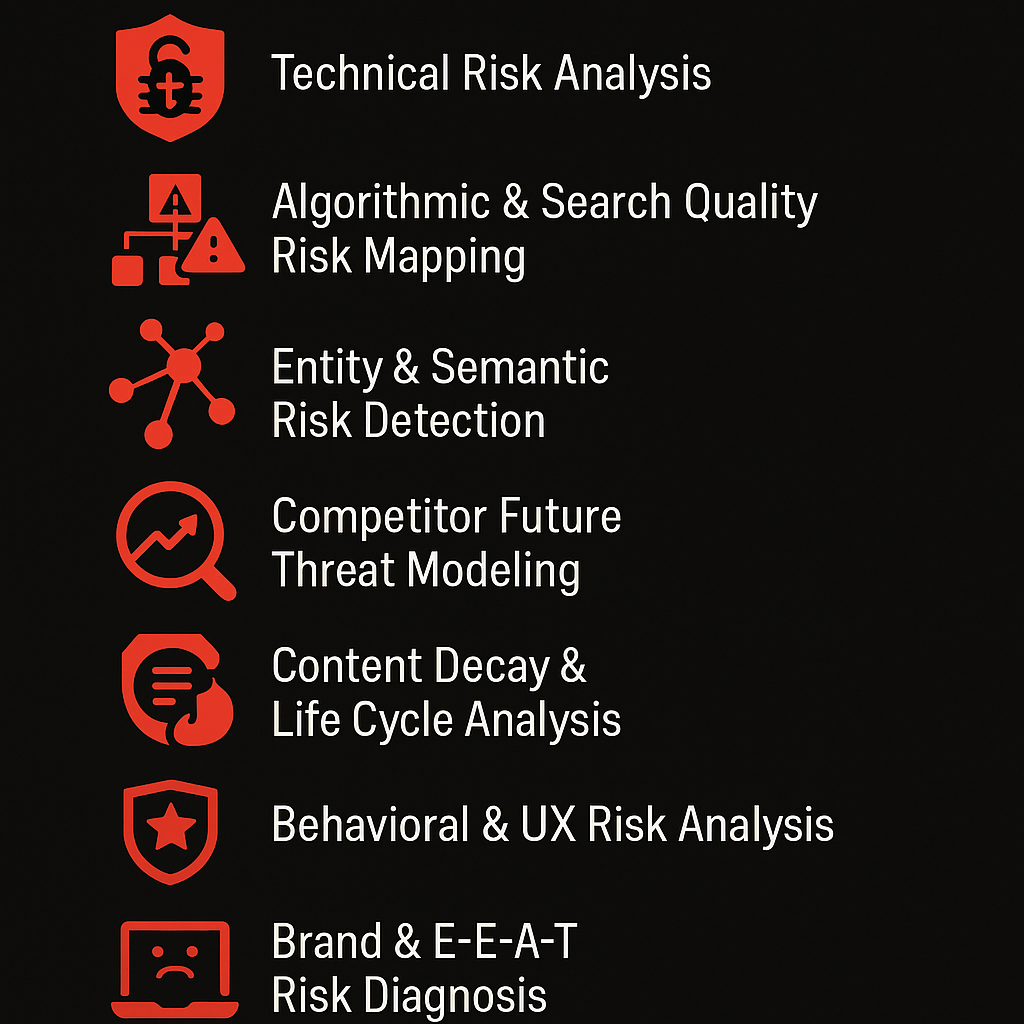
A proper SEO audit can no longer stop at pointing out broken links or listing keyword opportunities. Search has become unpredictable, algorithm updates arrive without warning, and user behavior shifts faster than most brands can react. This is why a modern audit needs to resemble a diagnostic process. It has to uncover risks, expose weaknesses and give you a clear idea of where your site might fail before those failures cost you visibility.
What follows is a breakdown of how a full scale, risk-focused audit works when done correctly. Each component is designed to strengthen the stability of your website and prepare it for whatever changes might arrive next.
Technical Risk Analysis
Technical strength is the backbone of every successful site. Even the best content struggles when crawlers cannot reach it or when key pages take too long to load.
Crawl Depth Issues
Large websites often bury valuable pages so deep that search engines take weeks to crawl them. This delay can block new content from gaining traction and can cause fluctuating rankings. The audit evaluates crawl paths, identifies pages that are too hard to reach and highlights sections that need restructuring.
Log File Analysis
Log files give a clear picture of how search engines interact with your website. They show which pages Googlebot visits often and which ones it ignores. This helps uncover wasted crawl budget, irregular indexing patterns and parts of the site structure that need attention.
JavaScript Rendering Risk
Many sites depend heavily on JavaScript for content display. When Google struggles to render that content, rankings fall even if the page itself looks fine to users. A risk audit checks how your pages load with and without scripts and pinpoints the places where search engines may fail to see critical information.
Website Architecture Stress Test
This part checks how well your site holds up when crawlers move through it at scale. It helps identify weak internal linking, broken hierarchy, repeated content, orphaned pages and any structural issues that might hurt SEO.
Core Web Vitals Degradation Forecast
Core Web Vitals scores can drop over time as the site expands and new scripts are added. A forecast helps predict which pages are likely to fail future CWV thresholds. This lets the brand make improvements ahead of time.
Security Protocol Risks
Security problems harm trust signals and can even lead to ranking penalties. The audit checks for mixed content errors, improper redirects, outdated SSL certificates and anything that could expose users to risk.
Algorithmic and Search Quality Risk Mapping
Search engines judge quality through a complex list of signals. A risk-oriented audit examines whether your site fits those expectations or if it shows traits that may trigger future penalties.
Detecting Emerging Thin Content Indicators
Pages with shallow information or repeated content formats can fall victim to quality-related updates. This part of the audit identifies content that may get flagged as low value so you can enhance it before rankings slip.
Content-Intent Mismatch Risk
Searcher intent changes over time and if a page no longer satisfies what users expect, it begins to fall in the rankings. This process pinpoints mismatches between content and real user needs.
Spam-Signal Detection
Patterns like keyword stuffing, unnatural anchor text or rapid link spikes can accidentally mimic spam. The audit checks for these red flags and reveals where adjustments may be needed.
Toxic Link Pattern Detection
Harmful backlinks still influence rankings negatively. This portion analyzes the profile of incoming links to isolate suspicious domains, low-quality networks and negative SEO attempts.
Page Quality Scoring and Future Volatility
Pages are evaluated for depth, accuracy, engagement and trust signals. This helps predict which pages are vulnerable to upcoming changes and which ones are sturdy enough to remain stable.
Entity and Semantic Risk Detection
Search engines are moving toward entity-based understanding. If your site lacks proper semantic structure, you lose topical authority and relevance.
Missing Entity Connections
A strong entity network helps Google grasp what your brand stands for. Missing entities or incomplete associations can weaken your presence across multiple queries.
Poor Topical Depth
A site may cover a topic but fail to explore it deeply enough. This part checks whether your content ecosystem supports your niche or if you need additional pages to build authority.
Lack of Structured Data Alignment
Structured data gives context to your content. Missing or incorrect markup can reduce your eligibility for rich results. The audit identifies markup issues and suggests improvements.
Semantic Relevance Decay Predictions
Topics evolve. Information that was accurate two years ago may not match the current understanding of a subject. This component predicts which pages are losing relevance and may need updates.
Competitor Future Threat Modeling
Competition is not static. Brands that track what rivals will do next, instead of only observing current rankings, gain a real advantage.
Competitor Velocity Mapping
This examines how quickly competing sites publish new content, gain links or expand their topical coverage. A competitor with increasing velocity signals a future threat even if their current rankings appear stable.
Market Share Trend Analysis
By studying changes in SERP distribution, the audit highlights which competitors are gaining ground and which ones are losing influence.
Future Ranking Prediction Models
Patterns in content creation, site improvements and link growth help forecast where competitors may rank in the coming months.
Emerging Competitor Intent Analysis
This involves identifying new players entering your niche and understanding what type of content or user intent they are trying to capture.
Content Decay and Life Cycle Analysis
Every piece of content has a lifespan. Without intervention, it eventually loses visibility.
Identifying Decaying URLs
Pages with declining impressions, engagement or CTR are identified early so they can be refreshed rather than allowed to fade.
Predicting Content Death Timelines
Based on patterns in the data, the audit estimates how long a page can remain competitive before it needs renewal.
Refresh Strategy
This part provides guidance on how to repair, expand or reposition aging content.
Relevance Gap Mapping
Relevance gaps show which keywords or topics your competitors are covering better than you. Closing these gaps helps maintain authority.
Behavioral and UX Risk Analysis
User behavior influences algorithmic decisions. Poor engagement can hurt rankings even if the page appears technically sound.
Performance Decay Patterns
This tracks performance issues that worsen over time such as slower loading, heavier scripts or image bloat.
Poor Engagement Signal Diagnostics
High bounce rates, short dwell time and low click depth often indicate that users are not satisfied. The audit explores these patterns to identify where the user experience breaks.
Funnel Drop Off Analytics
Understanding where visitors abandon the journey can reveal deeper issues in layout, content clarity or navigation.
Behavioral Anomaly Detection
Sudden shifts in user behavior can indicate technical issues, UX regressions or inappropriate content changes. This detection helps identify problems before they hurt rankings.
Brand and E E A T Risk Diagnosis
Search engines seek trustworthy sources. If your brand does not demonstrate expertise, experience, authoritativeness and trust, it becomes vulnerable.
Author and Entity Trust Gaps
Pages without clear authorship or weak personal branding lose credibility. The audit highlights these gaps and suggests reinforcement strategies.
Reputation Risk
Negative sentiment, low rating distribution and unresolved complaints can quietly hurt SEO. This part identifies how reputation influences search visibility.
Missing Credibility Signals
Trust elements such as citations, professional credentials, expert reviews and privacy assurances are evaluated to determine whether the brand meets modern quality standards.
Review Cluster Analysis
Customer reviews are inspected for sentiment patterns and consistency. This helps diagnose early reputation threats.
Zero Click and AI Overview Risk Mapping
Search engines are presenting more answers directly on the results page. This reduces the number of organic clicks and can dramatically affect visibility.
Queries Moving Toward AI Takeover
Informational queries are increasingly handled by AI summaries. The audit identifies which of your keywords are at risk of losing organic clicks.
Query Intent Models Shifting
Some keywords change intent over time. A query that once required a blog post might now require a how to video or a comparison chart. This part of the audit detects shifts early.
Reduced SERP Real Estate Risk
Rich snippets, ads, video carousels and AI snapshots reduce the space left for traditional listings. The audit highlights categories where this trend may intensify.
Invisible Content Threat
Some pages lose visibility even when they are well written because AI rewrites answers directly in the SERP. Identifying these threats early helps protect your traffic.
How Risk Detection Leads To Future Positioning
Most people approach SEO with a simple goal in mind. They want more traffic and better rankings. That sounds reasonable on the surface, yet it overlooks something much more important. Growth only matters when it is built on stable ground. If the foundation is weak, a few algorithm shifts or a sudden change in user behavior can send everything tumbling.
This is where risk detection becomes the real turning point in modern search strategy. Once you begin to read your website the way a search engine reads it, every weakness becomes a signal. Every anomaly becomes a clue. When you start treating these clues as opportunities rather than problems, something interesting happens. Your SEO stops being reactive and becomes a plan for the future.
Turning Risk Into Strategy
A true risk-focused audit does not stop at pointing out what is broken. The real value lies in how each risk turns into a specific action item. Think of it as creating a roadmap that not only fixes the present but also strengthens your future position.
When ThatWare analyzes a site, we often find dozens of hidden issues. Some are small technical flaws. Others are structural problems that could snowball into major ranking losses. We convert each of these into a priority task, clearly mapped to the potential impact on visibility and revenue. This becomes the starting point of a practical, grounded strategy.
One principle guides this entire process: stability comes first, growth comes second. If the base of your digital presence is unstable, any aggressive expansion will only speed up the eventual collapse. But once the core is secure, growth becomes predictable, sustainable, and much easier to scale.
Clients often feel relieved when they see this structured approach. Instead of chasing rankings or buying into short-lived trends, they finally have a plan that keeps their brand protected while moving them toward long-term opportunity.
The Future Positioning Framework
Future positioning is not about chasing the newest keyword. It is about shaping your brand so that search engines and users can unmistakably recognize who you are and why you matter. At ThatWare, we focus on five essential pillars.
1. Strengthening entity signals
Search engines are shifting toward entity recognition, which means they need to understand what your brand stands for and how it fits into the larger information system. We help brands build stronger identity markers through structured data, consistent expertise demonstration, and authoritative content footprints. This makes your presence more durable during major algorithm changes.
2. Diversifying your presence across different SERP features
Depending on a single channel or a few ranking positions is a risky game. Future-ready brands spread their presence across multiple touchpoints. This includes traditional listings, video snippets, knowledge panels, people-also-ask boxes, maps, social signals, and emerging formats. When your presence is diversified, your visibility becomes far more difficult to disrupt.
3. Preparing your content for AI driven discovery
Search engines are leaning toward AI powered summaries that attempt to answer queries without a click. This shift is already reducing organic traffic for many industries. Preparing your content for this new landscape involves strengthening factual accuracy, improving topic depth, and ensuring your brand is one of the trusted sources AI references. This makes your website appear not only in search results but also inside AI generated responses.
4. Building thought leadership content that influences trust
Future positioning requires more than SEO optimized writing. It demands real expertise and unique perspectives. When a brand develops topical authority, people start to trust it beyond the search result itself. This creates a long lasting advantage because trust signals reinforce your position across search, social, and AI models.
5. Improving UX to support strong behavioral signals
Search engines have become extremely sensitive to user behavior. Slow loading pages, confusing navigation, or poor mobile experiences damage your ranking potential, even when your content is solid. Strengthening UX eliminates negative user signals and boosts engagement. This tells search engines that your content is genuinely useful, which stabilizes your position over time.
Together, these five elements create a future positioning framework that protects your brand from volatility while opening new paths to growth.
Preparing for the Future of Search Technology
Search behavior is not standing still. It is evolving quickly, and brands that are not preparing for the next stage of search risk becoming invisible. Risk detection naturally leads you into forward thinking because many of the weaknesses we uncover point directly to future disruptions. Here are the key areas brands need to prepare for.
Voice search and conversational queries
Voice search is expanding not just through mobile assistants but also in smart devices, cars, and home automation systems. These queries are longer and more conversational. A future-ready website must understand natural language patterns and provide answers that feel human and direct.
Multi-modal search
People are now searching with images, text, voice, and sometimes combinations of them. Search engines use visual understanding, entity recognition, and contextual inference to respond. Websites that provide clear visual information, structured data, and context rich content are more likely to succeed in this environment.
AI driven zero click environments
With AI summaries taking over a growing portion of the search landscape, organic traffic will continue to be affected. Brands that adjust early by strengthening their authority signals, factual consistency, and topical relevance will have a higher chance of being featured or referenced in these summaries.
The rise of personalized and predictive search
Search is shifting from “what users type” to “what users are likely to need next.” Data history, past interactions, device behavior, and local signals influence results more than before. A strong brand identity across all touchpoints helps search engines deliver your content at the right moment, even before a user actively searches.
Understanding these changes is not enough. You need to prepare for them. That is why risk detection is so powerful. It highlights the areas of your digital presence that may suffer as search evolves and turns them into opportunities to move ahead of your competitors.
Building a Defensible Digital Moat
A defensible digital moat is the difference between being visible today and being visible for the next five years. It is the outcome of combining risk detection with strategic planning. Here are the core elements that make a brand truly resilient.
1. Visibility resilience
This refers to your ability to hold your position when algorithms shift, new competitors enter, or user behavior changes. Resilience comes from strong entity signals, authoritative content, consistent UX performance, and diversified SERP visibility.
2. Competitive insulation
Competitors often scale through automation or aggressive expansion. When your brand has deeper topical coverage, stronger trust signals, and a better user experience, it becomes much harder for others to outrank you. Your position does not depend on single keywords but on the overall strength of your ecosystem.
3. Authority compounding over time
Authority grows gradually when your content is useful, your expertise is consistent, and people mention your brand naturally. Once your authority reaches a certain level, rankings tend to stabilize. New content succeeds faster. Your brand becomes a reference point in your niche.
4. Ongoing risk monitoring
Search is not static. Even the strongest moat weakens if it is ignored. ThatWare uses continuous risk monitoring to identify early signs of decay, competitive gains, UX regressions, or algorithmic vulnerabilities. This keeps your digital moat healthy and prevents sudden drops.
A defensible moat creates peace of mind. It also creates freedom. When you are no longer chasing rankings or reacting to sudden changes, you can focus on bigger goals such as brand storytelling, new market entry, or product innovation.
Why Brands Need Risk Detection First and SEO Second
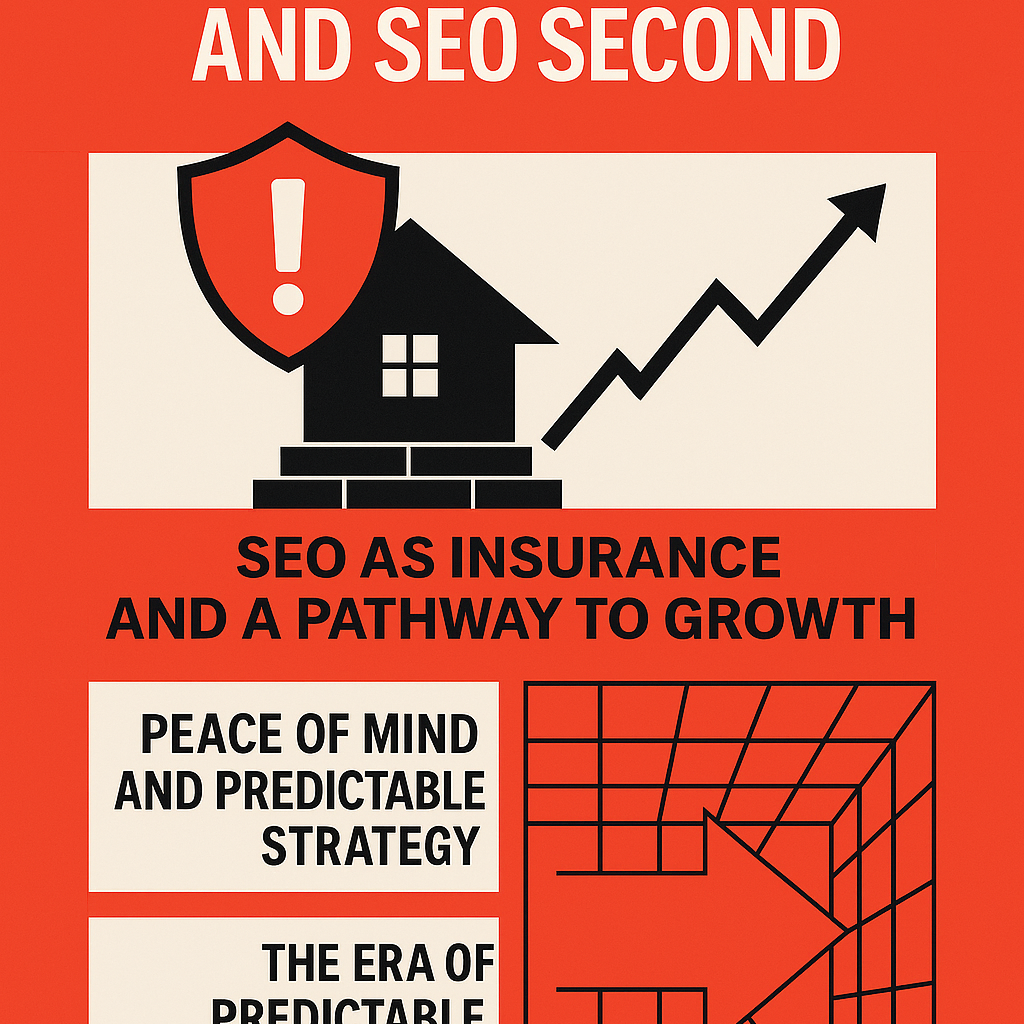
SEO as Insurance and a Pathway to Growth
Most brands think of SEO as a traffic machine. They imagine keywords, rankings, and monthly reports. What they rarely consider is the risk that sits underneath all of that. Search visibility is fragile. One unexpected algorithm update or a few unnoticed technical problems can wipe out months or even years of momentum. This is why a risk-first approach matters so much.
Think of it the way you think about insurance. Before you plan future expansion, you make sure your foundation is protected. You would not build a new wing on a house that has cracks in its structure. In the same way, you should not attempt aggressive SEO growth without understanding the vulnerabilities that could bring your progress to a halt.
When you run a proper risk detection audit first, you eliminate the weak spots that create instability. Only then can you scale safely. Growth makes sense when you know that your site, your content, and your brand signals are protected from common search volatility. This shift in mindset frees you from the stress that most website owners quietly carry. It allows you to pursue growth with intention rather than fear.
Peace of Mind and Predictable Strategy
One of the biggest frustrations business owners face is feeling like search performance is unpredictable. Some months look strong. Others look rough. Keywords bounce. Competitors move. Google changes something and nobody knows why. What teams really want is stability. They want confidence that their organic strategy is moving in the right direction instead of spinning in circles.
A risk-first SEO model provides that clarity. When you understand the threats that could affect your visibility, you reduce the guesswork that typically surrounds organic performance. You stop reacting and start planning. Sudden traffic drops become far less common because your vulnerabilities have already been identified and addressed.
This gives you a sense of control that rankings alone can never offer. Your roadmap becomes cleaner. Your decisions become easier. You can look ahead knowing where your brand is strong, where it needs reinforcement, and which opportunities are safe to pursue. That level of predictability is what separates brands that simply chase rankings from those who build long-term visibility.
The Era of Predictive SEO
Search is not linear anymore. It is not a simple formula where you follow a checklist and expect consistent results. Modern search involves machine learning models, behavioral signals, personalized SERPs, and rapid algorithmic changes. This means SEO has become probabilistic. You are no longer optimizing only for what exists today. You are also preparing for what the search environment might look like in the near future.
This is where predictive SEO enters the picture. Brands need partners who understand patterns before they become problems. They need teams who study signals that reveal what is likely to happen, not just what has already happened. Reactive SEO is too slow for the current landscape. By the time you fix something, the damage is already done.
A risk detection approach gives your brand an early warning system. It helps you anticipate shifts in user behavior, competitive moves, and search engine expectations. While others are scrambling to recover from the latest update, you are already two steps ahead. This advantage compounds over time and positions your brand as a stable leader in your space.
Conclusion

If there is one thing to take away from this entire discussion, it is that rankings alone cannot show you the real state of your online presence. They rise, they fall, and sometimes they vanish overnight without warning. Treating them as the only measure of success is a risky game. What genuinely matters is knowing where your vulnerabilities are hiding, what threats are quietly building up, and what direction the search landscape is moving toward.
This is why risk detection should sit at the heart of every SEO audit going forward. It gives you a longer horizon. It helps you identify weak spots long before they turn into ranking drops. And it allows your brand to grow from a position of stability instead of scrambling every time Google introduces a new update.
At ThatWare, this is the lens we work through every day. We do not behave like a typical SEO agency because we are not trying to sell you another report filled with charts or jargon. Our focus is on helping you understand what is coming, how search is shifting, and what needs to be reinforced so your digital presence remains strong and adaptable. Think of it as moving from short-term metrics to long-term resilience. When you know how to protect your foundation, you can strengthen your strategy, position yourself clearly in your market, and then scale with confidence.
If you have reached this point in the article, chances are you already sense that your next audit needs to look deeper than what you are used to seeing. So here is a simple next step. Request a free risk-detection SEO audit from us. We will analyze the hidden warning signs, outline the threats that may be forming around your brand, and help you understand how to secure your future visibility before competitors or algorithm shifts catch you off guard.
Your brand deserves more than a spreadsheet of rankings. It deserves a clear, informed plan for the road ahead. Protect your digital presence, strengthen your structure, position your brand for what is coming, and open the path to sustainable growth.
Stop buying SEO. Start investing in search resilience.
When you are ready, reach out and let ThatWare show you the risks that others overlook — and the opportunities waiting behind them.