SUPERCHARGE YOUR ONLINE VISIBILITY! CONTACT US AND LET’S ACHIEVE EXCELLENCE TOGETHER!
Search engine optimization (SEO) has evolved significantly as search technology and user behavior have become increasingly sophisticated. In 2026, SEO is no longer optional for businesses that want to strengthen their online presence, build credibility, and achieve measurable digital growth. This article explains the fundamentals of SEO, outlines its core components, and introduces the four essential elements that define an effective SEO strategy in 2026.

⭐The Evolution of SEO
SEO has progressed far beyond the early practices of keyword stuffing and low quality link building. Over time, Google algorithm updates such as Panda, Penguin, Hummingbird, and recent AI driven improvements have reshaped how search engines evaluate and rank content. Modern search systems are now highly capable of identifying content that genuinely serves users while filtering out pages created purely to manipulate rankings. This shift highlights a clear reality in SEO today. Relevance, content quality, and user experience sit at the center of any successful strategy. In 2026, strong SEO requires careful attention to content, technical performance, and overall website usability.
⭐Why SEO Still Matters
In a digital landscape filled with competing content, SEO remains one of the most effective ways to connect businesses with the right audience. Current SEO practices prioritize understanding search intent and delivering information that is accurate, credible, and useful. High visibility in search results drives qualified traffic, strengthens brand authority, and builds long term trust with users. In 2026, SEO continues to be a foundational component of online success and a critical investment for businesses that want to stay competitive.
👉The New Reality of Search in 2026
Search is no longer limited to typing keywords into Google and clicking ten blue links. Users now expect answers instantly. They ask questions through voice assistants, AI chat interfaces, video platforms, and social communities. In many cases, they never visit a website at all.
This does not mean SEO is dead. It means SEO has matured.
The modern search environment rewards brands that demonstrate real expertise, practical experience, and genuine authority. Shallow content, generic blogs, and recycled advice simply do not survive anymore. Algorithms have grown smarter, but more importantly, users have become far less patient.
To succeed in 2026, SEO strategies must align with how people actually search, learn, and make decisions.
👉Core Components and Goals of an Effective SEO Strategy
The foundation of an effective SEO strategy in 2026 lies in a balanced approach that combines high quality content, technical optimization, user focused design, and strong authority building practices. Each of these elements plays a vital role in creating a comprehensive SEO strategy that aligns with modern search engine requirements while genuinely addressing user needs. By defining clear objectives for each area, businesses can develop a more targeted and results driven approach to SEO.
⭐Understanding the Core SEO Components
- A successful SEO strategy is built on four essential components: content optimization, technical SEO, user experience (UX), and authority building through link acquisition. Each serves a distinct purpose within the overall strategy.
- Content optimization ensures that website content is relevant, well structured, and aligned with the search intent of the target audience.
- Technical SEO focuses on improving crawlability and indexation so search engines can efficiently access and understand the website.
- User experience (UX) emphasizes creating a smooth, intuitive journey for visitors, which supports higher engagement and lower bounce rates.
- Link building and authority development strengthen credibility by connecting the website with reputable and relevant sources, increasing trust among both users and search engines.
👉The 4 Core Elements of Any SEO Strategy
To create a well-rounded SEO strategy, businesses need to prioritize four essential elements: content, technical aspects, user experience, and link-building. When combined, these components provide a strong foundation for improving search engine visibility and credibility.
⭐Content Optimization
⭐The Role of Quality, Relevant Content
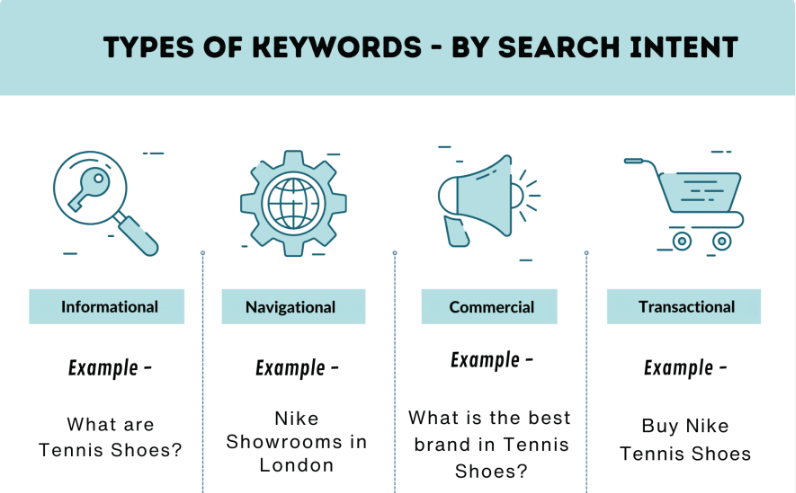
Content is the core of any SEO strategy. It’s about the words on a page and the value that content brings users. In 2026, search engines will reward websites that provide comprehensive, high-quality information that genuinely addresses users’ queries. This involves understanding search intent—whether informational, navigational, transactional, or commercial—and crafting content that meets these needs.
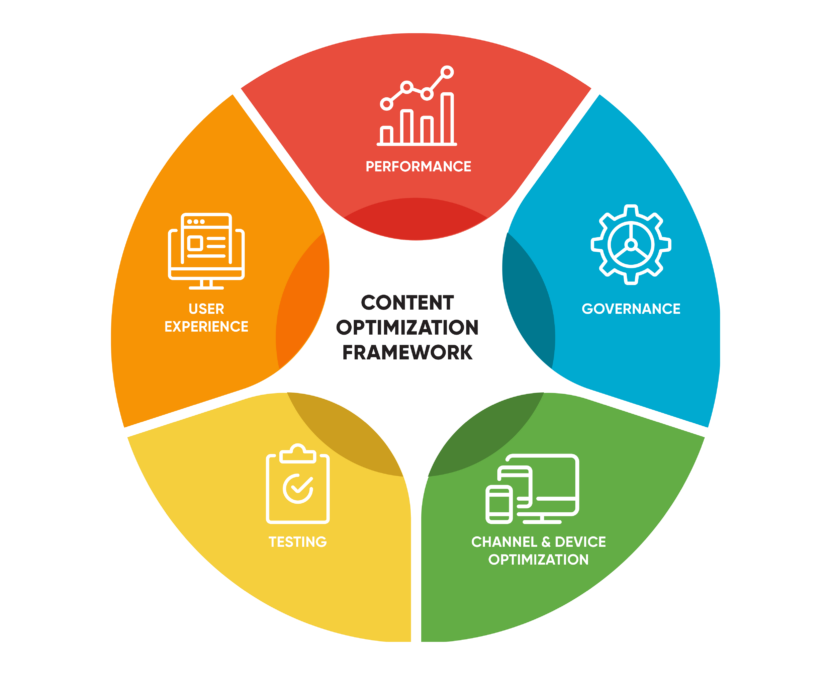
Relevant, up-to-date content fosters better user engagement and increases the likelihood of social shares, backlinks, and returning visitors. As part of content optimization, businesses should create valuable resources such as blog posts, articles, videos, and infographics, all optimized with keywords, headings, and relevant multimedia.
⭐Integrating EEAT Standards
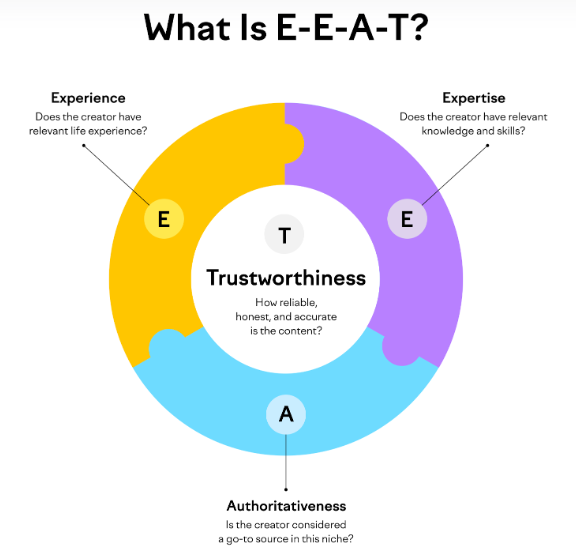
Google emphasizes EEAT—Expertise, Experience, Authoritativeness, and Trustworthiness—as essential standards for high-ranking content. Incorporating EEAT involves:
- Demonstrating expertise by having knowledgeable authors produce or review content.
- Highlighting experience by including firsthand insights or case studies that showcase practical knowledge.
- Building authority through reliable information backed by reputable sources.
- Establishing trustworthiness by ensuring the accuracy of information, maintaining a secure website, and providing a transparent user experience.
By following EEAT principles, businesses can create content that ranks higher in search results and builds trust with their audience.
✨Technical SEO
⭐Key Technical Elements for SEO Success in 2026
Technical SEO involves optimizing the infrastructure of a website to ensure search engines can effectively crawl and index its pages. Key areas to prioritize include:
- Site Structure: A well-organized site structure helps users and search engines navigate the site efficiently. Clear URL hierarchies, breadcrumb navigation, and XML sitemaps are essential for an optimized site structure.
- Crawlability and Indexability: It is crucial to ensure that search engines can easily crawl and index content. This involves removing or updating outdated pages, using robots.txt files properly, and avoiding duplicate content.
- Speed Optimization: Site speed is directly linked to user satisfaction. Techniques such as image compression, minimizing JavaScript, and leveraging caching are necessary for fast load times.
- Mobile Usability: With most internet traffic from mobile devices, optimizing for mobile is non-negotiable. Responsive design, mobile-friendly navigation, and avoiding intrusive interstitials contribute to a better mobile experience.
Addressing these technical aspects can help businesses improve their websites’ accessibility and performance, which in turn can enhance their search engine ranking potential.
👉User Experience (UX)
⭐Importance of UX in SEO
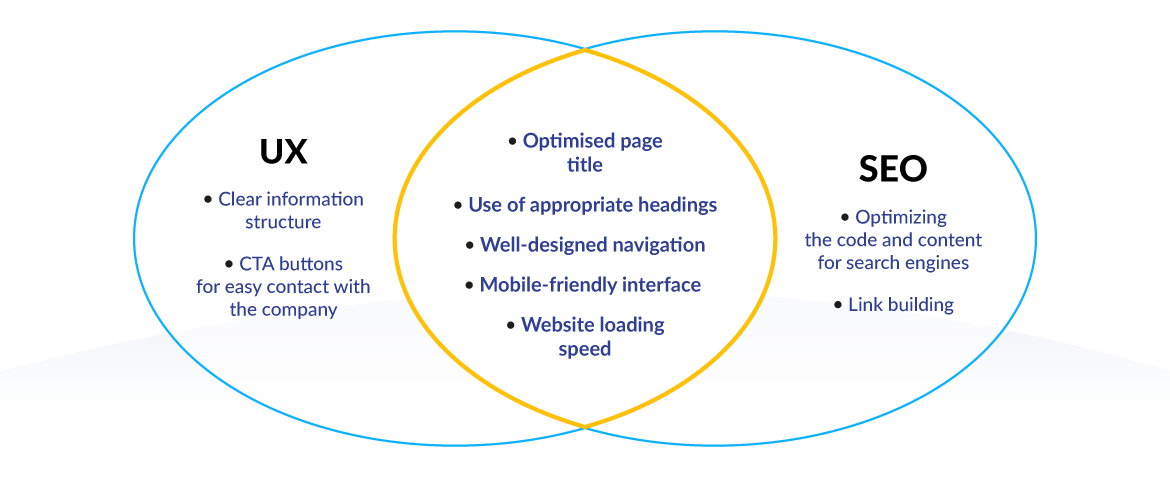
User experience is a vital component of SEO, as Google increasingly ranks websites based on how users interact with them. A well-designed website with intuitive navigation, clear calls-to-action, and accessibility options creates a positive experience that encourages longer visits and more page interactions. Key UX considerations include:
- Intuitive Navigation: Users should be able to find the information they need easily. This includes a simple menu structure, visible search bars, and helpful internal links.
- Accessibility: Websites should accommodate users with disabilities, ensuring compliance with WCAG standards.
- Reducing Intrusive Elements: Pop-ups, autoplay videos, and other disruptive elements can increase bounce rates. Limiting these features contributes to a more seamless browsing experience.
An excellent user experience can lead to lower bounce rates, longer session durations, and more repeat visits, all of which send positive signals to search engines.
👉Link-Building and Authority Building
⭐Quality Link-Building Strategies
Link-building remains one of the most powerful ways to improve a website’s authority. However, in 2026, the focus is on quality over quantity. Ethical link-building techniques, such as guest posting on reputable sites, earning mentions from credible sources, and creating link-worthy content, are crucial. Additionally, links should be relevant and from trusted sources in the same niche to add value and credibility to the website.
⭐Emphasis on Ethical Link-Building and Brand Mentions
Ethical link-building practices are essential to avoid penalties. Businesses should pursue organic link-building opportunities instead of purchasing links or relying on spammy directories. Leveraging brand mentions is also a valuable strategy; turning unlinked mentions into links can improve domain authority and boost SEO rankings. By prioritizing quality and relevance, businesses build authority that aligns with search engine guidelines.
👉Setting Your SEO Goals for 2026
In an increasingly competitive digital environment, SEO strategy plays a critical role in driving online visibility, user engagement, and sustainable business growth. As we move toward 2026, search engines continue to evolve, placing greater emphasis on content quality, credibility, and user intent. Setting clear and measurable SEO goals is no longer just a best practice. It is essential for staying relevant and competitive. A well defined SEO plan should align closely with Google’s EEAT principles of Expertise, Experience, Authoritativeness, and Trustworthiness while prioritizing genuine value for users.
👉Defining Clear and Measurable SEO Goals
Effective SEO starts with well structured goals that support broader business objectives. One of the most reliable frameworks for goal setting is the SMART approach, which ensures goals are Specific, Measurable, Achievable, Relevant, and Time bound.
Specific goals remove ambiguity and provide direction. Rather than aiming to increase website traffic in general, a stronger objective would be to increase organic traffic by a defined percentage within a set period. Clear targets help teams focus their efforts and allocate resources more efficiently.
Measurable goals allow progress to be tracked and evaluated. Identifying key performance indicators such as organic sessions, keyword rankings, click through rates, bounce rates, and conversion rates makes it easier to assess performance objectively. These metrics provide insight into what is working and where adjustments are needed.
Achievable goals balance ambition with realism. While growth is the objective, targets should reflect current performance levels, competition, and available resources. For example, a gradual increase in qualified organic traffic over several months is more sustainable than unrealistic short term spikes.
Relevant goals ensure that SEO efforts directly support business outcomes. If the primary objective is revenue growth, SEO should prioritize keywords and content that attract high intent users who are more likely to convert. Alignment between SEO goals and business strategy ensures meaningful results rather than vanity metrics.
Time bound goals create accountability and structure. Setting a clear time frame for each objective allows teams to measure success and refine strategies. A defined deadline also encourages consistent execution and performance reviews.
By applying the SMART framework, businesses can build an SEO strategy that is focused, actionable, and aligned with long term growth goals.
👉Establishing Benchmarks for SEO Success
Benchmarking provides the context needed to evaluate progress and guide decision making. It begins with understanding current performance levels and setting realistic targets for improvement across key SEO metrics.
Traffic benchmarks help define growth expectations. Reviewing historical data and industry trends allows businesses to set informed targets for organic traffic increases. These benchmarks guide keyword research, content planning, and technical optimization efforts.
Engagement benchmarks focus on how users interact with content. Metrics such as time on page, bounce rate, scroll depth, and pages per session indicate whether content meets user expectations. Setting engagement improvement goals encourages the creation of content that is more relevant, structured, and valuable.
Conversion benchmarks connect SEO performance to tangible outcomes. Whether the goal is sales, lead generation, or sign ups, conversion targets provide clarity on SEO effectiveness. Evaluating conversions alongside traffic and engagement ensures that growth is meaningful and aligned with business objectives.
👉Tools for Monitoring and Optimization
Tracking performance requires the right tools. Google Analytics remains essential for understanding user behavior, engagement patterns, and conversion paths. Google Search Console provides valuable insights into search visibility, keyword performance, and technical health.
In 2026, AI driven analytics platforms play an increasingly important role. These tools offer predictive insights, performance forecasting, and trend detection that help businesses adapt quickly to algorithm changes and shifting user behavior.
With clearly defined goals, realistic benchmarks, and reliable tracking tools, businesses can build an SEO strategy that is resilient, user focused, and aligned with modern search expectations. Setting the right SEO goals today lays the foundation for sustainable visibility and long term success in 2026 and beyond.
✨Creating an SEO Optimization Plan to Succeed in 2026 and Beyond
An effective SEO optimization plan offers a clear, structured framework for implementing, monitoring, and refining strategies over time. By following a well-defined roadmap, businesses can ensure their SEO efforts remain impactful, measurable, and adaptable to evolving search engine algorithms.
⭐Step-by-Step SEO Optimization Roadmap
Building an actionable SEO roadmap is the foundation of long-term search visibility and organic growth.
- Keyword Research: Begin with in-depth keyword research to identify search terms that align with user intent while maintaining a healthy balance between search volume and competition. Leverage reliable tools such as Google Keyword Planner, Ahrefs, and SEMrush to uncover relevant, high-performing keywords that support your business objectives.
- Content Planning and Development: Use keyword insights to create a strategic content calendar focused on topics that genuinely address user needs. Content should be informative, well-structured, and optimized according to EEAT (Experience, Expertise, Authoritativeness, and Trustworthiness) principles to enhance credibility and user engagement.
- Technical SEO and On-Page Optimization: Strong technical foundations are essential for SEO success. Focus on improving site speed, mobile responsiveness, crawlability, and URL structure. Complement these efforts with on-page optimization, including optimized title tags, meta descriptions, header tags, and descriptive image alt text to enhance both search engine visibility and user experience.
- Continuous Content Updates and A/B Testing: SEO is an ongoing process that requires regular evaluation and refinement. Updating existing content ensures it remains relevant and competitive, while A/B testing SEO strategies—such as variations in page titles, meta descriptions, or layouts—helps identify what resonates most effectively with your audience in 2026 and beyond.
This roadmap provides a structured approach to SEO, guiding the prioritization of tasks and ensuring continual progress.
⭐Prioritizing SEO Tactics Based on Business Goals
Effective SEO strategies should be tailored to align with the specific goals, audience, and structure of your business. A customized approach ensures maximum impact while optimizing the use of time and resources.
- Content Strategy: Focus on creating content that directly addresses the needs and interests of your target audience. For e-commerce businesses, this typically includes optimized product pages, category descriptions, and detailed buying guides. Service-based businesses, on the other hand, benefit from educational blog content, case studies, and customer testimonials that build trust and authority.
- Technical SEO: Identify and resolve technical barriers that may hinder website performance. For content-rich websites, optimizing page load speed, mobile responsiveness, and crawl efficiency is critical to delivering a seamless user experience and improving search engine rankings.
- Link-Building Strategy: Emphasize earning high-quality, relevant backlinks from authoritative sources within your industry. These links strengthen domain authority and credibility. Avoid low-quality or spammy backlinks, as they can negatively impact search visibility and long-term performance.
By tailoring SEO strategies to your business model, you ensure more efficient resource allocation, stronger alignment with core objectives, and sustainable organic growth.
👉Key SEO Trends and Challenges in 2026
SEO is evolving rapidly, and with each year, new technologies, regulations, and user preferences shape how we optimize content for search engines. In 2026, SEO strategies must adapt to key trends for 2026 and challenges to stay effective. Here, we explore the top SEO trends in 2026, including the impact of Google’s antitrust trial, the rise of AI, and the critical importance of high-quality, original content in meeting users’ needs.
✨Search Alternatives and Google’s Antitrust Trial
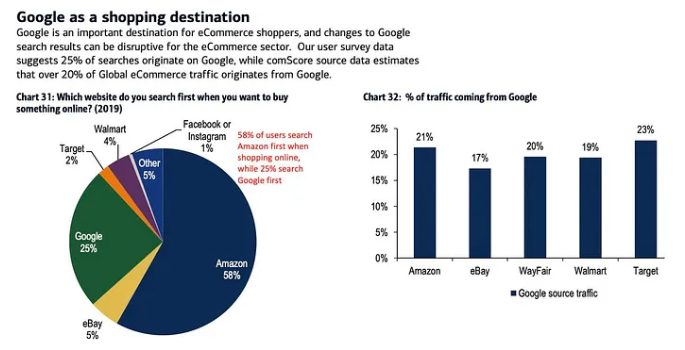
With Google facing increasing scrutiny over its search engine dominance, regulatory changes could significantly reshape the SEO landscape. Antitrust trials and regulations in 2026 may encourage competitors like Bing, DuckDuckGo, and others to capture a larger share of search traffic. This shift presents opportunities and challenges for SEO strategies 2026, as companies may need to optimize content for alternative search engines with algorithms and ranking factors different from those of Google.
✨Alternatives to Google
While Google holds the majority market share, search engines like Bing and DuckDuckGo are gaining popularity, especially as privacy concerns drive users to explore options beyond Google. Bing, for instance, has made advances in AI integration and personalized search, while DuckDuckGo offers a privacy-focused alternative with a strong stance against tracking. As Google’s antitrust trials unfold, SEO professionals should consider optimizing for these platforms by studying their unique ranking criteria. Bing, for instance, emphasizes social signals and may rank certain types of media, such as videos and images, differently than Google.
✨Anticipating Regulatory Changes
If Google faces limitations or restrictions, SEO strategies might shift toward a more multi-platform approach, requiring a deeper understanding of each search engine’s nuances. For example, content optimized for DuckDuckGo might emphasize privacy and factual relevance. Preparing for these changes means staying informed on antitrust developments and diversifying SEO tactics across platforms.
✨AI Overview as a Powerful (or Terrible) Assistant
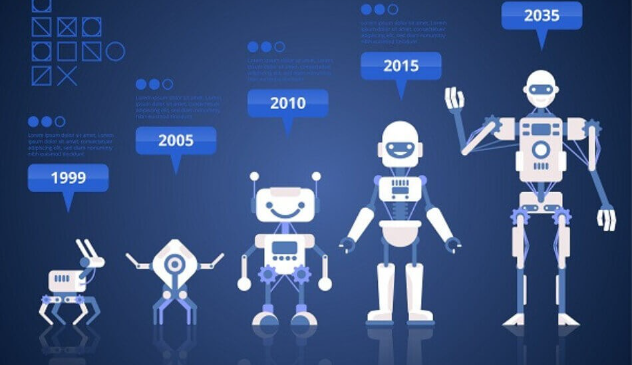
Artificial Intelligence (AI) continues to revolutionize SEO, enhancing capabilities in keyword research, content generation, and user personalization. AI-powered SEO tools can automate tasks such as identifying keyword trends, generating content ideas, and personalizing user experiences based on browsing behavior. However, with these advancements come the potential pitfalls of over-relying on AI, which could lead to content quality issues and reduced human oversight.
✨The Role of AI in SEO
AI-driven tools like ChatGPT and Jasper have transformed content creation, helping marketers quickly produce and analyze vast amounts of content. AI can provide data-backed insights into what users search for, allowing for more targeted content. Additionally, AI-powered algorithms can help analyze user behavior patterns, suggesting topics and formats likely to engage visitors.
✨Balancing AI with Human Oversight
While AI can streamline content creation and analysis, human oversight remains crucial for maintaining quality and authenticity. Search engines, especially Google, reward originality and value-rich content. Excessive reliance on AI-generated content without human input can lead to generic, repetitive articles that fail to engage users. The key to leveraging AI effectively is to use it as a supportive tool rather than a substitute for human creativity, ensuring that content remains relevant, accurate, and user-centered.
👉EEAT and the Push for Originality
As content saturation continues, the need for Expertise, Experience, Authoritativeness, and Trustworthiness (EEAT) is more important than ever. Google’s EEAT guidelines place a premium on content created by experienced individuals or reputable sources, especially in areas like health, finance, and legal information. Search engines prioritize original, insightful content that provides real value to users rather than rehashed or generic information.
✨Ensuring Originality in Content
With the rise of AI, maintaining originality is both a challenge and an opportunity. Originality is key for standing out in a crowded digital space, and content that reflects firsthand insights or unique research will likely perform better. SEO professionals should aim to produce content that thoroughly answers specific user questions, incorporating unique perspectives, case studies, and data.
✨Avoiding AI-Generated Content Pitfalls
While AI can support content creation, entirely AI-generated articles can be risky, as they may need a more nuanced understanding that human writers bring. In 2026, successful SEO strategies will balance AI’s efficiency with the depth and authenticity provided by human insights. Avoiding AI pitfalls means fact-checking information, adding real-world examples, and ensuring content aligns with the EEAT principles.
✨The User Versus the Keywords
Modern SEO strategies 2026 prioritize user intent and experience over keyword stuffing. In 2026, search engines will increasingly reward websites that address user needs with meaningful, comprehensive content. Rather than focusing solely on keyword density, effective SEO strategies will emphasize user satisfaction by crafting content that directly answers search queries.
✨User-Centric Content Over Keyword Stuffing
Keyword stuffing needs to be updated, and Google penalizes content that manipulates search rankings without genuinely serving the reader. The key to SEO success is creating user-centric content that addresses various types of intent—informational, transactional, or navigational. For example, a user searching “how to improve page speed” wants clear, actionable steps, not a page filled with repeated keywords.
✨Emphasizing Query Satisfaction
Query satisfaction involves understanding what users seek when entering a specific search term. In 2026, content that fully answers a query will rank better than content that only partially meets user needs. Achieving query satisfaction involves answering follow-up questions, offering solutions, and including FAQs to provide a well-rounded answer to the initial query.
👉Technical SEO Will Matter More Than Ever in 2026
In the dynamic realm of SEO, technical SEO continues to be a crucial element for securing top search engine rankings and enhancing user engagement. Looking toward 2026, the significance of technical SEO is only growing, fueled by increased attention to Core Web Vitals, structured data, mobile optimization, and the influence of Artificial Intelligence (AI) on search strategies. Technical SEO plays a vital role in making websites fast, accessible, mobile-friendly, and easy to navigate—qualities that directly support Google’s focus on delivering a superior user experience. In 2026, refining these technical elements will lay the groundwork for a strong SEO approach, enabling brands to remain competitive in a rapidly changing digital environment.
✨Artificial Intelligence in Technical SEO
Artificial Intelligence is reshaping technical SEO by changing how SEO professionals identify and resolve technical issues. AI-powered tools now provide a faster and more accurate approach to maintaining website health. Instead of relying on manual audits, these tools conduct automated audits to quickly identify issues such as broken links, crawling errors, and duplicate content. This proactive approach helps detect potential problems early and recommends precise actions to optimize site performance.
AI overview also allows SEO professionals to monitor website performance from a user-centric perspective, offering insights into how real users interact with content. By analyzing user behavior patterns, AI can identify pages that contribute to high bounce rates and detect slow-loading pages that disrupt navigation. AI’s predictive capabilities help anticipate technical issues based on historical data, allowing professionals to prioritize strategic improvements rather than repeatedly addressing errors. This efficiency enables SEO teams to focus more on content creation, link building, and overall site strategy, while technical audits continue running in the background.
✨High-quality, Relevant Content in Technical SEO
Although technical SEO and content may appear separate, they are closely connected, especially when content is structured to support technical SEO efforts. For example, using clear, specific headings with semantic keywords helps search engines better understand the topic and hierarchy of a page, resulting in more accurate indexing. In this context, content relevance focuses on addressing user intent while organizing information in a way that search engines can easily read and interpret.
A logical content structure, such as breaking complex topics into smaller, digestible sections, improves both user experience and search engine comprehension. The use of headings, subheadings, and structured formatting elements like tables and bullet points enhances scannability and increases the likelihood of ranking for competitive keywords. When content is well-organized and aligned with user intent, search engines recognize it as high-quality, relevant information, helping improve rankings and visibility.
✨Voice & Mobile Search Optimization
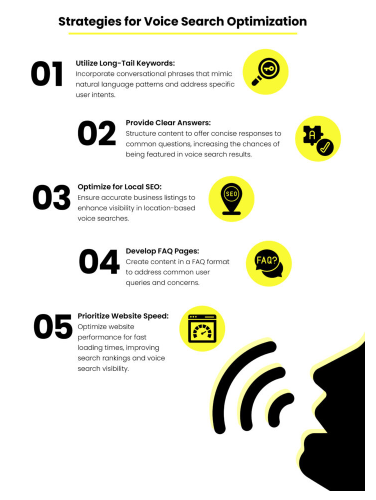
As voice search continues to expand and mobile-first indexing remains dominant, optimizing for both is essential. Voice search queries are generally longer and more conversational, reflecting how users speak rather than type. This shift means content optimized for voice search should provide clear, direct answers in a natural, conversational tone. Including FAQ sections or structured snippets that deliver concise responses can significantly improve voice search rankings, while also supporting mobile-first indexing requirements.
In addition to voice search, mobile optimization remains a priority as Google’s mobile-first indexing favors websites that perform well on mobile devices. Websites that are not mobile-friendly may experience lower rankings because they do not meet user expectations for accessible, on-the-go information. Key elements of mobile optimization include responsive design, fast loading times, and a clean, uncluttered layout that enables easy navigation on smaller screens. By making these adjustments, websites can better align with voice and mobile search needs, which are crucial for success in the 2026 SEO landscape.
✨“Zero-Position” or “Zero-Click” Searches
One of the most sought-after placements on search engine results pages (SERPs) is position zero, often referred to as the featured snippet. This is a “zero-click” search result, meaning users can access the information they need directly on the results page without clicking through to the website. Featured snippets may include text, lists, tables, or bullet points and are designed to answer common search queries quickly and clearly.

To capture zero-position spots, content should be structured to provide clear and concise answers directly to user queries. Including tables, bullet points, or numbered lists where appropriate increases the likelihood of content appearing as a featured snippet. Organizing content to address commonly searched questions within a specific niche also encourages users to explore further, improving engagement and visibility. As zero-click searches continue to grow, implementing strategies to secure these positions will remain a key focus for SEO professionals in 2026.
✨Topical Authority: Building Trust and Credibility
Establishing topical authority will be essential for websites aiming to build trust and enhance their search engine rankings in 2026. Topical authority involves producing comprehensive, high-quality content on specific subjects, signaling to search engines that the website is a trusted resource in that domain. This approach aligns well with Google’s EEAT guidelines (Expertise, Authoritativeness, Trustworthiness) by demonstrating in-depth expertise on a topic, which is essential for ranking higher and establishing credibility.
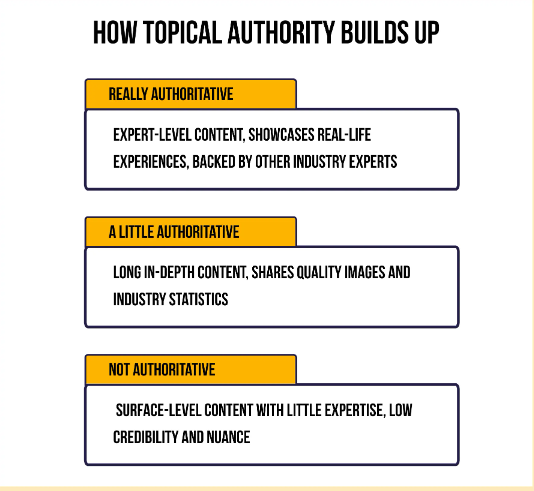
Building topical authority means going beyond surface-level content and addressing a subject from multiple perspectives. For instance, a website focused on wellness could provide detailed content on different areas such as mental health, nutrition, and fitness, with each topic explored thoroughly. This depth of coverage establishes the website as an expert source and helps it rank higher for related searches. By creating content that answers user questions comprehensively and strategically interlinking relevant articles, websites can strengthen their authority and relevance within their niche.
✨Preparing for Future SEO Trends
SEO is constantly evolving, and successful strategies require continuous adaptation. Preparing for future SEO trends in 2026 involves staying up to date with changes in search engine algorithms, user behavior, and emerging technology. Taking this proactive approach enables SEO professionals to develop adaptable, data-driven strategies that remain effective over time. With the rapid growth of AI, voice search, and rising user expectations, staying ahead of trends is essential.
For example, as search engines place increasing emphasis on content quality and user experience, SEO strategies in 2026 will need to reflect these priorities by consistently updating and refining content, technical elements, and engagement tactics. By investing in flexible strategies and keeping pace with industry changes, SEO professionals can ensure their websites remain relevant and competitive.
Elevating Content Quality with Rich, Engaging Formats
As search engines continue to prioritize user satisfaction, producing high-quality content that thoroughly explores topics will be critical for SEO success. In 2026, content extends beyond written text, incorporating multimedia formats such as videos, infographics, and interactive elements. These formats enhance the user experience, encouraging longer on-page time and higher engagement. For instance, embedding a video tutorial or interactive infographic can clarify complex concepts and provide a more immersive experience for users.
Comprehensive and relevant long-form content will also stand out, as both users and search engines value depth and detail. By offering well-researched articles that meet user intent and are enriched with visuals, websites can strengthen credibility, attract more traffic, and establish authority within their niche.
👉Content Strategy: Crafting High-Quality, User-Intent Focused Content
A successful content strategy in today’s digital landscape must be rooted in high quality, aligned with user intent, and informed by the evolving guidelines of Google’s EEAT (Experience, Expertise, Authoritativeness, Trustworthiness) algorithm. This ensures that content resonates with audiences while performing well on search engines. This guide delves into creating content that balances these demands across different formats, from localized to long-form, while consistently prioritizing the user experience.
⭐Adopt EEAT Content Standards: Prioritizing Firsthand Knowledge and Expert Perspectives
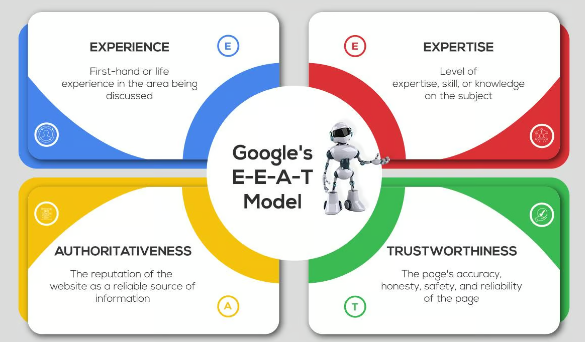
Google’s EEAT guidelines are integral to the foundation of content quality, prioritizing attributes that build trust and engagement.
- Expertise: Content should be created or reviewed by knowledgeable individuals. An article about health should ideally be written or reviewed by a qualified healthcare professional.
- Experience: Firsthand insights add an irreplaceable layer of authenticity. For instance, travel blogs with the author’s personal experiences provide more valuable insights than generalized information.
- Authoritativeness: Sources matter. When citing facts, statistics, or research, rely on well-regarded publications, research bodies, or respected industry experts.
- Trustworthiness: Transparency about sources and authorships, such as disclosing affiliations or potential biases, boosts credibility. Adding author bios and links to professional profiles enhances trustworthiness.
Prioritizing EEAT attributes helps content rank well in search engines and resonates more authentically with audiences.
⭐Leverage AI in Content Creation: Identifying Gaps, Generating Ideas, and Analyzing Topics
AI transforms content strategy, offering tools to identify gaps, generate ideas, and analyze trends effectively.
- Content Gap Analysis: AI-powered tools like SEMrush and Ahrefs help identify which topics are missing from your site but are trending in your niche. This can shape a more comprehensive and competitive content library.
- Topic Generation: Tools like ChatGPT or Jasper can generate topic ideas based on keywords, enabling content creators to brainstorm more efficiently and adapt ideas to target diverse users.
- Quality Control: While AI overview is an excellent tool for content ideation, maintaining human oversight is essential to ensure that the content quality remains high and that it is both accurate and well-aligned with user expectations.
AI’s role in content creation lies in facilitating research and ideation. However, to meet EEAT standards, a human touch is vital for authentic, high-quality content.
⭐Humanize Content with Unique Insights: Sharing Personal Stories, Case Studies, and Unique Experiences
Humanizing content by adding unique insights and experiences helps it stand out in a crowded digital space.
- Personal Stories: Whether writing about a professional journey, a memorable experience with a product, or a solution to a common problem, personal narratives are engaging and relatable.
- Case Studies and Success Stories: Real-world examples add authority and value. For instance, sharing case studies detailing how a specific SEO strategy increased organic traffic builds credibility and provides a blueprint for readers.
- Unique Perspectives: Insights that showcase your unique perspective or expertise make content more valuable. In a field as vast as content marketing, adding an original take on how certain strategies can improve business outcomes gives readers a reason to stay engaged.
Adding these elements makes the content engaging and enhances EEAT by showcasing the author’s firsthand experience and knowledge.
⭐Focus on User Intent: Aligning Content to User Queries Across the User Journey
User intent is the foundation of modern SEO and content strategy. Aligning content to different user needs ensures higher engagement and search performance.
- Understanding Different Intents: Content can be informational, navigational, or transactional. For example, users looking for “how to make a content strategy” likely seek informative content, while those searching for “best content strategy tools” may have transactional intent.
- Creating Content for All Stages of the Journey: Aligning content with user intent across the journey, from awareness (informational content) to consideration (comparative guides) to decision-making (product/service pages), enhances user engagement and satisfaction.
- Mapping Intent Variations: Developing content that answers specific questions, like “how to create an SEO strategy 2026” or “SEO strategy tools,” can guide users at various points in their journey, improving user experience and conversion rates.
Crafting content that meets user intent drives organic traffic and enhances user satisfaction, keeping them engaged longer and more likely to return.
⭐Diversify Content Formats: Engaging Different Types of Users
Offering a variety of content formats allows you to cater to diverse user preferences and enhance engagement.
- Videos and Webinars: Tutorials, interviews, or short guides can visually engage users and make complex concepts more digestible.
- Podcasts and Audio Content: Podcasts provide information and insights in a more accessible, hands-free format for audiences on the go.
- Infographics and Visual Content: Simplifying data or complex information into visual formats can make the content more accessible and engaging.
- Interactive Tools: Quizzes, calculators, and interactive elements allow users to engage with content more deeply, creating a personalized experience and increasing session duration.
Diverse formats make the content more accessible and engaging, allowing users to choose how they consume information and increasing overall content value.
⭐Update Content Regularly: Keeping High-Performing Pages Relevant
Regularly updating high-performing pages maintains relevance and signals to search engines that the content is current.
- Refresh Data and Information: Ensuring that all facts, statistics, and data are up-to-date can improve credibility and reliability.
- Monitor Trends and Algorithm Changes: Adapting content based on current trends and Google updates ensures better alignment with user expectations and SEO requirements.
- Republish Updated Content: Republishing refreshed content with a recent date can improve click-through rates (CTR) and potentially rank positions.
Frequent updates also reflect a commitment to providing valuable and accurate information, which is integral to satisfying EEAT guidelines.
⭐Embrace Localized Content: Creating Location-Specific Content When Applicable
Localized content can be an essential part of a content strategy, especially for businesses with a regional focus.
- Creating Localized Content: For example, a digital marketing agency in Austin can create content targeting keywords like “Austin SEO services” to improve relevance to local users.
- Incorporating Local Events and Trends: Content that references local events, trends, or seasons can help connect with the audience on a more personal level, driving regional traffic and engagement.
- Optimizing for “Near Me” Searches: Adding phrases like “near me” or “in [location]” can help capture search intent for users looking for nearby services or information.
Localized content supports user intent and improves search engine visibility in specific geographic regions.
⭐Cover Trending and Evergreen Topics: Balancing Content Planning
A balanced content planning approach that includes trending and evergreen topics ensures that content remains relevant and valuable over time.
- Trending Topics: Addressing trending topics can drive traffic spikes but may have a short lifecycle. For instance, covering an SEO algorithm update or a new digital marketing tool release attracts immediate interest.
- Evergreen Topics: These are timeless pieces of content, like “How to Create a Digital Marketing Strategy” or “Beginner’s Guide to SEO.” Evergreen content drives consistent traffic over time and requires minimal updates.
- Balancing the Two: A mix of trending and evergreen content builds immediate interest and long-term engagement, creating a robust library for varied user needs.
This balance optimizes resources and builds authority, supporting short-term gains and sustained search presence.
⭐Optimize for Long-Form Content: Providing Comprehensive Coverage of Topics
Long-form content is better for SEO and positions your content as a comprehensive resource.
- Depth and Detail: In-depth content (1,500+ words) covers topics thoroughly, offering more value and often performing better in SERPs.
- Improving Topical Authority: Creating detailed content around a central theme establishes authority in that niche, helping boost your rankings.
- Enhancing Engagement Metrics: Longer content tends to improve dwell time and session duration, which are positive user engagement signals to search engines.
Long-form content that provides value from start to finish supports EEAT standards and satisfies user search intent, making it a key component of an effective content strategy.
⭐Visual Content SEO: Optimizing Multimedia for Search with Appropriate Metadata
Visual elements like images, infographics, and videos enhance user engagement and must be optimized for search.
- Alt Text and Captions: Adding descriptive alt text, captions, and titles to images improves accessibility and SEO.
- Structured Data for Videos and Images: Marking up videos and images with structured data can make them eligible for rich results on Google.
- Compressing and Optimizing Image Size: Reducing file sizes improves page speed, enhances user experience, and potentially boosts SEO.
Visual SEO helps make your multimedia elements discoverable while improving accessibility, aligning with both user intent and SEO best practices.
👉Technical SEO: Providing a Robust Website Base
Building a strong and user-friendly website requires technical SEO. Google’s algorithms are more sophisticated than ever in 2026, therefore website owners must improve technical aspects to satisfy strict user experience requirements. You can build a strong technical basis for your website and make sure it satisfies user and search engine requirements by concentrating on these essential elements, from accessibility to Core Web Vitals. Let’s examine ten crucial facets of technical SEO, all aimed at improving the functionality and organization of your website.
⭐Enhance Essential Web Vitality
Google uses Core Web Vitals (CWV) to gauge how quickly a webpage loads, how interactive it is, and how stable its appearance is. They have a direct impact on SEO results and are an essential part of the customer experience.
- Largest Contentful Paint (LCP): LCP calculates how long it takes for a page’s primary content to load. An LCP of less than 2.5 seconds is recommended by Google. Strategies like picture compression, quicker server response times, and less JavaScript loading can result in an effective LCP.
- First Input Delay (FID): FID evaluates the speed at which a website reacts to user input. Because they react to clicks and other actions rapidly, pages with low FID scores provide a more seamless experience.Google recommends an FID of less than 100 milliseconds. This can be improved by reducing JavaScript execution time and optimizing event listener setup.
- Cumulative Layout Shift (CLS): CLS measures visual stability by tracking how much the layout shifts unexpectedly during loading. Pages with minimal CLS offer a stable viewing experience. For good user experience, Google recommends a CLS score below 0.1. Optimizing CLS involves specifying size attributes for media files and avoiding content shifts through ad loading.
Websites can enhance user satisfaction and SEO success by concentrating on these CWV indicators, since Google is progressively giving preference to websites that offer a seamless user experience.
⭐Make sure the design is mobile-first.
A website’s mobile performance has a direct impact on its ranks since Google switched to mobile-first indexing. A responsive, user-friendly experience on smaller devices is emphasized by the mobile-first design.
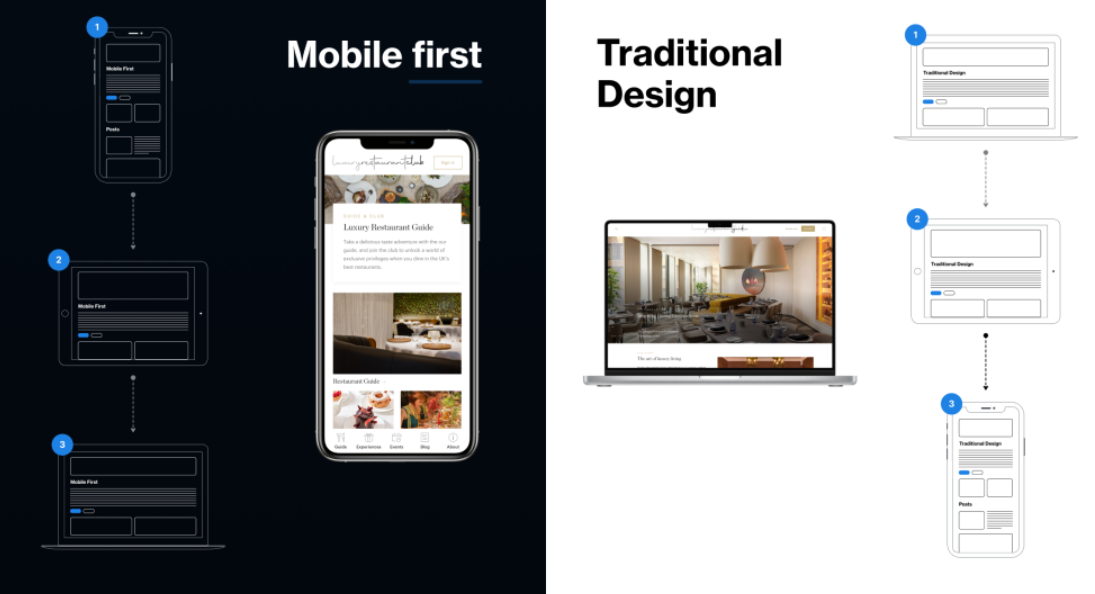
Responsive Design: Make sure things adapt to different screen sizes by using responsive design. This may be accomplished with flexible layouts, grids, and CSS media queries.
Quick Mobile Load Times: Mobile pages ought to load as fast as feasible. Mobile-specific information and areas for improvement can be obtained by using tools such as Google’s PageSpeed information.
Touch-Friendly Navigation: To avoid unintentional clicks, buttons and interactive elements should be scaled for ease of tapping and spaced appropriately.
In order to guarantee accessibility and enjoyment on all screen sizes, mobile-first design is not only a fad but also a must as more people visit websites via mobile devices.
⭐Put Structured Data to Use
A defined format for giving search engines information about a page is called structured data. Google can display rich snippets using schematic markup, which improves a website’s visibility in search engine results pages (SERPs).
- Structured Data Types: Reviews, FAQs, events, products, articles, and other schemas serve a variety of content categories and can assist draw attention to pertinent information in search results.
- Improved Search Engine Ranking: Because they give customers instant answers, rich snippets backed by structured data frequently result in greater click-through rates.
- Top Techniques: To create and verify schema code, use Google’s Structured Data Markup Helper. Regular testing of structured data guarantees that it is accurate and updated with pertinent data.
By using structured data, you’re improving search engines’ ability to understand and present your content effectively, potentially increasing visibility and click-through rates.
⭐Become Voice Search-Ready
Voice search has become a mainstay of contemporary search activity with the emergence of digital assistants like Siri and Alexa. Voice searches are lengthier, conversational, and frequently ask questions.
- Developing Conversational material: By using natural language and providing direct answers, material may be optimized to address common voice inquiries. This can be made simpler by adding a well-structured FAQ section.
- Long-tail keywords to target: Long-tail keywords are useful because voice searches are frequently more precise and detailed. Think about expressions that are representative of everyday speech.
- Optimization Based on Location: “Near me” and other voice searches are frequently local. You may increase your presence for regionally relevant queries by optimizing for local SEO.
Voice search optimization is an evolving field, and focusing on conversational language will help your content remain accessible to users who prefer voice interaction.
⭐Put Crawl Efficiency First
For search engines like Google to effectively find and index every pertinent page on your website, crawl efficiency is crucial.
- Optimization of Site Architecture: Search engines find it easier to navigate a well-organized website with a distinct hierarchy. To organize content logically, use categories and subcategories.
- Robots.txt and XML Sitemap: Essential pages are indexed by search engines thanks to an updated XML sitemap. The robots.txt file helps prioritize more important content by preventing superfluous pages from being crawled.
- Get Rid of Crawl Errors: To find crawl issues, use tools such as Google Search Console. Crawl efficiency can be increased by resolving “404 errors” and fixing broken links.
By optimizing your site for crawl efficiency, you ensure that search engines can accurately and quickly index the pages that matter most, which supports improved rankings and visibility.
⭐Adopt AI-Driven Analytics
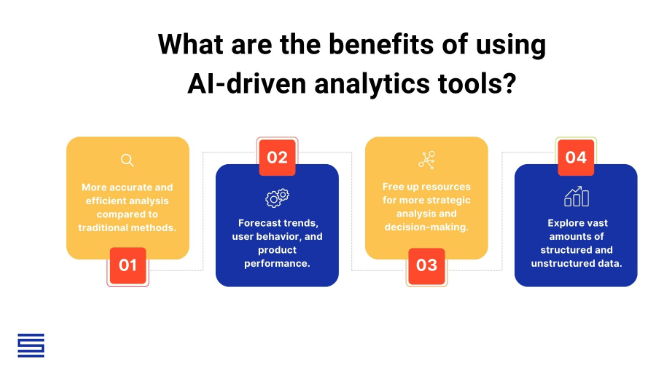
AI-driven analytics offers insightful information on user behavior, site performance, and the efficacy of content. Through trend prediction and more in-depth data analysis, sophisticated tools like Google Analytics 4 (GA4) and other AI-powered platforms assist maximize technical SEO efforts.
- Predictive insights: You can keep ahead of changes by using AI analytics technologies to predict user behavior patterns and keyword trends.
- Automated Anomaly Detection: AI can automatically identify anomalous traffic or changes in user behavior, enabling you to promptly resolve possible problems.
- Audience Segmentation: By identifying distinct user groups, AI-driven segmentation techniques allow content to be tailored to the demands of the audience.
Using AI overview in your analytics will help you improve your SEO strategy in 2026 by giving you the information you need to make prompt, well-informed decisions about user experience optimization and site enhancements.
⭐Boost the Speed of the Page
Both user experience and SEO rankings are significantly impacted by page speed. In addition to frustrating users, a slow website lowers its search engine ranking.
- CDNs, or content delivery networks: By distributing content among several servers worldwide, CDNs shorten the time it takes for users in various places to load content.
- Browser Caching: By storing static files in their browsers, you can enable caching to make your website load more quickly for repeat visitors.
- Image Optimization: To speed up load times, compress photos without sacrificing quality. For this, programs like ImageOptim and TinyPNG work well.
More effective user experiences and improved SEO performance can be achieved by identifying particular areas for speed improvement with the aid of Google’s PageSpeed Insights and Lighthouse.
⭐Improve Internal Connectivity
Internal linking is a smart method to improve SEO and direct users through your website. In addition to distributing page authority, a well-thought-out internal linking structure aids search engines in comprehending the hierarchy and significance of various pages.
- Create a Clearly Defined Link Hierarchy: Increase traffic and authority to high-priority pages by linking to them from the homepage or top-level pages.
- Contextual Connections in Content: By including links within the body of blog posts or articles, you can encourage users to stay on your website longer and uncover relevant content.
- Make Sensible Use of Anchor: Text In order to give consumers and search engines context, anchor text should be pertinent and detailed.
Good internal linking enhances the usability of your website and aids search engines in comprehending its structure, both of which can have a favorable effect on SEO.
⭐Invest in Superior Hosting
Technical SEO and user satisfaction are greatly impacted by hosting, which also affects page load speed, security, and dependability.
- Fast and Reliable Hosting: To guarantee a seamless user experience and reliable performance, pick a hosting company with high uptime and fast server response times.
- SSL Certificates: Because security is so important, browsers mark websites that do not have SSL certificates—which are signified by HTTPS—as insecure. Google’s algorithms use SSL certificates as a ranking element and to increase security.
- Scalability: Your hosting package should be able to handle growing traffic without sacrificing performance as your website expands.
Purchasing top-notch hosting ensures your users have a safe, dependable, and quick website and lays a solid foundation for SEO.
⭐Make Accessibility a Priority
In addition to being a good practice, making your website accessible for people with disabilities improves SEO by giving search engines clear, organized content.
- Compliance with WCAG: Standards for accessible websites are outlined in the Web Content Accessibility Guidelines (WCAG). By adhering to these recommendations, you can improve the usability of your website for people with impairments.
- Alternative Text for Pictures: Using screen readers, visually impaired people can comprehend images thanks to descriptive alt text. It also gives search engines the context they need to properly index your photographs.
- Keyboard Navigation: Make sure a keyboard can be used to completely browse your website. This will increase accessibility and help people with motor impairments.
Optimizing for accessibility broadens your audience reach and aligns with Google’s commitment to inclusivity, which can benefit your SEO and user engagement.
👉User Experience (UX): Crafting a Positive User Journey
In today’s competitive digital landscape, user experience (UX) plays a pivotal role in determining the success of a website. A positive UX leads to higher engagement, increased conversions, and greater customer satisfaction. Crafting a seamless user journey ensures your website is intuitive, engaging, and easy to navigate. Here’s how to optimize UX by focusing on five key elements:
✨Intuitive Navigation and Layout: Focusing on Ease of Use
Navigation is a website’s backbone. It is the first point of contact users have when visiting your site, and if they find it confusing or cumbersome, they’re likely to leave quickly. A website’s navigation and layout should be intuitive, meaning that users should be able to find what they are looking for quickly and without confusion.
✨Key Points for Optimizing Navigation:
- Simple Menus: Keep the top-level navigation menu simple and avoid clutter. Only display the most important sections of the website and categorize content logically. This will help users easily access what they need without getting lost.
- Search Bar: Include a visible, easy-to-use search bar at the top of the page. It can significantly improve the user experience, especially for larger websites.
- Responsive Design: Your website’s layout should be flexible and adjust to different screen sizes. As mobile searches dominate, your navigation and layout must adapt to mobile devices, ensuring a seamless experience on smartphones and tablets.
- Sticky Navigation: Use sticky navigation, where the main menu stays at the top of the screen as users scroll down. This ensures users can always access key areas without scrolling back up.
By prioritizing intuitive navigation, users can focus on finding relevant content rather than struggling with the website’s interface.
👉Reduce Popup Usage: Avoiding Intrusive Elements
Popups can be an effective tool for gaining user attention, but when used excessively, they can become a nuisance and damage the user experience. Intrusive popups, especially those that block content or appear too frequently, can lead to frustration and drive visitors away. According to Google’s Core Web Vitals and user experience guidelines, a website with intrusive popups may be penalized in search rankings.
✨Key Strategies to Minimize Popup Interruptions:
- Limit Frequency: Avoid showing popups immediately after a user lands on your website. Give them time to explore your content before interrupting them with a popup.
- Exit-Intent Popups: Instead of showing popups randomly, trigger them when the user is about to leave the page. These pop-ups can offer discounts, gather feedback, or suggest related content.
- Use Subtle Design: If you must use pop-ups, design them to be less intrusive. Consider using small, non-intrusive banners or slide-in boxes that don’t block the main content.
- Mobile Optimization: Since mobile devices have smaller screens, intrusive popups can cause significant disruption. Ensure your popups are responsive and don’t interfere with mobile navigation.
Reducing popup usage enhances the overall experience by ensuring that users can interact with your site freely without disruptions.
👉Incorporate Interactive Elements: Using Quizzes, Calculators, and More
Interactivity is a powerful way to engage users and enhance their experience. Interactive elements like quizzes, calculators, polls, and infographics can turn passive browsing into an active, engaging experience. Users who interact with content feel more involved, which can increase their time on the site and improve conversion rates.
⭐Ways to Add Interactive Elements:
- Quizzes: Create quizzes that provide personalized results based on user responses. These are particularly effective for e-commerce sites where users are looking for product recommendations or for service-based sites that can assess user needs.
- Calculators: Whether it’s a mortgage calculator, a savings calculator, or a BMI calculator, adding tools that help users access valuable information in real-time can significantly increase engagement.
- Interactive Infographics: Instead of static graphics, create infographics that users can explore or click through for more detailed information.
- Live Chats: Offering a live chat function can also make your site feel more interactive, providing immediate assistance to users and enhancing customer service.
Interactive elements engage visitors and give them a reason to stay on the site longer. They also improve the chances of converting casual visitors into customers.
⭐Focus on Session Duration: Boosting Engagement Through Content
Session duration is an important metric for assessing user engagement. The longer a user stays on your website, the more likely they will convert or return. High session duration indicates that users find your content useful and engaging. The key to boosting session duration is offering high-quality content that answers users’ needs and encourages them to explore more.
⭐Strategies to Increase Session Duration:
- High-Quality Content: The foundation of longer sessions is providing valuable, relevant, and well-written content. Focus on in-depth articles, informative blog posts, or detailed product descriptions that engage users.
- Internal Linking: Use internal links to guide users to other related content. This encourages them to explore more pages on your site, increasing session duration.
- Multimedia Content: Incorporate videos, infographics, and images into your posts. Studies have shown that multimedia content increases user engagement, as users are likelier to watch a video or look at an infographic than to read long-form text.
- Content Updates: Regularly update your content to ensure it stays relevant. Fresh content encourages users to return to your site, thus increasing repeat visits and overall session duration.
The longer users stay on your website, the more opportunities you have to engage them with your products or services, driving higher conversions.
👉Clear Call-to-Action Strategy: Optimizing CTAs Without Being Intrusive
A call to action (CTA) is essential for guiding users toward a specific action—whether it’s making a purchase, signing up for a newsletter, or downloading a resource. A well-crafted CTA can improve conversion rates and direct users toward valuable actions. However, overuse or poorly placed CTAs can negatively impact UX, making your website feel overly sales-driven.
⭐Best Practices for Effective CTAs:
- Clear and Concise: Your CTA text should be straightforward and clear about what action the user is expected to take. Phrases like “Get Started,” “Sign Up,” or “Learn More” are effective.
- Visibility: CTAs should be visible but not disruptive. Placing them in key areas like the top of the page, within the content, or at the end of articles encourages users to take action without feeling pressured.
- Use Contrast Wisely: Use contrasting colors that align with your website’s design to ensure that your CTA buttons stand out visually.
- Offer Value: Clear what the user will gain by clicking the CTA. For example, instead of “Subscribe,” offer “Get Weekly Updates on Industry Trends.”
- A/B Testing: Use A/B testing to find the best-performing CTAs. This allows you to optimize the language, design, and placement of CTAs based on user behavior.
A well-thought-out CTA strategy provides users a clear path to conversion without being pushy, creating a seamless, positive user journey.
👉Keyword Strategy: Staying Aligned with Search Intent and Trends
A strong keyword strategy is essential for driving organic traffic and ensuring your content reaches the right audience. With search engines and user behavior constantly evolving, staying informed and flexible is critical. Here’s how to create a keyword strategy that aligns with search intent and current trends.
⭐Focus on Semantic Keywords: Optimizing for Related Terms and Concepts
While targeting specific keywords has been the core of SEO for years, there are better approaches than focusing solely on exact-match keywords. Google’s algorithms have evolved to understand context and intent, meaning they now prioritize semantic relevance—i.e., related terms and concepts.
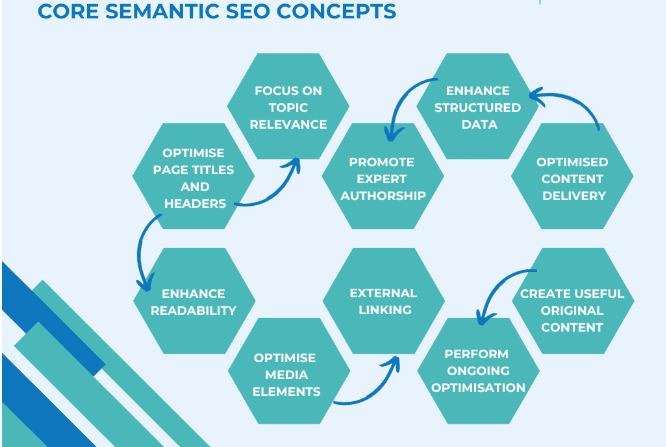
⭐Why Semantic Keywords Matter:
- Better User Experience: Optimizing for related terms helps Google understand the context of your content, ensuring that users can find what they need, even when they search using variations of your target keywords.
- Natural Language Processing: Google’s advancements in NLP mean that focusing on semantically relevant keywords allows your content to rank for a wider range of queries.
For instance, instead of only targeting “buy shoes,” you could also optimize for terms like “best running shoes,” “comfortable sneakers,” and “shoe store online.”
⭐Use Long-Tail Keywords: Capturing Targeted Traffic
Long-tail keywords are extended, highly specific search phrases that often attract users with stronger intent. These keywords generally face lower competition and are more likely to drive conversions, as they directly address particular user needs.
⭐Why Long-Tail Keywords Work:
- Higher Conversion Rates: Users searching for precise terms (e.g., “best hiking boots for women 2026”) are often closer to making a purchase or taking action.
- Reduced Competition: Long-tail keywords generally face lower competition, making it easier to achieve higher rankings.
- More Accurate Targeting: Long-tail keywords ensure your content aligns with specific search queries, increasing its relevance for users.
⭐Optimize for Emerging Terms: Finding New Keywords as Trends Evolve
The digital landscape is always changing, and the keywords users rely on are evolving as well. To stay ahead, it’s crucial to monitor emerging trends for 2026 and optimize content for new and relevant keywords.
⭐How to Identify Emerging Keywords:
- Trending Topics: Keep an eye on news, social media, and industry developments to spot keywords that are gaining momentum.
- Google Trends and Other Tools: Utilize tools like Google Trends to track the popularity and growth of search terms over time.
By focusing on emerging terms early, you can establish your website as an authoritative voice on a new topic before competitors do.
⭐Refresh Keyword Research Regularly: Updating Strategies as the Landscape Changes
Keyword trends for 2026 are constantly evolving, and your keyword strategy should evolve as well. Regularly updating your keyword research ensures that your SEO efforts remain relevant, effective, and competitive in the changing digital landscape.
⭐Key Actions for Updating Your Keyword Strategy:
- Monitor Search Data: Utilize analytics tools to track how your keywords are performing and discover new opportunities.
- Adjust Based on User Behavior: Modify your content to reflect emerging trends and shifts in user intent.
Regularly updating your keyword strategy ensures that your content remains fresh, relevant, and aligned with user expectations.
👉Link-Building and Authority: Establishing Credibility and Reach
Increasing your internet presence and establishing credibility are crucial in the cutthroat world of SEO. Link-building, which increases your website’s search engine visibility and establishes your authority in your field, is a crucial tactic for accomplishing these goals. Here, we’ll look at the basic strategies for developing a strong link profile, like emphasizing quality over quantity, seeking brand mentions, taking part in forums with high authority, and producing linkable content.
⭐Prioritize Quality over Quantity
The proverb “quality over quantity” has a lot of weight when it comes to link-building. Although it could be tempting to strive for a large number of backlinks, the goal should be to obtain connections from reliable, pertinent, and superior sources.
⭐Why Quality Matters
Search engines receive powerful indications about the relevance and reliability of your website from backlinks from reputable websites. Backlinks are one of the main ranking variables used by search engines such as Google. But not every backlink is made equal. A link from a reputable, high-domain authority website is far more advantageous than multiple connections from irrelevant or poor-quality websites.
⭐Actionable Steps:
- Build relationships with reputable websites, industry influencers, and high-authority publications.
- Ensure that the anchor text (the clickable text in a hyperlink) is relevant and natural.
- Avoid buying links or participating in link farms, as these can result in penalties from Google.
By putting quality first, you build a stronger foundation for your website’s SEO operations, eventually increasing its authority and credibility.
⭐Pursue Brand Mentions
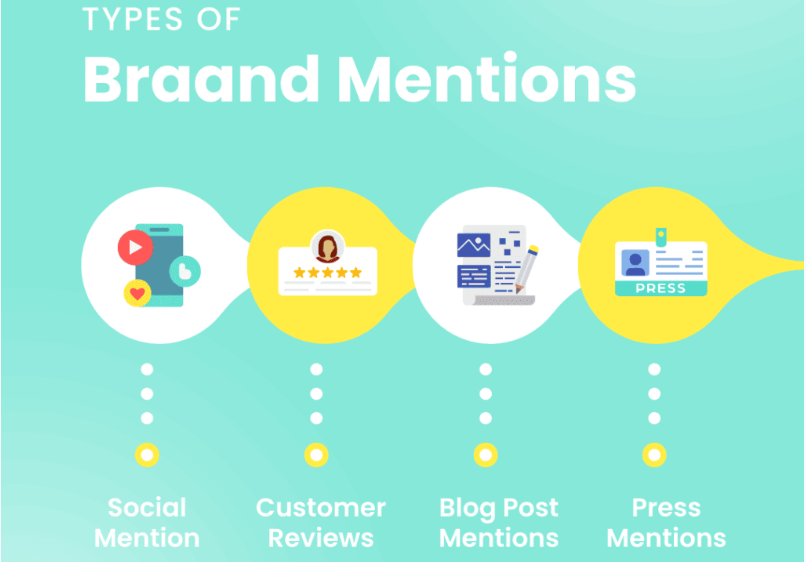
Converting brand mentions into backlinks is a frequently disregarded but effective link-building technique. Many companies receive internet mentions but do not receive a link to their website. A rare chance to obtain high-quality backlinks that improve your domain authority is presented by these unlinked brand references.
⭐How to Convert Brand Mentions into Links
Track situations where your brand is mentioned without a link to begin exploiting brand mentions. You may track internet mentions in real time with several apps, including Google Alerts, Mention, and BuzzSumo.
After you’ve located these mentions, get in touch with the author or owner of the website and request that they add a link to your website. Make sure to emphasize how the audience will benefit from the link and that their material will be enhanced.
⭐Practical Steps:
- Create alerts to monitor unrelated brand references.
- Send courteous outreach emails asking for a link, emphasizing how it will improve the material or help the reader.
- Build connections with content producers and influencers who often bring up your brand.
By converting unlinked brand mentions into backlinks, you may efficiently increase your link profile without using aggressive link-building campaigns.
⭐Participate in High-Authority Forums
Participating in high-authority forums can effectively build backlinks while positioning your brand as an expert in your field. Many forums allow users to include links in their signatures or within the body of their posts. These forums are especially valuable because they are populated by individuals actively seeking information or solutions in your area of expertise.
⭐How to Use Forum Engagement to Create Links
Make sure the forums you participate in have high domain authority and are pertinent to your topic in order to effectively use them for link-building. Backlinks can be obtained from popular sites like Reddit, Quora, and Stack Exchange as long as you post thoughtful and helpful comments.
Make sure you adhere to the community norms and concentrate on offering insightful information rather than only promotional material. Your objectives should be to develop your reputation, sincerely interact with the community, and incorporate backlinks in a useful and organic way.
⭐Practical Steps:
- Find respectable forums in your sector or specialty.
- Give insightful responses to user inquiries, citing your content where appropriate.
- Steer clear of excessive promotion and concentrate on enhancing the discussion.
By taking part in these forums, you enhance your brand’s reputation as an informed and reliable source of information and obtain useful backlinks.
⭐Create Linkable Assets
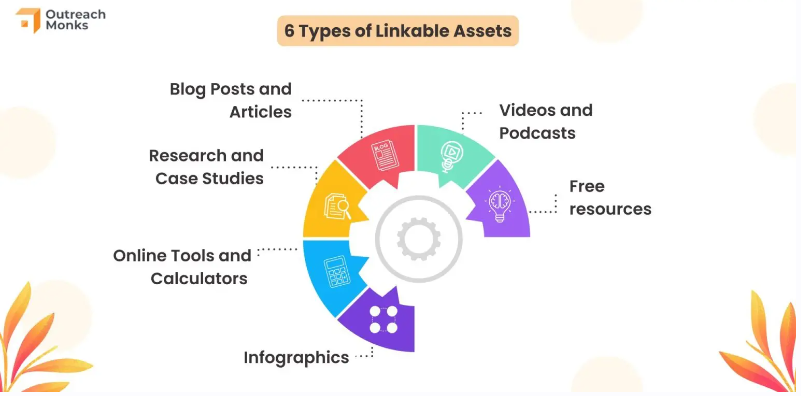
Creating linkable assets involves developing high-quality, valuable content that naturally attracts backlinks. These assets include in-depth guides, research papers, case studies, or interactive tools. The key is to create content that offers significant value to your target audience, making it more likely that others will reference and link to it.
⭐Examples of Linkable Assets
- Ultimate Guides: Comprehensive resources on a topic that serves as the go-to guide for users.
- Infographics: Visually appealing and informative infographics that summarize key data and insights.
- Case Studies: Real-world examples of how your product or service solved a problem, which other websites can reference.
- Tools and Calculators: Interactive tools that provide value and encourage others to link to your site.
Creating content that others find helpful and informative increases the chances of earning backlinks naturally, without the need for outreach or additional efforts.
⭐Practical Actions:
- To find subjects that appeal to your audience and close any holes in your current material, conduct research.
- Produce comprehensive, resource-rich content that will be useful to those in your field.
- To make your linkable materials more visible, use networking, social media, and outreach.
👉AI and Automation in SEO: Leveraging Technology for Efficiency
As SEO continues to evolve, AI and automation have become essential tools for improving efficiency and achieving better results. From content suggestions to automated audits and A/B testing, AI allows SEO professionals to streamline processes and quickly make data-driven decisions.
✨Use AI for Content Suggestions
AI-powered tools can significantly enhance your content strategy by offering suggestions based on search trends, user behavior, and competitive analysis. Tools like Frase.io, Surfer SEO, and MarketMuse can help identify new content ideas, suggest keywords, and highlight content gaps within your niche.
✨How AI Can Help
- Keyword Research: AI tools analyze user search behavior to recommend the most relevant and trending keywords.
- Content Gaps: AI can highlight areas where content is lacking or underperforming.
- Topic Clustering: AI can help group similar topics and suggest comprehensive content ideas.
By leveraging AI for content suggestions, you can ensure your content strategy always aligns with current trends for 2026 and user demands.
✨Automate SEO Audits

SEO audits are essential to maintaining a healthy website, but they can be time-consuming. AI-driven SEO audit tools like SEMrush, Ahrefs, and Moz automate the process, quickly detecting broken links, slow loading speeds, and other technical SEO problems.
👉Benefits of Automating SEO Audits:
- Time Efficiency: AI tools run audits in minutes, manually identifying issues that would take hours.
- Comprehensive Insights: AI tools analyze various aspects of your site, from backlinks to on-page optimization.
- Actionable Recommendations: Tools provide specific actions to improve SEO performance.
With automated audits, SEO professionals can quickly address issues before negatively impacting rankings.
👉AI-Powered A/B Testing
A/B testing helps optimize your website’s performance by testing variations of web pages to see which one performs better. AI-powered A/B testing platforms, such as VWO and Optimizely, can analyze user behavior and make real-time adjustments to your website.
⭐Why AI-Powered A/B Testing is Valuable:
- Smarter Experimentation: AI helps identify the best-performing page variants based on user interaction data.
- Continuous Improvement: AI makes testing and iterating on design, content, and layout changes easier.
- Personalization: AI can adjust elements of your page based on user behavior for more personalized experiences.
Incorporating AI into your A/B testing strategy can improve conversions and user engagement more effectively.
👉Social SEO and Community Engagement: Building Authority and Visibility
Social media is essential to SEO in today’s digital environment. You may improve your visibility and authority while bolstering your SEO efforts by interacting with your audience, utilizing user-generated content, and optimizing for social sharing.
⭐Prioritize Community Engagement
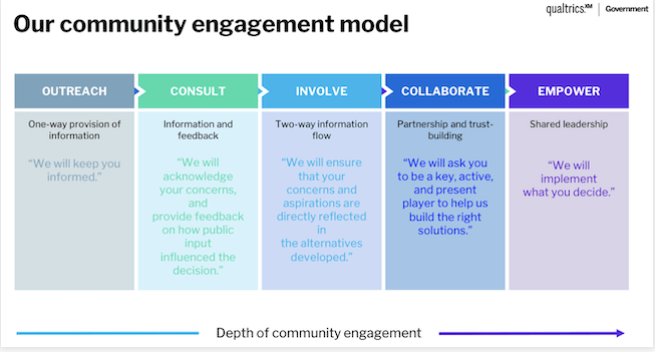
Developing deep connections with your audience on social media, forums, and other online communities is the goal of community engagement. Participating actively in these areas can boost organic backlinks, user trust, and brand visibility.
⭐How to Participate Successfully:
- Answer messages and comments on social media.
- Participate in discussions in forums about the sector.
- Organize webinars or live events to engage your audience.
By remaining active, you cultivate a devoted following that is more inclined to link to your website and promote your material.
⭐Leverage User-Generated Content
Reviews, comments, and social media posts are examples of user-generated content (UGC) that can improve SEO by establishing credibility and offering social evidence. In addition to increasing engagement, encouraging people to share their brand experiences generates new material that Google indexes.
⭐Advantages of UGC:
- Increases SEO: New and pertinent information is highly valued by search engines.
- Develops Trust: Testimonials and reviews boost a brand’s legitimacy.
- Promotes Sharing: UGC frequently results in social media sharing, which raises awareness.
To boost your SEO efforts, ask happy clients to post reviews or share their experiences on social media.
⭐Make Social Sharing Easy
Make your material easily shareable on social media by optimizing headlines, photos, and meta descriptions. Social signals can raise traffic and brand awareness, which indirectly improves SEO even if they are not a direct ranking element.
⭐How to Optimize for Social Sharing:
- Use compelling headlines and meta descriptions.
- Include social sharing buttons on your website.
- Create content tailored to the preferences of your social media audience.
By optimizing content for social sharing, you increase the chances of your content going viral, further expanding your reach.
👉Enhancing Local Presence with Local SEO
Businesses need to make sure they are visible to local potential clients in an increasingly digital world. Optimizing your online presence to appear higher in search engine results when people look for goods or services nearby is known as local SEO. For small, service-oriented businesses that depend on a local clientele, it is especially crucial. This comprehensive tutorial will help you improve your local SEO presence by utilizing analytics, customer reviews, and your Google Business Profile.
Google Business Profile (formerly Google My Business) is one of the most powerful tools for local SEO. Businesses must increase their visibility on Google’s search results and Google Maps. Having a fully optimized Google Business Profile helps businesses appear in local searches and gives potential customers all the necessary information they need at a glance.
⭐Enhance Your Google Business Profile
One of the most effective tools for local SEO is Google Business Profile, formerly known as Google My Business. Companies need to be more visible on Google Maps and search results. A completely optimized Google Business Profile helps companies show up in local searches and provides prospective clients with all the information they require quickly.
⭐Frequent Optimizations and Updates
You must update your Google Business Profile frequently to keep it functional. A comprehensive and current profile gives your consumers a seamless experience and influences Google’s ranking. Here are key elements to focus on when optimizing your Google Business Profile:
- Accurate Business Information:
Ensure your business name, address, phone number, and website are accurate and consistent across all platforms. Only accurate details can make sure both users and search engines are clear. Consistency across your website, social media profiles, and business directory listings helps strengthen your local SEO.
- Business Categories:
Selecting the appropriate business categories is essential to making it easier for clients to locate you. Choose primary and secondary categories that correspond with your company’s offerings. Choose categories that accurately represent your offerings and be specific.
- Hours of Operation:
Update your business hours on a regular basis, particularly on holidays and other important occasions. Google will display your company as open or closed based on its preference for companies with current information.
- Images and Videos:
You may increase customer engagement by including high-quality photos of your company, products, and storefront. Visuals are valued by Google’s algorithm, and companies that provide images typically get more engagement. You keep your profile current and make sure you change your images regularly.
- Services and Products:
Google allows businesses to list their services and products directly on their profile. Make sure this section is detailed, as it helps Google understand what you offer and helps users easily find what they need.
- Business Description:
Your business description should be clear and concise and contain relevant keywords related to your services. This is an opportunity to provide a quick summary of your business and showcase what makes you unique.
- Q&A Section:
Encourage customers to ask questions and provide answers in the Q&A section. This helps address customer concerns quickly and allows you to demonstrate expertise. Regularly check this section and respond to queries promptly.
By keeping these elements updated, you ensure your business is visible in local search results and appears trustworthy and reliable, improving both user experience and SEO performance.
⭐Promote Positive Evaluations
In local SEO, customer reviews are very important. Google determines which companies show up in local search results by using reviews as a ranking element. Positive evaluations raise your profile and foster confidence in prospective clients.
⭐Driving Reviews on Google, Yelp, and Other Platforms
Encouraging your customers to leave positive reviews is one of the most effective ways to improve your local SEO rankings. Here are some strategies to generate more reviews:
- Make It Easy:
Give consumers a simple way to submit reviews. Provide them with direct links to your Yelp page or Google Business Profile. Customers are more likely to follow through if you make the process easier.
- Ask for Reviews at the Right Time:
Timing is crucial. Ask for reviews after customers have had a positive experience, such as after a successful purchase or service completion. If you run an e-commerce store, follow up with an email thanking customers for their business and requesting feedback.
- Incentivize Reviews (Without Violating Guidelines):
You can promote feedback by providing incentives like discounts or special promotions for all reviews, regardless of rating, even if Google’s review regulations forbid rewarding favorable evaluations.
- Respond to Reviews:
Acknowledge both positive and negative reviews with thoughtful responses. Engaging with reviews shows that you value customer feedback and helps build trust. It also signals to Google that your business is active and involved with its customers.
- Leverage Social Media:
Promote reviews on your social media sites. Post a message expressing gratitude to clients for their comments and asking others to share their own experiences. Reaching a larger audience and producing more reviews is made simple with social media.
- Keep An Eye on Review Sites:
Pay attention to every platform on which your company appears. Building your local reputation requires using websites like Yelp, Facebook, and Yellow Pages. Make sure your company profile is current and keep an eye on all of your reviews.
Positive reviews improve your reputation overall, raise client confidence, and help you rank higher in local searches. Take the initiative to get reviews and professionally reply to them.
👉Monitoring and Analytics: Keeping Track of Progress and Adjusting
To succeed with local SEO, it’s essential to continuously monitor your performance, analyze data, and adjust strategies accordingly. Monitoring your SEO efforts helps you stay on top of changes, identify issues, and ensure you’re on the path to improvement.
⭐Use Google Search Console Regularly
Google Search Console (GSC) is a free tool that helps website owners monitor, maintain, and troubleshoot their site’s performance in Google Search results. Regularly using GSC is essential to tracking your website’s performance, understanding your audience’s behavior, and identifying issues that could affect your SEO.
⭐Monitoring Performance and Issues
You can view your website’s impressions, clicks, and average ranking positions in GSC for specific search queries. This helps you understand which keywords drive traffic and which areas need improvement. Key features to monitor in Google Search Console include:
- Search Performance: Review the queries users are using to find your website. Monitor each keyword’s clicks, impressions, and CTR (click-through rate). Use this data to identify top-performing content and areas that need optimization.
- Index Coverage: Check for any indexing issues that could prevent your pages from appearing in search results. This helps identify problems like missing meta tags, crawl errors, or URL issues that might impact your SEO.
- Mobile Usability: Google has shifted to a mobile-first index, meaning that the mobile version of your site is considered the primary version for ranking. GSC provides mobile usability data, highlighting any issues with mobile optimization that need addressing.
By regularly reviewing your performance in Google Search Console, you can identify potential issues, track your progress, and optimize your website for better results.
⭐Measure and Optimize Conversion Rates
Driving traffic to your website is only one part of the equation. The ultimate goal is conversions, whether sales, leads, or sign-ups. By focusing on conversion rate optimization (CRO), you can ensure that visitors arriving on your site are taking the desired actions.
⭐Focusing on Quality Traffic and Conversions
To optimize conversions, consider the following:
- Review User Behavior: Use tools like Google Analytics to understand how users interact with your website. Where do they spend the most time? Are they bouncing quickly from certain pages? This data will help you optimize landing pages and adjust your marketing efforts.
- A/B Testing: Regularly test different elements of your website, such as CTAs (calls to action), page layouts, or content formats, to see which combinations lead to higher conversion rates.
- Optimize Forms and Landing Pages: Ensure that your forms are easy to fill out and your landing pages provide clear, concise information with a compelling CTA. A streamlined, intuitive design can improve conversion rates.
Tracking and optimizing your conversion rates will help you identify areas for improvement in the user experience and drive better business outcomes.
⭐Track EEAT Factors
EEAT (Expertise, Authoritativeness, and Trustworthiness) is an important concept for SEO, particularly for content on health, finance, and other sensitive topics. Google values high-quality, authoritative content that users can trust.
⭐Using Analytics for Content Alignment
Incorporating EEAT into your content strategy can significantly improve your SEO efforts. To track EEAT factors:
- Analyze Content Performance: Regularly monitor how your content aligns with EEAT principles. Use Google Analytics to track engagement metrics like time on page, bounce rate, and social shares to determine how well your content resonates with your audience.
- Content Audits: Perform regular content audits to ensure your content maintains high expertise and authority. Update outdated content, add relevant sources, and improve the quality to align with EEAT standards.
- User Engagement: Foster trust by encouraging user engagement and interactions with your content. Engaged users are more likely to trust your brand and return in the future.
⭐Stay Updated on Google Algorithm Changes
Google’s search algorithm is constantly evolving, and staying updated on these changes is essential for maintaining or improving your rankings.
⭐Adapting Strategies as Updates Emerge
Google’s core algorithm updates can significantly impact your SEO performance. To stay ahead:
- Follow SEO News: Stay informed by subscribing to SEO blogs, forums, and Google’s official channels to learn about upcoming algorithm updates.
- Adjust Content and SEO Tactics: When algorithm changes are announced, assess your website’s performance and adjust your strategy accordingly. For example, if Google updates its algorithm to favor long-form content, you might need to revise your content strategy.
- Test and Adapt: After updates, monitor your rankings and adjust your approach to accommodate any changes in how Google ranks websites.
Staying proactive about algorithm changes will help ensure your website remains competitive and aligned with Google’s ranking factors.
👉Generative Search and Answer-First Optimization
One of the biggest shifts shaping SEO in 2026 is the rise of generative search experiences. Instead of presenting a list of results, search engines and AI tools now generate direct answers by pulling information from multiple trusted sources.
This has introduced a new layer of competition. You are no longer competing only for rankings. You are competing to be referenced, summarized, and trusted by AI systems.
⭐Writing for Answers, Not Rankings
Content must now be structured to clearly answer questions. This means:
- Clear definitions early in the content
- Direct responses to common questions
- Logical flow that mirrors human curiosity
- Supporting data, examples, and context
Pages that ramble or hide answers deep inside paragraphs tend to get ignored. AI systems favor clarity, specificity, and usefulness.
⭐Why Depth Beats Length
Long content alone does not guarantee visibility. What matters is depth of understanding. Content that explains why something works, when it fails, and who it is best for is far more valuable than surface-level guides.
For example, instead of writing “best SEO tools for 2026,” strong content explains which tools suit startups, which work for enterprise teams, and which are a waste of money depending on use case.
This level of nuance is what AI systems and human readers both trust.
👉The Rise of Search Everywhere Optimization
In 2026, SEO no longer belongs exclusively to Google. Discovery happens everywhere.
People search on YouTube before Google. They trust Reddit threads more than brand blogs. They discover products through TikTok comments and Instagram captions. They ask AI assistants for recommendations without ever opening a browser.
This means SEO strategies must expand beyond websites.
✨Platform-Specific Optimization
Each platform has its own form of search logic:
- YouTube favors watch time, retention, and topical authority
- TikTok favors engagement velocity and relevance to trends
- Reddit values community credibility and contribution history
- AI tools favor trusted sources with consistent topical coverage
Brands that treat all platforms the same fail quickly. Successful SEO in 2026 requires understanding how content behaves differently in each ecosystem.
✨Why Brand Mentions Matter More Than Backlinks Alone
Traditional backlinks still matter, but they are no longer the only authority signal. Mentions across forums, podcasts, social platforms, and reviews now contribute to overall visibility and trust.
When AI systems evaluate sources, they look for consistency. If your brand appears repeatedly across trusted platforms discussing the same topic, you gain credibility even without direct links.
This is why public relations, community engagement, and SEO are slowly merging into one discipline.
👉Experience, Expertise, Authority, and Trust Are No Longer Optional
Search engines have made it clear. Content without credibility does not deserve visibility.
In 2026, demonstrating experience is just as important as expertise.
👉Experience Over Theory
Readers and algorithms both favor content written by people who have actually done the work. Case studies, real examples, lessons learned, and mistakes matter more than theoretical explanations.
A marketing blog written by someone who has managed real campaigns will always outperform content written by someone summarizing other articles.
👉Building Trust Signals That Actually Matter
Trust is built through small but consistent signals:
- Clear author profiles with real background
- Transparent data sources
- Honest pros and cons
- Updated content that reflects current realities
Over-optimized, sales-heavy content tends to lose trust quickly. Audiences are smarter than many marketers assume.
✨AI as an SEO Assistant, Not a Replacement
By 2026, AI tools will be embedded in nearly every SEO workflow. However, the most successful teams will use AI as support, not as a content factory.
⭐Smarter Research and Planning
AI excels at identifying patterns, grouping keywords by intent, and spotting content gaps. It saves time in research and analysis, allowing strategists to focus on decision-making.
Where AI struggles is judgment. It cannot fully understand brand voice, audience emotion, or market positioning without human input.
⭐Editorial Control Is the Differentiator
The brands that stand out are those that edit heavily, add perspective, and refine content beyond what AI generates. Raw AI output feels generic because it lacks lived experience.
Human oversight transforms average content into authoritative content.
👉Personalization and Intent-Driven SEO
One of the most overlooked SEO shifts heading into 2026 is personalization. Search engines and platforms are getting better at understanding user context.
Two people searching the same phrase may see entirely different results based on location, behavior, and intent.
✨Understanding Micro-Intent
Search intent is no longer limited to informational, navigational, or transactional categories. Intent is layered.
For example, someone searching “SEO agency” could be:
- Comparing prices
- Looking for reviews
- Learning what an agency actually does
- Hiring urgently
Content that addresses only one interpretation loses potential relevance. The best pages guide users naturally through multiple intent stages.
👉Zero-Click Searches and Visibility Without Traffic
Zero-click searches are often framed as a threat. In reality, they are an opportunity for brand positioning.
When your content appears in featured snippets, AI summaries, or instant answers, you gain visibility even without a click.
✨Why This Still Matters for Business
Users may not click immediately, but they remember sources that consistently appear. This builds familiarity and trust over time.
In competitive industries, visibility precedes conversion. Brands that ignore zero-click exposure often lose mindshare to competitors who understand its value.
👉Technical SEO as a Trust Foundation
Technical SEO in 2026 is less about tricks and more about reliability.
Fast load times, accessibility, mobile usability, and clean site architecture are not ranking hacks. They are trust indicators.
Search engines and AI systems avoid recommending sources that frustrate users. A slow, broken, or confusing website silently damages visibility.
✨UX and SEO Are Now Intertwined
User behavior feeds ranking systems. High bounce rates, low engagement, and poor navigation all send negative signals.
In 2026, SEO and user experience can no longer operate separately. They must support each other.
👉What This Means for Businesses and Niche Audiences
For niche businesses and specialized audiences, these changes are actually an advantage.
Large brands often struggle to sound human. Smaller brands can win by being specific, honest, and deeply knowledgeable about their audience.
Niche expertise cuts through noise far more effectively than generic authority.
👉LLM SEO in 2026: “Optimizing for AI Answers, Not Just Search Results”
LLM SEO stands for optimizing content so that it performs well in LLM-generated search experiences. Instead of being ranked in a simple list, content is now:
- retrieved by AI search engines
- analyzed
- summarized
- and then stitched together into a final answer
This is why a new framework called Generative Engine Optimization (GEO) is becoming mainstream in 2026. GEO refers to optimizing content for generative answer systems, not just traditional ranking systems.
⭐Generative Engine Optimization (GEO) Becomes Essential
GEO is important because most AI answer engines use two steps:
- Retrieval: they gather relevant documents/pages from the web
- Generation: they synthesize the information into a single response
So your content must be designed to perform well in retrieval and generation.
⭐What GEO-optimized content looks like:
- A short direct answer in the first 2–3 lines
- Clear structured headings aligned with user intent
- “summary blocks” that can be extracted easily
- bullet points and numbered steps
- supporting evidence and references
⭐How you can apply GEO in real content:
- Start each section with a direct answer
- Use “What / Why / How” frameworks
- Add definitions (AI loves definitions)
- Include “Top takeaways” blocks
⭐Entity SEO is Replacing Keyword SEO
In 2026, AI search engines interpret content using an entity-first lens. Entities are things like:
- people
- products
- brands
- services
- places
- concepts
Instead of matching keywords, LLMs understand the relationship between entities and concepts.
⭐This means the new SEO game is about:
- building topical authority
- reinforcing entity relationships
- creating consistent semantic coverage
⭐Entity SEO best practices in 2026:
- Build a pillar page + topic cluster model:
- 1 main pillar topic
- 8–15 supporting articles
- Use internal links to connect entity-related pages
- Write content that answers both direct and related questions
- Add schema (Organization, Person, Article, etc.) for entity recognition
This shift toward semantic/entity optimization is frequently highlighted in advanced SEO trend reports.
⭐Citation Engineering Becomes a Powerful Advantage
A key difference between AI search engines and traditional search:
AI systems are much more cautious about misinformation.
Google AI Overviews faced criticism for incorrect outputs and since then, Google has improved its filtering and trust checks. That means content quality + credibility signals are now even more important.
In 2026, “citation engineering” is the practice of shaping content to be:
- easy to quote
- easy to verify
- easy to trust
⭐What AI engines prefer to cite:
- short answer blocks
- clear definitions
- content supported by data or sources
- original research and unique insights
- structured formatting with headings and bullets
⭐Citation engineering checklist:
- Add statistics where possible
- Use sources and citations
- Include author credibility (E-E-A-T)
- Write in a “reference-friendly” format
- Add summaries that can be extracted as-is
👉Google AI Overviews (AIO) Insights: “Optimizing for Generative SERP Inclusion”
Google AI Overviews (AIO) are reshaping the way SEO works because they appear at the top of many SERPs and often reduce clicks to websites.
While AI Overviews create challenges (traffic loss), they also create a major opportunity:
If your brand is featured or cited in AIO, your authority and trust multiply instantly.
✨Answer-First Content Architecture Dominates AIO
AI Overviews extract and synthesize answers.
So the content that performs best is content that gives immediate clarity.
✨Best structure for AIO optimization:
- first 2–3 lines: direct answer
- next: bullet summary of key points
- then: expanded explanation
- add examples + FAQs
✨AIO-friendly section format:
- What is it? (definition)
- Why it matters? (value + context)
- How to do it? (steps)
- Best practices (bullets)
- Common mistakes (bullets)
- FAQs (schema-ready)
This format aligns with what multiple AI Overview optimization guides recommend.
⭐Schema is Becoming a Trust System
In 2026, schema markup is not just a “rich snippet tool.”
It functions like a trust layer for AI.
⭐Schema types that influence AIO selection:
- FAQ schema
- HowTo schema
- Article schema
- Review schema
- Organization schema
- Person schema
The reason schema matters is because AI Overviews rely on structured data to understand what your content is, and whether it is credible.
⭐Consensus SEO (“The AI Checks What Others Say About You”)
In classic SEO, you could rank even if you were the only strong result.
In AI Overviews, Google checks for consistency and reinforcement across multiple sources. That means:
Your content must align with:
- what other sites say
- what users expect
- what trusted sources confirm
⭐Consensus SEO strategy in 2026:
- Publish the same key idea in multiple formats:
- blog post
- short version article
- YouTube transcript
- LinkedIn carousel
- PDF guide
- Build brand mentions through PR and partnerships
- Ensure your brand has consistent “about” and credibility signals across the web
⭐Brand Demand SEO is Rising Sharply
Since AI Overviews reduce traffic from generic informational searches, brands are investing heavily in:
- brand awareness SEO
- branded search growth
- communities (email, social, groups)
- audience retention
The brands that win are the brands users already trust.
👉Quantum SEO as a Service (QSaaS): “Scalable, Predictive, Next-Gen SEO”
Quantum SEO as a Service is an emerging concept that combines:
- AI-powered automation
- large-scale optimization systems
- and quantum-inspired computation approaches
While practical quantum computing is still emerging, quantum-inspired frameworks already help solve SEO problems at enterprise scale, such as:
- internal linking optimization at 10K+ pages
- crawl budget management
- content rollout prediction
- ranking volatility forecasting
✨Quantum-Inspired Optimization For Complex SEO Problems
Quantum-inspired approaches can solve multi-variable SEO decisions that are difficult for human teams, such as:
- Which pages should be connected by internal links?
- Which pages should be updated first?
- Which keywords will become AI Overview-heavy?
- Where is crawl waste happening?
Quantum-style models improve:
- optimization speed
- structural accuracy
- scalability
- predictive decision-making
✨Hyper-Automation Becomes Standard For Enterprise SEO
In 2026, enterprise SEO is moving toward:
- automated technical SEO fixes
- automated internal linking systems
- AI-driven content updates
- live performance monitoring
Quantum SEO as a Service positions itself as a managed model where SEO becomes “always-on” rather than a manual workflow.
Best use cases for QSaaS:
- eCommerce stores with 1,000+ product pages
- real estate sites with multi-location pages
- SaaS content libraries with large clusters
- news publishers and portals
✨Predictive SEO Becomes a Major Advantage
Predictive SEO means using AI models to forecast changes like:
- keyword demand shifts
- SERP volatility
- AI Overviews triggering
- ranking drops before they happen
- new topic opportunities
Predictive SEO lets brands act early, meaning:
- you publish before the trend peaks
- you update pages before they lose rankings
- you invest in queries before competitors notice them
👉How LLM-SEO Works: How AI Search Engines Actually Find and Choose Your Brand
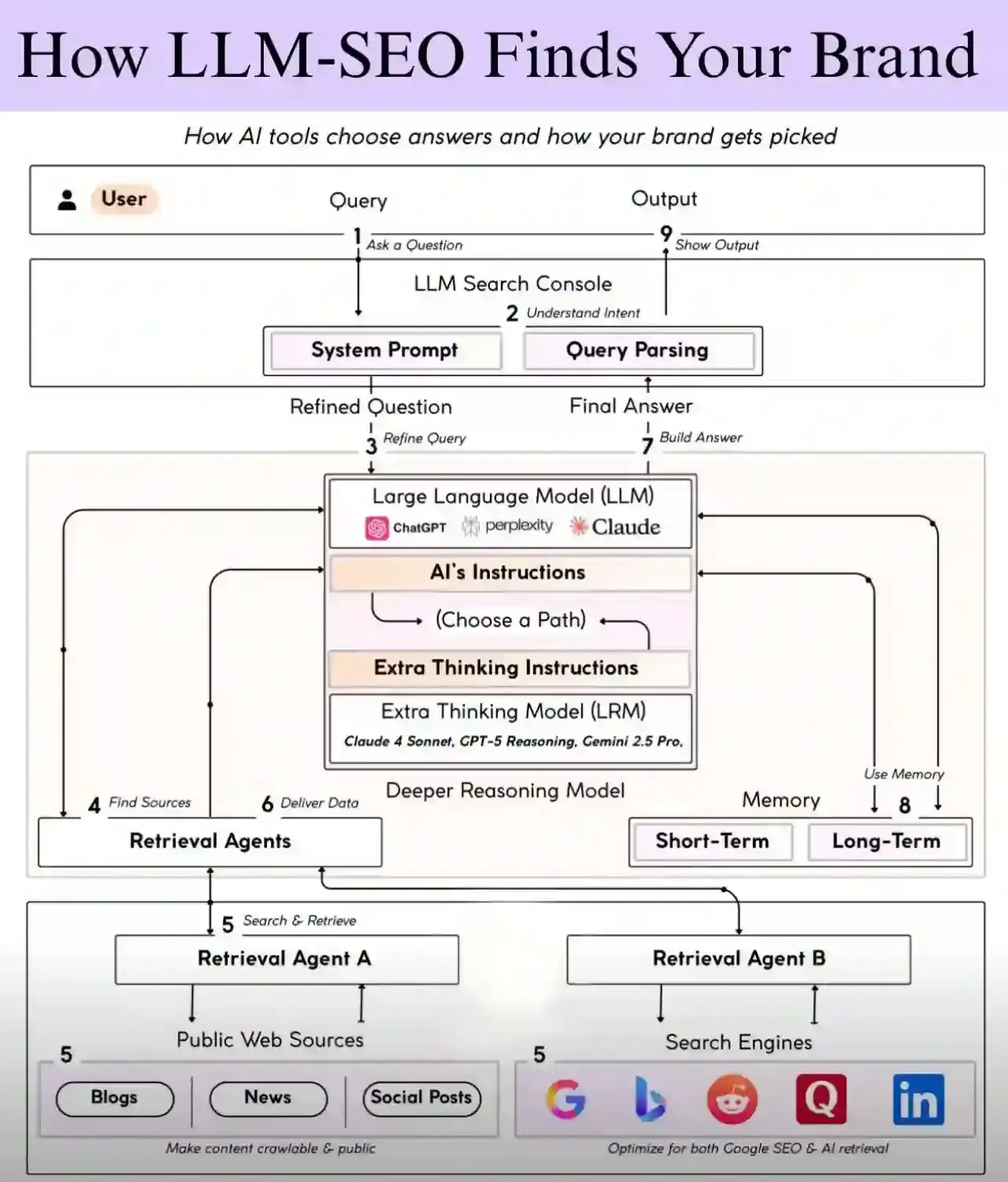
(Courtesy: LinkedIn)
AI search is changing the way people discover brands online. Instead of showing a list of 10 blue links like traditional search engines, large language models (LLMs) increasingly generate a single answer—and within that answer, they choose which brands to mention, recommend, or trust.
This shift makes one thing clear: ranking on Google alone is no longer enough. Brands now need to be optimized for how LLMs retrieve and generate answers. That’s exactly what LLM-SEO is—optimizing your content and reputation so AI systems can reliably find your brand, understand it, and include it when responding to users.
Let’s walk through the complete 9-step LLM-SEO process, using small paragraphs that explain what’s really happening behind the scenes.
👉Step 1: The User Asks a Question
Everything begins with a user query.
The user types or speaks a question into an AI-powered search system. It might be a simple question like “Best email marketing tools,” or a complex one like “Which SEO agency is best for SaaS companies under $5k/month?”
This query sets the whole system into motion. But unlike Google, the goal of an LLM is not to return a page full of links—it’s to generate a direct answer that feels complete and reliable.
That means the system must decide what information matters most, and which brands deserve to be included.
👉Step 2: The LLM Search Console Understands Intent
The system doesn’t just read the words. It tries to understand the intent.
Every AI search engine has an internal layer—similar to a “search console”—that analyzes what the user truly wants. The model interprets whether the query is informational (learning), transactional (buying), navigational (finding a site), or comparative (choosing between options).
This understanding is shaped by two big elements: the system prompt and query parsing.
The system prompt contains hidden rules that tell the model how to behave. For example: be accurate, be safe, avoid misleading information, and prioritize credibility.
The query parsing breaks the question into structured meaning. It identifies key entities, topics, constraints (budget, location, industry), and the type of answer expected.
This is where your brand can win or lose—because if AI thinks your content doesn’t match user intent, it may ignore you completely.
👉Step 3: The LLM Refines the Question
Users rarely ask perfect questions.
Many queries are vague, incomplete, or unclear. So before the model starts retrieving content, it often reformulates the query internally into a stronger version that will produce better results.
For example, “best SEO company” might turn into “most reliable SEO companies with proven case studies and strong reviews, especially for small businesses.”
This step matters because LLMs don’t retrieve content based on your keyword alone. They retrieve content based on what they think the user really means.
If your content only targets generic keywords, it may not match the refined intent and won’t be pulled into the AI’s answer.
👉Step 4: Retrieval Agents Begin Searching for Sources
Now the AI begins sourcing information.
Most modern AI search systems use retrieval agents—automated sub-systems that function like advanced web researchers. They scan the internet to collect relevant sources.
Many systems run multiple retrieval agents at once (like Agent A and Agent B) to ensure coverage. One may prioritize mainstream sources, while another may pull community and social proof sources.
Retrieval agents gather information from places like blogs, company websites, news sources, public forums, social platforms, and structured databases.
They may search through Google, Bing, Reddit, Quora, LinkedIn, review sites, and niche industry portals.
This is why brand presence across the web matters more than ever.
👉Step 5: Retrieval Agents Search & Retrieve Data
After finding potential sources, retrieval agents start pulling the actual content.
They crawl webpages and extract relevant sections. They look for content that appears to answer the refined query. They also prioritize content that is accessible, readable, and credible.
If your content is blocked by heavy scripts, locked behind paywalls, or buried inside poor structure, it may never be successfully retrieved.
AI systems cannot recommend what they cannot access.
This is where LLM-SEO becomes extremely practical:
- Your content must be crawlable and public
- Your pages must be structured for retrieval
- Your brand must show up on trusted sources beyond your own website
- And traditional Google SEO still matters—because many retrieval systems rely on Google-indexed sources
👉Step 6: Retrieval Agents Deliver Data Back to the LLM
The retrieval agents then send the gathered information back to the LLM.
But they don’t send entire websites. Instead, they send chunks of content—sections, paragraphs, snippets, summaries, and extracted passages.
The LLM receives these chunks as “context.” The quality of these chunks heavily affects whether your brand gets included.
If your information is clear, direct, and well-formatted, the chunk becomes useful.
If your content is too long, unclear, overly salesy, or filled with fluff, the chunk becomes weak—and the model may ignore it.
This is why content formatting, clarity, and structure are now ranking factors for AI.
👉Step 7: The LLM Builds the Final Answer
Now the model enters the reasoning stage.
This is where the LLM compares sources, checks consistency, and decides what information is most likely to be accurate and helpful. It isn’t simply copying—it is synthesizing.
It uses multiple internal layers:
- The system’s safety and accuracy instructions
- Extra thinking instructions (LRM) that improve reasoning
- A deeper reasoning model to reduce hallucinations
- Context from the current conversation
- Brand relevance in relation to the user’s intent
Here’s the key: the LLM is not trying to “reward” brands.
It is trying to generate the best possible answer, and brands are selected only if they appear to be credible and relevant enough to support that answer.
👉Step 8: The LLM Uses Memory
Depending on the platform, the model may use memory to enhance responses.
Short-term memory includes context from earlier messages, like preferences, budget, location, and specific constraints the user mentioned.
Long-term memory can include persistent user preferences (in some AI systems), or historical brand patterns learned during training. This can influence which brands the model recognizes as “common,” “trusted,” or “frequently mentioned.”
That’s why reputation matters.
Even if your content is strong, if your brand has weak external visibility or inconsistent messaging, the model may hesitate to include you.
👉Step 9: The Final Output Is Shown to the User
Finally, the model generates and shows the answer.
This answer may include brand recommendations, comparisons, explanations, and sometimes citations (depending on the search engine).
But here’s what most people don’t realize:
AI answers aren’t random. They are the final result of:
- intent interpretation
- query refinement
- retrieval quality
- source credibility
- reasoning judgment
- and memory influence
So if your brand appears in AI answers, it’s because the system had enough signals to trust you.
If your brand doesn’t appear, it’s because it didn’t find strong enough evidence—across multiple sources—that your brand should be included.
👉How AI Search Engines Choose Your Brand (In Plain Terms)
When AI systems decide which brand to mention, they usually prioritize brands that meet these conditions:
They appear across multiple sources, not just their own website.
They have strong authority signals, such as mentions, backlinks, reviews, and citations.
They provide clear, structured answers, making their content easy to retrieve and use.
They match the user’s intent, not just the keyword.They are consistent, meaning their message, positioning, and reputation align across platforms..
✨Wrapping Up
As 2026 approaches, SEO strategies must continue to evolve alongside changing search engine algorithms, shifting user behavior, and advancing technologies. While foundational practices such as keyword research, content optimization, and technical SEO remain essential, long term success will depend on a stronger focus on artificial intelligence, user experience, and strict alignment with E E A T principles of expertise, experience, authoritativeness, and trustworthiness.
AI powered tools are becoming increasingly valuable for content planning, performance analysis, and search trend forecasting. However, their use must support, not replace, authentic and user focused content. Search engines continue to reward depth, relevance, and clarity, making long form, well researched, and multimedia enriched content more important than ever. Content strategies should aim to answer user questions comprehensively while remaining adaptable to changing search intent.
Technical SEO will also play a greater role in 2026. Factors such as core web vitals, mobile first optimization, page speed, and structured data will directly influence both rankings and user satisfaction. At the same time, local SEO will grow in importance as users increasingly rely on location based searches. Optimizing Google Business Profiles and addressing proximity driven queries will be essential for local visibility.
User experience will tie all SEO efforts together. Intuitive navigation, fast loading pages, and interactive elements help keep users engaged and signal quality to search engines. To remain competitive beyond 2026, businesses must continuously monitor performance, adapt to algorithm updates, and refine their SEO strategies in line with emerging trends such as voice search, mobile usage, and social engagement.