SUPERCHARGE YOUR ONLINE VISIBILITY! CONTACT US AND LET’S ACHIEVE EXCELLENCE TOGETHER!
At ThatWare, a hyper-intelligence powered SEO agency, we focus on building sustainable digital growth systems that go far beyond traditional optimization practices. This case study highlights our work with Tia Marie Trucking, a Michigan-based semi-truck transport company that was heavily reliant on paid advertising and had minimal organic visibility in search results. While paid campaigns were generating leads, they created a costly and unstable growth model with little long-term brand equity.
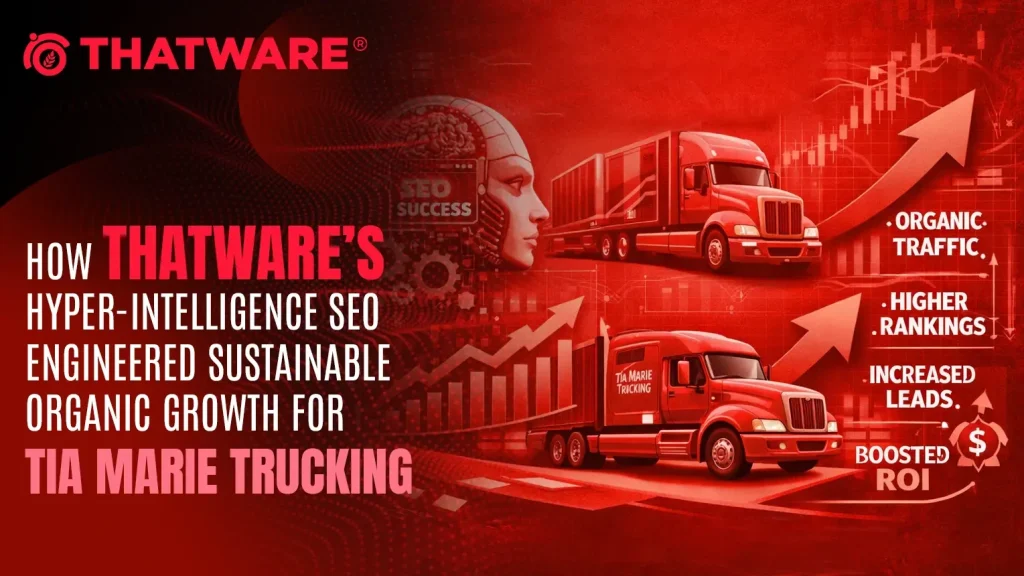
To address this, we implemented a strategic shift toward an AI-driven SEO transformation, leveraging our proprietary frameworks—Hyper-Intelligence SEO, Quantum SEO as a Service (QSAAS), and LLM SEO. These approaches allowed us to deeply understand search intent, align content with how modern search engines interpret language and context, and continuously optimize performance through data-driven insights. Instead of focusing only on keywords, we built a comprehensive, intent-focused ecosystem supported by strong technical foundations and user experience improvements.
The results reflected this shift: a +37% increase in organic traffic, improved keyword rankings, stronger authority signals, and enhanced visibility across high-intent search queries. More importantly, the business began transitioning from a paid-dependent model to a scalable organic growth engine. This case study demonstrates why modern SEO is no longer about isolated tactics, but about integrating intelligence, automation, and user-centric strategies to stay competitive in an increasingly AI-driven search landscape.
About ThatWare: The Intelligence Layer Behind the Strategy
Rethinking SEO Beyond Traditional Approaches
ThatWare operates with a fundamentally different mindset compared to conventional SEO agencies. While most agencies focus on isolated tactics—such as keyword targeting, backlink acquisition, or on-page tweaks—ThatWare approaches SEO as an interconnected, intelligence-driven ecosystem. The goal is not just to improve rankings temporarily, but to build a scalable digital foundation that evolves with search engine algorithms and user behavior. This shift is critical in today’s landscape, where search engines are powered by advanced AI systems that prioritize context, intent, and experience over static optimization methods.
Core Frameworks Powering ThatWare’s Approach
At the heart of ThatWare’s strategy are three proprietary frameworks that work together to deliver consistent and adaptive growth:
- Hyper-Intelligence SEO focuses on deep data analysis, including user behavior patterns, semantic relationships, and predictive search trends. This allows for a more accurate understanding of what users are searching for and how to meet those needs effectively.
- QSAAS (Quantum SEO as a Service) introduces a continuous optimization model. Instead of one-time fixes, it enables ongoing refinement through data-driven iterations, ensuring that SEO performance improves consistently over time.
- LLM SEO (Large Language Model Optimization) aligns content with how modern AI-driven search engines interpret language, context, and meaning. This ensures that content remains relevant, natural, and highly discoverable.
SEO as a Dynamic, AI-Aligned System
ThatWare’s philosophy is rooted in the idea that SEO is no longer static—it is dynamic, adaptive, and deeply influenced by artificial intelligence. By integrating data science, AI models, and real-time search behavior, ThatWare creates strategies that respond to changes in both algorithms and user expectations. This intelligence layer ensures that every optimization decision is backed by data and aligned with how search engines actually work today.
Client Overview: Tia Marie Trucking
Business Background and Services
Tia Marie Trucking Inc., based in Northville, Michigan, is a semi-truck transport company specializing in the hauling of construction-related materials. The company supports a wide range of projects by transporting aggregates, sand, topsoil, and other bulk materials essential for construction and infrastructure development. With a fleet designed for both local and extended hauls, the business emphasizes reliability, flexibility, and timely service delivery. It also offers hourly truck and driver rental options, catering to varying project requirements.
Target Audience and Market Focus
The primary customers of Tia Marie Trucking include contractors, construction companies, builders, and material suppliers who require dependable logistics support. These clients often rely on search engines to find local trucking partners, using queries that reflect urgency, reliability, and proximity. The company operates primarily within Michigan, making local visibility a critical factor for business growth.
Competitive Landscape and Challenges
The trucking and logistics sector in Michigan is highly competitive, with numerous local operators and larger logistics firms competing for the same customer base. Many competitors already have established digital footprints, making it difficult for smaller or mid-sized businesses to stand out organically. Without strong visibility in search results, even well-established service providers risk being overlooked by potential clients.
Digital Presence Before ThatWare
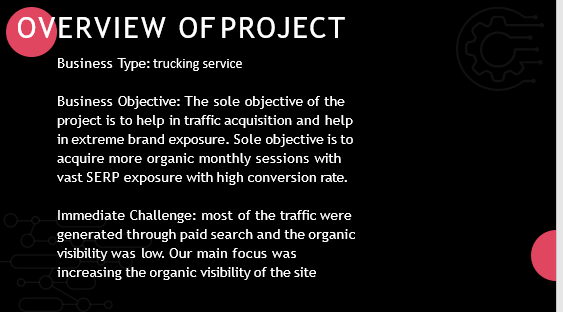
Before partnering with ThatWare, Tia Marie Trucking had a basic online presence but lacked strategic optimization. The website generated most of its traffic through paid advertising, with minimal contribution from organic search. Content was limited in depth, technical performance required improvement, and keyword visibility was low. As a result, the business faced high customer acquisition costs and inconsistent lead flow, highlighting the need for a more sustainable and intelligence-driven digital strategy.
Problem Statement: Where the Business Was Struggling
Paid Traffic Dependency
Before working with ThatWare, Tia Marie Trucking relied heavily on paid advertising as its primary source of leads. While paid campaigns delivered short-term visibility, they came with rising costs and no long-term compounding value. Each lead required continuous investment, making customer acquisition expensive and unpredictable. The moment ad spend slowed, traffic and inquiries dropped—highlighting a clear lack of sustainability in their growth model.
Weak Organic Visibility
Organic search performance was minimal. The website ranked for very few relevant keywords, and even those rankings were not competitive enough to drive meaningful traffic. As a result, the business had limited presence on search engine results pages (SERPs), missing out on high-intent users actively searching for trucking services in Michigan.
Content Gaps
The website content lacked depth and strategic direction. Many pages were thin, offering only basic information without addressing real user queries or concerns. There was no alignment with search intent, meaning the content failed to match what potential customers were actually looking for. This reduced both engagement and search engine relevance.
Technical Limitations
From a technical perspective, the website faced multiple challenges. Page speed was suboptimal, mobile responsiveness needed improvement, and the overall structure made it difficult for search engines to crawl and index content efficiently. These issues negatively impacted both user experience and rankings.
Low Authority Signals
The domain had limited authority, with few quality backlinks and weak Domain Authority (DA) and Page Authority (PA) scores. This made it difficult to compete against more established players in the market, further restricting organic growth potential.
The SEO Landscape Shift: Why Traditional SEO No Longer Works
SEO has undergone a significant transformation over the past decade. What once revolved around keyword density and backlink volume has now evolved into a system driven by intent, context, and user experience.
From Keywords to Intent
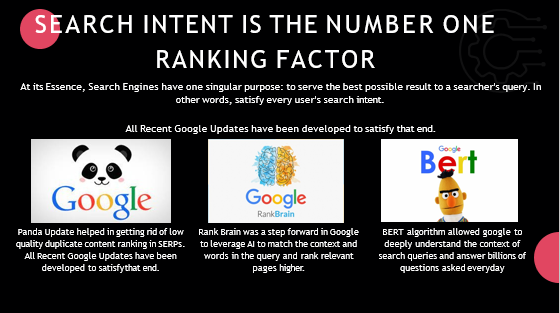
Earlier SEO strategies focused on matching exact keywords. Today, search engines prioritize understanding why a user is searching. This shift from a keyword-centric to an intent-driven model means that content must deliver real value, not just keyword relevance.
Impact of Major Algorithm Updates
Several key updates have shaped this evolution:
- Panda penalized low-quality and duplicate content
- RankBrain introduced machine learning to interpret queries
- BERT improved natural language understanding
- Helpful Content Updates emphasized user-first content
These changes collectively pushed SEO toward a more human-centric approach.
The Rise of AI in Search
Modern search engines now rely heavily on artificial intelligence to interpret meaning, context, and relationships between topics. This has made traditional tactics—like keyword stuffing or generic link-building—far less effective.
New Ranking Priorities
To succeed in this environment, websites must focus on:
- E-E-A-T (Experience, Expertise, Authoritativeness, Trustworthiness)
- Strong user experience
- Positive behavioral signals such as engagement and dwell time
Transition to AI-Driven SEO
This shift creates the need for a more advanced approach—one that aligns with how search engines actually function. This is where ThatWare’s AI-driven frameworks come into play, bridging the gap between traditional SEO and modern search intelligence.
The 3Cs of Content: Aligning Strategy with Search Intent
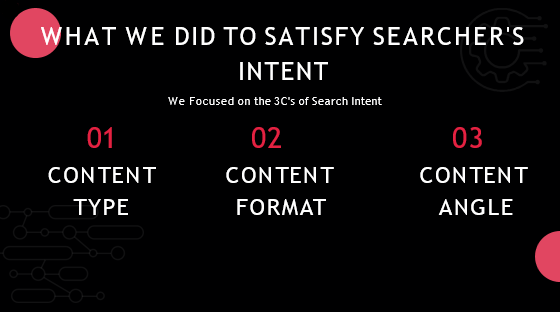
A critical part of the transformation was structuring content using the 3Cs framework—Content Type, Content Format, and Content Angle. This ensured that every page on the website was not only optimized for search engines but also aligned with what users actually expect when they perform a search.
Content Type: Delivering the Right Kind of Page
The first step was identifying the most appropriate type of content for each query. Instead of treating all keywords the same, ThatWare mapped them to specific page types such as service pages, location-based landing pages, and informational blog content. This ensured that when users searched for trucking services, they landed on pages that directly addressed their needs rather than generic or mismatched content.
Content Format: Structuring for Better Engagement
Once the content type was defined, the focus shifted to how the information was presented. Content was structured into clear, easy-to-digest formats such as detailed service breakdowns, step-by-step explanations, and logically organized sections. This improved readability, helped users quickly find relevant information, and made it easier for search engines to interpret the content.
Content Angle: Creating Relevance and Differentiation
The final layer was defining a strong content angle. For Tia Marie Trucking, the messaging consistently emphasized reliability, local expertise in Michigan, and specialization in construction material hauling. This positioning helped differentiate the business from competitors and made the content more relevant to its target audience.
ThatWare’s Strategic Framework
To address these challenges, ThatWare implemented a multi-layered strategy built on intelligence, adaptability, and continuous optimization.
Hyper-Intelligence SEO
This framework focuses on understanding search behavior at a deeper level. Through behavioral analysis, ThatWare identifies how users interact with search queries and content. Semantic mapping is used to build relationships between topics, ensuring content aligns with broader search contexts. Additionally, predictive SEO helps anticipate emerging trends, allowing the strategy to stay ahead of algorithm changes.
QSAAS (Quantum SEO as a Service)
QSAAS introduces a dynamic approach to SEO. Instead of static optimization, it relies on continuous improvement loops driven by data. Automation enables scalability, while real-time insights allow for immediate adjustments. This ensures that the website evolves alongside changing search patterns and user behavior.
LLM SEO
With search engines increasingly powered by AI models, content must align with how machines interpret language. LLM SEO focuses on natural language optimization, ensuring content flows in a way that feels human while remaining machine-readable. It also enhances contextual relevance, making content more meaningful and discoverable.
Integration Layer: A System, Not Just Tactics
What truly differentiates ThatWare’s approach is how these frameworks work together. Instead of isolated efforts, they form a unified system where content, technical SEO, and user experience are interconnected. This system-driven approach ensures long-term scalability, making SEO not just a tactic—but a sustainable growth engine.
Execution Phase 1: Deep Audit & Intelligence Mapping
The transformation began with a comprehensive audit designed to uncover both visible and hidden performance gaps. From a technical standpoint, ThatWare conducted a full-site analysis covering page speed, mobile responsiveness, crawlability, indexing issues, and Core Web Vitals readiness. This helped identify structural inefficiencies that were limiting search engine access and user experience.
Parallel to this, a content audit was carried out to evaluate the depth, relevance, and effectiveness of existing pages. Many pages were found to be thin, outdated, or misaligned with actual user queries. This highlighted the need for a complete content restructuring rather than incremental edits.
A detailed competitor analysis provided insights into how other trucking companies were ranking, what type of content they were producing, and where they were gaining authority from. This helped establish realistic benchmarks and uncover opportunities to outperform them.
One of the most critical steps was search intent clustering, where keywords were grouped based on user intent rather than volume alone. This allowed ThatWare to understand patterns in how potential customers search for trucking services and what information they expect at each stage.
Finally, a gap analysis brought everything together—identifying missing content, weak technical areas, and untapped keyword opportunities. This intelligence-driven foundation ensured that every subsequent step was strategic, not guesswork.
Execution Phase 2: Content Engineering & Intent Optimization
Content transformation was the core driver of organic growth, executed through a structured and intelligence-led approach.
Content Architecture Redesign
The website structure was rebuilt to create a clear hierarchy of pages, making it easier for both users and search engines to navigate. Core service pages, supporting content, and informational resources were strategically interconnected to form a cohesive ecosystem.
Service Page Optimization
Existing service pages were expanded into detailed, high-value resources. Each page was optimized to address specific user needs—covering services, processes, benefits, and use cases—ensuring alignment with high-intent search queries.
New Content Creation
New pages were developed to target previously missed opportunities, including niche services and common customer queries. This helped capture long-tail traffic and broaden the site’s keyword footprint.
Semantic & LLM Optimization
Using LLM SEO principles, content was written in natural, context-rich language that aligns with how modern search engines interpret meaning. Semantic relationships between topics were strengthened, improving overall relevance and discoverability.
Local Intent Targeting
Given the regional nature of the business, strong emphasis was placed on local SEO. Content was tailored to Michigan-specific searches, ensuring visibility for users looking for nearby trucking services.
Execution Phase 3: Technical SEO & Core Web Vitals Optimization
A strong technical foundation was essential to support content and ranking improvements.
ThatWare optimized Largest Contentful Paint (LCP) by improving loading times for key page elements through image compression, code optimization, and efficient resource loading. Interaction to Next Paint (INP) was enhanced by reducing heavy scripts and improving responsiveness, ensuring smoother user interactions. Cumulative Layout Shift (CLS) issues were resolved by stabilizing page layouts and defining proper dimensions for visual elements.
Beyond Core Web Vitals, overall site speed was significantly improved, creating a faster and more reliable browsing experience. The website was fully optimized for mobile-first indexing, ensuring consistent performance across devices.
Technical improvements also included better crawlability and indexing, achieved through optimized site structure, internal linking, and clean URL architecture. A structured framework was implemented to ensure that search engines could easily understand and prioritize content, leading to improved visibility.
Execution Phase 4: UX & Behavioral Signal Optimization
User experience played a crucial role in improving both engagement and rankings.
Navigation was simplified to make it easier for users to find relevant information quickly. A well-planned internal linking strategy guided users across related pages, improving both usability and crawl efficiency.
Content layout and design were enhanced to increase readability and engagement, encouraging users to spend more time on the site. These improvements helped reduce bounce rates and increase dwell time, both of which are important behavioral signals for search engines.
By aligning user experience with search intent, the website became more effective at converting visitors into potential leads.
Execution Phase 5: Authority Building & Off-Page Signals
To strengthen domain credibility, ThatWare implemented a focused off-page SEO strategy.
A structured backlink strategy was developed to acquire high-quality, relevant links from authoritative sources. This helped improve trust and domain strength over time.
Efforts were also made to increase referring domains, ensuring a diverse and natural link profile. In addition, various trust signals—such as consistent business information and credible mentions—were reinforced to enhance reliability in the eyes of search engines.
These initiatives contributed to improved brand visibility, allowing Tia Marie Trucking to establish a stronger presence within its competitive market while supporting long-term organic growth.
Results & Performance Analysis
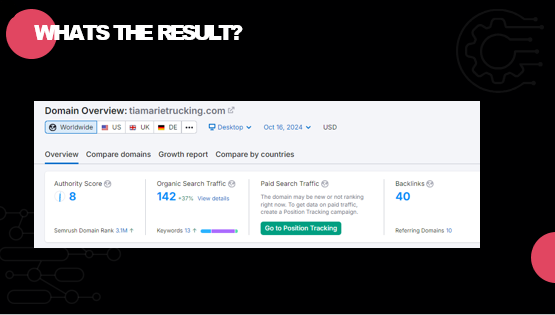
The impact of ThatWare’s hyper-intelligence driven SEO strategy was reflected in clear, measurable outcomes across multiple performance indicators. One of the most notable improvements was in organic traffic, which increased to 142 sessions, marking a +37% growth within the optimization period. While the absolute number reflects an early-stage growth curve typical of localized service businesses, the upward trajectory signals strong long-term potential and validates the effectiveness of the strategy.
In terms of keyword performance, the website began ranking for 13 relevant search terms, including high-intent queries such as “truck transport company in Michigan.” This improvement in keyword visibility directly contributed to increased discoverability among potential customers actively searching for trucking services. More importantly, these were not just informational keywords but commercially valuable queries with higher conversion intent.
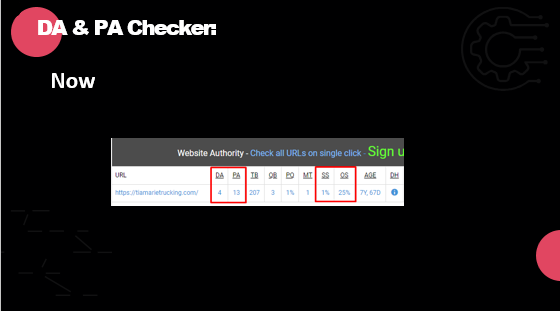
Authority metrics also showed steady progress. The website achieved an Authority Score of 8, with Domain Authority (DA) at 4 and Page Authority (PA) at 13. While these figures indicate an early-stage authority profile, the growth trend demonstrates increasing trust and credibility in the eyes of search engines. The low spam score further reinforces the quality of optimization and link-building efforts.
From an off-page perspective, the website gained 40 backlinks from 10 referring domains, strengthening its overall link profile. These backlinks played a crucial role in improving domain credibility and supporting ranking improvements.
Another significant outcome was enhanced SERP visibility. The website started appearing prominently for targeted local queries, improving brand exposure and positioning Tia Marie Trucking as a viable option within its market. Compared to the initial state—where organic presence was minimal and heavily overshadowed by paid campaigns—the “after” scenario reflects a clear shift toward sustainable organic visibility.
Overall, the results demonstrate a successful transition from a limited, paid-dependent digital presence to a growing, organic-first model supported by strong technical and content foundations.
ROI & Business Impact
Beyond performance metrics, the true value of the campaign lies in its business impact. One of the most immediate benefits was the reduction in dependency on paid advertising. As organic traffic began to grow, the business no longer needed to rely exclusively on paid campaigns for visibility and lead generation. This shift not only reduced marketing pressure but also created a more stable and predictable growth model.
Another key outcome was the improvement in lead quality. Organic visitors tend to have higher intent, as they actively search for specific services rather than passively clicking on ads. This resulted in more relevant inquiries and better alignment with the company’s offerings.
The campaign also established a strong foundation for long-term growth. Unlike paid traffic, which stops when spending stops, organic visibility compounds over time. Each improvement in content, authority, and technical performance contributes to sustained traffic growth.
From a financial perspective, organic SEO proved to be more cost-efficient in the long run. While initial investment is required, the ongoing returns significantly outweigh the cost compared to continuous ad spending.
Finally, the improvements in visibility and authority contributed to stronger brand positioning. Tia Marie Trucking is no longer just another service provider—it is becoming a recognizable and trusted name within its local market.
Why ThatWare’s Approach Works
The success of this campaign can be attributed to ThatWare’s fundamentally different approach to SEO. Traditional SEO often relies on static tactics—optimizing pages, building links, and waiting for results. In contrast, ThatWare operates with an intelligence-driven model, where every decision is backed by data, user behavior insights, and AI analysis.
One of the biggest advantages is alignment with modern search engines. As search algorithms increasingly rely on artificial intelligence, strategies must evolve accordingly. ThatWare’s frameworks—especially LLM SEO—ensure that content is structured in a way that both users and AI systems can understand effectively.
The continuous optimization model (QSAAS) is another critical factor. Instead of treating SEO as a one-time activity, it introduces ongoing refinement based on real-time data. This allows the strategy to adapt quickly to changes in search trends, competition, and algorithm updates.
Additionally, the approach is highly scalable. The same frameworks can be applied across different industries, making it possible to replicate success in various markets. By focusing on systems rather than isolated tactics, ThatWare creates solutions that are both sustainable and adaptable.
Key Lessons for Businesses
This case study highlights several important lessons for businesses looking to succeed in today’s digital landscape.
First, SEO is now AI-driven. Search engines are no longer simple indexing systems—they are intelligent platforms that interpret context, intent, and behavior. Businesses must align their strategies accordingly.
Second, intent matters more than keywords. Ranking for the right queries requires understanding what users are actually looking for and delivering content that meets those needs.
Third, content must be contextual and meaningful. Generic or surface-level information is no longer sufficient. High-quality, in-depth content that provides real value is essential for both rankings and engagement.
Fourth, technical SEO cannot be ignored. Performance, mobile usability, and site structure play a crucial role in visibility and user experience.
Finally, continuous optimization is key. SEO is not a one-time effort but an ongoing process that requires regular updates and improvements.
Businesses that embrace these principles will be better positioned to achieve sustainable growth and remain competitive in an increasingly AI-driven search environment.
Wrapping Up
This case study clearly demonstrates how ThatWare’s hyper-intelligence powered SEO approach can transform a business from a paid-dependent model into a sustainable, organic growth engine. By combining deep search intent understanding, AI-aligned content strategies, and continuous optimization through frameworks like Hyper-Intelligence SEO, QSAAS, and LLM SEO, Tia Marie Trucking was able to achieve measurable improvements in visibility, authority, and traffic. More importantly, the transformation established a strong digital foundation that will continue to deliver long-term value beyond short-term gains. In an era where search engines are driven by artificial intelligence and user-centric signals, businesses that adopt intelligent, adaptive SEO strategies will not only stay competitive but also build lasting brand authority and scalable growth.