
SUPERCHARGE YOUR ONLINE VISIBILITY! CONTACT US AND LET’S ACHIEVE EXCELLENCE TOGETHER!
If you are looking for the most effective off-page SEO techniques, you are in the right place. In this guide, we explore the top 16 off-page SEO strategies and trends that help improve website visibility, authority, and search engine rankings. Off-page SEO plays a vital role in driving organic traffic by helping websites achieve higher positions in Search Engine Results Pages (SERPs) across platforms such as Google, Bing, and Yahoo. When implemented correctly, these strategies strengthen your site’s credibility and long-term growth potential.
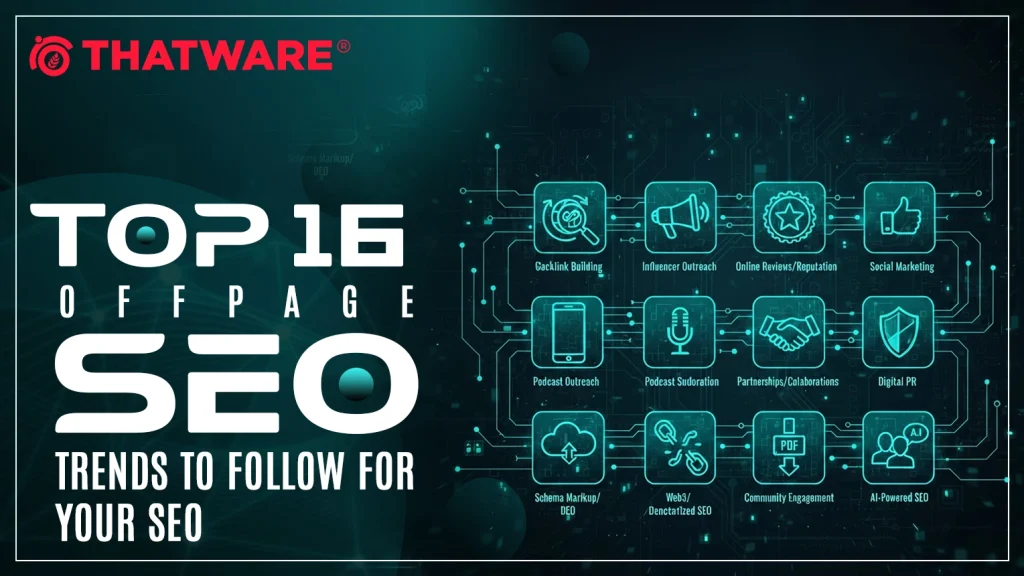
What Is Off-page SEO?
Off-page SEO refers to all optimization activities performed outside your website to enhance its search engine rankings. Unlike on-page SEO, which focuses on internal elements such as content quality, keywords, and site structure, off-page SEO is centered on building authority, trust, and reputation through external signals. These signals include high-quality backlinks, social media engagement, guest blogging, influencer outreach, brand mentions, and directory listings. Search engines use these external indicators to evaluate how reliable and valuable your website is, making off-page SEO essential for establishing a strong online presence.
Importance of Off-Page SEO Trends
Off-page Optimization will assist your website in becoming more famous on the internet, allowing you to gain greater visibility through SEO Off-Page Techniques. While on-page SEO ensures your content is optimized internally, off-site SEO strategies strengthen your website’s authority in the eyes of search engines. Together, both approaches create a well-rounded SEO foundation that supports sustainable rankings and traffic growth.
Top 16 Off-Page SEO Strategies
Develop Shareable Content
In search engine optimization, content remains the most powerful asset. Creating informative, engaging, and shareable content significantly increases the likelihood of earning natural backlinks. Well-researched articles, data-driven insights, guides, and original perspectives encourage users and websites to reference your content organically. Regular updates ensure your material stays relevant, accurate, and competitive in search rankings.
Outreach to Influencers
Once you have strong content in place, reaching out to relevant influencers can amplify its reach. Influencers already command trust and authority within their niche, making their endorsements highly valuable. Share your content with them, invite feedback, and request backlinks only when the content genuinely adds value to their audience. Always prioritize relevance over volume when acquiring links.
Contribute as a Guest Author
Guest blogging remains an effective off-page SEO strategy when executed strategically. Publishing high-quality articles on authoritative and niche-relevant websites helps build credibility and earn strong backlinks. Focus on content quality and topical relevance rather than link quantity, and avoid posting repeatedly on the same platforms to maintain link diversity.
Engage Actively on Social Media
Social media engagement plays a critical role in off-page SEO by increasing content visibility and brand awareness. Consistent interaction across platforms such as LinkedIn, X (Twitter), Facebook, and Instagram helps attract users, encourage sharing, and generate indirect backlinks. A strong social presence supports brand growth and drives referral traffic.
Leverage Social Bookmarking Platforms
Social bookmarking websites are effective channels for content promotion and traffic generation. One of the finest channels for promoting your website is social bookmarking networks. When you save your webpage or blog post on prominent social bookmarking networks, you drive a lot of traffic.
Participate in Relevant Forums
Forum participation helps establish authority and build trust within your industry community. Engage in niche-related discussions, provide helpful answers, and share insights rather than promotional messages. Using reputable “do-follow” forums strategically can generate referral traffic and valuable backlinks over time.
Submit to Quality Blog Directories
Blog directory submissions help improve link diversity and online visibility. Focus on well-maintained, relevant directories and choose the most appropriate categories for your content. While results may take time, consistent and selective submissions can deliver long-term SEO benefits.
Article Submission for Wider Reach
Submit your content to an article submission directory with good PR. You may also provide links to your own website. Ensure all submissions are original, informative, and free from keyword stuffing. Choosing compelling titles and relevant categories improves approval rates and visibility.
Discussion, Question, and Answer
Question-and-answer websites are powerful tools for driving targeted traffic. By providing clear, accurate, and helpful responses to relevant questions, you can position your brand as an authority while earning visibility. Adding contextual links to your website enhances exposure without appearing promotional.
Video Submission for Enhanced Engagement
Video content continues to dominate user engagement. Uploading videos to high-authority platforms such as YouTube and Vimeo increases brand reach and backlink opportunities. Optimized titles, descriptions, tags, and links are essential for maximizing visibility and referral traffic.
Photographs Submission
Submitting images to reputable photo-sharing and image submission platforms is an effective off-page SEO strategy for increasing visibility and earning referral traffic. Before uploading, ensure each image is properly optimized with a relevant file name, target URL, and title tag. Every photograph should include a clear and descriptive title, an informative description, and relevant tags to improve discoverability in image searches. Well-optimized images not only attract traffic but also contribute to brand awareness and contextual backlinks.
Infographics Submission
Creating visually engaging and informative infographics is a powerful way to earn high-quality backlinks and increase content reach. Infographics are highly shareable and continue to gain popularity across digital platforms due to their ability to convey complex information quickly. Submit your infographics to infographics submission platforms and include connections to your website or blog. Be sure to follow platform-specific image size and formatting guidelines to ensure optimal display and maximum engagement.
Document Sharing
Sharing professionally designed documents such as PDFs and presentations on document-sharing platforms extends content visibility. These materials should contain original insights and include relevant links back to your website to support off-page SEO.
Press Release Distribution
Press releases help communicate important announcements to media outlets and online publications. When distributed through credible channels, they can generate brand mentions, authoritative backlinks, and increased trust.
Web2.0 Platforms
Web 2.0 platforms allow you to create branded subdomains on high-authority websites like Medium, WordPress, Blogger, and Tumblr. These platforms support content distribution, backlink creation, and brand recognition when used strategically.
Key Off-Page SEO Tips to Remember
Consistency and quality are essential for off-page SEO success. Regularly update your website, share valuable content, and build backlinks for newly published articles. Avoid spammy tactics and focus on sustainable, long-term strategies.
Optimize Google My Business for Local SEO
Google My Business is another free Google offering. Optimizing this platform for maximum local SEO performance is essential for improving visibility in location-based search results. Google My Business provides multiple opportunities to strategically enhance content, links, and engagement signals. When optimized effectively, it can drive significant social traffic, strengthen brand recognition, and increase trust among local audiences, ultimately leading to higher conversions and improved local rankings.
Best Google My Business Tips
- Ensure your business description is detailed and informative, with a minimum of 250 characters that clearly explain your services and value proposition.
- Include your primary keyword and city name within the opening paragraph to reinforce local relevance.
- Regularly update posts, blogs, images, products, and promotional offers to keep your profile active and engaging.
- Monitor customer reviews consistently and respond promptly to both positive and negative feedback to build credibility and trust.
- Upload authentic, high-quality photographs and place them in the correct categories to improve engagement and visual appeal.
Performing Google Redirect Link
Google has plenty of high authority domains that can be used to rank websites or pass high value link juice to your target websites. Below is a non-exhaustive list of such sites, that can be used specifically for link building.
| Google Domains https://www.google.behttps://www.google.com.grhttps://www.google.co.inhttps://www.google.com.mxhttps://www.google.dkhttps://www.google.com.arhttps://www.google.chhttps://www.google.clhttps://www.google.athttps://www.google.co.krhttps://www.google.iehttps://www.google.com.cohttps://www.google.plhttps://www.google.pthttps://www.google.com.pk | Google SubDomains plus.google.com/cse.google.de/clients1.google.de/images.google.es/www.google.es/clients1.google.es/clients1.google.co.uk/images.google.co.uk/www.google.co.uk/toolbarqueries.google.co.uk/maps.google.co.jp/clients1.google.co.jp/images.google.co.jp/www.google.co.jp/toolbarqueries.google.fr/cse.google.fr/www.google.fr/maps.google.fr/images.google.it/www.google.it/toolbarqueries.google.it/cse.google.it/maps.google.ca/toolbarqueries.google.ca/cse.google.ca/images.google.ca/clients1.google.ca/www.google.ca/images.google.com.br/www.google.com.br/cse.google.com.br/clients1.google.nl/www.google.nl/cse.google.nl/maps.google.nl/images.google.nl/maps.google.co.in/images.google.co.in/www.google.co.in/clients1.google.co.in/cse.google.co.in/toolbarqueries.google.co.in/cse.google.ru/maps.google.ru/images.google.ru/clients1.google.com.hk/toolbarqueries.google.com.hk/images.google.com.hk/ |
How to Perform a Redirect Link?
There are two forms of Redirections:
For Google Domains:
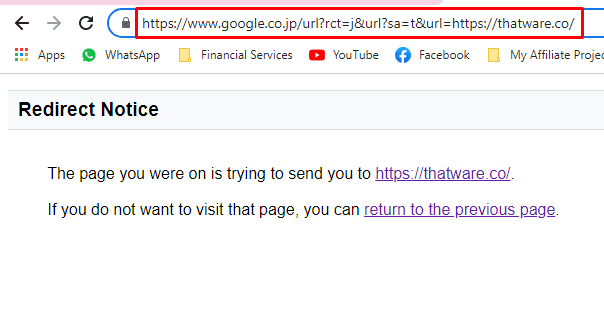
google.co.jp/url?rct=j&url?sa=t&url=https://thatware.co/
For Subdomains:
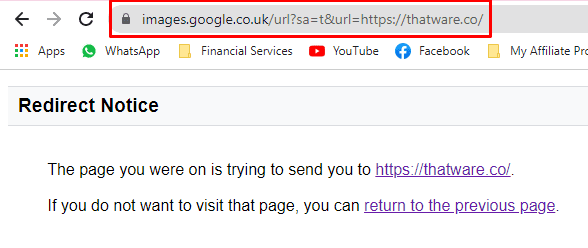
images.google.co.uk/url?sa=t&url=https://thatware.co/
Upon implementing the Redirect Link, you are served a Redirect Notice. Note: The appearance of the Redirect Notice page confirms the redirect is implemented successfully.
How to Get Your Redirect Links Crawled By Search Engines?
Method 1
Look up into Google for a free website checker, speed checker or analyzer. Choose a popular website checker tool.
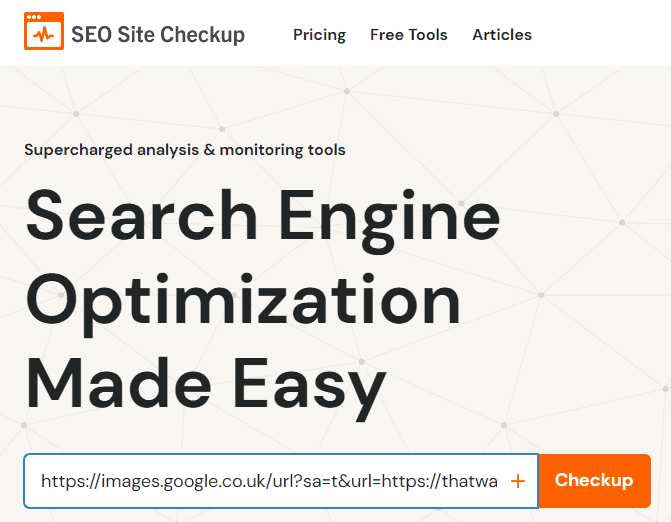
Put the Redirect Notice Page Links and Run a Scan.
Make sure a Page is Generated displaying the Redirect Link explicitly.
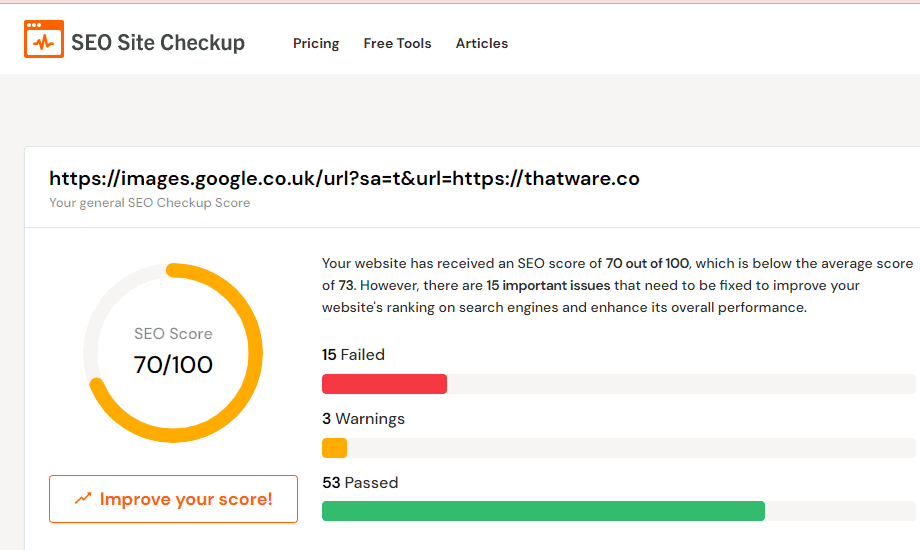
Ensuring that these pages are generated in popular website there is a high probability that these links will be crawled by Search Engines like Google.
Method 2
Create a Web 2.0 Site in Blogger or Google or WordPress. Create a Google Search Console property for that Website.
Create a Page and enlist all of the Google Redirect Backlinks that Were created.
Submit that Page for Indexing.
Types of Off Page SEO
Off-page SEO refers to actions taken outside your website to improve its search engine rankings. Common types include:
- Backlink Building: Acquiring high-quality links from other reputable websites.
- Social Media Marketing: Promoting content through social platforms to increase visibility and traffic.
- Guest Blogging: Writing articles for other sites to build authority and earn backlinks.
- Influencer Outreach: Collaborating with influencers to create and share content.
- Directory Submissions: Listing your website in relevant online directories to improve visibility and credibility.
Advanced Off-Page SEO Signals That Search Engines Value Today
As search engine algorithms become more sophisticated, off-page SEO has evolved beyond traditional link building. Modern SEO now emphasizes quality signals, brand authority, and user trust. Search engines evaluate not only where links come from, but also how users interact with brands across the web. Understanding these advanced off-page signals can help future-proof your SEO strategy.
One of the most critical shifts in off-page SEO is the growing importance of brand mentions without links. Even when a website mentions your brand name without providing a clickable link, search engines can still interpret this as a trust and authority signal. These “implied links” indicate that your brand is being discussed naturally across the web, which contributes to credibility and recognition.
Another important factor is link context. Search engines now analyze the surrounding content of backlinks to determine relevance. A link placed naturally within a high-quality article carries significantly more weight than a link embedded in unrelated or low-quality content. This means off-page SEO strategies must focus on earning links within meaningful editorial contexts rather than mass link placements.
Topical relevance has also become a dominant ranking signal. Backlinks from websites operating in the same or closely related niche provide stronger authority signals than links from generic or unrelated sources. For example, a digital marketing website receiving backlinks from SEO blogs, analytics platforms, or SaaS publications will perform better than one receiving links from unrelated directories.
Search engines also evaluate author and publisher authority. Content linked or referenced by recognized experts, authoritative brands, or well-established publications signals higher trustworthiness. This makes expert collaborations, co-authored content, podcasts, and interviews powerful off-page SEO tools.
Finally, user engagement signals such as branded searches, social sharing behavior, and repeat visits indirectly influence off-page SEO. When users actively search for your brand, share your content, or engage with it across platforms, it reinforces brand legitimacy in search engine algorithms.
The Role of E-E-A-T in Off-Page SEO
E-E-A-T (Experience, Expertise, Authoritativeness, and Trustworthiness) plays a vital role in modern off-page SEO. While on-page SEO establishes expertise through content quality, off-page SEO validates that expertise externally.
Backlinks from authoritative sources demonstrate authoritativeness, while mentions on trusted platforms improve trustworthiness. Reviews, testimonials, and third-party recommendations contribute to experience, especially for local and service-based businesses. Search engines cross-reference these signals to assess whether a website deserves top rankings.
To strengthen E-E-A-T through off-page SEO, brands should focus on building relationships with authoritative publishers, earning mentions from reputable industry sources, and maintaining consistent brand representation across platforms.
Off-Page SEO for Local Businesses
Local SEO relies heavily on off-page factors. Citations, reviews, local backlinks, and geographic relevance directly impact visibility in local search results and Google Maps.
Local citations, mentions of your business name, address, and phone number across directories, help search engines validate business legitimacy. Consistency across platforms such as Google My Business, Yelp, Bing Places, and industry-specific directories is critical.
Customer reviews also act as powerful off-page signals. High-quality, authentic reviews increase trust and influence both rankings and conversion rates. Responding to reviews regularly further strengthens credibility and engagement.
Local backlinks from chambers of commerce, local news outlets, community blogs, and regional organizations enhance geographic authority and relevance. These links signal that your business is established within a specific location.
Measuring Off-Page SEO Performance
Tracking off-page SEO success requires more than counting backlinks. Effective measurement focuses on quality, relevance, and impact.
Key performance indicators include:
- Growth in referring domains rather than total backlinks
- Increase in branded search volume
- Improvements in keyword rankings for competitive terms
- Referral traffic from authoritative sources
- Engagement metrics such as time on site and conversion rate
- Brand mentions across the web
Tools such as Google Search Console, Ahrefs, SEMrush, and Google Analytics help monitor these signals and identify opportunities for improvement.
SEO On Page and Off Page
SEO can be broadly divided into on-page and off-page strategies. On-page SEO focuses on optimizing elements within your website to improve search engine rankings. This includes using relevant keywords in your content, optimizing meta tags, headers, and images, improving site speed, ensuring mobile-friendliness, creating high-quality and user-friendly content, implementing internal linking, and using descriptive URLs to make your site easier for search engines to crawl and index.
Off-page SEO, on the other hand, involves activities outside your website that build authority and credibility. This includes acquiring high-quality backlinks from reputable sites, engaging in social media marketing, guest blogging, influencer outreach, and participating in online forums. While on-page SEO ensures your site is structured, understandable, and user-friendly, off-page SEO signals trustworthiness and authority to search engines. Together, they form a complete SEO strategy that enhances visibility, improves rankings, and drives sustainable traffic.
Difference between On Page Off Page SEO
The key difference between On-Page and Off-Page SEO lies in where optimization efforts are applied. On-Page SEO focuses on improving elements within your website, such as content, meta tags, headers, internal links, and site speed. Its main goal is to make your site user-friendly and ensure that search engines can easily crawl, understand, and index your content.
Off-Page SEO, on the other hand, focuses on building your website’s authority and reputation externally. This includes acquiring high-quality backlinks, engaging in social media marketing, guest blogging, and influencer outreach. Off-page SEO strengthens your site’s credibility, signaling trustworthiness to search engines and helping achieve higher rankings.
Common Off-Page SEO Mistakes to Avoid
While off-page SEO is powerful, incorrect execution can harm rankings. One common mistake is prioritizing quantity over quality when building backlinks. Low-quality or spammy links can trigger algorithmic penalties and reduce trust.
Another mistake is ignoring relevance. Links from unrelated niches provide minimal value and may dilute topical authority. Similarly, excessive use of exact-match anchor text can appear manipulative and raise red flags.
Overlooking brand consistency across platforms is another risk. Inconsistent business details, outdated profiles, or inactive accounts weaken trust signals. Off-page SEO requires ongoing maintenance, not one-time efforts.
Finally, relying solely on backlinks while ignoring brand building limits long-term growth. Search engines increasingly reward strong brands with loyal audiences and authentic engagement.
Emerging Off-Page SEO Strategies for the upcoming years
As search engines evolve, so must your off-page SEO tactics. While foundational strategies like link building and social engagement remain essential, the latest trends are shifting toward holistic, brand-focused optimization. Understanding these emerging techniques ensures your website stays competitive and maintains strong search visibility.
Leveraging Influencer Collaborations Beyond Links
Influencer marketing is no longer just about earning backlinks. Search engines value authentic mentions and engagement from trusted personalities. Collaborating with influencers for co-authored content, podcasts, webinars, or social campaigns creates brand visibility while signaling authority. Focus on relevance and audience overlap rather than sheer reach to maximize impact.
Content Amplification Through Syndication Networks
Content syndication allows you to republish your blog posts, infographics, and guides across high-authority networks. Platforms such as Medium, LinkedIn Articles, and niche-specific portals help your content reach wider audiences, earn indirect backlinks, and generate referral traffic. Remember to use canonical tags or proper attribution to avoid duplicate content penalties while amplifying your reach.
User-Generated Content as an SEO Signal
Encouraging reviews, testimonials, and forum contributions not only enhances brand credibility but also creates organic mentions and links. User-generated content (UGC) on platforms like social media, product review sites, and community forums provides fresh, dynamic content for search engines to index, which improves your website’s authority over time.
Podcasting and Video Content for Authority Building
Audio and video content continues to dominate online engagement. Hosting or participating in podcasts, live streams, or webinars builds trust, expands your audience, and often generates authoritative mentions. Adding structured descriptions, links, and timestamps ensures search engines can effectively index and attribute authority to your brand.
Digital PR and Data-Driven Content
Journalists and media outlets increasingly seek statistics, surveys, and research-driven insights. Creating high-quality, data-backed content can earn backlinks from reputable publications and authoritative blogs. Shareable charts, infographics, and case studies increase the likelihood of organic media coverage, strengthening your website’s domain authority.
Local Off-Page SEO Evolution
Local SEO remains a cornerstone for small and medium-sized businesses, but it’s evolving. Google now weighs not just citations but also engagement metrics such as review velocity, responsiveness, and local social mentions. Businesses that maintain accurate NAP (Name, Address, Phone) listings, collect authentic reviews, and actively participate in local community websites will see stronger local rankings.
Monitoring and Auditing Off-Page SEO
A successful off-page SEO strategy requires consistent monitoring. Tools like Ahrefs, SEMrush, Moz, and Google Search Console allow you to track referring domains, brand mentions, backlink quality, and social signals. Regular audits help identify low-quality links, missed opportunities, and emerging trends, enabling timely strategy adjustments.
Preparing for the Future: AI and Off-Page SEO
Artificial Intelligence is increasingly influencing SEO algorithms. Search engines analyze semantic relationships, content quality, and user behavior to evaluate authority. Creating content that earns high engagement, natural mentions, and authoritative backlinks aligns with AI-driven ranking signals, future-proofing your off-page SEO strategy.
Final Thoughts on Off-Page SEO Strategy
Off-page SEO is no longer just about acquiring backlinks; it’s about building a trustworthy, authoritative digital presence. From influencer collaborations and guest blogging to brand mentions, social engagement, and local signals, every off-page action contributes to how search engines perceive your website.
By combining traditional strategies with modern off-page signals such as E-E-A-T, brand authority, and contextual relevance, businesses can achieve sustainable growth and long-term rankings. A well-executed off-page SEO strategy not only improves visibility in search results but also strengthens credibility, user trust, and brand recognition.
When aligned with strong on-page SEO, technical optimization, and high-quality content, off-page SEO becomes a powerful driver of organic traffic, conversions, and business success.



