SUPERCHARGE YOUR ONLINE VISIBILITY! CONTACT US AND LET’S ACHIEVE EXCELLENCE TOGETHER!
With the constant evolution of Google’s algorithms and its shift towards semantic search, understanding and analyzing search intent has become more critical than ever for SEO success. Today, ranking high in search results is no longer just about using the right keywords or building backlinks. It’s about truly understanding what your audience is looking for at the moment they type a query and delivering content that meets that need precisely. Search intent defines the “why” behind a user’s search, and aligning your content strategy with it ensures that your pages provide real value, increase engagement, and drive conversions. Ignoring this can mean missing out on a large portion of your potential traffic, no matter how well-optimized your website might otherwise appear.
Optimizing for search intent has become one of the most discussed topics in the SEO community, yet very few marketers fully understand how to implement it effectively. While it is often highlighted in the context of e-commerce, where landing pages must be tailored to meet customer expectations, the principles apply to all types of content and industries. From blogs and informational pages to product and service pages, understanding the type of search intent behind each query allows you to craft content that satisfies user goals, improves rankings, and builds long-term trust with your audience.
So it’s clear that you should pursue Search Intent Optimization but what does it mean for SEOs?
What is Search Intent Optimization and Why It Matters
In today’s fast-paced, mobile-first world, people search on the go. Attention spans have shortened, and users expect immediate answers to their queries. This shift has made understanding search intent crucial for anyone looking to rank well on Google. Traditional SEO strategies that focus solely on keywords or backlinks are no longer enough. Modern SEO demands that content not only matches what people are typing but also addresses why they are searching for it.
This is where Search Intent Optimization comes into play. At its core, Search Intent Optimization is a step-by-step process of creating and refining content to meet the exact needs of your audience. It is about delivering answers in a way that satisfies the user’s goal, whether they are looking for information, comparing products, or ready to make a purchase. By focusing on search intent, brands can improve engagement, reduce bounce rates, and increase conversions. More importantly, aligning your content with search intent is the foundation of Intent-based SEO, which ensures your pages remain relevant as Google’s algorithms evolve.
Understanding the Four Types of Search Intent
Before diving into strategies, it is important to understand the four main types of search intent. Each type reflects a different user goal and requires a tailored approach to content creation. The four types are: Informational, Navigational, Transactional, and Commercial Investigation. Recognizing the intent behind a query allows marketers to create content that answers questions, solves problems, or guides users toward a purchase.
Informational Intent
Informational searches are the most basic and widespread type of intent. Users are looking for knowledge, insights, or instructions about a particular topic. They are not looking to buy anything; they want fast, clear, and accurate information. In other words, these queries have low shopping intent, but they are essential for building authority and trust.
Examples of informational searches include:
- “Who is Julian Assange?”
- “Manchester airport directions”
- “Donald Trump biography”
- “Football scores today”
- “HTML 5 tutorial”
Content targeting informational intent can take many forms. Blog posts, how-to guides, tutorials, listicles, and videos all work effectively. Using intent-based content ideas, SEO professionals can design content that addresses questions comprehensively while guiding the user subtly toward further engagement. Informational queries also provide an opportunity to nurture users into more high-intent search queries over time by linking educational content to product or service pages.
Navigational Intent
Navigational intent occurs when users are searching for a specific brand, website, or page. Here, the user knows exactly where they want to go but uses a search engine for convenience. These searches are less about discovery and more about efficiency. While navigational queries do not directly involve shopping intent keywords, they are important for brand visibility and ensuring that users reach your official content rather than competitors’ pages.
Examples include:
- “Facebook login”
- “Ahrefs Content Explorer”
- “Beginner’s guide to SEO Moz”
- “Twitter support page”
For navigational intent, optimizing your site structure, ensuring brand consistency, and maintaining strong technical SEO are critical. By aligning with Intent-based SEO, businesses ensure that these users can find what they are looking for quickly, which improves the user experience and reinforces brand authority.
Transactional Intent
Transactional intent is at the heart of online marketing and e-commerce. Users with transactional intent are ready to buy, subscribe, or engage in a specific action. They already know what they want and are looking for the best place or deal. These are prime opportunities for targeting high-intent search queries and shopping intent keywords that can directly convert into sales.
Examples of transactional searches include:
- “Buy MacBook Pro”
- “NordVPN coupon”
- “Samsung Galaxy S10 cheap”
- “LastPass premium pricing”
Content targeting transactional intent should focus on product pages, landing pages, and comparison tables. By understanding user needs, marketers can optimize product descriptions, highlight unique selling points, and make checkout processes seamless. Incorporating intent-based content ideas like “best deals,” “top features,” and “reviews” helps convert traffic into actual revenue.
Commercial Investigation Intent
Commercial investigation sits between informational and transactional intent. Users are researching products or services but have not yet decided which solution is best for them. These users are looking for feedback, comparisons, reviews, or recommendations. Understanding this intent allows marketers to craft content that educates users while nudging them toward a purchase decision.
Examples of commercial investigation searches include:
- “Best protein powder”
- “Mailchimp vs ConvertKit”
- “Ahrefs review”
- “Top restaurants in London”
Local searches often fall under this category as well, such as “plumber near me” or “cheapest hotel in Singapore.” These queries combine research and local convenience, making it crucial to offer clear, informative, and persuasive content. By targeting high-intent search queries, brands can capture users before they commit to a competitor. This approach also leverages Intent-based SEO strategies to turn exploratory searches into sales opportunities.
How to Use Search Intent for Content Strategy
The most effective SEO strategies now are built around intent. Here’s how to leverage search intent when creating content:
- Identify Keyword Modifiers – Keywords often contain modifiers that indicate intent, such as “buy,” “review,” “compare,” or “how to.” These help determine whether a query is informational, transactional, or commercial. While not perfect, analyzing modifiers is an effective starting point for building intent-based content ideas.
- Analyze SERP Features – Google’s search results often display rich features like Featured Snippets, Shopping results, Knowledge Panels, video results, and “People also ask” sections. Each feature reflects a certain intent type and can guide your content format and approach. For example, Featured Snippets indicate informational intent, while Shopping results signal high shopping intent keywords.
- Map Content Types to Intent – Once intent is identified, choose the right content type and format:
- Informational: Blog posts, tutorials, explainer videos
- Navigational: Brand pages, support documentation
- Transactional: Product pages, category pages, landing pages
- Commercial Investigation: Comparison articles, reviews, listicles
- Informational: Blog posts, tutorials, explainer videos
- Focus on High-Intent Queries – Prioritize queries with clear commercial or transactional intent. These are the searches most likely to lead to conversions and revenue.
5. Create Clusters Around Intent – Building a content cluster targeting multiple related queries allows you to dominate a topic while satisfying different user intents simultaneously. This strategy also improves internal linking and strengthens topical authority.
How to Conclude a Search Queries’ Intent
- Using Keyword Modifiers
Keyword Modifiers on search queries help indicate the type of searches made by the user. Here’s a table that maps each type of modifier to a particular intent.
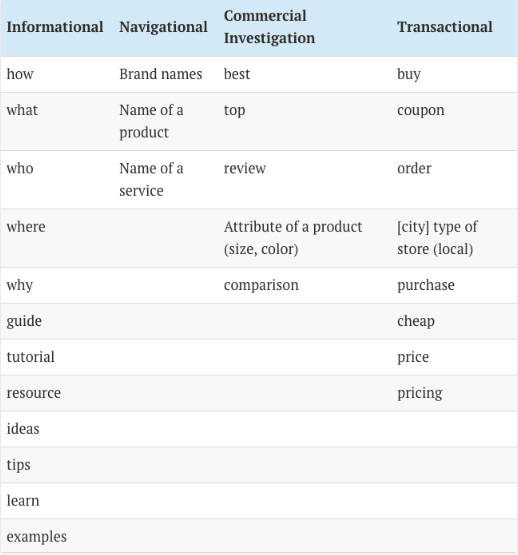
If you are using a Keyword Research tool like Ahrefs it will be easy for you to research all types of intent-based keywords around a single search query.
For Example: if you are searching something like “On Page SEO”, you can use the include, exclude filters to filter out keywords based on specific search intent.
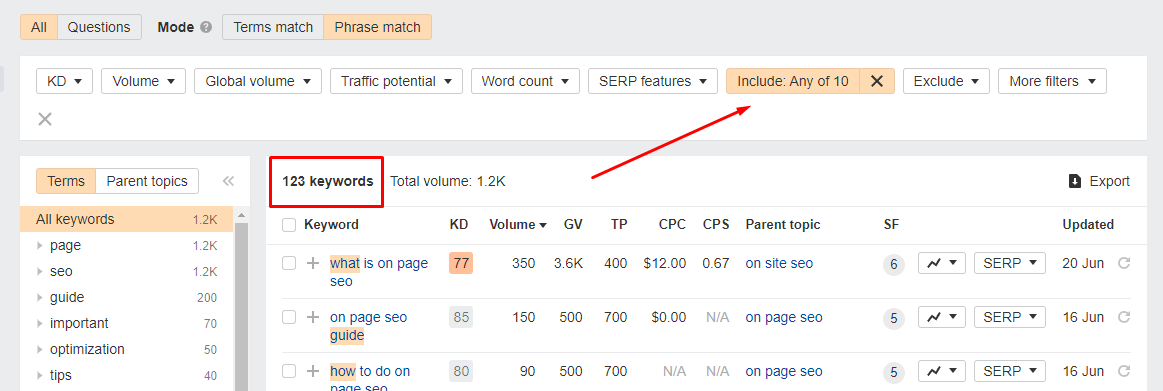
But there’s a catch: Modifiers aren’t perfect because not all keywords contain them.
As a result, you shouldn’t rely solely on modifier words to determine search intent. You’ll miss out on a lot of good keyword ideas if you do.
Perhaps Google Itself has the Answer
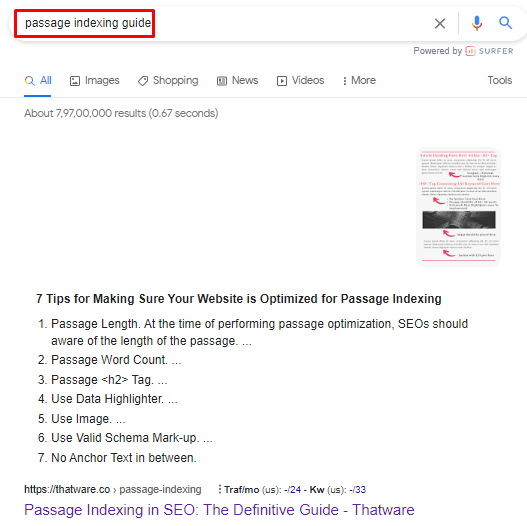
Sometimes you might have seen results like this on Google. These are called Featured Snippets and are one of the many features of a SERP.
Others are:
- Shopping results
- Knowledge card
- AdWords ads
- Related questions
- Video results
Each SERP Feature corresponds to a particular search intent as the featured snippet feature corresponds to informational intent. The following chart maps each feature to its search intent.
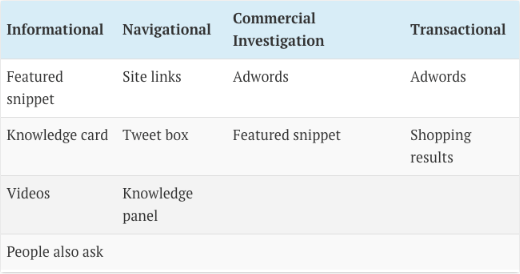
Hence using a combination of Keyword modifiers and some raw SERP analysis you can easily determine the Search Intent of a Keyword.
How to Optimise for Search Intent
Before we even begin the procedure of optimizing our content and landing page to better suit the target query’s search intent, it is important to factor in the variation of search intent with time.
As we know SERP values change over time, hence making sure the SERP is stable for a particular search query gives us an idea as to how the process should be followed.
Understanding SERP Fluctuations
It is easier if you use the Ahref tool. If you enter your target query in Keywords Explorer, then scrolling down gives a SERP history graph.
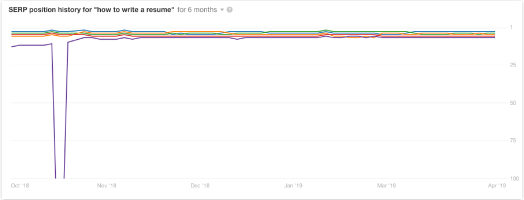
SERP showing little to no fluctuation
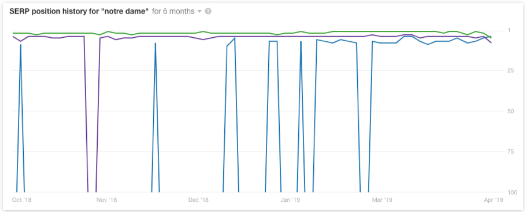
SERP showing major fluctuations
If the fluctuations are somewhat stable it might be prudent to create content in a way that satisfies around 2-3 Search Intents.
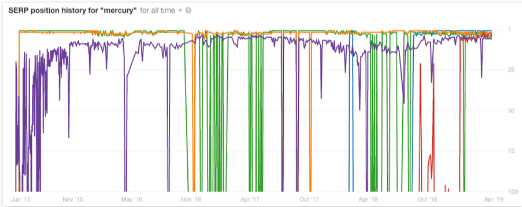
An unstable fluctuation indicates Google is unable to determine the true search intent behind the query.
Although this might immediately repel you from pursuing this search query, it is quite the opposite.
In this case, the best course of action would be to dedicate a landing page and clusters of content around satisfying all of the search intent at once. Despite the harder job, the increased fluctuations and quantity of content produced will increase your chances of ranking significantly.
Mapping Search Intent to the Right Type of Content
Most types of Website content can be classified along these types:
- Content type
- Content format
- Content angle
Content-Type
Mostly consists of three major types:
- Blog post
- Product page
- Category page
- Landing page
For example for the query: “how to make pancakes” the SERP looks like this:
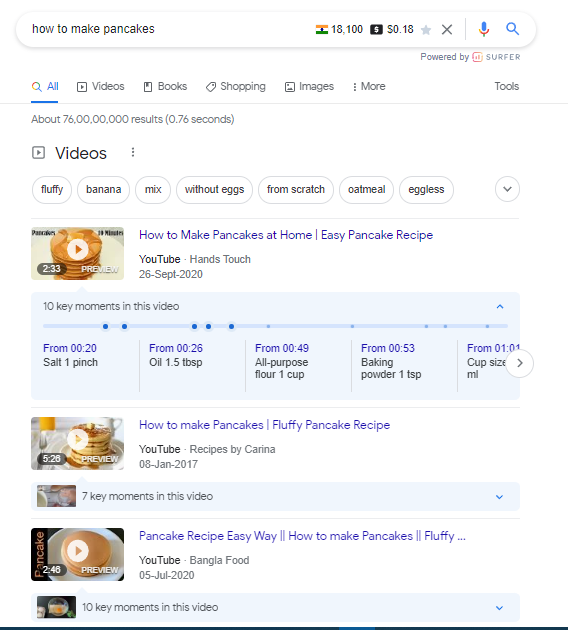
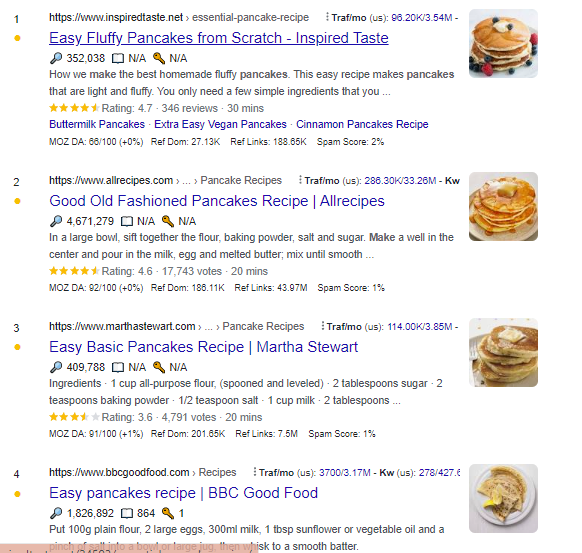
This clearly indicates that Videos and Blog posts are the dominant types of content that work.
Content Format and Content Angle
Content Formats are:
- “How-to” guides
- Step-by-step tutorials
- List posts
- Opinion pieces
- Reviews
- Comparisons
While the content angle is the unique selling point of most of the SERP results. In the previous example, we can understand the intent is informational, with Blog and Videos as the content type with “How to” and “Step By Step tutorial” being the majority content format and “Easy” being the content angle.
Take Clues from Top Search Results
Last but not least before designing the elements of the content, it is always a good idea to visit the top ranking pages as they are ranking first in Google for a reason.
Analyzing the different features of their page and realizing how they satisfy the searcher’s intent can give greater insights while optimizing your own page too.
Why Intent-Based SEO Is the Future of Digital Marketing
The digital marketing landscape is changing at a rapid pace. Search engines are no longer just matching keywords to queries—they are trying to understand the intent behind every search. This means that traditional SEO tactics focused on keyword density or backlinks are becoming less effective. To rank consistently in 2026 and beyond, marketers must embrace Intent-based SEO.
Intent-based SEO is about creating content that directly aligns with the specific goals of your audience. This approach prioritizes understanding the user’s mindset: are they researching a topic, comparing options, or ready to make a purchase? By analyzing these patterns, businesses can create content that satisfies users and signals to search engines that the content is relevant.
Unlike traditional keyword-focused strategies, Intent-based SEO emphasizes the why behind searches. It encourages marketers to think about high-intent search queries, which are queries that indicate the user is ready to take action. For example, a query like “buy wireless earbuds online” signals a different intent than “how do wireless earbuds work.” Recognizing these nuances allows marketers to craft targeted content that meets user expectations and drives results.
Identifying High-Intent Search Queries
Understanding high-intent search queries is at the core of any successful intent-based SEO strategy. These are searches that show strong purchase signals, brand consideration, or other conversion-oriented behaviors. By targeting these queries, businesses can maximize the ROI of their content marketing efforts.
To identify high-intent search queries, start by segmenting searches into categories:
- Informational: Queries where the user seeks knowledge, e.g., “best practices for SEO.”
- Transactional: Queries where the user is ready to buy, e.g., “purchase MacBook Air 2026.”
- Commercial Investigation: Queries where the user is researching options, e.g., “best laptops under $1000.”
Tools like Ahrefs, SEMrush, and Google Keyword Planner allow you to filter keywords by intent. Look for queries that contain shopping intent keywords such as “buy,” “coupon,” “best price,” or “discount.” These keywords often indicate a user is nearing the bottom of the sales funnel.
Additionally, consider local intent. Queries like “plumber near me” or “coffee shop open now” may not contain traditional shopping keywords but often reflect high-intent behaviors, especially for service-based businesses. By mapping these queries, marketers can prioritize content that captures potential customers at the exact moment they are ready to act.
Developing Intent-Based Content Ideas
Once high-intent search queries are identified, the next step is creating intent-based content ideas. These are content concepts explicitly designed to address the user’s search intent.
Step 1: Analyze the SERP
Start by analyzing the top results for your target query. Look at the content format, tone, and structure of the pages that rank. Ask yourself:
- Are the top results blog posts, product pages, or video tutorials?
- What kind of questions do they answer?
- How can your content improve on what’s already ranking?
By reverse-engineering the SERP, you can generate intent-based content ideas that meet the needs of searchers while offering unique value.
Step 2: Match Content Type to Intent
Different types of content work better for different intents:
- Informational queries: How-to guides, tutorials, step-by-step instructions, and educational videos.
- Commercial investigation: Reviews, comparison articles, expert roundups, and case studies.
- Transactional queries: Product pages, landing pages, and e-commerce catalogs optimized with shopping intent keywords.
Step 3: Leverage Content Clusters
Content clusters involve creating a central “pillar” page supported by multiple related articles or subpages. This structure not only organizes content logically but also helps search engines understand the breadth and depth of your topic. By using high-intent search queries within these clusters, businesses can capture both top-of-funnel informational traffic and bottom-of-funnel transactional traffic.
Mapping User Intent to Content Formats
Not all content formats perform equally for all types of search intent. Understanding which formats resonate with which intent is critical for execution.
Informational Intent
For users seeking knowledge, blog posts, infographics, explainer videos, and podcasts work best. The goal is to provide clarity, authority, and actionable advice. For example, a blog titled “Step-by-Step Guide to Buying Your First DSLR Camera” meets informational needs while subtly introducing product options later in the content.
Commercial Investigation Intent
Comparison charts, reviews, and expert recommendations excel here. Users are evaluating options, so your content must answer questions like:
- How does product A compare to product B?
- Which option offers the best value?
- Are there real-world reviews available?
Incorporating high-intent search queries into headings and meta descriptions ensures your content captures the attention of users actively considering a purchase.
Transactional Intent
Content with transactional intent must make purchasing easy. This includes product pages, service listings, landing pages, and checkout-optimized content. Using shopping intent keywords like “buy,” “order,” “deal,” and “discount” increases the likelihood of conversion. Structured data and rich snippets can further enhance visibility on Google Shopping or e-commerce SERPs.
The Role of Content Angle in Intent-Based SEO
The content angle differentiates your content from competitors. It’s the unique perspective, tone, or value proposition that makes your content stand out. For example:
- Informational: “The Complete Beginner’s Guide to SEO in 2026”
- Commercial Investigation: “Top 10 Wireless Earbuds Compared: Features, Pricing, and Reviews”
- Transactional: “Buy the Latest MacBook Air with Free Shipping Today”
Focusing on content angle ensures that even if competitors target the same keywords, your content provides a distinct, actionable experience that satisfies the user’s intent more effectively.
Using Intent-Based SEO for E-commerce
E-commerce businesses benefit immensely from Intent-based SEO. By focusing on shopping intent keywords, businesses can capture customers who are ready to buy.
Optimizing Product Pages
Product pages should include clear product descriptions, pricing, availability, and calls-to-action. Integrate high-intent search queries naturally into headings, meta descriptions, and product specifications.
Category Pages
Category pages can target broader commercial investigation searches. For example, a “Best Laptops for Students” page may target users comparing multiple products, guiding them toward transactional pages.
Blog-to-Product Funnels
Informational blogs can guide users down the sales funnel. A blog post like “How to Choose the Right DSLR Camera” can link to transactional product pages using intent-based content ideas, converting research-oriented users into buyers.
Measuring Success in Intent-Based SEO
Tracking the impact of Intent-based SEO requires more than traditional metrics like pageviews. Focus on metrics that reflect user engagement and conversions:
- Click-through rate (CTR): Indicates how well your content attracts attention for the target query.
- Bounce rate & dwell time: Shows whether the content satisfies user intent.
- Conversion rate: For transactional or commercial investigation pages, this is the ultimate measure of success.
- SERP feature visibility: Track how often your content appears in featured snippets, shopping results, or knowledge panels.
By measuring these metrics and continually refining content to align with intent, marketers can ensure that their SEO strategy delivers tangible business results.
Advanced Strategies for Targeting High-Intent Queries
To truly dominate search results, marketers must go beyond basic keyword targeting:
Content Personalization
Segment content based on audience behavior, demographics, or geography. Personalized content increases relevance for high-intent search queries.
Voice Search Optimization
With the rise of smart speakers and mobile voice search, queries are increasingly conversational. Optimizing for natural language and long-tail high-intent search queries ensures your content captures this growing traffic source.
Semantic Keyword Clustering
Group keywords by topic and intent rather than focusing on individual keywords. This enhances authority and relevance in the eyes of search engines.
Leveraging User-Generated Content
Reviews, Q&A sections, and testimonials address both commercial investigation and transactional intent. Incorporating shopping intent keywords in reviews can help capture users closer to the conversion stage.
Final Thoughts
Search intent has become one of the most critical factors in ranking success. If your content does not align with what searchers are truly looking for, no amount of keyword optimization or backlink building will help you achieve long-term visibility. On the ThatWare blog, we’ve repeatedly seen the difference between content that satisfies user intent and content that misses the mark—and the results are striking. Pages that fully address searcher needs consistently outperform those that don’t.
Even if you temporarily manage to “trick” Google with low-quality or poorly targeted pages, this strategy is not sustainable. Search engines are constantly refining their understanding of intent, and eventually, the mismatch will be detected. Your rankings could fall sharply—tomorrow, next month, or even next year. The only reliable path to lasting success is to make meeting user intent your priority. By creating content that genuinely provides value, answers questions, and solves problems, you not only satisfy searchers but also signal to Google that your site is authoritative, trustworthy, and relevant.
Make it your mission to deliver precisely what your audience needs. When you prioritize the searcher over algorithms, the rankings, traffic, and engagement will naturally follow. Intent-driven content is not just a strategy—it’s the foundation of sustainable SEO success.