GET A FREE CUSTOMIZED SEO AUDIT & DIGITAL MARKETING STRATEGY FOR YOUR BUSINESS
⭐️Overview of the Importance of Email Security
In today’s digital age, email is a vital communication tool for individuals and organizations alike. However, it’s also a prime target for cybercriminals, with 60% of businesses experiencing a phishing attack in 2020 alone. Email security isn’t just about keeping unwanted messages at bay; it’s about safeguarding sensitive information from malicious intents like fraud, identity theft, and data breaches. A single email breach can result in financial losses averaging over $3.86 million, not to mention the lasting damage to an organization’s reputation.
Email security is no longer limited to blocking spam messages. It now plays a critical role in protecting sensitive information, maintaining brand credibility, and ensuring business continuity. A single compromised email account can expose private customer data, financial records, and internal communications. Beyond immediate financial losses, organizations often face regulatory penalties, operational disruptions, and long-term reputational harm. The average cost of a data breach now runs into millions, making prevention far more cost-effective than recovery. For this reason, strengthening email authentication has become a top priority for organizations of all sizes.
⭐️Brief Introduction to DMARC, SPF, and DKIM
To address growing email threats, three email authentication protocols have become essential pillars of modern email security: DMARC, SPF, and DKIM. These standards work together to verify sender identity, prevent domain impersonation, and reduce the risk of phishing and spoofing attacks. When properly implemented, they not only protect recipients but also improve email deliverability and trust across email ecosystems.
⭐️DMARC (Domain-based Message Authentication, Reporting, and Conformance)
DMARC acts as the policy layer that ties SPF and DKIM together. It allows domain owners to define how receiving mail servers should handle messages that fail authentication checks. Through DMARC, organizations can instruct email providers to monitor, quarantine, or reject unauthenticated emails claiming to originate from their domain.
One of DMARC’s most valuable features is visibility. It provides detailed reporting on email activity, helping organizations identify unauthorized sources attempting to send emails on their behalf. This insight enables proactive action against abuse, ensuring that only legitimate messages reach inboxes. By enforcing alignment between the sender domain and authentication results, DMARC significantly reduces the risk of email fraud and brand impersonation.
⭐️SPF (Sender Policy Framework)
SPF focuses on verifying the source of an email. It allows domain owners to publish a list of approved mail servers in their DNS records. When an email is received, the recipient’s server checks this list to confirm whether the sending server is authorized.
This mechanism prevents attackers from forging the “From” address, a common tactic used in phishing campaigns. While SPF alone cannot stop all forms of spoofing, it serves as a critical first line of defense. Properly configured SPF records help reduce fraudulent emails, improve deliverability, and protect domain reputation.
⭐️DKIM (DomainKeys Identified Mail)
DKIM ensures the integrity of email content. It works by attaching a cryptographic signature to each outgoing message. This signature is created using a private key and validated by the receiving server using a public key published in the domain’s DNS.
If the email content is altered during transmission, the signature fails validation, alerting the recipient’s server to potential tampering. DKIM provides confidence that the message is authentic and unchanged, reinforcing trust between senders and recipients. It also plays a vital role in passing DMARC alignment checks.Implementing DMARC, SPF, and DKIM is not just a technical necessity; it’s a strategic imperative for any organization that values the integrity and confidentiality of its email communications. By leveraging these protocols, businesses can significantly reduce the risk of email-based threats, safeguarding their information assets and reinforcing their reputation as a trustworthy entity in the digital ecosystem.
⭐️Understanding Email Authentication Methods
Email authentication is the cornerstone of secure electronic communication, acting as the gatekeeper that separates legitimate correspondence from potentially harmful content. It’s a set of protocols designed to verify the identity of the sender and the integrity of the message. This verification process helps to prevent malicious activities such as phishing, spoofing, and spam, which are not only nuisances but also serious security threats.
⭐️The Role of DMARC, SPF, and DKIM in Email Security
The triad of DMARC, SPF, and DKIM forms the backbone of modern email authentication and security. These protocols work in tandem to verify the authenticity of the sender and the integrity of the message, providing a multi-layered defense against common email threats.
SPF (Sender Policy Framework) checks whether the sending server’s IP address is authorized to send emails on behalf of a specific domain by referencing that domain’s DNS records. This validation step is critical because email spoofing remains one of the most common entry points for cybercrime. Previously the FBI reported more than 241,000 incidents of business email compromise (BEC), resulting in losses exceeding $1.8 billion worldwide. These attacks often rely on forged sender addresses that appear legitimate to unsuspecting recipients. SPF helps reduce such risks by confirming that incoming emails originate from approved servers. When a message fails an SPF check, receiving mail systems can flag or reject it, significantly limiting an attacker’s ability to impersonate a trusted brand or internal email address.
DKIM (DomainKeys Identified Mail) strengthens email security by attaching an encrypted digital signature to the header of every outgoing message. This signature is generated using a private key and can be validated by the receiving server through a corresponding public key stored in the sender’s DNS records. DKIM ensures that the content of an email remains unchanged as it travels across multiple servers on its way to the recipient. If even a small portion of the message is altered, the signature fails verification. This integrity check builds confidence with email service providers and recipients alike. According to research by Valimail, organizations that implement DKIM correctly can see email deliverability improve by up to 10%, as authenticated messages are more likely to reach the inbox rather than being filtered as suspicious or spam.
DMARC (Domain-based Message Authentication, Reporting, and Conformance) builds directly on the foundations laid by SPF and DKIM. It allows domain owners to publish clear policies instructing receiving email servers on how to handle messages that fail authentication checks. These policies can range from monitoring only, to quarantining suspicious emails, or rejecting them outright. Beyond enforcement, DMARC offers valuable reporting capabilities. These reports provide insight into who is sending email on behalf of a domain and whether those messages are passing or failing authentication. This visibility enables organizations to identify unauthorized sending sources, misconfigurations, and emerging threats in real time. Studies from the Global Cyber Alliance indicate that businesses implementing DMARC can improve email deliverability by up to 30%. More importantly, DMARC helps protect brand reputation, reduces phishing success rates, and establishes a stronger, more trustworthy email ecosystem for both senders and recipients.
⭐️SPF Setup Guide: Ensuring the Authenticity of Your Email Sender
Sender Policy Framework (SPF) is a vital tool in the email security arsenal, designed to verify that the sender of an email has the authority to use the domain from which it originates. In an era where email-based threats are increasingly sophisticated, implementing SPF is more than a technical task; it’s a strategic necessity to protect your organization’s communications integrity.
⭐️What is SPF and How it Works
SPF allows domain owners to define which mail servers are authorized to send emails on behalf of their domain. This is done by creating a DNS TXT record that lists the IP addresses of the servers permitted to send email for that domain. When an email is received, the recipient’s server checks this SPF record to verify that the email comes from a server authorized by the domain’s administrator.
⭐️Step-by-step guide to setting up SPF
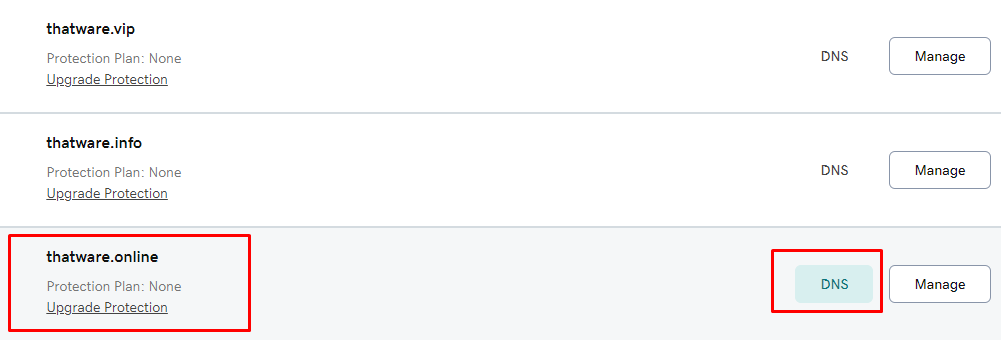
Step 1: Login to the Domain Settings and choose the Mail Id on which the Protocols are to be implemented.
In our case, we use Godaddy and we choose the following mail:

Step 2: Go to the Domains DNS Settings and keep it opened.
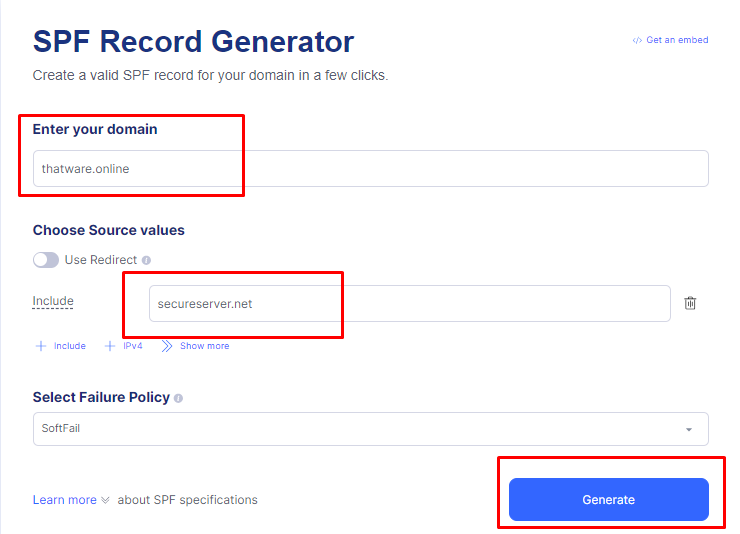
Step 3: Now we need a SPF Record Generator. Use the following link
https://easydmarc.com/tools/spf-record-generator?domain=thatware.online
Step 4: Enter the following fields as below:
Domain: Enter domain name. Rest all is same.
The Records are generated as below:
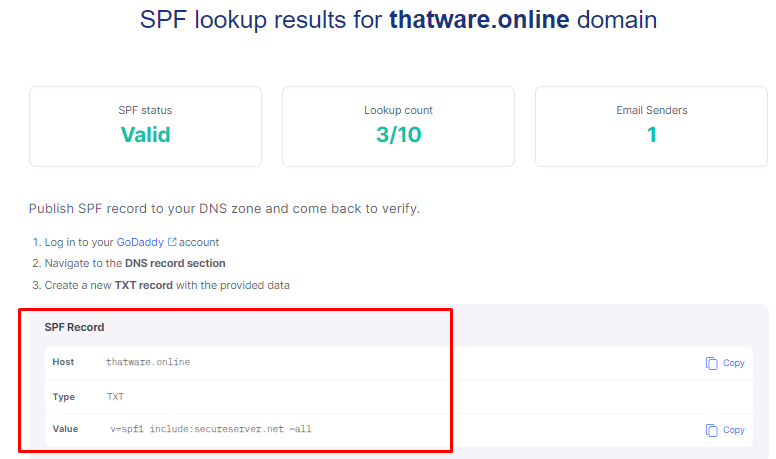
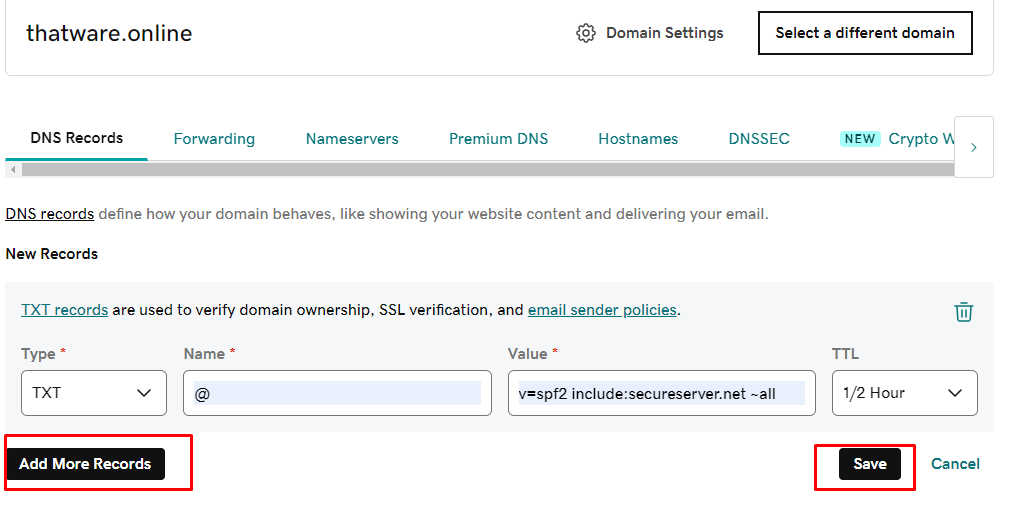
Step 5:
Add the new Record in the DNS Section
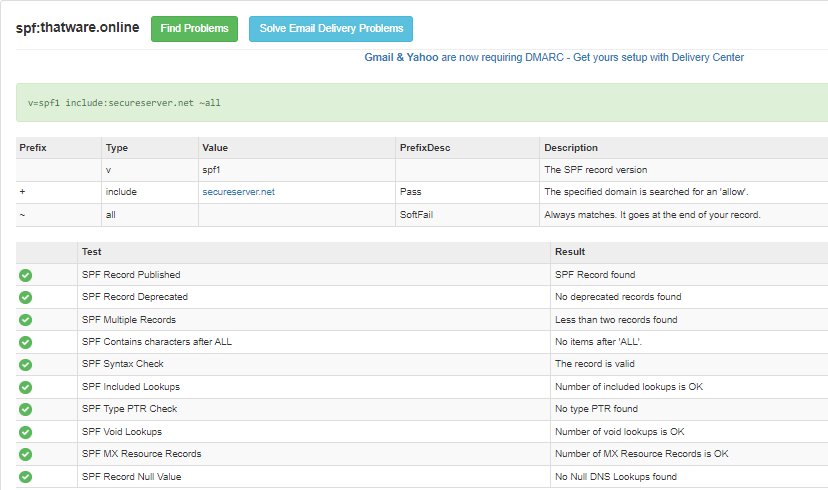
Step 6: Now we need to validate the implementation of SPF on the Mail Server. Go to https://mxtoolbox.com/spf.aspx
Enter the Domain name and hit enter. If the following result appears then SPF is implemented properly.
⭐️DKIM Configuration: Strengthening Email Integrity and Trust
DomainKeys Identified Mail (DKIM) is an essential component of a comprehensive email security strategy, serving as a robust method to validate the authenticity and integrity of email messages. In the ever-evolving landscape of cyber threats, DKIM plays a pivotal role in fortifying an organization’s defense against email-based attacks, particularly those involving message tampering and identity fraud.
⭐️Explaining DKIM and Its Role in Email Security
DKIM provides a mechanism for email senders to add a digital signature to their messages. This signature is linked to the domain of the sender, allowing recipient servers to verify that the email was indeed sent from the claimed domain and that its content has not been altered during transit.
⭐️Step-by-step guide to setting up SPF
Step 1: Login to the Domain Settings and choose the Mail Id on which the Protocols are to be implemented.
In our case, we use Godaddy and we choose the following mail:
Step 2: Go to the Domains DNS Settings and keep it opened.
Step 3: Now we need generate the DKIM Key. Use the following tool
Step 4: Use the following values and hit generate. Except the domain name, all values will be the same.
In the selector field you may select “s1” or “s2”
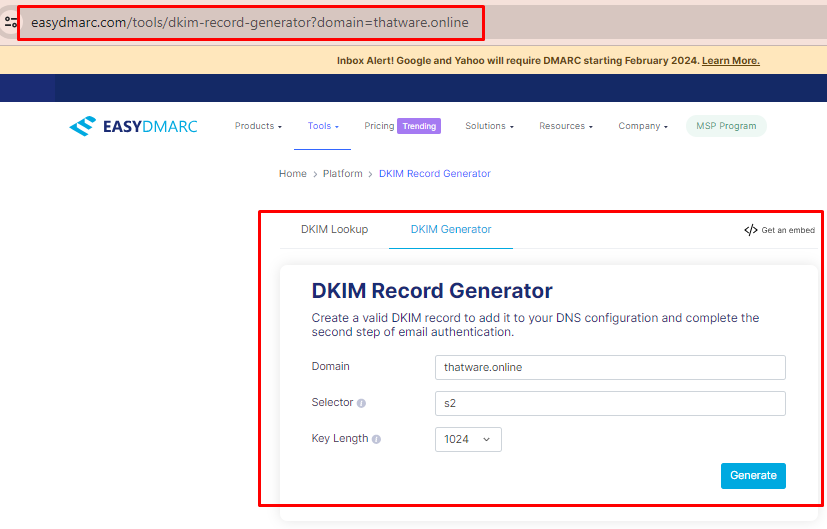
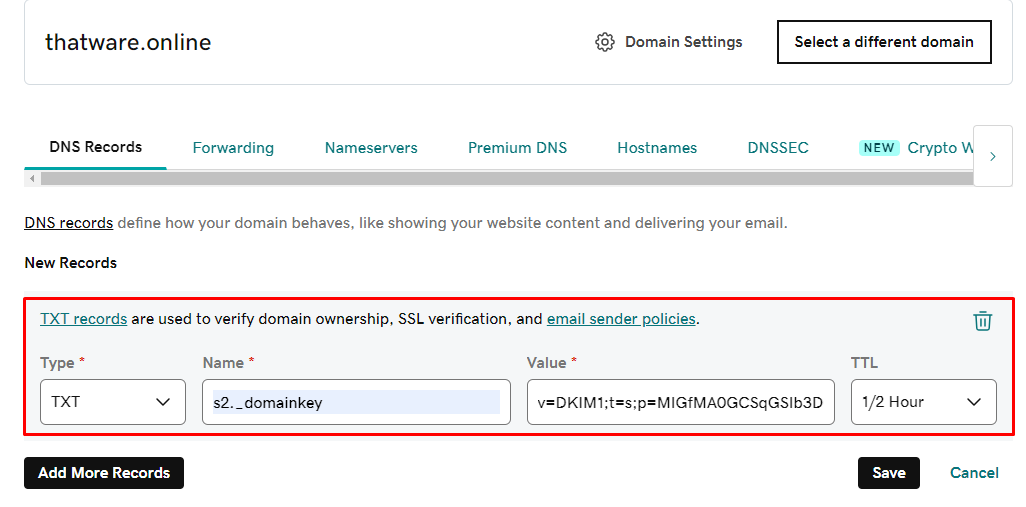
Step 5: Now go to the Domain DNS Setting and add the TXT Record in the format given below and hit save.
Step 6: Now we need to validate the Fix. Go to the link
https://mxtoolbox.com/dkim.aspx
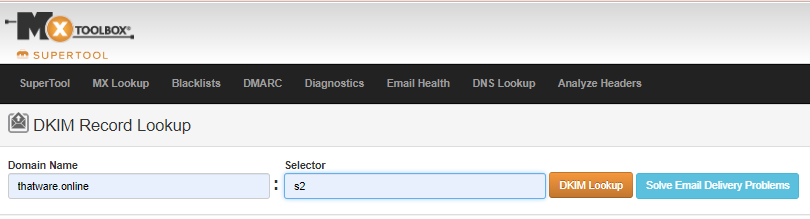
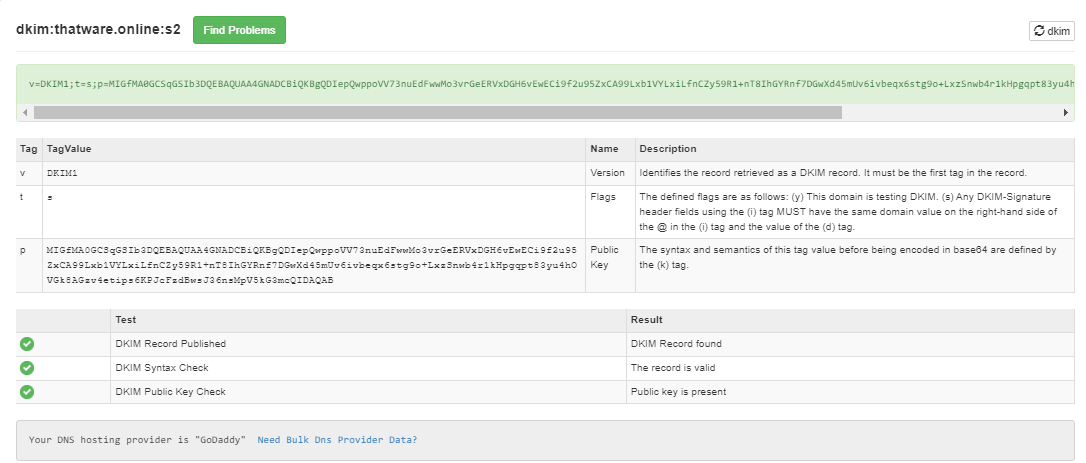
Hit enter and if the following result appears, your DKIM is validated.
⭐️DMARC Implementation: Enhancing Email Security and Domain Reputation
Domain-based Message Authentication, Reporting, and Conformance (DMARC) is a robust email authentication protocol that extends the capabilities of SPF and DKIM. It verifies the legitimacy of an email’s sender while also guiding receiving mail servers on the appropriate action to take when authentication fails. As cyber threats continue to grow in sophistication, DMARC has become essential for organizations seeking to safeguard their domain from misuse and improve overall email deliverability.
⭐️Detailed Explanation of DMARC and Its Benefits
DMARC (Domain-based Message Authentication, Reporting, and Conformance) enables domain owners to clearly state their email authentication standards by publishing policies within their DNS records. These policies tell receiving mail servers how to evaluate messages that fail SPF and DKIM checks and what action to take when authentication does not pass. By doing so, DMARC ensures that only emails legitimately authorized by the domain owner are delivered to inboxes. This dramatically minimizes the chances of cybercriminals exploiting a domain for phishing, spoofing, or other deceptive email-based attacks.
Beyond basic authentication, DMARC introduces accountability and alignment into email security. It connects SPF and DKIM results to the visible “From” address, closing gaps that attackers often exploit. As email threats continue to evolve in sophistication and scale, DMARC has become a foundational requirement for organizations that want to protect their domains, customers, and partners while maintaining strong email performance.
⭐️The benefits of DMARC implementation are substantial:
Prevention of Email Fraud:
DMARC plays a critical role in stopping email-based fraud by blocking unauthorized senders from abusing your domain. When strict policies are enforced, malicious emails that attempt to impersonate your brand can be rejected or quarantined before reaching end users. This is especially important given that email remains the primary delivery method for phishing campaigns, with industry reports consistently showing that the vast majority of phishing attacks originate through email channels.
Improved Deliverability:
Email providers place a high level of trust in domains that use DMARC correctly. When authentication is properly configured and aligned, legitimate emails are less likely to be flagged as spam or rejected. As a result, organizations often experience noticeable improvements in inbox placement and overall delivery success. Even a modest increase in deliverability can lead to higher open rates, stronger engagement, and more reliable communication with customers and stakeholders.
Enhanced Visibility and Control:
One of DMARC’s most powerful advantages is reporting. DMARC generates detailed reports that show which servers are sending emails on behalf of your domain and whether those messages pass authentication checks. This transparency allows organizations to identify unknown or unauthorized email sources, correct configuration issues, and make informed decisions about tightening policies. In an environment where phishing activity continues to rise year over year, this visibility is essential for maintaining control over your email ecosystem.
Protection of User Trust and Brand Reputation:
A compromised or spoofed domain can quickly erode customer confidence. DMARC helps safeguard your brand by preventing attackers from impersonating your organization in malicious emails. By ensuring that recipients only receive verified, authenticated messages, DMARC reinforces trust in your communications. This protection is crucial, as even a single successful phishing incident can lead to significant financial losses, operational disruption, and long-term reputational damage.
Implementing DMARC involves setting a clear policy that instructs receiving mail servers to either allow, quarantine, or reject emails that fail SPF and DKIM authentication. This policy is published in DNS alongside existing SPF and DKIM records. Together, these three mechanisms form a strong authentication framework that strengthens email security, improves reliability, and protects your domain against modern email threats.
⭐️Step-by-step guide to setting up DMARC
Step 1: Login to the Domain Settings and choose the Mail Id on which the Protocols are to be implemented.
In our case, we use Godaddy and we choose the following mail:
Step 2: Go to the Domains DNS Settings and keep it opened.
Step 3: Now we need to generate your DMARC Value Key. Go to the following url:
https://easydmarc.com/tools/dkim-record-generator
Step 4: Enter the values as follows. Except the domain name, rest values will remain the same.
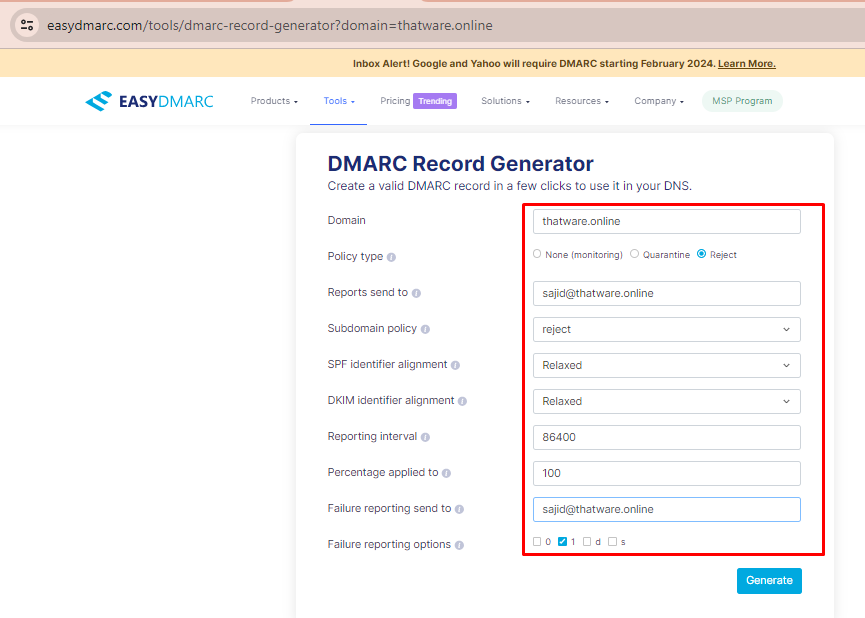
The Records generated are as below: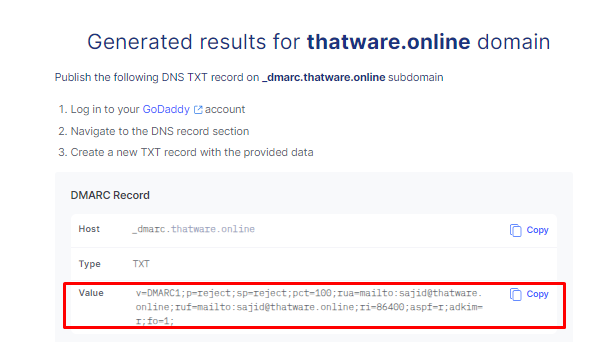
Step 5: Now go to the Domain DNS Setting and add the TXT Record in the format given below and hit save.
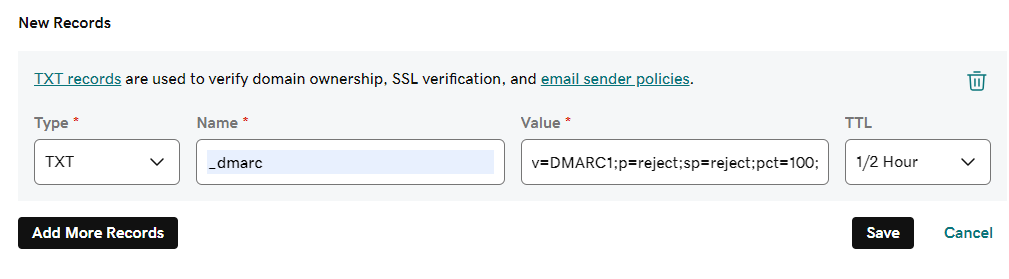
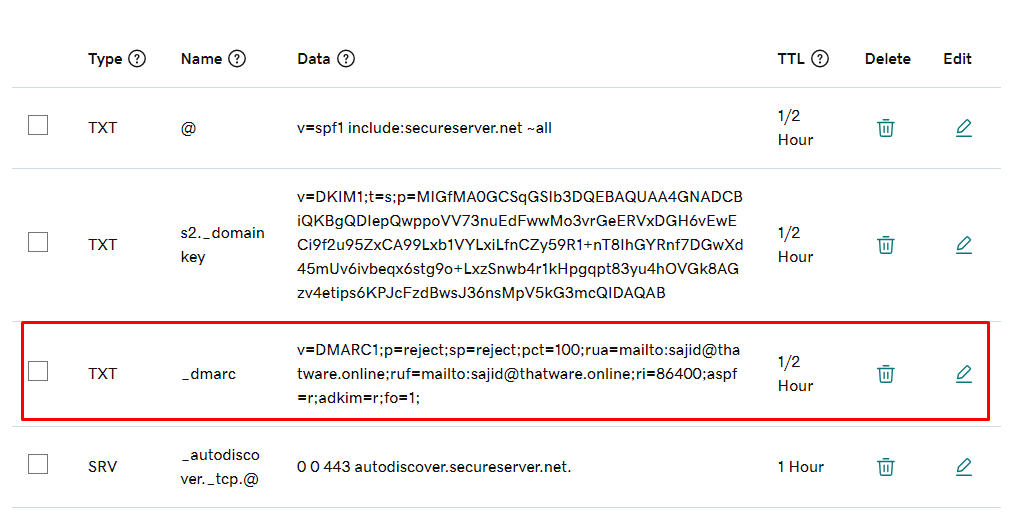
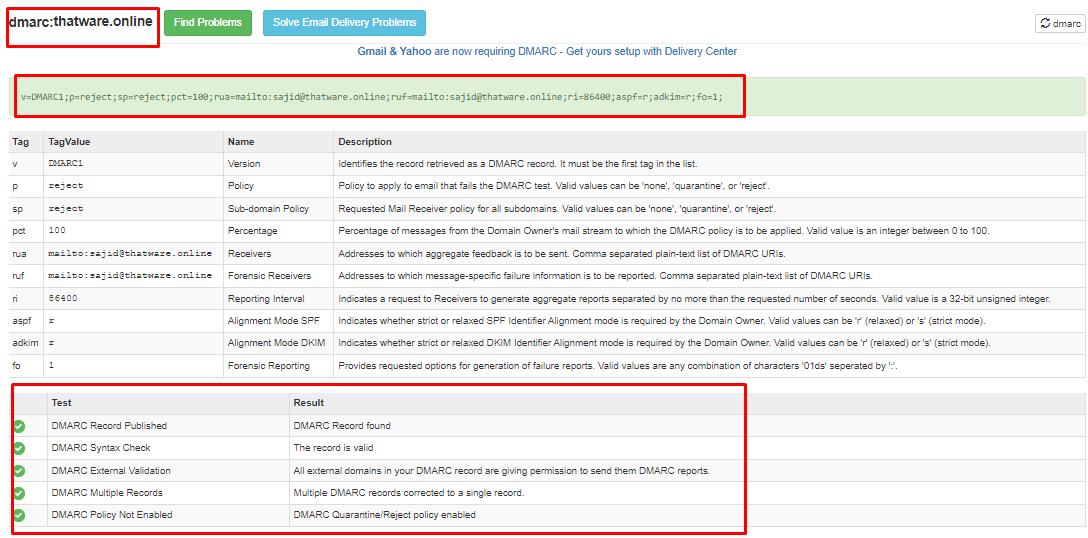
Step 6: Now we need to validate the records.
Go to https://mxtoolbox.com/dmarc.aspx
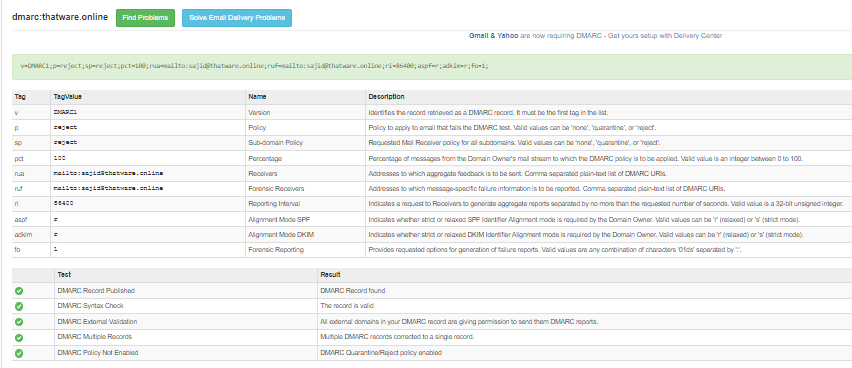
Enter the domain name and hit enter. If the following result appears. Then everything is perfect.
⭐️Combating Email Spam: Leveraging SPF, DKIM, and DMARC for a Cleaner Inbox
Email spam remains one of the most pervasive challenges in digital communication, with The Radicati Group reporting that spam messages accounted for 45% of all email traffic previously. Beyond being a daily nuisance, spam often acts as a delivery mechanism for far more dangerous threats, including malware infections, credential theft, and large-scale phishing campaigns. These malicious emails can compromise systems, steal sensitive data, and damage brand credibility. Fortunately, organizations are not powerless. Implementing email authentication standards such as SPF, DKIM, and DMARC can significantly shift the balance in favor of security, transforming how incoming mail is validated and filtered. Together, these protocols create a layered defense that not only reduces spam but also strengthens overall email trust and reliability.
⭐️Strategies to Reduce Spam Using SPF, DKIM, and DMARC
The combined use of SPF, DKIM, and DMARC forms a powerful framework for identifying legitimate email sources and blocking suspicious or fraudulent messages. Each protocol plays a distinct role, yet they work best when deployed together. Here’s how these mechanisms contribute to effective spam reduction:
SPF (Sender Policy Framework):
SPF helps combat spam by confirming whether an incoming email was sent from an authorized mail server. It does this by checking the sender’s IP address against the list of approved servers published in the domain’s SPF record. If the sending server is not listed, the email can be flagged or rejected. This simple but effective validation step prevents attackers from impersonating your domain, significantly cutting down spoofed messages and reducing the likelihood of phishing attempts that misuse your brand identity.
DKIM (DomainKeys Identified Mail):
DKIM focuses on preserving the integrity of an email message. It adds a cryptographic signature to outgoing emails, which receiving servers can verify using a public key stored in DNS. If the message content is altered during transit, the signature validation fails. This assures email service providers that the message is authentic and untampered. As a result, DKIM helps ESPs confidently distinguish legitimate communications from manipulated or suspicious emails, improving spam filtering accuracy.
DMARC (Domain-based Message Authentication, Reporting, and Conformance):
DMARC builds on SPF and DKIM by tying their results to a domain-level policy. It clearly instructs receiving servers on how to handle emails that fail authentication checks, whether to monitor, quarantine, or reject them outright. In addition, DMARC provides valuable reporting data, giving domain owners visibility into who is sending emails on their behalf. By enforcing consistent handling of failed messages, DMARC drastically reduces the chances of spam and fraudulent emails reaching end-user inboxes.
When implemented together, SPF, DKIM, and DMARC create a resilient email authentication strategy that not only curbs spam but also enhances email deliverability, security, and trust.
⭐️Tools and Techniques for Spam Prevention
While SPF, DKIM, and DMARC form the backbone of modern email authentication, they are most effective when supported by additional tools and best practices. A layered approach to email security helps organizations stay ahead of increasingly sophisticated spam and phishing tactics. By combining technical safeguards with operational discipline, businesses can significantly reduce exposure to email-based threats.
Email Filtering Solutions:
Advanced email filtering solutions play a critical role in stopping spam before it ever reaches an inbox. These systems rely on a combination of heuristics, reputation analysis, behavioural patterns, and machine learning models to identify malicious or unwanted messages. Unlike traditional filters that depend solely on static rules, modern solutions continuously learn from new data, allowing them to adapt to emerging spam campaigns. They can analyse sender reputation, message content, attachment behaviour, and even user interaction patterns. When integrated with existing email platforms, these filters add a dynamic, intelligent layer of defence that complements authentication protocols and reduces false positives.
Regular Audits and Monitoring:
Implementing authentication protocols is not a one-time task. Ongoing audits and monitoring are essential to ensure they continue to function as intended. Regularly reviewing SPF, DKIM, and DMARC configurations helps identify misalignments, outdated records, or unauthorised sending sources. DMARC reports, in particular, provide valuable insights into who is sending email on behalf of your domain and whether those messages pass authentication checks. By analysing these reports, organizations can detect anomalies early, address configuration gaps, and prevent attackers from exploiting weaknesses. Continuous monitoring also ensures that changes to email infrastructure do not inadvertently weaken security.
User Education and Training:
Technology alone cannot eliminate the risk of spam and phishing. Employees remain one of the most targeted entry points for attackers, making education and awareness a vital component of any spam prevention strategy. Regular training sessions can teach users how to identify suspicious emails, recognise social engineering tactics, and respond appropriately to potential threats. Topics may include spotting spoofed sender addresses, avoiding malicious links, and verifying unexpected requests. When employees understand the risks and feel confident reporting suspicious messages, organizations benefit from an additional human layer of defence that technology cannot replace.
Blacklists and Whitelists:
Blacklists and whitelists remain effective tools when used thoughtfully. Blacklists help block emails from known spam sources, malicious IP addresses, or domains with a history of abusive behaviour. Meanwhile, whitelists ensure that messages from trusted senders are delivered without unnecessary filtering delays. When maintained properly, these lists can significantly refine email filtering accuracy. However, they require regular updates to remain effective. Overreliance on static lists can create blind spots, so they should be used alongside adaptive filtering technologies and authentication protocols for best results.
⭐️Final Thoughts
The sheer volume of email-based threats highlights the urgency of adopting strong authentication and prevention measures. With billions of emails exchanged every day, attackers have countless opportunities to distribute spam, launch phishing campaigns, and impersonate trusted brands. This reality makes robust email security not just a technical necessity, but a business imperative. SPF, DKIM, and DMARC provide a powerful framework for reducing these risks by verifying sender authenticity and enforcing clear policies on how unauthenticated emails should be handled.
Incorporating these protocols into an email security strategy represents a proactive move toward building a resilient digital defence. However, true effectiveness comes from viewing security as an ongoing process rather than a static configuration. Regular updates, consistent monitoring, and timely adjustments ensure that protections evolve alongside the threat landscape. Equally important is fostering a culture of security awareness within the organization. When employees understand their role in safeguarding communication channels, the overall security posture becomes stronger and more sustainable.
Looking ahead, the role of AI and machine learning will continue to transform how organizations combat email threats. These technologies promise faster detection, deeper analysis, and improved response to increasingly complex attacks. Even so, the foundation of email security will remain rooted in SPF, DKIM, and DMARC. These protocols establish trust, enforce accountability, and create a reliable framework upon which advanced defences can be built. By investing in these core standards today, organizations not only protect themselves from current threats but also position themselves to adapt confidently to the evolving tactics of cyber adversaries.