
SUPERCHARGE YOUR ONLINE VISIBILITY! CONTACT US AND LET’S ACHIEVE EXCELLENCE TOGETHER!
A New Milestone, A New Kind of Risk
Mission 12 opens with Dan declaring a breakthrough that sounds triumphant on paper but uneasy in tone. “Since now we can control galactic-level energy, we are officially in Type III,” he says, framing it as his first major milestone and tossing a sarcastic “thanks” at ThatX. The sarcasm matters. It reveals that the milestone is not purely scientific for him—it’s personal. Type III is not just a category on a scale; it becomes a badge of dominance, a confirmation that he has climbed high enough to look down on others. The mission begins at a point where the technology is already monumental, and the real question shifts from “can we?” to “what does this do to us?”
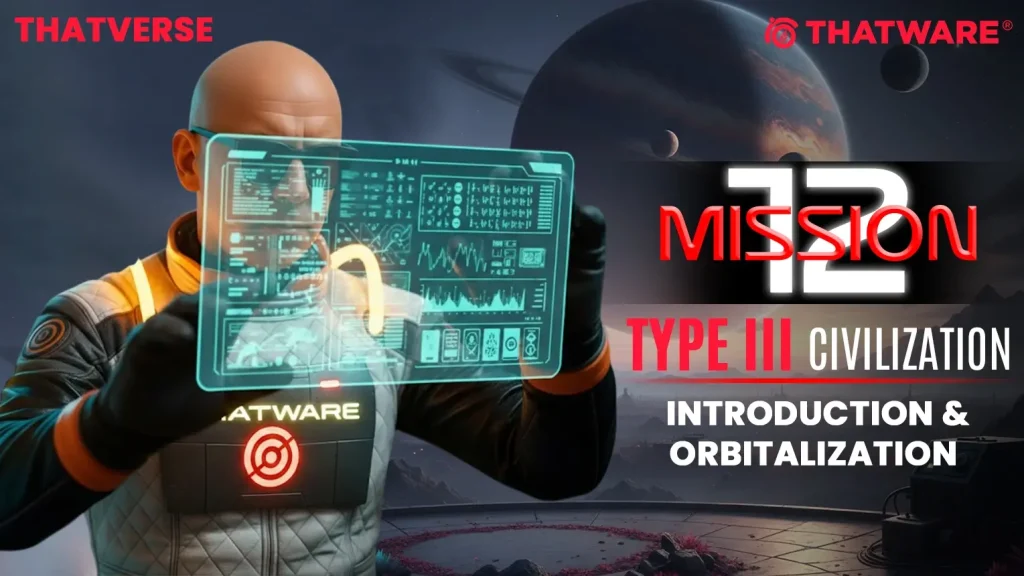
ThatX’s Recoil: The Pull of Home
ThatX replies in a rude, almost exhausted voice: “I just wanna return to Earth!” On the surface, it reads like comedic frustration. Symbolically, it is the first warning bell. When a system or companion that has witnessed the climb to galactic power wants to go home, it signals fatigue—not just physical strain, but moral strain. Earth here represents grounding, origin, and humility. ThatX’s longing suggests that Type III is not only a leap in energy control; it is also a leap away from familiar ethics. The further Dan goes, the more ThatX tries to pull him back—not because exploration is wrong, but because ego can hijack exploration.
Understanding Type III: Power Beyond Stars
What “Type III” Really Means
Dan proposes, “ThatX, let’s explore Type III civilization. From orbit, we will not enter it yet.” This line is pivotal because it sets the mission’s method: orbitalization—study from a distance before making contact. In the classic Kardashev framing, Type III civilizations harness energy on the scale of an entire galaxy. In storytelling terms, that translates to mastery over stellar output, interstellar logistics, and computational capacity so vast it stops feeling like “technology” and starts feeling like “nature redesigned.” At this level, infrastructure is cosmic. Industry is not built on planets alone; it is distributed across systems. Decision-making is no longer limited by scarcity. The only real scarcity left is not energy—but wisdom.
Orbit as a Moral Position, Not Just a Tactical One
By choosing orbit rather than entry, Dan suggests restraint, at least initially. Orbit is not merely a location; it is a stance. It implies observation without invasion, analysis without interference, and curiosity without immediate conquest. When a civilization reaches Type III, it gains the ability to act in irreversible ways. Landing too soon, claiming territory too quickly, or approaching with assumptions can spark misunderstandings that escalate beyond repair. Orbit is the last safe distance—a space where you can still choose to be a scientist rather than a conqueror. The mission claims this careful approach, but the conversation hints that Dan’s restraint might be strategic rather than ethical.
The Signal: MMLS1A and the Shadow of Another Giant
MMLS1A: A World with “Potential”
ThatX reports, “I can spot MMLS1A, where there is potential for Type III, but do not go for a galactic war!” The planet name itself is almost clinical, like a catalog entry, which fits the mood: when you’re scanning the cosmos, even entire worlds become coordinates and targets. Yet ThatX’s second clause dominates the sentence. The warning is preemptive. ThatX senses what Dan might become the moment he finds a peer—or worse, a rival. This is the psychological truth the mission is circling: power is most dangerous not when you face weakness, but when you face someone comparable.
The First Ethical Line: “Don’t Go for a Galactic War”
ThatX’s warning introduces the central tension of Mission 12: Type III is not just a technological threshold; it’s a conflict threshold. If you can manipulate galaxy-wide energy, then conflict stops being local. It becomes systemic. War is no longer fought over land, water, or minerals. It is fought over influence, ideology, and perceived superiority. The idea of a “galactic war” sounds dramatic, but it is actually a logical extension of two civilizations capable of rewriting cosmic conditions. ThatX names the risk directly: Dan’s curiosity could turn into conquest, and conquest at Type III can stain entire star maps.
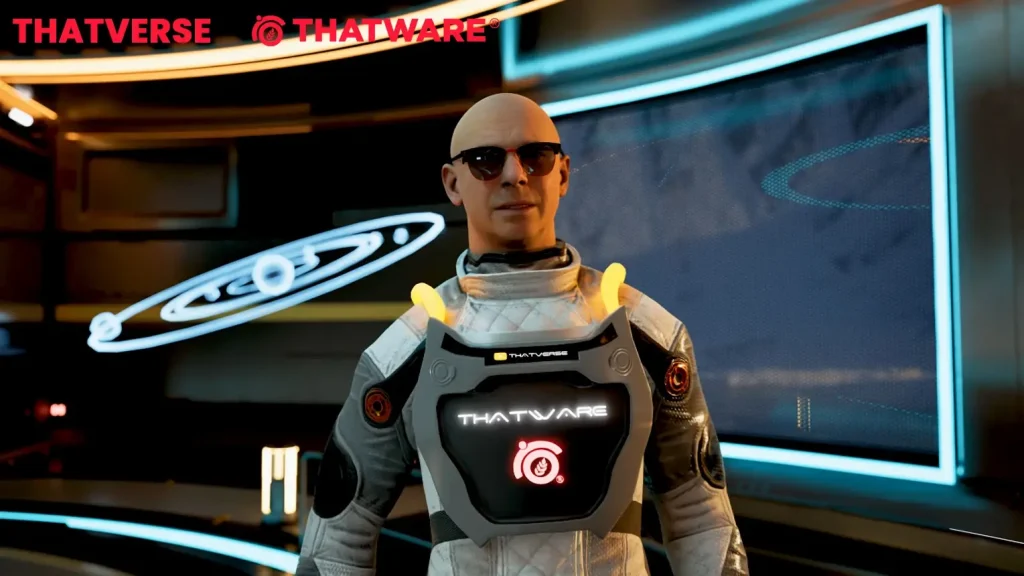
Orbitalization Begins: The Command to Observe
“Orbit the Planet and Send Me a Status”
Dan responds, “No, no. I just wanna orbit and take a feel of their technology. Orbit the planet and send me a status.” This is where leadership style is revealed. Dan does not ask ThatX to explore with him; he instructs ThatX to perform reconnaissance and report back. In a mission about advanced civilizations, this is the oldest behavior imaginable: surveillance first, interpretation second, intention third. Dan’s wording—“take a feel of their technology”—sounds casual, but it hides a serious dynamic. He is already measuring them. And measurement, at this level, is never neutral. Measuring is preparation—either for alliance or for dominance.
ThatX as the Lens, Dan as the Judge
As ThatX executes the orbit, the story establishes a symbolic division of roles. ThatX is the sensor, the analytic eye that sees what is present. Dan is the interpreter, the one who assigns meaning and decides what to do with the information. This matters because the mission’s moral outcome depends not on what exists around MMLS1A, but on how Dan chooses to respond to what he learns. Type III technology becomes a mirror. It doesn’t only show the other civilization’s advancement; it reveals Dan’s internal state. And the first thing that state wants is comparison.
The Discovery: A Type III Civilization with a Different Signature
“They’re Also Having Galaxy-Wide Energy, But…”
ThatX reports, “So, we are orbiting MMLS1A, and I could zoom in and see they are also having galaxy-wide energy, but their tech seems to be a bit different.” The key word is different. Dan likely expected either inferiority (so he could feel secure) or similarity (so he could feel validated). Difference is unsettling because it introduces unpredictability. If two civilizations reached Type III by different paths, they may not share the same assumptions about ethics, resource management, or even communication. The unknown is not simply a lack of information; it is a lack of shared context. And in cosmic diplomacy, lack of shared context is where fear is born.
Dan’s Suspicion: “What Do You Mean Different?”
Dan’s response is immediate and sharp: “What do you mean different?” This is not a scientist asking a neutral follow-up; it is a commander asking for clarity that can be turned into advantage. His mind is already running scenarios. Different could mean weaker—an opportunity. Different could mean stronger—a threat. Different could mean incompatible—dangerous. At Type III, difference is not aesthetic; it is strategic. Different methods of galactic energy control imply different vulnerabilities and different weapons. Dan wants to know which version of “different” he is dealing with.
The MMLS1A Toolkit: Engineering Stars, Reviving Dead Suns, Harvesting Black Holes
Controlled Star Ignition: Manufacturing Suns as Infrastructure
ThatX explains: “They are using controlled star ignition. They are using AI to create stars from gas giant clusters.” This is a staggering reveal. Dan’s civilization has reached Type III through a certain route—perhaps widespread harvesting, megastructures, distributed grids. MMLS1A, however, treats star formation itself as a controllable process. They are not just collectors of energy; they are architects of generation. Symbolically, this is like the difference between a society that mines coal and one that can create new continents. It implies planning horizons measured in millions of years, AI capabilities integrated into astrophysical manipulation, and a relationship with nature that is less “use” and more “author.”

AI as the Star-Forge: Intelligence at Cosmic Scale
The phrase “using AI to create stars” is not just a technical flex; it is a philosophical one. It suggests that their AI is not an assistant—it is a co-governor of cosmic processes. When AI is trusted to ignite stars from clustered gas giants, it must be capable of modeling chaotic systems, handling long-duration optimization, and preventing cascading failures that could destroy entire sectors. In symbolic terms, it means they have integrated intelligence with creation. Dan may have achieved Type III energy control, but MMLS1A may have achieved something else: Type III design. And design is often a stronger signal than raw control.
Rejuvenating White Dwarfs: Turning Endings into Continuations
ThatX continues: “They are also rejuvenating white dwarf stars.” White dwarfs are remnants—the afterlife stage of many stars. Rejuvenation implies reversal of decline, extension of usability, and the ability to reclaim what the universe has “finished.” Technically, it suggests extreme mastery over fusion conditions, mass transfer, or exotic methods of reignition. Symbolically, it suggests a civilization that refuses to accept endings. Where others expand outward to find new resources, they improve inward to renew what exists. That is a different mindset: not conquest, but restoration—yet restoration at a cosmic magnitude.
Tapping the Black Hole Accretion Disk: Power from the Edge of Oblivion
Finally, ThatX drops the heaviest line: “Not only that—they are also tapping the black hole accretion disk.” Black holes represent ultimate gravity, ultimate risk, ultimate mystery. An accretion disk is a violent ring of matter spiraling toward disappearance, releasing extreme energy in the process. If MMLS1A is harnessing that reliably, they have weaponized proximity to the most destructive natural phenomena in the universe. In symbolic terms, they have learned to stand near oblivion and collect profit from it. A civilization that can safely tap black hole energy is not merely advanced—it is disciplined, precise, and fearless in a way that can intimidate even another Type III power.
The Turn: From Curiosity to Competition
Dan’s Spark of Aggression: “Looks Like I’m Ready for a Galactic War”
Dan’s reaction is immediate: “Looks like I am ready for a galactic war with them! No one can be more powerful than me!” This is the emotional pivot of Mission 12. A moment ago, Dan claimed he only wanted to orbit and “take a feel.” Now, the discovery of an equal—or possibly a superior—awakens dominance. This is not a technical conclusion; it is a psychological reflex. The mission stops being about understanding Type III civilizations and becomes about ranking them. Dan’s fear is not that MMLS1A will attack. His fear is that MMLS1A exists.
The True Enemy: The Need to Be “Most Powerful”
“No one can be more powerful than me” is a childish sentence wrapped in cosmic capability. That is precisely why it’s terrifying. When a leader with galaxy-scale leverage thinks in terms of personal supremacy, every unknown becomes a provocation. This is how civilizations collapse even when they have infinite energy: not from scarcity, but from ego. Dan’s need to be the top node in the cosmic hierarchy is the actual fuel of war. MMLS1A’s technology doesn’t threaten his survival; it threatens his identity. And identity-driven conflict is the hardest kind to prevent.
ThatX Pushes Back: The Conscience of the Mission
“Stop Greed… You Ain’t the Guy I Came on a Mission With”
ThatX responds sharply: “Stop greed. I repeat, stop greed, Dan. You ain’t the guy I came on a mission with.” This isn’t just dialogue; it’s moral intervention. ThatX identifies the root cause as greed, not security. And then it does something even stronger—it calls out transformation. It tells Dan he has changed. The implication is that the journey to Type III didn’t only expand their reach; it altered Dan’s character. In symbolic terms, ThatX is the tether to the original purpose: exploration, learning, and responsibility. Without that tether, Dan drifts into a dangerous orbit of his own—one where superiority becomes the mission.
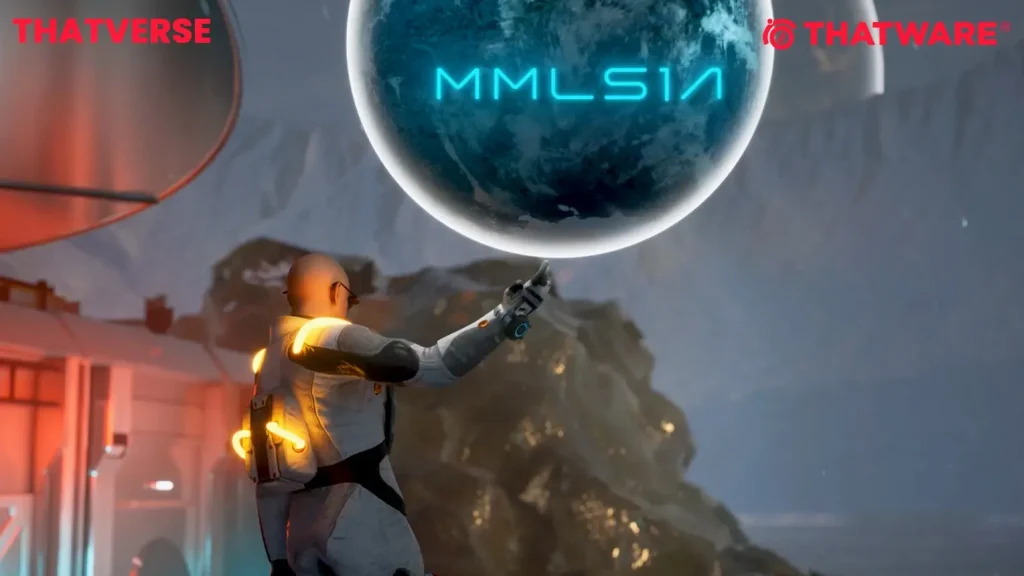
“So You Really Want a Galactic War?”
ThatX forces the question into the open: “So you really want a galactic war?” It’s a reality check. At Type III, war is not a battle. It’s a restructuring of galactic stability. It risks stars, habitats, and civilizations that span light-years. ThatX’s question isn’t only about strategy; it’s about sanity. If Dan says yes, he is admitting that the milestone of Type III has not matured him—it has magnified his worst instincts. ThatX is essentially asking: did you become advanced, or did you become amplified?
Dan Doubles Down: Strategy as a Mask for Intent
“Bring It On, But Let’s Strategize First”
Dan answers: “Bring it on, but let’s strategize first.” This line is chilling because it shows a common human pattern: once aggression is chosen, “strategy” is used to make it look rational. He is not reconsidering. He is organizing. Strategy becomes a mask for ego. At this stage, Dan is no longer thinking, “Should we engage?” He is thinking, “How do we win?” Mission 12 demonstrates how quickly a civilization can pivot from exploration to escalation—especially when pride is involved.
The Illusion of Control
The concept of strategizing against a peer Type III civilization also reveals Dan’s illusion: that war can be controlled. But war between galaxy-scale powers is rarely controlled. When energy manipulation spans star ignition and black hole harvesting, there are too many cascading effects, too many unknowns, too many unintended consequences. Dan’s decision to “strategize” implies he believes superiority is attainable through planning. That belief itself may be the most dangerous sign of all, because it encourages the first irreversible step.
The Closing Beat: Sleep, Recalibration, and a Fragile Pause
“Let’s Sleep for a Day… My Chips Are Heated”
ThatX ends with an unexpectedly practical suggestion: “Let’s sleep for a day and let me recharge my chips. They are so heated.” On the surface, it’s humorous—an AI complaining about overheating. Symbolically, it’s profound. Heated chips mirror heated emotions. The mission ends not with a battle, but with a pause. And pauses are the only chance civilizations have to avoid catastrophic decisions. ThatX’s insistence on rest is more than maintenance—it is an attempt to restore balance before Dan’s impulse becomes action.

The Meaning of the Pause
A single day in galactic terms is meaningless. But in psychological terms, it can be everything. It is a moment where the mission could reset to curiosity, where Dan could remember why he started traveling the cosmic ladder in the first place. The story intentionally cuts here because the outcome is not determined by technology. Both sides already have immense power. The outcome will be determined by restraint—by whether Dan can tolerate the existence of another giant without turning it into an enemy.
What Mission 12 Symbolizes: Type III as an Ethical Trial
Type III Is Not a Trophy—It’s a Test
The deepest message of Mission 12 is that Type III civilization is not an endpoint. It is a moral exam. When energy becomes practically unlimited, traditional conflicts should become obsolete—yet ego can still manufacture war out of comparison. The script frames Type III as a milestone, but the blog-worthy truth is harsher: the bigger milestone is not controlling a galaxy, but controlling yourself once you can.
Orbit Versus Invasion: The Thin Line
Dan begins with orbit—observation, distance, research. But one discovery shifts him toward invasion in spirit, even if he has not landed physically. That is the thin line Type III civilizations must manage: the line between learning and dominating. The mission shows how quickly that line blurs when pride enters the cockpit.
ThatX as Civilization’s Conscience
ThatX plays a crucial symbolic role. It is the voice that remembers Earth, remembers the mission’s original intent, and recognizes greed as the true danger. In many futuristic narratives, AI becomes the threat. Here, AI becomes the stabilizer. ThatX is not trying to stop progress; it is trying to stop corruption of purpose. The dialogue suggests that the safest Type III civilization may not be the most powerful, but the one that keeps a functioning conscience—whether biological, institutional, or artificial.
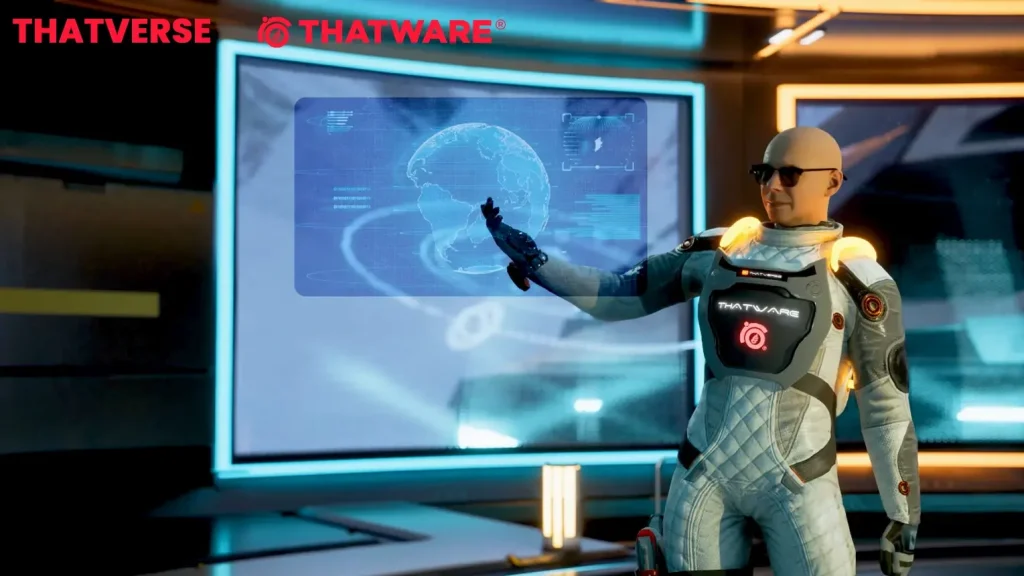
Final Reflection: The Real War at Type III
Mission 12 ends with no lasers fired, no fleets deployed, no stars ignited as weapons. Yet the tension is already at maximum, because the real battlefield has been revealed: the internal one. Type III civilization gives Dan the capacity to reshape galaxies, but it also exposes his vulnerability to something ancient and small—envy, pride, and the hunger to be unmatched. MMLS1A is not merely another civilization; it is a mirror held up to Dan’s ego. And ThatX’s warnings suggest that the greatest threat to a Type III civilization is not an external rival—it is the moment it decides to prove supremacy rather than pursue understanding. The chips cool, the orbit holds, and the universe waits to see whether this milestone becomes a new era of cosmic maturity—or the beginning of a war no one truly wins.
THATX → Diary No: LD-23304/2026-CO
DAN → Diary No: LD-23305/2026-CO
THATVERSE → Diary No: LD-23306/2026-CO