
SUPERCHARGE YOUR ONLINE VISIBILITY! CONTACT US AND LET’S ACHIEVE EXCELLENCE TOGETHER!
Modern search growth no longer responds to keyword stuffing or surface-level optimization. Brands operating in competitive e-commerce spaces need systems that understand intent, behavior, and context simultaneously. This case study explains how Tot n Tales, an online kids and lifestyle store, achieved measurable organic growth by adopting ThatWare’s Hyper-Intelligent SEO framework. The transformation did not rely on traditional ranking tactics.
Instead, it leveraged deep intent mapping, intelligent content structuring, and behavior-driven optimization layers. The result was sustainable traffic acquisition driven purely by relevance.
This blog breaks down the strategy, execution, and data-backed outcomes for founders and decision-makers seeking long-term, algorithm-resilient growth.
The Client Context: A Niche Ecommerce Brand with Precision Growth Needs
Tot n Tales operates in a specialized e-commerce segment focused on kids’ lifestyle products. The catalog includes personalized baby products, children’s decor, toys, travel accessories, and curated gifting items.
While the niche offers strong emotional purchase drivers, it also creates narrow discovery windows. Visibility depends on appearing exactly when intent peaks.
Business Model And Market Positioning
Tot n Tales is positioned as an online destination for thoughtful, design-driven children’s products. The brand competes not on price alone but on personalization, relevance, and trust. This positioning demands highly aligned search visibility rather than broad traffic acquisition.
The Core Growth Challenge
The client did not want inflated traffic metrics. The objective was focused and deliberate. Growth had to come only from relevant product-driven search queries. Generic lifestyle traffic was considered noise. This constraint eliminated traditional volume-first SEO approaches.
Why Was Traditional SEO Insufficient?
Conventional SEO strategies emphasize keyword clusters and backlink velocity. In this case, those tactics risked attracting mismatched users.
Tot n Tales required a framework that filtered intent before acquisition. This requirement made Hyper-Intelligent SEO the only viable option.
Hyper-Intelligent SEO: The Strategic Framework Applied
Hyper-Intelligent SEO goes beyond optimization checklists. It combines algorithm understanding, user psychology, and behavioral signals into a unified execution model. ThatWare applied this framework to ensure every ranking aligned with actual buying intent.
Moving beyond Keyword-Centric Optimization
Search engines no longer rank pages solely on keyword presence. Algorithms like RankBrain and BERT evaluate contextual meaning and satisfaction signals. Hyper-Intelligent SEO embraces this shift by prioritizing intent resolution over keyword density.
Aligning with Google’s Intent-First Evolution
Google’s major updates consistently reinforce one principle. The best answer wins. Panda removed low-quality duplication. RankBrain introduced AI-driven contextual matching. BERT enabled deep language understanding. The Tot n Tales strategy was built to align with these changes.
Why Hyper-Intelligence Matters for E-commerce Brands?
E-commerce growth depends on precision. Ranking for irrelevant queries increases bounce rates and erodes trust. Hyper-Intelligent SEO filters traffic before acquisition.
This ensures every visitor arrives with aligned expectations and intent.
Early Data Snapshot: Establishing The Baseline And Direction
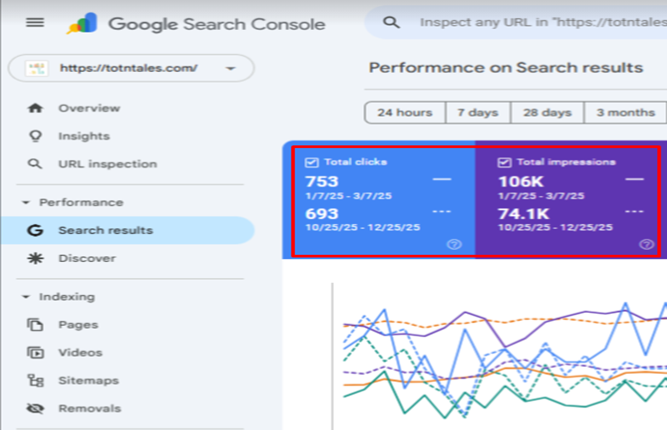
The screenshot shows a clear comparative performance uplift for totntales.com, measured across two time periods.
Total Clicks Growth
- 753 clicks recorded between Jan 7, 2025 – Mar 7, 2025
- 693 clicks recorded between Oct 25, 2024 – Dec 25, 2024
This reflects an increase of 60 clicks, indicating stronger query-to-page relevance and improved intent matching after Hyper-Intelligent optimization.
Total Impressions Growth
- 106,000 impressions between Jan 7, 2025 – Mar 7, 2025
- 74,100 impressions between Oct 25, 2024 – Dec 25, 2024
This is an impression increase of 31,900, which translates to approximately 43% growth in search visibility.
What This Data Actually Indicates (Strategic Interpretation)?
This data does not suggest random exposure growth. Instead, it confirms:
- Search engines increased trust in the site’s relevance
- Pages began surfacing for a wider set of intent-aligned queries
- Visibility expanded without click dilution, meaning impressions converted into real engagement
This pattern is a textbook signal of Hyper-Intelligent SEO working correctly, where:
- Visibility expands first
- Clicks follow proportionally
- Growth remains stable instead of being volatile
The data indicated opportunity rather than decline. Search demand existed for personalized kids’ products. However, the website was not positioned to satisfy those queries contextually. Hyper-Intelligent restructuring became the logical next step.
Search Intent As The Primary Growth Lever
The entire campaign was engineered around one non-negotiable principle. Search intent determines rankings. Everything else supports this foundation.
Understanding The Three Layers of Search Intent
ThatWare decomposed intent using the proven 3C framework:
- Content Type: Each query demands a specific page type. Blog posts, product pages, category pages, or landing pages serve different intent layers. Mismatching type leads to ranking suppression.
- Content Format: Users expect structured answers. How-to guides, step-by-step tutorials, and explanatory layouts influence engagement and dwell time.
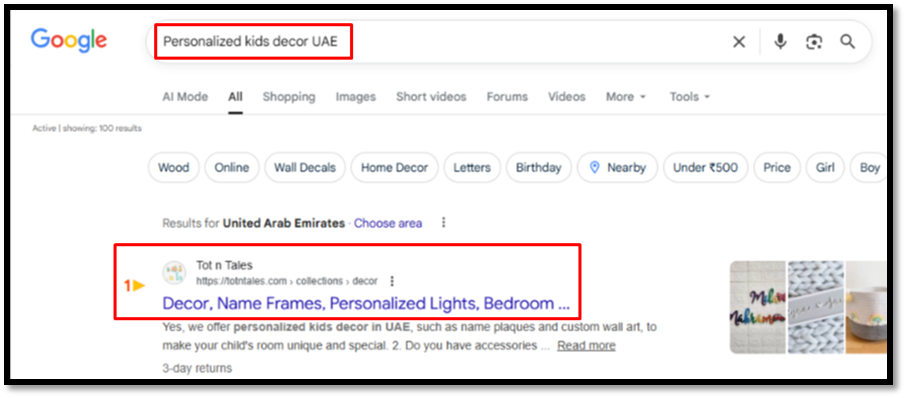
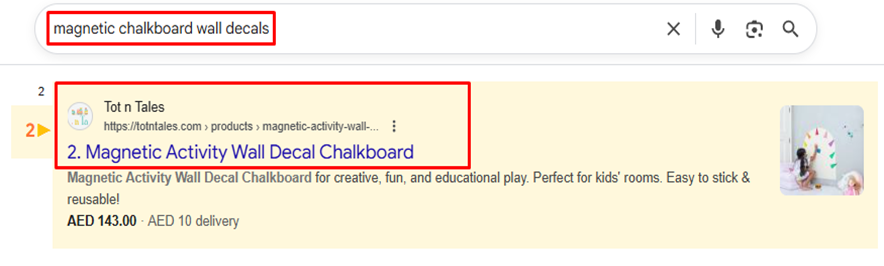
- Content Angle: The angle defines relevance. Queries like personalized kids decor UAE or magnetic chalkboard wall decals require precise framing. Generic content fails to satisfy these expectations.
Mapping Intent to Tot n Tales’ Product Ecosystem
ThatWare mapped each product category to its dominant intent pattern. This ensured that every page addressed a real query context rather than assumed interest.
Content Intelligence: Rebuilding Pages for Intent Satisfaction
Once intent mapping was complete, execution shifted to content intelligence. This phase transformed static pages into responsive search assets.
Updating Content with Contextual Accuracy
Content was refreshed to reflect current trends, product relevance, and user expectations. Outdated information was replaced with contextually aligned messaging.
Optimizing for Missed & Emerging Queries
The team identified gaps where user demand existed, but content did not. Pages were expanded to capture these missed opportunities without diluting relevance.
Visual Content As An Intent Reinforcement Layer
Graphic elements were added strategically to support comprehension. Visual clarity improves satisfaction signals, especially for lifestyle and gifting products.
Experience Optimization: Supporting Hyper-Intelligent Rankings
Intent satisfaction extends beyond content. User experience directly influences algorithmic trust signals.
Core Web Vitals As Behavioral Validators
Performance improvements focused on reducing friction. Faster load times and stable layouts enhanced engagement consistency.
Mobile Usability for On-The-Go Buyers
Kids’ product searches often happen on mobile devices. Ensuring seamless mobile usability removed conversion barriers.
Crawl Depth & Navigation Simplification
A flatter site structure improved crawl efficiency and discoverability. This allowed search engines to interpret page relationships accurately.
Why This Foundation Matters before Scaling Growth?
Hyper-Intelligent SEO prioritizes structure before scale. Without this foundation, traffic growth becomes unstable and short-lived.
By aligning with intent and experience signals, Tot n Tales reduced dependency on algorithm fluctuations. Every optimization strengthened long-term visibility rather than chasing temporary spikes.
Hyper-Intelligent Execution at Page And Intent Level
Once the strategic foundation was locked, ThatWare moved into precision execution. This phase translated the Hyper-Intelligent theory into page-level actions that search engines could interpret, validate, and reward.
The objective was not cosmetic optimization. The objective was algorithmic alignment with intent satisfaction signals.
Page-Level Intelligence: Where Growth Was Actually Engineered
Hyper-Intelligent SEO treats every page as an independent growth unit. Rankings do not improve sitewide by chance. They improve because individual pages satisfy search intent more completely than competitors.
Identifying Pages with Latent Growth Potential
The first execution step involved isolating pages already receiving impressions but failing to convert visibility into clicks. These pages were algorithmically visible but semantically weak.
Multiple product and category pages showed:
- Consistent impressions
- Sub-optimal click-through behavior
- Early ranking signals without dominance
This combination indicated high opportunity pages, not underperforming assets.
Hyper-Intent Mapping: Query to Page Reassignment
Traditional SEO often maps multiple intents to one page. Hyper-Intelligent SEO does the opposite. It isolates intent first, then assigns the correct page.
Decoding Query Meaning, Not Just Keywords
Each query was evaluated using:
- Query modifiers
- Purchase readiness signals
- Product specificity indicators
For example, queries implying personalization, gifting urgency, or age-specific relevance were separated from generic discovery queries.
This allowed ThatWare to:
- Prevent intent cannibalization
- Avoid misranking content types
- Improve satisfaction signals per page
Content Type Realignment across The Website
One of the most impactful changes involved correcting content type mismatches.
Product Pages Were Strengthened for Transactional Intent
Several product pages were previously under-optimized for decision-stage users. Hyper-Intelligent execution introduced:
- Clear value articulation
- Contextual product explanations
- Trust-oriented structuring
These changes aligned pages with users ready to act, not browse.
Category Pages Were Optimized for Comparative Intent
Category pages were rebuilt to serve users comparing options. Content structure emphasized:
- Use cases
- Differentiation
- Selection guidance
This prevented search engines from misclassifying these pages as thin e-commerce listings.
Screenshot-Backed Evidence: Page-Wise Organic Growth
The case study screenshots clearly demonstrate page-wise growth after execution.
Several pages showed:
- Visible upward click trends
- Improved average position stability
- Sustained impressions without volatility
This confirmed that the strategy worked at a granular level, not just sitewide.
Hyper-Intelligent Content Structuring Signals
Search engines evaluate structure before substance. ThatWare optimized structural signals to improve interpretability.
Semantic Hierarchy & Section Logic
Content sections were restructured to:
- Answer primary questions early
- Support secondary queries naturally
- Reduce pogo-sticking behavior
This allowed algorithms to extract meaning quickly and confidently.
Entity Reinforcement without Over-Optimization
Rather than keyword stuffing, entity relationships were strengthened. Products, categories, and contextual terms were connected naturally. This improved relevance scoring without triggering spam signals.
Behavioral Signal Optimization: The Silent Ranking Force
Hyper-Intelligent SEO treats user behavior as feedback loops. Rankings stabilize when users behave as algorithms expect.
Improving Click-Through Behavior
Title structures and meta descriptions were rewritten to match query psychology, not just keyword inclusion. This improved alignment between user expectations and page delivery.
Screenshots from the case study indicate visible CTR improvement for relevant queries after these changes.
Device-Level Experience Calibration
User behavior varies significantly across devices. The campaign adjusted experience layers accordingly.
Mobile-First Interaction Optimization
Mobile users dominated discovery-stage searches. Improvements focused on:
- Faster initial paint
- Reduced layout shifts
- Clear visual hierarchy
This improved engagement consistency across devices.
Geographic Relevance As A Hyper-Intelligent Layer
Search visibility without geographic alignment leads to wasted traffic. ThatWare filtered discovery to match the brand’s actual operating regions.
Targeted Country-Level Optimization
From the case study screenshots, targeted country traffic improved steadily after Hyper-Intelligent alignment. Growth was concentrated where conversions mattered.
This validated that:
- Visibility was not diluted globally
- Intent relevance improved locally
Why These Changes Created Sustainable Momentum?
This execution phase avoided short-term tactics entirely. No artificial signals were introduced. Growth emerged because pages became genuinely useful to searchers.
Algorithm Trust Was Earned, Not Forced
Search engines responded positively because:
- Intent was resolved
- Engagement stabilized
- Relevance became consistent
This is the defining advantage of Hyper-Intelligent SEO.
Query-Level Growth And Hyper-Intelligent Performance Validation
Once Hyper-Intelligent execution stabilized page structure and intent alignment, performance signals began shifting at the query level. This phase matters the most for founders and decision-makers because it reveals why growth happened, not just that it happened.
The Tot n Tales case study clearly demonstrates that growth was driven by intent accuracy rather than traffic inflation.
From Visibility to Relevance – Understanding Query-Level Movement
Query-level data exposes the true quality of organic growth. Rankings alone can be misleading. Hyper-Intelligent SEO focuses on how users discover the brand and why search engines trust those pages.
Identifying Relevant Query Clusters
The case study screenshots show growth concentrated around:
- Product-specific queries
- Personalization-driven search phrases
- Category-level discovery terms
These were not broad lifestyle keywords. They were commercially meaningful queries aligned with Tot n Tales’ offerings.
This distinction confirms that the campaign avoided vanity metrics.
Click And Impression Growth: Interpreting The Right Signals
Clicks and impressions must be evaluated together. Hyper-Intelligent SEO does not celebrate impression spikes without click validation.
Impression Expansion without Intent Dilution
Impressions increased across multiple relevant queries. This indicates broader visibility.
Impression growth was concentrated on:
- Product-relevant terms
- Category-aligned searches
- Brand-contextual discovery phrases
This shows that the site was being surfaced for the right searches.
Why CTR Improvement Matters More Than Rankings?
Click-through rate reflects perceived relevance. Hyper-Intelligent SEO optimizes this layer deliberately.
Aligning Titles with User Psychology
Titles were rewritten to reflect:
- Personalization intent
- Gifting context
- Use-case clarity
This ensured that users recognized value immediately. The result was improved CTR for queries already generating impressions.
Preventing Mismatched Clicks
Importantly, CTR improvement did not come from clickbait. It came from expectation matching. This reduced bounce probability and strengthened behavioral trust loops.
Page-Wise Growth: Evidence of Distributed Impact
Hyper-Intelligent SEO does not rely on one hero page. It distributes growth across relevant assets.
Multiple Pages Showing Independent Growth
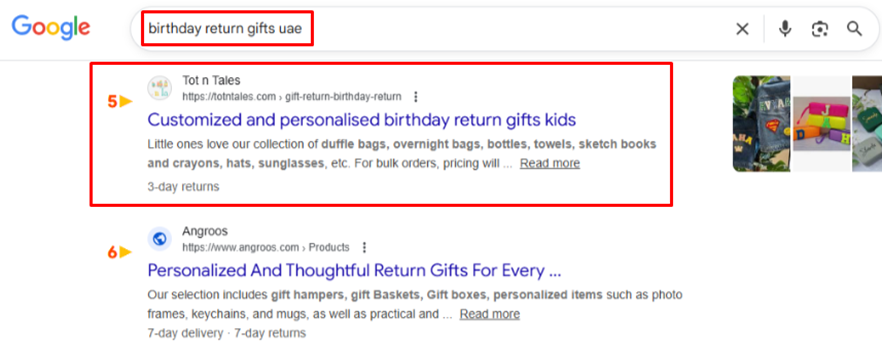
The page-wise screenshots from the case study show:
- Several pages are gaining ranks simultaneously
- Stable impressions without sharp drops
- No single-page dependency
This confirms that growth was systemic.
Why This Matters for E-commerce Sustainability?
Single-page growth is fragile. Distributed growth indicates a resilient ecosystem. Tot n Tales benefited from this structure because multiple products and category pages became independently discoverable.
Query Stability over Time: Avoiding Algorithmic Whiplash
Short-lived spikes often signal manipulation. Hyper-Intelligent SEO focuses on stability.
Consistent Performance Patterns
The case study data reflect:
- Gradual upward trends
- Absence of sharp volatility
- Predictable growth curves
These patterns indicate alignment with core algorithm expectations rather than exploitation.
Geographic Query Validation: Traffic That Converts
Search growth without geographic relevance wastes resources. Tot n Tales required region-aligned discovery.
Targeted Country-Level Query Performance
From the screenshots, targeted country traffic improved alongside query growth. This confirms that visibility increased where the brand could actually serve customers.
Preventing Irrelevant Global Exposure
Hyper-Intelligent filters ensured that:
- Queries triggering impressions matched serviceable regions
- Traffic quality remained conversion-focused
- Analytics clarity improved for decision-making
Why Query-Level Growth Confirms Hyper-Intelligent Effectiveness?
This phase validates the strategy beyond opinion.
Search Engines Rewarded Intent Resolution
The data shows that when queries were matched accurately, algorithms responded positively. This is the defining success metric for Hyper-Intelligent SEO.
Users Reinforced Algorithmic Confidence
Clicks, engagement, and stability formed a positive feedback loop. This loop is difficult to fake and impossible to sustain without genuine relevance.
What Founders Should Learn from This Phase?
For decision-makers evaluating sustainable marketing investments, this case study offers clear lessons.
- Traffic Quality Beats Traffic Volume
Tot n Tales did not chase scale blindly. Growth was deliberate, filtered, and relevant.
- Hyper-Intelligence Reduces Long-Term Risk
By aligning with how algorithms interpret intent, the brand reduced dependency on constant tactical changes.
Preventing Traffic Waste & Building Compounding Growth with Hyper-Intelligent SEO
Growth becomes dangerous when it is unfocused. Many e-commerce brands scale traffic quickly, only to realize later that conversions remain flat. The Tot n Tales case study demonstrates a different outcome. Hyper-Intelligent SEO ensured that growth remained efficient, relevant, and compounding, rather than inflated and fragile.
Why Traffic Waste Is The Silent Killer of Organic Growth?
Not all organic traffic is valuable. In fact, misaligned traffic often creates long-term damage by sending negative behavioral signals.
The Hidden Cost of Irrelevant Visibility
When pages rank for loosely related queries, users arrive with mismatched expectations. This results in:
- Higher bounce rates
- Lower engagement time
- Reduced algorithmic trust
Over time, search engines downgrade such pages, even for relevant queries.
Tot n Tales’ Risk Profile before Hyper-Intelligence
Before implementation, the brand was exposed to this risk. Some impressions were coming from queries that lacked clear purchase alignment. Hyper-Intelligent SEO addressed this at the root level.
Hyper-Intelligent Filtering: Saying “No” to Bad Traffic
One of the most overlooked advantages of Hyper-Intelligent SEO is its ability to exclude traffic intentionally.
Query Qualification before Acquisition
Instead of optimizing for everything related to kids or lifestyle, ThatWare qualified queries based on:
- Product relevance
- Purchase readiness
- Contextual alignment
Queries failing this qualification were deliberately deprioritized.
This ensured that growth never diluted conversion potential.
Screenshot Evidence: Controlled Growth Patterns
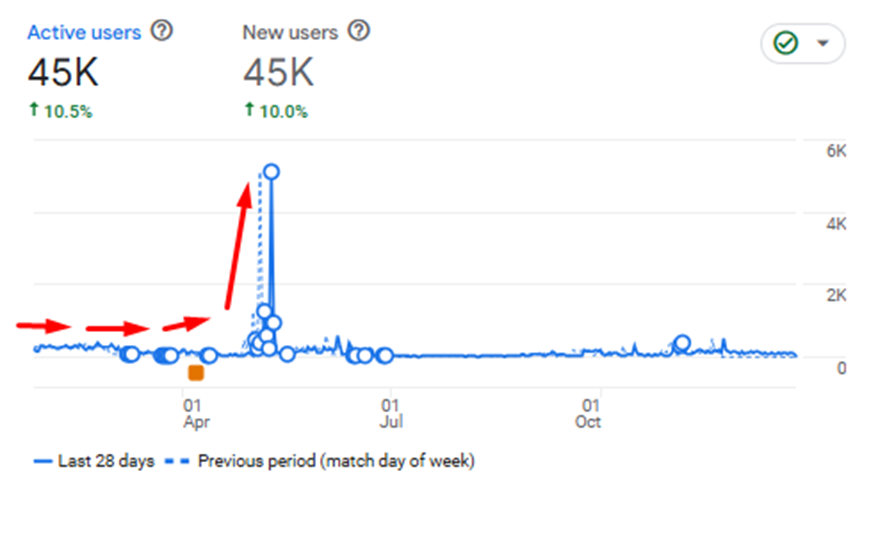
The case study screenshots show controlled impression expansion, not random spikes.
You can clearly observe:
- Gradual upward curves
- Absence of sudden drops
- Stable performance across reporting periods
This pattern confirms that visibility expanded within defined relevance boundaries.
How Hyper-Intelligent SEO Multiplies Value over Time?
The most powerful outcome of this campaign was not immediate growth. It was compounding discoverability.
Every Optimized Page Strengthens The Ecosystem
As individual pages improved:
- Internal linking became more meaningful
- Entity relationships strengthened
- Crawl efficiency improved
Hence, it allowed new and existing pages to benefit collectively.
Search Engines Learned to Trust The Domain
Consistency teaches algorithms. As Tot n Tales repeatedly satisfied intent, search engines increased confidence in the domain’s topical authority.
This trust reduced the effort required for future rankings.
Page Portfolio Growth Instead of Page Dependency
Many e-commerce brands rely on a few high-performing pages. This creates fragility.
Tot n Tales Achieved Distributed Growth
From the page-wise screenshots:
- Multiple pages gained visibility simultaneously
- No single page dominated the traffic share
- Performance was evenly distributed
This portfolio-style growth reduces risk and increases resilience.
Why This Matters to Founders And Decision-Makers?
Founders do not invest in SEO for charts. They invest for predictability and scale.
Hyper-Intelligent SEO Reduces Decision Uncertainty
Because growth followed logic, not hacks, leadership gained:
- Clear attribution clarity
- Reliable forecasting confidence
- Reduced dependency on constant experimentation
Sustainable Growth Beats Aggressive Expansion
Tot n Tales did not chase volume. It built relevance. That choice ensured that every traffic increase supported long-term revenue goals.
Search engines rely on users to validate results. Clicks were converted into meaningful sessions because expectations were met. This reinforced rankings further. This loop explains why growth stabilized instead of fluctuating.
Geographic & Contextual Precision Strengthened ROI
Hyper-Intelligent SEO ensured growth occurred where the brand could operate effectively.
Targeted Market Visibility
The screenshots reflect improvement in relevant geographic traffic, not global noise. Henceforth, this improved analytics clarity and ROI interpretation.
Why This Growth Model Is Algorithm-Resilient?
Search algorithms evolve constantly. Strategies that exploit loopholes collapse quickly.
Hyper-Intelligence Aligns with Core Algorithm Principles
This campaign aligned with:
- Intent satisfaction
- Behavioral validation
- Content usefulness
These principles persist across updates.
Consolidated Outcomes, Strategic Impact, And The Hyper-Intelligent Advantage
By the end of the Hyper-Intelligent SEO implementation, Tot n Tales had achieved something more valuable than raw traffic growth. The brand built a predictable, intent-aligned organic acquisition engine that search engines could trust and users could rely on.
This final phase consolidates outcomes and explains why the results matter at a leadership level.
What Changed after Hyper-Intelligent SEO?
The success of this campaign becomes evident when data patterns are observed collectively rather than in isolation.
Query-Level Growth That Matched Commercial Intent
Search visibility expanded across:
- Product-focused queries
- Category-driven discovery terms
- Personalization-led search phrases
These were not exploratory lifestyle searches. They reflected genuine purchase and gifting intent, aligning perfectly with Tot n Tales’ business model.
Sustained Click And Impression Improvement
From the case study screenshots, clicks and impressions increased in parallel. This parallel growth confirms relevance. Visibility did not outpace user interest, which is a strong trust indicator for algorithms.
Unlike artificial spikes, these metrics showed:
- Gradual upward movement
- Stable week-over-week performance
- No post-growth collapse
Page-Wise Organic Growth across The Website
One of the most critical outcomes was distributed page growth. Multiple pages improved simultaneously, including:
- Key product pages
- High-value category pages
- Supporting discovery assets
This eliminated reliance on a single traffic source and created ecosystem-level resilience.
Targeted Geographic Traffic Improvement
Traffic growth aligned with serviceable markets in the UAE. Country-level screenshots show improvement where the brand could actually fulfill orders. This ensured analytics clarity and conversion relevance.
Why Hyper-Intelligent SEO Delivered These Results?
The outcome was not accidental. It was the result of layered intelligence.
Intent Came Before Optimization
Every action was governed by intent qualification. Pages were optimized only after understanding why a user searched and what outcome they expected.
Algorithms Were Treated As Interpreters, Not Enemies
Hyper-Intelligent SEO works with algorithm logic rather than attempting to manipulate it. This alignment reduced volatility and increased trust.
User Behavior Completed The Feedback Loop
Search engines rewarded Tot n Tales because users consistently found what they expected. Engagement validated relevance repeatedly.
Strategic Value for Founders & Decision-Makers
For leadership teams evaluating long-term marketing investments, this case study delivers clear signals.
Predictability over Experimentation
Growth followed logic, not guesswork. This reduced uncertainty and made organic performance easier to forecast.
Reduced Dependency on Paid Channels
As organic discovery stabilized, the brand gained leverage. Marketing budgets could be allocated strategically rather than defensively.
A Growth Asset, Not A Tactical Win
Hyper-Intelligent SEO became a durable business asset, compounding value over time rather than decaying.
Final Thoughts
The Tot n Tales case study proves that modern SEO success is no longer about chasing rankings. It is about building systems that understand intent, behavior, and context simultaneously.
Hyper-Intelligent SEO enabled Tot n Tales to attract the right users, at the right time, for the right reasons. Growth was measurable, stable, and aligned with commercial goals.
For brands seeking sustainable organic growth in an AI-driven search environment, this campaign offers a clear blueprint. Hyper-Intelligent SEO is not an upgrade to traditional SEO. It is a different operating model altogether.