
SUPERCHARGE YOUR ONLINE VISIBILITY! CONTACT US AND LET’S ACHIEVE EXCELLENCE TOGETHER!
This document provides a complete strategic, architectural, semantic, cognitive, and implementation-level explanation of the reasoning-map.json file.
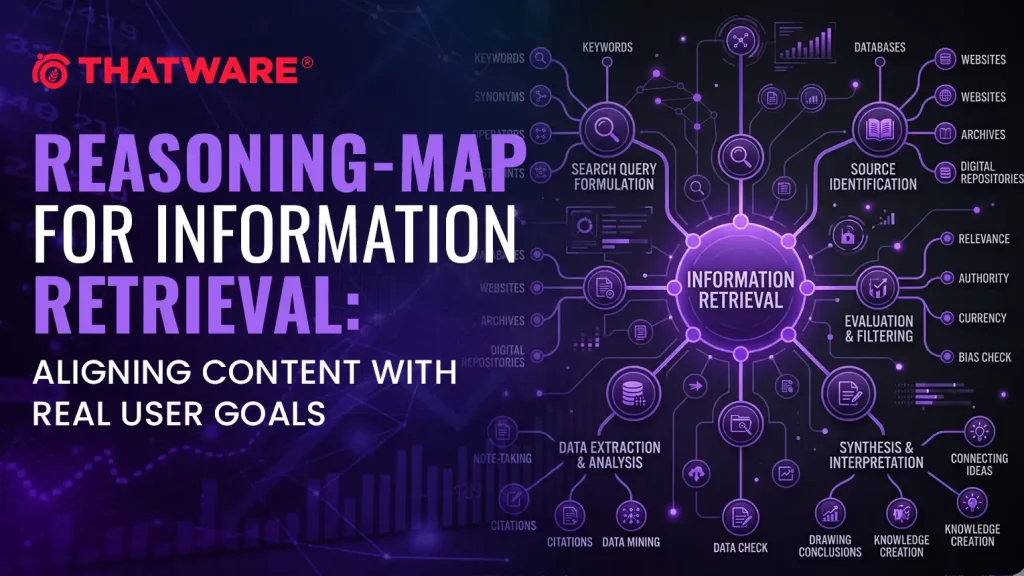
This file is designed to model how AI systems should:
· interpret user intent
· decompose questions
· construct reasoning chains
· assemble contextual understanding
· connect semantic entities
· navigate multi-hop knowledge relationships
· synthesize answers
· prioritize explanatory logic
· structure AI thought flows
· perform retrieval-guided reasoning
· generate grounded responses
This file is specifically intended for:
· Generative Engine Optimization (GEO)
· Large Language Model optimization
· Retrieval-Augmented Generation (RAG)
· semantic reasoning systems
· AI answer orchestration
· multi-hop retrieval systems
· AI agent cognition
· semantic inference engines
· contextual answer assembly
· explainable AI systems
· AI-native knowledge architectures
This guide explains:
· what reasoning-map.json is
· why it matters
· how LLM reasoning works
· how semantic reasoning chains function
· how AI systems construct answers
· how reasoning pathways improve retrieval
· how intent decomposition works
· how multi-hop reasoning operates
· how semantic inference systems behave
· how answer synthesis can be optimized
· how AI cognitive orchestration can be structured
· enterprise reasoning architectures
· reusable production-grade JSON structures
1. What Is reasoning-map.json?
reasoning-map.json is a machine-readable semantic reasoning orchestration file that defines:
· how questions should be interpreted
· how intent should be decomposed
· how semantic relationships should be traversed
· how retrieval pathways should be constructed
· how AI systems should assemble answers
· how contextual dependencies connect
· how reasoning chains should flow
· how supporting evidence should be incorporated
· how explanations should be prioritized
· how answer structures should be generated
In simple terms:
It is a semantic reasoning blueprint for AI systems.
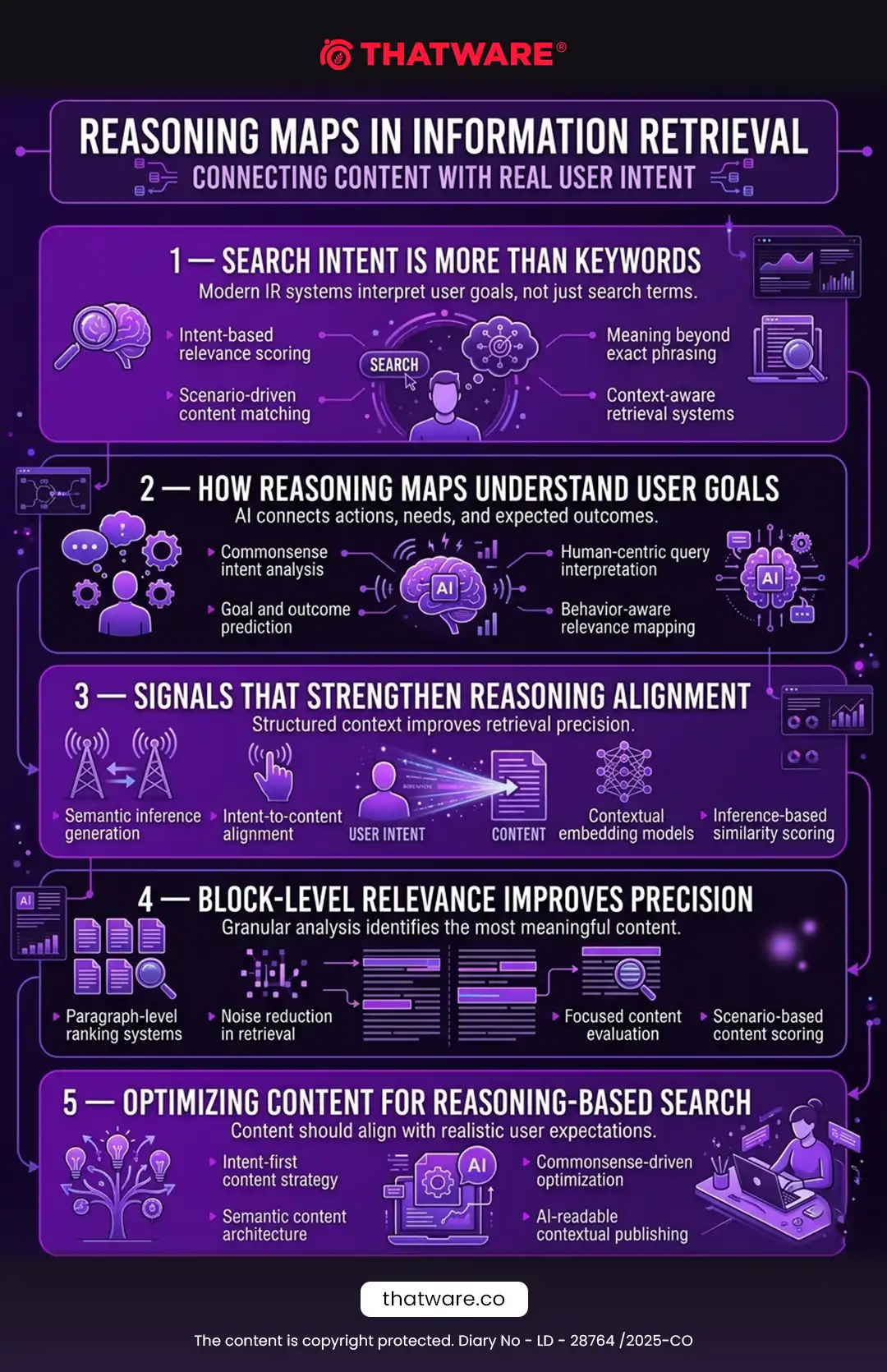
2. Why reasoning-map.json Exists
Traditional websites optimize content for:
· crawling
· indexing
· ranking
· keyword relevance
But AI systems increasingly depend on:
· reasoning quality
· context assembly
· semantic understanding
· logical progression
· multi-hop inference
· evidence synthesis
· retrieval coordination
· answer coherence
Most websites do not explain:
· how ideas connect
· how questions should be answered
· how explanations should flow
· which reasoning sequence is preferred
· how semantic dependencies interact
reasoning-map.json solves this.
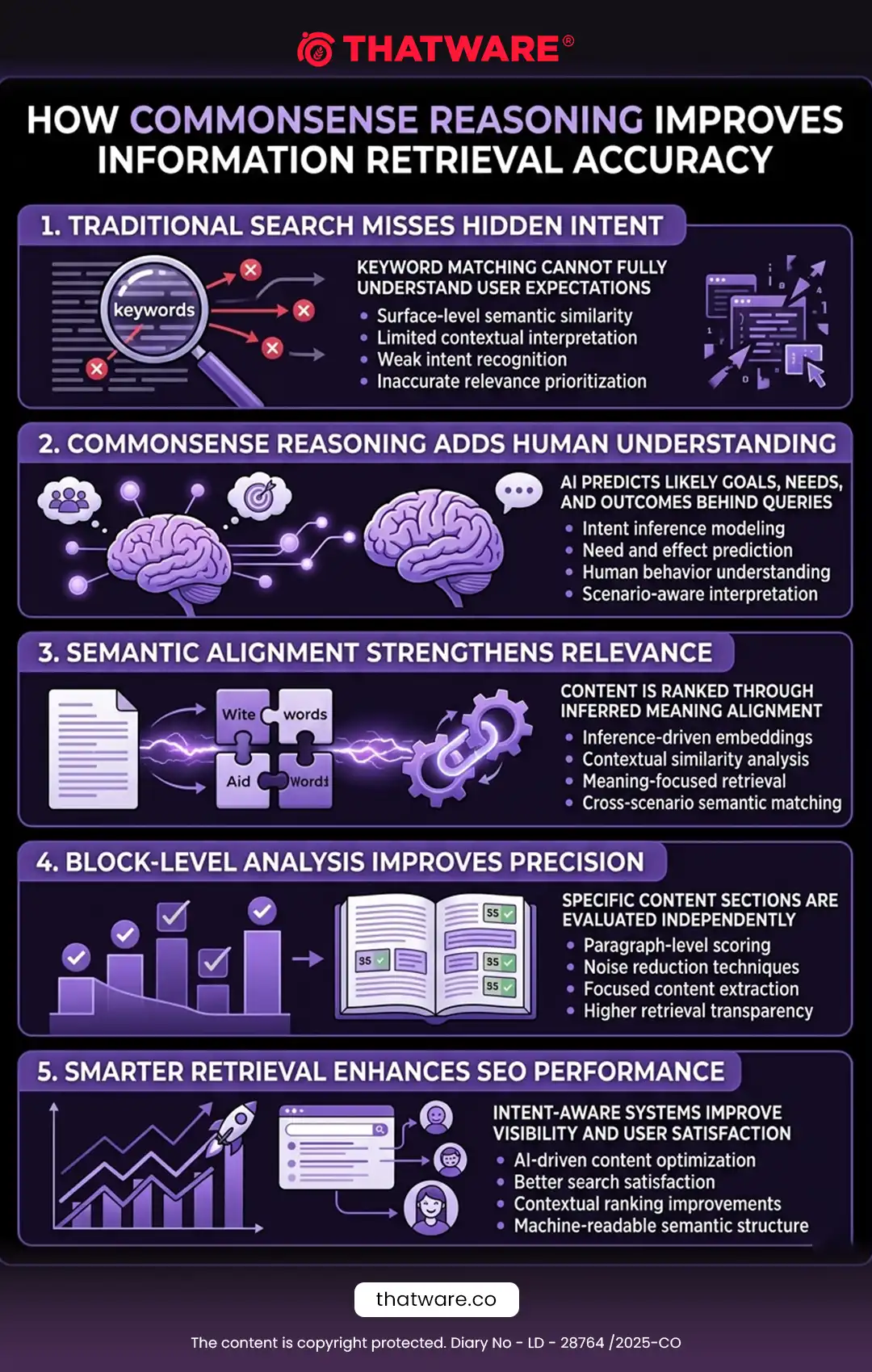
3. Core Objective of reasoning-map.json
The file helps AI systems answer:
· How should this query be interpreted?
· Which concepts must be understood first?
· What reasoning steps are required?
· Which supporting entities are needed?
· Which retrieval chain should be followed?
· What explanatory order should be used?
· Which evidence strengthens the answer?
· Which contextual dependencies matter?
· How should answer synthesis occur?
4. Why This Matters for GEO
In Generative Engine Optimization, appearing in AI-generated answers depends on:
· retrievability
· semantic authority
· contextual relevance
· reasoning compatibility
· answer usefulness
AI systems increasingly prioritize:
· coherent reasoning
· grounded logic
· structured explanations
· trustworthy inference
reasoning-map.json improves:
4.1 AI Answer Construction
Helps AI systems build coherent answers.
4.2 Multi-Hop Retrieval
Improves retrieval across connected concepts.
4.3 Semantic Context Assembly
Supports context-aware answer generation.
4.4 Query Understanding
Improves intent interpretation.
4.5 Citation Accuracy
Guides evidence inclusion.
4.6 Hallucination Reduction
Structured reasoning improves grounding.
5. Understanding AI Reasoning
Modern AI systems do not simply retrieve pages.
They:
1. interpret the query
2. infer intent
3. identify semantic entities
4. retrieve supporting information
5. connect concepts
6. synthesize reasoning
7. generate answers
This process resembles cognitive reasoning.
reasoning-map.json helps guide this process.
6. Types of AI Reasoning
A strong reasoning map should support multiple reasoning types.
6.1 Definition Reasoning
Example:
What is GEO?
Reasoning flow:
Define GEO
→ Compare with SEO
→ Explain AI search systems
→ Explain retrieval optimization
6.2 Comparative Reasoning
Example:
GEO vs Traditional SEO
Reasoning flow:
Define SEO
→ Define GEO
→ Compare objectives
→ Compare systems
→ Compare optimization strategies
6.3 Procedural Reasoning
Example:
How do I optimize for AI search?
Reasoning flow:
Explain AI retrieval
→ Explain semantic optimization
→ Explain entity authority
→ Explain RAG optimization
→ Explain implementation
6.4 Multi-Hop Reasoning
Example:
How does entity SEO influence AI retrieval quality?
Reasoning flow:
Define entity SEO
→ Define semantic entities
→ Explain retrieval systems
→ Explain embedding systems
→ Connect entities to retrieval precision
6.5 Diagnostic Reasoning
Example:
Why is my content not appearing in AI answers?
Reasoning flow:
Analyze retrieval issues
→ Analyze semantic structure
→ Analyze authority signals
→ Analyze citations
→ Recommend improvements
7. Relationship With Other GEO Files
reasoning-map.json works together with:
| File | Role |
| knowledge-graph.json | Defines entities |
| rag-index.json | Defines retrieval assets |
| context-engine.json | Defines context assembly |
| citation-preferences.json | Defines citation logic |
| entity-authority.json | Defines authority weighting |
| trust-signals.json | Defines trust evidence |
| answer-primitives.json | Defines atomic answer blocks |
The reasoning map orchestrates how these systems interact.
8. Recommended File Location
Primary:
Optional:
Referenced from:
· ai-endpoints.json
· llmsfull.txt
· knowledge-graph.json
· context-engine.json
9. Recommended MIME Type
application/json
10. Core Design Principles
10.1 Intent-First Architecture
Reasoning should begin with intent.
10.2 Stepwise Logic
Reasoning should flow logically.
10.3 Semantic Dependency Awareness
Concepts depend on other concepts.
10.4 Retrieval Coordination
Reasoning should align with retrieval systems.
10.5 Context Preservation
Reasoning should maintain semantic continuity.
10.6 Evidence Integration
Strong answers require supporting evidence.
10.7 Explainability
AI reasoning should remain understandable.
11. Main Components of reasoning-map.json
A complete reasoning map should include:
1. metadata
2. query intents
3. reasoning flows
4. semantic dependencies
5. retrieval pathways
6. answer structures
7. supporting evidence logic
8. context priorities
9. reasoning confidence
10. explanation ordering
11. multi-hop relationships
12. citation guidance
13. fallback reasoning
14. answer synthesis rules
15. semantic transition rules
16. contextual constraints
17. reasoning templates
12. Intent Modeling
Every reasoning flow should begin with intent classification.
Recommended intents:
definition
comparison
implementation
diagnostic
tutorial
research
commercial
navigational
strategic
technical
Example:
{
“intent”: “comparison”
}
13. Semantic Dependency Modeling
Many concepts require prerequisite understanding.
Example:
LLM Optimization
→ requires understanding of:
– retrieval systems
– embeddings
– semantic search
– AI answer generation
Dependencies help AI systems build better explanations.
14. Multi-Hop Reasoning
Multi-hop reasoning means connecting multiple concepts together.
Example:
Entity SEO
→ influences semantic understanding
→ improves retrieval precision
→ improves AI answer relevance
→ improves citation probability
The map should explicitly model these relationships.
15. Answer Construction Logic
A reasoning system should guide:
· what to explain first
· what supporting ideas to include
· which evidence to cite
· what depth to use
· how to conclude the answer
Example structure:
1. Define
2. Explain relevance
3. Explain mechanism
4. Provide evidence
5. Provide implementation
6. Summarize
16. Contextual Transition Logic
Strong AI reasoning requires smooth semantic transitions.
Bad reasoning:
Disconnected ideas
Abrupt topic changes
No logical flow
Good reasoning:
Sequential explanation
Concept dependency alignment
Progressive understanding
17. Retrieval-Oriented Reasoning
Reasoning should align with retrieval systems.
Example:
Intent
→ Query expansion
→ Entity extraction
→ Retrieval selection
→ Context assembly
→ Reasoning synthesis
→ Answer generation
18. Reasoning Confidence
Every reasoning flow should include confidence.
Example:
{
“reasoningConfidence”: 0.95
}
Confidence can depend on:
· retrieval quality
· evidence quality
· authority signals
· semantic consistency
· contextual completeness
19. Supporting Evidence Integration
Reasoning should reference:
· authoritative pages
· case studies
· research
· examples
· citations
· definitions
Example:
{
“supportingEvidence”: [
“https://example.com/geo-guide/”
]
}
20. Reasoning Templates
Templates help standardize answers.
Example template:
Definition
→ Problem
→ Mechanism
→ Benefits
→ Example
→ Implementation
Templates improve:
· answer consistency
· retrieval coordination
· citation quality
· contextual completeness
21. Relationship With Chain-of-Thought Systems
Modern AI systems increasingly use structured reasoning.
The reasoning map acts like an external semantic chain-of-thought framework.
It helps AI systems:
· follow logical paths
· maintain coherence
· avoid disconnected reasoning
· preserve semantic structure
22. Relationship With AI Agents
Future AI agents may:
· dynamically plan tasks
· build reasoning graphs
· perform multi-step inference
· retrieve contextual evidence
· validate claims
reasoning-map.json can support agent cognition.
23. Relationship With Context Windows
LLMs have limited context windows.
Reasoning systems help prioritize:
· important concepts
· supporting evidence
· semantic dependencies
· explanatory order
This improves context efficiency.
24. Semantic Transition Rules
A reasoning map should define:
· which concepts naturally connect
· which transitions are preferred
· which reasoning jumps should be avoided
Example:
{
“from”: “AI SEO”,
“to”: “GEO”,
“relationship”: “evolution-of”
}
25. Fallback Reasoning Systems
AI systems may fail to retrieve perfect context.
Fallback reasoning helps maintain answer quality.
Example:
{
“fallbackReasoning”: {
“ifNoDirectAnswer”: “use-parent-topic”
}
}
26. Relationship With AI Search Engines
AI search engines increasingly optimize for:
· coherent answers
· grounded reasoning
· trusted synthesis
· semantic continuity
The reasoning map improves all four.
27. Relationship With GEO
This file is one of the most advanced GEO assets.
Because future AI visibility may depend not just on:
· retrieval
· authority
· citations
but also:
· reasoning compatibility
· answer synthesis quality
· semantic coherence
28. Common Mistakes
Mistake 1: Flat Logic
Reasoning should not be linear without dependencies.
Mistake 2: No Intent Modeling
Intent is foundational.
Mistake 3: Weak Context Ordering
Poor sequencing weakens answers.
Mistake 4: No Multi-Hop Relationships
Complex concepts require multi-hop reasoning.
Mistake 5: No Evidence Integration
Reasoning should remain grounded.
Mistake 6: Generic Reasoning Paths
Reasoning should be topic-specific.
29. Best Practices
29.1 Model Intent Explicitly
Always classify queries.
29.2 Use Semantic Dependencies
Build prerequisite structures.
29.3 Align With Retrieval Systems
Reasoning should coordinate with RAG.
29.4 Prioritize Canonical Concepts
Use foundational explanations first.
29.5 Include Supporting Evidence
Ground reasoning with proof.
29.6 Preserve Semantic Continuity
Avoid abrupt reasoning jumps.
29.7 Optimize for Explainability
Reasoning should remain understandable.
30. Enterprise-Level Use Cases
AI Search Engines
Answer synthesis orchestration.
Enterprise AI Assistants
Context-aware internal reasoning.
Customer Support AI
Stepwise support logic.
Educational AI Systems
Progressive explanation systems.
Research Systems
Evidence-based reasoning.
Autonomous Agents
Task planning and semantic cognition.
31. Recommended Update Frequency
| Asset | Frequency |
| Intent models | Quarterly |
| Reasoning flows | Monthly |
| Semantic dependencies | Quarterly |
| Evidence integration | Monthly |
| Retrieval coordination | Monthly |
| Full reasoning audit | Every 6 months |
32. Full Reusable Prototype JSON Structure
{
“metadata”: {
“fileType”: “reasoning-map”,
“version”: “1.0.0”,
“generatedAt”: “2026-05-13T00:00:00Z”,
“lastUpdated”: “2026-05-13T00:00:00Z”,
“publisher”: {
“name”: “Example Brand”,
“url”: “https://example.com”
},
“description”: “Machine-readable semantic reasoning orchestration framework for AI systems and retrieval-aware answer generation.”
},
“reasoningFramework”: {
“primaryModel”: “semantic-multi-hop”,
“supportsIntentClassification”: true,
“supportsMultiHopReasoning”: true,
“supportsEvidenceGrounding”: true,
“supportsRetrievalCoordination”: true
},
“queryIntents”: [
{
“intentId”: “intent:definition”,
“name”: “Definition Query”,
“description”: “Queries seeking conceptual understanding.”,
“preferredReasoningTemplate”: “template:definition-flow”
},
{
“intentId”: “intent:comparison”,
“name”: “Comparison Query”,
“description”: “Queries comparing concepts or systems.”,
“preferredReasoningTemplate”: “template:comparison-flow”
}
],
“reasoningTemplates”: [
{
“templateId”: “template:definition-flow”,
“name”: “Definition Reasoning Flow”,
“steps”: [
“Define the concept”,
“Explain relevance”,
“Explain mechanisms”,
“Provide examples”,
“Summarize practical importance”
]
},
{
“templateId”: “template:comparison-flow”,
“name”: “Comparison Reasoning Flow”,
“steps”: [
“Define concept A”,
“Define concept B”,
“Compare objectives”,
“Compare systems”,
“Explain differences”,
“Summarize use cases”
]
}
],
“reasoningFlows”: [
{
“flowId”: “flow:geo-definition”,
“queryExamples”: [
“What is GEO?”,
“Explain Generative Engine Optimization”
],
“intent”: “intent:definition”,
“targetEntity”: “entity:generative-engine-optimization”,
“reasoningPath”: [
{
“step”: 1,
“type”: “definition”,
“description”: “Define Generative Engine Optimization”,
“preferredSources”: [
“https://example.com/generative-engine-optimization/”
]
},
{
“step”: 2,
“type”: “comparison”,
“description”: “Compare GEO with traditional SEO”
},
{
“step”: 3,
“type”: “mechanism”,
“description”: “Explain AI retrieval and answer generation”
},
{
“step”: 4,
“type”: “implementation”,
“description”: “Explain how GEO improves AI visibility”
}
],
“semanticDependencies”: [
“entity:ai-seo”,
“entity:llm-optimization”,
“entity:semantic-search”
],
“supportingEvidence”: [
“https://example.com/geo-guide/”,
“https://example.com/ai-seo/”
],
“reasoningConfidence”: 0.97
},
{
“flowId”: “flow:geo-vs-seo”,
“queryExamples”: [
“GEO vs SEO”,
“Difference between GEO and SEO”
],
“intent”: “intent:comparison”,
“reasoningPath”: [
{
“step”: 1,
“type”: “definition”,
“description”: “Define SEO”
},
{
“step”: 2,
“type”: “definition”,
“description”: “Define GEO”
},
{
“step”: 3,
“type”: “comparison”,
“description”: “Compare optimization targets”
},
{
“step”: 4,
“type”: “comparison”,
“description”: “Compare retrieval systems versus ranking systems”
}
],
“reasoningConfidence”: 0.95
}
],
“semanticDependencies”: [
{
“entity”: “entity:llm-optimization”,
“requiresUnderstanding”: [
“entity:retrieval-systems”,
“entity:embeddings”,
“entity:semantic-search”
]
}
],
“multiHopRelationships”: [
{
“from”: “entity:entity-seo”,
“relationship”: “improves”,
“to”: “entity:semantic-understanding”
},
{
“from”: “entity:semantic-understanding”,
“relationship”: “improves”,
“to”: “entity:retrieval-precision”
},
{
“from”: “entity:retrieval-precision”,
“relationship”: “improves”,
“to”: “entity:ai-answer-quality”
}
],
“retrievalCoordination”: {
“preferCanonicalSources”: true,
“preferHighAuthorityChunks”: true,
“allowSupportingEvidence”: true,
“avoidSemanticFragmentation”: true
},
“contextAssembly”: {
“preserveSemanticFlow”: true,
“prioritizeFoundationalConcepts”: true,
“avoidRedundantConcepts”: true,
“maxReasoningDepth”: 5
},
“fallbackReasoning”: {
“ifNoDirectAnswer”: “useParentTopic”,
“ifLowConfidence”: “retrieveSupportingEvidence”,
“ifContextIncomplete”: “expandSemanticCluster”
},
“citationPolicy”: {
“preferCanonicalCitations”: true,
“allowSupportingEvidenceCitations”: true,
“preferredCitationStyle”: “canonical-url”
},
“maintenance”: {
“maintainedBy”: “AI Reasoning Team”,
“reviewFrequency”: “monthly”,
“lastReviewed”: “2026-05-13”,
“nextReview”: “2026-06-13”
}
}
33. ThatWare-Specific Strategic Direction
For ThatWare, the reasoning map should strongly prioritize reasoning around:
Generative Engine Optimization
AI SEO
LLM Optimization
Semantic SEO
Entity SEO
Knowledge Graph Optimization
AI Search Visibility
Recommended reasoning patterns:
AI SEO
→ Entity Understanding
→ Retrieval Optimization
→ Semantic Authority
→ AI Answer Visibility
GEO
→ AI Retrieval
→ RAG Systems
→ Semantic Search
→ AI Citation Systems
→ AI Visibility
The objective is not just providing answers.
The objective is:
Teaching AI systems how to think about ThatWare’s expertise domains.
34. Final Strategic Summary
reasoning-map.json should be treated as the semantic cognition layer of an AI-optimized website.
It defines:
· how AI systems should reason
· how concepts connect
· how explanations should flow
· how semantic dependencies interact
· how multi-hop reasoning should occur
· how contextual understanding should develop
· how answers should be synthesized
· how evidence should support reasoning
For GEO and AI-native search systems, this file can become one of the most advanced semantic orchestration assets in the entire infrastructure.
A properly designed reasoning-map.json transforms a website from merely retrievable into being semantically understandable, logically explainable, contextually coherent, and AI-reasoning optimized.