
SUPERCHARGE YOUR ONLINE VISIBILITY! CONTACT US AND LET’S ACHIEVE EXCELLENCE TOGETHER!
This document explains the purpose, structure, strategic value, and implementation model of a knowledge-graph.json file for websites that want to improve AI discoverability, Generative Engine Optimization (GEO), Large Language Model optimization, semantic search visibility, entity recognition, and machine-readable authority.
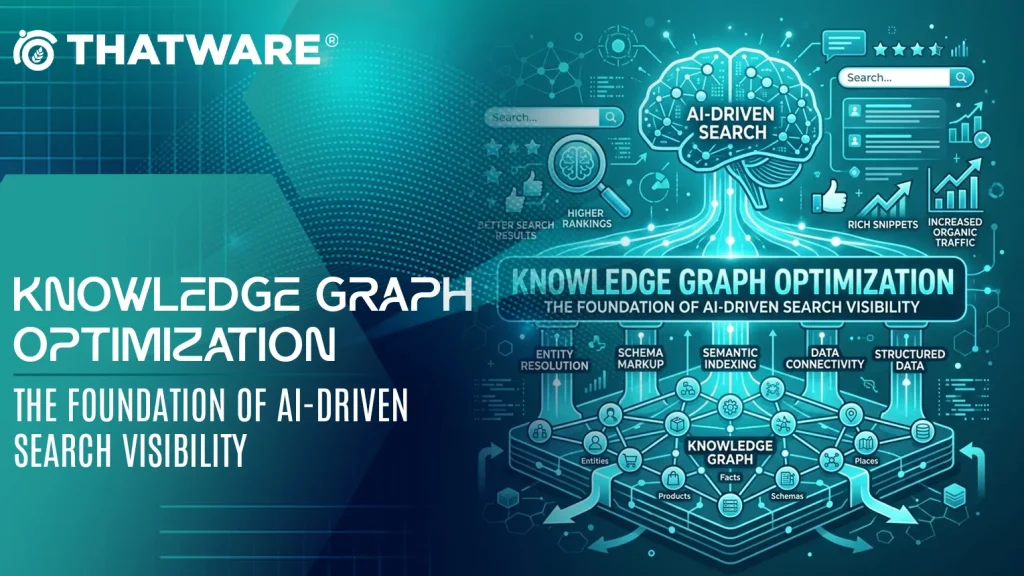
The goal of this file is to help AI systems understand a website not only as a collection of web pages, but as a connected semantic ecosystem of entities, topics, services, authors, evidence, citations, relationships, and trust signals.
1. What Is knowledge-graph.json?
knowledge-graph.json is a machine-readable JSON file that represents the core knowledge structure of a website, organization, brand, product, author, or topical ecosystem.
It defines:
· the main organization or website entity
· important topics the website covers
· services or products offered
· people associated with the brand
· relationships between topics and entities
· canonical URLs for important concepts
· evidence supporting authority claims
· content clusters
· schema-aligned entity types
· external references
· preferred citation targets
· machine-readable summaries
In simple terms, it tells AI systems:
“These are the important things this website knows about, these are how they are connected, and these are the best URLs to use when citing or understanding them.”
2. Why knowledge-graph.json Exists
Traditional websites are designed mainly for humans and search engine crawlers. They rely on:
· HTML pages
· navigation menus
· internal links
· sitemaps
· schema markup
· page content
· backlinks
These are useful, but they do not always provide a clear semantic map for AI systems.
LLMs and AI answer engines need to understand:
· what entities exist
· which entity is primary
· what topics the website is authoritative on
· which pages explain which topics
· how concepts are related
· which source should be cited
· what content is foundational versus supporting
· which facts are canonical
· what relationships exist between services, authors, and topics
A knowledge-graph.json file solves this by creating a central semantic reference file.
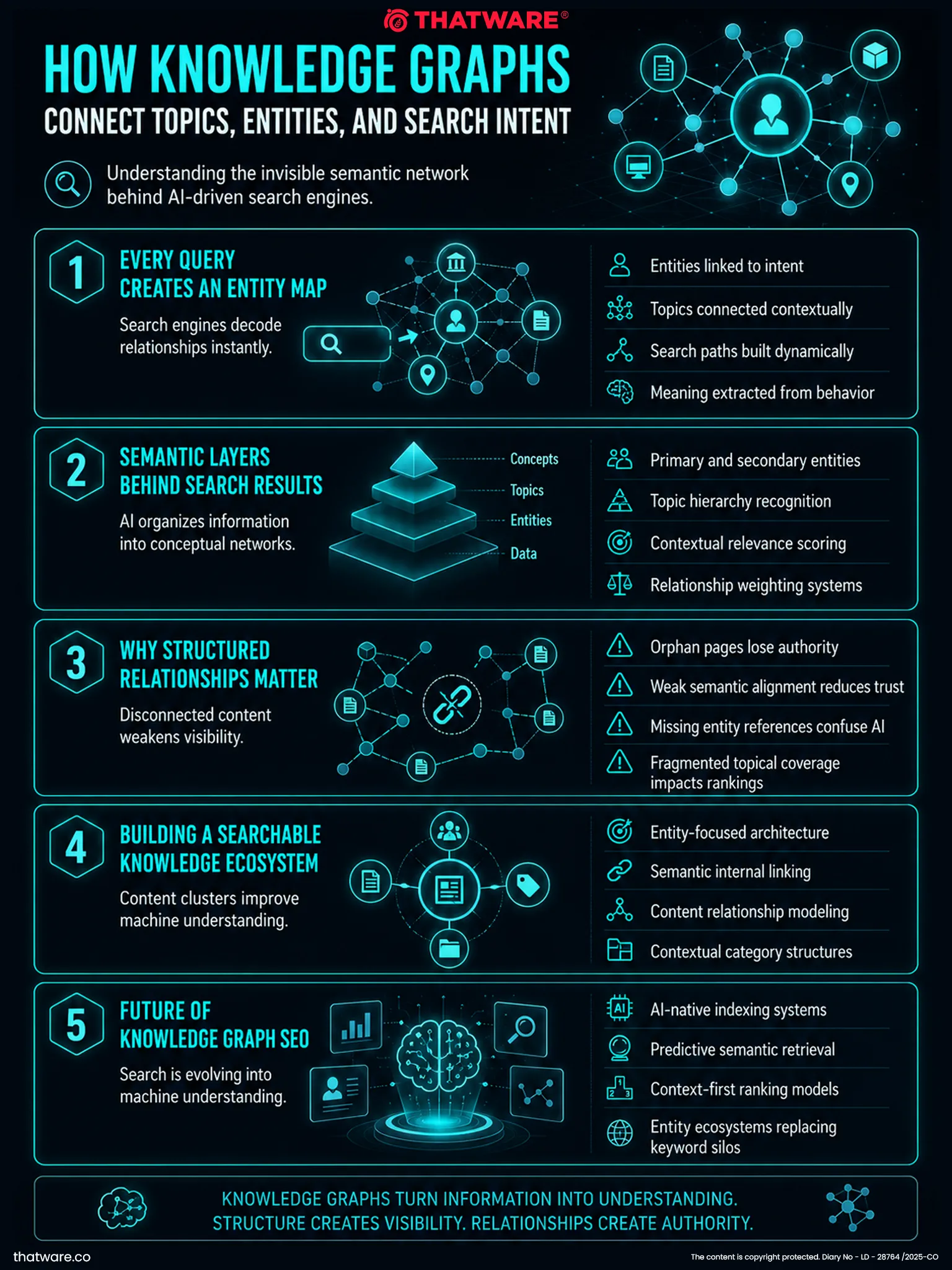
3. Difference Between a Sitemap and knowledge-graph.json
Traditional XML Sitemap
A sitemap answers:
· What URLs exist?
· When were they updated?
· Which URLs should crawlers discover?
Semantic Sitemap
A semantic sitemap answers:
· What does each URL mean?
· What topic does it belong to?
· What intent does it serve?
knowledge-graph.json
A knowledge graph answers:
· What entities does this website represent?
· How are those entities connected?
· Which topics does the brand own?
· Which pages support each entity?
· What evidence proves authority?
· Which canonical URLs should AI cite?
· What is the semantic architecture of the website?
A sitemap is URL-first.
A knowledge graph is entity-first.
4. Why It Matters for LLM Optimization
Large Language Models generate answers by predicting the most useful response based on training data, retrieval data, structured signals, and available context.
For a website to appear in AI-generated answers, the AI system must be able to:
1. identify the brand or entity correctly
2. understand the brand’s expertise
3. connect the brand to relevant topics
4. retrieve supporting content
5. trust the source
6. cite the correct URL
7. avoid ambiguity with similarly named entities
knowledge-graph.json helps with all of these.
It can support:
· better entity recognition
· stronger topical association
· clearer AI memory formation
· improved retrieval quality
· better citation matching
· reduced hallucination
· better semantic crawlability
· better brand disambiguation
5. Role in GEO: Generative Engine Optimization
Generative Engine Optimization is the process of optimizing digital assets for AI answer engines, LLMs, AI search systems, conversational search platforms, and autonomous agents.
knowledge-graph.json contributes to GEO by acting as a structured semantic authority layer.
GEO Benefits
5.1 Entity Understanding
The file makes it clear which entities matter.
Example:
· Organization: ThatWare
· Primary topic: Generative Engine Optimization
· Related topics: AI SEO, LLM Optimization, Semantic SEO
· Service category: AI-powered search visibility
5.2 Topical Authority Mapping
The file groups topics into authority clusters.
Example:
· AI SEO cluster
· GEO cluster
· Semantic search cluster
· Knowledge graph optimization cluster
5.3 Citation Control
It tells AI systems which URL should be cited for each topic.
Example:
· For “Generative Engine Optimization,” cite /generative-engine-optimization/
· For “AI SEO,” cite /ai-seo/
· For “LLM Optimization,” cite /llm-optimization/
5.4 Retrieval Improvement
AI retrieval systems can use the graph to find the most relevant page or chunk.
5.5 Context Assembly
The graph helps determine what supporting information should be included in an AI answer.
5.6 Brand Disambiguation
It prevents confusion between similar names, services, or topics.
6. How AI Systems Can Use knowledge-graph.json
Different AI systems may use this file in different ways.
6.1 AI Crawlers
An AI crawler can discover the file and extract important entities, canonical pages, and relationships.
6.2 RAG Pipelines
A retrieval-augmented generation system can use it to identify the best pages for specific questions.
6.3 Vector Databases
The graph can guide how content is chunked, embedded, and connected.
6.4 AI Search Engines
AI search engines can use it to understand topical authority and citation preference.
6.5 Autonomous Agents
AI agents can use it to navigate a website, select endpoints, retrieve correct facts, and summarize services.
6.6 Brand Knowledge Panels
The graph can support structured entity understanding similar to a knowledge panel.
7. Recommended File Location
The recommended public URL is:
https://example.com/knowledge-graph.json
Optional additional discovery paths:
https://example.com/.well-known/knowledge-graph.json
https://example.com/ai-endpoints.json
https://example.com/llms.txt
The file should also be referenced from:
· ai.txt
· llms.txt
· llmsfull.txt
· ai-endpoints.json
· robots.txt, optionally as a comment or sitemap-style reference
· HTML <link rel=”alternate”>, optionally
8. Recommended MIME Type
Serve the file as:
application/json
The server should return:
HTTP 200 OK
Content-Type: application/json; charset=utf-8
9. Core Design Principles
9.1 Entity-First Design
Do not start with URLs. Start with entities.
Entities can include:
· organization
· founder
· author
· service
· product
· topic
· concept
· location
· industry
· case study
· technology
· dataset
· research asset
9.2 Canonical Naming
Each entity should have one preferred name.
Example:
{
“name”: “Generative Engine Optimization”,
“alternateNames”: [“GEO”, “AI Search Optimization”]
}
9.3 Persistent IDs
Every entity should have a stable ID.
Example:
“id”: “entity:generative-engine-optimization”
9.4 Clear Relationships
Relationships should be explicit.
Example:
{
“source”: “entity:thatware”,
“relationship”: “specializesIn”,
“target”: “entity:generative-engine-optimization”
}
9.5 Evidence-Based Authority
Authority should not be claimed vaguely. It should be supported by evidence.
Example evidence:
· service page
· case study
· research article
· author page
· external mention
· client result
· technical documentation
9.6 Citation Readiness
Every major entity should have a preferred citation URL.
9.7 Machine and Human Readability
The JSON should be understandable by both developers and AI systems.
10. Key Components of knowledge-graph.json
A strong knowledge-graph.json should include the following major sections:
1. metadata
2. organization
3. website
4. entities
5. topics
6. services/products
7. people/authors
8. content clusters
9. relationships
10. evidence
11. citations
12. sameAs links
13. authority scores
14. update history
15. AI usage policy
16. validation metadata
11. Field-by-Field Explanation
11.1 metadata
Defines file-level information.
Recommended fields:
· version
· generatedAt
· lastUpdated
· publisher
· license
· language
· canonicalUrl
Purpose:
· helps crawlers understand freshness
· supports version control
· makes the file easier to validate
11.2 organization
Defines the main website or company.
Recommended fields:
· id
· name
· legalName
· url
· logo
· description
· foundingDate
· founder
· sameAs
· contactPoint
· primaryExpertise
Purpose:
· identifies the main entity
· supports brand recognition
· helps disambiguate the organization
11.3 website
Defines the website as a digital property.
Recommended fields:
· id
· url
· name
· publisher
· inLanguage
· primaryAudience
· contentTypes
Purpose:
· helps AI systems understand the website’s role
· separates the organization from the website asset
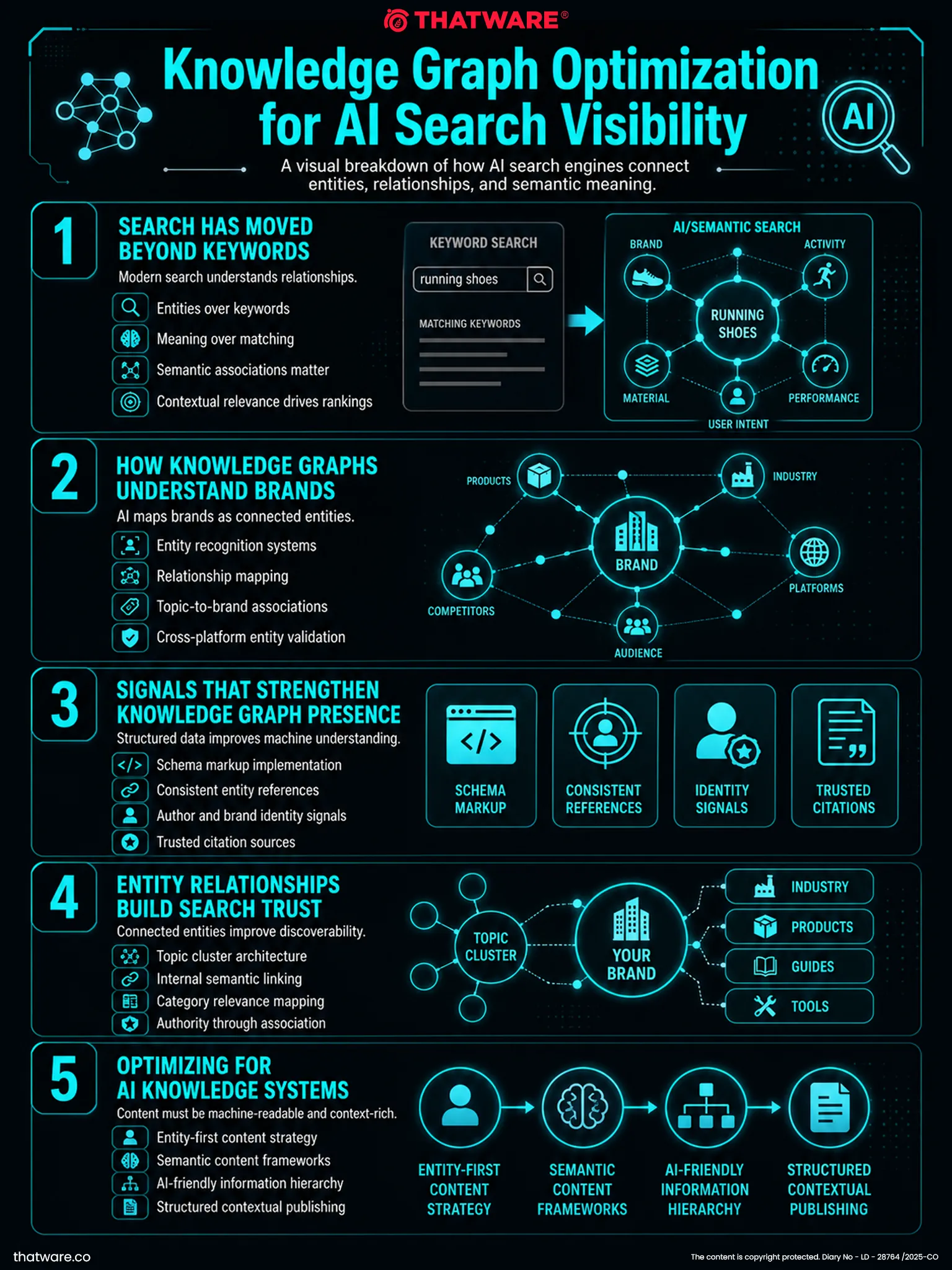
11.4 entities
The most important section.
Each entity should include:
· id
· name
· type
· description
· alternateNames
· canonicalUrl
· sameAs
· relatedEntities
· authorityScore
· evidence
· preferredCitation
Entity types may include:
· Organization
· Person
· Service
· Product
· Concept
· Topic
· Industry
· Location
· Article
· Dataset
· Technology
· Methodology
11.5 topics
Defines subject areas.
Recommended fields:
· id
· name
· description
· parentTopic
· childTopics
· relatedTopics
· canonicalUrl
· searchIntent
· llmIntent
Purpose:
· creates topical hierarchy
· improves semantic clustering
· helps AI route queries
11.6 services
Defines commercial offerings.
Recommended fields:
· id
· name
· description
· serviceType
· url
· relatedTopics
· targetAudience
· useCases
· proofAssets
Purpose:
· helps AI understand what the organization offers
· supports commercial query matching
11.7 people
Defines authors, founders, subject-matter experts, and contributors.
Recommended fields:
· id
· name
· role
· bio
· expertise
· sameAs
· authorUrl
Purpose:
· supports expertise signals
· strengthens author authority
· improves trust and attribution
11.8 contentClusters
Groups related URLs into topical clusters.
Recommended fields:
· id
· name
· primaryTopic
· pillarPage
· supportingPages
· clusterIntent
Purpose:
· helps AI understand site architecture
· supports topical authority
· improves retrieval grouping
11.9 relationships
Defines graph edges.
Common relationship types:
· specializesIn
· offers
· publishes
· authoredBy
· relatedTo
· partOf
· supports
· cites
· explains
· isSubtopicOf
· hasEvidence
Purpose:
· transforms the JSON file from a list into a graph
11.10 evidence
Defines proof points that support entity authority.
Evidence types:
· internal page
· external citation
· case study
· review
· research article
· dataset
· certification
· award
· client result
· press mention
Purpose:
· strengthens trust
· reduces unsupported authority claims
11.11 citationPolicy
Defines how AI systems should cite the website.
Recommended fields:
· allowCitation
· preferredCitationFormat
· canonicalDomain
· preferredPagesByTopic
Purpose:
· improves citation consistency
11.12 aiUsage
Defines usage permissions for AI systems.
Recommended fields:
· allowSummarization
· allowRetrieval
· allowCitation
· allowEmbedding
· allowTraining
· attributionRequired
Purpose:
· communicates machine-readable AI policy
12. Authority Scoring Model
A useful knowledge-graph.json can include authority scores.
Recommended score range:
0.00 to 1.00
Suggested interpretation:
· 0.90–1.00: primary authority
· 0.75–0.89: strong authority
· 0.50–0.74: moderate authority
· 0.25–0.49: supporting relevance
· 0.00–0.24: weak or contextual relation
Authority score should be based on:
· content depth
· internal coverage
· external citations
· expert authorship
· topical consistency
· structured data quality
· case studies
· freshness
· brand relevance
Avoid making unsupported claims. The score should be internally meaningful and evidence-backed.
13. Relationship Modeling Best Practices
Every relationship should contain:
{
“source”: “entity:thatware”,
“relationship”: “specializesIn”,
“target”: “entity:ai-seo”,
“confidence”: 0.98,
“evidence”: [“https://example.com/ai-seo/”]
}
Recommended Relationship Vocabulary
specializesIn
hasPrimaryTopic
offers
publishes
authoredBy
explains
supports
isPartOf
isSubtopicOf
relatedTo
cites
hasEvidence
hasCanonicalPage
hasPreferredCitation
mentions
sameAs
14. How to Use With Schema.org and JSON-LD
knowledge-graph.json does not replace Schema.org markup. It complements it.
Recommended approach:
· Use Schema.org JSON-LD inside HTML pages.
· Use knowledge-graph.json as the website-wide semantic map.
· Use llms.txt to point LLMs to important resources.
· Use ai-endpoints.json to list all AI-readable files.
Example connection:
{
“schemaAlignment”: {
“organizationType”: “https://schema.org/Organization”,
“websiteType”: “https://schema.org/WebSite”,
“serviceType”: “https://schema.org/Service”,
“personType”: “https://schema.org/Person”,
“articleType”: “https://schema.org/Article”
}
}
15. Implementation Workflow
Step 1: Identify Core Entities
Create a list of:
· brand
· services
· topics
· authors
· industries
· locations
· frameworks
· methodologies
Step 2: Assign Canonical URLs
Each major entity should map to one best URL.
Step 3: Build Topic Clusters
Group related pages around parent topics.
Step 4: Add Relationships
Connect entities with explicit relationships.
Step 5: Add Evidence
Attach proof assets.
Step 6: Add Citation Rules
Define preferred citation URLs.
Step 7: Validate JSON
Make sure the file is valid JSON.
Step 8: Publish Publicly
Upload to:
https://example.com/knowledge-graph.json
Step 9: Reference From AI Files
Add the file URL to:
· ai-endpoints.json
· ai.txt
· llms.txt
· llmsfull.txt
Step 10: Maintain Monthly
Update after:
· new services
· new case studies
· major content updates
· new external citations
· brand changes
16. SEO, GEO, and AEO Benefits
SEO Benefits
· better entity consistency
· stronger topical architecture
· improved structured data alignment
· clearer canonical mapping
GEO Benefits
· improved LLM understanding
· better answer inclusion
· stronger AI citation targeting
· improved retrieval relevance
AEO Benefits
· better direct-answer readiness
· clearer definitions
· improved FAQ/entity matching
· better voice and conversational search support
17. Common Mistakes to Avoid
Mistake 1: Making It a URL List
A knowledge graph is not a sitemap.
Mistake 2: No Relationships
Without relationships, the file is just structured metadata, not a graph.
Mistake 3: Unsupported Authority Scores
Do not claim authority without evidence.
Mistake 4: Too Many Generic Topics
Use specific, meaningful topics.
Bad:
Marketing
SEO
Business
Better:
Generative Engine Optimization
LLM Optimization
Entity SEO
AI Search Visibility
Mistake 5: No Canonical URLs
Every important entity needs a preferred URL.
Mistake 6: No Update Policy
The file should be maintained like a strategic data asset.
18. Recommended Update Frequency
| Update Type | Frequency |
| Minor URL/content changes | Monthly |
| New services | Immediately |
| New case studies | Immediately |
| External citations | Monthly |
| Authority scoring | Quarterly |
| Full audit | Quarterly |
| Schema alignment review | Twice yearly |
19. Full Reusable Prototype Code Structure
The following JSON structure can be adapted for different websites, industries, brands, SaaS platforms, agencies, publishers, ecommerce stores, educational institutions, healthcare websites, local businesses, and enterprise websites.
{
“metadata”: {
“fileType”: “knowledge-graph”,
“version”: “1.0.0”,
“generatedAt”: “2026-05-13T00:00:00Z”,
“lastUpdated”: “2026-05-13T00:00:00Z”,
“language”: “en”,
“canonicalUrl”: “https://example.com/knowledge-graph.json”,
“publisher”: {
“name”: “Example Brand”,
“url”: “https://example.com”
},
“description”: “Machine-readable knowledge graph describing the primary entities, topics, services, relationships, and authority signals of Example Brand.”
},
“organization”: {
“id”: “entity:organization:example-brand”,
“type”: “Organization”,
“name”: “Example Brand”,
“legalName”: “Example Brand Ltd.”,
“url”: “https://example.com”,
“logo”: “https://example.com/logo.png”,
“description”: “Example Brand is a company specializing in [primary expertise].”,
“foundingDate”: “2020-01-01”,
“founders”: [
{
“id”: “person:founder-name”,
“name”: “Founder Name”,
“role”: “Founder”
}
],
“sameAs”: [
“https://www.linkedin.com/company/example-brand”,
“https://twitter.com/examplebrand”,
“https://www.youtube.com/@examplebrand”
],
“contactPoint”: {
“email”: “contact@example.com”,
“url”: “https://example.com/contact/”
},
“primaryExpertise”: [
“Primary Topic One”,
“Primary Topic Two”,
“Primary Topic Three”
]
},
“website”: {
“id”: “entity:website:example-com”,
“type”: “WebSite”,
“name”: “Example Brand Website”,
“url”: “https://example.com”,
“publisher”: “entity:organization:example-brand”,
“inLanguage”: “en”,
“primaryAudience”: [
“Business owners”,
“Marketing teams”,
“Enterprise decision makers”
],
“contentTypes”: [
“Service pages”,
“Blog articles”,
“Case studies”,
“Guides”,
“Research resources”
]
},
“entities”: [
{
“id”: “entity:topic:primary-topic-one”,
“type”: “Concept”,
“name”: “Primary Topic One”,
“alternateNames”: [
“Alternative Topic Name”,
“Short Topic Name”
],
“description”: “A clear machine-readable explanation of the topic and why it matters.”,
“canonicalUrl”: “https://example.com/primary-topic-one/”,
“sameAs”: [
“https://www.wikidata.org/wiki/example”,
“https://en.wikipedia.org/wiki/example”
],
“authorityScore”: 0.95,
“authorityLevel”: “primary”,
“preferredCitation”: “https://example.com/primary-topic-one/”,
“relatedEntities”: [
“entity:topic:secondary-topic-one”,
“entity:service:main-service”
],
“evidence”: [
“evidence:primary-topic-service-page”,
“evidence:primary-topic-case-study”
]
},
{
“id”: “entity:service:main-service”,
“type”: “Service”,
“name”: “Main Service Name”,
“description”: “Description of the service offered by the website or organization.”,
“serviceType”: “Consulting”,
“canonicalUrl”: “https://example.com/main-service/”,
“relatedTopics”: [
“entity:topic:primary-topic-one”
],
“targetAudience”: [
“Startups”,
“SMBs”,
“Enterprises”
],
“useCases”: [
“Improve visibility”,
“Increase qualified traffic”,
“Build topical authority”
],
“preferredCitation”: “https://example.com/main-service/”
}
],
“topics”: [
{
“id”: “topic:primary-topic-one”,
“name”: “Primary Topic One”,
“description”: “Main topical area where the brand has authority.”,
“parentTopic”: null,
“childTopics”: [
“topic:secondary-topic-one”,
“topic:secondary-topic-two”
],
“relatedTopics”: [
“topic:related-topic-one”
],
“canonicalUrl”: “https://example.com/primary-topic-one/”,
“searchIntent”: [
“informational”,
“commercial”
],
“llmIntent”: [
“definition”,
“comparison”,
“recommendation”,
“implementation guidance”
]
}
],
“services”: [
{
“id”: “service:main-service”,
“name”: “Main Service Name”,
“description”: “Detailed description of the service.”,
“url”: “https://example.com/main-service/”,
“serviceCategory”: “Professional Service”,
“relatedTopics”: [
“topic:primary-topic-one”
],
“targetAudience”: [
“Business owners”,
“Marketing leaders”
],
“proofAssets”: [
“evidence:main-service-case-study”
],
“conversionUrl”: “https://example.com/contact/”
}
],
“people”: [
{
“id”: “person:expert-name”,
“type”: “Person”,
“name”: “Expert Name”,
“role”: “Subject Matter Expert”,
“bio”: “Short bio explaining expertise and credibility.”,
“expertise”: [
“Primary Topic One”,
“Secondary Topic One”
],
“authorUrl”: “https://example.com/author/expert-name/”,
“sameAs”: [
“https://www.linkedin.com/in/expert-name/”
]
}
],
“contentClusters”: [
{
“id”: “cluster:primary-topic-one”,
“name”: “Primary Topic One Cluster”,
“primaryTopic”: “topic:primary-topic-one”,
“pillarPage”: “https://example.com/primary-topic-one/”,
“supportingPages”: [
“https://example.com/primary-topic-one/guide/”,
“https://example.com/primary-topic-one/examples/”,
“https://example.com/primary-topic-one/case-study/”
],
“clusterIntent”: [
“educate”,
“compare”,
“convert”
]
}
],
“relationships”: [
{
“source”: “entity:organization:example-brand”,
“relationship”: “specializesIn”,
“target”: “entity:topic:primary-topic-one”,
“confidence”: 0.97,
“evidence”: [
“https://example.com/primary-topic-one/”
]
},
{
“source”: “entity:organization:example-brand”,
“relationship”: “offers”,
“target”: “entity:service:main-service”,
“confidence”: 0.99,
“evidence”: [
“https://example.com/main-service/”
]
},
{
“source”: “entity:service:main-service”,
“relationship”: “supports”,
“target”: “entity:topic:primary-topic-one”,
“confidence”: 0.92,
“evidence”: [
“https://example.com/main-service/”
]
}
],
“evidence”: [
{
“id”: “evidence:primary-topic-service-page”,
“type”: “internal_page”,
“name”: “Primary Topic Service Page”,
“url”: “https://example.com/primary-topic-one/”,
“supportsEntities”: [
“entity:topic:primary-topic-one”
],
“evidenceStrength”: “high”
},
{
“id”: “evidence:primary-topic-case-study”,
“type”: “case_study”,
“name”: “Primary Topic Case Study”,
“url”: “https://example.com/case-studies/primary-topic-case-study/”,
“supportsEntities”: [
“entity:topic:primary-topic-one”,
“entity:service:main-service”
],
“evidenceStrength”: “high”
}
],
“citationPolicy”: {
“allowCitation”: true,
“attributionRequired”: true,
“preferredCitationFormat”: “Use the canonical page URL and brand name.”,
“canonicalDomain”: “https://example.com”,
“preferredPagesByTopic”: [
{
“topic”: “Primary Topic One”,
“url”: “https://example.com/primary-topic-one/”
},
{
“topic”: “Main Service Name”,
“url”: “https://example.com/main-service/”
}
]
},
“aiUsage”: {
“allowSummarization”: true,
“allowRetrieval”: true,
“allowCitation”: true,
“allowEmbedding”: true,
“allowTraining”: “conditional”,
“attributionRequired”: true,
“preferredAttribution”: “Example Brand, https://example.com”
},
“schemaAlignment”: {
“organization”: “https://schema.org/Organization”,
“website”: “https://schema.org/WebSite”,
“person”: “https://schema.org/Person”,
“service”: “https://schema.org/Service”,
“article”: “https://schema.org/Article”,
“creativeWork”: “https://schema.org/CreativeWork”
},
“maintenance”: {
“owner”: “SEO / GEO Team”,
“reviewFrequency”: “monthly”,
“lastReviewed”: “2026-05-13”,
“nextReviewDue”: “2026-06-13”
}
}
20. ThatWare-Specific Example Direction
For ThatWare, the file should focus heavily on:
· ThatWare as the organization entity
· AI SEO
· Generative Engine Optimization
· LLM Optimization
· Semantic SEO
· Entity SEO
· Knowledge Graph Optimization
· Search Generative Experience
· AI search visibility
· technical SEO
· programmatic SEO
· digital marketing innovation
Recommended primary entities:
ThatWare
Generative Engine Optimization
AI SEO
LLM Optimization
Semantic SEO
Entity SEO
Knowledge Graph Optimization
AI Search Visibility
Search Generative Experience Optimization
Recommended relationship examples:
ThatWare specializesIn Generative Engine Optimization
ThatWare offers AI SEO Services
Generative Engine Optimization relatedTo LLM Optimization
Semantic SEO supports Knowledge Graph Optimization
AI SEO includes Entity SEO
LLM Optimization uses RAG Indexing
21. Final Strategic Summary
knowledge-graph.json should be treated as the master semantic brain of a website.
It is not just a technical file. It is a machine-readable declaration of:
· who the brand is
· what the brand knows
· what the brand offers
· what the brand should be cited for
· how topics connect
· what evidence supports authority
· how AI systems should interpret the site
For GEO and LLM optimization, this file can become one of the most important assets in an AI-native web infrastructure stack.
A strong knowledge-graph.json helps move a website from being merely crawlable to being understandable, retrievable, trustworthy, and citable by AI systems.
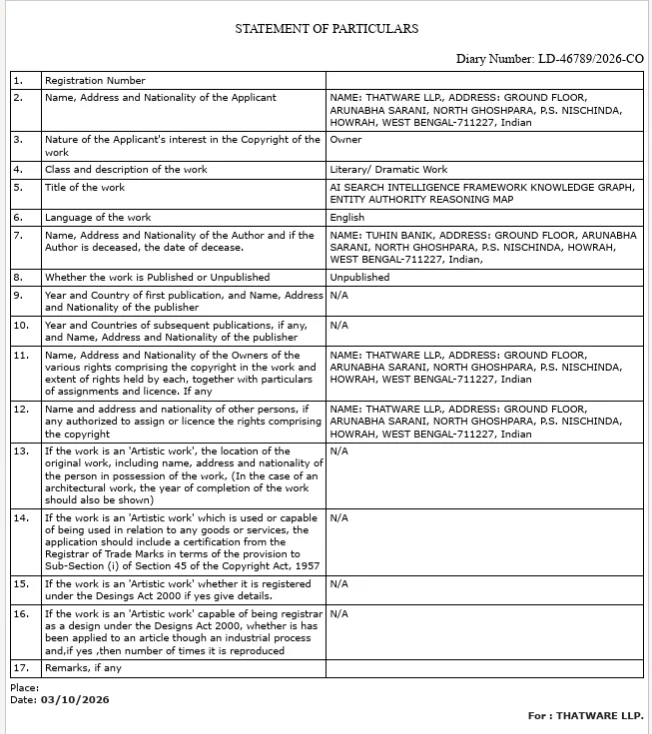
Copyright Notice: This content is part of “AI Search Intelligence Framework Knowledge Graph, Entity Authority Reasoning Map,” for which a copyright application has been filed by THATWARE LLP with the Copyright Office, Government of India under Diary No. LD-46789/2026-CO. Unauthorized reproduction, copying, distribution, or commercial use is prohibited.