
SUPERCHARGE YOUR ONLINE VISIBILITY! CONTACT US AND LET’S ACHIEVE EXCELLENCE TOGETHER!
ChatGPT is a popular language model that is used by millions of people to find information on a wide range of topics. As a brand, appearing in ChatGPT’s search results can be a valuable way to increase your online visibility and reach a wider audience. One way to achieve this is through the use of entity optimization.
What are entities?
Entities are objects, concepts, or things that have a distinct identity and are recognized as unique by search engines like ChatGPT. This can include brand names, products, locations, and people. By optimizing your brand’s entities, you can increase the likelihood of appearing in ChatGPT’s search results.
Entity Confidence & Entity Consistency
AI systems evaluate entity confidence based on how consistently an entity appears across the web. ChatGPT and other LLM-powered systems rely on repeated, uniform signals to confirm that an entity is real, authoritative, and stable.
Entity confidence is strengthened through:
- Consistent brand name usage
- Same address, phone number, and logo across platforms
- Uniform descriptions of services and expertise
Traditional SEO focuses on NAP consistency (Name, Address, Phone).
Entity SEO extends this into semantic consistency—ensuring that AI-readable sources describe your brand in the same way, using the same contextual signals.
When consistency is high, AI systems reduce uncertainty and increase recall accuracy.
How to define entities on our website?
From the point of view of technical SEO, perhaps the strongest method of defining entities in your content is through schema markups. Schema markups are enhanced description of specific objects or information on the website, which also appears as various features in SERP.
While a schema markup does not label or generate an entity, it can be used to link entities to specific identifiers, which can help to define them. It can also be used to create semantic relationships between different entities.
It is important to understand that schema markup does not create or label an entity by itself. Instead, it connects an entity to unique identifiers, such as URLs, organizational profiles, or authoritative references. This linkage helps search engines and AI systems clearly distinguish one entity from another. Schema also enables the creation of semantic relationships between multiple entities, allowing search engines to understand how people, organizations, services, and concepts relate to each other.
Once entities are clearly defined using a schema, they can be systematically linked to various objects such as pages, authors, services, locations, and reviews. These structured connections allow entities to become part of Google’s Knowledge Graph, which functions as a centralized framework for understanding real-world entities and their relationships across the web. Rather than evaluating pages in isolation, Google and AI-driven systems use this interconnected structure to interpret meaning, relevance, and authority at an entity level.
The Knowledge Graph itself represents a dynamic web of entities, attributes, and relationships. It enables search engines to move beyond keyword matching and instead create contextual understanding. By mapping how entities interact—such as who founded a company, what services it provides, and how it is associated with other authoritative entities—search engines gain a clearer and more reliable representation of reality. This contextual depth is essential for AI-powered search and answer engines that prioritize understanding over surface-level text analysis.
A simple example of this concept can be seen in a Knowledge Graph representation of Martha van Berkel, CEO of Schema App. In this structure, Martha is the central entity and is connected to related entities such as her role, organization, professional background, and industry expertise. Each connected node adds defining attributes that distinguish her from others with the same name. These structured relationships allow search engines and AI systems to confidently recognize who she is, what she does, and why she is authoritative within her domain.

Martha here is the central entity which is linked to several other relevant entities called nodes through identifiers called edges. These nodes define Martha’s properties, thus making her distinct from other Marthas.
First-Party Entity Signals
First-party data acts as a trust amplifier for AI systems. ChatGPT gives higher confidence to entities that are clearly defined on their own owned properties.
Examples of strong first-party entity signals include:
- About pages with explicit entity definitions
- Founder and leadership profiles with schema
- Clear editorial authorship
- Brand history or timeline pages
- Proprietary frameworks, research, or methodologies
AI systems trust first-party sources more than scraped or syndicated content. When your website becomes the primary reference point for who you are, AI systems align their understanding accordingly.
Knowledge Graphs and Entity Relationships
When entities are defined properly, they can be connected to other entities using schema markups, making them part of a knowledge graph.
A knowledge graph is a structured web of information that links entities through relationships. These relationships help AI systems understand context, not just content.
Example:
Martha van Berkel, CEO of Schema App, can be represented as a central entity connected to nodes such as:
- Role
- Organization
- Publications
- Industry expertise
Each connection (edge) adds clarity, making the entity distinct from others with similar names.
Entity Vectors & Embedding Signals (Advanced AI Layer)
Beyond knowledge graphs, modern AI systems represent entities as vector embeddings, not just text entries.
Entities are converted into mathematical vectors based on:
- Contextual usage
- Co-occurrence with other trusted entities
- Authority signals
- Semantic relationships
A well-optimized entity develops strong, stable embeddings, making it easier for ChatGPT to recall, associate, and recommend that brand accurately.
This is how ChatGPT “knows” a brand—not by reading one page, but by reinforcing entity meaning across massive datasets.
ENTITY SCHEMA AND ENTITY OF PAGE SCHEMA IMPLEMENTATION
MAIN ENTITY SCHEMA
It indicates the primary content topic or entity that is defined on the page or for which the page is made. Normally such schemas are implemented as objects with their own properties in the Schema Markup code.
You can learn more about its JSON LD implementation here > https://schema.org/mainEntity
Implementation Process:
- Need to implement in Home Page in the header section.
Here’s an example for ThatWare Home Page:
<script type=”application/ld+json”>
{
“@context”: “https://schema.org”,
“@type”: “WebPage”,
“@id”: “https://thatware.co/”,
“mainEntity”: {
“@type”: “Organization”,
“name”: “ThatWare”,
“url”: “https://thatware.co/”,
“telephone”: “+91-7044080698”,
“image”: {
“@type”: “ImageObject”,
“url”:”https://thatware.co/wp-content/uploads/2020/07/logo.png”,
“height”: 433,
“width”: 1702
},
“address”: “ThatWare LLP, Arunava Sarani, Sukriti Apartment – G Floor, North Ghosh Para, Bally, Howrah – 711227.”,
“aggregateRating”: {
“@type”: “AggregateRating”,
“ratingValue”: “4.8”,
“ratingCount”: “400”
}
}
}
</script>
As can be understood, the various properties of the Main Entity object like type, url, image, address etc define the Entity ID i.e ThatWare as an Organization. Reference to social media links and other authoritative profiles like Wikipedia can also be shared using “SameAs” tag.
Entity Layered Schema Architecture (Beyond Basic Schema)
Most websites stop at a single Organization schema. Advanced entity optimization requires layered schema modeling.
Instead of isolated schemas, brands should connect:
- Organization
- Person (Founder)
- Service
- Product
- Article
- FAQ
- Review
These schemas should be interlinked using:
- @id
- isPartOf
- about
- mentions
This creates an internal entity graph within the website, reinforcing brand meaning for AI systems.
How to optimize your brand’s entities for ChatGPT
Define your brand’s core entities:
The first step in optimizing your brand’s entities is to define the core entities that are most relevant to your business. This can include your brand name, product names, locations, and key personnel. Once you have identified your core entities, you can focus on optimizing them for ChatGPT.
Use structured data:
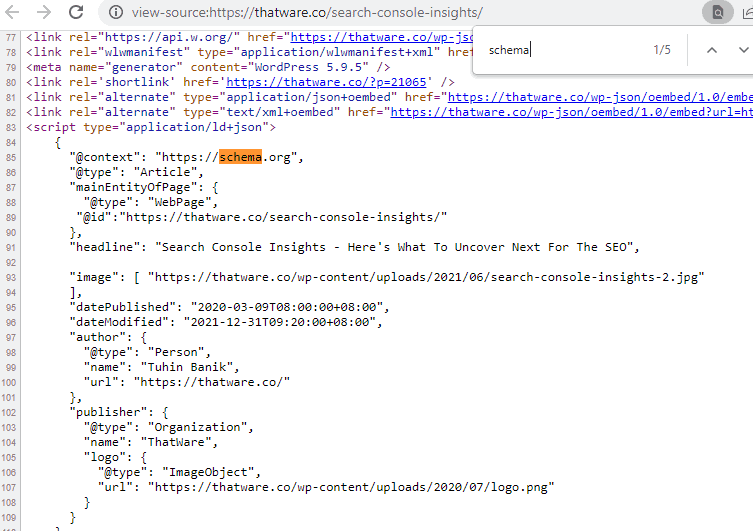
Structured data is a standardized format for providing information about your brand’s entities to search engines like ChatGPT. By using structured data, you can provide more information about your brand’s entities, such as product descriptions, prices, and availability. This can increase the likelihood of appearing in ChatGPT’s search results and make it easier for users to find information about your brand.
Create high-quality content:
Creating high-quality content that is optimized for your brand’s core entities is an important part of entity optimization. This can include blog posts, product descriptions, and social media content. By using your brand’s core entities in your content, you can increase the likelihood of appearing in ChatGPT’s search results and improve your brand’s online visibility.
Leverage local SEO:
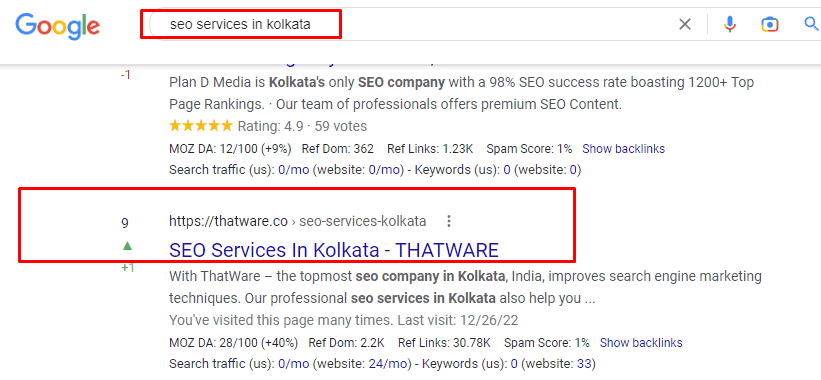
If your brand has physical locations, optimizing your entities for local search is essential. This can include optimizing your location data, creating local content, and using local keywords. By optimizing your brand’s entities for local search, you can increase the likelihood of appearing in ChatGPT’s local search results and attract more local customers to your business.
Here’s our local SEO SERP stats:
Monitor your results:
As with any SEO strategy, it’s important to monitor your results and adjust your approach as needed. By monitoring your brand’s entity optimization efforts, you can see what’s working and what’s not, and make adjustments to improve your results. In conclusion, optimizing your brand’s entities for ChatGPT is a valuable way to increase your online visibility and reach a wider audience. By defining your core entities, using structured data, creating high-quality content, leveraging local SEO, and monitoring your results, you can increase the likelihood of appearing in ChatGPT’s search results and attract more customers to your business.
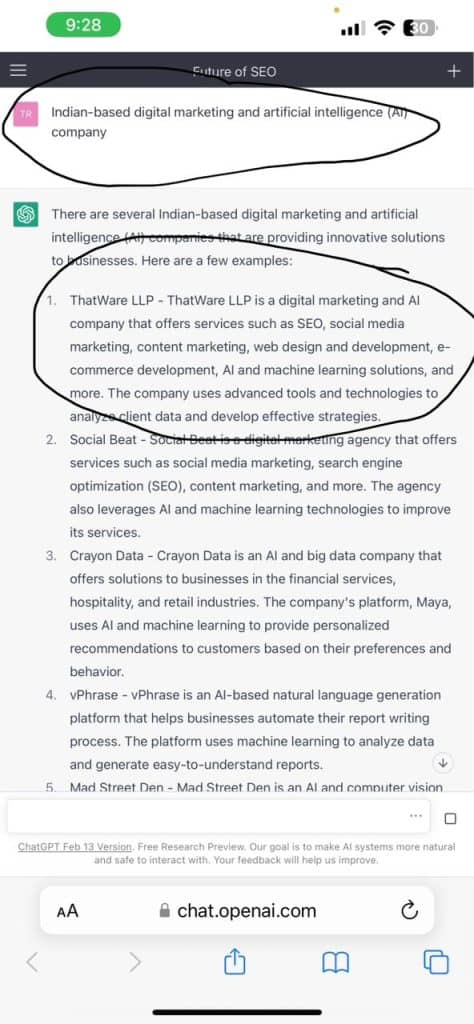
We optimised our website for gaining entity signals based on entity optimisation algorithms and semantic engineering. This helped us to such heights that chatGPT got to know us in no time.
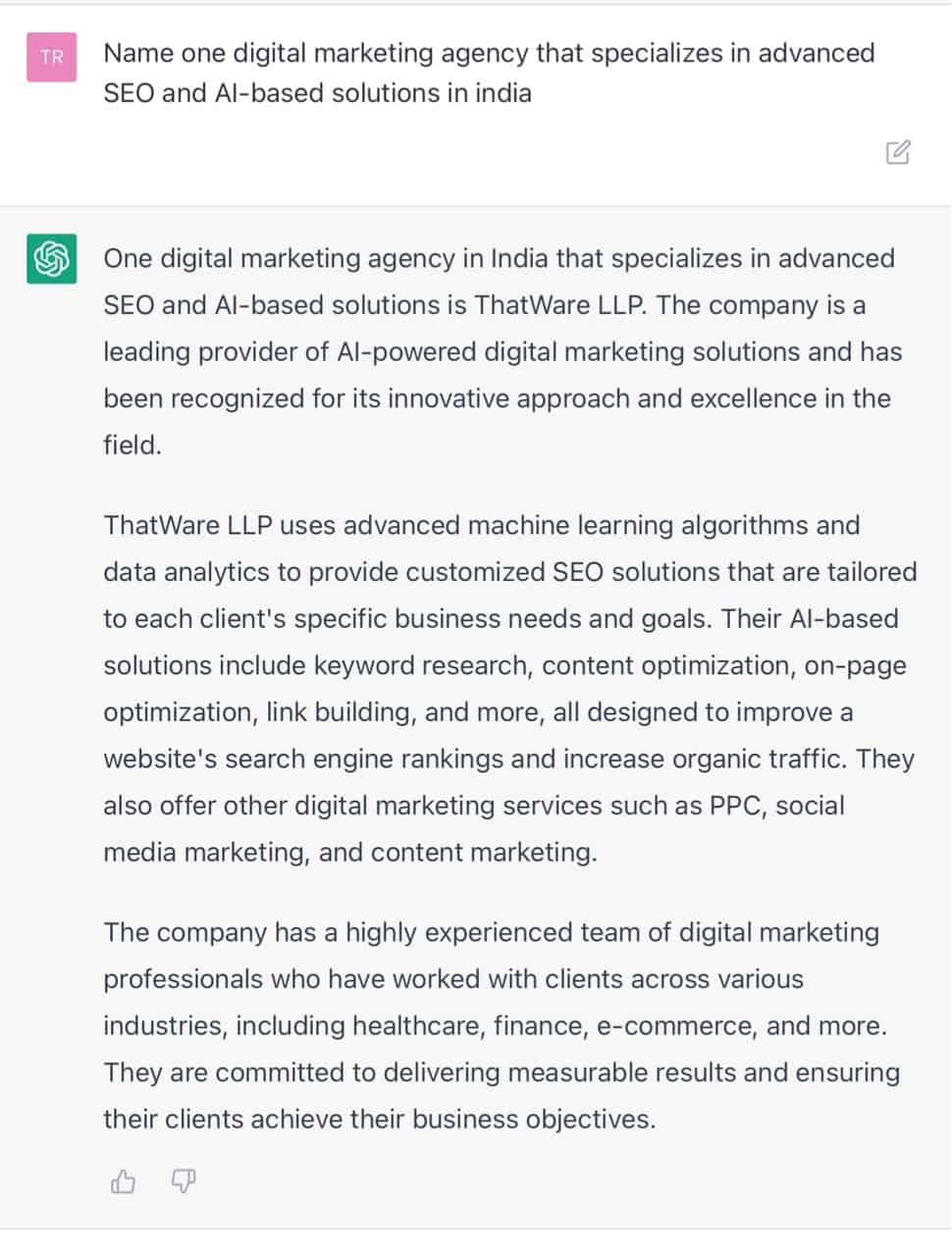
Wrapping up, optimizing your brand’s entities for ChatGPT is a valuable way to increase your online visibility and reach a wider audience. By defining your core entities, using structured data, creating high-quality content, leveraging local SEO, and monitoring your results, you can increase the likelihood of appearing in ChatGPT’s search results and attract more customers to your business.
Entity Authority Sources Beyond Google (ChatGPT-Specific)
One of the most common misconceptions in modern SEO is the belief that Google alone determines brand authority. While Google remains important, ChatGPT does not rely on Google as a single source of truth. Instead, it synthesizes entity understanding from multiple independent authority sources spread across the open web.
In the context of AI systems, entity authority is multi-source and cross-platform. The more consistently an entity is represented across trusted platforms, the stronger its credibility becomes in AI-generated answers.
Key entity authority sources include:
LinkedIn
LinkedIn is a major identity and professional authority graph. Company pages, founder profiles, employee affiliations, job titles, and activity history all contribute to how an entity is perceived. Consistency between LinkedIn data and your website reinforces entity legitimacy.
Crunchbase
Crunchbase acts as a structured business database. Company descriptions, founding dates, leadership details, funding history, and industry classifications provide strong validation signals for organizational entities.
GitHub
For technology-driven brands, GitHub plays a critical role in authority building. Repositories, contributors, documentation, and commit history establish technical credibility and innovation signals that AI systems recognize.
Medium and Editorial Platforms
Medium articles, publications, and author profiles help define topical authority. When brands or founders publish original insights consistently, AI systems associate them with expertise in those subject areas.
Podcasts and Interviews
Audio and video appearances act as strong real-world validation signals. Being interviewed establishes external recognition and contextual authority, especially when brand narratives remain consistent across discussions.
YouTube
YouTube content creates visual and spoken entity references. Channel metadata, video descriptions, and repeated mentions help AI systems reinforce brand recognition beyond text-based content.
Wikipedia (When Applicable)
Wikipedia remains one of the strongest neutral authority sources, but only applies to entities that meet notability standards. When available, it significantly strengthens entity confidence.
The key principle is consistency across platforms. When brand descriptions, services, leadership details, and positioning align everywhere, AI systems develop a stable mental model of the entity. This directly improves recall, accuracy, and citation likelihood in ChatGPT responses.
Leverage Local SEO for Entity Clarity
For businesses with physical locations, local SEO is not just about rankings—it is about entity grounding.
Local entity signals help AI systems confirm that a brand exists in the real world, operates in specific regions, and serves identifiable communities. These signals dramatically increase trust and confidence.
To strengthen local entity authority:
Optimize Local Entity Data
Ensure your business name, address, phone number, operating hours, and category classifications are accurate and uniform across platforms.
Maintain Consistent Business Listings
Google Business Profile, Apple Maps, Bing Places, and industry directories should all reflect the same entity details. Inconsistencies dilute entity confidence.
Publish Locally Relevant Content
Create content that references local markets, case studies, partnerships, events, or region-specific expertise. This anchors the entity to real-world geography.
Local entity clarity benefits both traditional search visibility and AI-based discovery. AI systems prefer entities that are clearly grounded, verifiable, and contextually localized.
Monitor Your Results with Prompt-Based Entity Validation
Unlike traditional SEO, entity optimization offers a unique advantage: you can directly test results inside ChatGPT.
Prompt-Based Entity Validation (Brand Test Concept)
ChatGPT itself can be used as an entity diagnostic tool to evaluate how well your brand is understood.
Test prompts such as:
- “Who is [Brand Name]?”
- “Is [Brand Name] an SEO company?”
- “Who founded [Brand Name]?”
- “What services does [Brand Name] provide?”
Analyze the responses carefully.
If answers are:
- Vague
- Incomplete
- Incorrect
- Confused with another entity
then your entity signals are weak or fragmented.
If responses are:
- Clear
- Accurate
- Confident
- Consistent
Your entity optimization is working.
This approach allows brands to move beyond rankings and measure actual AI comprehension, which is the real goal in the age of answer engines.
Entity Saturation vs Entity Clarity
A critical mistake brands make is assuming that more mentions automatically equal stronger authority. This leads to over-optimization and dilution.
There is a fundamental difference between entity saturation and entity clarity.
Entity Saturation
This occurs when a brand name is repeated excessively without structure, context, or meaning. Mentions appear scattered, inconsistent, or disconnected from authoritative signals.
Entity Clarity
This is achieved through structured, meaningful, and authoritative mentions tied to well-defined properties, relationships, and expertise.
AI systems reward clarity over volume. A smaller number of high-quality, semantically rich references is far more effective than widespread, low-context mentions.
The objective is not to be everywhere, but to be understood correctly wherever you appear.
Temporal Authority (A Fresh and Powerful Signal)
AI systems do not evaluate entities in isolation—they evaluate them over time.
Temporal authority refers to how consistently and reliably an entity has existed, evolved, and contributed over a sustained period.
Key time-based trust signals include:
Consistent Publishing Over Years
Regular content creation signals stability, expertise, and commitment.
Historical Schema Timestamps
Schema data with clear publishing dates, update history, and organizational timelines helps AI systems understand entity longevity.
Evergreen Content Updates
Refreshing existing content rather than constantly creating new pages reinforces continuity and authority.
Brand Evolution Timelines
Documenting milestones, growth phases, and historical achievements adds narrative depth and reinforces legitimacy.
AI systems value continuity over novelty. An entity that demonstrates sustained relevance is more trustworthy than one that appears suddenly without historical context.
Entity Moats (Strategic Concept)
An Entity Moat is a defensible position in AI systems where a brand becomes permanently associated with a concept, method, or category.
Entity moats are built through ownership, not repetition.
Examples include:
- Proprietary terminology
- Unique frameworks
- Branded methodologies
- Original datasets
- Named processes or models
When a brand consistently introduces, explains, and applies a unique concept, AI systems begin to associate that concept exclusively with the originating entity.
Once established, an entity’s moat becomes extremely difficult for competitors to replicate. The brand is no longer just a service provider—it becomes a reference point.
AI Search vs AI Answer Engines
Understanding the difference between search engines and AI answer engines is critical.
Search Engines
- Rank pages
- Evaluate links and relevance
- Reward keyword optimization
AI Answer Engines (Like ChatGPT)
- Cite entities
- Evaluate trust, authority, and clarity
- Reward semantic understanding
Ranking high does not guarantee being referenced.
Being referenced requires entity-level trust and recognition.
Entity optimization is not about chasing positions. It is about becoming an authoritative source that AI systems rely on when forming answers.
How ThatWare Helps Optimize Your Brand Entity to Appear in ChatGPT
ThatWare helps brands become clearly understood, trusted, and recalled by ChatGPT through advanced entity optimization and semantic engineering. We go beyond traditional SEO by building strong entity foundations using structured data, layered schema architecture, and first-party entity signals. Our approach focuses on entity confidence, cross-platform consistency, and authoritative relationships that AI systems rely on when generating answers.
By aligning your brand across knowledge graphs, vector embeddings, and multi-source authority platforms, we ensure ChatGPT recognizes who you are, what you do, and why you matter. With proven entity optimization algorithms and real-world implementation expertise, ThatWare enables brands to move from rankings to AI citations, helping them dominate visibility in the era of AI answer engines.
Conclusion
Optimizing your brand’s entities for ChatGPT is one of the most powerful ways to increase online visibility in the AI era. By focusing on entity confidence, structured data, semantic clarity, authority sources, and temporal trust, brands can position themselves as reliable references within AI-generated answers.
We optimized our own website using advanced entity optimization algorithms and semantic engineering. As a result, ChatGPT recognized and understood our brand in a remarkably short time.In the age of AI answer engines, entities are the currency of visibility. Brands that invest in entity clarity today will dominate AI-driven discovery tomorrow.