Get a Customized Website Audit and Online Marketing Strategy and Action Plan
We live in a rapidly changing SEO world, where several paradigms exist simultaneously. While many practitioners still talk about the role of keywords in link-building, visibility, and search rankings can no longer be explained by keywords alone.
There is something much more profound going on behind the scenes, something that is quietly shifting the way relevance is determined and links are evaluated in modern search.
The name of the new king in town is entity-based SEO. It’s what the modern AI chatbots, or the so-called answer engines like ChatGPT, Gemini, and Google AI Overviews value above keywords. Entity optimization for SEO helps AI algorithms move from pages to concepts and understand the relationships between concepts.
In this article, we’ll break down how entity-based SEO reshapes link building and what it actually means in practice. From entity-driven link building tips to common mistakes in entity-based SEO link-building — we’ll cover it all to help you build links that actually align with how search works today.
What Is Entity‑Based SEO?
Traditionally, to rank high in search results, brands had to position the right keywords in the right places. That was the main tactic that always guaranteed a good result.
Titles, texts, headings, subheadings, anchor texts — every website element was part of that system.
However, modern search engines no longer operate in that simplified system. They now aim to understand the meaning of your content, based on entity information and the relationships between different entities. That process resembles the way human brains make sense of the physical world.
Entity-based SEO reflects that evolution. It’s about building a clear, recognizable presence around specific topics, rather than relying on scattered keyword signals. What used to be a keyword optimization game is now an entity-driven system, making this approach critical for the long-term SEO success of every company, business, and brand.
So, what are those game-changing entities? They are brand names, companies, their founders and employees, locations, concepts, products, and ideas — they all serve as cognition building blocks for the AI-powered search algorithms. Answer engines like ChatGPT and Claude search for those entities and pull them into their responses to people’s queries.
How Entity Linking and Recognition Work in Search Engines
Behind the scenes, search engines organize information as interconnected entities. Each entity is linked to others — forming a web of relationships that helps define relevance.
When your content is processed, algorithms look for confirmation signals. They try to answer a simple question: what is this page really about?
This is influenced by:
- The entities explicitly mentioned.
- The context in which those entities appear.
- Internal linking strategy.
- The consistency of topic coverage.
- External references pointing back to the same idea.
If everything aligns, your content becomes easier to classify — and much more likely to rank within that topic cluster.
The Key Difference Between Keywords and Entities in SEO
At first glance, keywords and entities may seem similar. You may argue that they both are important elements on a webpage, in a post or article, and they both relate to how content is understood. But entities and keywords operate on very different levels.
Keywords are just strings of text. They depend heavily on exact wording and placement. When you change the context, the signal from the same keyword will either weaken or become stronger. It changes based on the context.
Entities, on the other hand, are tied to meaning. They represent real concepts that exist beyond specific wording. The change in the context and content doesn’t affect them as much as scattered keywords.
For a more nuanced comparison, check out this table:
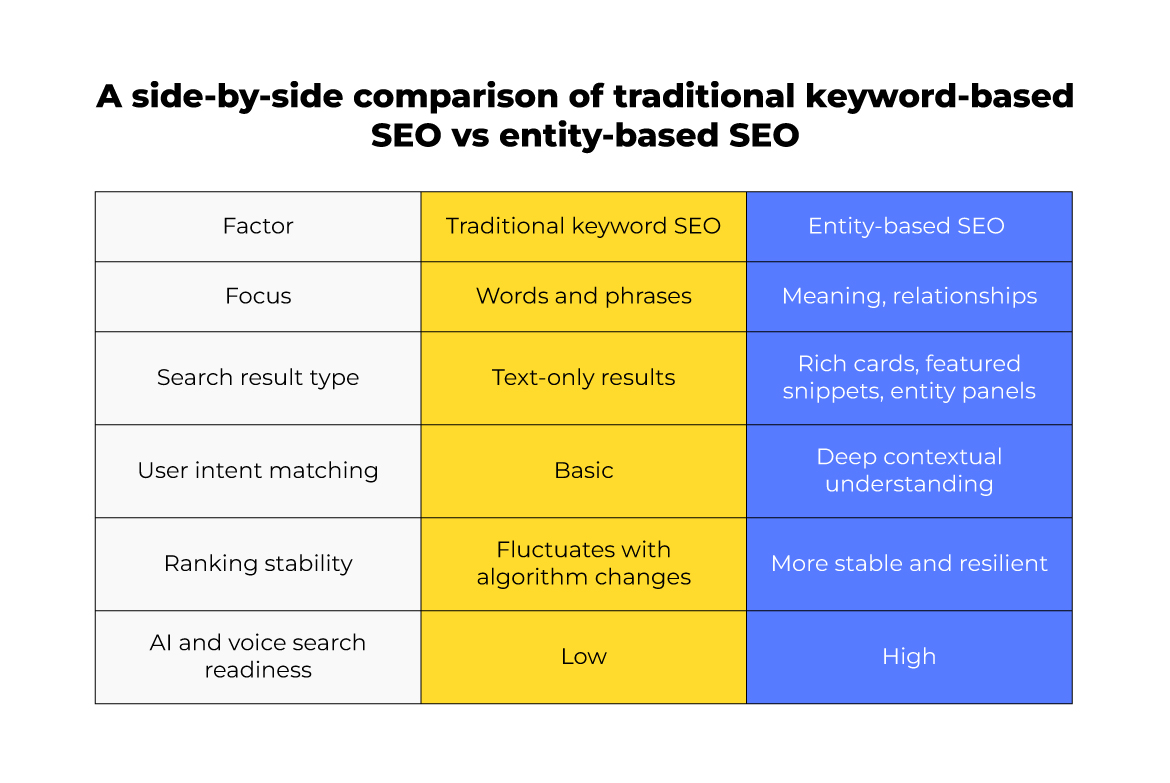
Source: Mavlers
How Entity Optimization Impacts Link Building
If you look at link building through a traditional lens, it’s all about authority metrics — DR, DA, traffic, and so on. And yes, those still matter. But they don’t tell the full story anymore.
Entity-based SEO adds another layer. It looks at how links contribute to the meaning of your content, not just its perceived strength.
So a link is no longer just a signal of trust. It’s also a signal of association.
Links now work best when they:
- Sit inside relevant, focused content.
- Come from sources already tied to your topic.
- Reinforce a clear relationship between entities.
- Don’t feel forced or out of place.
So instead of asking “how many links do I need?”, the better question is: “Do these links actually help define what my site is about?”
Because that’s what search engines are trying to figure out. Instead of chasing volume, the shift is toward earning placements in better publications that strengthen entity semantic relevance.
Quality over quantity. Although once you define your ideal publication profile (DR rating, referral domains, spam score, etc.), you can scale and target dozens or hundreds of relevant websites at once.
7 Entity‑Driven Link Building Strategy Tips
Alright, it’s time to move from theory to practice.
Most modern strategies today fall under what’s known as entity-based link building, where context and relationships guide link placement. Below, we’ve selected seven of the most impactful entity-based link-building tips to explore.
Tip #1. Build Links Within Tightly Focused Topical Clusters
We begin with something that traditionally was highly visible to the human eye, but remained beyond understanding to search engines. Not anymore. Modern search engines that utilize generative engines, or LLMs, look at how naturally a link fits into a particular piece of content.
For example, for Google’s AI Overviews, not every relevant link is actually relevant.
A page can mention your topic and still feel off. Maybe it covers too many things. Maybe your link is just added in without much support. And yes, search engines notice that.
Today, links are evaluated in context. Not just where they come from, but what surrounds them.
That’s why tightly focused topical clusters matter. Instead of isolated placements, you build a network of links that all support the same idea. That’s more about consistency and relevance.
What’s the endpoint? When everything points in one direction, search engines don’t need extra signals to understand your positioning. They stop guessing about your website’s meaning and instantly catch the main theme, idea, and how that fits into specific user queries.
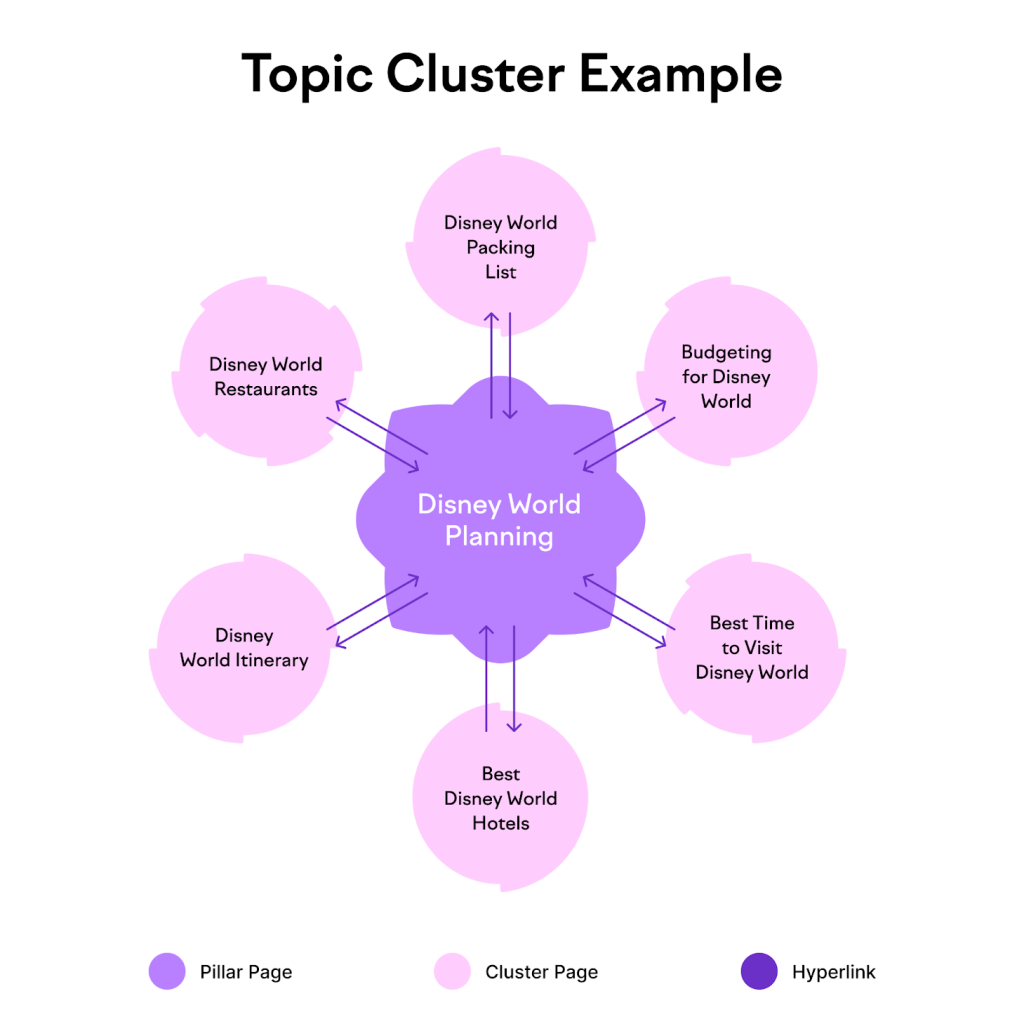
Source: Semrush
Tip #2. Prioritize Context Over Domain-Level Authority
The next aspect that you should prioritize while doing link-building is a perfect contextual match. You see, authority does matter; there is no arguing about that. But authority alone is only part of the success.
An even bigger success factor is context. It means that your link should fit well within the topic and website theme. Actually, in contextual backlinks, every detail matters, even the anchor text, which should bring value without any fluff (promotion, hype, etc.).
When everything connects well, this sends a strong signal to AI systems to consider your content in their responses. In this system, links help to confirm your relevance within a topic, rather than just pointing to your page.
That’s why context now often beats raw authority.
A link from a smaller but highly relevant page can carry more weight than a generic placement on a big site. Simply because it makes more sense.
And in modern SEO, “making sense” is what drives results.
Tip #3. Place Links Inside Semantically Rich Content
It’s tempting to think that once you get a link, the job is done. At least this is how discovery and ranking worked a few years ago. But not anymore.
Today, a link in content is only half of the SEO job. The other half is about what surrounds that link.
If the content is thin, the link won’t carry much weight. Even if everything else checks out, e.g., anchor text, and the sentences that come before and after the link. Poor content sends a much stronger (negative) signal to the modern smart search algorithms, and that signal ruins all of your SEO effort.
Search engines, powered by AI, look at the bigger picture. They try to understand the relationship between the link and the content.
So, when the page is rich and focused, the link becomes part of that success. Moreover, it amplifies the semantic SEO value of that page.
Here is what is meant by a link placed in semantically rich content:
- The topic is clearly defined.
- The content builds around that topic.
- The link supports the idea, not distracts from it.
- Everything feels connected and natural.
And that interconnectivity is the key. Because links don’t work on their own anymore. They work through context. It doesn’t make much sense to place a perfect link in poor content. Ensure the quality of the content first, and only then consider if you should place a link and how to go about it.
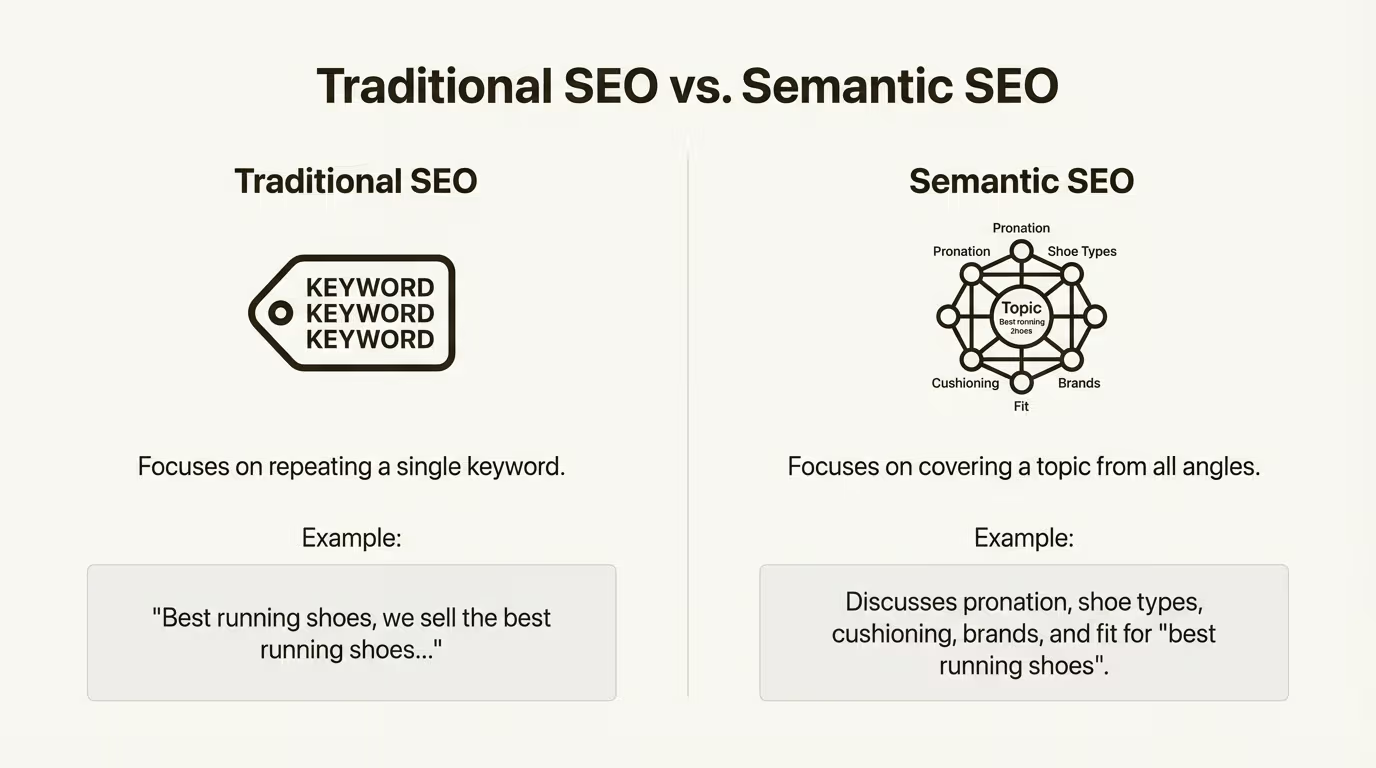
Source: eeselAI
Tip #4. Align Anchor Text With Entity Clarity
There’s this habit in link building — overthinking anchor text. What is it about?
People try to control it too much. Exact match here, variation there, percentages, ratios… it quickly becomes mechanical.
The problem is that search engines don’t work that way anymore. They don’t need perfect anchors, like the ones with a perfect match with the corresponding link content title (e.g., the anchor text “Modern trends in SEO” leads to the article with the exact same title).
Today, search engines need understandable anchor text.
However, the other extreme is also bad, i.e., when an anchor text is too vague. Search engines simply don’t connect it with the referenced page.
So when an anchor is too generic, it doesn’t say anything. And when it’s too optimized, it raises questions.
You’re basically choosing between weak and forced.
A more balanced approach works better. According to this approach, anchors should:
- Reflect the topic, not just the keyword.
- Blend into the sentence naturally.
- Vary a bit across different placements.
- Don’t try to “prove” relevance.
That’s it, and it’s not complicated, as you can see. You just need to make it clear what the page is about. Not perfectly optimized. Just clear.
Tip #5. Get Mentioned Alongside Related Entities
At this point, it might seem that we have diverted from the main theme — entity-based SEO in the context of link building. But that was intentional. Now it’s time to bring entities back into focus and connect everything we’ve discussed so far.
A link on a relevant page is good. A link surrounded by the right entities is better. Because search engines don’t just evaluate the link — they evaluate the company it keeps.
If your mention sits next to unrelated topics or random names, the signal gets diluted.
But if everything around it points in the same direction, the signal becomes stronger. Not explicitly. But consistently.
You’ll often see that strong placements have:
- Multiple related entities mentioned in the same section.
- A clear topic that connects all of them.
- No unrelated distractions in the content.
- A natural flow where everything fits together.
It’s a subtle effect. But modern generative engines are all about subtle effects, nuances, and the connection between those. Small positive things compound, and together they yield better results than a single, isolated positive signal.
Pro tip: Keep entity signals (mentions) at a reasonable level, as inserting a brand’s name in every sentence will only hinder readability and search ranking, respectively.
Tip #6. Earn Links From Topically Trusted Sources
Did you know? Not all websites with a high authority (DA) rating are worth your attention when building backlinks.
A domain can look strong on paper, have good metrics, solid traffic… and still not give you much in return. Simply because it’s not trusted within your topic.
For example, you operate in the coffee machine electronics niche, and want to build links to your website from a respected news resource that published a relevant article. Everything is fine with this resource; it’s credible and enjoys strong traffic.
The only problem is that it’s not known for publishing quality materials on coffee machines, and it’s unlikely that its regular audience will give your website many quality leads.
A clear connection between trust and topical authority is important. But that nuance is exactly what many SEO practitioners neglect.
Search engines and answer engines (e.g., Claude or Gemini) don’t just evaluate general authority. They also look at topical trust. In other words, how reliable a source is for a specific subject.
So a smaller niche site can sometimes carry more weight than a large general platform. It’s all about how closely the source is tied to your topic. And the closer that connection is, the stronger the signal becomes.
Tip #7. Use Content Formats That Attract Entity-Rich Links
Not all content attracts links equally. Some pages just sit there. Others keep getting referenced again and again. The difference is often the format.
Certain types of content naturally include more entities — brands, tools, people, concepts. And because of that, they are easier to link to.
Search engines like that kind of content. It’s easier to understand, easier to connect.
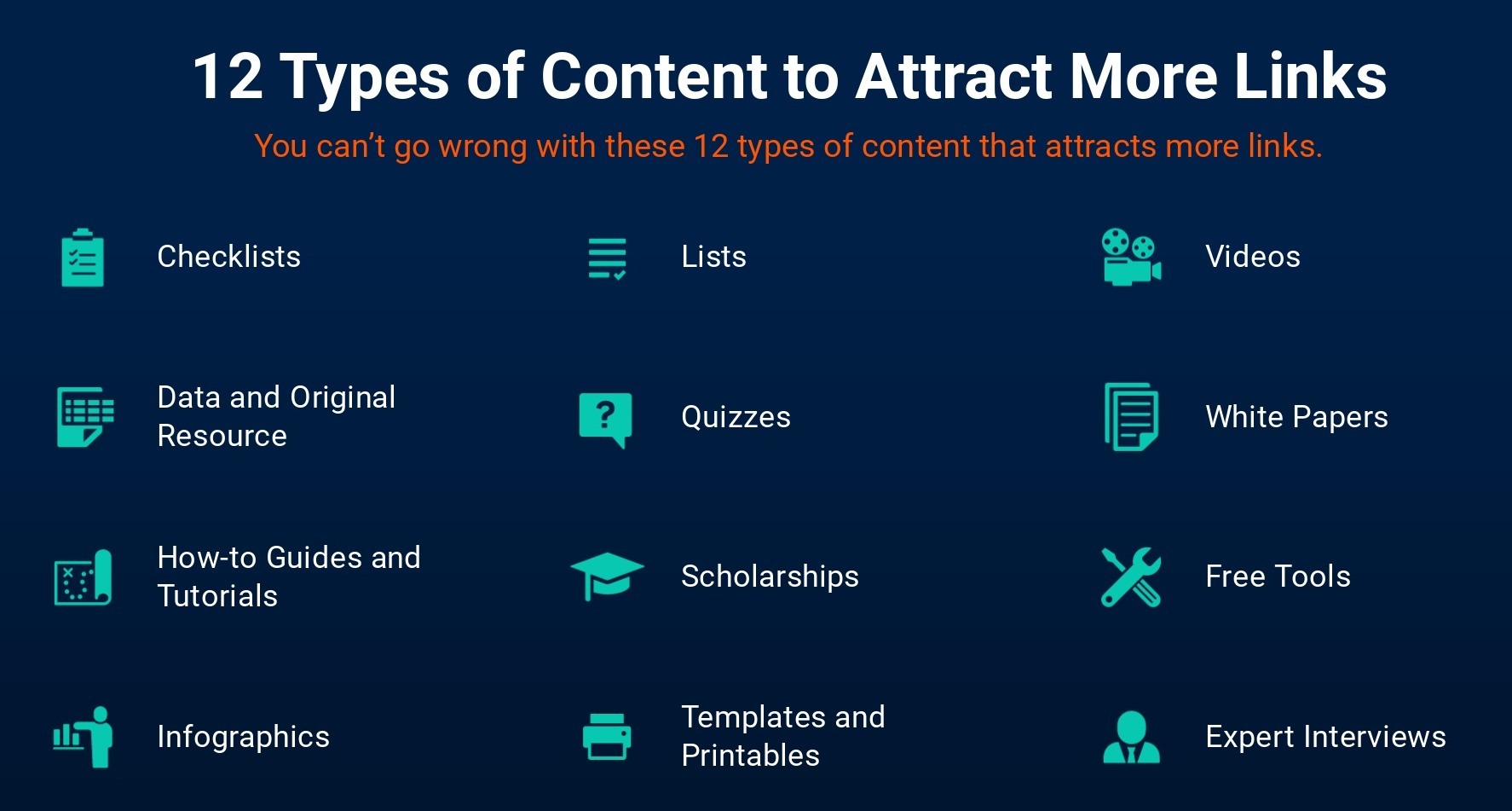
So, what are those content formats that attract entity-rich links? You’ve seen them many times, perhaps not even realizing how powerful these things are:
- Comparisons (X vs Y, alternatives, breakdowns) between different products and services.
- Lists that group related tools or brands.
- Case studies with real-life examples.
- Guides that explain how different things connect.
- User-generated content (UGC) that is authentic and honest.
The secret to modern SEO efficiency in these formats is that they don’t just talk about one thing. They bring multiple entities into one place. And that’s exactly what makes them linkable.
Source: Vazoola
Common Mistakes in Entity‑Based SEO & Link Building
At this point, everything may sound quite logical.
Focus on context, build connections, stay within your topic — nothing too complicated. And in theory, that’s true.
But practice is always more complicated than theory. When people start doing entity-based SEO, they tend to make all sorts of mistakes. Because many strategies that used to work in traditional SEO don’t translate well into building lasting entity relationships.
What’s interesting is that the issue is not what you do — it’s how you do it.
As they say, knowing your problem is halfway to solving it, so here are the most common mistakes that the newcomers make:
- Placing links on pages that only loosely match your topic.
- Using anchor text that is either too generic or overly polished (optimized).
- Repeating the same anchor phrasing across multiple placements (out of laziness).
- Building links across unrelated niches “for diversity”.
- Choosing sites that publish on everything instead of one clear subject.
- Ignoring the surrounding entities and overall context.
- Forcing links into sentences where they don’t really belong.
- Relying on one-off placements instead of building consistent patterns.
- Over-optimizing link-building to the point where it looks artificial.
At first, you may not notice that something is not going right. Individual mistakes don’t look dramatic. You can still build links, see some movement, maybe even short-term gains.
But over time, your mistakes compound, leading to weakened entity authority signals of your links. And search engines struggle to understand what your site actually represents.
So the goal here is not perfection. It’s consistency.
Because in entity-based SEO, small misalignments don’t break everything instantly. But they do accumulate. And fixing them later is always harder than avoiding them from the start.
The Bottom Line
Entity-based SEO is an epochal shift in the SEO theory and practice. However, it’s not a revolution, as entity optimization is not replacing keywords, but adding a deeper layer of meaning and relationships.
Today, links define your SEO strength (authority), as well as what you are about. In other words, they empower AI search optimization by helping algorithms see associations between your website, the ideas you represent, and the broader topic you belong to.
In this new system of subtle entity associations, content plays a crucial role. It defines whether your links make sense as part of a coherent topic or remain isolated signals.
At some point, it all comes down to one simple idea. Not metrics, not volume, not even entity recognition.
Just this: Does this link help connect my site to a clear topic? If it does, it’s a good link. If it doesn’t, you already know the answer.